Something Called ‘Boobs Oil’ Is Making Some Awfully Big Claims

Forget oiling your pubes ― oiling your boobs could be the next healthy beauty trend, though its health benefits are dubious at best. 

According to a Racked interview with Imelda Burke, the founder of Content Beauty & Wellbeing (and Emma Watson’s newest beauty guru), a product called Boobs’ Essential claims to serve an important purpose. 

“A cross between body oil and a health tracker, the Boobs’ Essential Oil encourages you to massage your breasts daily, which makes you familiar with them so that you can mentally track any changes,” Burke said.
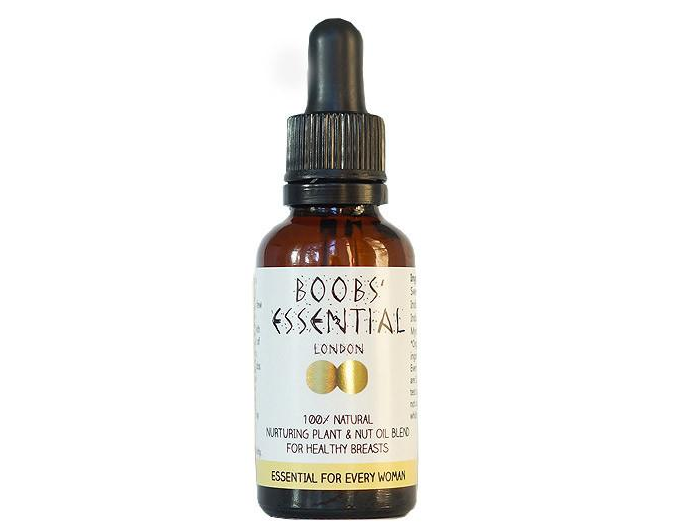
Indeed, the directions for using the oil somewhat mimic the self-exam instructions from the National Breast Cancer Foundation, which tell women to massage their breasts in a circular motion while standing or lying down, covering the entire breast to feel for changes. But experts say a self-exam once a month is the best practice for screening yourself.  

Daily screening, on the other hand, might lead people to feeling things that aren’t there and overscreening is a big public health concern

“The likelihood of detected lumps is increased when women touch their breasts more frequently. However, this would not depend on whether or not a woman touches her breast while applying this oil,” said Kirsten Moysich, PhD, MS, Distinguished Professor of Oncology in the Departments of Cancer Prevention and Control and Immunology at Roswell Park Cancer Institute, adding: “Aggressive exams lead to over detection of breast masses that might never become serious. Daily exams are certainly not necessary.” 

The oil is made from a mix of organic sweet almond oil (which is supposed to make skin softer), frankincense (boswellia serrata), sandalwood and myrrh. It was created by Zoe Lind van’t Hof, who said she started making it with her late mother after her mother was diagnosed with breast cancer, 

Lind van’t Hof says she intended for the product to be used as a daily or monthly check for lumps or for skin recovery during radiation for cancer treatments. She says the oil has certain health benefits, such as preventing and reversing cysts and the ability to rejuvenate cells and increase immune cell activity. For what it’s worth, Moysich told HuffPost there is no human evidence to support that claim. 

“You can find cell line studies or even animal studies to support biological effects of just about anything,” Moysich said. “However, I am unaware of any studies that have demonstrated that this particular oil has prevented and reversed cysts, rejuvenated cells or improved immune function in actual women. A healthy diet, maintaining a healthy weight and exercise are very effective ways to maintain a healthy immune system.” 

If you’re not in the market to drop around $37 on oil for boobs, head here for recommendations for breast cancer screenings.  

The HuffPost Lifestyle newsletter will make you happier and healthier, one email at a time. Sign up here.

Share Button

The 20 Funniest Tweets From Women This Week

The ladies of Twitter never fail to brighten our days with their brilliant ― but succinct ― wisdom. Each week, HuffPost Women rounds up hilarious 140-character musings. For this week’s great tweets from women, scroll through the list below. Then visit our Funniest Tweets From Women page for our past collections.

Share Button

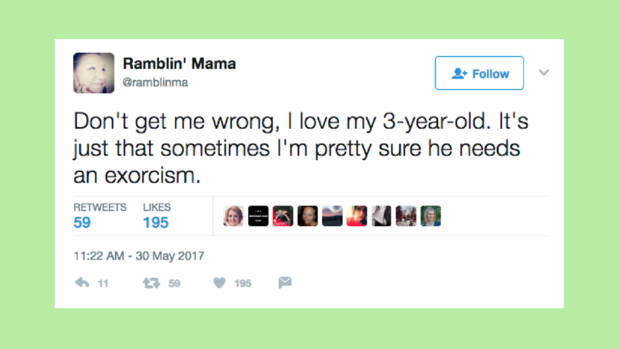
The Funniest Tweets From Parents This Week

Cute Kid Notes

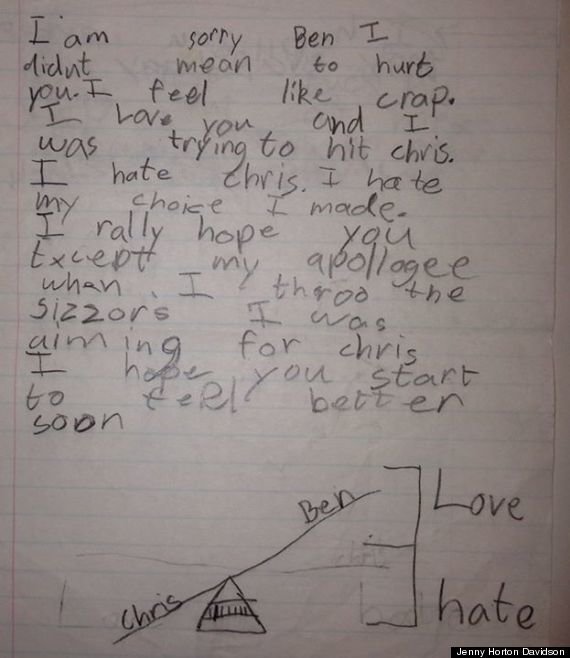
‘I Am Sorry Ben’

<strong>Author</strong>: Zachary <strong>Age</strong>: 8 <a href=”http://www.huffingtonpost.com/2014/01/15/cute-kid-note-of-the-day-i-am-sorry-ben_n_4604175.html?utm_hp_ref=kid-note-of-the-day” target=”_blank”><em>Click here to read the full note</em></a>

Jenny Horton Davidson

Share Button

9 Reasons To Drink Water That Have Nothing To Do With Being Thirsty

Exactly how much water people need to drink each day to stay hydrated is a subject of debate. You’ve likely heard that you need at least six to eight glasses a day, but the real figure depends on other factors. How much activity you get, the climate you live in and how much water you get from sources like fruits and vegetables all matters.

The good news is that as long as you make water your main beverage, drink when you’re thirsty and consume it with meals, you don’t need to get caught up tallying glasses, according to the U.S. Centers for Disease Control and Prevention.

But keeping properly hydrated isn’t the only reason to throw back some H2O. The beverage does other amazing things for your body when you consume enough of it. Check out the ways this magical elixir works for you other than its ability to quench your thirst:

1. It keeps skin healthy on a cellular level.

Water likely won’t clear up your acne or eczema, but on a cellular level it could make a difference. 

The skin is made up of three layers: The outermost is the epidermis, then the dermis and finally subcutaneous tissue. If the top layer, the epidermis, is not hydrated enough, your skin can lose elasticity and feel rough, according to the Mayo Clinic. 

And some experts say that water’s presence in the body can assist with the production of collagen, the protein responsible for keeping skin plump and firm.

2. Water keeps the joints healthy.

A small 2012 study published in the journal Medical Gas Research found that drinking hydrogen-rich water helped decrease pain in people who live with rheumatoid arthritis. For people without the condition, regular water intake can also help with staying healthy and comfortable. The beverage may cushion your joints and keep them lubricated, according to the CDC.

3. Water helps with weight loss goals.

There’s just no way around this one: Water helps with weight loss more than any other beverage. Study after study shows that water helps people consume fewer calories in a day and helps people maintain a lower weight. 

One 2015 study found that participants who “preloaded” meals with a pint of water lost almost 10 more pounds on average during the experiment than participants who did not drink before eating. This could be because your body’s hunger cues may often be misinterpreted as thirst cues.

4. Water keeps you regular. 

If you just can’t seem to go, consider upping your water intake before rushing for a laxative.

Daily water consumption is important to keep bowel movements regular, according to the CDC. It’s just one of a few core components that support good digestion, including a well-rounded diet with a good amount of fiber and regular exercise. 

5. It helps with headaches. 

Here’s an added benefit of staying hydrated beyond feeling parched: A common reason for a headache is actually dehydration (which could explain why your head might pound after a long night out).

Researchers say that not drinking enough water can cause blood volume to drop. This results in less oxygen and blood flow to the brain and dilated blood vessels, the New York Times reported. The nerves in your brain respond by producing pain signals, almost like a cry for help that you need to hydrate. 

Furthermore, try to drink a few more glasses a day if you are prone to migraines: Research suggests that extra water may help people experience less pain during a severe headache.  

6. Water may help protect against cancer.

There are causes for the disease that cannot be controlled, such as family history, gender and age. However, a healthy lifestyle can aid in the prevention of certain cancers.

Some research suggests that drinking several cups of water daily can reduce the risk of bladder cancer in men. A 2011 study found that men who drank more than 10 1/2 cups of water day had a 24 percent decreased risk of bladder cancer over a 22-year period. Researchers think that drinking a lot of water helps with flushing out potential cancer-causing agents before they have the opportunity to develop. 

7. It also keeps you alert and focused.

This might make you want to keep a glass of water on your desk: A 2012 study published in British Psychological Society found that undergrad students who brought water with them into an exam scored better than their peers who did not. The researchers believe that sipping on water helps people stay hydrated and focused on the task at hand.

8. Water helps your heart do its job. 

The heart is constantly working to pump blood throughout your vessels and muscles. Keeping your body properly hydrated with water makes it easier for the heart to do this, according to the American Heart Association. 

9. H2O keeps you happy and energized. 

Water may help improve mood, according to a small 2015 study. Researchers studied 120 women and found that greater water consumption was associated with reported lower levels of tension and depression as well as feeling happier. 

Even a mild case of dehydration, which counts as losing just 1.5 percent of water in the body, can cause irritability and a lower energy level, according to research. 

So drink up! (And keep it interesting. Here are a few fruit-infused water ideas that will change the game.)

Share Button

Trisha Yearwood Shares Her And Garth Brooks’ Recipe For A Successful Marriage

Long before Trisha Yearwood was a lifestyle guru, she was on the top of the music charts, selling out concerts and performing for adoring fans. The “She’s in Love with the Boy” singer was, and still is, a critical success, and her working and personal partnership with Garth Brooks has something to do with it.

After two divorces, Yearwood realized that maybe the man of her dreams had been right in front of her for years. In the 2000s, after Brooks ended his marriage to his college sweetheart, he took time off from music and eventually romantically reconnected with Yearwood after nearly 15 years of friendship. A love blossomed and the pair became engaged in May 2005 and got married later that year. 

They recently celebrated their 11th anniversary. 


“We have been friends for such a long time. Our relationship is based on a very deep friendship that we’ve had, so we were in the position of knowing each other as friends before we ever went on a date,” Yearwood told HuffPost of their marriage during a recent Build Series interview. “I think a lot of times you are ― just speaking for myself ― down the road in your relationship before you really get to know the person well enough to get to know if you really like them or not, and liking someone is as important as loving someone. And so we laugh a lot. When we’re not all lovey-dovey and passionate, we’re still best friends, so it’s just the way it works.”

Yearwood, who stars on an Emmy-winning cooking show, “Trisha’s Southern Kitchen,” and has a new line of products with Williams Sonoma, says Brooks is not just her husband but a true partner in life. 

“He’s whatever I need him to be; He can be my best friend, he can be my lover, he can be my shopper ― if I need a dress for an event and I don’t have time to go shopping, this guy can buy a dress and it’s gorgeous and it fits ― he’s fantastic,” she said. “He’s all those things that you need him to be and I think at the center of it is a true respect and love for each other, and a friendship.” 

Something else that helps Brooks’ case is his coffee-making skills

“My husband doesn’t drink coffee ― which I don’t trust people who don’t drink coffee, but I do love him ― but he makes my coffee every morning and he makes really good coffee, so he can stay,” she joked. 

Watch the full interview with Trisha Yearwood below. 

Share Button

8 Ways To Use Anxiety As Your Greatest Superpower

It seems every time I turn around, someone is talking about anxiety as if all anxiety is “disordered.” Not all anxiety is disordered, and in fact, a certain amount of anxiety is actually healthy. There is a generalized anxiety we should all have because life is built upon the unpredictable. I have witnessed the people I treat each day, including myself, turn anxiety into their greatest superpower. It comes down to mindset. To follow are nine ways to use anxiety to greatly benefit your benefit.

1. Pressure.

Pressure is a wonderful thing. It is when we’re under the intensity of high-pressured situations that we are the most alert. Our physiology responds automatically, putting us into the biological experience of fight-or-flight, where it feels like our very survival (reputation, closing a deal, relationship, promotion) may be at stake. Instead of viewing this anxiety as negative, train yourself to see it as fuel; the energy you need to jump into action to save your life. We need pressure to provoke us. Many procrastinators unconsciously lag, to allow for enough pressure to build, until they are forced into performing, or else face harsh consequences.

2. Risk.

Life is about risk. Without risk, and the natural anxiety that goes along with it, we would never get outside of our comfort zone long enough to grow in our self-development. Excitement and anxiety are often confused, causing some to falsely interpret the intensity of their excitement as negative. We must train ourselves to embrace the unfamiliar, and what it feels like to be there. Happiness requires pushing through the anxieties of the unknown. The more we do this, the easier it gets, and the more successful, confident and trusting of ourselves we become.

3. Intuition.

When we’re feeling “anxious,” we could also simply be in touch with our gut instinct. Oftentimes, the right answer grabs our attention by sending us strong doses of intense fear or anxiety. Fear shocks us into paying attention. The best response when experiencing intense emotion, is to slow down and give the negative feeling a moment’s attention. The more we ignore our impulses, the more impulsive we become when making decisions. Trust there is no emergency to act right now. Slow down, and listen to what is underneath the anxiety. This gives us the best opportunity to make the correct decisions.

4. Time.

The more anxious we are, the more responsible we tend to be with our time, and as a side benefit, the more respectful we naturally are of other people’s time. When we’re anxious, it is largely because we want to make a good impression and give our best work. We desire to be seen as valuable, at the top of our game and essential to the continuity of the whole. Feelings of anxiety create the discomfort we need to get things done, acting much like an internal alarm clock; making us great managers of time.

5. Vigilant.

Anxiety is a powerful tool when it comes to sensing and observing our environment and the people in it. It makes us more sensitive and perceptive to the subtleties in people, what their character may be, and if we can or cannot trust them. It operates much like a Morse Code. This is a true gift when trying to assess or predict the behavioral patterns of others. This hyper-awareness aids us in making better decisions in partners, in how we communicate, who we communicate with, and who we choose to bring in, or keep out of our lives.

6. Inventive.

The more anxiety we have, the more our thoughts bounce from one topic to the next. The more thoughts we entertain, the more innovative we have the potential of being. For this reason, it would be wise for us to carry a pen and paper at all times to release our thoughts onto the paper without judgment. Once onto paper, these thoughts become separate things from us; allowing us to view them with more clarity. Writing helps us decipher the relevant from the irrelevant, and to move on the ideas that are the most beneficial to us.

7. Active.

Nervous energy can be incredibly productive when channeled correctly. We can use this active energy to broaden our focus, and to take on more than one task at a time. Happiness and fulfillment require consistent attention, and a focus that is open, flexible and fast-moving. If we mess up in the moment, we must be able to keep going. Active energy is attractive and contagious. For this reason, we must channel our energy to be as productive as possible, as this will inspire others to pick up their own pace.

8. Self-talk.

When we feel anxious, it brings us face-to-face with our self-doubt. It takes time and effort to work through our fears and doubts. There is no stronger a force than anxiety to get us in touch with our inner coach. If we’re experiencing a tremendous amount of anxiety, our self-talk will get us to, at the very least, take the next step in our process. Once we make it to that next step, feel released from some of the pressure, we can better talk ourselves into the taking the next step. This is how we succeed; one-step-at-a-time.

Anxiety is 100 percent necessary. It’s healthy and consuming enough to drive us towards wanting more from of ourselves, our lives, business and other people. We would do well to avoid using natural, healthy anxiety as an excuse to underperform, or to avoid the pressures of our responsibilities. We must be careful when throwing the word anxiety around, as it may initially get us some empathy and more time to get our things done, but eventually this excuse will wear thin, and we will no longer be taken seriously.

Share Button

Deconstructing Stigma: Finding The Good In Life

Editor’s note: Deconstructing Stigma: A Change in Thought Can Change a Life is a public awareness campaign developed by McLean Hospital to spark conversation not only about behavioral and mental health but also about the stigma that surrounds it. The campaign features compelling stories from people across the United States who have been affected by mental illness, including Clare’s story below.

It has been more than six months since I’ve woken up in a psychiatric hospital, my longest separation from inpatient treatment since 2012. Over the years, the overwhelming pressure I placed on myself to be a good student, a good friend, and a good daughter led me to suicidal thoughts.

I’m constantly over-thinking things: Am I weird? Am I okay? Do they like being my friend? I feel like I am one hair trigger away from being rejected, and that’s the worst pain.

Making matters worse was the sense that not everyone felt my illness—borderline personality disorder—was legitimate. I got that sense among, most surprisingly, those I sought help from: members of law enforcement, EMTs, and hospital staff who acted as if my illness was a nuisance.

I also noticed the topic was an unwelcome one among family members and friends.

We have the ice bucket challenge for ALS and breast cancer awareness and the diabetes walk. You can post about those on social media, but if you say you’re mentally ill, people are like, “What’s wrong with you?”

Despite my insecurity, I feel remarkably at home and confident on stage. In front of the microphone, I belt out songs from the ‘60s at local pubs.

Sometimes I’m so focused on hitting notes that I just feel free.

I continue to see a psychiatrist and a therapist regularly. I hope to get my master’s degree in healthcare informatics, a specialty that may sound nerdy, but it’s fast changing and challenging.

Mental illness can make you feel unstable. I want to find a career that I love. I want some sense of stability.

Clare is a 28-year-old singer from Massachusetts. To read more about Deconstructing Stigma and to meet more people like her, visit DeconstructingStigma.org.

If you or someone you know needs help, call 1.800.273.8255 for the National Suicide Prevention Lifeline. You can also text HELLO to 741-741 for free, 24-hour support from the Crisis Text Line. Outside of the US, please visit the International Association for Suicide Prevention for a database of resources.

Share Button

No, Selma Blair Shouldn’t Have To Defend Her Gray Hair

A woman should not have to defend the natural color of her hair, but here we are. 

Paparazzi snapped photos of Selma Blair out Monday in Los Angeles for a casual afternoon of coffee and shopping. For some reason, the roots of her hair became a topic worthy of news coverage. 

The 44-year-old actress took to Instagram to post the photo that paparazzi snapped of her, and to offer the absolute perfect reply. 

Her Instagram followers applauded her post, writing “You are gorgeous!” and “You made my day.”

We couldn’t agree more. 

Share Button

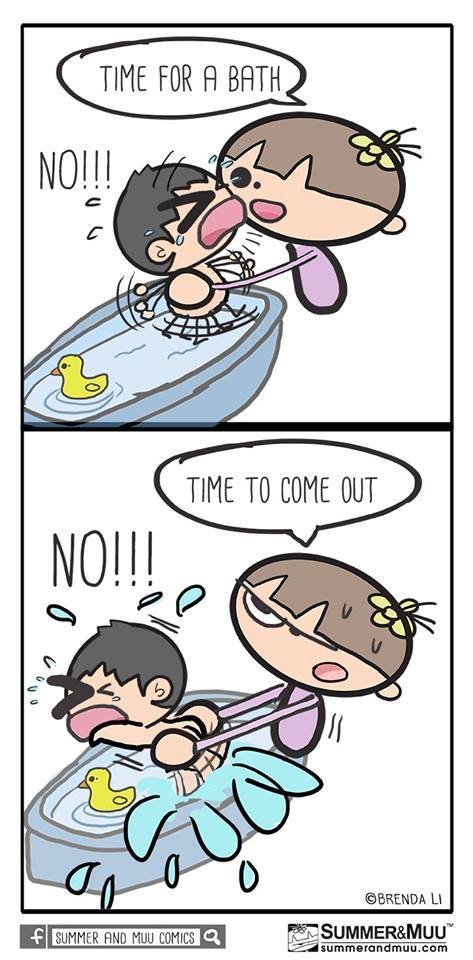
11 Adorable Comics That Get To The Heart Of Parenthood

Brenda Li initially started Summer and Muu Comics to chronicle life after marriage, as well as to provide a creative outlet for herself (she used to be a visual effects artist for movies like “Transformers: Dark of the Moon” and “Thor”). Once she became a mom, though, her focus in the comics shifted to parenting. 

Li draws on her experiences with her son, who’s now 22 months old, and her funny comics are deeply relatable. Li says that her son’s hobbies currently include “not sitting still, throwing food onto the floor, and doing the exact opposite of what Mommy says.” Sound familiar?

She’s found that motherhood has also changed her drawing style. “My characters and lines have simplified; not only because I enjoy a clean simple look, but finding the time to draw is very difficult now, so everything needs to be simple,” Li says. “Motherhood has also made me learned a new skill: drawing half asleep.”

And the comics have given Li perspective within motherhood: “By illustrating my daily struggles, I realize that there is always a cute and positive side to each hair-pulling scenario. I have learned that if you want to survive parenthood, you need to laugh about it.”

She hopes that parents can laugh at her comics ―”humor is the key to surviving parenthood,” says Li ― and realize they’re not alone. Check out Li’s sweet and funny comics below, which you can also find on Summer and Muu’s Facebook and Instagram pages. 

Share Button

There Is A Big Difference Between Being Lonely Vs. Alone

Before I had even been married for a year I was due with my first child. Yep, five weeks before my first wedding anniversary I was delivering my first son. I didn’t know anything about babies. I was an only child and each of my parents had passed away while I was in my twenties. Not a sob story, just fact.

So, in early September my husband and I were stuck in rush hour traffic while I hee-heed my way to the hospital. I wasn’t panicked but I was definitely anxious.

When we arrived at the hospital I was wheeled to my room and went into the restroom to change into my gown. There was a beautiful nurse standing there to help me and I said through the door, “I won’t miss these jeans, that’s for sure.” And, so sweetly, so lovingly, so tenderly, my husband said to me and the nurse, “She thinks she’s tired of them,” as if it had been such a burden on him to look at my hideous body in those horrid discount store jeans. In my head I was saying, “I thought I was having a baby but it appears that there is already one in the room. But, I was busy at that moment so I let it go.

We got pregnant much faster than we had anticipated and to say that we weren’t quite ready is an understatement. I took the pregnancy test on my birthday and went into the kitchen and told my husband the good news. He didn’t speak to me for two days. Somehow, I had managed to do this on my own.

Back to the delivery room, where we spent less than an hour. I was pretty speedy at popping out babies. It was an easy delivery, as if there is such a thing. Maybe because I made it look so easy my husband didn’t feel the enormity of the occasion: the enormity of having a small turkey come out of your private parts! I was wheeled into my room and got settled in with my new baby boy and my husband said to me, “Well, I have an 11 o’clock that I can still make.” And with that, he was gone.

I didn’t mind being alone with my baby. I loved him, and in those first few hours before real life set in it was just the two of us. I thought it would be three of us. I felt so lonely, so lonely. The only family I had was a day away so my husband was it for me. And, what first time dad would want to leave when he had a new baby boy? It just didn’t make sense to me. Being alone, no problem, but the loneliness that I felt in those first few hours of parenthood was crushing.

When I look back at that time I want to tell that young mother that what she was feeling was real, and justified and it wasn’t just in her head. That she wasn’t being needy, she was being normal. And sadly, that it would continue through the life of the marriage.

Now that about a million years have passed and I am no longer in the marriage, I know that the loneliness was real, it was not imagined or manufactured by me. That I told my husband often how lonely I was. That I was lonely when we were sitting in the same room.

Loneliness isn’t just in your head. You might feel neglected, or you might feel unappreciated, but all roads lead to loneliness. And, in my opinion, continued loneliness can lead to isolation: it creates a sadness that can’t quite be defined.

If you are spending a lot of time alone and you are happy, that’s great. But, if you are constantly around people and you are feeling lonely, take some action to figure out what you can do to climb out of that hole. It may be professional help or it may be that your marriage or relationship needs a tune up, but make the necessary changes to get you on the road to contentment.

Share Button