Health24.com | This is exactly how long the sex ‘afterglow’ lasts, according to science

It’s no secret why most people have sex: They’re horny and want to get some.

But doing the dirty also creates those some warm, fuzzy feelings post-sex that make you feel super close with your partner.

Now, new research suggests that closeness can last long after you’ve done the deed.

A data analysis of more than 200 newlywed couples published in the journal Psychological Science found that sex “afterglow” can last up to two days after you’ve hooked up.

For the study, researchers analysed data in which spouses reported their daily sexual activity and sexual satisfaction for 14 days. They also reported on their satisfaction with their marriage at the start of the study and four to six months after it started.

Researchers came up with several complicated-looking math equations using this data and found that people feel sexually fulfilled after getting it on (especially on the same day that they had sex – no shocker there).

But they also reported feeling more sexually satisfied in the 48 hours post-sex session, too.

And it’s not just a sex thing: Couples who reported sexual satisfaction also said they had higher levels of relationship satisfaction – both at the start of the study and over time.

Read more: 8 subtle things you can do right after sex to boost your bond

The association was the same for men and women of all ages, and stood up even after researchers took into account how often couples had sex, their personality traits and how long they’d been together.

“We interpret these findings as evidence that sexual afterglow is a proximal cognitive mechanism through which sex promotes pair bonding,” the study authors wrote.

The researchers point out that there are obvious limitations to the study, like the fact that people are more likely to want to report their sexual and marital satisfaction in a positive way.

They also noted that some people may have had sex when they weren’t really in the mood to please their partner, which may not cause the same afterglow effect.

So if you’re trying to get a sense of how often you should boink to keep the warm-fuzzies going in your relationship, it looks like every two days is the magic number.

Thought you knew it all? Um…Bet you haven’t heard of these! We’ve got 101 sex tips guaranteed to keep you busy (and satisfied) all summer long. 

This article was originally published on www.womenshealthsa.co.za

Image credit: iStock 

NEXT ON HEALTH24X

Share Button

Bowers & Wilkins PX Review

It’s incredible to think that the PX are Bowers & Wilkins’ first ever pair of noise-cancelling headphones. It is not by any stretch a new technology, and to enter a market so late in the game you would assume that B&W are already on the back foot.

You would be wrong however. The company’s reluctance to use noise-cancelling has always because of the trade-offs that come with sound quality.

Indeed when we asked a spokesperson for the company it was clear that noise-cancelling was something they actually wanted to actively avoid for a long time, so why now?

Well quite simply, they believe they can now release a pair of headphones that cancel noise to a high-standard while still maintaining the incredible sound quality that defines B&W’s entire portfolio.

BW

To give you some idea of how important that reputation is, B&W’s most expensive headphones the P9s aren’t even wireless, let alone noise-cancelling.

So how do the PX’s stand up to B&W’s almost ludicrous standards, and then also the competition.

Well from a design perspective the PX’s are perhaps the most edgy pair of headphones B&W have ever made. Gone is the all-leather design, instead this is a merging of leather, high-quality fabrics and curved metal.

BW

The result is something that looks still distinctly B&W but with more of a modern twist. They’re also quite large and in our view a little heavy so don’t expect them to blend into the background on the bus or train.

The metal frame and stiff leather ear cups also have another unfortunate side-effect which is that like so many other expensive headphones they have a tendency to push down on the top of your head resulting in a soreness that would kick in after the hour/two hour-long mark.

The PX’s certainly aren’t the only headphones to do this, both the recent Beats headphones suffer from it as do many others but it’s something to absolutely consider if you’re planning to take them on a long-haul flight though.

B&W have sensibly opted for clickable controls here rather than anything touch-sensitive and the headphones charge via USB-C. This last bit deserves a special mention because not only does it allow for faster charging but it also means that if your laptop has a USB-C port you can actually play high-quality audio direct to the headphones from the laptop.

BW

Enough about the design though, the key question here is how do they sound? Well they sound like a pair of high-quality Bowers & Wilkins headphones, which in and of itself should give you some sense of the achievement here.

While the noise-cancelling was good (not excellent), the fact they’ve managed to achieve that and maintain this quality of sound is nothing short of remarkable.

Being able to put the headphones on, block off the outside world and then listen to every minute detail on Ólafur Arnalds’ Eulogy For Evolution 2017 was goosebump-inducing.

We don’t want to say that it’s crisp because that suggests there’s a sharpness to the sound, which there isn’t. Instead it’s more a wide, open soundstage that can pick out even the tiniest details and give them the same breadth of volume that you would want from a thunderous bass.

BW

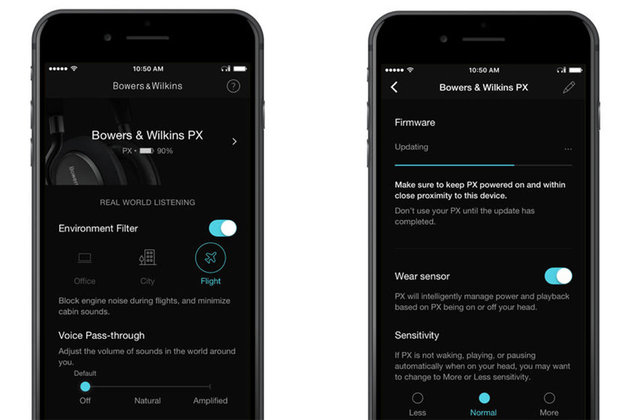
Now in addition to the sound quality, B&W have opted to pair the PX with an app that allows you to update the headphones and gives you some limited control over the ‘smart’ features that come with them.

Now we use the term ‘smart’ loosely because sadly this was the weakest part of the experience. The app allows you to select a number of different noise-cancelling environments such as an office or a plane but all they really seem to do is just determine how severe the noise-cancelling is.

In addition there are sensors in the headphones that can detect when you’ve taken them off, or have lifted a single ear cup. The headphones will pause the music while one side is raised, and then un-pause it when you place them back on your ears.

It’s a useful idea in theory but in our experience it was a bit hit and miss. Sometimes it would work, sometimes it wouldn’t, and sometimes it would just randomly pause the music without us doing anything. It’s not a deal-breaker and it can almost certainly be improved upon with further updates.

The PX’s reportedly have a 22-hour battery life with noise-cancelling enabled. We’ll be completely honest we didn’t get that, with the battery finally packing in at what must have been at least the 15/18-hour mark. That’s still over a days listening.

Are these the best noice-cancelling headphones we’ve ever used? Honestly, no they’re not. Are they the best-sounding noise-cancelling headphones we’ve ever used? Absolutely.

The PX’s don’t once compromise on sound-quality, so in that respect B&W have remained true to their ideals. As a pair of ‘smart’ headphones there’s definitely room for improvement too, but the addition of a USB-C port shows that the company is already planning for the future.

Who should buy the Bowers & Wilkins PX?

At £329 the PX’s are absolutely at the high-end of headphones which means they go up against the likes of the QC35′s and the PXC 500s. While they might not be able to compete in terms of raw noise-cancelling ability these are by far the best-sounding headphones with noise-cancelling. If sound quality is everything to you, then look no further.

Who shouldn’t buy the Bowers & Wilkins PX?

They’re not what you would call effortlessly portable, certainly not as much as say the Beats Studio3′s or the QC35s. This combined with the soreness they cause after long bouts of listening suggest to us that if you’re a long-distance traveller, we would probably recommend you look at the rivals we mentioned above.

The Bowers & Wilkins PX headphones are available now for £329.

Share Button

Prehistoric Fossils Dating Back 9.7m Years Could Rewrite History Of Where Humans Came From

A set of fossilised teeth dating back a staggering 9.7 million years could rewrite the famous ‘out-of-Africa’ theory that suggests humanity moved from Africa to Europe after a major change in the climate.

Discovered by archeologists in a former bed of the river Rhine, the discovery is so significant that the local town’s mayor has claimed that “we shall have to start rewriting the history of mankind after today.”

Mainz Natural History Museum

The teeth themselves seem to share some striking similarities with the teeth of Lucy a 3.2 million year old skeleton discovered in Ethiopia.

Writing in Researchgate, Dr Herbert Lutz writes: “Both teeth, the crowns of an upper left canine and an upper right first molar, are exceptionally well preserved and obviously come from the same body of unknown sex.”

“While the molar shares characters with various other taxa,” explains Dr Lutz. “The canine reveals intriguingly potential hominin affinities: its lingual outline is clearly diamond-shaped.” 

Herein lies the problem which is that while they match those of Lucy, they don’t match with any known species in Europe at the time.

GULSHAN KHAN via Getty Images

Professor Lee Rogers Berger holds a replica of the skull of ‘NEO’ a new skeleton fossil findings of the Homo Naledi Hominin species at the cradle of Human Kind in Maropeng near Johannesburg.

Until now there have been no truly concrete examples of hominins – a species closely related to humans – existing in the European continent around this time.

If they do turn out to belong to a hominin it would throw into question the currently held theory that early humans first evolved in the African continent and started moving north around 200,000/400,000 years ago.

It wouldn’t be until 60,000/70,000 years ago that they would start spreading around the world on a mass scale.

Of course if these teeth turn out to be from a human-related species this would drastically alter the theories that we currently have.

The significance of this is so great that the archaeologists actually waited a year before finally publishing their paper.

While the paper is now finally out in the public domain, Dr Lutz says that the work has just begun as further research will need to be carried out to finally prove the theory.

Share Button

Petrol And Service Stations Could Be Forced To Install Electric Chargers

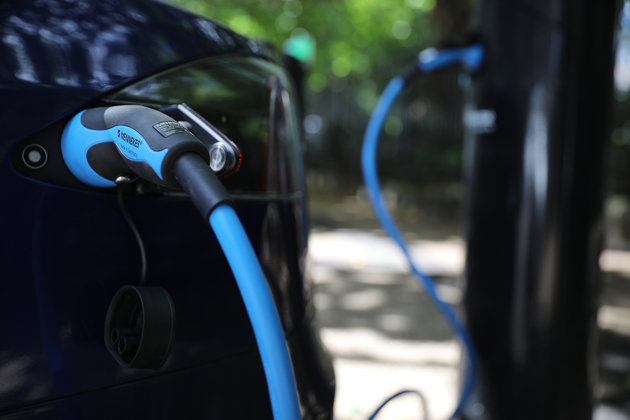
The government has announced a brand-new bill that could actually force petrol and service stations by law to install charging stations for electric and hybrid vehicles.

There are currently only 4,500 charging stations around the UK, the bill would enable this number to increase drastically along with the implementation of roadside charging points in areas where charging at your home is impossible.

Dan Kitwood via Getty Images

Transport Minister John Haynes said: “This bill will aid the construction of greater infrastructure to support the growing demand for automated and electric vehicles as we embrace this technology and move into the future.”

The bill goes on to state that every new charging point that’s installed will need to be a ‘smart charger’ meaning that it will know the demand that’s being placed on the national grid and adjust in order to maintain equal demand across the country.

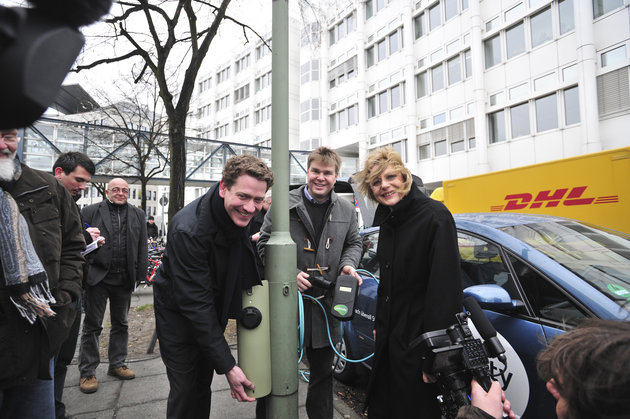
A German company Ubitricity has already started rolling out a trial program in London that can actually convert street lamps into charging stations.

ullstein bild via Getty Images

While the bill certainly sounds promising, Steve Gooding, Director of the RAC Foundation believes that “The test, though, will be how effectively those powers are exercised.”

The bill’s arrival comes just months after the government finally confirmed that it would be banning the sale of petrol and diesel vehicles by 2040.

While the date set is further away than most other countries, a recent report by Dutch bank ING predicted that by 2035 almost all vehicles sold in Europe will be electric anyway.

In addition to government support, the car industry has already started making commitments to move all its cars over to either electric or hybrid engines.

Volvo confirmed that all its cars would have an electric motor by 2019 while the Volkswagen Group also announced that it would move all 300 of its models over to an electric powertrain by 2030.

So while it’s clear that car companies are happy to set ambitious targets, the pressure will not be on the government to make sure that the infrastructure will be ready, potentially even before the 2040 deadline.

The need for a large charging network isn’t just to accomadate the increased number of electric vehicles on the road, it will also be needed because at present electric cars just can’t compete with their combustable counterparts in terms of range.

Bloomberg via Getty Images

While car companies like Tesla are offering frankly practical driving ranges (at a premium), the average electric car currently available has a range of around 150+ miles at most.

To help alleviate the concerns around charging times as well, companies like Toyota have said that it is working on a brand-new battery technology that is safer, cheaper and can be charged in just minutes.

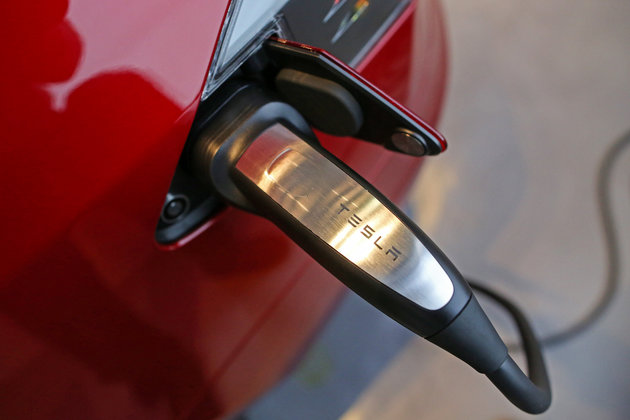
Currently a Tesla can be charged to around 80% in just 30mins using the company’s ultra-fast charging solution the Supercharger.

Finally the bill also requires that all owners of self-driving cars will need to be insured and it promises that a system will be put in place that in the event of an accident there will be quick and easy access to compensation.

Share Button

Driverless Tech? It’s Only The Tip Of The Disruption Iceberg

When people find out I work in the auto industry they all want to ask me about driverless and electric cars. Don’t get me wrong, I’m as excited about these as the next person, but when it comes to innovation in my industry, it’s only the tip of the tech disruption iceberg.

I’ve been working with cars for most of my life. I’ve seen a lot of innovation come and go. A lot of it has already been heralded as transformative, but the advances digital technologies are bringing mean we will see more change in the next ten to 20 years than in the last century. But here’s the thing: driverless cars and lithium-ion batteries are not going to be the only disruptor. Sure, they’ll change the way vehicles are driven, and their impact on the environment, but it won’t be the technology that fundamentally changes the way the automotive industry does business; there’s far more to it than that.

Let’s think about this in terms of IoT; it’s the way cars fit into the network of connected devices that surround us (be it smartphones, vehicles or even humans) that will really change the way we (as customers), interact with individual mobility and as an industry, do business. The rise of connected technology is quite literally going to shake the core idea of car ownership to its foundations.

There are two key factors in this dynamic that are going to drive this change; economics and demographics. Economic developments in the last few decades mean that most of us will not have the desire to invest in car ownership. In terms of demographics, by 2025, 70% of the global population will be living in megacities, removing the desire to own a car simply because it will take longer to find a parking spot than it will to make a journey.

There are already some very clever tech start-ups that have identified this opportunity. We all know about Uber, but what about those who still want to drive their own car? That’s not going to change. With the rise of the sharing economy and IoT connectivity, the concept of driving your own car without having to own it is already becoming a reality. I’m not talking about leasing (and the commitment involved), or rental (expensive in the short-term), soon customers will be pooling ownership via subscription-based services.

So how is my industry responding to the opportunity, and threat, this change in customer needs is creating? How are we responding to the transformation technology is provoking? The key to this will be innovation. Serious innovation.

However, to do that, we need to disrupt the old-school corporate behaviours and practices that kill off great ideas before they get going. Innovation and adaptation is possible, but we need the right platform to make it happen. We need to harness the entrepreneurial spirit and technological expertise of others outside our corporation and open our doors to them, such as those car-sharing start-ups behind subscription-based services.

Many of our big company peers have turned to the corporate-funded incubator as their route to innovation. I think these have merit. They can inject innovation into a business by creating a way to work with agile start-ups. But if they don’t work on the core challenges faced by the sponsor, the ideas they come up with will always feel tangential, as they don’t make it to the customer. They also carry the risk of absolving the corporate from its responsibility to change its culture and become truly innovative. You can’t just outsource innovation.

In my view, for any incubator lab to work, it is essential that it focuses on what really matters, and that innovation is guided with clear priorities and goals from the start. Get this right and incubators can really help. We’re already onboarding 4 tech start-ups from 5 of last year’s winners at our Innovation Lab. We were so happy with the success of this programme we’ve extended it this year to include our employees, giving 74 teams time away from their day job to bring their ideas to life, with significant investment earmarked for those that make it past pitch day.

Although it’s early days when it comes to meeting the transformation technology brings, it’s going to be a real first-mover advantage for those who adapt to this new concept of ownership. The automotive industry is going to change forever and the car will no longer be the only star of the show (even if it is driverless and electric). Customers will be demanding much more from car companies if they are to meet their changing habits and needs. It’s time to get our thinking caps on and commit to innovation at the heart of our business. Will it work? I’ll be keeping you posted.

Share Button

Digital Currency – Another Tech Bubble Waiting To Burst, Or Game Changer That Will Transform Our Financial Lives?

In 2017 the cryptocurrency market has increased seven-fold in value. Surging past the $140 billion mark, industry projections have the sector on course to exceed a value of $5 trillion by the year 2022. This marked upward momentum has been driven largely by the enthusiasm of venture capital investors, eager to claim a stake in the next big thing.

The venture capital investments have been flooding into cryptocurrency via ICO’s – Initial Coin Offerings – a fundraising strategy that gives investors the opportunity to buy units of cryptocurrency early doors at pre-launch and low value. The ICO method has proved incredibly successful for some companies. Ethereum’s Ether, the second most popular cryptocurrency after Bitcoin, was offered for pre-sale in 2014, and its value has increased two-hundred fold since 2015.

The boom has led to fever pitch hype surrounding the sector, and predictable comparisons with the infamous Dotcom bubble of the late 90’s. Speaking at a CNBC conference in September, JP Morgan CEO Jamie Dimon was dismissive and scathing of the recent cryptocurrency gold rush, branding it ‘a fraud’ and destined to ‘blow up’.

Is the cryptocurrency boom just another ephemeral tech bubble certain to burst?

Perhaps. But that doesn’t mean it won’t produce some enterprises that have a lasting or even revolutionary effect on the way we live our lives. The Dotcom Bubble left many shattered dreams and a trail of failed companies, but its legacy was also the birth of epoch-changing innovators, like Amazon and Google.

Naturally, the institutions who dominate traditional finance have been resistant to the spectre of change. But there are also tenative signs of a gradual acceptance of digital currency among some figures in the banking establishment. During a September WSJ discussion event, Morgan Stanley CEO James Gorman acknowledged cryptocurrency to be ‘certainly more than just a fad’, while Goldman Sachs is also reported to be developing trading and investment services specifically for cryptocurrencies.

Politically, some governments have begun to endorse digital currencies. In Japan, Earth’s third-largest economy, the government is supporting J-Coin, a digital currency that will coexist alongside the Yen and scheduled for launch in time for the 2020 Tokyo Olympics.

Yet there are still deep-rooted problems with cryptocurrency that require remedy before it can truly breakthrough into mainstream usage and become the norm – principally, regulation and security.

It is very difficult to govern cryptocurrency flows at present because of user anonymity – cryptocurrency accounts are not tied to forms of identity used in conventional banking. They are based on numerical ID’s, allowing users to stay anonymous and open myriad accounts. Consequently, cryptocurrency is especially vulnerable to capital flight, money laundering, and tax evasion. On a practical level, cryptocurrency is not simple to use – translating cryptocurrency into traditional currency for use outside of the cryptosystem is still a convoluted process.

One person’s problem though is another’s opportunity, and these defects have left open a large space for innovators. In a Horowitz tech podcast “Why Crypto Tokens Matter”, VC investor Chris Dixon, and Coinbase co-founder Fred Ehrsam emphasised the demand for transgressive concepts, imaginative solutions and potential for disruptive enterprises in the cryptocurrency world. Companies such as London based startup Forty Seven Bank, who propose a new type of hybrid bank to bring fiat and cryptocurrency together under one platform, and offer all the services of traditional banking to users of both – current accounts, savings, sale and purchase, investment, trading, futures, and exchange. Central to this hybrid bank concept is a multi-asset account, through which users can access and manage crypto and fiat assets in one place.

Cryptocurrency and the programmability of money also have transformative potential at the micro level, in terms of transactions. Smart Contracts could radically alter the way we are paid, borrow, take out insurance, attract investment and invest. AI enacted contracts could make transactions more efficient, and save money by cutting out middlemen – those financial and legal intermediaries who always take a fee. There is the potential to change almost every sphere of financial activity and service.

So how will the future look in this brave new world of smart contracts, hybrid banking, and computer coded currency?

It is unlikely that private sector digital currencies such as Bitcoin will ever replace central bank issued money. But it is possible that more central banks will create their own digital currencies, just like Japan. After all, as the Harvard economist Kenneth Rogoff commented last week, the history of currency shows that what the private sector creates, the state eventually appropriates. Individual cryptocurrencies will almost certainly rise and fall, and bubbles will burst, but the technology driving them will probably be here to stay.


Share Button

In 1997 Scientists Detected The Loudest Sound Ever Heard Underwater, But The Cause Is Still A Mystery

For any wannabe Ernest Shackleton, it might seem that the 21st century doesn’t provide many opportunities left for real exploration, but don’t despair as there is still one place on Earth full of unanswered mysteries.

As much as 95% of the deep ocean is unexplored, according to the National Oceanic and Atmospheric Administration, and a new documentary for The Atlantic, has highlighted one of the most baffling questions of all. 

mihtiander via Getty Images

In 1997, the loudest underwater sound ever recorded was detected by hydrophones set 5,000 miles apart in the Pacific Ocean.

Initially built to assist in the detection of Soviet submarines, the listening system had never heard anything like the ultra-low frequency sound emanating from a point off the southern coast of Chile, that lasted for one minute and never to be heard again.

And for the team of ten oceanographers at NOAA, lead by Dr Christopher Fox, who were left to piece the puzzle together, it was “baffling” and had no immediate scientific explanation.

Now twenty years later, the source of the sound, which has come to be known colloquially as the bloop, (as well as whistle, slowdown, upsweep and even Gregorian chant), is still a mystery.

Over the years, there were many possible theories put forward.

When it first happen, Dr Christopher Fox went to the United States Navy intelligence, to ask if it could have been a manmade sound from a bomb detonating or a submarine, but they said it wasn’t them.  

PaulFleet via Getty Images

Then in 2002 reports said it was consistent with large marine animals – perhaps a many-tentacled giant squid (the largest on record at the time was 60ft long).

But Phil Lobel, Boston University, quickly dismissed this as a creature like this has no gas-filled sac that would be the way you would create a noise like this. 

Then Fox and his team explored the possibility of it being a blue whale, but if so it would have been more powerful than any previous call recorded on Earth.

The bloop was also explained as being consistent with noises generated by icequakes in large icebergs, or large icebergs scraping the ocean floor

By 2012 the NOAA concluded that the noise was an icequake, and scientist Robert Dziak told Wired: “Each year there are tens of thousands of what we call ‘icequakes’ created by the cracking and melting of sea ice and ice calving off glaciers into the ocean.

“And these signals are very similar in character to the Bloop.” 

But later in 2012 a documentary on the Discovery Channel said it was actually due to mermaids, dismissing the ice theory.

Today the most likely explanation is that it was ice related, but this hasn’t stopped the most bizarre explanation of all – that it is a fictional creature from H.P Lovecraft’s novel ‘The Call Of Cthulhu’.

As the roughly triangulated origin of the bloop is approximately 950 nautical miles (1,760 km) from the precisely-described location of R’lyen a sunken extra-dimensional city.

In the documentary, Dr Fox says he is happy no conclusive answer has been found: “I am glad there are still mysteries on earth and in the universe.”

Share Button

Virtual Reality And Immersive Tech: The Great Health And Social Policy Revolution?

Social care is, by definition, how society supports the welfare of others – the young, old and vulnerable in our society who rely on this support to keep them safe and able to manage daily life. Often intertwined with mental health services, it largely relies on the deployment of carefully trained, professionals – social workers and family workers – and the allied health workforce of clinical psychologists, psychotherapists, drug and alcohol workers etc.

But, as per the headlines, social care is bursting at the seams and unable to properly meet demand. In children’s social care the numbers of children coming into care are at an all time high and growing with a majority of local authorities providing an unsatisfactory service (as judged by Ofsted, but also a simple review of the disproportionately poor outcomes for children in care reveals the shameful performance of our “corporate parenting” of these children).

And the budget-busting challenges of a rapidly growing adult social care sector has been the subject of fervent debate but with no workable resolution in sight.

So, as with other sectors such as finance and entertainment, can the mental health and social policy sectors stand to benefit from what some claim is the 4th industrial revolution?

Arguably, these sectors are ones that stand to gain more than others because the fundamental features of VR and immersive tech are social facilitatory in nature…VR is often described as an “empathy machine” which comes from the ability to put on a pair of goggles and disappear into someone else’s shoes… this ability to perspective-take is a crucial element and goal of many social and mental health interventions.

And that means it has enormous potential ranging from training of social workers, teachers, health professionals and carers, to the treatment of eating disorders and anxiety disorders as well as addressing major trends in crime such as gang crime, hate crime and radicalisation.

In my own sector of children’s social care, it means we can help those families who are either adopting, fostering or on the edge of care to fully understand the impact of trauma and abuse on children and how that translates to a child’s challenging behaviour at home or school.
Putting adults into the child’s shoes, albeit virtually, allows us to generate empathy and deep understanding which becomes engrained in our memory to the extent that we fundamentally alter our views and with that comes behaviour change.

Accelerating behaviour change in this way means we have a chance to strengthen the bonds between children and carers enabling them to withstand the challenges that go with adoption or fostering, and crucially, to enable our children to recover from whatever trauma, abuse or neglect led them to be in the care system in the first place. And ultimately to fulfil their potential in life.

The ability to cast into the future and generate foresight is another important feature of immersive technology which has huge application – how many would-be suicide bombers might think twice about making the long hard trek to the middle East if they had the benefit of hindsight… if they had experienced the extreme fear of putting their own lives on the line and the personal responsibility of destroying so many other human lives, would they still take that step? The two teenagers in London who were recently sentenced for a gang stabbing of an innocent bystander ended up weeping for their mums in the dock… if we could project these children into those moments of deep and sincere regret surely our chances of rehabilitating are far greater than any traditional methodologies.

And further, the more subtle societal and cultural challenges that come from a failure to equate what we do today with consequences in the future are challenges that this technology could help to overcome. Tackling climate change and our collective lack of empathy for the elderly are two such cases in point where our inability to consider our own ageing or connect our environmental actions today with the type of world our grandchildren might inherit in the not too distant future are the underlying dysfunctions that lend themselves so well to the power of VR.

So how do we get to the point where the benefits of this technology are realised? Social innovators like Cornerstone are the agitators seeking to disrupt their sectors and create major transformation that will deliver a stepped changes in outcomes. The skill of spotting where and how this technology can be applied, then having the entrepreneurial gumption to lift these ideas from paper and bring them to life as pilot projects is something we pride ourselves in.

We have the ambition, drive and willingness to make changes happen by seeking out, testing and refining the best of what the tech world has to offer. And once the concept is proven, cost benefit evidenced and teething problems ironed out then scaling and evolving these early innovations will rapidly follow.

By that time though we’ll be scouring the globe for the 5th industrial revolution and harvesting the very best from our new techie BFFs so that social policy can mirror the entertainment industry in making equally big transformational leaps forward.

Share Button

New Technology Removes Stress Of Bringing Gadgets Through Airport Security

There is something so predictably soul-destroying about airport security. From the long queues to the moment when you realise that everyone in front of you has 23 iPads between them and at least 100 iPhones that they completely forgot to take out of their bags.

We’re of course fans of being safe, and making sure that everything is checked, but the government has finally realised that it’s not what you would call a quick process.

monkeybusinessimages via Getty Images

The Department of Transport has asked universities and companies to bid for a £3 million research fund which would develop new technologies to speed the whole process up.

This could include revolutionary “portable scanning” devices that would scan bags as you were walking through duty-free saving you time while still getting the job done.

You wouldn’t even have to take the gadgets out of your bag, instead the technology would be able to detect the presence of illegal materials or anything dangerous simply as you walked past.

Since March passengers have been stopped from taking large electronic devices in their hand baggage on inbound flights from some airports in Turkey, Lebanon, Jordan, Egypt and Saudi Arabia over security fears.

Security minister Ben Wallace said: “Aviation security is a Government priority and one with an ever-changing threat landscape.

“We need to embrace and encourage the talent from industry that will allow us to stay several steps ahead of those who wish us harm.”

PA Wire/PA Images

Ben Wallace said aviation security is a Government priority (John Stillwell/PA)

Aviation minister Lord Callanan said: “The safety and security of the travelling public will always be our top priority but we understand that this can sometimes be inconvenient for passengers – especially families with young children.

“As technology improves we want to make the aviation experience quicker and easier for all holidaymakers.”

Share Button

Orionid Meteor Shower: Best Places And How To Watch It In The UK

You might not be enjoying the start of autumn because it means colder weather and dark mornings, but it also heralds the beginning of stargazing season.

October not only marks the arrival of the Harvest moon, but also one of the most impressive meteor showers in the calendar.

The Orionid meteor shower happens annually, during the tenth month of the year, and can see as many as 30 meteors an hour shooting across UK skies.

Michael Orso via Getty Images

What is the Orionid meteor shower?

What you are seeing when you watch the Orionid meteor shower is the stream of debris left by Halley’s comet coming into contact with Earth’s atmosphere.

The Orionid shower is one of two meteor showers (the other is Eta Aquarids in May) that happens as a result of Halley’s comet disintegrating into clouds of ice and dust. Although the last Halley’s comet happened in 1986 (it is visible from earth every 75 years) the resulting debris is still travelling in orbit today.

And because the stream of debris is travelling so fast – usually at a speed of 66 kilometres a second – when it intersects with our planet it burns up briefly and quickly. Leaving an impressive trail of shooting stars behind.  

The Orionid shower is named (as all meteor showers are) after the region of sky that they appear to come from – in this case, the Orion region. 

What will I be able to see of the Orionid meteor shower?

As it is one of the biggest meteor showers in the astrological calendar, the Orionid meteor shower can turn up to 15 and 30 meteors per hour. With an expected average of about 20 an hour. 

You won’t need a telescope or binoculars, as it can be seen with the naked eye. 

But obviously the extent of what you can see will depend on local weather conditions and cloud cover – current forecasts for the UK on Saturday night predict it to be dry and clear (although with localised cloud cover in some areas).  

When is the Orionid meteor shower?

The Orionid meteor shower is visible for the entire month of October every year.

But it peaks on the 20 and 21 October (Friday and Saturday) and especially on Saturday night into Sunday morning. This is because the moon will set before the meteor shower rises in the east.

If you don’t manage to catch it this weekend, then it will still be partially visible until the 7 November. 

Yuri Smityuk via Getty Images

What time is the Orionid meteor shower?

The best time to watch the shower will be after 9.30pm on Saturday night. 

If you are able to stay up between midnight and 3am you are guaranteed the best chance of seeing meteors with great frequency as meteor showers normally peak just before dawn. 

Where can I watch the Orionid meteor shower?

The most important thing to consider about your location for watching the Orionid shower is how close you are to light pollution. 

Especially if you are in a city or a highly residential area where streetlights are going to make it tricker to see the sky clearly. So try and get as far away from built-up areas as possible, go to a public park.

For example, if you are in London the best place will probably be clear areas such as Richmond Park or Hampstead Heath.

In general, if you are able to travel further afield, try heading northwards. 

Share Button