WiFi Krack WPA2 Security Flaw: How To Protect Your Wireless Network And Your Devices

As you may have seen, two security researchers have discovered a massive flaw in WiFi that affects just about every device we own.

The flaw relates to a security protocol called WPA2 that is designed to prevent outsiders from accessing our home WiFi networks and spying on us, or hacking into any connected devices.

Now that the vulnerability is out in the open it’s only a matter of days or weeks before companies start pushing out updates, but it’s a huge job and because it affects just about every gadget we use it’s going to be up to us as much as it is them to plug the holes and protect ourselves.

monkeybusinessimages via Getty Images

What should I do?

Speaking to HuffPost UK, Jarno Niemelä, Lead Researcher at F-Secure Labs explains the advice actually doesn’t change for normal consumers.

“The good news is that security advice doesn’t really change. Public WiFi is always thought to be untrustworthy and users should always use a VPN. And home and other WiFi access points under the user’s control should always be updated with latest ROM versions anyway.” he says.

So what can you do immediately? Make sure that all your devices are up to date, and that means all your devices including routers, TVs, any smart home equipment you might have.

Alex Hudson also makes an extremely good point in his blog which is that for the vast majority of us, our browsing habits and messages will still remain secure.

Any website that uses HTTPS (or a padlock symbol next to the web address) is completely secure. Luckily for the general public that’s pretty much all the websites we visit regularly.

In addition browsers like Chrome and Safari will warn you first if you’re about to visit an unencrypted website which should give you an extra layer of protection.

Remarkably, the one thing you actually don’t need to do is update your password on your router. This vulnerability goes well beyond a password so if you were to change it it would be for peace of mind only.

As mentioned earlier, there are likely to be a large number of updates coming for just about every device you own so keep an eye out and make sure you’re updating them as soon as you can.

Share Button

This Incredible Power Plant Produces Nothing But Electricity And Stone

In a bid to tackle climate change and stop the world from reaching the upper limit of two degrees warming before 2020, scientists were hoping that we could reduce our global carbon footprint.

But with world events making it seem increasingly unlikely that will happen, scientists are now turning their hand to alternative solutions.

Including the world’s first power plant to successfully send greenhouse gases deep underground, and turn them into rock.

The Hellisheidi geothermal power plant situated on the mid-Atlantic ridge, is the newest and largest geothermal plant in Iceland – a country that heats 90% of its homes using geothermal water.

But the plant has now become the first in history to capture carbon dioxide from ambient air, using a system of fans and filters, and then store it in bedrock 700 metres down.

There the gas reacts with basaltic rock and forms solid minerals, creating a permanent storage solution, and turning Hellisheidi into a negative emissions site.

While the EU-funded project, which is run by the public utility company, Reykjavik Energy, has proved cynics wrong it is still only a pilot.

Capable of capturing 50 metric tons of CO2 each year – a small drop compared to the 40 trillion kg we produce – and roughly equivalent to a single household in the USA or ten Indian homes.

Christoph Gebald, Founder and CEO at Climeworks, said: “The potential of scaling-up our technology in combination with CO2 storage, is enormous. Our plan is to offer carbon removal to individuals, corporates and organizations as a means to reverse their non-avoidable carbon emissions.′

It also costs $600 per ton of carbon dioxide, a figure they are hoping to reduce to $100 per ton.

Iceland currently runs 100% of it’s electricity from renewable sources.

Share Button

Why I secretly taped my disability assessment

Some ill and disabled people are so worried about the process, they are using mobile phones to secretly record those interviews, critics say.

Share Button

What If The 1987 Great Storm Happened Today?

When Michael Fish presented the BBC Weather forecast on the 15th October he had already been a regular fixture on television for 13 years. After all those years and the hundreds of weather broadcasts he will have recorded, it’s his opening remarks on this lunchtime forecast that are still replayed 30 years later.

“Good afternoon to you. Earlier on today apparently, a woman rang the BBC and said she heard there was a hurricane on the way. Well, if you’re watching don’t worry, there isn’t…”

[embedded content]

That night, the British Isles was hit by its worst storm since 1703. 22 lives were lost across Britain and France. Hundreds of thousands of homes were left without power, with destructive winds bringing down 15 million trees and blocking many roads and railways with wreckage. The cost of devastation from the Great Storm rose to £1 billion.

Strictly speaking, Mr Fish was correct: The Great Storm wasn’t technically a hurricane. Hurricanes, by definition, are tropical cyclones fuelled by seas warmer than 26 °C. This was an extratropical cyclone – otherwise known as a mid-latitude depression. The main differences are to do with where they form, how they are fuelled and their structure.

For those hit by the Great Storm, these technical differences won’t matter. The Great Storm was as terrifying and – with sustained wind speeds near Eastbourne of 87 mph – as powerful as a category one hurricane.
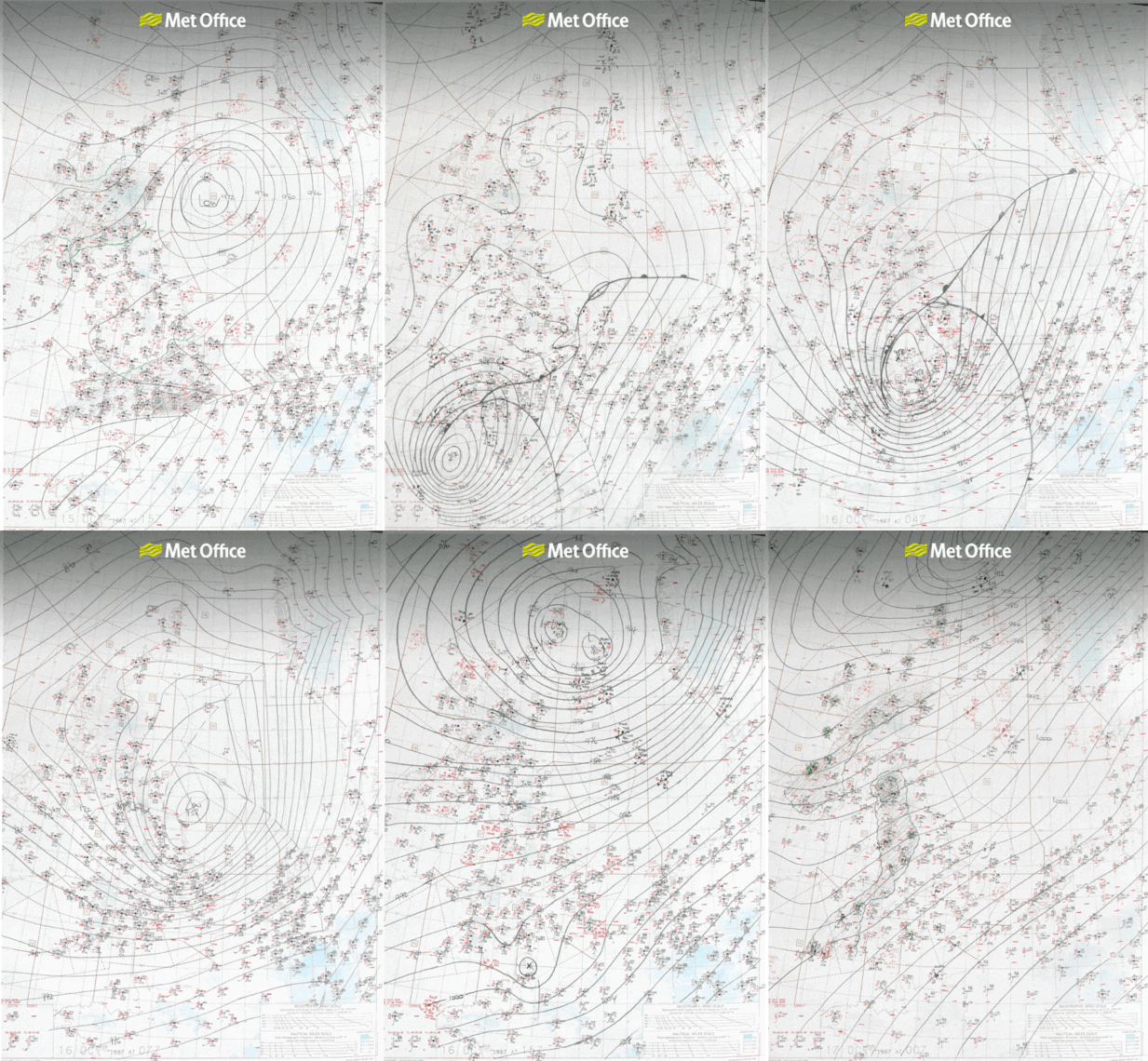
2017-10-12-1507801277-1164344-Handdrawnplottedchartanimation.gif

The original hand-drawn charts from the 15th and 16th October 1987. Credit: Met Office.

Incredibly, the public were not warned of what was to come – even in the hours before it struck. Nowadays, we have instant access to weather forecasts online and through our mobile apps as well as continuous updates via social media. It’s difficult to imagine going to bed in the evening completely unaware of an imminent hurricane-force storm in the English Channel. But would we really do a better job in 2017 compared to 1987?

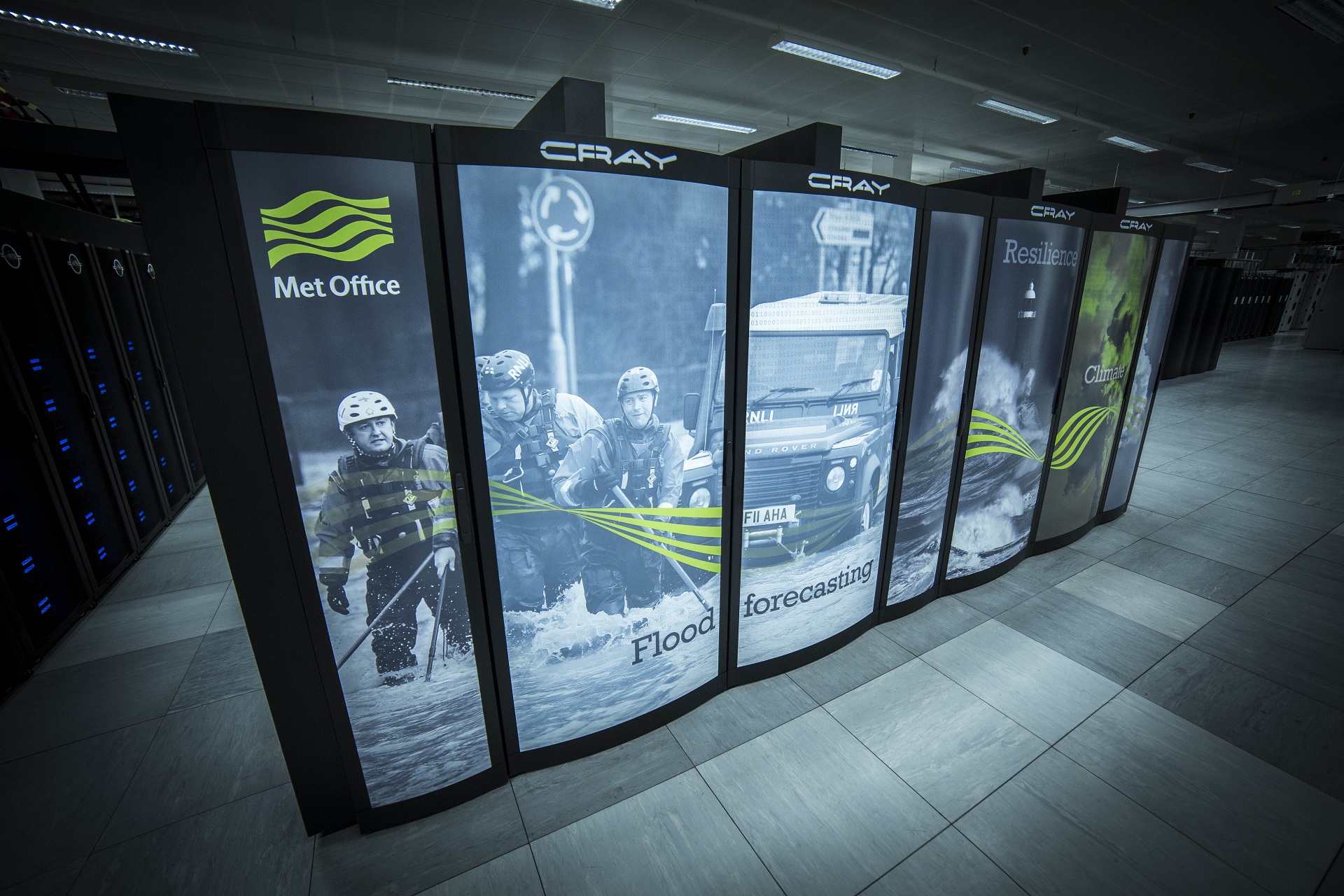
A comparison of the technological progress between 1987 and 2017 demonstrates just how far we’ve come during the past three decades. In 1987 the Met Office supercomputer could only perform 4 million calculations per second. Modern smartphones can perform around a thousand times that number of instructions per second.

Of course, these are dubious comparisons; smartphones are not designed to run computer weather prediction models. But 2017’s weather computers are billions of times more powerful than 1987’s. The current Met Office Cray XC40 computer can run a mind-boggling 14 thousand trillion calculations per second, equivalent to 2 million calculations every second for every human on the planet.
2017-10-12-1507801027-4681624-hpc002resized.jpg

Met Office supercomputer. Credit: Met Office.

Powerful supercomputers can handle more data. One failing in 1987 was the lack of weather observations – just 1200 – to represent the current weather across the whole planet. If we don’t know the current state of the atmosphere, how can we accurately predict its future state? In 2017, 215 million weather observations are fed into the supercomputer with the majority of these arriving from satellites allowing an uninterrupted view of the entire world.

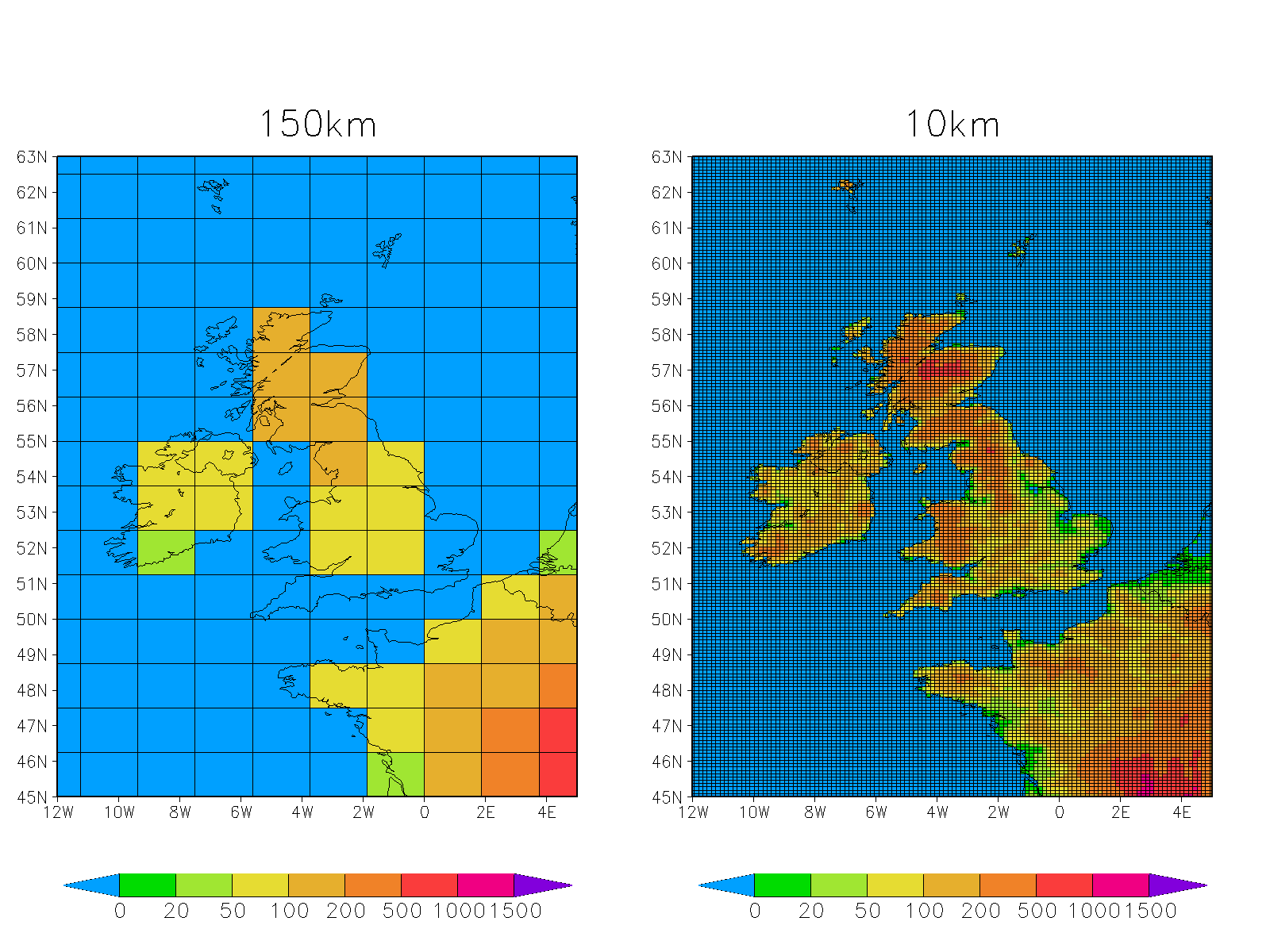
To turn weather observations into reliable forecasts, the Met Office runs high-resolution computer models. In 1987, the resolution for the Met Office ‘coarse grid mesh’ global model was 150 km with a so-called ‘fine grid mesh’ at 80 km resolution covering the North Atlantic and Europe. Now, the global model is 10 km and the UK is covered by a 1.5 km grid.
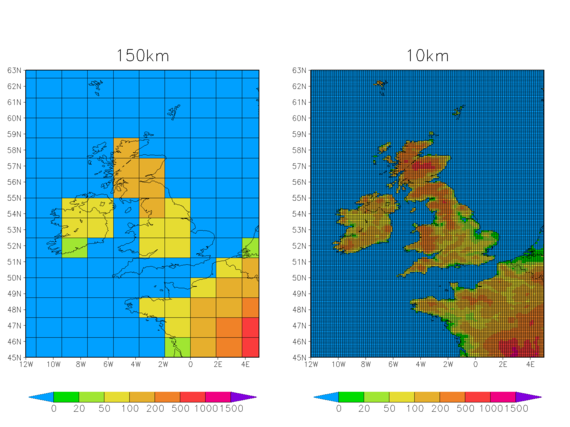
2017-10-12-1507800186-815622-globalmodelcomparison.png

Credit: Met Office. A comparison of the global computer model resolution in 1987 and 2017.

Perhaps most importantly, in modern weather forecasting the computer doesn’t just run one simulation – it runs many. Each computer model run is tweaked very slightly at the outset to account for the fact that small errors in the forecast on day one can escalate into very large errors by day three.

This is called ensemble weather prediction and it can provide us with a range of outcomes along with the probability of them occurring. If applied to the Great Storm, it might have given weather forecasters an idea of worst-case scenarios and their relative likelihoods.

The enormous increase in computing power and forecasting capability has made a difference. The Met Office four-day weather forecasts are now as accurate as the 1987 one-day forecast. But this would all be meaningless if we still failed to warn people of severe weather.

As a direct result of the Great Storm, the National Severe Weather Warning Service was established, providing a means for alerting the government, emergency services and the public of weather that poses a risk to life and property.

Initially, these warnings were faxed and broadcast on radio and television. When Michael Fish presented his infamous forecast, most people were provided weather forecasts at fixed times through the day. Today, over 90% of adults see weather information through a range of channels including the web, social media and mobile apps.

In recent years, the Met Office has begun naming storms that have the potential to cause significant impacts to the British Isles. Now, whenever the Met Office names a storm it soon becomes a trending topic on Facebook and Twitter, increasing awareness of potential severe weather and allowing people to make decisions that could save their lives.

[embedded content]

If the Great Storm happened today, it’s highly likely ensemble computer modelling would at the very least highlight a risk of hurricane-force winds in the English Channel. A risk of such significant weather would be enough for the Met Office to start issuing severe weather warnings and name the storm. Continuous updates on television, radio, online and through social media would increase awareness in the days ahead of impact. Lives could be saved.


Share Button

Tunnock’s Teacake Launched Into Space By Glasgow Science Centre

Scientists have launched a Tunnock’s Teacake “into space” as part of an experiment to spark people’s imagination about science.

The Glasgow Science Centre (GSC) team launched “Terry” the Teacake from Houston, Renfrewshire, at lunchtime on Friday.

The sweet treat, attached to a weather balloon, was airborne for two hours and four minutes, The Press Association reports.

It took one hour and 29 minutes to reach a peak altitude of 37,007 metres.

The teacake, which landed in a tree in Galloway Forest Park, was said to be “pretty intact” after the adventure.

The experiment was streamed on Facebook, with 33,000 people watching.

GSC chief executive Dr Stephen Breslin said: “We engage people with space science every day, and we thought what better way to spark people’s imaginations and interest in STEM than for us to launch something into space ourselves.

“We are delighted by how many people joined us at GSC, and online, to watch Terry’s space adventures.”

The teacake has not been eaten.

GSC said it will release another video next week, when it will “give another one of Scotland’s beloved treats the science treatment.”

Share Button

My Computer Says I’m Going To Die

What should we do if computers predict who may develop a terminal disease, attempt suicide or contract diabetes? And what should you or your doctor do on receiving such a forecast? Is it even possible? Yes – the growing accuracy of computer algorithms suggests we will soon be facing such challenges.

Researchers at Florida State University, for example, recently mined data from electronic health records in which they identified a group of patients who had attempted to commit suicide. They then used the fast-growing data analysis technique, machine learning, to identify a combination of factors that could most accurately predict a suicide attempt.

This kind of predictive modelling is not new, but the capabilities of computers to recognise complex interactions among variables associated with outcomes of interest has greatly advanced in recent years. Computers can now not only analyse huge volumes of data, they are also capable of reading and understanding free text (such as a doctor’s dictated note) and can combine multiple sources of information to achieve accurate predictions. Using machine learning, these systems are also designed to continuously improve as they gain experience with the outcomes they are measuring. As a result, they produce timely insights that exceed the capacity of humans.

The Florida State University researchers found the machine learning algorithms could predict a suicide attempt with 80 to 90 percent accuracy up to two years in advance. Other organisations are developing similar approaches for a variety of other conditions such as depression, heart failure, heart attacks, dementia, Parkinson’s disease, and chronic kidney disease.

The health industry is awash with data that can feed and inform these computer models, making it likely that their accuracy will continue to improve. Are we rapidly approaching a time when computers are so confident in their predictions we should consider that we already have the disease, or what we could call a “proto-disease”?

The promise of accurate disease predictions is they potentially allow for interventions that could reduce or eliminate the likelihood the diseases will occur. Unfortunately, the ability to predict is advancing faster than our ability to prevent. Consider a visit to your doctor during which she advises you a computer programme has predicted you will develop diabetes mellitus within the next two years. She prescribes a large dose of advice on healthy living (which you may be more likely to follow given the computer’s warning) but otherwise has little to offer. Indeed, studies that have evaluated prevention of diabetes with available medications have been inconclusive. You no doubt leave the office sullen, now bearing the burden of having a proto-disease.

To further complicate matters, it may not be your doctor who breaks the news to you. Data mining can also be conducted by organisations that have access to information about you, such as your health insurer. Ideally, health insurers will use the information to help keep you healthy but as noted earlier, effective interventions are not yet fully developed.

There may also be more nefarious uses for the information. A health insurer could, for example, use information about health risks in their insured population to their commercial advantage, and their customers’ detriment. Knowledge is power – especially in the insurance business.
Any insurer that can accurately predict who of their insured will develop illnesses (and hence cost more) will have an undisputed advantage when it comes to payment terms.

Ethical, moral and legal questions also arise. Does your health insurer – or more importantly your doctor – have to inform you when an accurate computer algorithm predicts you will develop a disease? Should it be considered negligent if they do not?

The near term challenge is to confirm the accuracy of the predictions and to find ways to inject them into the work-flow of already over-burdened health professionals. The predictions will ideally be accompanied by evidence-based information to help guide the clinician on what actions to take. Healthcare organisations already committed to population health (in which care is organized around groups of patients such as those with diabetes) will need to find ways to make use of the information. Finally, this data revolution will perhaps lead to a renaissance in disease prevention, with a focus on proto-diseases.

Advancement toward machine learning and disease predictions is already well under way. It’s just a matter of time before their predictions become a factor in determining how best to treat patients. The key challenge will be whether effective interventions can keep pace with the predictions.

Share Button

AR – Could Legal Issues Snap Developers Back To Reality?

Last summer’s phenomenon, Pokémon Go, which was downloaded onto more than 5% of Android phones in the US within just two days of its release and exceeded both Snapchat and Twitter in terms of daily active users, provided a first mainstream look at the potential of augmented reality in the gaming industry. Some estimations put the AR market at a value of $120 billion by 2020 (Digi-Capital), and the myriad legal challenges posed by the sector led us to investigate the issues in a recently-published industry whitepaper.

Facial recognition, geo-location and real-time data harvesting via AR games results in novel legal challenges. This technology will be used by many stakeholders, including game owners, advertisers and analytics service providers. The potential liabilities are significant, making it important to pin down as far as possible the responsibilities and roles of the parties. Various legal difficulties may also arise in relation to copyright and advertising. Yet notwithstanding these hurdles, analysts believe that the technology will be transformational for consumers in the next ten years.

Privacy

AR is spreading rapidly, but usage must still fit within the new legal frameworks for data protection – especially if data relating to identifiable individuals is being collected or otherwise used.

Personal data means data which relate to a living individual who can be identified using this data, or other information which is in the possession of, or is likely to come into the possession of, the data controller. Personal data can include:

  • Geo location;
  • Appearance; and

A fundamental requirement of European data protection law is that individuals are made aware of how their data will be used, shared and handled – and which entity is responsible for each. This is often achieved with privacy policies. As well as transparency and data security, users are entitled to a copy of their data, and are able to have it deleted in some scenarios; processes need to be in place to facilitate this. Building up large datasets from a huge user base may be tempting, but it brings significant responsibilities.

A lot of the data collected by AR will be personal data. For example, Pokémon Go asks for access to the user’s camera, contacts, GPS location, and SD card contents. Given AR’s capacity for “always on” data recording, there is the potential for reams of data to be collected, much of which could be linked back to the user, even if unintentionally. Developers must be wary of key principle of data protection: personal data collection should be adequate and relevant for its specific purpose, but never excessive.

Security

As with many rapidly evolving technology ecosystems, AR is vulnerable to breaches in security. The risk of bogus, malware-ridden copies of AR apps is huge; developers and players need to be careful to guard against hacking and protect data. It’s for the best that encryption is increasingly becoming standard, particularly for data in transit.

Developers should aim for ‘privacy by design’, embracing privacy and data protection compliance from the conceptual design stage of projects, instead of attempting to address privacy and security features as an afterthought.

Sanctions

AR companies failing to comply with the rules risk significant consequences. Breaches of data protection law can trigger fines of up to £500,000.

On top of negative press, fines and other sanctions, individuals are entitled to sue for compensation if they have suffered damage as a result of unlawful use of their personal data. Pokémon Go developer, Niantic, has been in the spotlight and privacy regulators are starting to ask searching questions around data collection and storage.

Copyright

AR can also raise complex copyright issues. For example, who owns user-created content which is integrated with digital information from an app? How does the freedom of panorama defence, which allows photography of buildings and sometimes sculptures and other art works which are permanently located in a public place, interact with AR? Footage of recognisable sights could be augmented for commercial purposes, potentially placing a virtual banner on a national monument?

Developers will need the appropriate rights clearances for their games, to guard against copyright infringement suits. When negotiating with rights holders, developers should aim for the rights being granted to be as broad as possible. Ideally, there should be no limitation on devices that can be used, and there should be a right to distribute on “internet-connected devices”.

Advertising

AR will create exciting new advertising opportunities: envision targeted and real life product placement through which brands can be embedded directly into the user’s experience. This could drive high levels of engagement. However, all advertising and product placement will also have to comply with advertising regulations. These demand, for one, that advertisers not mislead consumers, and ensure that marketing communications are obviously labelled.

As all these issues demonstrate, the advent of AR will bring with it challenges to match the opportunities generated. Gung-ho developers may wade into the field without the appropriate diligence, but prudence will likely be rewarded by longevity, and legal and regulatory security.

Reed Smith‘s Entertainment and Media team continue to be at the forefront of advising on legal issues relating to virtual and augmented reality on a global basis.

Gregor Pryor
Partner
Co-Chair of Reed Smith’s Entertainment and Media Industry Group
gpryor@reedsmith.com
+44 (0)20 3116 3536

Share Button

Why We Should All Switch To A Green Energy Supplier Before The Electric Car Revolution

When I was growing up in the 90s the concept of consumption and the definition of “energy efficient” was very different to what it is today. Back then it was all about making small changes: fixing leaky facets, throwing food waste on the compost heap, carpooling to school. Halogen light bulbs were considered the saviours of planet Earth and my father was always quick to remind me to turn off the lights when I left a room. For a time, it seemed as though this was enough to combat the dangers of climate change.

However, what it means to be environmentally aware in the modern world is vastly different. We are now being told that these little changes are not enough, and that we should all band together and make significant alterations to our lifestyles — many of which come at a steep cost — to ensure the longevity of our planet and species. Not that I’m complaining!

Fortunately, we (at least the majority of us) haven’t ignored the facts and stats. Despite Mr. Trump’s outlandish claims that global warming is a Chinese conspiracy designed to upset America’s economy, most of us will agree and accept that changes MUST be made. And switching to a renewable provider is the best place to start.

Electric cars seem to be the newest and best way that we, the general consumers, can do our bit. Thanks to Tesla, EVs are starting to make a major dent on the fossil fuel market; or more specifically, the filling station and gas industry. But, while they’re advertised as zero emissions vehicles — and there’s no doubt whatsoever that electric cars themselves are more environmentally friendly than petrol and diesel cars — they are only as clean as their power supply.

According to Scientific American, cars and trucks account for 24% of greenhouse emissions in the United States; and at present (2017) electric cars account for only 0.01 percent of all vehicles on the road. However, if current trends continue this could rise to 33 percent by 2040. Just imagine the extra pressure this would place onto power plants. It’s great that so many countries want to ban petrol and diesel fuelled cars, but we’re going to need a major boost in both the supply and demand for renewable energy before that happens. And the only way we’re going to get this is if we all make the switch in our homes.

But things are looking up!

Renewable energy has reached a tipping point. According to the World Economic Forum (WEF), solar panels now hold the top spot for being the cheapest energy supply, beating both coal and natural gas. This means that green energy is no longer only for the wealthy or environmentally conscious, it even makes sense for those who don’t give a damn about global warming. The scientists have done their fair share, now it’s time for us — as in society — to start making changes. Money is no longer an excuse!

Despite the current reduction deficit, it’s not too little too late

The UK has met and exceeded targets, reducing emissions 42% below 1990 levels in 2016, and is also on track to out-perform the second and third targets (though not yet the forth). That’s an accomplishment to be proud of, and one that I’m sure we all hope will continue to be a priority, even with Brexit hogging all the Government’s attention.

However, scientists state that the world needs to be completely emission-free well before 2040. Under the current Climate Change Act target, the UK are only set to reduce emissions by 80% by 2050. While you may think that it’s all just too little, too late, it’s important to remember that Government policy is dictated by the majority. If we change, the rules will change. And I for one don’t want to live in a world where we can’t look back and say “We gave it our best shot.”

For more random ramblings visit AdamManuel.com.

Share Button

Twitter Boycott Questioned As Women Refuse To Stay Silent Over Sex Harassment And Abuse Claims

A call for women to boycott Twitter, after actress Rose McGowan was suspended over tweets after accusing Harvey Weinstein of rape, has been met with scepticism, as some say they won’t be silent now “the whole world is listening”.

Dozens of women have come forward making accusations of sexual assault and harassment against film producer Weinstein, triggering a conversation about the scale of both that women face.

Oscar-winning actor Emma Thompson labelled Weinstein a “predator” who is just the tip of an “iceberg”, adding his alleged behaviour was “endemic” in Hollywood.

#WomenBoycottTwitter trended on Friday as people pledged to quit the site in solidarity with McGowan.

Bloomberg via Getty Images

Harvey Weinstein is facing mounting accusations of sexual harassment and assault, triggering a conversation about how much of both women face

After her Twitter account was restored, McGowan encouraged the boycott. Journalist Lauren Duca and model Chrissy Teigen are among those taking part, while a host of celebrities have also pledged their support.

But journalist Jane Merrick asked why women should quit the site given “we’ve only just started talking about the things we’ve kept a secret for years”.

As the hashtag trended, Labour MP Jess Phillips said: “I’m not going to boycott Twitter I’m going to sing like a bird.”

She shared a passage from her memoir Everywoman, in which she writes: “Our silence is complicity, our volume is napalm.”

Writer Kate Leth said she understood the idea of a boycott but added: “I don’t personally agree that silence is the right protest to being silenced”.

Author Samantha Shannon said she would not boycott but would be recommending books by women instead.

One Tweeter said they had “no idea why women would want to silence their voices when the whole world is now listening”. 

One woman said a boycott would “accomplish nothing”. Another asked: “Isn’t being silent about issues a hell of a lot worse than speaking up about them?” 

Another refused to boycott Twitter saying: “This is a time for us to SHOUT FROM THE ROOFTOPS.” 

McGowan’s suspension was due to the fact she tweeted a personal phone number in a series of tweets to Amazon founder Jeff Bezos, in which she alleged the head of Amazon Studios knew about her allegations about Weinstein and ignored them.

In later tweets, Rose also alleged that she sold a script to Amazon and tried to wrangle it back after hearing a “Weinstein bailout” might be taking place.

HuffPost UK has contacted Amazon for comment.

Share Button

Magic Mushrooms Could ‘Reset’ The Brain Of People With Depression

Scientists have discovered that psilocybin – the psychoactive substance found in magic mushrooms – could effectively ‘reset’ the brain activity of people with severe depression.

The small study by researchers at Imperial College found that when given to patients in whom conventional treatments had failed, the substance was able to have a positive long-lasting effect.

Daniel Berehulak via Getty Images

In fact, some five weeks after having administered the compound the researchers found they still had significantly reduced symptoms.

The researchers believe that psilocybin is able to effectively reset the activity of key brain circuits that are known to play a key role in depression.

In speaking to the patients after their treatment, Dr Robin Carhart-Harris, Head of Psychedelic Research at Imperial, who led the study, said:

“Several of our patients described feeling ‘reset’ after the treatment and often used computer analogies. For example, one said he felt like his brain had been ‘defragged’ like a computer hard drive, and another said he felt ‘rebooted’.

“Psilocybin may be giving these individuals the temporary ‘kick start’ they need to break out of their depressive states and these imaging results do tentatively support a ‘reset’ analogy. Similar brain effects to these have been seen with electroconvulsive therapy.”

While researchers have been testing the effectiveness of psychedelic drugs to combat depression and addiction before, this is the first time that psilocybin has been used in this way.

In the study, 20 patients who had treatment-resistant depression were given two doses of the drug with an initial large dose administered and then a smaller one a week later.

Using functional MRI scanning the researchers found that the effects were profound. Not only was there reduced blood flow in the amygdala – a region of the brain that processes emotional responses – but also increased stability in another region of the brain that had previously been linked to depression.

While the results from the study are promising, Dr Carhart-Harris remains cautious pointing out that this is very early on in the testing phase and that the study was very small.

Professor David Nutt, Edmond J. Safra, senior author of the paper adds: “Larger studies are needed to see if this positive effect can be reproduced in more patients. But these initial findings are exciting and provide another treatment avenue to explore.”

Share Button