Delta Airlines Just Ditched The Worst Thing About Flying

There’s nothing to put a real dampener on your holiday spirit like remembering you have to go via an airport first: The antisocial hours, the security queues, and the lack of legroom on board all serve to make flying an unenjoyable experience.

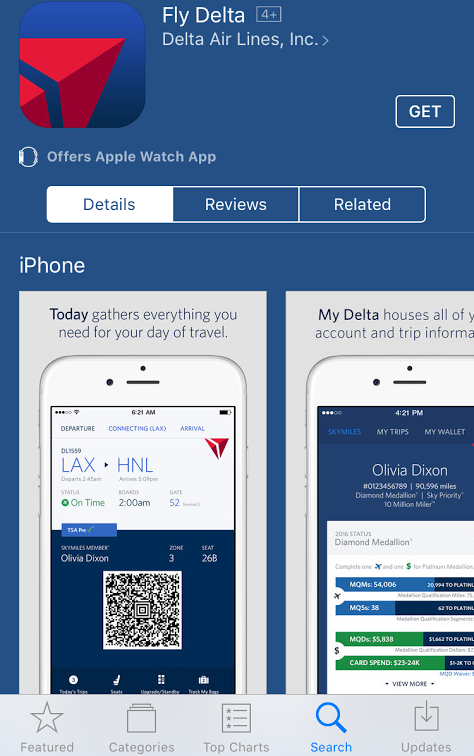
But now Delta airlines have taken a step to making it less painful and removed one of the most cumbersome parts of air travel – check in.

SophieGallagher

Manual check in, that either required you to visit the airline’s website or speak to an actual human at the airport, was undoubtedly an overhang from the days of paper tickets.

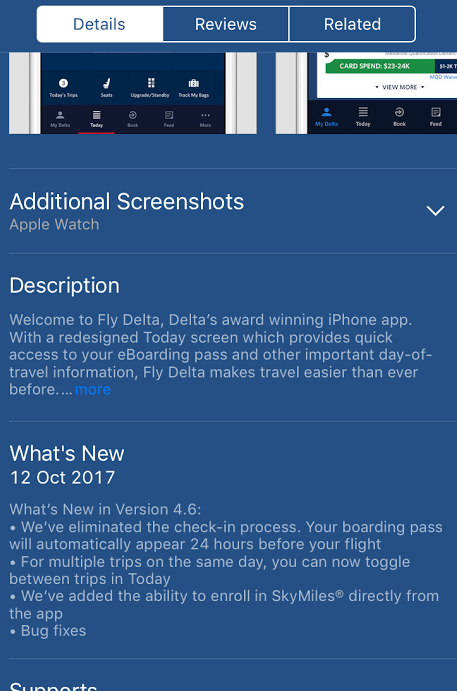
So the American airline decided to ditch it all together, for customers who are using the latest version of the Fly Delta mobile iPhone app (it doesn’t seem to apply to Android just yet).

SophieGallagher

Now, you will be automatically checked in, and your boarding pass sent to your phone 24 hours before you are due for take off.

So you don’t need to worry about doing anything apart from opening the app.

The change was first noted by a customer who had downloaded the iOS version of the app, but the updates seem to have taken place on the 12 October.

It is not yet clear how Delta plans to manage other administrative tasks that were sorted during the check-in process, such as seat allocation or bag check.

And of course you will still have to get to the airport well in advance for security checks (and an obligatory Duty Free supermarket sweep).

But as Delta are the first US airline to permanently make this change (Jetblue did briefly pilot something similar but scrapped it), it seems hopeful that others will follow suit.

The only airline elsewhere in the world offering a similar service is German airline Lufthansa.

Last month Delta announced that they would be offering free mobile messaging on flights as part of a “larger strategy around entertainment and giving our customers something they’ve been asking for,” according to The New York Times.

Delta said it would be the first global carrier based in the United States to offer onboard texting without charging for online access.

Share Button

Yellowstone’s Supervolcano Could Erupt Far Sooner Than We All Hoped

Just in case you were hoping to have a relaxing weekend, we’ve got some unnerving news for you – the Yellowstone supervolcano could erupt far sooner than anyone had previously predicted.

The revelation came after a team of scientists from Arizona State University studied samples of ancient ash from the caldera, which measures 34 by 45 miles, showing that eruption-conditions will develop in a matter of decades.

It was previously thought we would have centuries to plan.

Ignacio Palacios via Getty Images

In order for the dormant volcano, which has not erupted for nearly 640,000 years, to wake up it would need to undergo a period of geological transition where influxes of fresh magma move into a subterranean reservoir chamber.

It was believed that after every eruption, this chamber was drained entirely, and then would slowly refill.

And scientists sensibly presumed that they would notice if this was occurring and we would then have hundreds of years of advanced warning to play with.

But like all those deadlines we think we have ages to play with, it has rather crept up on us. 

As the new study has shown, the critical changes in temperature and mineral composition actually have a timeframe of tens of years instead. 

To make things worse the chamber of molten lava is two and a half times bigger than we had originally believed (which totally isn’t terrifying).

Study co-author Hannah Shamloo, told The New York Times: “It’s shocking how little time is required to take a volcanic system from being quiet and sitting there to the edge of an eruption.”

Currently, the plateau is rising at approximately 0.6 inches per year, indicating that pressure in the magma chamber is rising. 

Not that this means the supervolcano poses an imminent threat – in fact it is one of the most closely monitored sites in the world – and is not, contrary to some reports, well ‘overdue’ for a super eruption.

But the new insight does change how researchers can plan for an eruption at the Grand Prismatic Spring, which saw approximately 240 cubic miles of rock, dust and ash projected into the sky, when it last blew.

HuffPost reported in August that NASA had moved the Yellowstone supervolcano to the top of its threat list, because of the threat a volcanic winter that it would produce.

A volcanic winter would mean crops are not able to survive, and as the United Nations has warned food reserves would only last 74 days, the future wouldn’t be looking too promising.

Share Button

Data Is The New Water: Seven Reasons Why

‘Data is the New Oil!’ – the cliché, repeatedly stated by politicians, journalists and TV pundits as a profound new truth of the Digital Age.

Unfortunately, it’s dangerous and not entirely true. The term was coined by Clive Humby in 2006 when explaining that raw data needs to be ‘refined’ to be useful, like refining crude oil. The meaning morphed, to include the immense commercial value of data in a global digital economy. In the 20th century, oil ruled our world; in this century data rules, hence ‘data is the new oil’.

However, ‘data-is-like-oil’ portrays a dysfunctional view of ourselves and limits our potential as a digital society. Language and labels we choose to give to things are important. They anchor the stories we tell about ourselves personally and collectively.

Perception becomes reality

Think of crude oil. The words that spring to mind are likely to be far from positive: exploitation, hoarding, polluting, trafficking and profiteering. Now think about data. Directly or indirectly, our most valuable data is human data. What happens when you transfer the ‘oil words’ to humans? Human exploitation, human trafficking. You get the picture.

Our language sets expectations for what is acceptable. The ‘data-Is-like-oil’ analogy makes harmful actions excusable. There’s a better analogy. In the 21st Century ‘data is like water’. Want to know why?

1) Water gives life (oil takes it)

Crude oil is zombie soup. It’s the remains of fossilised plants and animals from millions of years ago. Even worse, burning oil to create energy kills people and causes environmental damage. Where oil is death, water is life. It sustains us and enables life as we know it. Used properly, our data can nurture life too, helping us cure disease, improve our self knowledge and mental wellbeing. Used wisely, it’ll enable us to understand each other better and make collective progress beyond our imaginations. Data can help humanity to flourish.

2) Water is abundant (oil is scarce)

When we burn it the oil, it’s forever gone. Meanwhile, water covers 78% of the Earth’s surface, we’ll never run out of it. It’s in the air we breathe. Like water, data is all around us. If you have a smartphone and WiFi, you’re practically bathing in data. In fact everything around us is ‘data’. From the sun rising over the rainforest, to bedouins braving a desert sandstorm, everything becomes digital, if recorded. With the arrival of ubiquitous satellite, sensor and smartphone coverage – the world is now becoming measured and digitized, especially if it involves humans. Data is now exponentially abundant.

3) Water is purified (oil is processed)

Oil is cracked and processed into consumable products. When we consume, we pollute. Water isn’t processed, it’s purified. We remove pollutants. With data, we don’t need to ‘refine’ it to use it. It’s purified. We purify data to give us what we need for a specific use, and no more. The principles of privacy by design and data minimisation are great example of this.

4) Water is distributed (oil is centralised)

In the Industrial Era, a handful of centralised oil refineries supplied global mass production. TV advertisements push the products to everyone with the same message: consume. Water is the opposite: it’s distributed, it’s everywhere there’s life. In the Digital Era ‘distributed’ is the default, from the internet to renewable energy. Products and services will increasingly be personalised based on the data that we hold and control locally, distributed to our smartphone (as a first step).

5) Water is democratic (oil is ‘owned’)

In the 20th Century we used oil for power. Big Oil became very powerful. It’s scarcity and value led to stockpiling and hoarding of ownership. Yet water is the shared property of all living things. Open Data is information about your community shared with everyone in your community. We’re seeing the emergence of a new ‘digital commons’. If data-as-oil is about humans consuming, data-as-water is about humans ‘being’.

6) Water is fresh (oil is stagnant)

By definition, oil is old and ‘dirty’, from spillages to emissions. By contrast, we use water to clean and refresh ourselves. In a digital world, old and dirty data is worthless and when it ‘spills’ it’s a huge mess. Digital information is borne of moving particles and, like water, naturally wants to flow. When data flows from it’s source, it’s fresh, transparent and at it’s most powerful. When data is ours, we can chose to share it as we choose, in real-time. In control as individuals and as a society. Refreshing.

7) Water is human (oil is synthetic)

Oil is a product. It’s a raw material which has shaped a century of human development. Water is literally a part of us. It’s 60% of our bodies and over 70% of our brains. We consider the water that forms us as ours. We’re a flood of living data points, constantly creating new flows with every single heartbeat. Our actions, bio-signs and thoughts are very much ours even as they become digitized. Like water, we excrete an invisible trail of our data everywhere we go. Unlike sewage, the data that we unknowingly leave in our wake is highly valuable and fuels a multi-trillion dollar industry of industries. The internet.

If ‘data-is-the-new-oil’ is obsolete as an analogy, Big Data companies have a choice to make. If they don’t change their business models to a more human-friendly and sustainable data-is-water model, will they face becoming obsolete? It’s time for brands to realise that ‘being human’ is the key to success. It’s no longer 2006, data isn’t oil. Data is water, and human.

Share Button

The Rise Of The Machines In Cyber Security

Nicola Whiting, Chief Operating Officer, Titania explains why organisations are turning to automated cyber security to win the fight against cyber-criminals and state-sponsored hackers

Anyone searching Google for ‘automated hacking tools’ is immediately offered an array of sites where they can quickly download highly disruptive tools. Many come with user ratings, operator guides and money-back guarantees. They are available to rent, buy, rework or franchise. They appear almost legitimate.

Yet for those hungry for hacking tools, this is just the start. Navigate onto the dark web and you’ll find yourself winding through the digital underworld of cyberspace’s most notorious black market, a Mos Eisley for cyber weapons vendors, creating a booming cyber arms marketplace outside the parameters of the law. Weapons of choice for hackers here tend to be those that dramatically simplify and multiply sophisticated cyber-attacks. These range from automated distributed denial of service (DDoS) ‘Stressor’ tools, which overload networks with reams of data, to dictionary attack tools that generate endless password combinations in a bid to break into private devices.

The increase in availability of automated hacking technologies coincides with a rise in the magnitude of online attacks. In 2015, Symantec found more than 430 million unique pieces of malware, that’s a 36 percent increase on the year before. Last year, the Dyn attack saw 100,000 IoT devices hijacked and used as platforms for launching the largest recorded cyber-attack of its kind. Earlier this year, the WannaCry ransomware attack infected more than 300,000 computers, hitting dozens of healthcare organisations in the US and bringing down multiple trusts within the UK’s National Health Service.

Easily available, automated hacking tools are allowing amateurs to carry out sophisticated cyber-attacks and swelling the armies of hacktivists and cyber criminals. However, the resources needed to defend and mend cyber security vulnerabilities, aren’t keeping up. The largest ever survey of the global cyber security workforce predicts a shortfall of 1.8 million cyber security workers by 2022. This isn’t just a problem for the future, Indeed, the world’s number one jobs site, reports that employer demand for cyber security roles is three times higher than candidate interest. Security experts are expensive to hire, costly to train and at risk of getting headhunted – often just when they’ve got to grips with your system!

As automated hacking tools make attacks more likely and the cyber skills gap weakens our traditional defences, we need to find smarter ways to protect ourselves from the rising threat. This is something that larger businesses and military organisations are already addressing. These organisations are on the frontline of the cyber war, facing thousands of attacks every day. To give some perspective, towards the end of 2016, the U.S. Air Force, whose network consists of more than 1 million airborne and ground-based networked computer systems, estimated there were more than 1 million cyber attacks on its network on a daily basis.

In order to contend with the scale of such a rising threat, organisations such as the U.S. Air Force, the FBI, Deloitte, PayPal and KPMG have been amongst the first to implement ‘intelligent’ cyber technologies within their organisations to ensure their networks and computer systems are fortified against the most vicious cyber-attacks thrown at them.

Large organisations and the military are not the only ones targeted by machine-aided hackers. In the UK alone, small to medium sized businesses were subject to an average of 230,000 cyber-attacks each across 2016. The rise of automated cyber-attacks means that every organisation with a connection to the internet is under threat. Therefore, the adoption of automated cyber security technologies, machines fighting machines, is vital.

The cyber security skills gap means we don’t have the people to constantly reinforce cyber defences. Instead, we can use machines to conduct rapid, detailed and accurate audits.
This enables organisations to free their cyber security teams from firefighting and engage them in strategy, implementation and active defence. How do we know that automated tools can save time, money and resources? The real proof is in the application. The WannaCry ransomware attack in May led to operations being cancelled in 48 NHS trusts across the UK. Yet those parts of the NHS using intelligent autonomous cyber security ‘audits’ to find system risks were largely unaffected. The autonomously gathered intelligence, used alongside other tools, ensured preventative measures were in place to successfully protect themselves. Finding the right combination of automation tools, in an industry famed for its “smoke and mirrors”, can be its own challenge – but it’s one worth pursuing.

Intelligent automated systems can now replicate the work of high-level security professionals, analysing networks, systems and devices with the speed and effectiveness of expert security teams. This technology is putting the defenders on a level playing field with the increasingly automated attackers and can enable organisations of all sizes to compete with the next generation of cyber-attacks.

Share Button

Facebook And Instagram Back Up After Sites Go Down Across Europe, Canada And America

Facebook and Instagram users are reporting the sites are now back up after the sites went down across Europe, Canada and America on Wednesday evening.

Facebook said it was aware of access issues and said Instagram, which it owns, was also having problems.

“We’re aware that some people are currently having trouble accessing Facebook and Instagram. We’re working to get things back to normal as quickly as possible,” a Facebook spokesperson said.

Outage-monitoring website DownDetector.com showed that there were thousands of incidents of people reporting issues with Facebook.

The problem, which began to appear around 4pm UK time, did not impact all users, while others reported the site was simply slow or some features were taking longer than usual to load.

The news quickly spread on rival social network Twitter, with the hashtag #facebookdown quickly trending, as Facebook refugees were welcomed by its denizens.

It disrupted many people’s routines.

One person revived the oft-made joke that social media going down would force people to go outside.

Another person suggested, optimistically, that the fall of Facebook would mean “people might reset to baseline human status”.

DownDetector.com showed that there were more than 12,000 incidents of people reporting issues with Facebook.

A total of 40% of those people were reporting a total blackout of the site, while 36% said they were having login issues.

The site also reported 2,500 people struggling to use Instagram, of whom 25% could not log in and 51% struggle to see their news feed.

Share Button

New Amazon Kindle Oasis Is Larger, Waterproof And Can Play Audiobooks

If you think about all the places that you enjoy reading a book, there is probably a chance that two of them wouldn’t have been possible if you owned an Amazon Kindle.

Well now reading in the bath and by the pool are back on the list as Amazon’s brand-new Kindle Oasis is completely waterproof.

Amazon

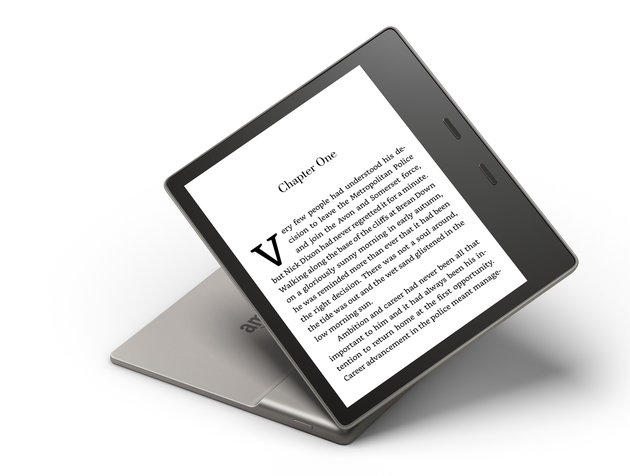
This is the second-generation of Amazon’s flagship Oasis e-reader which means that overall the design language remains very similar to the previous version.

While the design might look familiar there’s also a lot that’s changed. The new Kindle Oasis is much bigger sporting a new 7-inch high-resolution display.

It’s also sturdier thanks to an all-aluminium back that feels solid to hold yet still remains surprisingly light.

Amazon

Whereas the original Kindle Oasis was able to boast a staggering 9 week battery life with its charging case attached, the new one achieves a still extremely impressive 7 weeks and manages it without a special battery-pack case.

There’s the same one-handed design which flips automatically depending on which hand you hold it in and there’s a new adaptive light sensor that will adjust the light of the display to maximise battery-life even further.

Amazon

One of the other big new features is the ability to stream Audible audiobooks straight from the Oasis to a pair of wireless headphones or speakers.

A rather neat feature that runs alongside this is that if you own both the book and the audiobook both will sync along with your progress. So you could listen to some of it on the way into work and then carry on reading where you left off at lunch.

What’s even better is that if you buy the book or the audiobook Amazon will then discount the price of its counterpart.

Amazon

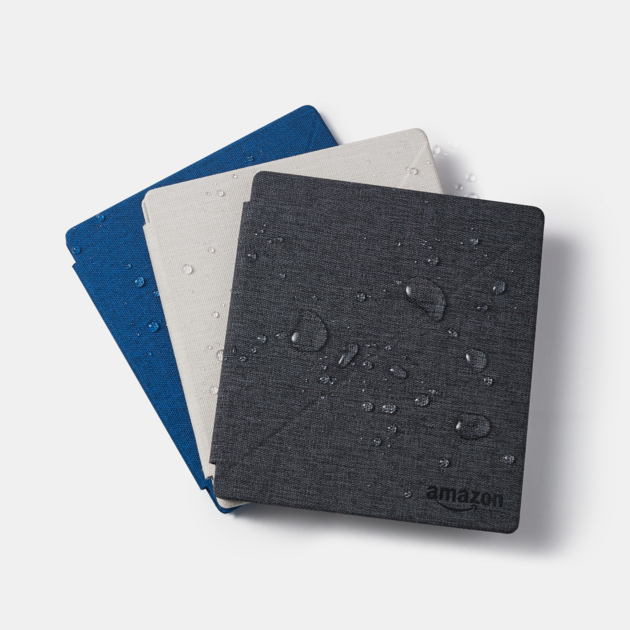
Finally there are a range of cases available, including some water-safe fabric cases and the more premium leather cases.

Now for the bad news, the original wasn’t cheap and neither is this one. For the standard 8GB version that allows downloads over WiFi it’ll cost you £229.

If you want more storage then the price goes up to £259.99 and finally if you want increased storage and the ability to download literally anywhere using free 3G then it goes all the way up to an eye-watering £319.99.

Amazon still has a huge range of Kindles, so it sees the Oasis as not only a flagship but also as an ultra-premium device for the most devoted of readers.

Share Button

Using Machine Learning To Predict The Trillion Dollar Solar Storm

There have been 26 significant ‘space weather’ events affecting Earth over the last 50 years. These solar events can severely disrupt the Earth’s magnetosphere (the boundary between the Earth’s magnetic field and the solar wind), and pose a direct threat to electrical infrastructure – knocking out technologies that we rely on every single day, like GPS signals, electrical grids, computers and satellites. To put it lightly, if a major event were to happen tomorrow, it’s likely to cost at least $2 trillion in damages in the first year alone.

So, we’re all doomed – right? Well, not exactly.

Luckily for us, NASA has founded a Solar Space Team, which sits within the Frontier Development Lab (FDL). Bringing together the best technological minds from across the world, the FDL tackles space science head-on, deploying specialised machine learning techniques to help protect the planet from space weather. Soon, they hope to be able to accurately predict any future ‘trillion dollar storm’.

What exactly is ‘Space Weather’?

‘Space weather’ refers to conditions on the Sun and in the solar wind that influence our planet’s magnetosphere and upper atmosphere. Solar flares, filament eruptions, solar radio bursts, active solar regions and enhanced solar wind all play a part in space weather and the behaviour of the magnetosphere.

How much of a threat is it really?

While many space weather events pass us by without much fuss, the main source of dangerous space weather is the violent and sudden release of magnetised plasma bubbles from our Sun, or Coronal Mass Ejections (CMEs).

Occurring anywhere between several times a day to once a week, CMEs send shock waves and bursts of energetic particles that stream near the speed of light straight towards Earth. These blasts of radiation make it difficult for satellite signals to penetrate the atmosphere, interrupting vital services including GPS and the WAAS system used by air traffic. They do this by destabilising our planet’s ionosphere – the part of the atmosphere through which radio signals travel, and through which many satellites orbit.

According to NASA, we have more than a 1 in 10 chance of being hit by a CME sometime in the next decade. In fact, Earth is no stranger to these events, with the most recent happening only 15 years ago. Dubbed the ‘Halloween Solar Storms of 2003’, numerous satellites and communications systems were affected, there was an hour-long power outage across Sweden, and aircrafts were advised to avoid certain altitudes near the Polar Regions.

However, as bad as that was, the biggest Solar Storm ever recorded is the Carrington Event of 1859, which caused telegraph networks around the globe to fail catastrophically, with telegraph paper catching fire and operators receiving electric shocks from equipment. Whilst that was deemed catastrophic back then, many believe that in today’s world of interconnectivity the effects would be much, much worse.

How is Machine Learning helping?

For the first time, sophisticated data processing and machine learning is enabling scientists to make significant breakthroughs in defending our planet from asteroids and solar weather, and in particular, monitoring CMEs. Machine learning can now be used to detect early warning signs of potentially hazardous solar storms, which is improving predictive models of major solar events and the emergence of new sunspot groups that predict the state of the Sun tomorrow.

Machine learning also offers the opportunity to analyse variations in the solar magnetic field and solar corona using data from the Solar Dynamics Observatory (SDO, surface vector magnetograms and EUV images). This data can be used to discover relationships between the observed magnetic activity in the photosphere and corona, and to identify the agents that drive solar eruptive events, such as flares and CMEs.

The scale of the challenge is not to be underestimated, with each data centre recording a reading for every minute of every day, amounting to 525,600 readings per data centre, per year. Our solar team has examined this across 14 data centres from 2010 to 2016, meaning that in a non-leap year there are 51,508,800 records to train and validate neural networks on. This is where the latest data processing techniques come into their own, with teams currently deploying complex neural networks to increase their predictive capabilities.

With the ability to effectively crunch and make predictions on such large datasets, other potential breakthroughs become increasingly possible. Amongst others, scientists are already looking to such technology to locate and model the orbits of comets, and to change radar images of asteroids into accurate 3D models to help determine shape and spin.

To infinity, and beyond!

There is no doubt that in the future, the pairing of data aggregation with machine learning techniques will become the critical enabler of future Space Exploration and defending our planet from asteroids and solar weather. The importance of this cannot be underestimated, as space weather events can affect our ground-based technological systems, and in serious cases, can even endanger human life or health. Monitoring space weather will also allow for us to move out of LEO (Launch and Early Orbit) and into deep space exploration; permanently manning facilities on the moon and fulfilling NASA’s goal to visit Mars within the next two decades.

The space sector, and engagement with space, is changing rapidly, with the global space market expected to grow to be worth $400bn by 2030. As this ‘New Space’ era generates increasing amounts of data in years to come, it is even more important for the technology community to provide new innovations to help us to succeed in tackling this global issue.

Share Button

Do You Like People Watching? My Computer Does

2017-10-06-1507288009-9107936-pexelsphoto260907.jpeg
https://static.pexels.com/photos/260907/pexels-photo-260907.jpeg

Every day I wake up at around 6am. I go downstairs, put the dog on his lead and take him for a walk. We go to the same park just around the corner. The one with the old oak tree by the lake where he does his business as he always does. He loves that tree. Then I walk him back home, have a bowl of cornflakes, read the news and check my emails.

After that, I leave the house and go to the tube station. On my way, I visit the local café where I order a latte from the same woman I order my latte from every single day, the one that always wears her hair in a bun and never wears lipstick. I don’t even need to tell her my order, she usually has it ready as soon as I get there – which is ideal, as it means I don’t have to speak to anyone in the morning before I’ve had my caffeine fix.

I’m a creature of habit. Most of us are and our behaviour is predictable. In fact – and you may find this uncomfortable to read – human behaviour is 93% predictable.

So recently one morning, when the woman handed me my coffee, I noticed that her hair was down and she was wearing bright red lipstick. I didn’t think too much about it but I did fleetingly think it was strange. It suited her. I forgot about it and went back to my routine. I had a train to catch.

Then guess what? A week later I saw her chatting to a good-looking bar man. My memory kicked in and I put two and two together. There was a new relationship in the air. How lovely.

Of course, it was only by chance that I noticed this change in the woman from the café, but you know who would have noticed this change instantly? A computer.

Changes in mood and behaviour can be subtle, so subtle that the brain often cannot detect these changes or save them in our memory. They often don’t stick and if they do, they only leave a slight trace. A computer however sees it as a big black binary mark. They have total memory recall and can be designed to retain information, analyse, compare, predict and interpret data. Computers can be taught to find patterns, learn from them and alert someone when something changes. In short, they can detect anomalies in behaviour patterns. They can spot the lipstick!

So, what are these patterns of behaviour? And can a computer really predict what we are going to do?

We are predictable

“Similarity breeds connection,” according to sociologists Miller McPherson, Lynn Smith-Lovin and James Cook in their paper Birds of a Feather: Homophily in Social Networks. Homophily means the tendency within social groups for similar people to connect on some level, across various relationships including marriage, friendship and colleagues from work. People of different genders, races, ages, classes, education and ethnicities all have different characteristics that impact who they choose to socialise with. To paraphrase Aristotle in his Nicomachean Ethics: “people love those who are like themselves.”

I’m specifically interested in how this principle can help us to safeguard children online. This principle, whereby similar people come together and form social groups helps machine learning systems to detect anomalies in patterns of behaviour and analyse when a discrepancy has occurred. For example, if your 14-year-old Zoella-obsessed daughter starts chatting to an 18-year-old punk metal fan or if your 12-year-old Chelsea Football Club supporter son suddenly connects with a 16-year-old boyband super-fan from Sydney, it could see that something was out of the ordinary and potentially not right. When these changes occur and they don’t make sense, computers are able to flag the connection and look deeper into the data patterns to see why this behaviour is breaking the norm.

The cadence of communication is important too; children and young adults tend to brag and banter with each other, which is a very distinctive pattern of communication. It helps us to pick up when people are posing as children and attempting to conduct grooming. Similarly, this cadence is well established during the build-up to a sext: it’s a ‘go on, go on, go on, send it’ style of exchange – very quickfire, much like children daring each other to do something they shouldn’t offline. The patterns of behaviour are distinctive and when statistical and probability analytics are overlaid, they can start to provide accurate patterns that can lead to predictable outcomes. For example, sexting is more common between the ages of 13 and 17 and increases with age. Boys receive more images than girls, exchanges commonly happen in a one-to-one situation and 89% happen at the beginning of a new relationship. The application of statistical analysis significantly reduces false positive outcomes.

But isn’t this all common sense? Well, not always. We are frequently too busy to pick up on these things, or are simply trying to give our children space online to explore, have fun and be themselves. With children on average sending and receiving over 200 messages a day, it becomes impossible for a human to spot delicate and intricate patterns. Not so in the world of AI and machine learning.

Mum and dad, for example, can drop the need to snoop, pry and spy on their children as the robots do all the hard work helping to safeguard children whilst also ensuring their privacy. It is this latter point that I get excited about. Children have rights too and apps that disclose to a parent what their children are sending and receiving are not only intrusive and invasive but do the safeguarding industry damage. Children simply find ways to avoid and bypass them.

The computer will see you now

This principle of automated discrete behavioural patterning is well-established in medicine. For example, Andrew Beck from Harvard Medical school conducted some research on women with breast cancer. He ran their details through a machine learning algorithm to see if the AI could identify whether the given biopsy he provided was cancerous or not. This would then determine what course of treatment the patient should go on. The only extra information he gave the AI was the longevity of the patient, whether they died within a week or are still alive etc. The AI was able to identify 11 signs that the given biopsy was cancerous. However, the medical community only knew around eight of them, the other three signs were unknown to the human eye, having never been picked up by a human before.

Similarly, when we look at behaviour and patterns of behaviour, we can see certain traits that crop up. Machine learning can spot a troll, predator, bully and a groomer by observing, patterning and analysing, it can then flag if it suspects a potential threat. We know that statistically, comments on YouTube that are between three and eight words have a 72% chance of being abusive and we know that an increased number of capital letters, exclamation marks and the use of first person pronouns is synonymous with the language of a troll.

By analysing these patterns of behaviour, machine learning algorithms can spot any changes that go against the grain. Regardless of whether they’re typical or not.

Let the robots lend a hand

The ability to track and analyse human behaviour is vital when it comes to being able to detect harm or potential harm. Computers can make sense of the confusing, emotive and sometimes scary online world. The algorithms can understand chaotic human behaviour and find patterns in linguistic traits, social media content and even likes on Facebook.

Using these systems, personalities can be patterned online, allowing for proactive and pre-emptive action to be taken to help reduce abuse and hate online, to spot that the quiet and shy girl is suddenly loud and flamboyant, or to flag cancerous cells before a human can even see them.

We all love to people watch. We poke our heads out of the living room window because we heard some people on the street or we sit outside a café watching people aimlessly wander by. We may notice that a person is wearing a green hat or is eating an apple, but we won’t observe much more. We need our computers to watch alongside us, to learn and analyse information in order to help us understand things we never would have seen – so that we can blithely get on with ignoring the majority of the world while enjoying a latte.

Now, if you’ll excuse me, the dog needs to find that tree.

Share Button

When Will We Accept That Smartphones Are Addictive?

If you fail a university course or lose your job because you are so distracted by your smartphone then is the phone manufacturer to blame? Is addiction the problem?

It sounds like a stupid question, but think about it slightly differently. The tobacco and alcohol industries both invest heavily in programmes designed to prevent and treat addiction – likewise with the gambling industry. Any industry selling a product that could potentially be addictive is forced to take measures to prevent addiction, such as funding awareness programmes or treatment charities.

You can argue that the measures are not enough. Gambling companies want to encourage gambling, not stop their customers logging in and placing bets, but most organisations are responsible. The gambling companies don’t want a wave of online poker addicts meaning their entire industry is more heavily regulated or closed completely. The drinks companies want you enjoy a good night out, but not to the extent that you rely on drinking their products every night and sleeping rough. Addictive products have a place in society when they are used responsibly.

But are we ignoring the addictive nature of smartphones? Try taking away someone’s phone today and see how long they can cope without it. Look around on a train or bus and see how many people are lost to the real world, gazing blankly into their phone. Phone separation, or battery status, is now a genuine source of anxiety for many people.

The Apple Chief Design Officer Jony Ive recently said that constant use of an iPhone is actually misuse. He uses an Apple Watch to filter the number of notifications he personally has to interact with. What he is implying is that most people are constantly distracted by their phone. The product is being misused and this is the man who designed the iPhone.

When Tim Cook was asked if the iPhone creates poor social behaviour he dodged the question, but now we are a decade into the smartphone era the data is starting to arrive. The Wall Street Journal recently published research indicating that college students who left their phone outside the lecture theatre – and therefore were more focused on the class – scored a full grade higher. Academics believe that the intellectual reliance on smartphones is having a seriously adverse effect on our mental skills, such as problem solving and creativity.

Apple and Samsung do all they can to encourage us to use our phones even more. Researchers suggest that the average American interacts with their phone at least 80 times a day. When the Financial Times profiled how British teenagers relate to their phones, they found that 13-year-olds feel a closer relationship to their phone than to other family members. The phone has become a family member. What happens when we move beyond smartphones to wearables and implants?

I’ve talked for several years to corporate leaders about how they need to change the way they talk to customers because the way that customers talk to each other has changed. It’s obvious really. When is the last time you called a family member for a catch-up? In fact when is the last time you called anyone or answered a call from a number that isn’t in your contact list? Voice calls feel disruptive today when compared to texting. It’s a lot to expect the recipient of a call to drop everything they are doing so they can focus on a conversation with you.

Conversation is now largely through text and social networking platforms. Families are held together by Facebook. Kids share activities from their day via Snapchat. I’m not an anthropologist, but I can see that in just ten years there has been a complete revolution in how humans interact and communicate. There must surely be an effect on how we process information and learn – we just don’t know what will change at this point. It’s still too early and change is coming so fast.

What is becoming clear though, is that for all the incredible communication benefits of smartphones there is a downside to constant distraction. It affects study, work, and relationships. How many times have you seen a couple in a romantic restaurant with both of them in a deep conversation with their smartphone rather than each other?

Will Apple and Samsung need to start behaving like Diageo, Philip Morris, or Paddy Power and accepting that they are manufacturing products that can potentially be addictive? I don’t think we have any detailed answers on this yet, but my suspicion is that they are going to need to face up to the problem of smartphone addiction and the first cases will not be far away.

Share Button

Secure Or Not Secure, That Is The Question

One of my proudest moments is when I was 17-years-old and became the first teenager in the world to achieve 1m App Store downloads with my facial recognition app, Face Rate. The app eventually went on to get nearly 7m downloads in total before I licensed the software to News Corp and got offered the position of Head of Digital Product Innovation, but that story’s for another time.

Back then, I was just testing a bunch of different technologies; experimenting with building apps during the early days of the App Store. This new environment allowed me to play with unusual ideas in a world where people were taken by the novelty of being able to grill a digital steak on their phone’s screen or drink an electronic pint of beer by tilting their phone near their mouth.

Nearly a decade later and Apple’s thrown facial recognition technology into the headlines again at its recent Keynote where it launched the iPhone X. Granted, not all the headlines were great; there were one or two about the technology failing on stage during its live unveiling. That aside, the launch really got me thinking about how much technology has advanced over the last 10 years. Facial recognition’s gone from being a fun experiment for myself and others in the early days, to being adopted by some of the biggest companies in the world. Snapchat uses the tech to create playful filters which has encouraged hundreds of millions of downloads, and now Apple’s taken it a step further by introducing it for security functionality.

Facial recognition technology uses a whole bunch of libraries that are built to recognise many different features on a face; be it eyes, nose, mouth, or whatever. It maps all these points using different algorithms; literally hundreds of thousands which are within the software. These locate different parts of your face and computerise this into metadata. That’s how things like Snapchat filters work; they’re taking the metadata off the back of an image or face and apply silly dog ears and the like, which become very accurate. One of the reasons I think this technology’s so commercially successful is that it’s one of the first real user cases of augmented reality (AR) in action. AR’s just a layer of technology over real life and Snapchat pioneered this into the limelight. It’s perhaps a bit faddy, but a great example of how this would potentially work on a much wider scale.

The fact Apple’s latest handsets can now replicate your face digitally and use this as a security measure to grant you access to your phone – or bank account – is taking things to a whole other level. The difference between how difficult it is to replicate your face versus your fingerprint makes your device – all being well – so much more secure. To understand this, you have to think about how different our biometric thumb prints are from one another, well everyone’s face is different on another scale. This would suggest security will be tighter than ever.

Of course, as with all technology, there are potential pitfalls that need to be considered. Not just the fact your phone might not recognise your face and deny you entry, but the biggest fears I have are: will these devices continue to be hacked like we’ve seen in the past and, if they are, how damaging will this be? If my phone gets hacked and someone has access to my biometrics, they can go take loans or mortgages out in my name without me knowing; this kind of infringement could literally ruin peoples’ lives. Consumer credit reporting agency, Equifax, was involved in a huge hack in the US recently, whereby the company had a breach of more than 140m people. That’s not just emails and passwords, it’s things like social security numbers as well. That stuff is obviously incredibly valuable to us and in the wrong hands is very dangerous. Now, all of a sudden, we’re starting to add biometric data into our phones using things like Apple’s facial recognition. The level of security here needs to be unshakable.

For me, this is such a risky area. Everyone’s so focused on the positives, that they’re maybe not taking these issues into account. With the power of Apple, I agree there’s a very small chance of things going majorly wrong, but if it does – the risks are very real.

What’s cool to observe following the Keynote, however, is just how powerful these devices are becoming. The iPhone X is – in some cases – more powerful than a top-of-the-range laptop! This means the different things you can use your phone for is increasing at an exponential rate – a far cry from the digital pint. It’s clear Apple’s primary focus is on making a huge push into AR; and that opens up loads of exciting avenues. The updates in the App Store show us Apple now has dedicated space for AR-specific apps, which has already seen some incredible games being launched and we can expect a lot more.

Back when I was working on Face Rate, the technology was so premature that it actually didn’t work so well. That’s simply due to the processing powers of the iPhones and other devices on the market at the time; they just weren’t there yet. I thought it was a genuinely novel idea and believed if I could make it work on a mobile device, it would have the potential to go mainstream. The reality is though – from what I was doing to where it is now – it just wouldn’t have been possible.

Today, there are a million and one opportunities, especially as the technology continues to improve as it naturally will over time. Usually when something’s used by Apple, it’ll go mainstream. What might have started as being niche and something the company created itself, normally ends up popping up en masse. We just have to look at the digitising of music, and the life changing impact of the App Stores for evidence of this. If it’s effective and works well, then you can absolutely expect others to follow suit.

Apple’s recent event certainly indicates the company sees facial recognition as a massive part of what it becomes in the next 5 – 10 years, meaning we’re potentially on the cusp of another exciting and innovative new era. Let’s just hope it’s a secure one too.

Share Button