North Atlantic Wind Farms Could Power The Whole Of Civilisation, But There’s A Catch

Imagine if you could provide all the electricity for entire planet, and all it would take is just one small part of the ocean?

Well new research from Carnegie’s Anna Possner and Ken Caldeira suggests that this could in fact be possible and it’s all thanks to wind.

According to their research, wind farms in the North Atlantic could provide sufficient energy to meet the entire planet’s needs over winter. In the summer this would drop significantly but it would still be enough to power the whole of Europe.
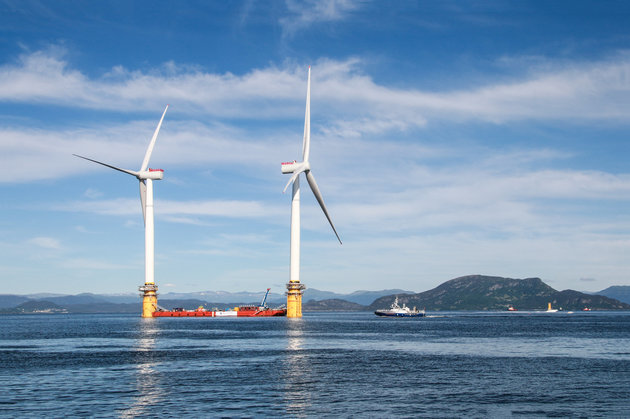
AASE/SHUTTERSTOCKCOM

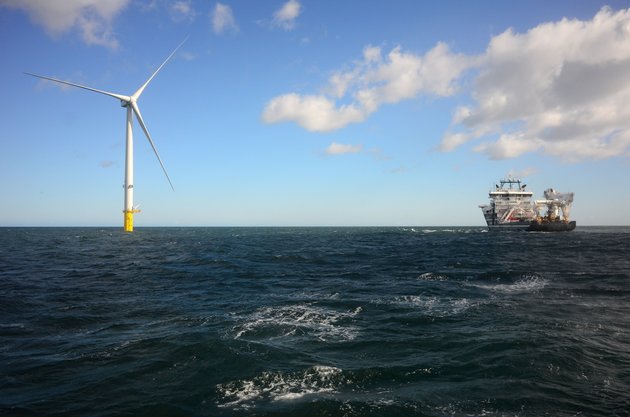
How is this possible? Wind speeds are, on average, much higher over ocean than they are over land, which means that theoretically wind farms in the open ocean could capture five times more energy than wind farms on land.

Until now though, this was just a theory and there were serious questions about whether it was as straightforward as simply saying faster winds means more electricity.

“Are the winds so fast just because there is nothing out there to slow them down? Will sticking giant wind farms out there just slow down the winds so much that it is no better than over land?” Caldeira asked.

Much of the energy that is captured by large wind farms is brought down from the higher atmosphere. Other studies have then also demonstrated that there is a maximum amount of energy that land-based wind farms can capture from this.

Which raises the question, would wind farms over the ocean suffer these same constraints or would the atmosphere be able to move more energy downward over the ocean?

To try and answer that question Possner and Caldeira created complex modelling tools which compared land-based wind farms in Kansas with theoretical wind farms that would be built far out in the ocean.
MARIE HEUCLIN via Getty Images

The results were extremely promising. 

“We found that giant ocean-based wind farms are able to tap into the energy of the winds throughout much of the atmosphere, whereas wind farms onshore remain constrained by the near-surface wind resources,” Possner explained.

In fact those ocean-based wind farms were able to generate as much as three times more energy than their land-based counterparts.

While open water wind turbines are still very much in their infancy, there is hope that this research will provide strong incentives for companies to start developing the technology at a faster rate.

In a statement to HuffPost UK, Emma Pinchbeck, RenewableUK’s Executive Director said: “The UK is the world leader in offshore wind and we have just built the first floating wind farm off the coast of Scotland. The advent of this innovative technology will allow us to harness powerful wind speeds at much greater depths.”

“It’s clear that floating offshore wind could play a key role in combatting climate change, helping us make the vital transition to a low-carbon economy. Our current offshore wind fleet, for example, is already powering over 5% of all the UK’s electricity, and we are on course to double that by 2020.”

Share Button

Scientists Develop A Way To Make Cancer Cells ‘Commit Suicide’ While Leaving Healthy Cells Alone

Scientists have discovered the first compound that directly makes cancer cells “self destruct” while leaving healthy cells completely alone.

This novel treatment was used to attack acute myeloid leukemia (AML) cells but the researchers believe it could have profound implications for other cancers too.

The compound, discovered by scientists from Albert Einstein College of Medicine, activates apoptosis – an important process in the human body that rids the body of unwanted or malfunctioning cells.

Albert Einstein College of Medicine

This image depicts the structure of the BAX protein (purple). The activator compound BTSA1 (orange) has bound to the active site of BAX (green), changing the shape of the BAX molecule at several points (shown in yellow, magenta and cyan). BAX, once in its final activated form, can home in on mitochondria and puncture their outer membranes, triggering apoptosis (cell death).

While some chemotherapy treatments have been found to indirectly cause apoptosis, this new treatment would use it as the main weapon against cancerous cells.

Apoptosis occurs when BAX – the “executioner protein” in cells – is activated by pro-apoptotic proteins. It then targets the parts of the cell that create energy and destroys them.

Sadly, cancer cells are very good at fighting this and are able to suppress BAX by producing anti-apoptotic proteins.

However, this is where the new compound comes into play.

“Our novel compound revives suppressed BAX molecules in cancer cells by binding with high affinity to BAX’s activation site,” says senior author Dr. Gavathiotis. “BAX can then swing into action, killing cancer cells while leaving healthy cells unscathed.”

To hunt down the right compound that can boost the ability of BAX, Dr Gavathiotis and his team used computers to screen over a million different compounds that showed potential.

They were then finally able to filter this even further until they had 500 compounds that met their requirements and eventually this was whittled down to just one.

“A compound dubbed BTSA1 (short for BAX Trigger Site Activator 1) proved to be the most potent BAX activator, causing rapid and extensive apoptosis when added to several different human AML cell lines,” says lead author Denis Reyna.

The researchers tested BTSA1 on human blood samples from patients which had high risk acute myeloid leukemia. Strikingly they found that the BTSA1 caused the AML cells to self-destruct while leaving the healthy cells completely untouched.

To take this a step further they then tested this on mice and found that just as before, the mice which were treated with BTSA1 not only had a longer survival rate but of those treated, 43% survived longer than 60 days and had no trace of AML in their system.

“BTSA1 activates BAX and causes apoptosis in AML cells while sparing healthy cells and tissues―probably because the cancer cells are primed for apoptosis,” says Dr. Gavathiotis.

The next step is to broaden their reach. The team are hoping to test BTSA1 on a wider ranger of cancers in the hopes that it will be just as effective.

Share Button

The Tech Trends You Need To Know To Land That New Job

You might associate YouTube, Snapchat, Instagram and gaming more with the goings on in a teenager’s bedroom rather than landing the job of your dreams. But ditch your preconceptions. Increasingly, these online channels are being used by employers to find talent – people like you.

Employers are now harnessing online technology more than ever to screen and select job applicants. As well as obviously saving time and costs, it’s also a way to increase the diversity of their teams by reaching out to previously hard-to-reach pockets of the population.

The two biggest recruitment tech trends right now are on-camera interviews and online cognitive assessments. They’re already being used extensively in graduate recruitment, as employers take as read that those applicants are totally au fait with the technology. But these methods are being employed more and more for other job seekers, and they still require the same diligent preparation and practice you would put into a traditional CV, cover letter and face-to-face interview scenario. Here are my tips on how to nail all these tech trends when it comes to landing a job…

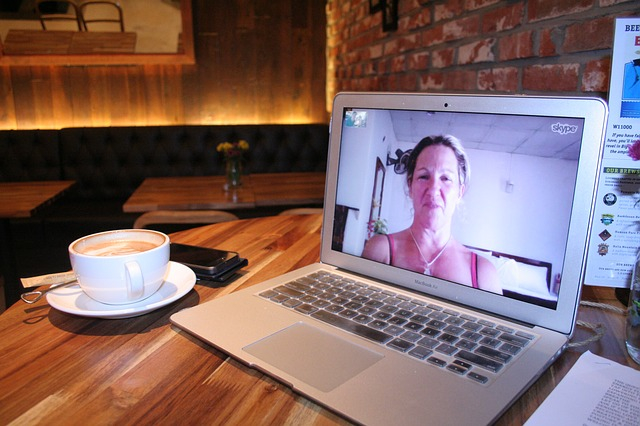
2017-10-06-1507317482-1145254-skypejobinterview.jpg
Image: Pixabay

Be camera-ready, not camera-shy

First interviews over Skype are now pretty common. Some companies even ask candidates to record and upload a video of themselves – McDonald’s for example has a Snapchat filter, where applicants can superimpose the company’s uniform on themselves before recording their 10 second video. And these Japanese companies have a similar strategy with Instagram.

Of course, there are some pitfalls. Some people have expressed concerns that unconscious bias through these mediums could lead to discrimination – after all, your race and sex (and maybe age, physical ability etc) are immediately on display. In addition, with a video or Skype interview, the employer will make an instant judgement on how well you communicate and fit with their brand.

So now, more than ever, first impressions count. It’s time to get really comfortable with presenting yourself on camera. But of course, eye contact, confidence and self-assurance all take practice. After all, TV presenters and newsreaders aren’t born with those skills, they learn them.

You can practice on your own or with a friend, but you must practice. It’s fundamental to coming across well in video. Here are some things to look out for when you’re reviewing your own performance:

2017-10-06-1507317675-5924360-skypejobinterview1.jpg
Image: Pixabay

• Body language. Don’t wave your hands about. It’s accentuated on a small screen and can be hugely distracting for the interviewer. The same goes for pulling faces, slouching or fidgeting. Don’t keep looking down at your notes or stare out of the window. To ensure you come across as competent and sincere you need to make eye contact – so look into the camera not just at the screen.

• Slow down. Remember, there can be a time lag when talking on Skype, so don’t talk over your interviewer.

• What does your Skype name say about you? Anything too jokey could create the wrong impression.

• Dress the part. You might feel a bit silly dressing up in formal business attire but you need to look as smart and professional as you would in a face-to-face interview. Looking like you’ve just fallen out of bed won’t do.

• Set the scene. Check the lighting, camera angle and the backdrop in advance – you don’t want the space behind you in the video to embarrass you. As with your LinkedIn and other social media profiles, ensure it looks professional. That means no inappropriate posters or piles of laundry. And definitely no pets, flatmates or family members joining in the fun. And lock the door if there’s the chance of a toddler breaking in… Yes, Professor Robert Kelly’s daughter was adorable but your objective is to get to the next stage of the recruitment process, not go viral.

A successful video interview is about practice and preparation, looking the part and making eye contact with the camera.

2017-10-06-1507317827-7190685-onlinecognitivetests.jpg
Image: Pixabay

Online cognitive assessments

The other big trend I’m seeing is the rise online cognitive assessments. Sometimes disparagingly called ‘robot recruiters’, these tests can range from simple multiple-choice questions to computer shooter-style games.

It’s worth taking these tests seriously. They’re designed to scan anything from numerical and verbal reasoning to cognitive ability, speed and decision-making skills. It can feel a bit like you’re back at school but you really need to prepare for them like an exam.

That means:

• Reading the questions carefully. Many people are caught out by skim reading.
• Taking care over spelling and grammar.
• Checking if it’s a timed test. If it is, work out how long you have for each question.
• Choosing a time and place where you can concentrate and won’t be disturbed.
• Having pens, paper and calculator to hand.
• Being honest: psychometric or personality tests don’t have right and wrong answers so don’t worry about ‘not being good enough’.

2017-10-06-1507318217-1506343-gettingajob.jpg
Image: Pixabay

The recruitment marketplace is constantly being disrupted and adapting is the name of the game. But whether you’re asked to upload a video of yourself or take an online test, the guidelines for a smooth and successful experience are the same.

Prepare, practice and be professional. Then you’ll have no worries – and you’ll be one step closer to landing the job of your dreams…

Share Button

Health24.com | This woman has the world’s longest fingernails

It’s such a schlep to constantly groom yourself, so how about not cutting your nails ever again? 

Meet Texas born Ayana Williams who started growing her nails after one of her friends challenged her to grow them longer than three inches. It’s now it’s more than 20 years later, and she hasn’t cut her nails since that time.

A daily challenge

She currently holds the 2018 Guinness World Record for the longest nails in the world.

Williams, a nail technician herself explains how difficult it is for her to do the mundane things other people do as a matter of course.

One thing that is rather challenging is trying to pull up her pants; the rest she manages at her own pace. 

“It takes me longer than any other human being because of the length of my nails,” Williams told Guinness.

Daily routine

Caring for her manual glory has become a full time job. Her daily tools consist of a special nail brush and antibacterial soap. She also regularly makes use of a nail hardener with a layer of acrylic to keep them strong.

Williams told Guinness that it takes her an entire week and two bottles of polish to keep her nails fierce.

Guinness measured her total nail length at 576.4 cm, with her thumbnails being the longest, measuring 50.8 cm and 66.04 cm.  

To avoid breakage, the nail technician stays away from doing dishes or ordinary household chores. Her nails even have a special pillow to rest on at night. 

WATCH: Ayanna speaks to Guinness World Records

[embedded content]

Williams explains to Ripley’s Believe It or Not! how she experience life not being able to wash her own hair. 

WATCH: Ripley’s Believe It or Not! Q&A with Ayanna 

[embedded content]

Health24 gives advice on how to keep your nails fungus free:

  • Keep your nails clean and dry, especially after a bath or shower.
  • Change your socks daily, more if your feet are particularly sweaty or if you do sport.
  • Check the credibility of the salon when you go for a manicure or pedicure and ensure that sterile tools are used.
  • Never share your nail files or other manicure tools.
  • Don’t ignore any sign of redness, soreness or infection on your fingers and toes.

Image credit: iStock

Share Button

Health24.com | Do more of this and you’ll stop stress-eating

It’s no surprise that stress sucks for your diet. But even if there’s no end in sight to your mounting work responsibilities, there is one thing you can do to stop the stress from wrecking your waistline: get more sleep, new research from Michigan State University suggests.

In the first experiment, researchers surveyed 125 Chinese information technology employees who regularly experience high workload and feel like they don’t have enough time in the day to get all their stuff done.

In the second experiment, they analysed data from 110 call-centre employees who often report feeling stressed by rude customers.

Read more: Here’s how you can sleep with any woman

The findings? When the tech employees felt higher job demands that morning and when the call-centre employees felt more mistreated by their customers, they were both more likely to eat more types of unhealthy food and fewer kinds of healthy food later that night.

But when workers slept better the night before, the stress of their workday didn’t affect their eating habits that much – they tended to make healthier food choices when they felt better rested.

The researchers believe that sleep protects against the negative effects of stress, since quality shuteye can make you feel more replenished and vigorous.

This makes you better able to deal with stress at work, which leaves you less vulnerable to reach for junk food to make you feel better, they say in a release.

Read more: How many hours should you sleep for healthy sperm?

But if you slept poorly the night before and feel the urge to eat everything in sight when your boss piles on yet another assignment, you need to do some recon now: Ask yourself if you’re truly hungry, suggests Susan Schembre, PhD, RD, an assistant professor of behavioural science at MD Anderson Cancer Centre.

If the answer is no, try to choose an easily-available and pleasurable activity to engage in instead, she suggests.

That might mean taking five minutes to check your favourite meme page or taking a quick walk outside.

This article was originally published on www.mh.co.za

Image credit: iStock

NEXT ON HEALTH24X

Share Button

Wolfenstein II Is Upsetting People Because It’s About Killing Nazis

If you didn’t know already, the year is not 1939.

And since that fateful annus horribilis the world has learned a number of important lessons, one of which is – being a Nazi isn’t OK.

Evidence of this can be seen in the myriad of films, books, speeches, you name it, that not only condemn an ideology that propagates genocide but roundly mocks it.

Only now its 2017 and the rulebook of human decency was last seen somewhere on the US presidential election campaign last year.

So it is with a large *sigh* that we tell you that some people out there are actually upset at the trailer for Wolfenstein II, the latest iteration of a franchise that for years now has sold on the premise it allows gamers to, almost exclusively, kill Nazis.

It’s latest guise uses the slightly familiar slogan of “Make America Nazi-Free Again”, which appears to have upset some people.

Here are some of the replies…

And then there were those who perhaps need to read a book or two.

This is why we can’t have nice things…

Share Button

Rethinking The Robot Tax

Last week, Labour leader Jeremy Corbyn announced his latest plans to implement a “Robot Tax” in a bold effort to face the “challenge” of automation. This proposed tax is part of his larger plan to “urgently manage” the evolution of robotics and technology for the sake of society. And, while this may seem like a daring statement, it’s not exactly the first time it’s been proposed. A handful of other leaders around the globe, including Bill Gates and the South Korean government, have quite recently raised similar points. But when broken down, is this hostility towards the evolution of technology really warranted?

Modern Fear

It’s no secret that the media has had a huge part to play in the current state of automation. Since the first mention of robots hit the 24-hour news cycle, hundreds of articles have warned of a robotic takeover and an impending meltdown of society. What’s usually left out of these articles, however, is the thorough research highlighting the benefits robotics and automation have on society. For example, it has been found that use of robots within manufacturing has increased labour productivity by 0.36%. While that may sound insignificant, it’s key to point out that 0.36% accounts for 16% of total productivity growth between 1992 and 2007. And while robotisation has traditionally been adopted by financial and manufacturing sectors, its contribution is not limited to these particular verticals. For example, a report by London’s Centre for Economic Research shows that contrary to popular belief, robots have been a huge driver of productivity and economic growth within most markets. This is due to the fact that robots have been able to successful integrate within a number of professions, eliminating the costs, risks and wasted time associated with manual tasks. Yet robots still seem to be the victim of fear mongering rhetoric within the media, mainly due to one particular topic–the dissolution of jobs.

The Question of Employment

There is no denying that with the introduction of robots comes a slight shift in the overall employment landscape. With that said, it’s unfair to suggest that automation will be the be all and end all of the job market. As a society, we’ve been through this before. When the Industrial Revolution occurred, the entire job market went into a frenzy, leaving about half of workers wondering what to do next. But with time came great change. The job market rapidly began to evolve in conjunction with technology, resulting in the creation of jobs that had never even existed before.

While it’s difficult to predict the exact outcome, it seems as if history is due to repeat itself. Britain’s unemployment rate is currently at a 42-year low, showing that regardless of the increase in automation, jobs seem to be largely unaffected. Luckily, this seems to be a direct representation of the future. According to a recent report by PWC, it’s predicted that AI and robotics will both create new jobs, specifically in the digital technology area. These new jobs will generate additional wealth and spending that will then support additional jobs of existing kinds, primarily in sectors that are historically harder to automate.

Arguing Against Robot Tax

In comparison to other leading nations, the U.K unfortunately still slightly lags behind when it comes to robotisation and AI. And while this may be due to our modern fear of the robotic revolution, it’s ultimately a dangerous game to play. In order to stay competitive within the global economy, it’s extremely important to put an emphasis on the future of technology and innovation. Instead of shying away from what we’re uncomfortable with, we should be focusing on where to go next.

Continuous innovation is an essential part of a robust economy. Yes, without a doubt, technology will shift our lives as we know it today. But, why should we approach this change with fear? Measures such as a “Robot Tax” are nothing more than a step backwards when it comes to productivity and the overall well-being of society. As a forward thinking society, we have a huge amount of opportunity to utilise this innovative technology to create positive change, not only when it comes to supporting the economy, but to create new channels for society that we may not reach otherwise.

Share Button

Emirates A380 Makes Bumpy Landing During Storm Xavier

An Airbus A380 is 73 metres long, weighs around 575 tonnes and costs a whopping £335 million pounds and as such requires more than a little skill to pilot without risking the 525+ people on board.

With that in mind, watch the clip and then give a few words of admiration for the person who landed this Emirates plane at Dusseldorf Airport during Storm Xavier yesterday.

The original footage was posted on YouTube by Cargostopper, who wrote: “I have filmed a few thousand crosswind landings at several airports in Europe within the past years, but this Airbus A380 crosswind landing was extremely hard and extraordinary.

“I have never seen such a tremendous reaction of an airplane after a touchdown.

“This video shows the incredible skills of the pilots. Even after an unexpected wind gust after touchdown they managed to re-align with the runway. Incredible job by the pilots!!”

A gif of the clip made it’s way to Reddit where some of the comments were just as entertaining and a lot less terrifying than the actual footage.

Share Button

This Is The First 360-Degree Video Of A Spacewalk From The International Space Station

We’ve seen spacewalks from the International Space Station before, but it’s unlikely that you’ve ever seen one like this.

The world’s first ever spacewalk shot in 360-degrees has been uploaded by RT in partnership with Russia’s space agency Roscosmos.

The footage shows Russian cosmonauts Sergey Ryazansky and Fyodor Yurchikhin hand-launching a selection of nano-satellites from outside of the spacecraft.

While the clip is only a few minutes long, it is completely interactive and probably gives you the best view yet of what it’s like to be attached to a space station hurtling above the Earth at over 17,000mph.

In case you’re curious as to what the cosmonauts are launching they consisted of two Tanyusha nanosatellites that were constructed by students from the Russian city of Kursk and then a Sputnik-like Tomsk-TPU 120 satellite.

The Tanyusha will both be broadcasting multilingual messages to the world on the frequencies 437.025 MHz and 437.05 MHz.

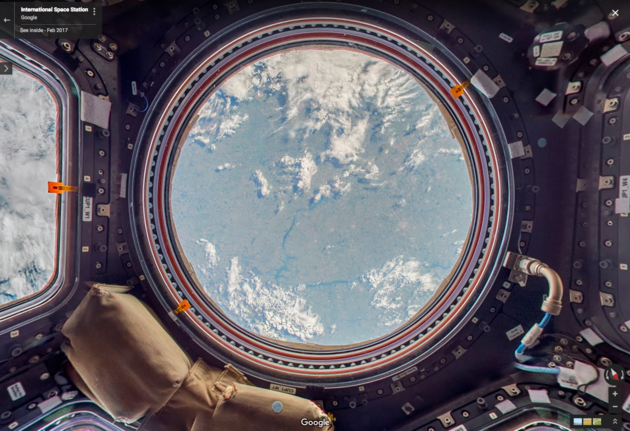
Recently it was revealed that the International Space Station had been added to Google Street View.

Google

Google added all 15 modules of the station along with interactive annotations about key rooms, equipment as well as facts and trivia about the ISS.

The unveiling of Street View on the ISS commemorates the first manned mission to the surface of the Moon which took place 48 years ago (20th July 1969).

Share Button

Netflix Has Just Raised The Price Of Its Subscriptions Again

We’ve got some bad news. Netflix is going to become more expensive, again.

The company sent out an email to all its users informing them of the price hike that will take place across the two premium tiers that offers.

Netflix

Basic users will still only be charged £6 per month but Standard users will see their monthly price go up from £7.50 to £8. If you’re on Netflix’s Premium plan you’re going to see the bill go from £9 per month to £10.

It’s a small increase but over the year these do add up, bringing the annual cost of Netflix’s Premium plan up to £120 from £108.

Finally, we’ve got some more bad news. This isn’t the first time Netflix has increased its prices and it certainly won’t be the last. 

Back in 2015 its CEO Reed Hastings announced that Netflix would start to slowly increase subscription costs over the next decade as the company grew.

Speaking to the Independent Hastings said: “We want to take it very slow, over the next decade I think we’ll be able to add more content and have more value and then price that appropriately.”

It’s no surprise that Netflix’s costs have gone up. Big budget shows like Stranger Things, House of Cards and Orange is the New Black have all started to add up and if Netflix wants to keep offering that level of premium content it’s going to need to find a way of paying for it.

While it’s not a major increase in price, it’s the regularity of these increases that will start to make a difference. If Netflix ups its price by £1 every 6-12 months then it might start seeing something of a backlash.

In case you’re wondering what each plan gets you here’s the latest list:

  • 720p Streaming quality
  • 1 screen can be watched at a time
  • HD Streaming quality
  • 2 screens can be watched at the same time
  • Ultra-HD/4K streaming quality
  • 4 screens can be watched at the same time

Share Button