The US And Russia Sign Agreement To Build A New Space Station Around The Moon

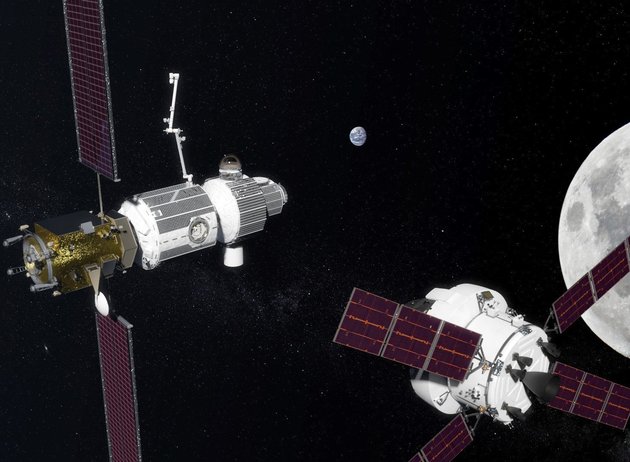
NASA has signed an agreement with the Russian Space Agency, Roscosmos to partner in building a brand-new space station around the Moon.

There are no design plans or budgets as yet, however Roscosmos have said that work could start on the lunar station in the 2020s.

NASA

The agreement to build a space station together is part of NASA’s wider Deep Space Gateway project.

This was a plan put together by NASA that would see the building of a lunar space station, not only as a testing site for further deep space exploration but then also as a staging ground for spacecraft looking to extend beyond the realms of Earth’s orbit.

Speaking about the historic agreement, Robert Lightfoot, NASA’s acting administrator at NASA Headquarters in Washington said: “While the deep space gateway is still in concept formulation, NASA is pleased to see growing international interest in moving into cislunar space as the next step for advancing human space exploration,”
NASA

NASA will initially start with a number of manned and unmanned missions to the Moon.

Using the lessons they’ve learned from the International Space Station, the next step would be to lay concrete plans around building a new lunar space station.

Part of this enormous task will be making sure that everything is universally standardised.

Thanks to Russia’s continued track record of sending crew to the ISS, it has already been agreed that a universal docking system will be agreed upon using Russia’s designs.

It’s believed that the major components that make up the new station will be lifted into orbit using Russia’s Proton-M heavy lift vehicle and NASA’s own newly developed SLS rocket.

Sergei Savostyanov via Getty Images

A Proton-M rocket carrying ExoMars 2016 spacecraft blasts off from the Baikonur Cosmodrome.

NASA has said on numerous occasions that it wants to send humans to Mars by 2030 and this space station will almost certainly be a major step in that direction.

Initially NASA had said that it would send an astronaut to an asteroid as part of its roadmap to the red planet, however it looks as though the Moon will now replace that mission as one of the key staging grounds.

7 Incredible Discoveries By Cassini

  • Cassini has been getting up close to Saturn’s planet-sized moon, Titan. Taking incredible photographs and learning more about its dunes, mountains and seas of pure liquid methane (definitely not for swimming). Not to mention the 95% nitrogen atmosphere. 

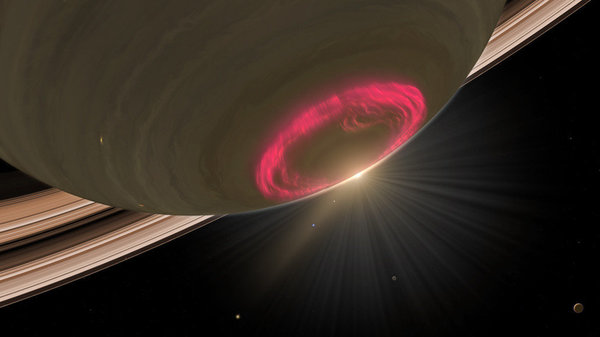
  • Just like our home planet, Saturn has powerful magnetic fields at its poles that create shimmering auroras, and for the first time Cassini was able to capture these incredible (and pretty intimidating) images of the glowing-pink Southern lights. 

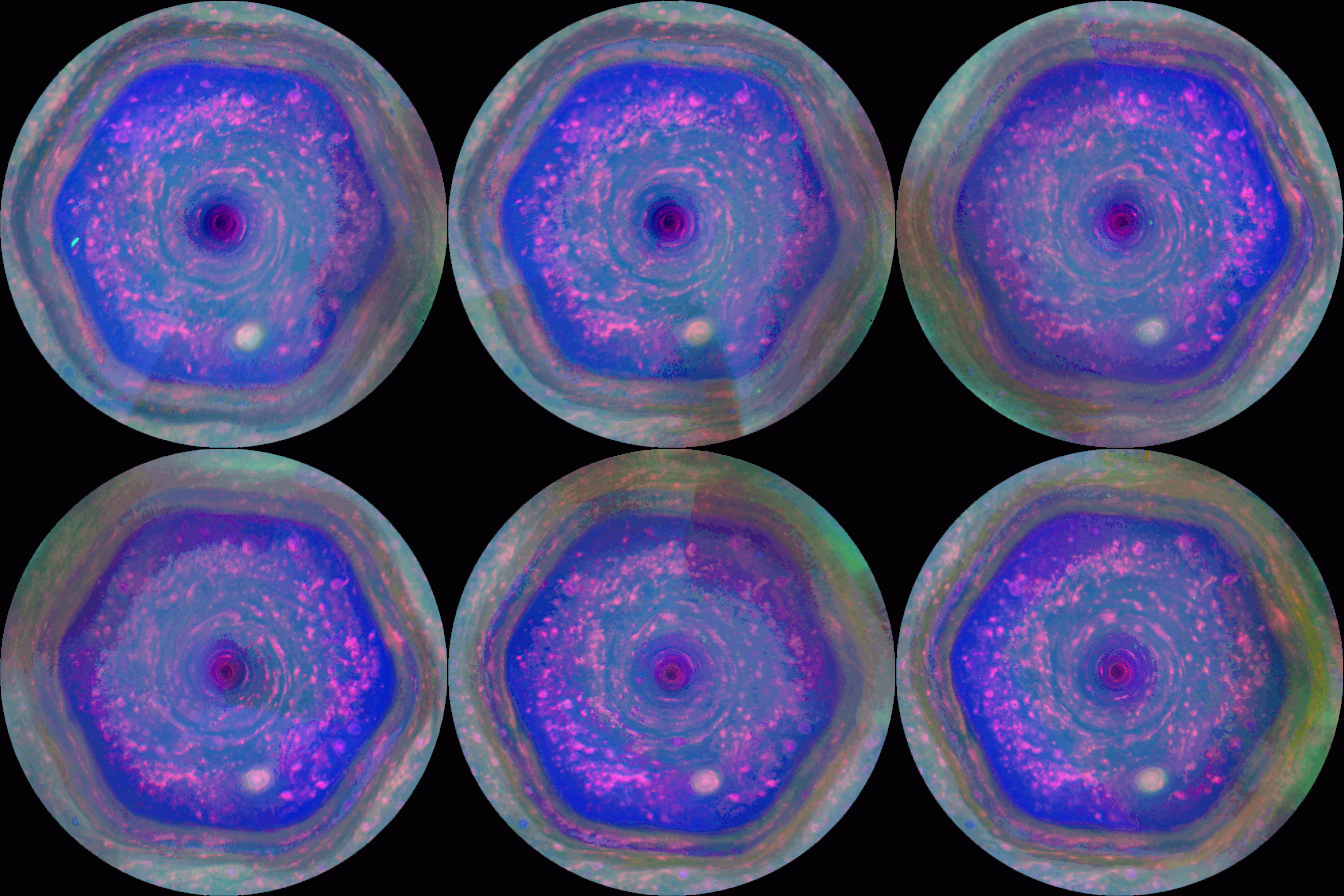
  • Not only are Saturn’s poles decorated with beautiful auroras, they also have violent swirling storms with an (unusual) six-sided jet stream that creates these hexagonal weather patterns. But you don’t want to get too close, as NASA found the eye of hurricanes on Saturn are 50 times wider than those on Earth.

  • Hyperion is the largest of Saturn’s “potato-shaped” moons and is likely to be the result of a violent collision that shattered a larger object into pieces. The sponge-like appearance means it has an unusually low density for such a large object — about half that of water – and any material that comes into contact with it gets blown off, never to return.

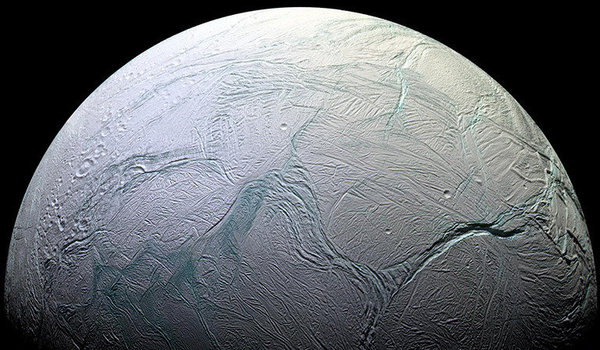
  • Pre-Cassini, scientists didn’t understand why Encleadus was the brightest world in the solar system. But Cassini found it has a huge ocean of salty liquid water hidden beneath a surface of ice with exploding hydrothermal vents that send sporadic plumes of water shooting out into space. It is also one of the most promising locations for extra terrestrial life…

  • Saturn’s two-toned moon, Lapetus, is surrounded in a cloud of reddish dust that gets swept around in orbit giving it a hellish colour. But that’s not the strangest find, for the first time Cassini photographed a topographic ridge that runs along the equator. No one knows yet whether this is a mountain or a crack in the surface. 

  • Cassini’s final mission has required getting closer to Saturn than ever before, dropping from a normal altitude of 1,000,000km above to just 120,000km. Although this did require Cassini to enter a “death plunge” and sacrifice itself, it has also resulted in the most intricate images of Saturn’s B rings ever recorded, clearly showing the spiral density waves.

Share Button

Our iPhone Obsession Has Created A Hidden Economy That’s Good For Everyone

Unless you’ve been living on a remote island for the past few weeks, you’ll have noticed that Apple recently revealed the latest models of the iPhone. Cue near-mass hysteria. The unveiling is a now annual event, and this year coincided with the famous handset’s tenth birthday.

At eBay UK, we know that Brits love the iPhone. After all, we’ve collectively spent over £1 billion on various models of the device on eBay over the last ten years, and it remains our number one most searched for product.

But the fervour that greeted this year’s big reveal by Apple was huge, even by the standards of the iPhone fandom, prompting us to take a deeper look at our love affair with this titan of the tech world. So, we’ve delved into a decade of data to bring you the untold story of the iconic device.


Shining a light on a hidden economy

Each and every Apple launch sees Brits trading in their old models to fund their latest upgrade, in what experts have dubbed ‘the circular economy’. This involves consumers trading in their old goods for money rather than throwing them away, putting the proceeds towards an upgrade or new purchase – a major new trend in retail.

Small businesses are then refurbishing these older products, selling the nearly-new technology to consumers who want the hottest brands at more affordable prices. On average, we’ve seen Brits save around 45% on the latest tech this way – a product of savvy buyers and sellers.

The iOutlet is one such seller. Originally launched back in 2012 by friends Matt Green and Liam James to repair cracked screens, the pair spotted an opportunity to repair premium smartphones for those who didn’t want to pay full whack for a brand-new products. Fast forward five years and today, their business employs 15 people and turns over more than £8 million.

Co-founder Matt Green captures the growing opportunity for small businesses across Britain:

“I think that the refurb market will continue to grow, with so many new phone models being released each year there will always be a demand to keep up and offer people the option to purchase decent phones at a reasonable price.”

Is this just another example of out-of-control consumerism? Far from it, I’d argue. The circular economy of the iPhone isn’t just good for your wallet or for the sales of British businesses – the planet is benefiting too. We’ve calculated that the amount of waste avoided through preowned phone sales in the U.S. and U.K. in 2016 sat at a whopping 424 tonnes.

So the next time you’re thinking about the latest Apple model (and we know you will, because Brits have already spent a whopping 730 million minutes searching iPhones on eBay this year!) remember: you’re contributing to a hidden economy that’s changing the face of retail in the UK, benefiting small businesses, buyers and the environment alike.

Share Button

Haplobank: A biobank of reversible mutant embryonic stem cells

[unable to retrieve full-text content]

Share Button

Black holes with ravenous appetites define Type I active galaxies

[unable to retrieve full-text content]

Share Button

Science Should Never Become Boring… Here’s Why

As you might expect, ‘athlete’ and ‘firefighter’ are two of the most sought after jobs for children. But it wasn’t a surprise to me to find ‘astronaut’ and ‘scientist’ holding their own in the top ten as well. Why not? Defying gravity, even zero gravity, must be one of the most exciting scientific developments of our time, and children everywhere want to be a part of it.

So, why is it that that in recent years 47% of young people think that science subjects are for those who are ‘boring’, with a further 55% of online conversation describing STEM as ‘too difficult’? What about the role physics has played in making space travel real? Or the scientific research which has allowed pilots to fly across the world at up to 39,000 feet? Science certainly isn’t boring and I’m fascinated to know why one in two schoolchildren think it is.

Answering a question like this is not straightforward, and no one answer can solve it. But I think one way to address the issue is by encouraging schoolchildren to understand science away from their textbooks. I was lucky – Mr Davies, my primary school teacher, was nothing short of legendary in the classroom. He loved doing the sort of exploding volcano experiments that left red stains on the ceilings, and got us jumping out of our seats from the start of the lesson.

2017-09-25-1506345763-9244444-170825_GroupSofa_073.jpg


Photo Credit: Jonathan Birch/Statoil

It was these kinds of lessons that put me on the path to where I am today: presenting science live at events, on the TV, and on the radio. Doing what I do gives me the chance to convey to the next generation that science is not only important, but fun.

Let’s not get ahead of ourselves – not all science is volcano-exploding-awe-inspiring amusement. Some elements of STEM subjects can be tremendously pure, complex and difficult to convey. But, even these subjects can be explained to children in interesting ways. I’m not expecting every lab technician in Britain to charge towards their nearest school test-tube in hand; but when scientists can explain things in a way that we can all relate to, it’s great to try and make the link.

One way, for example, of presenting science to young people is as an explainer of everything we see. Science can answer a simple question, like why on earth your voice sounds different on video, or a more exciting one, like exploring how fireworks explode. Beyond this, science is about answering the most complex questions young people will face, so let’s do everything we can to make it engaging.

Explaining real-world phenomena, big or small, in terms of science is what I love, and that’s why I am working with Statoil and the Science Museum on this year’s Young Imagineers competition. Steph McGovern, Jill Tully, Lopa Patel and I are inviting 7-14 year olds to design the future, under the title ‘what invention would you create to make tomorrow’s world a better place’. We’re looking for a huge mix: everything from teleporters to biscuit dunkers welcome! Entries can be submitted here.

The ten most creative entries will be shortlisted and the entrants will get a chance to develop their invention with a top developer. Then, they’ll be invited to showcase their entry to us with a live audience in an exclusive day of events at the Science Museum, on the 18th of November. The winner will get an even bigger prize – their invention will be created and displayed inside the Science Museum for everyone to see.

This is a great way to engage the UK’s most talented minds with the STEM subjects, and show just how important they can be to the world we live in. Science isn’t going anywhere, so let’s make it as relevant as we can and have a laugh, and maybe a few explosions, along the way.

1https://www.fatherly.com/what-kids-want-to-be-when-they-grow-up-1463191840.html
2https://www.worcester.ac.uk/documents/BIS-14-899-STEM-book-of-insights.pdf

Share Button

Five Simple But Effective Tips On Becoming Insta-Famous

So you want to become an Insta-famous eh? Have tens of thousands of followers, reap in hundreds of likes and be an influencer in your own right? It all sounds very attractive, especially since the Hopper HQ Instagram Rich List 2017 highlighted top influencers get paid up to $18,000 per post! However as grand as it sounds becoming insta-famous isn’t as easy as you may think – back when Instagram was fairly new it was much easier to climb up the ranks, but since the app introduced an algorithm led feed and changed the way the explore tab works, the task of becoming Insta-famous is much more tricky. So here are five simple, but very effective tips from us.

1. Find your niche

First things first, whether you already have a decent following on Instagram or you’re just making a new account, you’re going to want to define yourself. What do I mean by this? Well the most popular accounts on Instagram are those that are based on specific niches. Think of it as a certain topic that will interest a large demographic of users. Whether it be food, fashion or fitness, finding your niche will help shape your account and help you draw in loads of followers that are interested in that topic. When finding your niche, be sure to choose an area that you have interest in, a hobby or a passion, this will create a more authentic feel to your account and will also help you create better content.

2. Post high quality content

Which conveniently leads us on to the second tip and that’s all about content. Anyone can start posting on Instagram in the hopes of gaining loads of followers, but there’s a huge gap between high quality content and those unfocused, shaky camera snaps from your holiday. Poor quality posts simply won’t cut it any more, the competition is fierce so you really do need to up your game and get your pictures on point. Don’t just rely on your phone camera, use additional editing tools to perfect your posts, and most importantly get creative. Make sure you’re using the correct hashtags to get your posts the best visibility as well.

3. Engage with the Instagram community

Instagram is not a one way relationship, if you want to gain loads of followers you’re going to have to do some following of your own, some liking and even some commenting. A great place to start is by following those in the same niche as you, and users who have interest in that niche, like posts and start conversations. You’ll soon start to see the rewards of your engagement efforts and reap in return follows and more likes on your posts. Engagement is the key to more engagement, it’s kind of like the circle of life on Instagram, the more you give the more you get.

4. Let your personality shine through

There are millions of Insta-famous accounts out there and one thing you’ll find with the best accounts is that those that showcase their personality through their Instagram are on top, and that’s what helped them break away from the crowd and gain popularity. Authenticity and originality are key ingredients for you to shine, so let your personality show with your posts. Give your followers a window into your world. Often times you’ll stumble across famous instagrammers doing mini blogs, Q&As, or giving their review on the latest product or eatery. Let your followers get familiar with who you are, voice your opinion and they’ll naturally lend their ears to hear what you have to say.

5. Use Instagram

Tip number five is to use Instagram, it sounds very obvious but again many ‘grammers don’t use Instagram to its full potential. The platform has grown enormously since its early inception from being just a photo sharing app in 2010, now it’s packed with loads of features you need to be utilising to perfect your Insta game. Use stories, boomerangs, videos and carousel posts to add variety to your feed, make the most out of hashtags to gain more reach, tag in brands to get exposure from a feature and even try live video. You never know what will work for you, so don’t limit yourself. Above all else the most important lesson from this tip is to be consistent with your posting, being more active is said to help boost your posts up the algorithm feed and keep you relevant for longer, if you are finding it difficult balancing life outside the gram, consider scheduling your Instagram posts, you can save time and guarantee to still be posting.

If you want to know the latest Instagram trends and updates, head over to the Hopper HQ Instagram scheduling blog, and I’d love to hear your thoughts on this topic on Twitter! @Hopper_HQ blog, and I’d love to hear your thoughts on this topic on Twitter! @Hopper_HQ

Share Button

The Rise And Rise Of Omnipresent Digital Assistants

TechRadar recently asked ‘what happens when our assistants are smarter than us?‘. The author made a good point – that these assistants, like Alexa, OK Google, Siri, Bixby, et al are all still the first generation and are likely to improve – but mixes up the physical device (like the Echo or HomePod) with the digital assistant. At the moment, digital assistants are associated with particular devices but once Apple’s HomePod arrives and other companies integrate Alexa or OK Google into their products, consumers will start to understand that these assistants can be in their pocket and in their home and are no longer tied to a single form factor.

But, if these digital assistants are going to reach into every part of our lives then they would be much more useful if they better understood the world around them as well as the commands we use.

The author of the TechRadar piece makes the point about the assistants needing to understand more complex things beyond just location. Don’t get me wrong, location awareness is really important for lots of reasons but there are other more useful sensing capabilities.

The broad consumer technology sector talks up artificial intelligence but if we want to create products capable of responding in human-like ways then we have to teach them to understand context and the world around them in the same we do – through our senses. Products respond to our touch, computer vision technology can recognise us visually, there are companies like Owlstone developing technology that can ‘smell’ and ‘taste’, and we have products that can respond to our voices. But there is so much more information that we can extract from the things we can hear but not see.

Understanding specific and significant audio events or having a better understanding of an audio environment allows the digital assistant – whether running on a smart speaker, phone, car, headphones or wearable – to react based on what it knows and what it believes that you want or need. This means that we have to provide those local sensing capabilities within each environment and product, which in turn provides the digital assistant with information that it needs to provide its holistic, multi-device services.

For example:

  • If my personal assistant knows that I’ve been sneezing at home, in the car, at the office, and it knows that I’m about to head home, and it knows that the pollen count is forecast to be high, then it will be able to turn on the HEPA filter at home and in the car before I arrive. And it will do these things automatically.
  • If my assistant hears that my baby is crying in the night, it can turn on my hallway lights to a low hue so that I don’t trip over, play a soothing lullaby through the smart speaker to help my baby back to sleep, and maybe buzz my wearable to help me respond quicker.
  • Or perhaps my personal assistant knows that I’m cooking in the kitchen and automatically changes the sound equaliser of my smart speaker so that I can hear my music above the crashing and banging of pots without me having to ask it.

I think that as more context-sensing capabilities like hearing are embedded within devices, these cloud-based personal assistants will become more intelligent and more helpful. As a result, the mainstream consumers (who are starting to embrace smart homes and smart speakers) will see how this technology can be really helpful to us without attempting to take over the world or surpass our own intelligence.

Share Button

Why We Shouldn’t Be Afraid To Embrace Technology In The Classroom

Annual global spending on educational technology in schools has been valued at £17.5bn and is set to rise to £19bn by 2019. However, worryingly, a recent report by OECD stated that students who use computers frequently at school get worse results.

This is baffling to me. While it’s claimed that the use of technology in the classroom doesn’t boost academic achievement, surely it’s wrong to value our children’s education purely by their exam results? Besides, in the teaching of STEM subjects, in particular, there is evidence to suggest that that the use of technology to support teacher-led learning can increase engagement and improve learning effectiveness.

Perhaps, it’s the way we are using technology, rather than its presence that is the problem. Here’s why we should embrace technology in the classroom and some exciting ways it’s already being harnessed to improve learning experiences.

Active learning and increased engagement

Active learning encourages students to engage with resources, participate in class and work together. We know that activities such as discussion groups and collaborative projects encourages pupils to engage with lessons and helps them to retain information.

Research backs this up and shows that active learning has a positive impact, particularly amongst students in STEM fields. One study found that active learning reduced failure rates in mathematics, science and engineering university courses by 11%.

One way to optimise the classroom for active and interactive learning is through the effective use of interactive projectors or interactive whiteboards (IWB’s). Making use of interactive technology has been found to have a positive impact on students’ motivation, engagement and self-esteem.

Using an IWB as a central hub for brainstorming and research, to answer questions or complete games as a class, can increase engagement. Pupils can put together their own mini-lessons and lead the class. The ability to embed video, link to further reading and identify discussed locations using Google Maps encourages real-life research skills, and gives our children a great grounding for higher education.

Access to immersive experiences

The advent of accessible virtual reality equipment has opened a world of possibilities for immersive learning. Students can now travel the world and visit important historical moments from the comfort of the classroom. Teachers can take them to Machu Picchu, Antarctica or even the International Space Station.

Educators have long relied on video documentaries or photographic series to bring places or events to life. While such sources are important to our children’s learning, they view these passively, sitting behind desks and watching the images rather than being able to interact with them.

Initiatives such as Google Expeditions support teachers in harnessing VR technology for educational purposes and bring learning to life. Students can experience the Apollo 11 Space mission, walk through a museum or explore the ocean floor while annotating key discoveries and discussing their experiences.

In the US, Google is taking the experience one step further by exploring the educational applications of Augmented Reality. Expeditions AR uses Google technology to map the physical classroom and place 3D objects that pupils can walk around, identify details and step back to see in a wider context.

Addressing the skills gap

While the technology sector in the UK has attracted 28bn in investment since 2011, finding high-quality candidates to fill positions in the tech sector is proving problematic. Potential STEM employees are almost twice as likely to miss job opportunities due to lack of skills.

However, initiatives such as the BBC micro:bit are tackling the demand for digital literacy head-on. The pocket-sized, programmable computer was given to every year 7 in the UK last year. It can be connected to various other devices, sensors and objects and was launched to inspire a new generation of coders. Easy-to-use software complements the device, ensuring it’s accessible to a younger audience. The micro:bit can also be used in conjunction with devices like the Raspberry Pi, opening up possibilities to more complex learning. There’s plenty of support online in the form of videos, forums and how-to articles to help support your child’s learning at home.

Also available to schools, completely free of charge, is Scratch. Developed at the MIT Media Lab, Scratch gives students the opportunity to code their own interactive stories and animations. It’s ideal for younger children as they can see the results of their programming in a way they understand. Pupils can also share their creations online, fostering collaborative working and collective creative thinking.

With so many free, practical tools available to support digital learning at a young age, there’s plenty of easy ways we can begin to lay the foundations for digital literacy.

Learning is about more than just exams

One of the biggest benefits of technology is that it gives students access to interactive, timely, high-quality learning materials at the touch of a button. Instead of relying on dusty, out-of-date textbooks and resources, technology opens up the possibility of discovering fluid, cutting-edge research. Students can follow real-time events, share their ideas online and access a range of tools to support learning. In a world of 24-hour news and continuous social media updates, our children need to be able to work in this way to keep pace with the modern world.

Above all, it’s clear that there’s far more to gain from investing in technology in the classroom than purely boosting academic results. Global institutions have identified a need to prepare the next generation for a world crying out for digital skills and are investing in developing solutions. If we fail to equip children with the expertise they need to compete in our evolving jobs market, there is a very real danger that they will fall behind.

Share Button

This Terrifying App Simulates What Would Happen If A Deadly Virus Swept Through The UK

A new app is allowing scientists to conduct a nationwide citizen experiment that could save the UK from the deadly effects of a viral pandemic sweeping the nation.

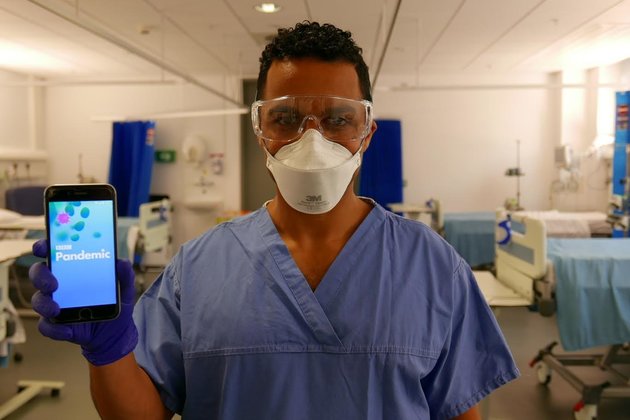
The BBC-commissioned ‘Pandemic’ app is now available for anyone with a smartphone to download, and will be tracking your movements over a 24 hour period, to see where and with whom we interact.

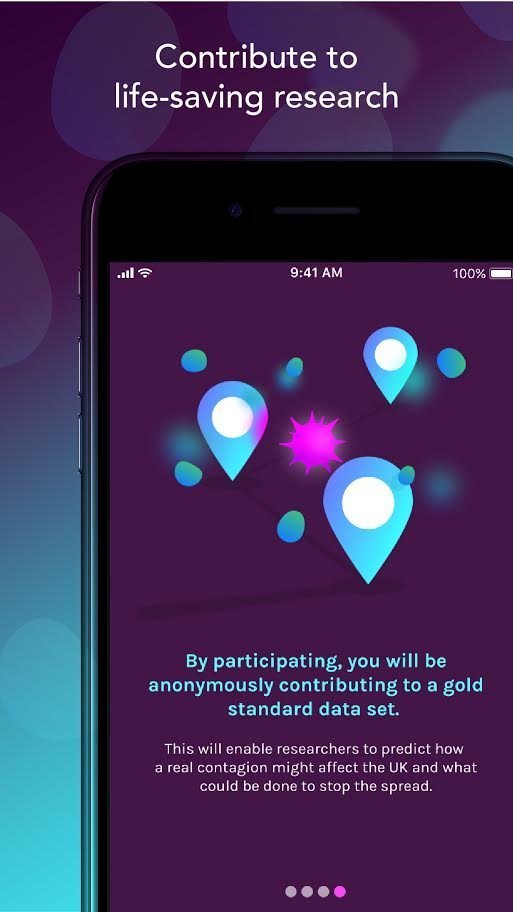
The idea is that this information (which is totally anonymous) will then allow a team of mathematicians at The University of Cambridge and London School of Hygiene and Tropical Medicine, led by Dr Hannah Fry, to build a contagion model that shows how diseases spread.

BBC Pandemic

In 1918 Spanish flu was responsible for killing over 50 million people globally, and a century later influenza still tops the list of risks to our country on the Civilian Risk register.

According to the UK government, a pandemic of flu (not just seasonal coughs and colds) could see up to 50% of the population experience debilitating symptoms, and as many as 750,000 fatalities in a short space of time.

Unfortunately modern air travel and the extent of global movement means that stopping a pandemic is “really hard, if not impossible” so instead we have to rely on a robust plan of action.

This plan requires scientists being able to accurately predict how these diseases spread through populations, in order to devise a dynamic healthcare plan based on evidence. 

BBC Pandemic

But obviously no one wants to volunteer to contract avian flu and spread it to all their friends and family, so the app acts as a marker.

Nobody gets ill, no phone is “infected” and downloading the app is not downloading a virus, so can’t be passed from phone to phone.

It will track your approximate position (to within about a squared kilometre) once per hour for 24 hours.

At the end you’ll be asked about the number of people you had significant contact with (this means proper face-to-face conversation or physical contact, handshake, hug, kiss).

And don’t worry, it is data grouped for anonymity – so no one in charge of the experiment will know exactly where you are at any point.

The team are hoping to encourage as many people as possible to take part, and if they are able to reach a pool of 10,000 people, they will reach a new gold standard. That means the resources they are able to create are better than anything we currently have at our disposal.

There is one experiment going on a national-scale as well as a localised one in Haslemere, Surrey.

To download the app, search ‘Pandemic’ in the App Store or Google Play.

Share Button

There’s A Sustainable Energy Source You’ve Never Heard Of And It Could Power Most Of The USA

By now we’re all familiar with the likes of solar and wind power as alternatives to using up unsustainable fossil fuels, but what about evaporation?

That’s right. A team of scientists have successfully exploited nature’s basic cycle of moving water between land and air in order to create energy, and it’s already looking more promising than other green options we have.  

And this is no small contribution – researchers at Columbia University found that lakes and reservoirs across the USA could generate 325 gigawatts, nearly 70% of what the country currently produces.

Srongkrod via Getty Images

Research has previously shown that evaporation can produce energy, but the most recent study is the first that set out to discover just how much energy this method could potentially produce if replicated on a larger scale than just in the lab.

The system works by using a humidity-controlling machine that opens and closes a shutter forcing bacterial spores to expand and contract and transfer energy to a connected generator.

This is beneficial because it doesn’t require back-up batteries like solar and wind power (which are expensive and toxic to make), “evaporation comes with a natural battery,” explained lead author Ahmet-Hamdi Cavusoglu.

“You can make it your main source of power and draw on solar and wind when they’re available.”

Published in Nature Communications, the team found that evaporation was a worthy competitor in terms of energy generation, and not only that but it could used on demand, day or night and without certain weather conditions, thus overcoming the intermittency problems plaguing solar and wind energy.

The study also showed that evaporation technology can save up to 25 trillion gallons of water from going to waste (by evaporating into the atmosphere) a year, or about a fifth of the water Americans consume.

Water strapped states, such as California, Arizona and Nevada, with growing populations could benefit most from this.

Klaus Lackner, at Arizona State University who was not involved in the study, but is working on a similar project that sees artificial trees draw carbon dioxide from the air, in part, by harnessing the power of evaporation, expressed support for the team’s findings.

“Evaporation has the potential to do a lot of work,” he said. “It’s nice to see that drying and wetting cycles can also be used to collect mechanical energy.”

They are now hoping to test the concept on a lake, reservoir or even greenhouse.

Share Button