[unable to retrieve full-text content]



[unable to retrieve full-text content]

Unlike a sore throat or stomachache, which demand your attention, bones and muscles dont complain much unless something majorlike a break or a pullgoes wrong. But these quiet, graceful supporters need regular TLC to help your body handle the load of daily life. Heres how to keep your bones and muscles strong and capable now and in the decades to come.
Your 20s and 30s: Bone Up.
Your bones have reached 90% of their peak mass by the time you reach your 20s; after age 30 or so, the best you can do is maintain the amount youve built up. So consider this your last chance for growth! Make sure your daily diet includes 1,000 milligrams of calcium and 600 IU of vitamin D, which aids calcium absorption. If you cant get the full dose from food, bridge the gap with a supplement, but realize that with calcium, more is not better. “New data shows that excessive calcium in supplement form increases the risk of kidney stones and possibly vascular diseases,” says Felicia Cosman, MD, clinical director of the National Osteoporosis Foundation. So consume no more than 2,500 milligrams a day, she says.
Build those biceps.
Your ability to build muscle also peaks in your 20s. And if you dont do any strength training, your muscle mass will start to declineover the next 20 years, you could lose as much as half a pound of muscle per year. If youre pressed for time, you only really need to target eight major muscle groups: biceps, triceps, quads, hamstrings, calves, glutes, core (including lower back), and shoulders. You dont even have to hit them separatelyjust do a basic sequence of squats, lunges, push-ups, biceps curls, and triceps dips (two sets of 15 reps, three times a week).
Kick butts.
Besides the myriad other reasons why you shouldnt smokehello, cancer!add bone health to the list. “Smoking reduces the efficiency of the bone-building cells,” Dr. Cosman says. “Plus, it lowers your bodys production of estrogen, which could cause you to go through menopause at a younger age and put you at risk for osteoporosis.”
[ pagebreak ]
Your 40s:Pack in protein.
If youve been forgoing iron (the dumbbell kind), muscle continues to disappear in this decadeat twice the rate it did in the previous two. “Your muscles start to become infiltrated with fatyou turn from flank steak to rump roast,” says Vonda Wright, MD, an orthopedic surgeon at the University of Pittsburgh Medical Center.
The good news: Strength can be significantly improved in as little as three months. To maximize the benefits of weight-lifting, up your protein intake: “You cant build muscle without it,” says Dr. Wright, author of Fitness After 40: How to Stay Strong at Any Age. Aim to eat 0.36 grams per pound of body weight daily; a 150-pound woman would need about 54 grams. Good sources include lean meats (30 grams of protein in a 3 1/2-ounce chicken breast), low-fat dairy products (15 grams in 1/2 cup of cottage cheese), and beans (7–10 grams in 1/2 cup of cooked beans).
Jump to it. Building hip and back strength now will help you fend off osteoporosis, the loss of bone mass or density most prevalent in women over 50. Several times a week for a few minutes at a time, in addition to your regular workouts, jump rope, perform jumping jacks, do small side-to-side jumps in the driveway. Or simply do any kind of exercise in which youre on your feet, moving your bodys own weightlike racket sports, dance classes, or power-walkingfor at least 30 minutes, three or four times weekly.
[ pagebreak ]

Your 50s:Take it up a notch.
Women can lose up to 20% of their bone density in the five to seven years after menopause. Counteract the drain by upping your calcium to 1,200 milligrams (and continue getting 600 IU of vitamin D) daily. If youre drinking fortified juices or other beverages, be sure to shake them well before pouring, as the calcium often sinks to the bottom.
Because some recent studies suggest that calcium supplements in postmenopausal women could lead to a higher risk of heart attacks, Dr. Cosman recommends getting as much calcium from food as possible, and supplementing minimally. And stick with those weights: Numerous studies show that consistent strength training not only makes muscles stronger but also increases bone density 1 to 3% in the spine and hipthe two areas most prone to fractures in women.
Plan ahead.
All women should have had a DEXA (bone-density) scan by age 65unless youre at risk for osteoporosis, in which case you may need one earlier. Risk factors include family history; ethnicity (Caucasian and Asian women are most at risk); low body weight (a body-mass index of 19 or under); and early menopause (before age 45), either naturally or due to a hysterectomy or removal of ovaries. Talk to your doctor about your personal risk factors now so you can minimize their impactand maximize your strength in the future.
When you hit the gym, chances are you’re thinking more about how your body will benefit rather than how your brain will.
But as it turns out, all that time spent on the treadmill is doing your noggin a serious favour.
Read more: How eating avocados may help slow down your brain’s ageing
New research from Australia’s National Institute of Complementary Medicine (NICM) at Western Sydney University and the Division of Psychology and Mental Health at the University of Manchester in the UK shows that aerobic activity can improve your memory and overall brain health as you age.
The study, published in NeuroImage, looked at brain scans of 737 people who were either totally healthy, had mild brain deterioration (like Alzheimer’s) or had a diagnosed mental illness like depression or schizophrenia. Their ages ranged from 24 to 76 years old (the average being 66).
Read more: The treat that raises your Alzheimer’s risk
Participants in the study did all types of cardio – the stationary bike, walking and running – two to five times a week for anywhere between three months and two years.
By the end of the 14 clinical trials, researchers found that even though exercise didn’t have an impact on the overall size of the hippocampus (the part of your brain that controls memory), the left region of it actually did get bigger.
“Our data showed that, rather than actually increasing the size of the hippocampus per se, the main ‘brain benefits’ are due to aerobic exercise slowing down the deterioration in brain size,” Dr Joseph Firth, research fellow at NICM, said in a statement.
“In other words, exercise can be seen as a maintenance program for the brain.”
Read more: 8 cardio exercises that burn more calories than running
This is all due to a chemical your brain creates when you do any type of aerobic exercise called brain-derived neurotrophic factor (BDNF), Dr Firth says.
As we’ve reported in the past, adding 30 to 45 minutes of cardio into your weekly workout routine can also help you build muscle and burn fat.
“There is also evidence that at the right intensity and duration, cardio can build the aerobic capacity of your fast-twitch muscle cells, the ones needed to produce raw strength and power,” Dr Chris Frankel, exercise physiologist and Director of Human Performance at TRX, told Men’s Health in 2015. “That can potentially improve your lifting performance.”
So the next time you’re heading to the gym, think about how much cardio you’ve gotten in lately. Your brain will thank you.
This article was originally featured on www.mh.co.za
Image credit: iStock

NEXT ON HEALTH24X

I go to bed at 10 and get up at 5; not the reverse. Seems like every time I visit the doctor he finds a potentially life-threatening disease—then tells me not to worry. I worry a lot more. When I do high-impact cardio my back achieves complete failure before I do. I’m at my happiest in bed, alone. I jest, of course: My dog takes up half the space. My biggest fear when flying is not crashing; it’s being seated next to the window without easy access to the bathroom.
When I look at my mother I often see someone else—me. I can’t remember what appointments I have this week, but they probably have something to do with that life-threatening disease. Please don’t ask me what I did yesterday: I panic under pressure. I’m furious when friends cancel last-minute, until I remember it means I don’t have to deal with the hassle of trains and figuring out what to wear and—Damn, Heather just soared past me on Words with Friends! My night has purpose.
I have friends who are getting sick, but this time it’s from illnesses I’d heard about growing up. Unless it’s free I have no patience for crowds or bad seats—sorry, Barbra. Binge-watching is the new binge-drinking, and unless you mean “Popcorn and Pixar” I don’t PNP. I’m still attracted to older men, except that most of them are now younger than I am. I’ve seen more dicks on my phone than I have in real life.
I shave my back as often as I shave my beard, but at least I don’t have much gray hair. What there is I refer to as the “silver lining.” I’ve learned that “You have a lovely shaped head” is meant as a compliment. And that only thick-haired people say it. And that I’m sure they have grotesque-shaped heads. I like muffins and tops but not my muffin top. My favorite foods are fattening; so are my least favorite. I don’t care if you’re the cutest go-go boy on the planet; if you don’t know who the Go-Go’s are I just can’t even.
Even though I don’t have children, I can be a Daddy, a DILF, or, if I gain ten pounds, a Dad Bod example. And that if I stopped working out to actually raise kids, something different altogether: Discarded. I’ve learned that we never learn, and that accepting this is unacceptable.
When I run into longtime neighbors on the street, we discuss arthritis, pinched nerves, hip problems, food allergies, skin rashes, cataracts, and which remedies work best. And we are referring to our pets. No matter how simple the instructions, I will always return from the store with the wrong item. Would it have killed you to use FreshDirect? I don’t care if you’re the cutest go-go boy on the planet; if you make me wrap it up first, it’s probably not going to wake up before I go-go.
I’ve learned that the people who make restaurant menus are in cahoots with the eyeglass people…and are Nazis. When I go on a date, I’m now judged, not on my looks and personality, but on my ability to fit in with their furniture, which has an enormously large collection of brand-name baggage. And that traveling isn’t the only time men search for an upgrade.
I no longer max-out my credit cards but one trip to TJ Maxx means I might have to cut my closet space in half. I can no longer bear to lie in the sun and I survive winter about as well as the night watch. I’ve learned that our country has hit bottom so many times it’s like two-for-one night at the Eagle. And that I’ll never learn to take it. I’ve learned that my political views have changed a lot of people’s minds. And that I still have a sense of humor.
I’ve learned that friends come and go, lovers come and go, family comes and (hopefully) goes home, but the planet just goes. And that sadness is in the bloodstream.
Oh, one more thing: I’ve learned that, despite the above, I’m a fuck of a lot happier at 53 than I was at 23. Membership has its privileges.
David Toussaint writes about subjects affecting older gay men. If you’ve got a “Daddy Issue,” let him know. –-DRT

Why it’s making you look older: Sleeping on your stomach or side can lead to wrinkles, says Lauren Ploch, MD, an Augusta, Georgia-based board-certified dermatologist and Fellow of the American Academy of Dermatology, which is why she and pretty much any dermatologist will tell you it’s best to sleep on your back. If you’re a stomach/side sleeper with cotton or flannel pillowcases though, you could be making matters even worse, as those two fabrics tend to cling and pull on the skin, says Rachel Nazarian, MD, assistant clinical professor of dermatology at Mount Sinai Hospital in New York.
The fix: Becoming a back sleeper isn’t easy; plus, you can’t control whether you move and turn over in your sleep. A do-able first move is to switch to silk or satin pillowcases.
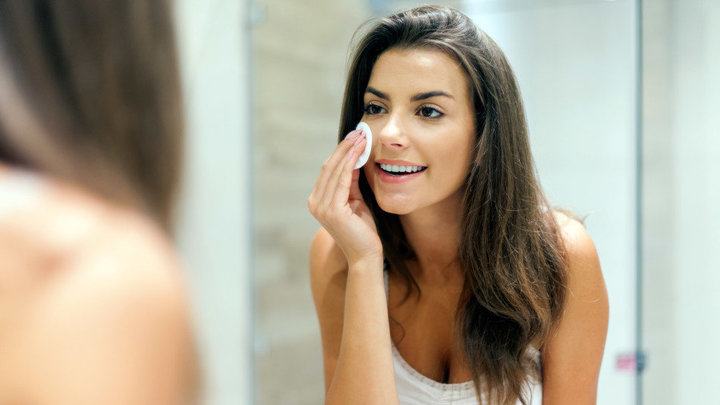
Why it’s making you look older: Thanks to today’s long-wear, budge-proof makeup formulas, “which require more than water and a gentle cleanser to remove,” says Nazarian, you’re probably going to bed with some makeup still on your face. That can lead to clogged pores, dull skin and accelerated skin aging, says Nazarian.
The fix: If you use long-lasting makeup formulas, start your cleansing process with a makeup-removing wipe or cloth (which will have ingredients that break down long-wear formulas better than a regular cleanser can. Look for ones that say “makeup-removing” on the packaging); then use your gentle cleanser to catch any traces the wipe left behind. The two-step combination is much more likely to get all of your makeup off before you hit the hay.

Why it’s making you look older: You know that heat can dry out your skin, and that exacerbates wrinkles. It can also lead to eczema and atopic dermatitis flare-ups, and is a known trigger for rosacea, an inflammatory condition that accelerates the aging process, says Nazarian.
The fix: Everyone’s ideal sleeping temperature is different, but a good rule of thumb is to find a temperature where you’re just a little bit cool without a blanket, not straight-up cold. (You could also try using a humidifier in the bedroom to keep the air moist.)
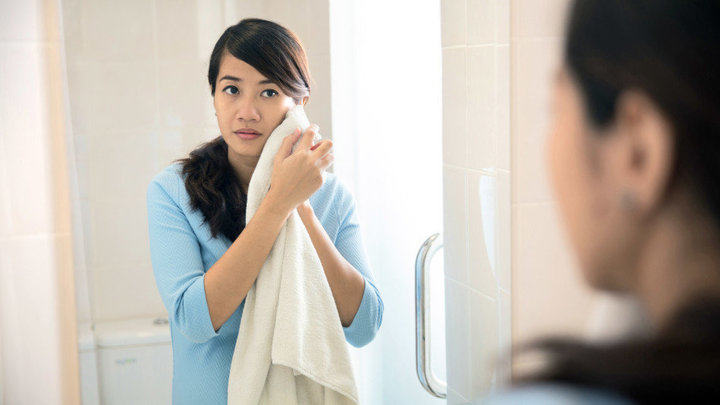
Why it’s making you look older: Retinol (the gold standard among anti-aging ingredients) can be irritating. Because it penetrates even deeper into damp skin, you may experience increased tenderness or feel it more sharply, says Nazarian. You’re less likely to use it consistently if you can’t stand the way it makes your skin feel; and, if you don’t apply it regularly, you won’t see the benefits.
The fix: If you’re new (or even new-ish) to retinol, make sure your skin is dry before you apply it. Only seasoned retinol users should consider using it on damp skin.
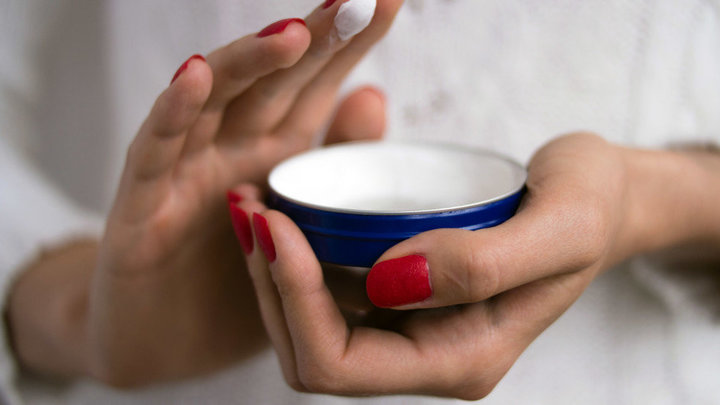
Why it’s making you look older: Along with your chest/neck area (and your face, of course) your hands are one of the first areas to show the signs of aging. Using a rich, hydrating hand cream is a great way to combat dryness and crepey skin; but, if you put it on in the morning, you’ll likely wash and rinse it off over the course of the day, says Nazarian.
The fix: Make hand cream part of your nightly anti-aging routine, applying it just before bed.
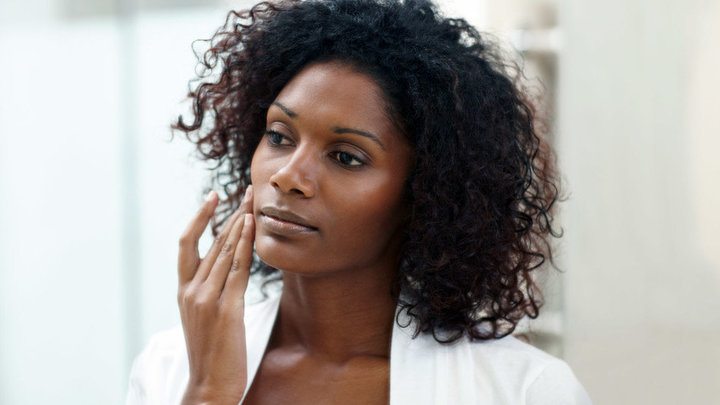
Why it’s making you look older: First, kudos for using anti-agers at night, when your skin makes the best use of them. But they need to be applied in the right order to make sure all of the ingredients can actually reach your skin. Generally speaking, products should be put on in order of heaviness—gel, lotion, cream, serum, ointment, etc.—to prevent thicker products from blocking the lighter ones.
The fix: Start with serums or gels, then lotions, then creams, then ointments, says Nazarian. Don’t go overboard with products, though. Ploch recommends using no more than three or four per night, to minimize skin irritation. If you’ve got a long nightly routine full of products that only do one thing each, consider switching to multitasking products instead.

The story goes that as you get older, your sex life gets less satisfying, right? Well according to a new study, that’s totally dependent on how you approach it.
The study, published in the Journal of Sex Research, actually found that older people had a higher sexual quality of life than their younger, friskier counterparts – with a few caveats.
For the study, the researchers looked at how sexual satisfaction changed over time using data from a national survey of more than 6 000 adults between the ages of 20 and 93, collected between 1995 and 2014.
To analyse the survey data, researchers created multiple models (or charts) to see the association between participants’ age and the quality of their sex lives.
The first model, which compared the age of the participants and which wave they took the survey in to how they ranked their sex lives over time suggested that the quality of their sex lives declined with age.
The second model found that both men’s and women’s sex lives take a dip as they get older.
Read more: 12 things we wish guys knew about blow jobs
However, when the researchers recalculated their model to take frequency of sex, perceived control of their sex life, thought and effort invested in sex, and number of sexual partners into account (in addition to their age and when they took the survey), they found that participants who reported high levels of comfort and control, thought and effort, and frequency of sex were actually more satisfied with their sex lives even as they got older.
And those who had only one partner (indicating they were in a committed relationship) were also more satisfied than those with two or more.
In fact, when these factors were favourable, their sexual quality of life increased by about 1.4% over each decade.
The researchers also found that as you get older, how often you have sex and control over your sex life becomes less important to your overall sexual satisfaction. But at the same time, the amount of thought and effort put into each encounter is even more vital to a happy sex life. In other words, the quality of your sex sessions trumps the quantity as you get older.
The future is definitely looking hot.
Looking for more? Here are six important times in your life when sex feels totally different.
This article was originally published on www.womenshealthsa.co.za
Image credit: iStock

NEXT ON HEALTH24X

A year in school adds nearly a year to your life, study in Edinburgh shows.
Jane Fonda is a beauty, both on the red carpet and off.
The actress glows on the cover of Town & Country’s November issue in what is an unretouched photo, People reports.
Fonda wears a simple white collared shirt and bold statement jewelry with minimal makeup.
Fonda is open about the fact that she’s had cosmetic surgery, though she’d rather discuss topics she deems more important.
“I did have plastic surgery. I’m not proud of the fact that I’ve had it. But I grew up so defined by my looks,” she told W Magazine in 2015. “I was taught to think that if I wanted to be loved, I had to be thin and pretty. That leads to a lot of trouble.”
Her unretouched cover is the latest step in the beauty industry’s growing appreciation of older women. It follows Helen Mirren’s Allure cover from August, which accompanied Allure’s announcement it is banning the term “anti-aging” from its pages.
“Whether we know it or not, [the term is] subtly reinforcing the message that aging is a condition we need to battle,” wrote Editor-in-Chief Michelle Lee. “Repeat after me: Growing older is a wonderful thing because it means that we get a chance, every day, to live a full, happy life.”
Fonda and Mirren gave us even more gold when they rocked the runway together at a L’Oreal fashion show last week.
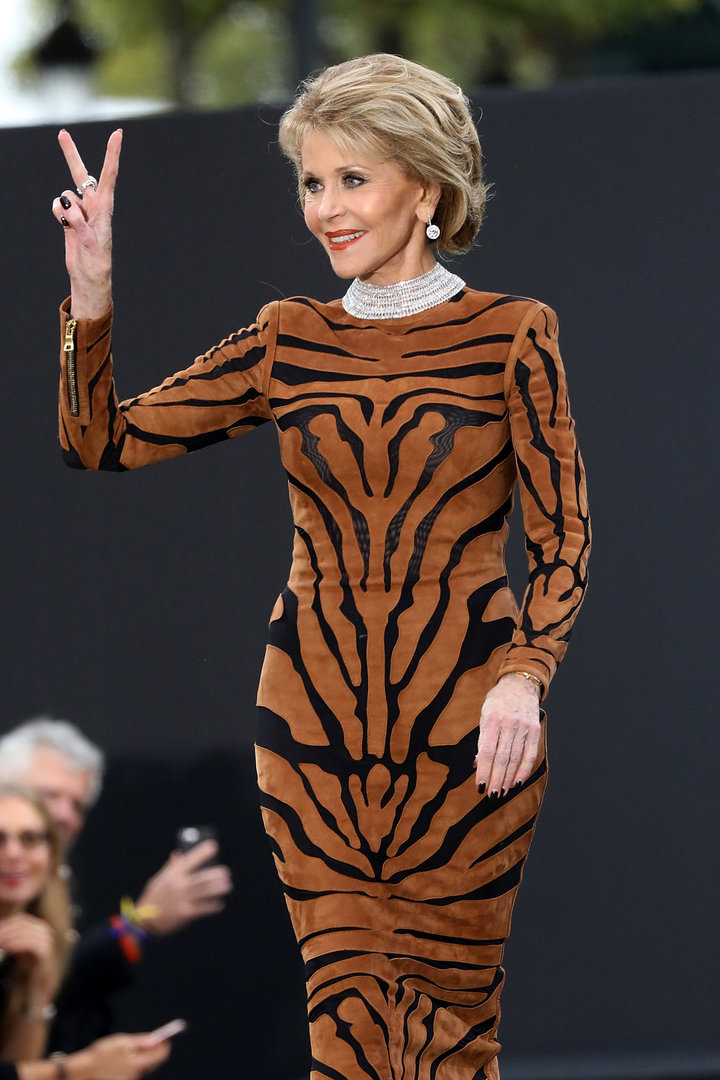
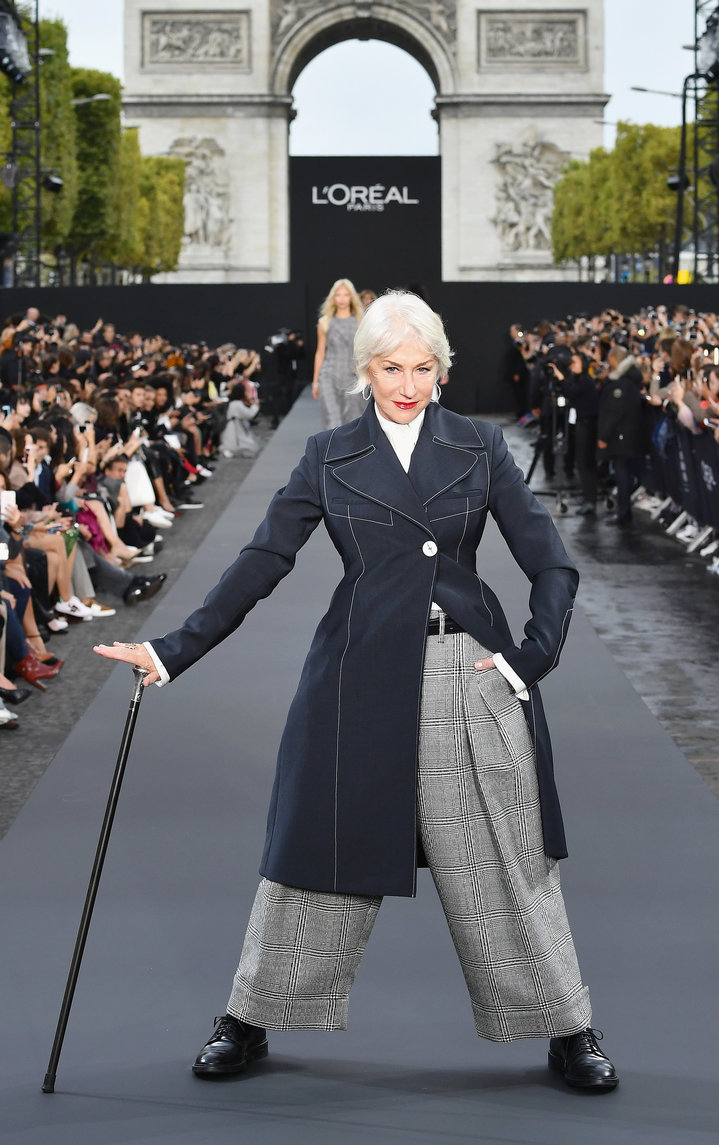
Keep it up, ladies.
CORRECTION: A previous version of this story misattributed a 2014 quote against retouching to Jane Fonda. It was Helen Mirren who made the statement.

Jane Fonda Is 79, Unretouched And Glorious On The Cover Of Town & Country
[brightcove:5583080330001 default]
Does going gray earlier mean I’m aging more quickly?
Silvery strands are one of the more conspicuous signs of aging. That said, getting gray hair doesn’t necessarily mean that you’re closer to the end of your life span than anyone else your age. Gray hair occurs when the hair follicles produce less melanin, the pigment that gives hair its color. It’s most common for graying to begin in your 30s, though some women spot a few grays in their 20s. Your graying age is related to your ethnicity (Caucasians tend to go gray earlier than Asians and African-Americans), as well as your family history, so you may want to ask your parents and grandparents when they noticed their first grays.
RELATED: 13 Everyday Habits That Are Aging You
If you think you’re going gray unusually early, there are a number of possible reasons why. Smoking, for one, has been linked to the early onset of gray hair. Environmental factors—like ultraviolet rays and air pollutants—may also be partially to blame. In rare cases, premature graying can be a sign of a medical issue, such as vitiligo (a condition that causes skin to lose its pigmentation), pernicious anemia (in which the body has difficulty absorbing vitamin B12) or problems involving your pituitary or thyroid glands.
Health’s medical editor, Roshini Rajapaksa, MD, is associate professor of medicine at the NYU School of Medicine and co-founder of Tula Skincare.
CoverGirl keeps on getting better with age, adding new members to its roster of awesome faces. The same can be said of its newest star, 69-year-old model, dietician and entrepreneur Maye Musk.
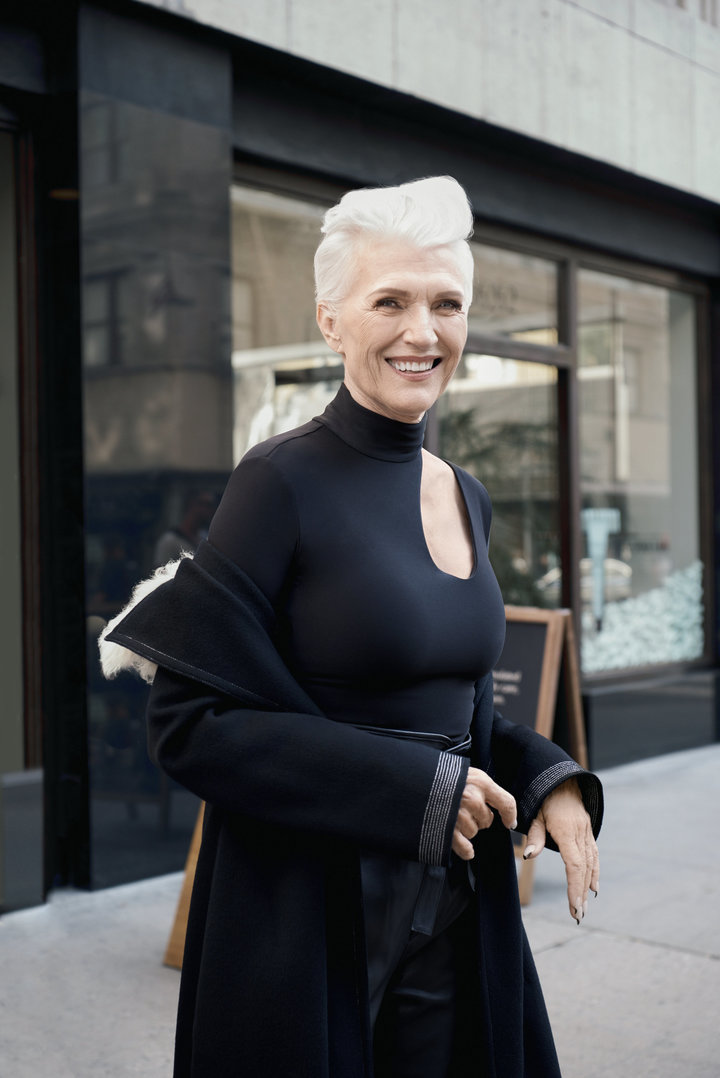
Musk, who is also the mother of Tesla founder Elon Musk, filmmaker Tosca Musk and The Kitchen Community founder Kimbal Musk, has two master’s degrees and has been modeling since she was 15.
“Maye Musk is not only a timeless beauty, but a visionary who has always follower her own path, creating new opportunities and paving the way for so many others who might not meet the industry standard of ‘model’ but are truly beautiful in every regard,” said Unkowa Ojo, senior vice president of CoverGirl said in a press release.
The news comes just a few weeks after the global brand named Issa Rae as a CoverGirl and just days after it tapped Ayesha Curry, too.
“Who knew, after many years of admiring the gorgeous CoverGirl models, that I would be one at 69 years of age?” Musk wrote on Instagram. “It just shows, never give up. Thank you CoverGirl, for including me in your tribe of diversity. Beauty truly is for women of all ages, and I can’t wait to take you all along this amazing journey with me!”
Despite Musk’s long modeling career, it’s just recently that she emerged as the star of multiple magazine covers and campaigns. In an interview with The New York Times, she said aging has been good for her.
“You develop confidence, you’re able to handle the knocks a little easier,” she said. “I model for my age. I’m not trying to hide it and say I’m 50. I’m so proud that I’m going be 70.”
This news serves as further proof that the fashion and beauty industries are adjusting their dated standards of beauty. More models over 50 walked in more shows during Fashion Week in March 2017 than ever before, for example.
Easy, breezy, beautiful and right on the money. Big ups, CoverGirl.

