The country-pop diva talked about embracing menopause and why she’s proud to be flaunting more than ever in an interview with the New York Post’s Alexa magazine published Wednesday.
Twain ― a five-time Grammy winner with a number of hits to her name, including “That Don’t Impress Me Much” and “Man! I Feel Like a Woman!” ― described the experience as a rewarding challenge.
Advertisement
“I think menopause was a very good thing for me because there were a lot more things changing in everything about me physically that I had to very quickly come to terms with,” Twain, 58, said.
“Menopause taught me to quickly say, ‘You know, it may only get worse. So just love yourself now. Just get over your insecurities — they’re standing in your way. And fear is standing in your way,’” she explained.
“I always sing about being fearless and all of that. I go there when I write. But I’m not living it the way I’m writing it. And I want to live the way I write. I’m more fierce than I ever was because I really demanded it about myself.”
Shania Twain performs on Day 3 of the 2023 Faster Horses music festival on July 16 in Brooklyn, Michigan.
Scott Legato via Getty Images
Advertisement
That new outlook inspired Twain to bare her soul, and more, for the cover of her single “Waking Up Dreaming,” which came out last year.
Talking about her topless, Western-themed photo shoot, she said: “I think I needed to capture where I am right now, because it’s a moment that I want to remember.”
“So I just had to be brave about it, to own it,” she said. “And I felt really good that I felt like, ‘Yeah, I’m OK with that.’ I need to be able to look at myself in the mirror every day. I’m perfectly the way I should be. This is the way I should be at my age. I’m fine with it. And I’m not afraid of it anymore. It’s all good.”
The Canadian singer-songwriter struck a similar tone around the time of the song’s release last year.
“I am a woman in my late 50s, and I don’t need to hide behind the clothes,” she told People magazine. “I can’t even tell you how good it felt to do nude shooting.”
Advertisement
“I was just so unashamed of my new body, you know, as a woman that is well into my menopause,” she said. “I’m not even emotional about it; I just feel okay about it. It’s really liberating.”
Isn’t there something so thrilling about finding a truly stellar and game-changing product? It’s a huge joy, and you want to tell everyone how great it is and use it all the time and bask in its glory and congratulate yourself for choosing it and see other people experience it, too. It’s so satisfying to see good results that make a purchase truly worth it.
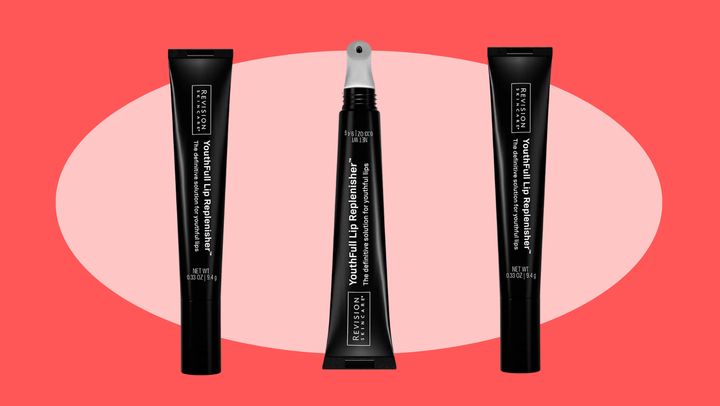
That’s how I feel about Revision Skincare’s YouthFull Lip Replenisher, which I bought last month while on a mission to find something that would care for and address my aging lips. My lips have gotten just as much sun damage as the rest of my face over the last nearly-five decades, and it was starting to show in fine lines. I’m not overly bothered by signs of aging, but I do want to take care of my face, and of course I can’t just slap some retinol cream on my lips like I can on my crow’s feet. Lip skin is wildly delicate.
Advertisement
I figured one of the most promising lip-safe active ingredients would be peptides, given that certain peptides can have skin-restoring abilities and help address things like loss of firmness, dullness and fine lines, and others are solid antioxidants. Although they don’t produce quick miracles — no skin care does — peptides can be effective, and some are gentle enough to be included in lip products. I tried a few of them, including Hailey Bieber’s peptide lip gloss (what can I say? she has good skin!), but nothing was really doing it for me.
Then I took one last stab at it when I spotted Revision’s peptide treatment at Dermstore. Designed to target visible signs of lip aging, it not only has several peptides including palmitoyl tripeptide-1 and palmitoyl tripeptide-38, but also other research-backed ingredients like vitamins E and C and green tea that canwork well in tandem with peptides, plus very solid moisturizers like shea butter. I put it on overnight — more on that choice below — and let me tell you, I could actually tell a difference the very next morning.
Advertisement
Revision Skincare YouthFull Lip Replenisher
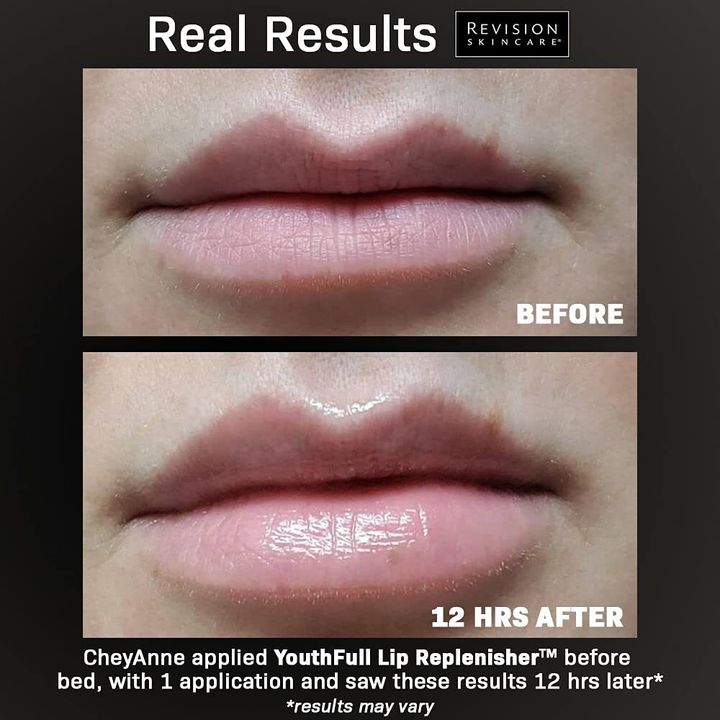
My lips hadn’t been in terrible shape, but they definitely seemed smoother than they’d been in years. They weren’t puckery. They didn’t look wrinkly. And they certainly felt supremely healthy. I kept going with overnight use, and within days felt like this it was making a real difference. I was honestly floored when I woke up each morning, and kept being reminded during the day when they just felt so freshly smooth all the time. And given how little of it I have to squeeze out to give my lips a solid coat, I feel like this one tube is going to last for an almost comically long time (a relief given that $40 is way more than I typically spend on a lip balm).
I will note that when I first put this on, I immediately knew it wasn’t going to be a product I’d wear much during the day, despite Revisions’s guidance of applying it three times daily. It’s pretty thick and sticky (if you are constantly pulling your hair out of your lip gloss, you know the struggle). But as one reviewer noted, this is actually the product’s superpower, because it absolutely does not budge, even if you wear it overnight. “Although some reviews complain about the tackiness of the balm, that’s actually what is so great about this product!” wrote a Dermstore customer named Lizzie. “It sticks to lips better than any other balm I’ve tried.”
I’m only including this marketing image from the brand because I found my results to be very similar.
I can attest to this. Each morning when I wake up, it’s still there as if I just applied it. I sleep on my side, but it doesn’t melt off or get on my pillow. The fact that it clings so hard and lasts so long gives me some assurance that all those little peptides really are hard at work while I sleep, safely ensconced on my lips in a very stay-put formula.
Advertisement
Although some reviewers do enjoy it wearing this formula as a daytime gloss, many others are using it overnight only, too, and say it makes their lipstick easier to apply the next day. Some aren’t so concerned with fine lines, and simply use it for dry, cracked lips in winter or desert climates (and they say it’s hugely effective for that). Read some promising thoughts from verified Dermstore purchasers and Amazon reviewers below:
“Love this product. The day it arrived I used it twice, at noon and before bed. When I woke up in the morning I did a double take in the mirror. My 46 year old lips were reminded me of the 18 year old lips in my senior pictures! They were more defined on the edges, and a bit more plump. The results after one night were amazing!” — Julie at Dermstore
“I have a pretty epic lip balm graveyard in my beauty cabinet so I was not expecting much from this, but it knocked my socks off! It’s so good. Very thick and sticky, but that helps it stay on all night. I just wipe off the residue in the morning and my lips look amazing. I have not had a single skin flake since I started using this. I also love the smell, which is very delicate. Will definitely repurchase.” — Anonymous at Dermstore
“There are tons of lip moisturizers and masks and I’ve tried many of them. They essentially have the same end result…temporary hydration of the lips. None of them have ever really wowed me until I tried Revision! What makes it different? It adheres to the lips unlike any product that I’ve ever tried. I apply it at bedtime and it is STILL there in the morning! That kind of adherence means that the active ingredients make contact with the lips longer so they can work their magic. My lips are hydrated and plumped all day long with just a night time application so it’s very cost effective as well.” — Laura at Dermstore
“It actually works! My Dermatologist recommended this to me. Results are noticeable some in the beginning but with daily use (throughout the day) my lips are fuller, less wrinkles! (age 46)” — Amy Gragg at Amazon
“I am embarrassed to say how many of these tubes I’ve purchased since first using it after lip injections in August. There is absolutely nothing that comes close in both appearance and function. It stays on for hours and my lips are plump, hydrated and regaining their natural healthy tone and texture. My only complaint is that there isn’t a punch card because I will be buried in this lip treatment.” — Jessica at Dermstore
“I’ve tried so many lip masks. Laneige, Tatcha, First Aid Beauty (was amazing and now discontinued), Bite, Fresh, Ole Henricksen, Kiehl’s (tastes and smells fantastic, lasts on lips for 4 minutes)…Tarte, Buxom, Dior, was a Burt’s Bees fan for a decade. BB is nice and keeps the moisture in, but no active ingredients to nourish. Revision is serious business… I travel for work, am on planes and changing climates weekly. My lips are soft and nourished. I’m over 50, and no lip lines. **Can’t recommend strongly enough. 10/10**” — Kimberly S at Amazon
“Didn’t want to love this product due to the price point but it really works. Gives me a plump lip filler look when left on overnight. Definitely prefer this to the laneige lip mask. It does have a sticky/tacky feel so best to use overnight vs during the day.” — Lindsey at Dermstore
Shenae Grimes-Beech knows a thing or two about aging in the public eye.
The “90210” actor sent a message via Instagram last week to people who find it necessary to comment that she’s “aged terribly” whenever she posts “a nostalgic clip from my past life as a TEEN actor.”
“Thing is … I’m just … aging. I’m nearly 34 years old with 2 kids, what the hell do you expect?!” Grimes-Beech wrote in her post, alongside a video of her explaining the same message to her followers.
Advertisement
The actor said she knows “how easy it is to lose grip on reality and judge yourself harshly when you’re inundated with images of seemingly effortless ‘perfection’ every day.”
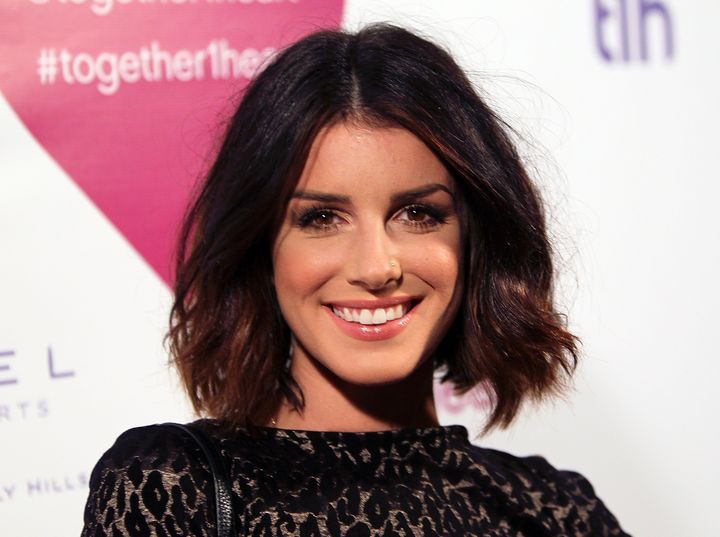
Shenae Grimes-Beech attends the together1heart launch party on June 25, 2016, in Los Angeles.
David Livingston via Getty Images
She added that she is “100% for a bit of Botox or filler or whatever it is you choose to do to feel confident in your skin” and explained that she’s “been debating a boob job big time since breastfeeding two children.”
“That said, I think transparency when it comes to beauty standards is more important right now than ever before,” the “DeGrassi” entertainer continued. “I have so much respect and admiration for the badass, beautiful women I follow that open up about these topics, whether you choose to age naturally or with a little help from your friends.”
Advertisement
Grimes-Beech is one of a handful of celebrities in Hollywood who have been open about their experience of getting older in the spotlight.
Former “Family Ties” star Justine Bateman realized people had a lot of opinions about her aging when she went to Google her name while researching something when she was in her early 40s.
“I put in my name, Googled my name ― Justine Bateman ― and then the autocomplete came up, which was ‘looks old.’” Bateman, now 57, said in an interview with “60 Minutes Australia” earlier this year.
“I was like, ‘What?’ And I looked at the pictures that they had as evidence, and I couldn’t see what they were talking about,” she said, adding that she doesn’t “give a shit” about what people think.
Advertisement
“I think I look rad,” Bateman added. “I think my face represents who I am. I like it.”
If you’re over 50 years old, you’ve probably noticed that food affects you a little bit differently than it did when you were younger. While a nightly bowl of ice cream used to be a delicious, harmless nightly staple, you might find that this habit now has a bigger impact on your health or makes you feel a certain way.
It’s possible that your doctor has talked to you about eating in a way that promotes bone strength or keeps your blood sugar in check, and there’s good reason for that. As we age, our nutritional needs change, and the phrase “you are what you eat” becomes more relevant than ever before.
Advertisement
Women see estrogen levels drop with menopause, which leads to a decrease in bone mass and an increased need for calcium-rich foods that can help stave off osteoporosis. And for both women and men, bodies lose the ability to produce insulin as easily over time, leading to blood sugar imbalances and the potential development of Type 2 diabetes. The metabolism slows down, too, particularly after age 60 — which means calorie-heavy foods are more likely to cause weight gain. And considering that heart disease is the No. 1 killer in the United States, eating a heart-healthy diet is key.
We know, we know. We’re delivering a lot of depressing news here. With that in mind, certain foods can be beneficial when it comes to keeping age-related health issues at bay. Here, a geriatrician and registered dietitians share the top foods people over 50 should pick up at the grocery store.
Flavorful herbs like parsley, saffron or rosemary
Because salt can contribute to high blood pressure, Dr. Nina L. Blachman, a geriatrician at NYU Langone Health, suggests limiting salt as much as possible. “Instead of salt, I recommend seasoning foods with herbs,” she said. Flavorful herbs like parsley, saffron or rosemary can go a long way when it comes to adding flavor to your food with little or even no salt.
Beans
According to nutritionist Tara Tomaino, a registered dietitian, beans (think chickpeas, black beans, etc.) are a great option for people over 50.
Advertisement
“Whether canned or dried, beans are a great food to incorporate in the diet for people 50 and over,” she said. “Beans are a great source of fiber as well as plant-based protein. Fiber is a key nutrient for heart health, blood-sugar management and weight control. If purchasing canned beans, be sure to rinse and drain them to get rid of the packing liquid and excess sodium. Aim to eat half a cup of beans per day by adding them to salads or soups.”
“This high-protein food is a great choice for any meal of the day or even snacks,” she said. “Pair cottage cheese with fruit for a sweet and salty combo or blend into a dip to enjoy with fresh vegetables. Choose low-sodium or no-salt-added cottage cheese if high blood pressure is a concern.”
Dark leafy greens
Choose from your favorite leafy greens, Tomaino suggests: spinach, kale, chard, collard greens and even broccoli.
“These vegetables are high in fiber, iron, magnesium, potassium and calcium, which are all crucial to heart health. Leafy greens are also low in carbohydrates and calories, making them an excellent addition to the diet if you are trying to manage weight and blood sugar.”
Advertisement
Glasshouse Images via Getty Images
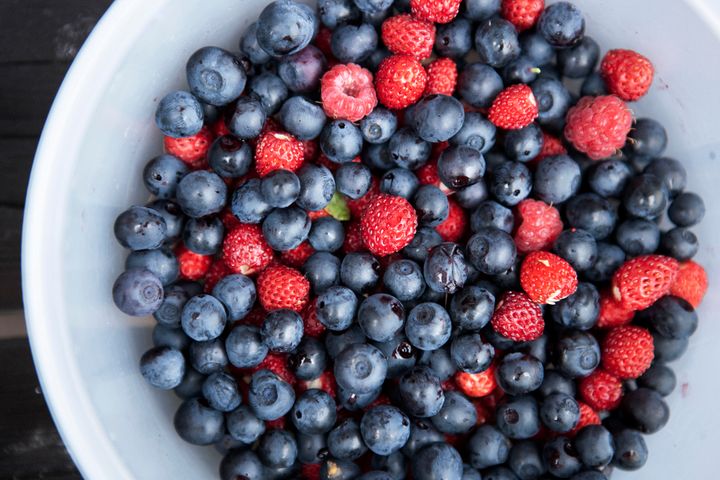
As your insulin levels change, berries are a low-sugar option if you want a sweet treat.
Berries
All kinds of berries, including strawberries, blueberries and blackberries, are packed with health benefits for people over 50.
“Berries are high in antioxidants, which help mitigate inflammation and provide the body with anti-cancer properties,” Tomaino said. “Berries are also high in fiber, making them an excellent fruit choice for those managing blood sugar. Choose organic berries (fresh or frozen) when possible. Eat them on their own or add to oatmeal, yogurt, salads or smoothies.”
Salmon
Salmon, ideally wild-caught, is a top food for people over 50 due to it’s omega-3 content, Tomaino said.
“Omega-3 fatty acids are beneficial to heart health and have also been linked to brain health,” she said. “Lower in saturated fat than red meat, salmon is a great protein choice to include in the diet at least once a week. Broiled salmon with veggies makes an easy weeknight sheet pan meal.”
Advertisement
Nuts and seeds
Almonds, walnuts, flaxseeds and chia seeds are rich in heart-healthy fats, fiber and essential nutrients, explained nutritionist Marine Melamed. “They can help maintain healthy cholesterol levels, support digestive health, and provide a source of plant-based protein,” she said.
Lean protein
Skip the fatty cuts of meat and opt for lean cuts of chicken and turkey, or even eggs. “Lean sources of protein like poultry, lean cuts of meat, eggs and plant-based proteins (tofu, legumes, lentils) are essential for muscle maintenance, immune function and wound healing,” Melamed said.
Quinoa and brown rice
Whole grains are another great option for the 50-plus crowd. “Quinoa, brown rice, whole wheat and oats are high in fiber and complex carbohydrates,” Melamed said. “They provide sustained energy, aid in digestion, and help regulate blood-sugar levels, reducing the risk of developing metabolic diseases.”
While nutritional needs and limitations do become more complex as we get older, with a few simple diet tweaks you can come up with simple, delicious ways to modify your diet. So get that grocery list started!
At HuffPost, we believe that everyone needs high-quality journalism, but we understand that not everyone can afford to pay for expensive news subscriptions. That is why we are committed to providing deeply reported, carefully fact-checked news that is freely accessible to everyone.
Our News, Politics and Culture teams invest time and care working on hard-hitting investigations and researched analyses, along with quick but robust daily takes. Our Life, Health and Shopping desks provide you with well-researched, expert-vetted information you need to live your best life, while HuffPost Personal, Voices and Opinion center real stories from real people.
Help keep news free for everyone by giving us as little as $1. Your contribution will go a long way.
At HuffPost, we believe that everyone needs high-quality journalism, but we understand that not everyone can afford to pay for expensive news subscriptions. That is why we are committed to providing deeply reported, carefully fact-checked news that is freely accessible to everyone.
Help keep news free for everyone by giving us as little as $1. Your contribution will go a long way.
As the 2024 presidential race heats up, the very foundations of our democracy are at stake. A vibrant democracy is impossible without well-informed citizens. This is why HuffPost’s journalism is free for everyone, not just those who can afford expensive paywalls.
We cannot do this without your help. Support our newsroom by contributing as little as $1 a month.
As the 2024 presidential race heats up, the very foundations of our democracy are at stake. At HuffPost, we believe that a vibrant democracy is impossible without well-informed citizens. This is why we keep our journalism free for everyone, even as most other newsrooms have retreated behind expensive paywalls.
Our newsroom continues to bring you hard-hitting investigations, well-researched analysis and timely takes on one of the most consequential elections in recent history. Reporting on the current political climate is a responsibility we do not take lightly — and we need your help.
Support our newsroom by contributing as little as $1 a month.
Before “pandemic” became a household word, my husband Keith received an email from one of our neighbors. I’ve changed his name, but frankly, Jim could be any older person, living alone with children hours away.
Jim said he was afraid he’d die and no one would find him for days and asked if Keith would check in on him regularly with a call, email or text. Keith said, “Sure,” and wrote down his children’s contact information, just in case.
Advertisement
“Love our neighbor as ourselves” — that was our guideline. But as Jim declined mentally and physically, we began to ask ourselves how we could help without enabling him to stay in a dangerous living situation.
Keith and I had retired to this small rural neighborhood of 12 families. All of us chose the location for the mountains, forests, quiet, and privacy afforded by multi-acre lots. How-are-you waves when passing on the gravel road that connects our properties and the annual owners’ association meetings — that was about the extent of our interaction. But with the pandemic, we became more deliberate about checking on one another.
Even though we’d noticed deterioration of Jim’s exterior house maintenance during the pandemic, we weren’t overly concerned about him until he had a single-vehicle accident on the mountain road one evening. He was not injured, though his truck took a beating. More concerning was that he didn’t have a reasonable explanation for what had happened.
Keith contacted his children, and they arrived that weekend. We offered to meet with them at our house. Jim did not attend.
Advertisement
“The house was as we expected,” his son said, “piles of trash and pizza boxes.” We weren’t surprised either, having seen our parents let things go in their later years.
“This is new to you, common but not easy,” I said. “There are services you can put in place, as we did for our parents, and resources. In the meantime, how can we help?”
Jim’s son was already assisting with finances and legal matters; his daughter said she’d check on housekeeping, coordinate with doctors, and research elder-care services covered by his insurance. We agreed to visit Jim more often, to be their “eyes and ears on the scene.”
Jim admitted to having balance and memory problems. We noted other concerns along with his poor eating habits: lack of social interaction, misplacing personal items, and inability to properly care for his beloved dogs. Jim had built a fenced area when he got the two dogs eight years ago but had never walked them, and now he couldn’t. So, when I stopped to check on Jim during my mid-afternoon writing break, I walked his dogs. Minimal, not nearly enough, but we had our own dogs to walk too.
It was hard to see Jim’s decline. Should we have been doing more? Yes, but more could turn into a full-time job, infringe on his independence, and give him and his children a false sense of security.
Advertisement
In less than a year, Jim had two more unexplained one-vehicle accidents. By then, everyone in the neighborhood was worried about him. We encouraged his children to pursue a driving evaluation for their father and left it at that.
There are many federal and state government and organizational resources and articles about how to help older people. Regional agencies, such the Jefferson Area Board for Aging in our community and local social services, are good places to start as well as safety nets for low-income seniors, hardship cases, or those without family. Seniors need on-site teams for help and support: trusted friends, good neighbors, church members. Recommendations for “team” members include visiting often, offering meals and transportation, helping with home maintenance, listening, and watching for scams and pet neglect.
We now invite Jim for dinner every Tuesday — picking him up and driving him home— so he has a decent meal and social interaction once a week. Keith regularly emails Jim’s son, while Jim’s daughter and I text each other. She found a physical therapist to help her dad with balance exercises. The therapist also delivers groceries she orders online.
The gravel mountain road in the author’s neighborhood in November 2021.
Courtesy of Carole Duff
In a pinch during times when Jim’s truck is in the shop, I drive him where he needs to go and pick up milk, orange juice, and his prescriptions when I’m otherwise out and about. But we draw the line with house maintenance, personal care, and regular transportation, even though driving is our biggest concern: his safety and the safety of those he might encounter on the road.
Advertisement
Keith and I have re-missioned to second careers — we’re both writers — and have other commitments. Although it is an honor and a blessing to help our neighbor, we do not want to love grudgingly. Jim and his children often express gratitude, but ultimately, they must figure this out. He has options and is able to pay for services but is more afraid of losing his privacy or having to leave his home than he is of dying alone. And there’s the rub, as it is for many.
“Hey, Jim,” I yelled in his entry one afternoon. His two large dogs came barreling down the stairs — there are lots of stairs in Jim’s three-level house. The house felt uncharacteristically cold, and it was the middle of winter.
“Hey,” Jim said to me. He sat on the top step of the stairs. “When I got up this morning, it was 55 degrees in the house and the heat was off. Guess I ran out of propane.”
“Have you contacted the company?” I asked.
“Not yet. I have to find my phone. I started a fire in the basement stove.”
Until recently, he’d heated his house with firewood. Now I wondered if he remembered how to do so safely. Instead of asking and risk hurting his pride — and our relationship — I pulled out my cellphone. “While you find your phone and call the propane company, I’ll text your daughter so she can help you with this,” I told him. I leashed the dogs. “I’ll touch base with you again when we get back from our walk, OK?”
Things often disappear in Jim’s house, including his watch and phone. I’d get “I can’t reach Dad” text messages from his daughter and reply, “I’ll check on him when I’m down there.” Another line drawn, except when his cellphone went missing for two days. His daughter had installed a phone tracker, which he could ping from his computer. So, she coached him on my phone until I found his phone pinging under the sofa upstairs where he sleeps.
Advertisement
Jim’s dogs need grooming, and so does he — shave and haircut. But Tuesday dinners, dog walk check-ins, and occasional “in a pinch” helping are how things stand. We love our neighbor — within reason.
On Fridays, Keith and I review the week as we celebrate our happy hour together. We are blessed to have each other — and to hold each other accountable for personal and household care and social behavior. We’re baby boomers in our seventies. Our children also live hours away.
We pray not to burden anyone but know when our time comes we will, no matter how well we plan. There are no magic wands, and no one to make these issues go away. But after cleaning out decades of accumulation from our parents’ homes, we promised ourselves not to keep more than we need. And after watching Jim’s decline and experiencing our own, we have more patience and compassion for those who need help due to aging.
“I think we’re still hitting all points,” Keith said. “Physical, spiritual, intellectual, family, community. We’re attenuating gracefully, but conscious of our slipping.” I nodded.
“We will outlive our time here on the mountain,” I said, and he nodded. But for now, we are still in the third stage of life, our third season, autumn, the harvest. Time to reconnect and prepare for the winter we know is to come: the fourth and final stage.
Advertisement
There’s great strength in facing the realities of aging and death, in preparing for the inevitable rather than denying it. That’s how we love ourselves and others. Community. Not easy, never perfect, almost always messy, but a good goal all the same.
Carole Duff is a veteran teacher, flutist, naturalist, and writer of narrative nonfiction. She posts weekly to her long-standing blog Notes From Vanaprastha and has written for Brevity blog, Mockingbird, Streetlight Magazine,The Perennial Gen (now The Sage Forum), for which she is a regular contributor, and other publications. Her book “Wisdom Builds Her House” will be released in early 2024 through Brandylane Publications. Carole lives in Virginia’s Blue Ridge Mountains with her husband, writer K.A. Kenny, and two large, overly friendly dogs.
Do you have a compelling personal story you’d like to see published on HuffPost? Find out what we’re looking for here and send us a pitch.
Eyebrows play several crucial roles. They frame your face and help you express emotions, like surprise, happiness and anger. They also help protect your eyes from moisture and light.
But as you get older, you may notice your eyebrows start to look a little wispy.
“It is true that most people will develop sparse eyebrows as they age,” New York-based board-certified dermatologist Dr. Lian Mack told HuffPost. “With age, the eyebrow hair follicles become senescent, often producing thinner, finer hairs.”
Advertisement
Around the time you reach your 40s, your levels of the hormones estrogen or testosterone start to decline. And with that comes hair thinning and hair loss.
Along with your hair’s natural reaction to aging, several other factors can cause your eyebrows to thin. “It may be related to age, over-plucking, treatments like chemotherapy, thyroid disease, hormonal fluctuations or an unbalanced diet,” Mack said.
Dermatologists say there are several ways to deal with thinning eyebrows, including at-home remedies and doctor’s office treatments. Here’s how to handle sparse eyebrows.
Why do your eyebrows get thinner as you age?
The natural aging process affects the hair-growth cycle, said Dr. Ife Rodney, a board-certified dermatologist. This can decrease eyebrow density and thickness.
Advertisement
“Aging can also cause a decrease in the production of melanin, the pigment responsible for hair color, resulting in lighter and sparser eyebrows,” Rodney said.
Hormonal changes, including a drop in estrogen and testosterone, can contribute to the problem. Nutrient deficiencies, including of vitamin A, vitamin B7 (biotin), zinc and iron, can slow hair growth. Thyroid disease may lead to eyebrow hair loss and skin conditions, like eczema or psoriasis, or the autoimmune disease alopecia areata could affect your eyebrows.
Genetics play a role, too. Mack said the number of hair follicles you have and your eyebrow thickness are genetically predetermined.
“If an individual is starting out with fewer eyebrow hairs, it may simply appear as if they are losing hairs more rapidly than someone who biologically has more hairs from birth and is of a similar age,” she explained.
And if you’re prone to genetic hair loss, you might be more likely to experience thinning eyebrows, Rodney said.
Advertisement
How to slow eyebrow thinning.
If you’ve already noticed your eyebrows are looking thin, dermatologists say there are a few things you can try to slow the process:
Keep a healthy diet that’s rich in antioxidants, including a rainbow of fruits and vegetables.
Take vitamin E, biotin and iron supplements to speed up hair growth.
Avoid overplucking.
Apply sunscreen to your eyebrows, as UV rays can damage sensitive hair follicles.
Avoid using scrubs or other skin care and cosmetics with harsh chemicals and opt for all-natural products.
Use a serum to encourage eyebrow growth (see more below).
Talk to your dermatologist about the best course of action.
How to fake the appearance of fuller brows.
There are a couple of things you can do to address eyebrow thinning and make your eyebrows look a little fuller.
Use an eyebrow conditioner or serum.
Rodney said these products contain ingredients like peptides, biotin and panthenol, which promote hair growth and improve the appearance of your eyebrows. She recommends RevitaLash RevitaBrow Advanced Eyebrow Conditioner ($111) with biotin, green tea and ginseng.
Mack said one of her favorite eyebrow serums is RapidBrow Eyebrow Enhancing Serum ($39.99). “The formulation contains a number of peptides and conditioning ingredients to improve eyebrow density,” she said.
“When choosing an eyebrow pencil or powder, select a shade that closely matches your natural eyebrow color for a more natural look,” she said.
Dusan Stankovic via Getty Images
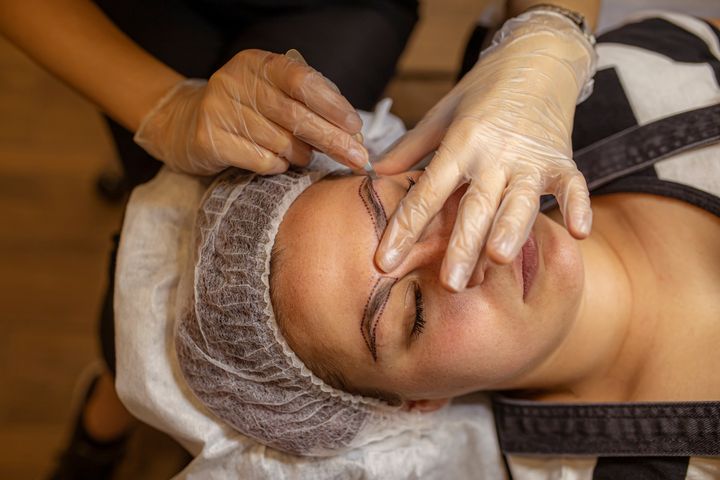
A beautician prepares for a microblading session.
Determine whether you should see a professional about thinning eyebrows.
Dermatologists can offer treatments for your thinning eyebrows, depending on the cause, Mack said.
“A board-certified dermatologist can diagnose and work up the underlying cause of your eyebrow thinning,” she added. “Once the diagnosis is confirmed, he or she can create a customized treatment to target the cause of your eyebrow thinning.”
Intralesional Kenalog injections, or tiny diluted steroid injections, can help reduce inflammation around the hair follicle, Mack said. This procedure is often used when eyebrow thinning is related to an underlying autoimmune issue.
Advertisement
Platelet-rich plasma (PRP) injections can address thinning related to natural aging. Mack said this involves drawing a patient’s blood, spinning it down in a centrifuge, and then isolating the PRP, which is injected into the skin to revitalize hair follicles.
Dermatologists can also prescribe medication, like minoxidil (Rogaine), to stimulate hair growth and thickness, Rodney said. Other treatments include laser or light therapy or KeraFactor treatments.
“Remember that the effectiveness and availability of these treatments will vary from person and doctor,” Rodney noted.
Professionally trained microblading treatments are an option that purely fixes the aesthetics, not the actual thickness of your brows. The procedure is a semi-permanent cosmetic tattoo that involves using tiny needles to create hair-like lines along your eyebrows that give the appearance of fullness, Rodney said.
“Microblading is an effective tool for semi-permanent, natural-looking enhancement,” she said, adding that her own eyebrows are microbladed. “It’s safe when done by a qualified technician, effective and long-lasting.”
Advertisement
But microblading does come with a few risks, such as allergic reactions, scarring, infections and the potential that you just might not like the results, Rodney added. You’ll likely need touch-ups every couple of years, too, Mack said.
Allsummer,people have been obsessing over the aging filter on TikTok, which is so spot on that some dermatologists have praised its accuracy. But queer men across the social media platform have been completely freaking out at the elder versions of themselves — and we need to talk about it.
Whether it’s gay men joking that they need to “drive off a cliff” or pointing out how much they “hate it here,” there seems to be a genuine animosity toward the aging filter. And although they’re mostly jokes, I can’t help but feel that these TikToks point to a deeper problem within our community: Many of us are extremely uncomfortable with the thought of getting older.
Advertisement
Of course, aging can be scary for anyone. But in the gay community specifically, youth tends to be such a high metric for self-worth that gay men often struggle with getting old, and derogatory terms like “sugar fossil” are common among older queer men.
There’s more to it than being less desirable, though; aging can also bring to mind how the AIDS crisis left us without so many of the people who would now be elder queers.
Advertisement
And the reality is that the messaging we all receive daily about gay men — from pop culture to Hollywood — doesn’t really prepare us to think about life beyond youth. It sometimes feels like there’s no road map for getting ready to live as older queer men. Our shortsightedness is evident in the spaces we’ve built for ourselves, especially considering that gay spaces tend to take the form of nightclubs and bars, which usually cater to younger people.
But if we’re lucky, we’re all going to get older, and it’s time we start to seriously address that stigma. When we’re no longer young and we need new kinds of physical and emotional support, some of us could end up in community centers where we might not feel comfortable being ourselves. In fact, a 2018 survey found that 34% of LGBTQ+ adults ages 45 and older were worried about having to hide their identities to access suitable housing. We should all be thinking about that a little bit more.
As queer men, it’s time to accept that we won’t always look young, and that our looks are not a direct reflection of our worth. This TikTok filter is, frankly, too harsh of a wake-up call — but if we need to laugh till we cry with some form of acceptance, I’m OK with that.
“I don’t like it,” Kylie Jenner says plainly. She flips her hair and stares into the camera, taking in the AI-generated wrinkles that the TikTok aging filter has superimposed on her face. Then, in almost a whisper, she adds: “I don’t like it at all.”
Videos like this one are all over my TikTok feed. Most users gawk, wide-eyed and horrified, as the viral filter generated through artificial intelligence gives their faces sagging jowls, sunken cheeks, deep grooves in the forehead and around the mouth. Like Kylie, most young people trying this filter out do not like what they see. In turn, most of the media response to the filter’s popularity has revolved around dermatology, procedures and potions that could potentially blunt the blow of nature taking its course.
Advertisement
For me, the filter brings up a different kind of discomfort.
I’m not some kind of virtuous exception to modern vanity. I’m 37 and just as shallow as the next person. But when I see this stream of instantly aged-up faces, I’m not really thinking about the aesthetics of wrinkles — I’m thinking about the older faces that I’ll never get to see.
Like the face of my little brother, who died suddenly almost 10 years ago now, at the age of 26. I think about his face, young and frozen in time in my memory, and wonder how it would look at age 60, 70. I think about how I took looking at that face for granted.
I imagine he’d be taking to his mid-30s pretty elegantly. He would’ve finally outgrown his babyish features. His face would show the permanent side effects of all the time spent laughing too hard, furrowing his brow too skeptically at the “Real Housewives,” sleeping with cheek blissfully smashed into his pillow. All the wonderful stuff of life that the skincare experts caution you against experiencing, for the sake of a smooth complexion.
Not everybody gets to grow old, the age filter reminds me.
My brother shed his skin suit so young. Too young. He was supposed to live longer, I feel sure of it, but somehow the wires got crossed. His pain was so heavy, and the drugs were too intense. He checked out too early and missed the complimentary brunch.
Advertisement
If only he could’ve known how tasty it can be to age, to keep on living. If he’d made it to the other side of his struggles, I imagine he’d have earned that look in his eye that I admire so much in people in recovery from addiction. The look that says: I’ve seen the void, and now I’m not taking any of this for granted.
Maybe engaging with our imagined older faces is a good way to remind ourselves that this body we live in, each and every one of us, is destined to be a corpse. No amount of eye cream can change this fact.
I don’t mean to come off as creepy or nihilistic — in fact, I hope to have just the opposite effect. This life is amazing! It’s incredible! It’s for a limited time only! Death doula Alua Arthur puts it simply: “The real gift in being with our mortality is the sheer wonder that we live at all.”
We have so little time here. It’ll take your breath away if you stop to think about how short the time truly is. An average lifespan is about 4,700 weeks. How many weeks have you rushed through blindly? I’ve rushed through practically my entire summer for no real reason at all other than general anxiety and dread at world events.
Meanwhile, my beloved old dog gets even older. My crow’s feet deepen. My time left with my loved ones clicks downward. And I’m supposed to channel this ambient sense of loss into chemical peels? There’s something so unsatisfying about the fact that our public dialogue about aging begins and ends with fine-line prevention.
Advertisement
Instead of obsessing over active ingredients, wouldn’t it be amazing to talk about what aging really means to us? Our fears, pains and aspirations? Wouldn’t it be incredible if we could learn to aspire toward age as we grapple with our impermanence? This still feels far away, but I think we’re getting closer. Even Barbie is thinking about dying these days.
We won’t wake up some morning and be forced to confront our drastically aged face all at once. It’ll happen slowly, over time, and only if we’re very, very lucky. I’m hoping that once I’m 70, I’ll be too up to my eyeballs in love and happiness to think about it at all.
As for the age filter, plenty of people on TikTok have moved past the initial shock and settled into something like acceptance. One ongoing bit on the app features millennials and Gen Zers using the filter while explaining things like AOL Instant Messenger, Raya and Four Seasons Total Landscaping to their imagined future grandkids. Others, like Amy Poehler, simply put the filter on and smile serenely, with a caption that says: “May I be so lucky.” Aging is a privilege, the adage goes.
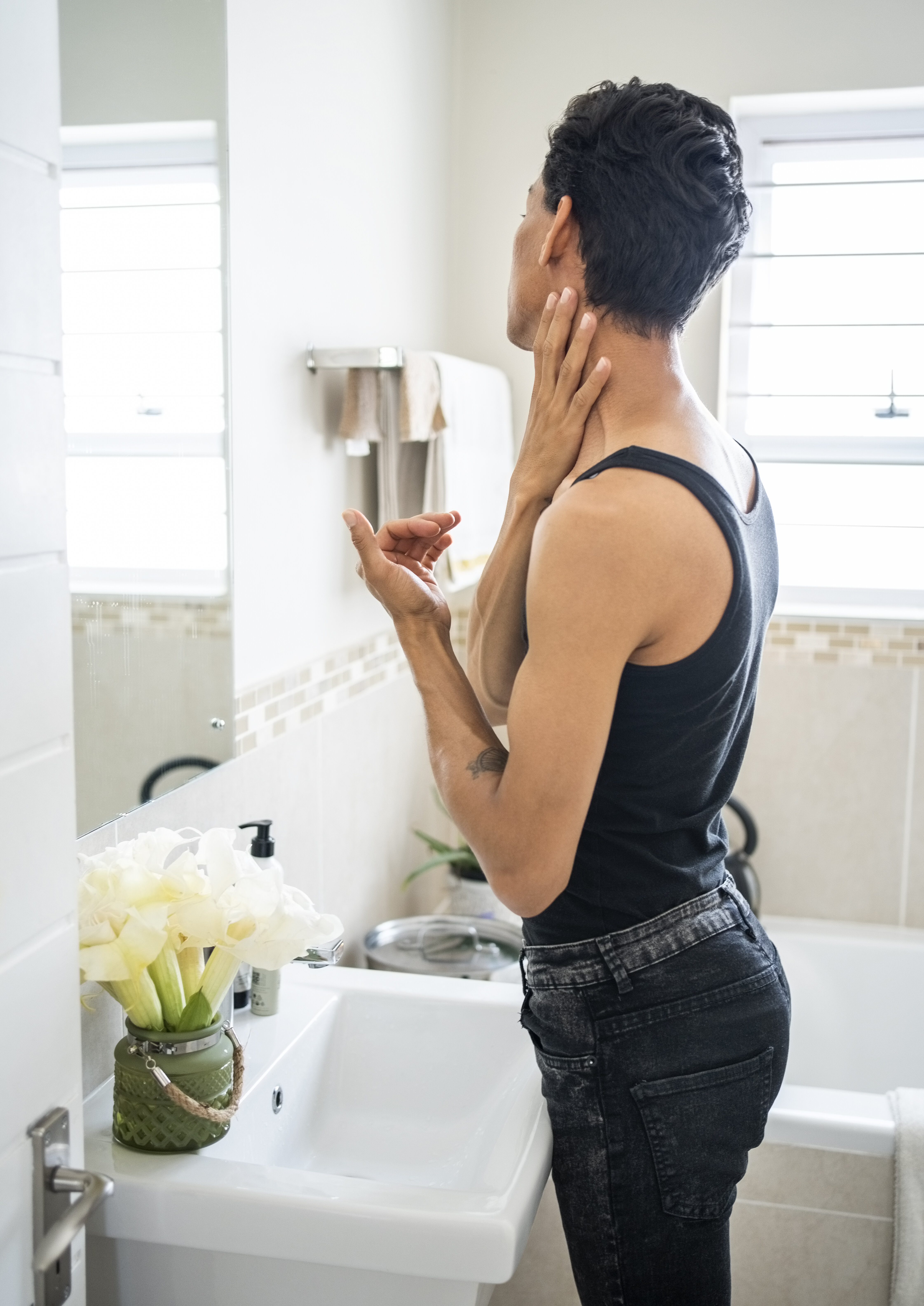
While I go through my own skincare routine in front of the mirror, I sometimes look for my brother in my face. I peer closely for the traits we shared. Yep, there’s his squat nose, his Chiclets teeth, his thin, bowed upper lip. But my face also shows the signs of the last decade of aging. The grooves are subtle but they’re permanent now, visible even when my face is still, like dry little riverbeds.
My first reaction is, of course, panic. But while I cringe at my crow’s feet, it helps to remember how lucky I feel to be getting older, even if that means watching the signs of a well-lived life increasingly show up on my face.
Advertisement
What I wouldn’t give to have the pleasure of watching my brother get older, too.
Do you have a compelling personal story you’d like to see published on HuffPost? Find out what we’re looking for here and send us a pitch.
As crucial as our brains are to our ability to function, they don’t get nearly the attention that certain muscle groups (or even wrinkles) do. Unless we’re dealing with a serious condition, most of us don’t experience symptoms of cognitive decline until after midlife.
But brain care is self-care. Just like you brush your teeth to avoid a root canal and wear sunscreen to protect your skin, giving your noggin the TLC it deserves sooner rather than later is the best way to keep it functioning at its peak.
Advertisement
“It’s going to help your heart, protect you from other diseases, make you more connected to other people and more upbeat,” Dr. Gary Small, a geriatric psychiatrist, professor at the University of California, Los Angeles and author of “The Memory Bible,” toldHuffPost. “You’re going to live longer andbetter. Who doesn’t want that?”
Whether you’re in your 20s or 60s, here are five expert-backed habits you can adopt to give your brain a leg-up:
Taking Walks With A Friend
Consistent physical exercise is one of the best things you can do for your brain health. But you don’t have to be a triathlete to reap the benefits. Research has shown that older adults who frequently engaged in “leisure walking” were less likely to develop Alzheimer’s disease than those who didn’t.
While getting your steps in can help keep your mind sharp, Smalls has a hack for getting even more cognitive juice out of your strolls: Invite a friend.
Advertisement
“The triple threat against Alzheimer’s disease is to take a walk with a friend. You get the aerobic exercise that’s going to help your brain, the mental stimulation of a conversation, and ― if [your friend] is empathic ― you can talk about anything that’s bothering you.”
That combination of physical exercise, social connection and stress reduction is a potent brain-booster. Whether you set a weekly walk date with a friend or call loved ones every time you hit the pavement, your brain will thank you for the company.
Meditating For 10 Minutes
Stress is the enemy of healthy brain functioning. Science has long determined that exposure to chronic stress candamage the hippocampus and impair our memory. Since life isn’t getting any less stressful anytime soon, Smalls said a good tool to combat anxiety and worry is a regular meditation practice.
“My team at UCLA did studies where they found that just 10 minutes of meditation not only improved your mood but improved your cognitive function,” he explained. “You don’t have to take a vow of silence for a month at some retreat. Just a little bit of meditation each day can make a big difference.”
The style or method of meditation doesn’t matter as much as your consistency. Find something you like ― guided visualizations, mantra chanting, simple breathing exercises ― and make actively reducing stress a part of your daily routine.
Advertisement
Mayur Kakade via Getty Images
Journaling comes with a host of mental health benefits.
Gratitude Journaling
Being a cynic isn’t just bad for your mood. It’s bad for your brain, too. Studies indicate thatrepetitive negative thinking is a potential marker for an increased risk of dementia and cognitive decline. Training yourself to find the silver lining by practicing gratitude can bea powerful antidote, but shifting your mindset isn’t easy. Pairing this habit with another brain-friendly practice, like writing by hand, can be a powerful one-two punch.
Jessica Fredericksen, the brain health program manager at the not-for-profit senior living and health care organizationGoodwin Living, told HuffPost that writing by hand works the prefrontal cortex ― the part of the brain responsible for memory and recall. Repetitive exercises like reading aloud, simple math and writing by hand keep that part of your brain sharp.
Not a fan of journaling? Try writing letters to loved ones as another way to work your brain by combining the power of penmanship with social engagement.
“We don’t really write letters anymore,” Fredericksen said. “But a lot of people love getting mail. You obviously have that brain health activity of physically writing, but you also get that socialization and stress reduction. It’s really a positive thing to write to someone and connect.”
Advertisement
Keeping A Consistent Bedtime
Sleep plays a crucial role in how well our brains function. Dr. Daniel Rifkin, medical director of the Sleep Medicine Centers of Western New York and founder of the virtual sleep care networkOgnomy, explained that while we’re drifting off to dreamland, our brains are hard at work consolidating memories and clearing toxins that build up when we’re awake.
“Our bodies have a lymphatic system that clears all the yucky stuff, but the brain doesn’t have that. It has sinuses where blood and cerebrospinal fluid flow through. [Researchers] discovered that when we sleep, there are certain brain cells that will shrink and swell to allow that cerebrospinal fluid to drain more easily and clear all the junk that we left in our brains during the day.”
This discovery has led Rifkin and other researchers to believe that the link betweensleep deprivation and Alzheimer’s disease has a lot to do with not giving your brain enough time to clear out those toxins. Even getting just one hour less of the recommended amount of sleep every nightincreases your risk of dementia.
The best way to combat sleep deprivation? Keep a consistent bedtime that allows for at least seven hours of sleep.
Picking Up A New Team Sport
Learning is another key piece to healthy brain functioning. But picking up a new language or skill isn’t the only way to get the job done. If you really want to keep your brain on its toes, Frederickson recommends any social hobby that has a physical component. Whether it’s joining a yoga studio, taking a ballroom dancing course or playing pickup basketball with your friends, any activity that combines physicality, learning and social engagement is a guaranteed brain-booster.
Advertisement
“You’re learning something new, you’re getting physical exercise and you’re meeting new people,” she said. “We have some seniors who do senior parkour, so the possibilities are really endless.”
Humans are social creatures by nature, and research continues to back up the idea that relationships are good for our brains. One study found that meaningful social engagement with friends, family members and even strangers canreduce the loss of gray matter (the brain tissue responsible for normal day-to-day functioning) and associated cognitive decline.
So if you’re limited in what you can do physically, Frederickson said to opt for any hobby that combines learning and social interaction. Playing bridge and mah-jongg, for example, can be just as stimulating for the mind as joining a kickball team.
Improving your brain health doesn’t have to mean overhauling your life. The most important part is finding activities that you genuinely enjoy and can stick with. Integrating a few brain-friendly habits can make all the difference in how well your brain operates today, tomorrow and years down the road.