Paget Brewster intends to stay “inquisitive and sexy” as she looks ahead to her future in Hollywood.
The 53-year-old actor, best known for her portrayal of Emily Prentiss on the drama series “Criminal Minds,” acknowledged the new year Sunday by sharing her thoughts about aging and the decision not to go under the knife.
“Hi guys. I’m excited about 2023!” she tweeted, alongside a photo showing off her gray hair. “It’s hard getting older and not doing injections or surgery but I choose that. I’m older. I’m still hard working, inquisitive and sexy. Very sexy.”
Advertisement
By mid-Tuesday, Brewster’s tweet had received nearly 130,000 likes and a plethora of supportive comments. Many followers shared selfies in which they, too, displayed their gray tresses.
“I just wish that aging honestly ― and proudly ― were the norm,” journalist Amy Biancolli wrote. “The older we get, the more kickass we get. That’s the lesson and arc of life.”
Added “Portlandia” producer Evan Shapiro: “Grey is the new black. You look amazing – better than ever.”
Brewster joins a number of women in the entertainment industry, including Jamie Lee Curtis and Andie MacDowell, who are choosing to embrace their age, even if that means speaking out against cosmetic procedures.
Advertisement
In July, the actor shared another photo in which she rocked gray hair, noting that she’d chosen not to color it.
I like my grey hair. I have felt pressure to dye it, pretend to be 35 again, no thanks. We all have huge issues to address, I know. This is one small battle. But I think all of us have small personal battles. Let’s start by being kind to each other, even when we disagree. Please. pic.twitter.com/dGMJyfqfMr
“I have felt pressure to dye it, pretend to be 35 again, no thanks,” she tweeted at the time. “We all have huge issues to address, I know. This is one small battle. But I think all of us have small personal battles. Let’s start by being kind to each other, even when we disagree. Please.”
Sure, Michael Myers is terrifying — but aging shouldn’t be.
Or at least that was the message Jamie Lee Curtis tried to convey while speaking to “Today” last week.
The “Halloween Ends” star, 63, shared her thoughts about getting older and the wisdom she’s gained since turning 60 — which included going under the knife.
Advertisement
“I did plastic surgery. I put Botox in my head,” Curtis said. “Does Botox make the big wrinkle go away? Yes. But then you look like a plastic figurine.”
Due to her experiences of succumbing to beauty standards, Curtis says that she always tells her daughters, Annie and Ruby, to keep one rule in mind: “Don’t mess with your face.”
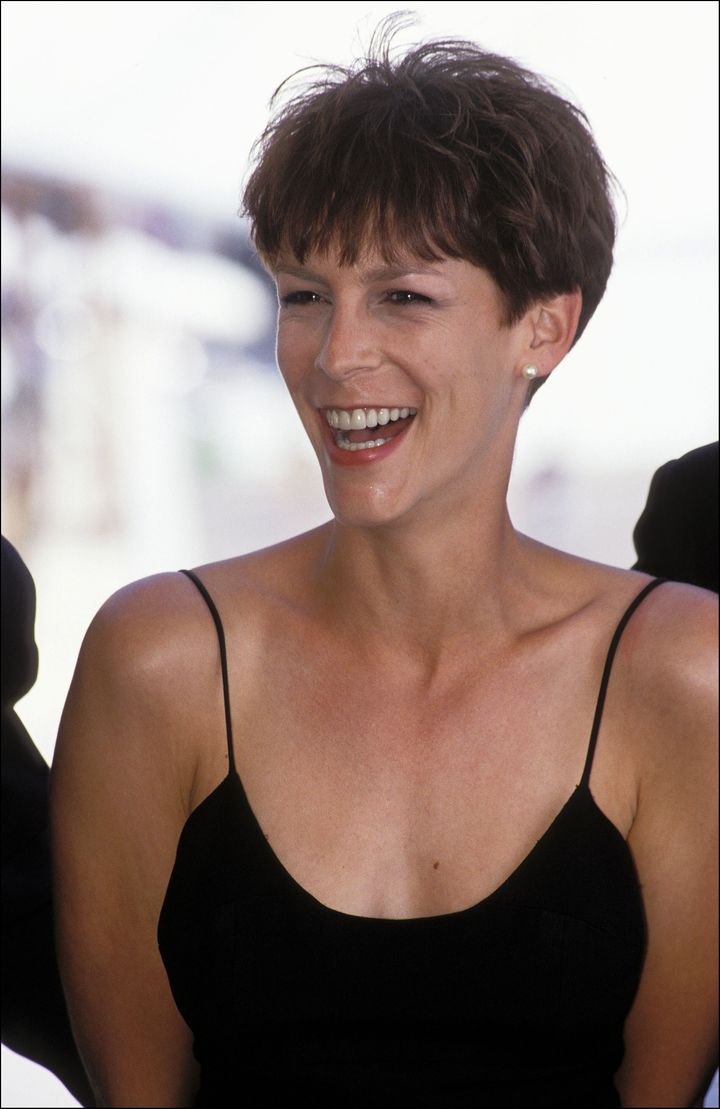
Curtis in 1992.
Pool BENAINOUS/DUCLOS via Getty Images
And although the actor — who rose to fame at age 19 with her role as Laurie Strode in John Carpenter’s 1978 classic “Halloween” and has been highly visible ever since — could empathize with the appeal of turning back the clock, she insists that getting cosmetic procedures isn’t worth it.
Advertisement
“Walk a mile in my shoes,” she said. “I have done it. It did not work. And all I see is people now focusing their life on that.”
Curtis has never shied away from her thoughts on aging or cosmetic procedures, and has also spoken candidly about how her experiences with plastic surgery led to a yearslong drug addiction.
She explained to Variety in 2019 that she began getting plastic surgery after a cameraman once refused to shoot her because her eyes were “too puffy” on film.
“I was so mortified and so embarrassed and had just so much shame about it that after that movie, I went and had routine plastic surgery to remove the puffiness,” Curtis told the outlet. “They gave me Vicodin as a painkiller for something that wasn’t really painful.”
Advertisement
Curtis, who has been sober for over 20 years now, has also spoken about embracing her body as it is — and how empowering it has been.
In March, she revealed a photo of her character in “Everything Everywhere All at Once” on Instagram. In the photo, her character sits with her belly proudly on display. Curtis explained in her post that she gave a very specific idea of how she wanted her character to be styled in the film: “I want there to be no concealing of anything.”
“I’ve been sucking my stomach in since I was 11, when you start being conscious of boys and bodies, and the jeans are super tight,” Curtis wrote in her post. “I very specifically decided to relinquish and release every muscle I had that I used to clench to hide the reality. That was my goal. I have never felt more free creatively and physically.”
First introduced to the general public in the late 1980s, Botox has now become a billion-dollar industry that has challenged our relationship with beauty, wellness, plastic surgery, ageism and even gender ― it’s not just women who are getting the procedure.
Although there’s still a large difference in number of treatments between the two genders, experts are quick to note that, in the past few years, there has been a sharp increase in desire for the muscle-freezing, wrinkle-reducing injection among a range of people.
“While Botox is and has traditionally been more popular among women, various sources have demonstrated that it has been growing in popularity among men, as well,” said Dr. Samuel Lin, a board-certified plastic surgeon and associate professor of surgery at Harvard Medical School.
Facial plastic surgeon Dr. Jacob D. Steiger has also noticed the trend. “We are seeing the proportion of men versus women increasing,” he noted, “meaning the male segment is increasing at a higher rate. This is jokingly referred to as ‘brotox.’”
According to the American Society of Plastic Surgeons, “brotox” is the No. 1 cosmetic procedure requested by men, with a 400% increase in treatments administered since 2000.
Advertisement
Overall, men and women seem to concentrate on the same area of the face when undergoing treatment: the forehead.
In the past, “people preferred a more total effect to the point that they looked expressionless,” explained Dr. Bruce Hermann, a board-certified plastic surgeon. “Today, I find that the majority of women prefer the maximal effect possible without having a frozen forehead. For men, I find that in general they prefer an effect similar to women but a bit more subtle on the forehead.”
Male vs. Female Botox
Although men and women tend to seek Botox treatments on similar areas of the face, experts note that the procedures differ based thegender one was assigned at birth. As a general statement, given their larger muscle mass in the facial musculature, men need more Botox than women do to obtain similar effects.
“For example, in the glabellar area [the skin between your eyebrows], for a similar effect, I start women with about 15 units of Botox and go up as needed to achieve the desired result,” Hermann shared. “For men, I would normally recommend starting with 20 units and adjusting from there.”
The expert is quick to note that the approach gets more complex when dealing with patients’ foreheads. “Men commonly prefer a more subtle effect in the area,” he said. “So I’ll use a higher dosage per area in men but inject a smaller surface area.”
Advertisement
As long as the dosage is adjusted, the frequency of injection is the same for men and women, Steiger said. For most patients, results last about four months.
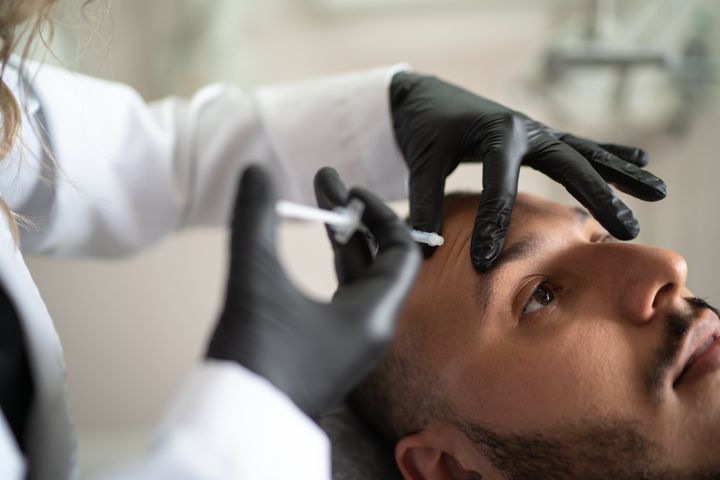
FG Trade via Getty Images
In general, given their larger muscle mass in the facial musculature, men need more Botox than women do to obtain similar effects.
Anatomical variations in skin composition can also potentially lead to gender-specific differences in terms of reactions and complications. “Men typically have thicker skin with higher collagen composition compared to women,” Lin explained. “Male skin also tends to be more vascular, which carries a higher complication rate of bleeding and bruising when injecting Botox.”
Although based on anecdotal evidence, some physicians also believe that Botox wears off faster in men given their metabolism. However, Lin explained that this should be discussed directly between a patient and doctor, because it’s not easy to generalize “given broad differences in human metabolism.”
In short: Men and women look to address similar facial issues when getting Botox, but the dosages needed to reach similar results can vary.
Advertisement
The Future Of Botox
Experts, including Hermann, believe the overall trends will stay the same in the future: Men and women will continue seeking to tackle similar facial issues through the treatment. Although more women than men are likely to undergo the procedure, “the percentage of men getting Botox will increase slightly each year,” Hermann predicted.
The surgeon specifically calls out ageism in the workforce. Although ageism was once an issue commonly mentioned by women in the workforce, it affects men as well.
Case in point: In 2019, Google settled an age discrimination lawsuit concerning its hiring practices. As a result, over 200 job seekers over the age of 40 who had applied for positions at the company received a settlement of $11 million.
COVID-19 also changed things. “The ‘Zoom effect’ is a phenomenon brought on by the pandemic whereby people working from home saw themselves more frequently on camera and started to notice things that made them look more aged,” Hermann said. “A study by the American Society of Plastic Surgeons in 2020 showed an increase in interest in plastic surgery or non-surgical procedures like Botox to look younger in 11-35% of women surveyed that were using Zoom or similar platforms.”
When most people think of aging, they think of loose skin, brittle hair and fragile bones — but there’s one more thing to add to the list, and it involves your nails.
With time, you may have noticed changes to your nails’ texture, thickness, strength and even growth rate. According to experts, this is completely normal, and most people will experience age-related nail changes by the time they’re 40. Despite these side effects of aging being inevitable, there’s a lot you can do to manage them.
Advertisement
We tapped experts to learn about the different ways nails change as we get older along with tips on how to navigate them.
Nail texture and thickness
Noticing ridges on your nails? This is referred to medically as onychorrhexis and is akin to wrinkles on the nail.
“When parts of the nail growth plate (aka the nail matrix) become thinner and begin to atrophy, the result is ridging (parallel longitudinal depressions in the nail plate),” said Dr. Dana Stern, assistant clinical professor of dermatology at Mount Sinai Hospital in New York.
A number of things can contribute to onychorrhexis, including nutritional deficiencies and hormonal changes, but age is another factor.
Advertisement
Giuseppe Elio Cammarata via Getty Images
Ridges, known as onychorrhexis, tend to occur under your nails as you age.
According to Dr. Michelle Henry, the founder of Skin and Aesthetic Surgery of Manhattan, our nails can also become brittle over time. This is due in large part to the degradation of the structural keratin proteins in our nails, which play a major role in our nail health and protect against external damage.
“As we age, our bodies start to produce less of the natural proteins found in nails, which can lead to nails becoming more brittle, dry, and prone to breaking,” Henry noted. “These keratin proteins are also found in our hair follicles, which is why we may also see a change in our hair texture as we age.” What’s more, if you have a family history of brittle nails, one study found that your chance of developing brittle nails is greater.
Nail growth rate and yellowing
If you’ve removed your nail polish only to find that your natural nails are yellowing, know that it’s most likely related to a slower growth rate.
“Fingernails grow on average 3.47 mm a month, which means the average fingernail takes six months to replace,” Stern said. “As our nail growth rates slow, the nails are exposed to considerably more environmental influences and these exposures, over time, can affect the color and overall appearance and strength of our nails.” Other common causes of yellowing include fungal infections and prolonged polish wear, Stern added.
Advertisement
But why exactly does nail growth rate slow down with age? Henry said it relates back to our bodies producing fewer keratin proteins. “With less keratin being produced, our nails naturally start to lose their strength and structural integrity, which may lead to thinning and discoloration,” she said.
Other nail changes
An often-overlooked nail change people undergo relates to cuticles. Cuticles act as the nail’s natural protective seal, and when they’re ragged and dehydrated, they can separate and lift, resulting in hangnails and openings where organisms and water can enter the nail unit, Stern said. This can not only lead to infection but, combined with other changes in nail texture and thickness, can highlight these age-related changes. Ultimately, healthy cuticles can contribute to more youthful-looking nails.
Finally, onycholysis, a condition in which the nail lifts off the underlying nail bed, is one of the most common age-related nail changes, according to Stern. “The slightest trauma, such as overly vigorous cleaning under the nail with a tool, can result in the nail lifting off of the nail bed,” Stern said. Over time and with age, your nails may fail to adhere to nail beds as firmly as well.
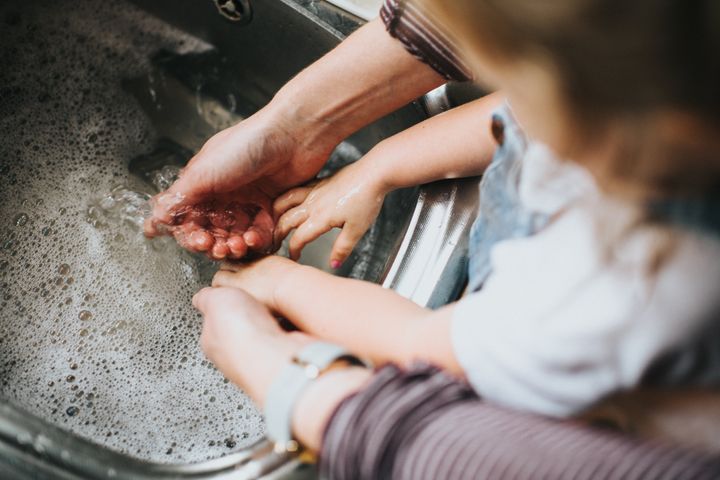
Catherine Falls Commercial via Getty Images
Something as seemingly harmless as washing the dishes could cause raised nail beds and lead to infection.
How to deal with aging nails
There are several things you can do to manage age-related nail changes. For one, develop a routine for your cuticles to keep them hydrated and well-kempt. Stern recommended gently pushing them back with a washcloth after a shower or bath, as well as hydrating them daily with oils or ointments (versus creams, which tend to not absorb as effectively, she said). If you’re experiencing a hangnail, resist the urge to bite or pull it off and instead use a clean cuticle nipper and cut it at the base. When it comes to using nail polish remover, look for hydrating, acetone-free formulas, as acetone can dehydrate and weaken the nail and surrounding area.
Advertisement
Also, consider the nail file you use. Stern said to use a glass file instead of a cardboard emery board, as these can cause microscopic tears at the nail tip, which can turn into splits and breakage. Glass files, on the other hand, create a perfectly smooth edge. And, be sure to replace dull nail clippers, as Stern said old ones can lead to splits and snags.
You should also consider the amount of water that hits your nails. “Nails are extremely absorptive of water (even more so than skin) ― when water is constantly moving in and out of the nail it puts a tremendous strain on the delicate nail cells, which can result in weakening, softening and breakage,” Stern explained. Not to mention, this can dehydrate your cuticles and cause them to lift and separate, which can lead to hangnails or openings where infections can more easily gain entry. A good solution? Wear protective gloves when washing dishes, cleaning the house or gardening.
Finally, Stern said if you’re experiencing sudden nail changes, see your board-certified dermatologist, as these can potentially be a sign of internal disease.
Maybe it happened when you had to make another salon appointment for a roots touch-up. Or maybe it’s because you noticed a lovely gray-haired person and thought, “Could I pull off that look?” Or possibly you’re just tired of hiding behind the dye on your head, when there’s an aged-to-perfection dynamo trapped inside who can’t wait to get out.
So here you are, reading an article about gentler, easier advice on going gray. We have tips from those who’ve done it themselves and from stylists who help people make that long, careful leap all the time — while emerging on the other side, looking fabulous.
Advertisement
Are you ready for this?
First, let’s acknowledge that there still are plenty of good reasons for continuing to dye your hair, even if some of them are based in fear that you need to keep doing it as you get older. “I find that hair dye use is more common among people who work public-facing jobs or any kind of competitive field where appearance is a factor,” said Mirza Batanovic, style director for hair care company Eufora International. “People will choose to cover the gray to keep up with appearances and younger competitors.”
And then there’s the “I’m not old; I’m actually only 28, right?” factor. “We all want to look and feel young, and we want to hold on to our youth,” stylist Rod Anker said. “For so many, even the thought of having a head full of gray hair makes them feel older.”
Those factors may be true, but are there positives to embracing the gray? Yes, said Cassie Siskovic, U.S. artistic director of hair, facial and body care company Alfaparf Milano. “Beauty continues to evolve and change, and wearing natural gray hair is a wonderful way to express your individual beauty,” she said.
Meet someone who did it
Whitney Lichty’s hair has been dye-free for more than two years, and now she’s “feeling as confident and empowered as ever.” On her Silver Strands of Glitter Instagram page, she proudly models her gray-locks-looks for more than 100,000 followers. “Through social platforms like Instagram, I’m able to connect with thousands of people, worldwide, who are on their same journey,” she said.
Advertisement
She acknowledged that it isn’t always easy: “You’re left with a growing line on your head as you patiently wait for the dyed hair to grow out. Insecurities can creep up, and comments and stares from loved ones and strangers can leave you feeling self-conscious. It can be a lot to process, and it’s a bigger commitment than people are ready to make.”
Her advice? “I would suggest surrounding yourself with cheerleaders and people who will encourage and support you, whether that support is coming from close to home or from the many online social platforms with people on the same journey as you,” she said.
How to do a slow transition
First, you need to prepare yourself for “the talk” with your stylist, who’s gotten used to seeing lots more of you as the gray hairs have crept in. Most likely, they’ll be understanding. “As much as they’ll miss having you in the color chair, stylists want to help,” said stylist Michelle Cleveland. So spill the beans and make a plan, already. And that plan will need to take into account your timing, hair type, dye type and more.
“It’s a different approach for everyone,” Anker said. “I always like to start by coloring with less coverage — so instead of full 100% coverage, we start with slight translucent coverage of about 75%. It softens the regrowth and allows clients to get used to seeing something a little different that’s one step closer to the goals.”
Advertisement
From there, Anker begins to drop coverage to about 50% over a period of two or three months. “Then you can add highlights or simply stop coloring your hair altogether. It takes longer to do it this way, but it’s gentle on the hair, and it’s a good choice for anyone who’s a little anxious about the process.”
Keeping it looking good
Keep in mind that as you’re dealing with a new head of hair, daily maintenance will probably be different than you’re used to. “Gray hair is void of melanin, the pigment that gives your hair its color,” Batanovic explained. “Melanin typically has moisture content and fats attached, so once it’s gone, hair can feel coarser and dryer than even colored hair.” And then there’s the shine factor. “Gray hair won’t shine like chemically colored hair,” Anker said. “The lighter color absorbs light instead of reflecting it.”
This could be a good time to book some in-salon services, too, now that you’re saving so much money by skipping coloring sessions. “I recommend a glaze every so often to keep the tone and shine, and then using a clarifying shampoo a few times a week as it’s growing out,” said stylist Jennifer Korab. You might also want to increase the frequency of deep conditioning and heat protectant treatments.
Once you start looking, you’ll find there’s no shortage of companies that are more than willing to help you make the best of your new look. Jenniffer Paulson is vice president of marketing for Go Gray, which sells products “for every state of your go gray journey.”
Advertisement
“We see products for every type of hair, from blond hair, to curly, to straight hair, but there isn’t much in the way of gray transitional hair,” Paulson said. “We have products for men and women who are going on a natural gray journey. Everything is specifically designed to address the concerns of transitions, but also to keep the hair moisturized and healthy-looking throughout the process.”
The final key to taking care of your locks as they grow out? “Regular haircuts!” Siskovic said.
Do’s and don’ts
Visual evidence: “I recommend taking pictures, lots of pictures,” Lichty said. “When you’re purposefully growing out your roots, time can feel like it’s at a standstill. There were months when I wasn’t even sure my hair was growing at all. Documenting your growth can be a great visual representation along the way.”
Freestyling: “A big mistake is attempting dye removal at home,” Wall-Innella said. “Without a full understanding of color, some have tried to remove their previously colored hair themselves. This usually results in an expensive color-correction process.” (In other words, you’ll end up spending time and money back at the salon anyway.)
Be nice: “Always speak kindly to yourself,” Lichty said. “Growing your natural gray hair can be emotionally complex. When you’re feeling discouraged, speak kindly and confidently to yourself, and take it one day at a time.”
Hang in there with your stylist: “A great partnership with your stylist is key for a successful transition,” Wall-Innella said. “Don’t listen to others when making the transition. Do what’s best for you, stay the course, and remember that patience is key.”
The image I see of myself in my mind is that of a photograph taken in 1992, when I was 22 years old. The photo is of me and my friend, Sean. I’d gone with him to have his professional headshots taken (he’s an actor and songwriter) and the photographer offered to snap a few of the two of us. The frame is a close-up shot of both of our faces. I am sitting on his lap, my arm around his neck, my eyes fixed on something past the camera. Sean stares directly into the lens with all the confidence and defiance of youth. We are both so very, very young.
While I know, as a relatively intelligent, mostly adjusted, grown woman, that I no longer look like the person in that photo, what I see in the mirror these days always takes me a bit by surprise. It is my mother’s face that stares back at me, a face that sparks both distress and grief. When and how did I start to look so old?
Advertisement
“There’s a certain amount of sadness, grief when we look at our faces [as we get older] — I should mention I’m 73,” Naomi Woodspring, an author and gerontologist, told me. “Yet notions, ideas about what we see in the mirror are seen through the lens of our current age.”
And these ideas change as we change.
Intellectually, I know I cannot magically remove all the effects of aging from my skin and body, no matter what advertisers and (often) the media want me to believe. I also know there must be some way to let go of my inner psychological equation that youth equals beauty and that, without it, I am no longer attractive. I’m not sure, though, how to go about changing my outdated definitions of these things.
I talked with three psychologists and researchers about ways to alter the narrative running through my head, the one that prattles on about how I look old and how unattractive the wrinkles and sags in my face are.
Advertisement
How psychologists approach aging
“First, you have to make a decision to accept yourself and accept aging. Think about what prevents you from doing that. You may think, ‘I’m not attractive, I’m invisible.’ But what, really, does this keep you from doing?” asked Ann Kearney-Cooke, an author, lecturer and director at the Cincinnati Psychotherapy Institute.
“How do you really want to spend your time?” she asked me.
I don’t especially want to think about how I look. It was never something that really bothered me or occupied my time, at least not until a couple of years ago when I turned 50. Now I’m often overly focused on the gray hairs and the lines and creaseson my face. I want to change this narrative in my head.
Advertisement
Cognitive behavioral therapy and thought restructuring
Goali Saedi Bocci, a licensed clinical psychologist and adjunct faculty at Pacific University School of Graduate Psychology, explained to me the process of cognitive behavioral therapy and restructuring thoughts. Essentially, she explained how I could start to alter the story in my head, the one that continually laments my apparent untimely demise.
Cognitive behavioral therapy is a lot about changing our thoughts, Saedi Bocci told me ― which isn’t an easy thing to do, at least not for me. I have a very loud and insistent voice in my head that, at times, spews all sorts of negative things. I suspect many of us do. It’s difficult to change that perspective. That, though, is exactly what I needed to do.
“Cognitive restructuring, cognitive reframing, and thought distortions are challenging,” Saedi Bocci said. One kind of thought distortion is catastrophizing, she explained. An example would be taking notice of a line or a wrinkle and catastrophizing by thinking something like, “My aging is premature. By the time I’m a specific age, I’m going to look a specific way.”
The subtext, of course, being that that specific way will be old and no longer attractive.
“One thing doesn’t have to lead to this rabbit hole of thoughts,” continued Saedi Bocci. “I can make an observation, take a step back and say, ’OK, I’m assessing, yes, this is a true physical change. I’m not going to say this wrinkle isn’t here, but I can change the meaning of it.’”
This goes hand in hand with practicing mindfulness and nonjudgment, Saedi Bocci explained. “We’re so obsessed with good, bad, pretty, ugly. If we take back the label, remove ourselves and not make a judgment; well, that’s the healthiest place we can be.”
As soon as we label something as good or bad, delicious or disgusting, or whatever, it becomes that. Words are incredibly powerful. As Kearny-Cooke put it, “If you move around the world thinking you’re pitiful, then people will see you that way.”
“In my research, most people readily admitted that there was a certain amount of grief connected with aging.”
– Naomi Woodspring, an author and gerontologist
“And so,” said Saedi Bocci, “being aware and intentional with our words, with our thoughts is powerful. Look at the story behind it. What does beauty mean? What does attractiveness mean?”
By thinking about these things, about the backstory of them, I realized that I was capable of changing some of my preconceived notions, or cognitively restructuring my thoughts.
Advertisement
As Saedi Bocci explained, cognitive restructuring means taking a pre-formed thought ― one based on societal norms, values, expectations or things your parents may have taught you — “into a court of law and arguing all sides of it. Is this something that’s true? Is it untrue? Is it helpful? Is it unhelpful?”
These kinds of questions are important when there is a level of cognitive rigidity, such as believing that only one thing — youth — equals beauty.
To combat this rigidity, talk and think about other forms of beauty. “Ask yourself, what is leading to this? Where have you gotten those messages from?” she continued.
She told me I needed to find a way in, the one place where I could begin the unraveling of whatever narrative has been looping through my mind in an unhealthy way. (I confess, at times, there are several.)
Shifting the narrative
One way to begin shifting your narrative is to figure out what your signature strengths are, Kearny-Cooke told me. This could be a great smile or great legs. Think about how you enjoy them and/or show them, she suggested.
“Also, challenge yourself to stop seeing yourself through men’s eyes,” she added. That, as Kearny-Cooke said, is often a difficult thing. But what if I redefined that? She suggested I keep track each day of any thing I did that made me feel good about my body and/or myself — things like taking a walk or learning something new or planning a trip I wanted to take.
Klaus Tiedge via Getty Images
One kind of thought distortion is catastrophizing, when one fixates on a line or a wrinkle and thinks something like, “My aging is premature. By the time I’m a specific age, I’m going to look a specific way.”
She also suggested I alter my inner monologue to include phrases like: “I’m eating healthy, I’m moving. I have good relationships with people. I have goals. I’m proud of what I’ve done in my life.”
“We all are proud of some of the things we did and not so proud of others,” Kearny-Cooke said, “but if we really try to tell ourselves a story, a new narrative about our life story, we can decide what the next chapters will look like.”
One way to help do this is that, instead of getting together with friends and lamenting our culture and how older women do not seem to be as valued as younger ones, spend that time with your friends going on a hike, planning adventures (I’m partial to ones of the cycling variety) or learning a new language.
Advertisement
“Remember, curiosity, courage and adventure-seeking are all youthful qualities,” she added. As I pondered this, I thought about another photograph of myself, taken a couple of years ago during a monthslong cycling trip across Central Asia. In this photo, I am laughing. I haven’t showered or seen a mirror in days. And I do not think I look old.
All three of the experts I spoke with emphasized the importance of creating my own narrative about my life. Kearny-Cooke described it as “honoring all the things you’ve overcome, the things you may still be struggling with, and the knowledge you’ve gained through your whole life — really honoring them,” she said. “And then, make a decision about what you want this time to look like. Ask yourself how you can gain power.”
Who do you want to be?
As most of us know, we can’t control a culture’s or other people’s reactions to us. We can, though, decide to be somebody that people want to spend time with and get to know. We need to decide who we want to be.
“Am I going to speak out about issues or values I have? Am I free from that evolutionary selection of the young woman? Thank God I’m out of that. I’m free of that. I can create my own version of a middle-aged woman,” said Kearny-Cooke.
Her suggestion on how to begin to accomplish this: Make deliberate choices and write them down every day until eventually they become a mindset.
“Regardless of how you live your life, you bring that many years of experience into that face in the mirror,” Woodspring told me. “In my research, most people readily admitted that there was a certain amount of grief connected with aging.”
“But there was also acceptance,” she continued, “And I believe that the acceptance comes from all of those years of life experience and is part of what happens when people realize they have lived more lifethan they have left to live. We begin to see the world differently. We begin to see ourselves differently.”
Essentially, what I think she wanted me to know was that I am at the beginning of this transition into what I guess could be called ‘old age,’ that, eventually, I would make what she called a pivot, a pivot where I would begin to see myself differently.
A trick to help you pivot your mindset
Advertisement
Kearny-Cooke has a rowboat metaphor that she uses when she counsels people about beauty, aging and acceptance. Imagine you’re in a rowboat and the rudder that steers the boat is stuck. There’s also water in the bottom of the boat. You have a bucket with holes in it, but still you keep trying to bail out the water. You spend all your time and energy on the water problem that you can never solve, while completely ignoring the fact that the rudder on the boat is stuck, and is really what you should be paying attention to.
What I take from this is that I need to stop bailing out the water. There is nothing I can do about aging, but what I can do is focus on regaining control of my narrative and accepting that I cannot stop the effects of aging.
Though Sean and I are not as close as we once were, we still check in occasionally. In the early ’90s, we’d go out dancing two or three times a week. About 10 years ago, I sent him an email rambling about those nights we spent in questionable bars and sketchy music halls and lamenting the absence of adequate dance time in my current life.
He wrote back, simply, “I am always, always dancing with you.”
And I think that, for me, that is part of how I begin to accept aging. It’s not that I want to be “young” again or go back and relive any of it (God forbid), but I find comfort in believing that there is a 22-year-old me always and forever dancing with a 23-year-old Sean. Her existence helps me to recognize (and honor) all that has transpired over the past 30 years, as well as this new version of myself — who may have wrinkles, gray hair and the face of her mother, but is still alive, learning and growing and becoming, and maybe, maybe also a version of “beautiful.”
And as I write these words, perhaps I am taking the first step to making them so, of deciding what the rest of the story of my life will be.
Lately there’s been this recurring TV commercial that my husband, Chris, and I find particularly distressing. It’s for a diabetes drug. The ad begins with a son coming home for a visit after leaving for college. He observes the way his father has turned his focus to old hobbies and is developing some new, healthier habits, implying that using this drug opens space in your life for other things besides managing your Type 2 diabetes.
The 60-second spot cycles through scenes of the father — a somewhat hefty, gray-haired man — working out, preparing salads (while his wife flashes their son an approving look), tinkering with his car’s engine and fishing on a scenic lake. The wife, a woman with a nondescript, practical haircut (also fully gray) and mom jeans (definitively not the trendy ones that my 19-year-old daughter wears), hovers on the periphery.
Advertisement
Our distress is rooted in the implication that this man and this woman supposedly represent people at our stage of life: parents with a child who has just left for college (our daughter began this fall), adjusting to the empty nest, rediscovering old pastimes and trying out new ones. Every time we see it — and if we happen to be watching the nightly news or one of the early morning shows, we see it a lot — one of us inevitably has to ask, “Do I really seem that old?”
“No way,” the other reassures. “There’s no way that couple is our age.” An unsure silence usually follows. It’s weighted with all the denials that want to confidently claim our hold on youth and vitality but are struggling to take shape and leave our mouths. Even if the actors in the ad are miscast age-wise (and I really want to believe they are), a nagging feeling tugs at the edge of my consciousness and leaves me doubting. Maybe that commercial is more about us than we care to admit.
This week, I turn 50.
I’d like to say that I am embracing this milestone birthday with boundless grace and gratitude. But honestly? I’m dragging my heels more than a little bit as the looming finish line of my 40s approaches and I teeter on the brink of becoming officially “middle-aged” (which statistically actually happened when I turned 40, since the average life expectancy for women in the U.S. is 81).
Advertisement
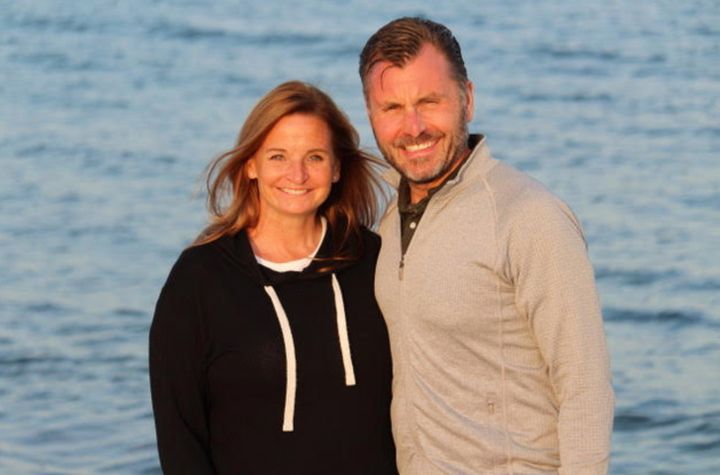
The author and her husband, Chris, at a beach in Maine in 2021.
Courtesy of Melanie Brooks
“You are only as old as you feel, right?” a friend (still living blissfully in her mid-40s) quipped recently in an effort to reassure me that turning 50 is no big deal. It didn’t work. “If that’s true,” I responded, “I’m in big trouble.”
Because here’s the thing: I do feel old. In. So. Many. Ways.
Take, for example, my left foot. It hurts. Regularly. Especially when I wake up in the middle of the night to pee (don’t even get me started on this epic betrayal by my bladder). The first step out of bed genuinely feels like the floor is made of spikes. I move through the darkness to the bathroom in an off-balance hobble reminiscent of a drunken sailor. It’s not pretty. A recent trip to the podiatrist revealed that the plantar fasciitis I had surgery for in my 30s has returned along with a half-inch heel spur. It might eventually mean more surgical intervention, but for the time being it means consistent use of a bulky stretching boot, Advil and sensible (translate that to ugly) shoes.
My foot issue wouldn’t be overly concerning if it weren’t for the fact that I’m supposed to be training for a half-marathon at the end of May — an ill-conceived venture instigated by my oldest brother (who might also be pushing back against the realities of his age; he’s 53, FYI) that I grudgingly agreed to because of my lifelong FOMO and not being able to stand the thought of my three brothers accomplishing it without me.
Advertisement
My foot, coupled with the gathering aches in my joints, the extra pounds assembling at my waistline (and other places I didn’t even know you could gain weight) that are more determined to stay than I am to fight them off, and an expectation (based on empirical data from the last few years of trying to regain my exercise momentum that includes two broken kneecaps and a stress fracture in my hip) that at any moment something is inevitably going to break down, have me strongly doubting the possibility of running that race, let alone making it up the stairs.
So, this very-soon-to-be-50 body — with its taunting night sweats forecasting menopause, mysteriously appearing spots and wrinkles, and obnoxious sagging flesh — is making me feel old. But it’s not just the physical. There’s also the fact that my firstborn (the culprit in the creation of that sagging flesh) is about to turn 22. How is it possible that I have a 22-year-old? Chris and I got married when we were 22. There’s no way that this kid of mine, who I still partly see as the 4-pound premature baby I could hold in the palm of my hand, is possibly ready for anything so grown up. And yet, whether that’s true or not, he does have a serious girlfriend and is about to apply to graduate school.
The author with her husband, Chris, daughter, Lily, and son, Will, at a beach in Maine in 2021.
Courtesy of Melanie Brooks
Despite my sincere efforts to stay relevant and keep up with the interests and outlooks of my own Gen Z kids and the college students I teach, some recent interactions have exposed the grim reality that I have not. Here’s a sampling:
I made a “Schitt’s Creek” reference in my class the other day, and my students offered me their best blank stares. “Nobody has watched ‘Schitt’s Creek’? Come on! ‘Ew, David’? ‘Best wishes, Warmest regards’?” I exclaimed. One guy dutifully raised his hand. “My mom loves that show,” he said.
Aware of its cult-like following, I convinced my 19-year-old daughter (who’d binged the series) to watch the first episode of HBO’s “Euphoria” with me while she was home for spring break. It was a mistake. She’d prepared me for the sexual content and substance abuse. But as I watched the teenage characters face one traumatic experience after another, I couldn’t stop myself from repeating, “Where are their parents?” and felt a burgeoning anxiety for the well-being of all teenagers the world over. “I can’t do it,” I told Lily, peeling my fingers away from my eyes, when she asked if I wanted to watch the second episode. We turned on “Grey’s Anatomy” instead.
I once saw a T-shirt that said, “You know you are getting old when you open your mouth and your mother comes out.” Well, last week, when I spent 10 minutes engaged in a sanctimonious conversation on a walk with a friend about Rhianna’s sheer black maternity dress over a lacy bra and panties and nothing else! that she wore to the Dior Show during Paris Fashion Week, I heard myself say, “I mean, really, can that even be called a dress?” and there my mother was.
Today I experienced a disproportionate surge of excitement when I managed to guess the day’s Wordle on my second try (and I came precariously close to posting it on Facebook).
When I turned 40, I didn’t feel old. There wasn’t time. I was teaching a full load of classes, and I’d started a master’s program in creative writing with lofty literary goals keeping me focused. My children were 12 and 9, and I was looking ahead to the business of middle school and high school. My work and the kids’ activities and year-round sports — baseball, soccer, gymnastics, basketball, track and field, lacrosse — were the guardrails that kept my schedule full, productive and moving in a defined direction.
Now, 10 years later, my kids are both in college and where all that scheduled activity used to live is wide-open space. Unlike Drug Commercial Man who has apparently pounced on the chance to re-create himself as he’s entered his new stage of life, I feel stalled. I’m approaching this sixth decade without a map, and a languishing sense of uncertainty has latched on and won’t let go.
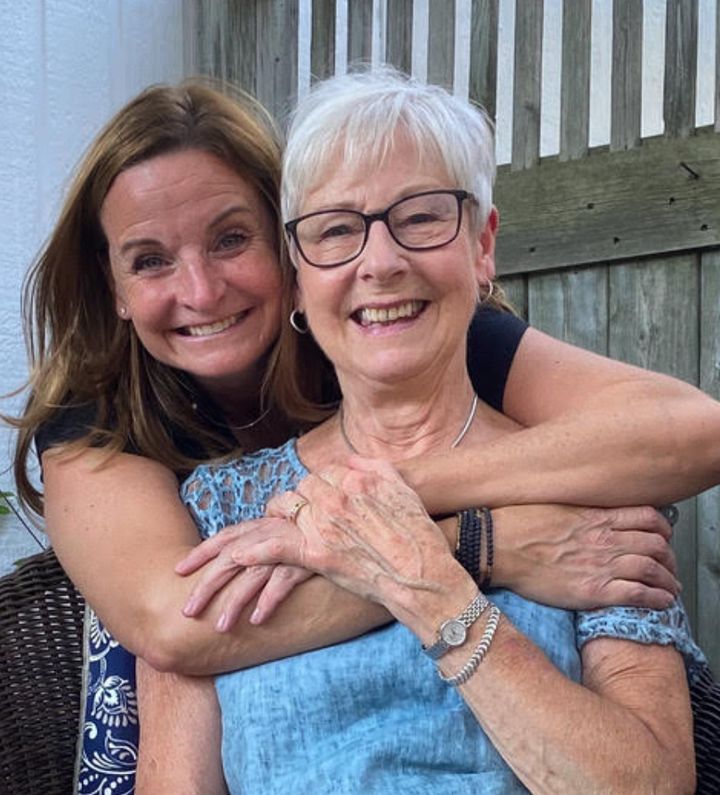
The author and her mom during their first visit in 18 months (because of the pandemic) in July 2021 in Kingston, Ontario, Canada.
Courtesy of Melanie Brooks
It doesn’t help that I’m turning 50 at a time when the whole world seems to be experiencing an existential crisis. There are layers of collective and individual trauma that have emerged from the ongoing effects of the COVID-19 pandemic, the war in Ukraine and the sobering forecasts from global climate researchers that have us all feeling a generalized sense of unease. But as I try to wrap my head around the mounting dread accompanying my birthday and what comes next, I recognize there is more to it than that.
My dad died when he was 53. He’d lived with an incurable illness for close to 10 years, and though reaching his 50th birthday was an achievement none of us had allowed ourselves to envision after his diagnosis, it felt less of a celebration and more of a step closer to the end (which, as it turned out, it was). My mom was 52 when he died. She and my father had dated since she was 14 years old. The grief of losing him derailed her natural transition to midlife, and she spent a good part of the next two decades trying in various ways to reinvent herself and fill the void. Now 78, she’s reached a graceful and settled rhythm, one definitely worth striving for when I reach that age. But in terms of role models for how to lean into my current moment or portraits of “flourishing 50s,” neither my father’s nor mother’s trajectories offered much guidance.
The truth is, I’m scared. I’m scared that I’m 50 and I haven’t done enough. I’m scared that I’m 50 and I don’t know what to do now. And I’m scared that before I can unravel these fears and grab onto a tangible thread of direction, time is going to run out.
Positive thinking, and oftentimes my therapist, tell me to wrap my arms around my fears, pull them close and listen to their wise whispers. My thinking, on the other hand, tells me to grab a handful of chocolate chips, hide under a weighted blanket and ignore my fears for as long as I can.
Advertisement
My immediate challenge, since there’s only so much fulfillment I can garner from the chocolate chips before self-loathing about the chocolate chips sets in, is to find some sort of middle ground. Maybe I don’t have to go as far as fully embracing the things that scare me, but I can at least acknowledge them, give them a little space inside all of this new wide-open space I have and stop trying to run from them (which, currently, doesn’t have the outlook of being all that successful anyway — see previous commentary on my left foot).
With a milestone birthday at hand, the author is ready to acknowledge her fears.
Courtesy of Melanie Brooks
Maybe it’s not so much about suddenly re-creating myself in a way that’ll make my kids feel compelled to do voice-over narration about their new and improved mother when they come home from college, but instead it’s about taking the pressure off, easing my way in and reminding myself who I already am. And even though I’m clearly not all that secure about her, there’s one thing I do know about 50-year-old me for certain: She’s not yet surrendering to the exterior cues prescribing mom jeans and a practical haircut for women her age, no matter what portrait that drug commercial paints of who I’m supposed to be.
Melanie Brooks is the author of “Writing Hard Stories: Celebrated Memoirists Who Shaped Art From Trauma” (Beacon Press, 2017). She teaches professional writing at Northeastern University and narrative medicine in the MFA program at Bay Path University in Massachusetts and creative writing at Nashua Community College in New Hampshire. She is completing a memoir called “A Hard Silence” about the lasting effect of living with the 10-year secret of her father’s HIV before his death in 1995. She lives in New Hampshire with her husband, two children (when they are home from college) and two Labs.
Do you have a compelling personal story you’d like to see published on HuffPost? Find out what we’re looking for here and send us a pitch!
What does the term “nighttime routine” bring to mind? If you’re a skin care aficionado, it may be your favorite part of your everyday routine. But if all the different products available to you feel overwhelming, don’t worry — we’ve enlisted the help of skin care experts to share the perfect nighttime routine for each decade of your life, from your 20s to your 80s.
Our skin changes over time due to various factors such as age, environmental issues, lifestyle changes and more. So it makes sense that the products a 20-something uses aren’t suitable throughout their life, and it’s important to make that distinction to support the skin’s needs. Our skin is our largest organ, after all.
Advertisement
The routines below serve as a general guide, depending on the needs of your skin during each decade of your life ― they cannot, of course, apply to everyone. But here’s one tip that does: Be gentle and have a consistent routine that won’t compromise your skin barrier.
“I always say to my patients: An ounce of prevention is worth a pound of cure. So it is always great to start incorporating key skin care ingredients early on, even before a problem develops,” Marisa Garshick, a board-certified dermatologist at MDCS Dermatology in New York, told HuffPost. She added that new products should only be added one at a time, and they should be layered from thinnest to thickest.
In your 20s
Having a basic, solid routine in your 20s is crucial. You can start by incorporating a retinoid to help with skin texture and to brighten your skin, according to Devan Jesmer, an aesthetician at Skin Remedy MD in north Texas. Plus, retinoids such as adapalene can help with breakouts that many people continue to have in their 20s, said both Jesmer and Garshick.
Advertisement
Even though we are focusing on nighttime routines, it’s worth noting that sunscreen should be part of your daily morning skin care.
“It’s always good to start the habit of sunscreen early and commit to it long term to get the most benefit,” Garshick said. “Sunburns, even in childhood and adolescence, can impact the long-term skin cancer risk.”
All the experts agreed on the importance of double cleansing, which thoroughly cleans the skin and removes makeup and sunscreen. If you’ve got oily skin, opt for a gel or foaming cleanser, and if your skin is on the dry side, choose a creamy or hydrating one, Garshick said. You can use two different cleansers for double cleansing — like a balm followed by a gel — or you can use the same cleanser twice.
Jesmer’s proposed routine in your 20s:
Advertisement
Garshick’s proposed routine in your 20s:
In your 30s
By your 30s, a stronger retinoid (like retinaldehyde) is advised. A retinoid eye product may also be beneficial, Jesmer said, as well as weekly exfoliation.
“When introducing a retinoid into a skin care routine, it is best to start low and slow, only using it two or three times per week and gradually increasing the frequency,” Garshick said, adding the caveat that retinoids shouldn’t be used if you’re pregnant or breastfeeding. ”For someone with dry or sensitive skin, it may be best to apply the moisturizer prior to the retinoid to reduce the potential for irritation.”
During this decade of your life, “the skin tends to get a little bit drier and collagen levels are starting to slowly decrease, but visible signs of aging are still minimal. The goal is to maintain our collagen stores and even glowy complexion,” Cristina Psomadakis, a dermatologist in London, told HuffPost.
Garshisk explained that we actually lose 1% of collagen every year during our 20s, and this becomes more obvious in our 30s in terms of appearance and fine lines.
Jesmer’s proposed routine in your 30s:
Advertisement
In your 40s
In your 40s, focusing on replenishing collagen production is key.
“If you can get your hands on prescription tretinoin, this is the most powerful form of retinol on the market and available via your dermatologist,” Psomadakis said.
Cell turnover, which is our skin’s ability to renew its cells, slows down with age, and that’s why an exfoliating product might be beneficial. This will help remove dead skin cells from the skin’s surface, and the skin will appear smoother. An exfoliator can be a cleanser, exfoliating pads, toner or serum. If your skin is sensitive, pick your exfoliator carefully, something like mandelic acid or lactic acid, or a polyhydroxy acid such as gluconolactone, Garshick said.
“For those with more normal to oily skin types, glycolic acid or salicylic acid can be considered, respectively,” she said. “It is best to avoid exfoliating the same nights that you use your retinoid to minimize the chance of irritation and to limit exfoliation to one to two times per week.”
Psomadakis’ proposed routine in your 40s:
Garshick’s proposed routine in your 40s:
BSIP via Getty Images
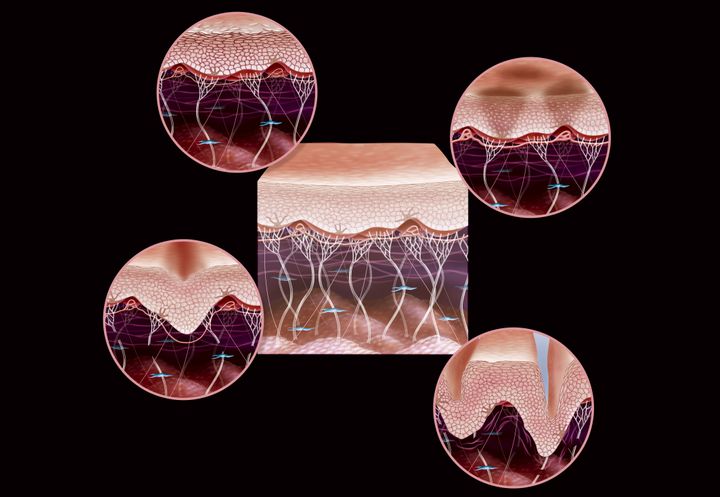
An illustration of the signs of aging in skin. In the center, a cross-section illustration features young skin and provides a comparison with different types of aging. The illustration in the top left shows the dulling of the epidermis, while the illustration in the top right shows spots. The illustration in the bottom left shows the loss of firmness due to diminished activity of the fibroblasts (blue), which are responsible for skin’s elasticity, producing elastin and collagen. The bottom right illustrates wrinkles due to the deterioration of collagen (white vertical) and elastin (pink horizontal) fibers.
In your 50s
Advertisement
Skin laxity tends to be a big concern in our 50s, Garshick said, explaining, “People start to notice jowls forming as well as textural changes in the neck.”
It may be beneficial to add a separate neck cream in this decade. Other ingredients that may help include peptides, growth factors and antioxidants like resveratrol and vitamin C.
Garshick’s proposed routine in your 50s:
Psomadakis’ proposed routine in your 50s:
In your 60s
“Brown spots and hyperpigmentation are often a concern in your 60s, so while everything else still remains important, it is a good time to consider products and serums that also work to lighten discoloration and reduce pigmentation,” Garshick said.
The ingredients you should look into include antioxidants, alpha arbutin, tranexamic acid, kojic acid, niacinamide and azelaic acid. Retinoids continue to be essential as well as sunscreen in the morning.
Garshick’s proposed routine in your 60s:
Advertisement
In your 70s
The skin loses moisture as we age, so we have to replenish that with topical products and moisturizing creams, Garshick said.
“It may also be important to adjust the frequency of exfoliation, as well as the frequency and strength of the retinoid use if the skin begins to feel too dry, and look for products that help to repair the skin barrier,” she told HuffPost.
Garshick’s proposed routine in your 70s:
In your 80s
Hydration is more important than ever at this stage. Garshick recommended ingredients such as hyaluronic acid or glycerin, which contains humectants that will draw moisture in the skin, as well as firming peptides. For cleansing, a micellar might be preferred as a gentler option.
Garshick’s proposed routine in your 80s:
Advertisement
When in doubt, listen to your skin and consult a skin specialist who will be able to recommend products to suit your specific concerns. Also, remember that active ingredients such as retinoids take eight to 12 weeks of consistent use for noticeable results, so patience and consistency are key. If you catch any signs of irritation or sensitivity, strip back your routine to the basics.
HuffPost may receive a share from purchases made via links on this page. Prices and availability are subject to change.
My 90-something grandma is a badass boss who lives alone, takes care of herself and loves to cook. After working as a chef and nutritionist for close to 30 years, she could tell you how to make the perfect Cornish game hen like she’s giving directions to the local Dunkin’ Donuts.
Yet, as a party of one, she’s reluctant to buy bushels of herbs or large amounts of produce she knows she won’t use. That, coupled with COVID precautions keeping her away from the store, mean her menu has been looking a little bleak. So in the name of flavor and encouraging older folks to feel independent and strong, I’m gearing up to get her a meal delivery kit for the holidays. But with more options than there are Kardashians, it’s daunting to choose the perfect one.
Advertisement
According to Barbara Ruhs, a registered dietitian and founder of The Market RD, it’s imperative that older folks eat consistent, nutrient-dense meals. “As we age, some nutrients are not absorbed as well,” Ruhs told HuffPost. “Pre-made meals can make it easier for seniors to consume adequate nutrition.”
Retired physical therapist and home-health care specialist Cathy Ellis added that getting nutritious food delivered at home can help with recovery illness or injury. Rather than risking falling or being in public, older folks can have their pantry stocked from the inside of their own house.
Philly resident Shelby Guercio sends meal kit deliveries to her mom, who is 62, and grandmother, who is 100, in small-town Massachusetts. “My mom lives alone and works two jobs and is so busy that I worry about her being able to eat full, fresh meals after a long day of work or in between jobs,” Guercio said. “With meal kits just showing up at my mom’s door, she can either cook it quick and drop it off for my grandma, or easily bring the ingredients over and cook them at my gram’s house.”
Guercio said that sending over meal kits is easier than having her mom and grandmother drive a long way to the grocery store. Additionally, using meal kits means her mom and grandma are introduced to new foods they wouldn’t be able to get at their local store. “They live in an area where [meal] delivery takes an extra day, but still shows up fresh,” she said.
Advertisement
Chef Jake Minigiello says meal kits can be a low-stakes way to introduce older folks to different, but doable, ingredients and methods of cooking, especially because the pre-portioned ingredients allow you to try something new without committing to buying a whole container of it. “It’s good how they just send you the exact amount of ingredients you need for a recipe to cut that waste out,” Minigiello said.
Although meal kits may cut down on food waste, the packaging and shipping required has been the subject of criticism. And the costs of these kits can be a barrier for many shoppers. While delivery makes food more readily available, the high price points mean it’s only really available to those who can afford it. (It’s also import to note that Amazon Fresh, Top Box and Hungry Harvest, all listed below, accept EBT/SNAP.)
When exploring meal kit and food delivery options, you may also want to consider the work behind the scenes, and how those employees are treated. If worker’s rights are important to you as a consumer, find a brand that works for your kitchen and your ethics.
“Of course, a local, subsidized, sustainable alternative would be amazing, but let’s be real ― if that existed, it definitely wouldn’t exist [in rural areas] for all the old people,” Guercio said. “You can hardly even get Grubhub out there.”
Advertisement
If you’re looking to get a loved one started on a meal kit or trying to find the perfect one for yourself, we’ve rounded up the best meal kits for smaller portioned food and dietary restrictions.
HuffPost may receive a share from purchases made via links on this page. Every item is independently selected by the HuffPost Shopping team. Prices and availability are subject to change.
Martha Stewart & Marley Spoon, for name recognition and more “meat and potatoes”-type meals
Why it works for older folks: Per Ellis, trusting a new food source can be an adjustment for someone who’s homebound and into a routine. For something that feels a little more familiar, the Martha Stewart & Marley Spoon kit has a name they recognize and recipes they’ve likely had before. While the service does offer international cuisines and Instagrammable smoothie bowl meals, they also have comforting classics like pork tenderloin and parsnips and cheese ravioli.
How it works: Ten days before the food come to you, you get an email telling you to choose your dinners from 40 weekly recipes. You can chose up to six meals a week and portions come for two people or for four. (The more meals you order, the cheaper each becomes.) You can skip or decline an order up to five days before its scheduled delivery date, and can plan meals up to seven weeks in advance. Deliveries are made to most of the contiguous U.S. states, but you should check your zip code before ordering.
How much? Shipping is always $8.99. For a two-person portion, meals range from $9.49 to $11.99 per portion, depending on how frequent the deliveries are.
Dinnerly, for more frequent food and less paper/packaging
Why it works for older folks: As Ruhs described, when we get older, nutrients like B12, calcium and vitamin D are not absorbed as well by the body. Because of this, it’s extra important that older folks eat consistent, nourishing meals. With Dinnerly, you have to receive at least three two-person meals a week, meaning you or your loved one will have a stocked fridge. For more stubborn folks or people who may not ask for help when they’re hungry, this subscription will ensure they have ingredients for at least six meals. Dinnerly also uses fewer paper products and packaging than other kits, so it won’t fill the house with trash.
How it works: After creating an account, you log on to choose your recipes and which day you want your ingredients delivered. There tons of dietary options like no meat, low-carb, dairy-free and low-calorie, and easy-cook options like “under 30 minutes” and “one-pot” meals. It’s important to note that Dinnerly uses digital recipes; there is not a paper flyer like other kits, so some understanding of a smartphone or computer is needed.
How much? Shipping is $8.99 and two-portion meals range from $5.59 to $5.89 per portion.
Hungry Harvest, for discounted produce and SNAP/EBT users
Why it works for older folks: As Ruhs shares, older folks are at risk of not getting enough veggies. Hungry Harvest is a produce subscription box that accepts SNAP/EBT and comes in various sizes. For those who live alone, the “mini-harvest” comes with one type of green, three veggies and 2 to 3 pieces of fruit. You can set it for every other week to ensure there’s fresh produce in the house, without too much food going to waste or going bad.
How it works: As of now, Hungry Harvest only delivers in Maryland, Washington, D.C., Virginia, Greater Philadelphia, Southern New Jersey, Northern Delaware, South Florida, the Triangle area and Charlotte in North Carolina and the Detroit metro area. Select the size of harvest you want and weekly or biweekly deliveries.
How much? The mini harvest is $15 per box with $3.49 shipping. Shipping is free on orders over $29.99.
Purple Carrot, for single-serving pre-made, veggie-packed meals to help with lowering LDL cholesterol
Why it works for older folks: Ruhs notes that it’s common for older folks to not consume enough veggies. Purple Carrot is an all plant-based meal kit that sends both fully pre-made meals and ingredients that you cook. Either pop it in the microwave or choose to chef something up (most recipes have around six steps.)
How it works: First, you choose between meal kits or prepared meals. For kits, you pick your number of servings (two or four) and how many dinners you want (three or four). Prepared meals come in single servings and you can get six, eight or 10 a week. There are options like high-protein, gluten-free, “easy” meals or “Chef’s Choice” meals, where you don’t choose. To skip a delivery, just alert the website before 11 p.m. ET on Tuesdays.
How much? For meal kits, servings are $9.99 to $11.99 per serving depending on how frequent the meals are delivered. Prepared meals are $12.99 each, regardless of frequency.
SNAP-Eligible Amazon Fresh, for maximum convenience
Why it works for older folks: If they already use Amazon, they may know how to work the website and feel comfortable ordering from it. Additionally, Amazon Fresh makes it easy to send groceries to someone else. Stock their fridge with a click of a button.
How it works: Amazon Fresh delivers in most of the continental U.S., but check the zip code to make sure. Then, like ordering anything from Amazon, click around and find what you like. Delivery is often available same-day or the next day. Check out the SNAP-eligible page to use your SNAP/EBT on Amazon Fresh.
How much? Just like the grocery store, each item is priced separately. When using SNAP/EBT, delivery is free even if you’re not an Amazon Prime member.
Hungry Root, for actual food that looks like groceries
Why it works for older folks: Ellis shared that getting groceries delivered helps ensure people’s safety and lowers risk of injury or illness that can come from going out to the market. If you’re feeling skeptical about the “Jetsons”-eqsue futuristic feel of meal kits, Hungry Root may be the way to go. Instead of packaged and proportioned ingredients made for set meals, Hungry Root is a subscription grocery service that sends a selection of actual groceries and access to a bank of recipes. The packages come as if someone went to the market for you and dropped it at your door, meaning the products are all more familiar, and the recipe bank correlates to what you have, letting you decide what you want to make and how.
How it works: Upon signing up, you take a quiz to develop your grocery plan. Select “fresh veggies” for a vegetable selection every week, and “premium proteins” for meatballs, chicken breasts, Beyond meats and more. You can select “ready to eat” meals for things that only need the microwave or heating up on a stovetop. Every week Hungry Root will send you their suggestions for foods they think you’d like, and recipes you can make with the groceries.
How much? Plans start at $65 and are totally customizable.
Sunbasket, for single-serving dietary restrictions and lots of options for all three meals (and snacks)
Why it works for older folks: From “carb-conscious” to “diabetes-friendly,” Sunbasket has a wealth of options for different dietary needs. Choose from pre-made meals that just need heating or meal kits that generally take between 15-45 minutes to make. In addition to dinners, Sunbasket has breakfast options like oatmeal and yogurt, snacks like granola and protein bars, and other fare like juice or red sauce.
How it works: First, decide if you want the prepared meals or meal kits. Then select all your dietary preferences and restrictions, like “low sodium” or “avoid lamb.” Each week, you’ll get to see a bank of recipes and pre-made meals that fit your needs. Choose the one(s) you want, then pick the day of delivery.
How much? Shipping is $7.99.Prepared meals are for one, and start at $9.99 a serving for up to 10 meals week. Meal kits come in servings of two or four, for two to five dinners a week, from $11.49 to $14.49 per serving, depending on frequency.
Green Chef, for protein-packed options that are highly customizable
Why it works for older folks: “Obtaining enough protein is important to maintain muscle mass,” Ruhs said, “which can be very important to avoid falls that can lead to broken bones.” To help your loved one get enough protein, Green Chef has an array of keto, paleo and plant-based high protein meals. With options like gluten-free, grain-free, soy-free and legume-free, Green Chef is good for ensuring those with dietary restrictions still eat nourishing meals.
How it works: Select the “type” of meal you want — “Keto/Paleo,” “balanced” (no diet restrictions) or “plant-powered” (vegan and vegetarian options) — then choose if you want two, four or six portions and if you want three or four meals a week.
How much? Shipping is $9.99. A two-portion meal ranges from $11.49-$11.99 per serving, depending on frequency.
Top Box Foods, for a more personal delivery and EBT/SNAP users
Why it works for older folks: A community-driven food resource, Top Box Foods is an anti-hunger non-profit that delivers grocery staples and food boxes geared at making recipes. Because it’s community-run, they partner with churches, community organizations, housing facilities and schools. It’s less transactional and robotic than other meal kits, and you’ll likely get to know your delivery person.
How it works: As of now, Top Box Foods delivers food around Illinois, Georgia and Louisiana. You place your order before the stated date each month and get your groceries about four days later. On the website, you can choose if you want pantry staples like oatmeal and milk or a box to make a meal. They have a bank of recipes to help you chose your groceries.
How much? Take Box Foods takes EBT/SNAP. There is no delivery fee. Boxes range from $9-$23, depending on the selection, and individual items are priced separately.
EveryPlate, for easy cooking and less decision making
Why it works for older folks: EveryPlate has fewer weekly options to choose from, meaning less decision-making and more relaxing and eating. All of EveryPlate’s recipes have only six steps for cooking and most take under 30 minutes to cook. It’s a more manageable kit that doesn’t demand 45 minutes of zesting for every meal.
How it works: You choose your meal preferences, such as “classic” (full display recipes) “veggie” (vegetarian recipes) “family” (kid-friendly recipes) or “easy” (all under 30 minutes, often using fewer dishes). Then you decide how many meals you want a week and what day you want the delivery. You can cancel or postpone at any time online. You can even order “protein packs” alongside your meals, which are chicken breasts and cuts of meat. The minimum is three meals per week.
How much? For a two-portion meal, it’s $4.99 to $5.49 per portion, depending on how many meals you get per week.
It’s shortly after my 40th birthday, I’m enjoying some well-deserved time off with my family, and it’s shaping up to be one of the loveliest days I’ve had in a long time. We’d spent the day out in the water, and everyone was still lounging around in their swimwear by the time dinner rolled around.
At some point, the conversation turned to fitness. After years of yo-yo diets, watching what I ate, and berating myself with all types of internal verbal abuse, I was finally in a healthy space — mentally and physically. I was in a hot pink bikini, and I felt fly and fabulous. To celebrate and acknowledge that, I happily shared how I was feeling with my family: “I’m in the best shape of my life.”
Advertisement
Ten words were all it took to shatter the moment.
“That’s not true,” my brother scoffed. “I saw the cellulite on your legs.”
My face flushed immediately. My stomach dropped and the air rushed out of me. I was shocked. Then embarrassed. And then furious. His wife immediately called him out on making such an insensitive, backward and rude comment.
I simmered in anger but I also felt bad. Bad that my sister-in-law was arguing on my behalf. Bad that everyone in my family had heard my brother’s comment. Bad that my kids had to witness this ugliness.
Advertisement
My first instinct was to brush it off and manage everyone’s emotions so we could still salvage the evening. Fifteen years ago, Susan would have left it at that. But 40-year-old Susan? She was tired of constantly shouldering the invisible workload of women.
I shut my brother down. “Yeah, I’m celluLIT,” I responded before telling him that cellulite has zero to do with my fitness level or whether I deserve to feel good about myself. I’d been fighting body image issues for years, and my insecurities with aging were nothing new to me, but I was going to be damned if I let my kids grow up thinking that having cellulite or wrinkles was bad.
When I was a kid, I was no stranger to worrying about aging. I remember watching my mother stand in front of a mirror, nitpicking at her appearance as she noticed her skin sagging or wrinkling. I’d tell her she was beautiful.
“You won’t understand until it happens to you,” she would say. And oh, how right she was.
Advertisement
When I turned 38, I started noticing the first signs of perimenopause. Suddenly, I had to adjust my lifestyle. The way I ate and what I drank. And just as suddenly, I started noticing changes in my body. My skin sagging where it didn’t use to sag. Wrinkles appearing and deepening where they didn’t use to be.
Goodbye luscious hair, supple skin and strong bones, I thought to myself bitterly as I looked in the mirror, flashing back to the moments my mother would do the same.
But it wasn’t just my mother who hammered in these insecurities. There’s a$58.5 billion anti-aging industry that’s making bank off these thoughts.
You don’t want to be old, says every anti-aging cream. You want to be wrinkle-free, like me, says every airbrushed model image. You want to be desirable, says society.
Last year, a meme comparing Jennifer Lopez and Rue McClanahan from ”Golden Girls”went viral. Both aged 50, there was Rue in an old-fashioned maternal look versus J-Lo, dressed in a sheer and sequin costume, hanging off a pole at the Super Bowl.
Seeing that meme made me angry. Angry that we choose to celebrate women for their ability to look young rather than something more concrete. Angry that we continue to pit women against each other as well, over something as natural and uncontrollable as aging.
“I am no longer happy in spite of my aging body. I am thrilled to see my body evolve — just as it’s supposed to.”
Between the ages of 38 and 40, I comforted myself by focusing on aging gracefully. I’ll be different. I won’t worry over my changing looks, I’ll embrace them and wear them with grace. But the aging part was still happening, graceful or not. And I still found myself scrutinizing my insecurities in front of the mirror as my mother had before me.
I thought aging was wrong because the media spent my entire life telling me so. Because society erases women over a certain age. Because actresses are airbrushed and Botox-ed while actors are called “mature” and ”stately” with their wrinkles. Because there is no space where an aging woman is shown in a positive light.
But you take away my age, and I am still a business owner, a badass entrepreneur who coaches women to their success. A lively, vibrant person. A friend. A mother. A partner.
I pushed myself to be mindful in the moments these insecurities would threaten to take over. I challenged myself to remember that I was fed this BS about aging. It wasn’t the truth.
Advertisement
I took a hard look at what I surrounded myself with online and started curating my space with content that would lift me up rather than minimize me. And as the male gaze began to shift off of me, I found it liberating to no longer be subject to society’s expectation of desirability or be boiled down to my reproductive value. This freedom started to incite a sense of newfound independence.
Worrying about aging, I soon realized, was stealing my youth. I was losing time, money, confidence and energy to it. Why hide my cellulite and stretch marks? My saggy skin and wrinkles? My body has carried me my whole life and the way it looks is my business.
Choosing to accept aging for what it is — a natural part of life — is one of the most empowering things we can do as women. In my refusal to let societal expectations push me aside, I found myself becoming bolder and louder and prouder. Clapping back instead of sitting in silence. Standing up for myself and my beliefs instead of meekly muttering excuses.
Since I have started mindfully rejecting the aging industry, my internalized ageism has melted away. I am no longer happy in spite of my aging body. I am thrilled to see my body evolve — just as it’s supposed to.
I still have moments of insecurity. Moments when I find myself in front of a mirror, staring a little too hard. But I choose to extend the same compassion I would extend to anyone else. I remind myself of the person I am, of the life I have lived, and the surety that there is still so much more to see, live and experience.
Do you have a compelling personal story you’d like to see published on HuffPost? Find out what we’re looking for here and send us a pitch.