Top 3 benefits of vitamin C serum

You have chosen to share the following article:

How elderberries can help you fight the flu

To proceed, simply complete the form below, and a link to the article will be sent by email on your behalf.
Note: Please don’t include any URLs in your comments, as they will be removed upon submission.

We do not store details you enter into this form. Please see our privacy policy for more information.

Message sent successfully

The details of this article have been emailed on your behalf.

Click here to return to the Medical News Today home page.

Share Button

What to know about scar tissue

You have chosen to share the following article:

How elderberries can help you fight the flu

To proceed, simply complete the form below, and a link to the article will be sent by email on your behalf.
Note: Please don’t include any URLs in your comments, as they will be removed upon submission.

We do not store details you enter into this form. Please see our privacy policy for more information.

Message sent successfully

The details of this article have been emailed on your behalf.

Click here to return to the Medical News Today home page.

Share Button

What to know about duct tape wart removal

You have chosen to share the following article:

How elderberries can help you fight the flu

To proceed, simply complete the form below, and a link to the article will be sent by email on your behalf.
Note: Please don’t include any URLs in your comments, as they will be removed upon submission.

We do not store details you enter into this form. Please see our privacy policy for more information.

Message sent successfully

The details of this article have been emailed on your behalf.

Click here to return to the Medical News Today home page.

Share Button

How to treat acne on black skin naturally

You have chosen to share the following article:

How elderberries can help you fight the flu

To proceed, simply complete the form below, and a link to the article will be sent by email on your behalf.
Note: Please don’t include any URLs in your comments, as they will be removed upon submission.

We do not store details you enter into this form. Please see our privacy policy for more information.

Message sent successfully

The details of this article have been emailed on your behalf.

Click here to return to the Medical News Today home page.

Share Button

Causes and treatment of pimples in the armpit

You have chosen to share the following article:

How elderberries can help you fight the flu

To proceed, simply complete the form below, and a link to the article will be sent by email on your behalf.
Note: Please don’t include any URLs in your comments, as they will be removed upon submission.

We do not store details you enter into this form. Please see our privacy policy for more information.

Message sent successfully

The details of this article have been emailed on your behalf.

Click here to return to the Medical News Today home page.

Share Button

Treatments and remedies for dark inner thighs

You have chosen to share the following article:

How elderberries can help you fight the flu

To proceed, simply complete the form below, and a link to the article will be sent by email on your behalf.
Note: Please don’t include any URLs in your comments, as they will be removed upon submission.

We do not store details you enter into this form. Please see our privacy policy for more information.

Message sent successfully

The details of this article have been emailed on your behalf.

Click here to return to the Medical News Today home page.

Share Button

How to treat razor bumps

Razor bumps are ingrown hairs that develop after shaving or using other hair removal techniques, such as waxing or plucking. The medical term for razor bumps is pseudofolliculitis barbae.

Ingrown hairs develop when hair starts to grow back into the skin, rather than up and out. After removing hair by shaving, waxing, or plucking, the hair may curl and turn inward. As the new skin cells grow over the hair, it becomes trapped and causes a bump to form.

Razor bumps can develop on any area of the body where a person shaves or removes hair, including the face, head, legs, underarms, and pubic area.

In this article, learn about how to treat razor bumps quickly and how to prevent them from forming in the future.

Treatment

Razor bumps can range in size from small to large, and they can be red or have a white, pus-filled bump.

Although nothing can make them go away instantly, there are several strategies that can help remove them faster and allow the skin to heal. We discuss these strategies in the sections below.

1. Use salicylic acid

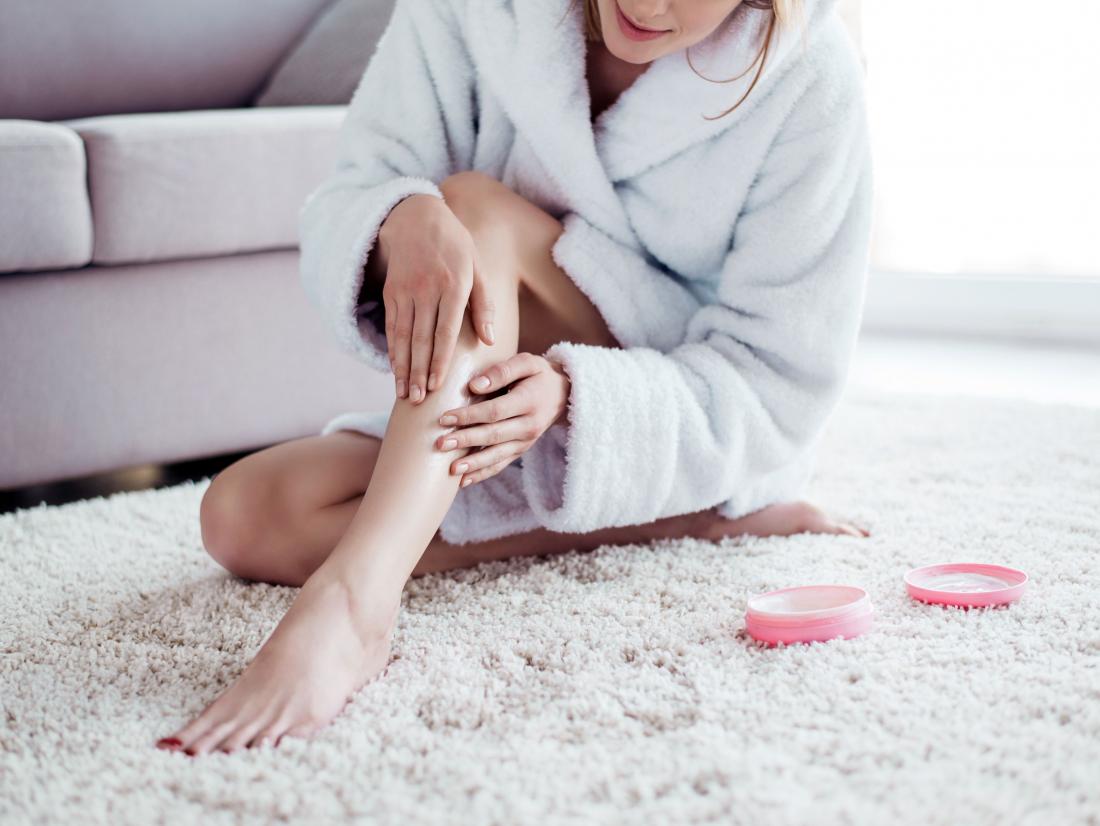
Woman applying lotion to get rid of razor bumps
Using products that contain salicylic acid can help heal the skin around razor bumps.

Salicylic acid is a beta hydroxy acid that helps exfoliate, or peel, skin cells. It can penetrate oil glands in the skin to unclog pores as well as fight inflammation.

Salicylic acid works to alleviate razor bumps and slough off dead skin cells. This allows the ingrown hair to make its way out of the pore. It also reduces the appearance of the bump.

Salicylic acid can also help treat acne, according to the American Academy of Dermatology (AAD), so it may be a good option for people who experience both acne and razor bumps.

Various products contain salicylic acid, including cleansers, toners, and lotions. These products are available in drug stores and online.

2. Try glycolic acid

Like salicylic acid, glycolic acid helps the skin peel by removing old cells from the surface of the skin. Glycolic acid is an alpha-hydroxy acid.

Razor bumps develop when excess skin cells clog the pores and trap the hair inside. Glycolic acid can help get those cells out of the way and allow the hair to come to the surface.

Because it speeds up the skin’s natural sloughing process, a glycolic acid product can help razor bumps clear up more quickly and give the skin a smoother appearance.

Products that contain glycolic acid are available to buy online.

3. Tweeze

If the ingrown hair is visible, it may be helpful to use sterile, pointed tweezers to pull it out.

Removing the trapped hair could get rid of the razor bump quickly. A person should sterilize the tweezers with alcohol and cleanse the skin and hands with soap and water before tweezing.

If the hair is not visible on the surface of the skin, using tweezers could make the problem worse. The tweezers could injure the skin, causing more irritation and infection.

A person should not attempt to pick or squeeze the bumps, as they could get worse or cause scarring.

4. Use scrubs with caution

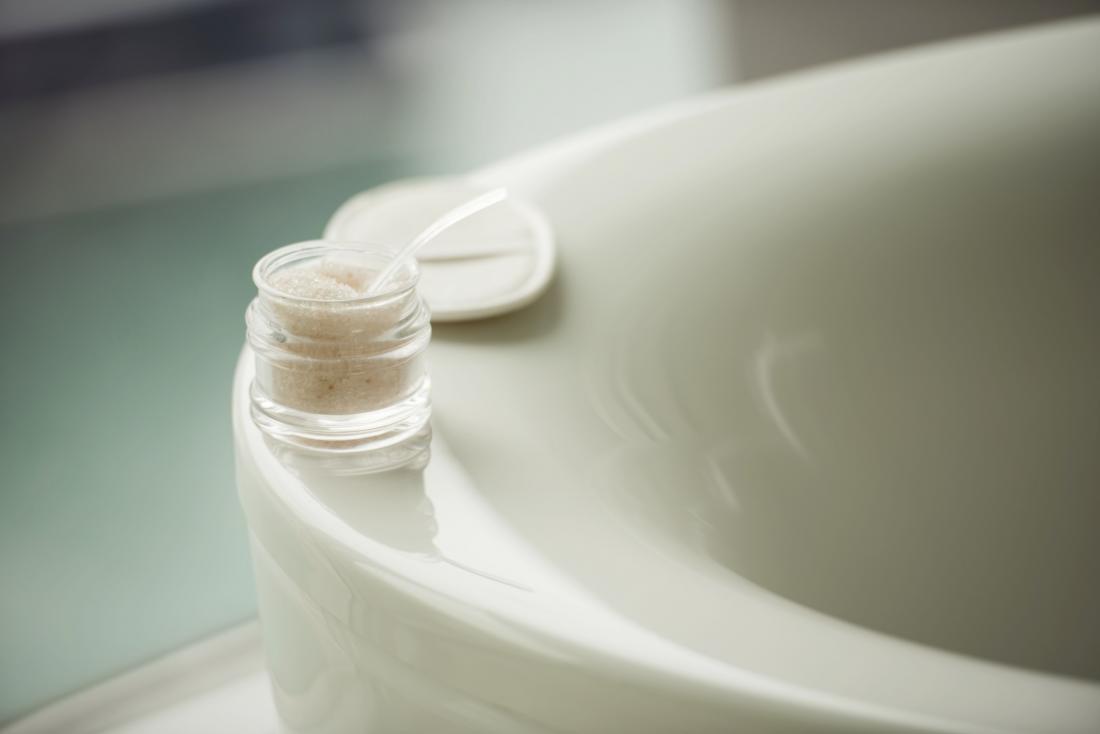
Body scrub in a bathroom to get rid of razor bumps.
If a person has sensitive skin, they should use scrubs with caution.

Sometimes, a mechanical or physical scrub can remove dead skin cells that plug the pores and keep hairs trapped inside. These types of skin care scrub may contain sugar, salt, ground up fruit pits, or tiny beads.

Scrubs may remove debris and free ingrown hairs by physically sloughing off dead skin cells.

Some people may have a skin reaction to the rough texture of scrubs, especially those with sensitive or inflamed skin. If the skin is red, irritated, or sensitive, use scrubs with caution.

Skin scrubs are available in many drug stores and online.

5. Gently brush the skin

Another option for removing dead skin cells and debris clogging the pores is using a soft brush in the areas a person shaves. Some people use a skin care brush or a soft toothbrush.

A brush can help guide the hair out of the clogged pore so that it does not become trapped underneath.

Brushing the area each day may help remove current razor bumps and prevent new ones from forming.

People can buy special skin brushes in some drug stores and online.

6. Use a warm washcloth

Applying a warm, wet washcloth to the skin can help soften the skin and draw the ingrown hair out, especially when a person pairs this technique with one of the other treatments above.

Similarly, a person may wish to steam the area in a hot shower or sauna.

Razor bumps vs. razor burn

Razor bumps are not the same thing as razor burn.

Razor burn is a type of skin irritation that the friction of the razor causes. It tends to cause areas of redness and irritation immediately after shaving.

Razor burn can occur if a person does not properly lubricate their skin with shaving gel or cream before shaving. It may also occur if the person uses a dull razor or has skin that is sensitive to friction.

Razor bumps, on the other hand, can develop several days after hair removal, once the hair has had time to grow into the skin and create a blockage.

Prevention

There are several things a person can do to help prevent razor bumps from forming.

If none of these measures help, however, a person may wish to see a doctor so they can evaluate the bumps.

Some prevention tips include:

Shave less often

If possible, a person should try to shave every other day, or even less frequently. This can minimize the risk of hairs being too short to grow out of the skin, thereby decreasing the risk of ingrown hairs.

Use an electric razor

Shaving close to the skin cuts the hair very short. This increases the chance that the hair will become ingrown as it starts to grow back.

A person can use an electric razor on a low setting to keep the hair slightly longer. This makes it less likely that it will turn back into the skin.

Consider a retinoid product

It takes several weeks for a retinoid product to reach its full results, so it is not a quick fix. However, it may help prevent razor bumps as well as acne.

Retinoids come in over-the-counter creams, serums, and cleansers. A person can also get stronger retinoids with a prescription. Prescription retinoids include tretinoin (Retin-A), adapalene (Differin), and tazarotene (Tazorac).

Prepare properly

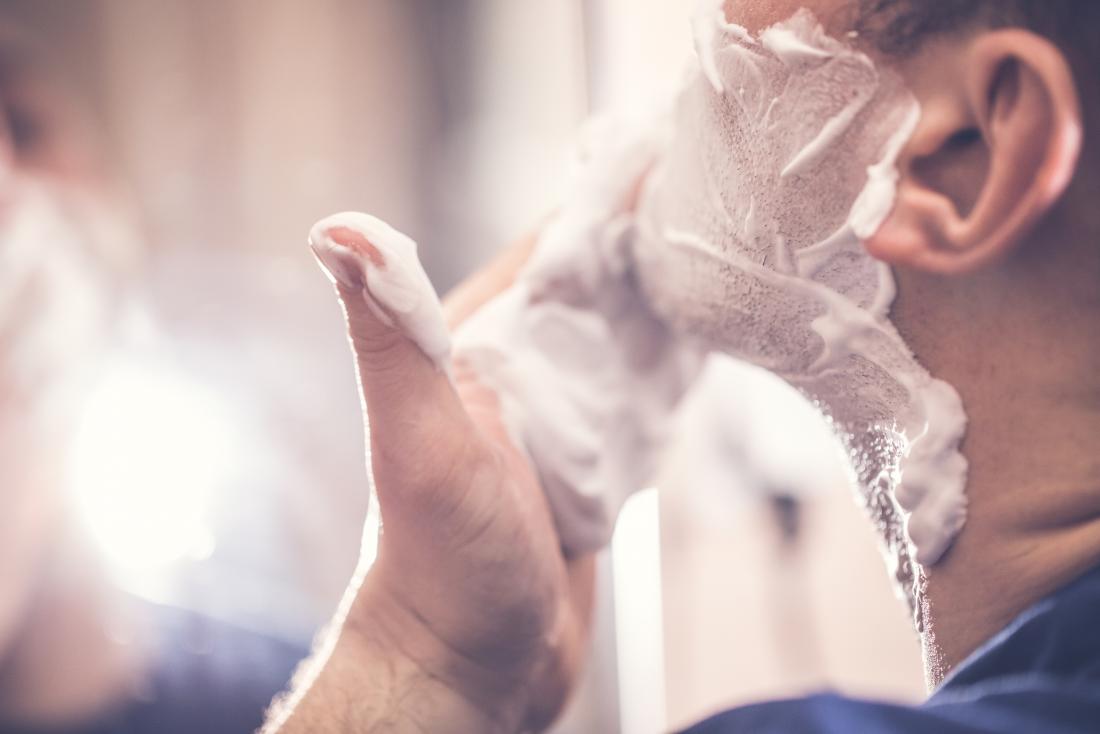
Man preparing to shave
A person can use a shaving cream to lower their risk of razor bumps.

Before shaving or plucking, a person can lower their risk of razor bumps by getting the skin ready. The following steps may help:

  • Cleanse the skin with a product that contains salicylic acid or glycolic acid to help clear pores and remove excess skin cells from the surface.
  • Shave only when the skin is very wet, either during or immediately after a shower. Or, place a warm, wet towel on the area for 5 minutes before shaving.
  • Use a shaving cream or gel appropriate for the person’s skin type. People who experience acne may wish to opt for a shaving gel that is safe for acne-prone skin. Those with dry skin should choose a product that contains moisturizer.
  • Avoid skin care products that contain irritating ingredients, which could make inflammation worse.
  • Use a fresh, sharp razor.
  • Clean the razor with alcohol before and after each use to keep it free of bacteria.

Try another hair removal technique

Some people may wish to try hair removal creams, or depilatories, which dissolve the hair and reduce the risk of razor bumps.

However, hair removal creams contain chemicals that can irritate some people’s skin. A person should not use these products if their skin is already red, inflamed, or sensitive.

Another option is laser hair removal. Dermatologists and other healthcare providers can perform this technique. The AAD state that laser hair removal requires multiple treatments to produce results, but the hair tends to grow back finer and lighter than before.

Summary

Razor bumps generally do not cause serious health problems but their appearance can be bothersome and can affect a person’s confidence.

If home remedies do not work, consider seeing a doctor or dermatologist to discuss other options, such as a prescription skin cream or laser hair removal.

Share Button

The best ways to get rid of dark spots on black skin

People with black skin can be prone to dark spots, which may appear on the face or other parts of the body. These areas of hyperpigmentation occur as the result of sun exposure or, more commonly, develop on a previously inflamed area of the skin.

In this article, we look at home remedies and medical treatments for dark spots on black skin. We also look at methods of prevention.

Causes

Man with dark or black skin and acne pimples
Acne can cause dark spots and scarring.

Dark spots may occur on black skin when the skin overproduces melanin. Melanin is the substance that gives skin its color.

Factors that can trigger excess melanin production include sun exposure and hormonal changes, such as those that occur during pregnancy.

Dark spots can also occur as a result of inflammation or trauma to the skin, such as from:

Even everyday skin care practices can contribute to the development of dark spots. Using harsh scrubs, waxing, and shaving can all cause minor skin trauma that leads to skin changes.

How to get rid of dark spots

The treatment that a person requires will depend on their skin type and the severity of the discoloration. Dark spots are not usually harmful, so it may not be necessary to seek treatment unless a person finds them bothersome.

Treatments include:

The “wait and see” approach

In some cases, no treatment may be the best option, as the spots could go away over time.

For example, this may be the case for some types of hyperpigmentation that occur during pregnancy or those that appear after an acne pimple goes away.

In the meantime, the use of sun protection can help prevent the spots from getting darker.

Removal of the cause

If the discoloration is the result of a skin care product or certain medications, then stopping the use of these products may prevent the formation of new dark spots.

According to the American Academy of Dermatology (AAD), once a person removes the cause of the spots, any existing ones will typically fade within 6 to 12 months. However, daily sunscreen use is important to help the area fade and prevent the sun from darkening it.

Darker spots may take years to fade, however. In these situations, medical treatments or skin lightening products may help.

Treatment of underlying medical conditions

Proper management of existing skin conditions, such as acne or psoriasis, is likely to help stop new spots from appearing.

Any dark spots that are already on the skin due to these conditions may then fade away over time.

Sunscreen

Adequate sun protection is advisable for everyone, regardless of skin type or color, yet research suggests that sunscreen use is especially low among non-Hispanic black people.

The sun’s ultraviolet (UV) rays are responsible for most dark skin spots. The UV rays trigger excess melanin production, causing new areas of hyperpigmentation and darkening existing areas.

The AAD recommend everyone to use sunscreen that:

  • has a sun protection factor (SPF) of at least 30
  • protects against UVA and UVB rays (manufacturers may label it as broad spectrum)
  • is water resistant

People should apply it to all areas of exposed skin — not just the face — and wear it year-round.

Sunscreen is available in drug stores and online.

Natural remedies

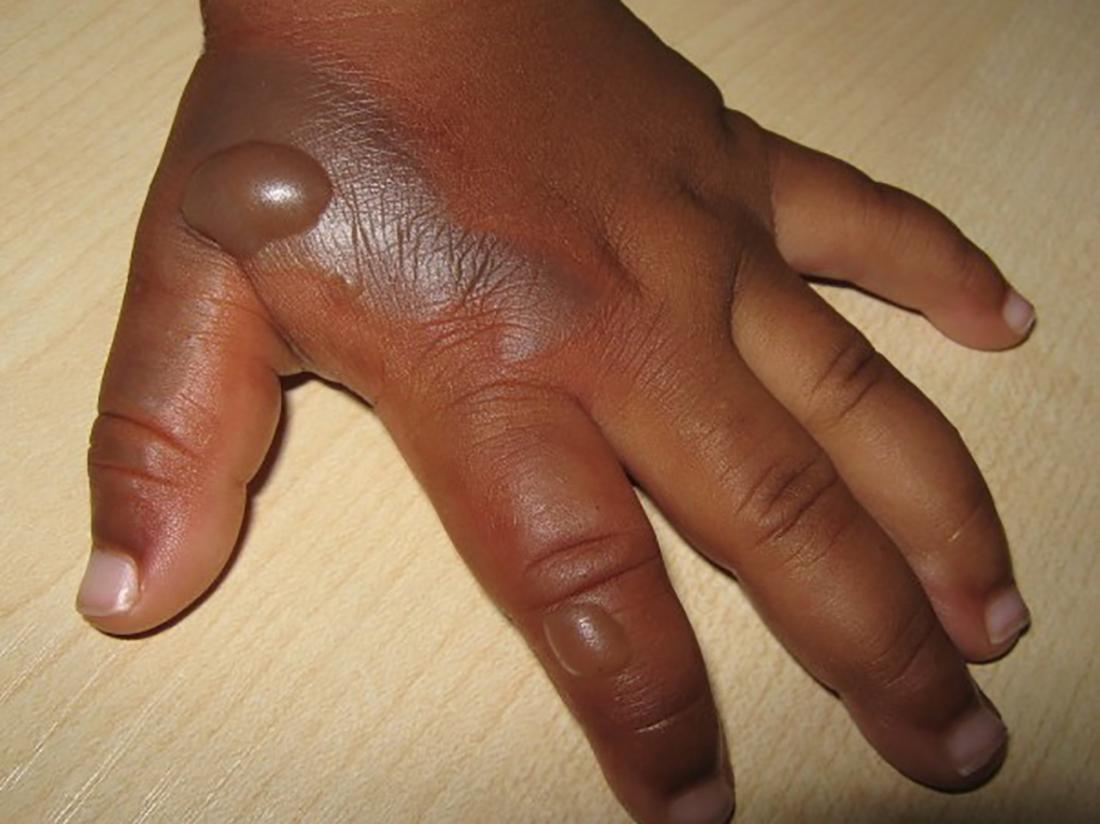
Burn with blister. Image credit: Grook Da Oger, 2010.
Applying aloe vera gel to burns may help prevent scarring.
Image credit: Grook Da Oger, 2010.

Some people claim that natural remedies can effectively reduce dark spots on black skin. The most popular remedies include:

However, there is no scientific evidence that these natural treatments lighten areas of hyperpigmentation. Some of them may even cause other skin problems. For example, lemon juice can dry out and irritate the skin.

Overall, however, these natural products are unlikely to cause harm if people use them sparingly.

Skin-lightening products

Several products are available over the counter to treat an uneven skin tone. For the best results, a person should choose a skin lightener that contains one of the following:

Vitamin C

Vitamin C is a potent antioxidant. When it comes to skin care, research suggests that it can protect against sun damage, increase collagen levels, and reduce the formation of melanin to stop hyperpigmentation.

However, it is unclear how effective it can be due to the poor ability of current preparations to penetrate the skin.

Vitamin C serums are available in pharmacies and online.

Hydroquinone

Hydroquinone is a very popular treatment for dark spots. Similar to vitamin C, it works by inhibiting melanin production.

Over-the-counter (OTC) products typically contain 2% hydroquinone, whereas prescription creams contain 4%.

Creams that contain hydroquinone are available in some drug stores, pharmacies, and online.

Kojic acid

Kojic acid is another common skin lightener.

However, it may be less effective than other remedies for dark spots. A study on a type of hyperpigmentation called melasma found that 4% hydroquinone cream was a better and faster treatment for hyperpigmentation than 0.75% kojic acid cream.

People can purchase kojic acid solutions online or in some drug stores.

Differin gel

Adapalene 0.1% gel (Differin) is an OTC treatment that is anti-inflammatory and helps stop acne comedones from forming.

Dermatologists may recommend it to even out a person’s skin complexion and lighten dark spots alongside preventing acne breakouts.

Medical treatments

If home remedies do not help get rid of the dark spots, then some people may wish to consider medical treatments.

These may cause adverse reactions, so it is best to discuss the advantages and disadvantages of each option with a dermatologist before having treatment.

Medical treatments include:

Laser therapy

Laser therapy uses a beam of light to eliminate areas of hyperpigmentation.

Research indicates that laser therapy is effective and gives lasting results. However, it is expensive and requires multiple sessions. It may lighten the skin surrounding the dark spots if the doctor accidentally targets those areas. It might even produce a lighter spot in place of the dark spot.

Chemical peels

Chemical peels exfoliate the skin but go deeper than other processes, such as microdermabrasion. Although they can be effective, strong chemical peels may burn the skin or even produce further pigment changes.

This treatment can be expensive, and a person may require several sessions to achieve noticeable results.

Treatments to avoid

Hyperpigmentation. Image credit: Kylie Aquino, 2017.
A dermatologist can offer advice on how to treat hyperpigmentation.
Image credit: Kylie Aquino, 2017.

People should avoid using very harsh treatments on the skin, as these may cause skin damage and serious harm to internal organs.

For example, some online sources recommend using liquid bleach on dark spots. People should never apply this product to the skin, as it can cause painful burns.

Also, it is important to be wary when shopping for skin lighteners and to avoid those that contain mercury, which may appear on ingredient lists as:

  • mercury
  • mercuric
  • calomel
  • cinnabaris
  • hydrargyri oxidum rubrum
  • quicksilver

The World Health Organization (WHO) warn that skin lightening soaps and creams containing mercury could cause:

Eventually, the mercury in cosmetic products also ends up in the water. Here, it makes its way into the food chain, meaning that people can end up eating fish that contains toxic levels of mercury.

Prevention

It may not be possible to prevent all cases of dark spots on black skin, especially those that occur due to aging and hormonal changes.

However, it is possible to reduce the risk of them developing by:

  • wearing sunscreen with an SPF of at least 30 every day
  • reapplying sunscreen every 2 hours and more frequently after swimming or sweating
  • avoiding direct sunlight between 10:00 a.m. and 4:00 p.m.
  • moisturizing the skin daily
  • avoiding using harsh exfoliating products
  • treating acne, psoriasis, and other conditions promptly
  • seeing a doctor if black spots are the result of the birth control pill or other medications

When to see a dermatologist

Individuals who find their dark spots bothersome may wish to see a dermatologist, especially if home remedies do not achieve satisfactory results.

Those who have skin conditions that trigger dark spot development should also consider making an appointment with a dermatologist to explore treatment options.

Summary

Dark spots are a common problem for those with black skin. They are harmless, but some people may wish to treat them for cosmetic reasons.

Home remedies include addressing the underlying cause and using skin lighteners.

If these do not work, people can discuss the possibility of laser therapy or other treatments with a dermatologist.

Share Button

What to know about pustules

Pustules are a type of pimple that contains yellowish pus. They are larger than whiteheads and blackheads.

Pustules appear either as red bumps with white centers or as white bumps that are hard and often tender to the touch. In many cases, the skin around the pustules is red or inflamed.

In this article, we look at the causes, appearance, and treatment of pustules.

What causes pustules?

pustules
A clogged pore is the root cause of a pustule.

A clogged pore is the root cause of any pimple, including pustules. Oil, bacteria, or dead skin can block the pore.

Pustules occur when the walls of the affected pore or pores begin to break down. As a result, pustules tend to be bigger than whiteheads and blackheads.

Acne and folliculitis are common causes of pustules. However, pustules can also occur in people with certain types of psoriasis, such as palmoplantar pustulosis, and those with some forms of eczema, including dyshidrotic eczema.

Pustules contain pus because the body is trying to fight against the dirt or bacteria that has entered the pore. Pus is a natural product of the immune system, which consists mostly of dead white blood cells.

Where do they occur?

Pustules can occur anywhere, but they are more common on areas of the body that become oily, such as the face and neck, and areas that get sweaty, such as the armpits, chest, and pubic area.

People often notice pustules around the following body parts:

  • face
  • neck
  • chest
  • underarms
  • hairline
  • back
  • shoulders
  • pubic area

Pustule vs. other types of pimple

pustules pimples
Whiteheads and blackheads are smaller than pustules.

According to the American Academy of Dermatology, there are six common types of pimple:

  • whiteheads
  • blackheads
  • pustules
  • papules
  • nodules
  • cysts

Pimples share similar features because they all occur as a result of blocked pores.

Blackheads and whiteheads are the smallest types of pimple. Blackheads have open pores, whereas these are closed in whiteheads.

Papules and pustules are similar, and both are larger than blackheads and whiteheads. They occur when the pore’s walls break down, causing a bigger pimple to form.

Pustules are typically white and, unlike papules, they contain pus. A person may find that a pustule is tender to the touch.

Nodules and cysts are larger than papules and pustules and may need medical attention. With these types of pimple, the skin around the pore becomes very irritated. Nodules are hard to the touch, while cysts are soft.

Treatment

Small pustules can heal on their own over time without any intervention, but treatments and home remedies can speed up this process.

People should try to keep the skin around the pustules clean and free of oil. They can do this by washing the area with warm water and mild soap twice a day.

Over-the-counter (OTC) creams, ointments, and soaps can help, particularly those that contain any of the following:

  • salicylic acid
  • sulfur
  • peroxide

However, people should avoid using these products near the genitals.

It is important to avoid picking at or popping a pustule. Doing this can cause further damage and extend the healing process.

If home remedies do not work, people can speak to their doctor about prescription treatments. These stronger medications can often remove the pustules.

Acne products can dry out the skin. People with sensitive skin should look for products that are less irritating and could help moisturize the skin. If the skin becomes inflamed, a person should stop using the product.

Home remedies

clay mask for pustules
Applying a clay mask to the affected area can help treat pustules.

Many people find home remedies effective for treating pimples, including pustules.

The following home treatments can help:

  • Clay masks. A mask that contains natural clays can draw oil and dirt from the skin, reducing the incidence of pimples. Learn about bentonite clay masks here.
  • Essential oils. Diluting and applying essential oils with anti-inflammatory properties, such as tea tree oil or rosemary oil, to the affected areas may reduce the pain and inflammation of pimples.
  • Aloe vera gel. Aloe vera is a natural substance with antibacterial and anti-inflammatory properties. Learn about aloe vera for acne here.

Read about home remedies for acne here.

Prevention

People can often prevent pustules by cleaning the areas of skin that are prone to pimples and keeping them oil free. Cleaning should occur at least twice a day and include a mild soap.

It is best to avoid using products that contain oils. These products include many types of moisturizer and some sunscreens. The oil can clog the pores and cause pustules to form.

Outlook

Pustules are irritating but otherwise harmless, and they usually go away on their own. People can often prevent them or reduce their severity by keeping pustule-prone areas clean and oil free.

Many OTC treatments contain ingredients that can be effective against pustules. If the pustules get worse, do not clear up on their own, or are chronic, a person should speak to their doctor about additional treatment options.

Share Button

Causes and treatments for thinning hair

As people get older, their hair may start to lose volume and thickness. In some cases, thinning hair is linked with diet, nutrient deficiencies, or hereditary hair loss.

In most cases, thinning hair is not linked with overall health concerns. However, it can affect people’s mental health and self-esteem.

People can try several treatments and home remedies to boost hair health, thickness, and strength.

In this article, we look at the causes of thinning hair, as well as some of the treatments and home remedies available.

Causes
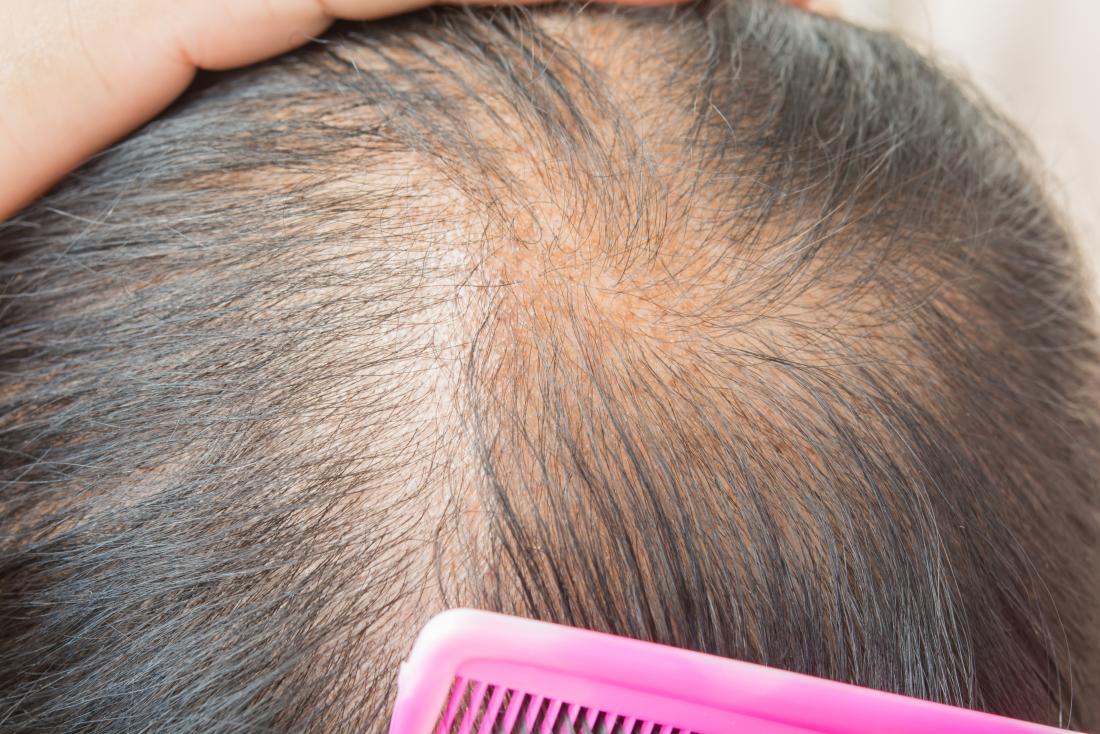
Thinning hair
As people get older, experiencing some degree of hair loss is normal.

Some degree of hair loss is normal. As people get older, their hair may naturally start to lose volume and strength.

The American Academy of Dermatology (AAD) point out that people lose 50–100 hairs each day. New hair then regrows from the same hair follicles.

Over time, however, some follicles stop producing hair, and hair shafts become finer. The hair also starts to lose its color.

If a person notices significant hair thinning or the development of bald patches, they may be experiencing hair loss. According to the ADD, people can stop or treat most causes of hair loss.

The following sections look at possible causes of thinning hair.

Male or female pattern hair loss

Male pattern baldness and female pattern baldness are together called androgenetic alopecia. Genes and hormones cause androgenetic alopecia.

Androgenetic alopecia is a frequent cause of hair loss. It affects an estimated 50 million men and 30 million women in the United States.

According to the Genetics Home Reference, the likelihood of experiencing androgenetic alopecia increases with age. Although it can affect teenagers, over half of males aged 50 and older have some degree of hair loss. It is most likely to affect females following menopause.

Often, people who have androgenetic alopecia have family members with the same condition.

In males, hair thinning tends to occur from the hairline to the back of the head. In females, it tends to affect the crown of the head.

Alopecia areata

Alopecia areata is a condition that causes hair loss in round patches on the scalp. It can also affect the eyebrows, beard, and other areas where hair is present.

People in the U.S. have a 2.1% chance of developing alopecia areata in their lifetime. It often occurs during childhood. Genes and environmental factors are the main causes.

In alopecia areata, the hair follicles are still alive, and the hair can regrow. Doctors may treat alopecia areata with an injection into the scalp every 4–6 weeks for up to 6 months.

Diet

The body needs nutrients in order to create new hair strands and maintain healthy hair follicles.

Protein is an essential component of hair. Micronutrients, which include vitamins and minerals, play a key role in the hair follicle growth cycle.

Malnutrition and vitamin deficiencies can cause hair loss. Eating a healthful, varied diet can help promote the continued growth of strong, healthy hair.

Eating a nutritious diet can also prevent the following signs of damaged hair:

  • brittle hair shafts
  • a dull appearance
  • dryness
  • dandruff

Vitamin D deficiency

Vitamin D stimulates the hair follicles, resulting in hair growth. When a person does not get enough vitamin D, they may experience hair loss, alongside other symptoms.

Some research has linked vitamin D deficiencies with alopecia areata.

Learn about vitamin D deficiency and hair loss.

Stress

After a long period of significant stress, people may notice that their hair feels thinner than usual. This is called telogen effluvium.

When stress causes thinning hair, people usually notice their hair returning to its normal volume once the stressful situation begins to pass.

Healthcare professionals can help people manage significant times of stress. Talking and behavioral therapies can help. People can also try natural remedies for dealing with stress and anxiety.

Pregnancy

People may notice hair loss during or after pregnancy. Typically, the hair grows back without any treatment.

Treatment

People can try taking prescription medication to treat thinning hair.

The Food and Drug Administration (FDA) have officially approved two prescription drugs for treating androgenetic alopecia: minoxidil and finasteride.

Minoxidil

Minoxidil comes in 2% and 5% treatments. People apply the product directly to the areas of thinning hair.

This is a safe and effective treatment for androgenetic alopecia.

It takes 6–12 months for hair growth to improve. However, people taking minoxidil will have to keep taking it permanently, or hair loss will reoccur.

Side effects of taking minoxidil can include:

  • contact dermatitis
  • skin irritation
  • excessive hair growth

Finasteride

Finasteride (Propecia) is an oral medication. People experiencing hair loss take 1 milligram daily. This is a prescription drug for men who have already tried minoxidil without success.

Side effects of taking finasteride can include:

Home remedies

eating eggs may help thinning hair
Eating eggs may boost hair growth.

People can also try a range of home remedies to improve hair growth.

However, not all home remedies have scientific backing. For this reason, people should speak with a doctor before trying any new home remedy for hair loss.

Studies into natural treatments are numerous and show promise. However, herbal remedies do not currently have FDA approval, and more research is needed to confirm their benefits.

The following sections look at home remedies that people can try to treat thinning hair.

Eat hair-healthy foods

Diet plays an important role in the strength and health of a person’s hair. Proteins, fats, and certain vitamins and minerals are especially important for hair health.

People may notice improvements in hair growth when they increase the amount of certain foods in their diet.

Foods that may boost hair growth include:

  • Eggs: These contain protein, which is essential for hair growth. They also contain biotin, a B vitamin that may boost hair growth, though research results are mixed.
  • Brazil nuts: These are a source of selenium, a mineral that may improve hair health.
  • Fatty fish: This is a good source of omega-3, which may also improve hair growth.
  • Walnuts: These also contain omega-3.

Get more vitamin D

Vitamin D deficiencies can contribute to hair loss. Addressing this deficiency could improve thinning hair.

People get most of their vitamin D from exposure to sunlight and their diet. Foods high in vitamin D include:

  • fatty fish
  • beef liver
  • cheese
  • egg yolks
  • mushrooms
  • fortified foods, such as milks, cereals, and juices

Try essential oils

Some people use essential oils to boost hair growth. There has been little research into how effective these oils can be, but they are unlikely to be harmful.

When using essential oils, people should always dilute them in a carrier oil such as coconut oil or jojoba oil to avoid irritation. Learn more about carrier oils here.

Aromatherapy practitioners may use the following oils to boost hair growth:

Rosemary oil

Some animal studies have suggested that rosemary oil may increase blood flow and could therefore improve scalp health. A healthy scalp is important for healthy hair growth.

One 2015 trial compared rosemary oil with minoxidil 2%. After 6 months, the participants applying rosemary oil and those applying topical minoxidil both experienced significant hair growth.

Peppermint oil

Also capable of stimulating blood circulation, peppermint oil has shown promise as a treatment for thinning hair.

In a 2014 animal study, scientists found that compared with treatments using salt water, jojoba oil, and minoxidil 3%, those using peppermint oil led to the most hair growth over 4 weeks.

They measured hair growth by assessing using hair thickness, follicle number, and follicle depth.

Other oils

Some people also use the following oils for hair growth:

  • cedarwood
  • lavender oil
  • tulsi oil
  • thyme oil
  • Scalp massage

Massaging the scalp may help promote blood flow. This, in turn, may encourage hair to grow. Performing a gentle scalp massage using essential oils could provide extra benefits.

Other natural remedies

According to a 2019 review of alternative treatments for alopecia, the following remedies could also help with hair growth:

  • capsaicin, a compound present in red chili peppers
  • ginseng, an herb with traditional use as a hair loss remedy
  • garlic gel, due to its antimicrobial and anti-inflammatory properties
  • onion juice, which may stimulate hair follicles
  • procyanidin, a class of flavonoid antioxidants present in apples, cinnamon, and grapes
  • caffeine, which may promote cell proliferation and hair growth

The study authors also suggest trying the following alternative medicine practices, as they may help reduce stress and anxiety:

Diagnosis

thinning hair doctor
Doctors can often diagnose the cause of hair thinning from a person’s diet, preexisting medical conditions, and family history.

Doctors can often diagnose the cause of thinning hair by looking at the pattern of hair loss.

They may ask a person about:

  • their current diet
  • any preexisting medical conditions
  • a family history of thinning hair
  • a family history of medical conditions that can cause thinning hair

A doctor may send hair or scalp samples to a laboratory for further testing. In some cases, they may order blood tests to rule out autoimmune conditions.

When to see a doctor

In most cases, thinning hair is not linked with overall health problems. If a person is concerned about hair loss, or if it affects their mental well-being, they can see a doctor.

If a person loses a lot of hair with no known cause, they should see their doctor. This is especially important if they have recently made dietary changes or started taking supplements.

The doctor may recommend that a person sees a skin specialist, or dermatologist, to determine the best ways to treat thinning hair.

Outlook

As a person gets older, it is natural for their hair to lose strength and volume. In many cases, people can improve the strength and overall health of their hair using treatments and home remedies.

Using prescription medication, topical treatments, and natural remedies can help prevent or slow down hair loss. In some cases, treating an underlying condition will solve hair loss.

Share Button