Double-Jabbed Adults Will No Longer Have To Isolate At Home After Covid ‘Contact’

JONATHAN BUCKMASTER via Getty Images

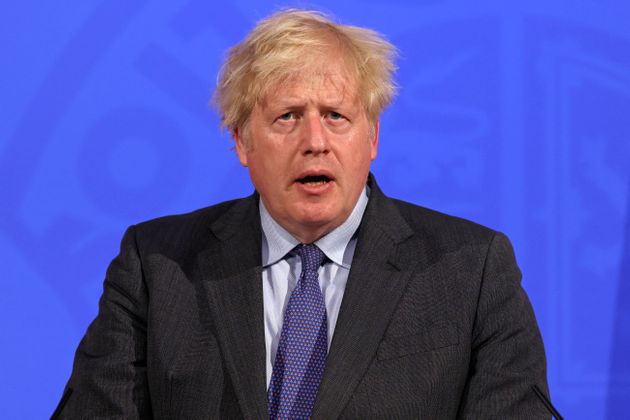
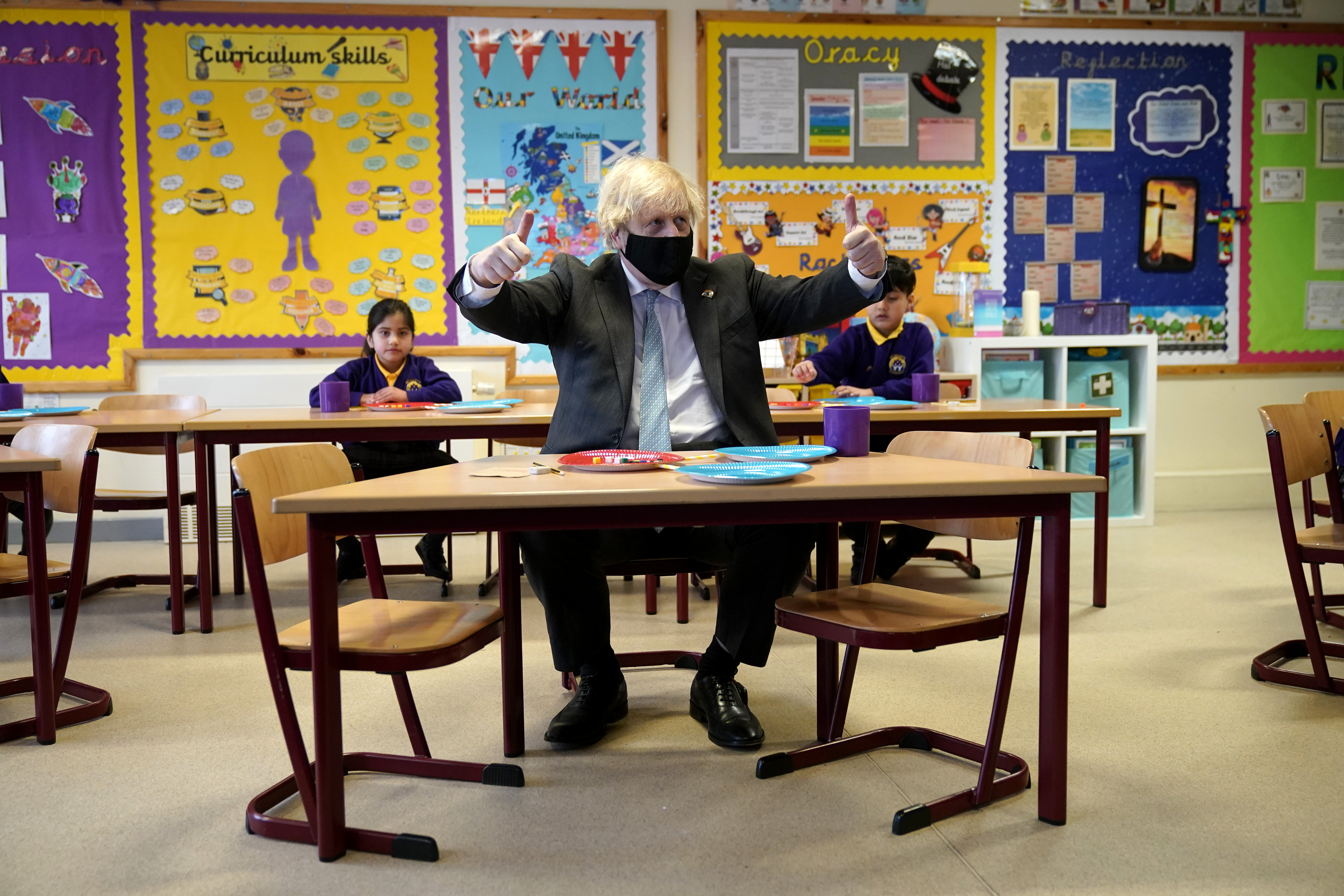
Double-jabbed adults will no longer be forced to isolate at home after coming into contact with someone with Covid, Boris Johnson has declared.

The prime minister announced the radical new move as he also revealed that the gap between first and second vaccine doses would be slashed from 12 weeks to just 8 weeks for all under-40s, with the aim of getting everyone fully protected by mid-September.

The proposals, which depend on the final data on the spread of the virus being confirmed next Monday, were part of a raft of measures set to kick in on so-called Freedom Day on July 19.

The changes to the home quarantine restrictions for double-vaccinated individuals will mean that for the first time in more than a year the public can continue to go about their daily life even after being classed as a “contact” of someone with Covid.

However, some people will still have to isolate at home for 10 days, including those who test positive or those who are explicitly asked to quarantine by the Test and Trace service.

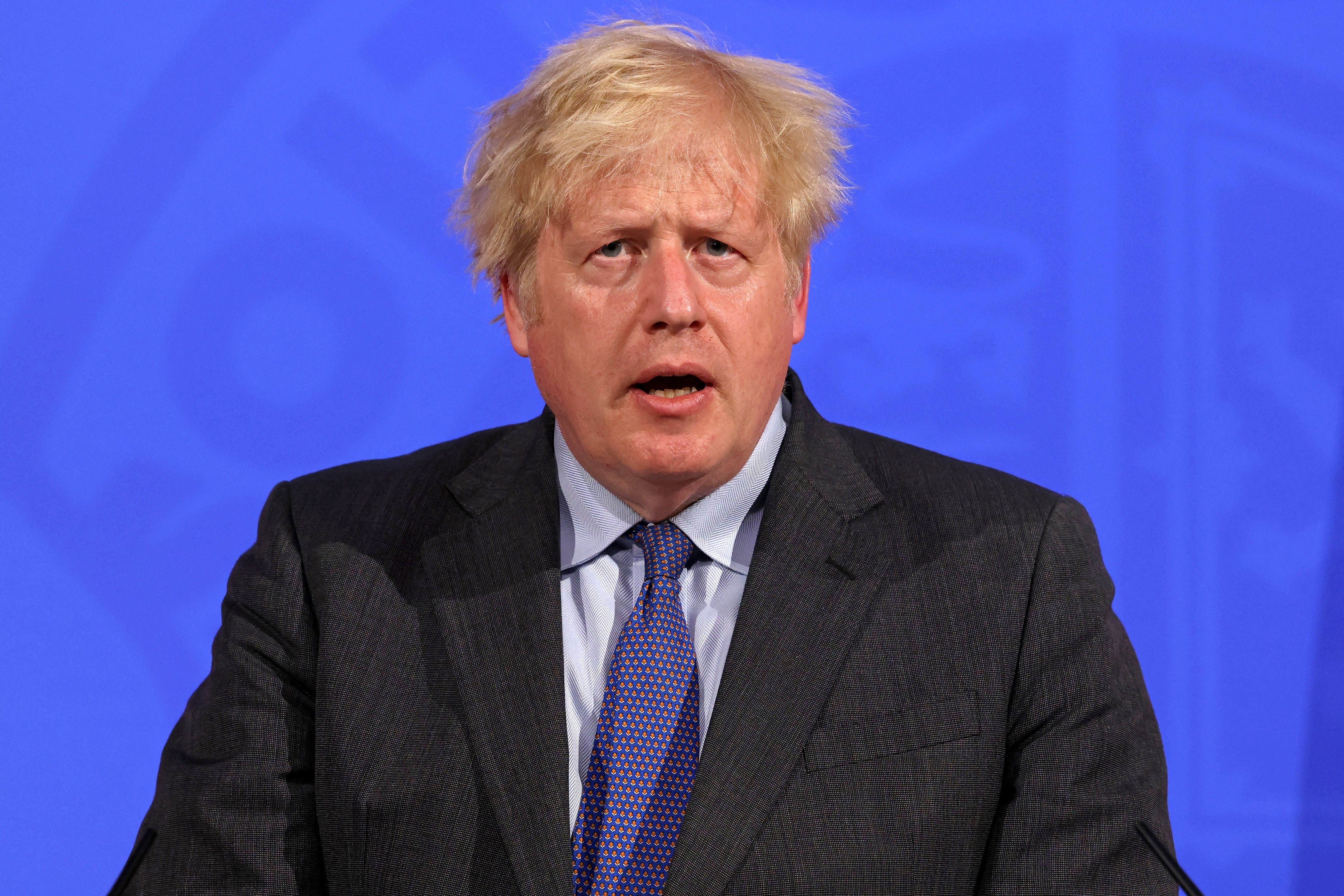
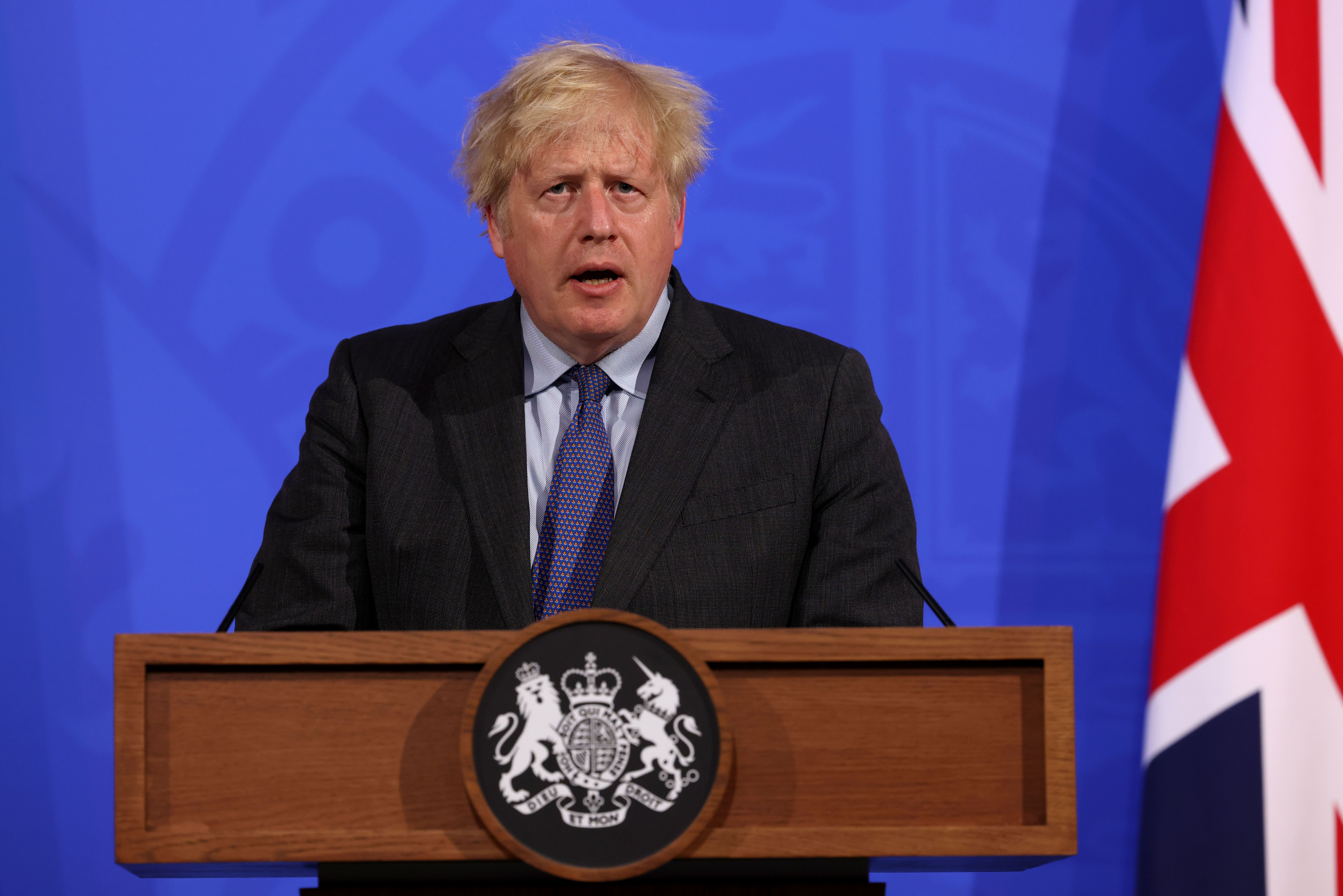
Speaking at a Downing Street press conference, Johnson said: “We will continue from Step Four [of his ‘roadmap’ out of lockdown], to manage the virus with a test, trace and isolate system that is proportionate to the pandemic.

“You will have to self isolate if you test positive, or are told to do so by NHS test and trace. But we’re looking to move to a different regime for fully vaccinated contacts of those testing positive, and also for children.”

Johnson and his fellow ministers have come under huge pressure in recent weeks to show that double-vaccination with Pfizer or AstraZeneca will finally have real benefits in terms of personal freedoms.

Both vaccines reduce the chances of serious Covid illness by more than 90%, including the Delta variant of the virus, and the government is keen to continue the UK’s reputation as the least vaccine hesitant nation in the world.

On Monday, the issue was highlighted when the Duchess of Cambridge was required under current rules to stay at home despite being double-jabbed, after she was told she had come into contact with someone with Covid in recent days.

Under the new system, a “proportionate” test, trace and isolate system will be kick in from July 19m with symptomatic testing continuing and free basic rapid testing extended until 30th September. Contact tracing will continue.

The vaccine rollout will be accelerated across England by reducing the dose interval for under-40s, from 12 weeks to eight. This will mean every adult has the chance to be double-jabbed by mid September.

In recent days, vaccine centres have been inundated with over-18s who want to get their second jab much sooner than the 12 weeks technically allowed at present.

Pfizer’s guidance is that a gap of just three weeks is required for minimum protection and some GPs and health centres have been allowing such fast-tracked dosing rather than have to throw away valuable vaccines at the end of their working day.

All over-50s are already allowed to cut the dosing gap to eight weeks and that will apply to all age groups under Johnson’s latest proposals.

Share Button

Boris Johnson To Give Glimpse Of July 19 Covid Freedoms In No.10 Press Conference

WPA Pool via Getty Images

Boris Johnson will signal how England can “learn to live with” Covid when he uses a press conference on Monday to set out his plans to restore people’s freedoms from July 19.

The prime minister will give an update of reviews into social distancing guidelines, working from home and vaccine passports, ahead of a formal announcement on the full lifting of lockdown next week.

The live televised briefing from Downing Street is aimed at giving the public and businesses more time to prepare for unlocking on July 19.

It appears that the PM will go for a “big bang” approach, ditching a whole raft of current requirements to work from home and wear masks on public transport.

The public are also expected to be allowed to order drinks at the bar in pubs for the first time in months, and to attend outdoor mass events. The idea of Covid ‘passports’ has also been shelved.

Some public health experts have warned that lifting all the restrictions at once may risk fuelling the current third wave of Covid cases triggered by the Delta variant of the virus.

On Sunday, Communities Secretary Robert Jenrick said he expected life to “return to normality as far as possible” in England after the “terminus date” due to the success of the vaccine rollout in preventing serious illness.

The cabinet minister told the BBC the country had moved into the “final furlong” of coronavirus restrictions.

Officials said the Prime Minister would on Monday give an update on the next steps on the one metre-plus rule in hospitality venues, the use of masks, and working from home.

As well as publishing the taskforce reviews, an update will also be provided on what is next for care home visits, No 10 said.

Speaking before his announcement, the prime minister said people would have to “exercise judgment” to protect themselves from Covid-19, in a sign the government will shift from legally enforced restrictions to affording people personal choice.

“Thanks to the successful rollout of our vaccination programme, we are progressing cautiously through our road map,” Johnson said.

“Today we will set out how we can restore people’s freedoms when we reach Step 4.

“But I must stress that the pandemic is not over and that cases will continue to rise over the coming weeks.

“As we begin to learn to live with this virus, we must all continue to carefully manage the risks from Covid and exercise judgment when going about our lives.”

With Johnson due to address the nation, Health Secretary Sajid Javid will take responsibility for announcing the government’s plans to parliament on Monday afternoon.

The move follows stern rebukes from Commons Speaker Sir Lindsay Hoyle in recent weeks for ministers deciding to make statements to the press before MPs.

The government said it will not be known until July 12 – seven days before the target date for easing restrictions – whether its four tests for unlocking have been met, given the need to consult the latest data.

Labour said Johnson must reveal how many Covid-related deaths it is willing to accept in the face of rising cases of the Indian strain – also know as the Delta variant – if restrictions are abolished.

Shadow health secretary Jonathan Ashworth said: “We are all desperate to move on from restrictions but with infections continuing to rise steeply thanks to the Delta variant, Boris Johnson needs to outline the measures he will introduce such as ventilation support for building and sick pay for isolation to push cases down.

“Letting cases rise with no action means further pressure on the NHS, more sickness, disruption to education and risks a new variant emerging with a selection advantage.

“So far ‘learning to live with the virus’ had been no more than a ministerial slogan.

“Now we know this is the Government’s strategy, when Sajid Javid addresses the Commons he must explain what level of mortality and cases of long Covid he considers acceptable. And what support will be in place for the most deprived areas where cases are highest and vaccination rates lowest.

“These are important questions ministers now must answer.”

Share Button

Can Keir Starmer Use Batley To Bounce Back Against The Tories?

You’re reading The Waugh Zone, our daily politics briefing. Sign up now to get it by email in the evening.

It was at just after dawn, at 5.14 am, that Keir Starmer was passed the intel that his party was close to winning its first new MP under his leadership. Already wide awake at his north London home, he got the news from the local campaign team in Batley and Spen that the Tories had called for a “bundle check” of votes at the by-election count.

“That was the puff of white smoke that we’d pulled off a big win,” one insider tells me. That feeling that this was indeed a big win, albeit with a small majority (323 votes), summed up the mix of joy and relief among Labour MPs, volunteers and staffers who had thrown everything into the seat in the past week. It was the dawn chorus they needed.

When the result was confirmed at 5.27am, Starmer swiftly tweeted that Kim Leadbeater was a “brilliant and brave” candidate who had run a “positive campaign of hope”. And when he joined her in the constituency, he repeated the main messages of the day: “Labour is back”, “Kim is Labour at its best” and “this is just the start”.

But Starmer now needs to answer the question: start of what? On one simple level, it’s the start of getting into the habit of winning again. If the Hartlepool by-election was the political equivalent of electric shock therapy, Batley felt to some MPs like their party was waking up from a coma. Many felt it had been a mistake to let Hartlepool obscure other successes on May 6 in big city mayoralties and southern councils.

For several MPs, however, the most important “start” will be a new confidence from Starmer himself, coupled with a fresh strategy for reconnecting with lost voters. When he addresses the parliamentary Labour party of MPs and peers on Monday night, he is expected to set out just how determined he is to change the party’s perceptions among the public.

When Leadbeater takes her seat in the Commons chamber, just metres from the shield dedicated to her late sister Jo, there will be more than a few tears on both sides of the House. The PLP meeting will be held by Zoom, but if it were held on Committee Room 14, one can imagine the cheers would be heard far away down the corridor.

Leadbeater is in some ways the answer to the definitional questions that Starmer has himself struggled to provide over recent months. Her overriding message of unity over division, of a sense of healing the nation after both Brexit and the Covid pandemic, will have to be Labour’s main pitch at the next election.

Starmer has tried his own version of that message at various points recently, not least as Boris Johnson pushes his “Red Wall, red meat” strategy of fuelling “culture war” grievances (real and imagined) alive. But Leadbeater is the living embodiment of the idea that there is common ground among much of the public, if only politicians have the bravery to embrace it.

And it’s somehow fitting that the new MP for Batley and Spen may well owe her victory to the viral video clip that many in Labour feel was the real turning point in the contest. Not the grainy CCTV of Matt Hancock’s “hypocrisy hug”, but the footage of Leadbeater standing up to an anti-LGBT activist who tried to shout her down in the street.

Tory voters in more rural parts of the constituency gave the feedback that they were struck by her courage, and her message that she was a real local. Older Asian voters were similarly impressed, I’m told. Leadbeater had never lived anywhere other than the constituency (she had lived in eight different homes in the same seat, which is quite something) and it showed.

Similarly, her focus on potholes and policing resonated. We’ve seen in both Hartlepool (where the Labour council was blamed for poor public services) and Chesham (where the Tory council was blamed for national planning reforms) that the local/national dynamic can swing by-elections. In Batley, Labour pinned the blame for the police station closure on national cuts.

Naturally, when such fine margins are involved, there will always be multiple reasons found for the result (the Greens losing a candidate, Galloway winning some former Heavy Woollen District independents instead of the Tories, Labour’s huge ground operation, Conservative near-silence, a string of right-wing candidates). Yet in our first-past-the-post system, a win is always a win, and no more so than in a by-election.

Starmer signalled today that instead of facing a summer leadership challenge, he would now carry out his plan for a summer meet-the-voters campaign. “As we come out of the pandemic and out of restrictions..the space finally opens up for me to make the arguments about the future,” he said. I’m told that jobs and crime will be the focus, tying together economic and physical security.

Labour MPs certainly hope that there will be a new energy and directness to Starmer’s leadership, and say that even a narrow win in Batley can create the momentum (with a small ‘m’) he has long needed. They hope that he can follow-through with bolder messaging to use party conference as a platform for finally showing the public who he really is.

The danger is that Starmer just banks the win, and repeats what he’s been doing the past six months. The opportunity is that Batley proved, like Chesham, the PM has lost his invincibility cloak. It also highlights the perils of complacency, both on the part of local Tory campaign and on the part of the PM in not sacking Matt Hancock.

The hard fact is that Labour had just 198 MPs before Batley and it still has just 198 MPs after it. Though it may be hoping for a return to ‘normal’ politics after the pandemic, there’s nothing normal about the huge challenge the party still faces. Edging it in a by-election is not the same as the real confidence boost of being consistently ahead in the national polls.

Most of all, to become the ‘change’ candidate at the next election, some of his MPs believe Starmer has to do more to show he has changed Labour and will change Britain. But at least Kim Leadbeater has provided a glimmer of hope that he can win back some of the Tory votes he needs.

Share Button

What Level Of Covid Deaths Will The Public Be Prepared To Tolerate This Summer?

Jeff J MitchellPA

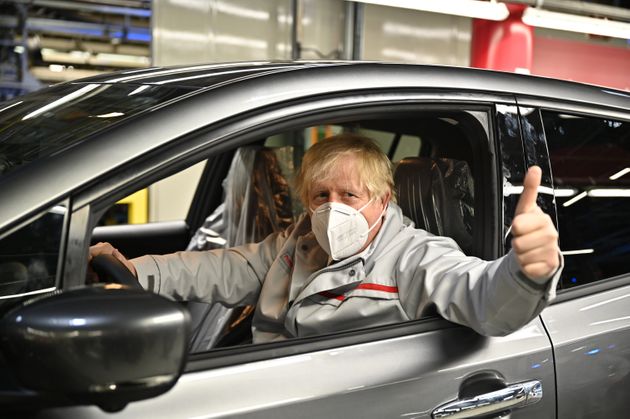
Prime Minister Boris Johnson during his visit to Nissan plant in Sunderland

Brace, brace, brace. That’s the mood among Labour MPs as they face what many believe will be another by-election defeat, this time in Batley. But it’s also the mood among some Tory MPs right now, as they prepare for the much more important prospect of a Covid third (or is it fourth?) wave.

 You always know something is up when our prime minister strikes a cautious tone, and today he carefully planted the seed of the idea that ‘Freedom Day’ may not in fact mean the total liberty that many had been hoping for.

In one of those not-scripted-honest pool TV ‘clips’ he does to avoid press conferences, the PM said there may be “extra precautions that we have to take” after July 19. New health secretary Sajid Javid refused to say this week that he would lift all restrictions and here was apparent confirmation.

What form these extra precautions will take is still unclear, though it sounds like mask-wearing and social distancing rules will be eased. The extension of the ‘work from home if you can’ edict is a prime candidate to continue, however. With the measure the R or reproduction number of the virus rising, No.10 has long known that home working helps take a chunk of that R value out of the game. 

The other clue the PM gave to his current state of mind came when he gently dismissed hopes of urgent action to stop schools from sending kids home in blanket year group ‘bubbles’. Instead, we have to be “cautious” ahead of the “natural firebreak of the summer holidays when the risk in schools will greatly diminish and just ask people to be a little bit patient”.

Rob Halfon, the chair of the Commons education select committee, tells our CommonsPeople podcast this week that he would like to see more widespread use of East Asian-style ‘micro-targeting’ of Covid cases and their contacts in the classroom. The schools that operate such policies certainly seem to make it work effectively.

The PM may be trying to sound cautious about easing some restrictions right now because he knows the scary rise in case numbers will be a presentational problem that makes any unlocking look counterintuitive. We all know by now to focus on hospitalisations rather than case numbers, but the worrying thing is today is that hospital admissions went up by 56% on last week.

No.10 was keen to stress today that case numbers were “not feeding through into big rises in hospitalisations and deaths”. Yet while the vaccination programme has weakened the link between Covid and severe illness, it has not yet broken it. And some of the data is undeniably worrying.

Almost everyone around Johnson believes he will go ahead with the July 19 ‘freedom day’. So far, it seems that his medical and scientific advisers believe that is a credible timetable too. As Chris Whitty hinted a few weeks ago, and as No10 reminded us today, that doesn’t mean there won’t be a third wave. The test is whether that wave has the impact that some fear.

One advantage Downing Street has is the wriggle room that stems from its refusal to set specific benchmarks or thresholds for the levels of case numbers, hospital numbers and, most tellingly, for the level of deaths. But the PM’s line that his roadmap will be “irreversible” does suggest that all the pressure will be on keeping things open.

The risk calculus is something that the PM is grappling with. I’ve asked before what level of deaths he is prepared to tolerate in coming months. Yet in fact it is the general public who will be facing some big questions too: what level of deaths and hospitalisations are they prepared to tolerate? Brace yourself for the answer to that one.

Share Button

Do Boris Johnson’s PMQs Show He Just Can’t Handle The Truth?

Another PMQs, another tone deaf performance from Boris Johnson. Last week, he appeared to belittle Keir Starmer’s concern over low rape conviction rates as mere “jabber”. This week, he seemed to dismiss anger over Matt Hancock’s Covid rule breach as “Westminster bubble” chatter.

In both cases, allies of Johnson say such attacks are unfair as it was clear he was hitting back at Starmer rather than the issues he raised. Well, upto a point, Lord Copper. In failing to separate out the issues, with the change in register needed for each, the PM has no one to blame but himself for the criticism.

Starmer has long been advised by older hands on the Labour benches to mix up his bowling speed, shifting from fast balls to slower off-spin, and it worked today. By contrast, Johnson stuck to his usual attack-as-best-form-of-defence tactic, and it failed.

First, the Labour leader ridiculed Johnson’s claim to have sacked Hancock a day after keeping him (Starmer must have been tempted to accuse the PM of being ‘Captain Hindsight’ on that one). Then he changed the tone to raise the fury of the parents of a dying cancer patient who was denied hospital visits the week before Hancock broke the social distancing rules with his mistress.

When Starmer quoted Ollie Bibby’s mother – “I’m livid. We did everything we were told to do and the man that made the rules didn’t” – Johnson should have spotted it was time to change gear himself and issue a heartfelt apology. If indeed he had sacked Hancock, as he implied, surely it wouldn’t be difficult to condemn his former health secretary’s actions?

Instead, the tone deaf PM gave a perfunctory answer about sharing the grief of families like Ollie’s, before launching swiftly into his charge that Starmer was raising matters that were the stuff of the ‘Westminster bubble’. Yet the whole point about the Hancock story was its reach went way beyond that bubble, that’s precisely why Tory MPs successfully pressured him to quit.

It wasn’t just the jaw-dropping photos and video of Hancock in a clinch that ensured this story cut through outside SW1 (the test is always whether the WhatsApps of MPs’ non-political friends pick it up and boy did they in spades). It was the simple, rank hypocrisy of the man who set the rules breaking them.

Add in the contrast between his workplace affair and the deadly seriousness of people forced to miss funerals, and this was way bigger than a bit of bubble trouble. The PM sounded like a man who believed the political wound had healed after just four days, but Starmer picked at the scab to reveal what lay beneath.

All those couples whose weddings have been reduced to small events, or whose family and friends have been barred from hugging or dancing at a reception, won’t have seen the Hancock clinch as hilarious. Wrecking your own marriage is a personal car-crash, wrecking thousands of other marriages while snogging your lover is public policy suicide.

The Hancock hypocrisy charge is also attaching to Johnson too. Brides-to-be are furious that the PM can have a garden party to watch the football but they can’t have a proper wedding reception. You can’t sing in church, but you can sing Three Lions in a stadium. You can’t go on holiday, but rich businessmen can arrive from abroad without quarantine.

Johnson’s failure to adapt his PMQs responses will fuel Labour’s charge that his complacency proves the Tories are a tired party that have been in power for too long. But it also risked a total lack of empathy that will worry his MPs more, especially when the PM’s X-factor has been his ability to channel and give voice to voters’ concerns.

And given he already has a reputation for being economical with the actualite (to quote the late Alan Clark), trying to spin his way out of an obvious failure to sack Hancock was ill-advised.

On Tuesday, the SNP’s Ian Blackford got into trouble with the Speaker when he declared: “The truth and this government are distant strangers, and that should come as no surprise when we remember the prime minister has been sacked not once but twice for lying.”

Now it’s demonstrably true that Johnson was fired from the Times for making up a quote and later as a shadow minister for denying he had an affair. So when Speaker Hoyle urged a retraction from Blackford, saying “as we know, hon. Members would never lie”, it’s no wonder the SNP leader in Westminster ignored the plea and carried on regardless.

The other problem for the PM is that he’s now made a habit of using misleading statements in PMQs. Refusing to correct the record over his false claim that Labour voted against an NHS pay rise is one thing. But his consistent misuse of statistics is another entirely. And today there was yet another warning from the statistics watchdog about his statements about child poverty.

As we revealed on Wednesday, the UK Office for Statistics Regulation (OSR) has written once more to get Johnson to use the right definitions, after he claimed last month that “we are also seeing fewer households now with children in poverty than 10 years ago”. The watchdog pointed out that while this may apply to ‘absolute’ poverty, the figures for relative poverty had got worse.

Most embarrassing to No.10 is that the regulator revealed it had raised this topic privately with the PM’s Downing Street briefing team, and still he kept on making statements that failed to show the full picture. There are clearly lies, damned lies and child poverty statistics.

It may just be down to Johnson’s slapdash nature, or to his failure to shift out of attack mode. Either way, he gives the impression of a PM who just can’t handle the truth. If he’s not careful, over time, the voters may decide on a sacking of their own.

Share Button

Boris Johnson Warned By Statistics Watchdog Over Child Poverty Claims

DANIEL LEAL-OLIVAS via Getty Images

Boris Johnson has been formally warned by the UK statistics regulator about his claim that child poverty has fallen over the past decade, HuffPost UK can reveal.

The Office for Statistics Regulation (OSR) has written to Downing Street to raise Johnson’s use of statistics in prime minister’s question time last month.

The PM declared “we are also seeing fewer households now with children in poverty than 10 years ago”.

The OSR said that it had received complaints about the misleading nature of the claim, adding that on some measures child poverty had increased in recent years, not decreased.

“It would help aid public understanding if statements concerning child poverty were clear about which measure is being referred to, particularly where other measures present a different trend,” the watchdog said in its letter to No.10’s head of data science.

Campaigners have long warned that Johnson deliberately makes misleading statements about the poverty statistics.

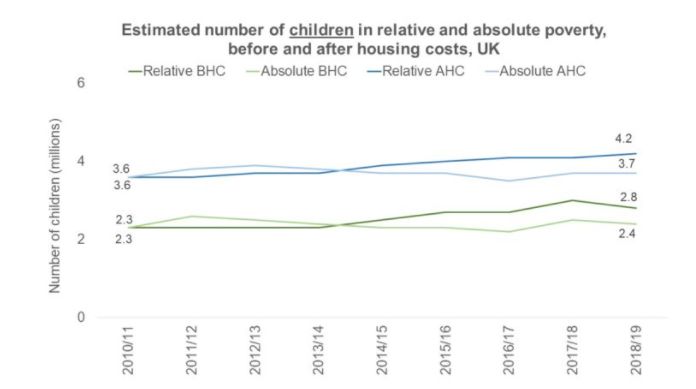
The Department for Work and Pensions (DWP) uses both relative poverty and absolute poverty measures, before and after housing costs.

Relative poverty covers households which have “less than 60% of contemporary median income”.

Absolute poverty is defined as households which have less than 60% of the median income in 2010/11 “held constant in real terms”.

Relative child poverty after housing costs rose from 3.6m when the Tories took office in 2010 to 4.2m in 2018/19. 

But Johnson relies on the “absolute” child poverty measure which has dipped in 2019/20 to fall just below the 2010 figure.

Anna Feuchtwang, Chair of the End Child Poverty campaign and CEO of the National Children’s Bureau, said: “The prime minister’s misuse of child poverty statistics is neither fair or accurate.

“It’s simply not right to play down the misery of families swept into poverty and hide behind different statistical measures when answering difficult questions. The simple fact is that even by the government’s own measures, child poverty is rising and we need urgent action rather than game-playing by policymakers.

“The Office for Statistics Regulation has written to the prime minister again, calling for him to be clear on which measure of child poverty he is using in his statements to parliament.

“We hope this will prompt greater recognition from across government that child poverty is a real and present blight on many young lives.”

A government spokesperson said: “The prime minister was referring to absolute child poverty statistics between 2009/10 and 2019/20.

“These statistics show that the number of children in the UK living in poverty fell both before and after housing costs were taken into consideration.”

In its latest letter, the OSR’s Ed Humpherson suggested that he had decided to issue a fresh warning because the PM had continued to ignore previous attempts to engage with Downing Street.

“Over the last year, a number of concerns have been raised to us regarding the prime minister’s use of statistics on child poverty and in each case, we have brought this to the attention of the briefing team in No.10,” he wrote.

The OSR wrote in a blog: “Measuring poverty is complicated. There is no wrong measure but there is a wrong way of using the available measures – and that is to pick and choose which statistics to use based on what best suits the argument you happen to be making.

“It is important to look at all the data available and set the context when referring to statistics on poverty.”

Earlier this year, the Resolution Foundation forecast that the situation would get even worse, pointing out that higher unemployment and the removal of a £20 uplift in universal credit could lead to 400,000 more children ending up on the breadline, the biggest year-on-year rise in poverty rates since the 1980s.

Here is the letter in full from the UK Office for Statistics Regulation to Laura Gilbert, Director of Data Science, 10 Downing Street:

Dear Laura

Use of official statistics on child poverty in Prime Minister’s Questions

Over the last year, a number of concerns have been raised to us regarding the Prime Minister’s use of statistics on child poverty and in each case, we have brought this to the attention of the briefing team in No.10. Further concerns were raised to us following Prime Minister’s Questions on 26 May, where the Prime Minister said that “We are also seeing fewer households now with children in poverty than 10 years ago.”

As the Office for Statistics Regulation highlighted last year in a blog and more recently in our review of income-based poverty statistics, measuring poverty is complicated and different measures tell different parts of the story.

We are pleased to see some improvement in the way official statistics on child poverty are referred to in these statements. However, it would help aid public understanding if statements concerning child poverty were clear about which measure is being referred to, particularly where other measures present a different trend.

I am copying this letter to Alex Jones, Head of Data and Transformation for 10 Downing Street, and Steve Ellerd-Elliott, Head of Profession for Statistics at the Department for Work and Pensions.

Yours sincerely

Ed Humpherson
Director General for Regulation

Share Button

If Catch-Up Education Is The PM’s Pandemic ‘Legacy’, Where’s The Urgency To Fund It?

Maybe it’s because Boris Johnson’s children are either too old or too young to be in school anymore. Maybe it’s because he’s more focused on rolling the dice on his July 19 freedom day. Maybe it’s because his education secretary lacks any real clout within the cabinet.

But whatever the reason, the growing anger among parents, pupils and teachers at the Covid chaos within schools right now is something any government would be wise to heed. New figures from the Department for Education laid bare the problem, with a massive 330,000 pupils forced to self-isolate in the past week.

The return of remote learning and home-schooling is difficult for the children but also for their parents, particularly if they’re losing income because they cannot go out to work. Just as important is the social loss incurred, with many missing those longed-for end-of-year trips, sports events and school productions.

And yet there is a solution. Schools have been taking part in clinical trials of a system of daily testing that prevents the need for Covid close contacts to automatically isolate at home. Instead of an entire class of 30, or even a whole year group, having to quarantine, only those who actually test positive have to stay home. Staff and pupils who test negative can turn up as normal.

The headteacher of Westhoughton High School in Bolton (yes, which was a Delta hotspot) revealed today just what a success the pilot had been. More than 500 pupils and staff had avoided having to isolate, with a huge 3,500 “saved learning hours” as a result.

The academic gains from classroom time are obvious. But I was struck most of all by Patrick Ottley-O’Connor’s remark, to Radio 4’s World At One, that “the mental health of students has been massively impacted positively by being able to stay in school”.

Fortunately, Sajid Javid has hinted he wants to act on such pilots. And sources in the DfE hint that from September such testing will be the norm. Yet many wonder why there isn’t any action right now. When asked if the government had given up on any changes for this term, the PM’s spokesman told us: “That’s not at all how I characterise it, obviously.” Except it wasn’t obvious.

The pilots will need assessing, but they have been running for several weeks and it’s worth asking why there hasn’t been a fast-tracked assessment for testing just as there was for vaccines. The JCVI managed to give the UK a head start on approval of vaccines precisely because it took a sensible view of risk.

The great irony about the current school testing inertia is that it was always the PM’s early preferred route out of the pandemic. It was mass testing that was his ‘moonshot’, even though in the end it was the Matt Hancock’s early gamble on vaccines that really reached for the stars (and don’t forget Dominic Cummings ridiculed Hancock for it last autumn).

Yet just as baffling for some Tory MPs has been the inertia around school catch-up policy too. Boris Johnson told us last June, a whole year ago, that there would be “a massive summer catch-up operation” for schools. (Spoiler: it did not materialise). In March, he said: “The legacy issue I think for me is education.” It was “an opportunity to make amends”, he said.

But as former catch-up czar Sir Kevan Collins made plain today, that promise has not yet been met. Collins’ evidence to the Education Committee was as politically devastating as it was patient and methodical. The cost-benefit analysis (£100bn and maybe £420bn could be lost in a hit to the economy from education losses) was overwhelming, even for a Treasury beancounter.

Ultra-reasonable, grounded in his own long experience in dealing with schools and social policy for children, he simply said the PM’s response had been “feeble” in the face of the enormity of the challenge. He pointed out he had presented his £15bn case for a longer school day to the PM, the chancellor and Gavin Williamson (and intriguingly Michael Gove too).

With only £1.4bn pledged so far, Collins said the PM’s signal of even more money later this year was not made in “bad faith”. His complaint was that later this year would be too late. And he squarely blamed the Treasury too for sticking to its spending review timetable (of November) instead of focusing on the school year timetable (starting in September).

As with school testing, this was about a lack of urgency. Children are on average two months behind in reading and three months behind in maths, and those averages mask even worse stats for the poorest kids. Collins pointed out that a child arriving from primary school to secondary next year could fall into a spiral of decline. With more textbooks, more subjects, the risk was “they don’t catch up” and instead go backwards.

Collins called for a 10-year spending strategy for schools, which is precisely the kind of bold ambition the Johnson government may need to run alongside similar ambitions for the NHS. Not for nothing has Labour’s new shadow chancellor Rachel Reeves made the £15bn catch-up funding her main spending pledge to date.

The Treasury has been privately dubious about Collins’ extra hours plan, suggesting teachers may not wear it. But the real obstacle may be the long-term nature of the hard cash needed. Because once you start spending real money to tackle educational inequalities, it can’t be a ‘one-off’ that you can then take away later.

Spending reviews are indeed usually the kind of place for such commitments. Yet when an emergency furlough scheme can be drafted (brilliantly by HMT officials) in such short order as it was last year, why not a ‘summer education plan’ to match the ‘winter economic plan’?

As I wrote last year, the pandemic response should not just be about lives and livelihoods, it should be about life chances. And if the PM can’t even deliver on what’s supposed to be his personal “legacy issue”, the public may wonder what happens to all those issues he doesn’t care about.

Share Button

Covid Restrictions Will Not Be Lifted Before July 19, Sajid Javid Confirms

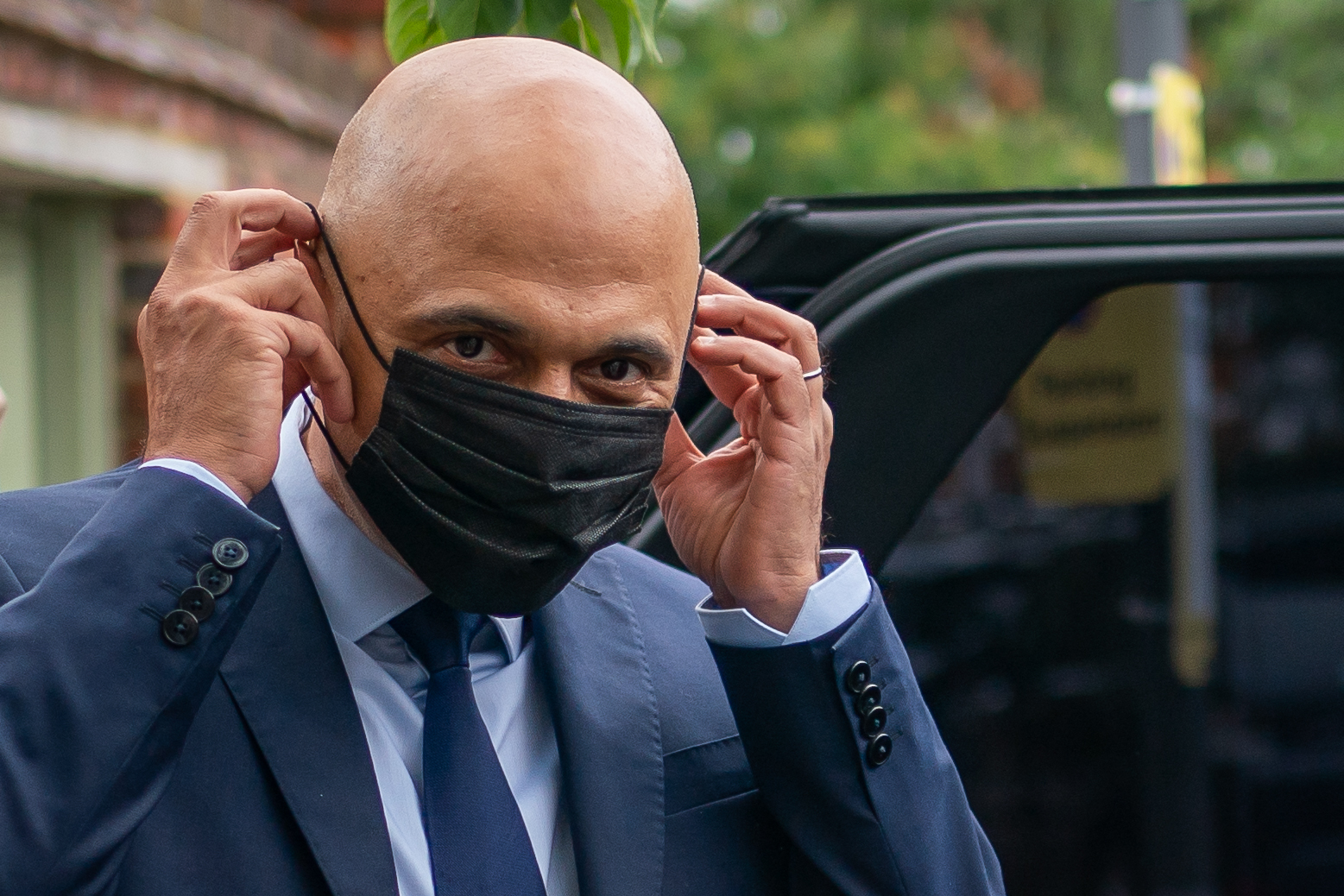
The new health secretary, Sajid Javid, has confirmed that the final Covid restrictions will not be lifted until July 19.

Javid revealed the government’s decision not to plump for an earlier easing of restrictions on July 5 in his first Commons statement since replacing his disgraced predecessor Matt Hancock in the job.

As the UK recorded 22,868 cases on Monday, the highest daily rise since January 30, Javid pointed out that hospitalisations had doubled since the start of May.

He said the government wanted the time to build up extra protection against the more transmissible Delta variant by ensuring two-thirds of England’s adults have received two doses of the jab before lifting restrictions.

“I spent my first day as health secretary, yesterday, looking at the data and testing it to the limit,” Javid told the Commons.

“Whilst we decided not to bring forward step four, we see no reason to go beyond July 19.

“Because in truth, no date we choose comes with zero risk for Covid.

“We know we cannot simply eliminate it, we have to learn to live with it.

“We also know that people and businesses need certainty so we want every step to be irreversible.

“And make no mistake, the restrictions on our freedoms, they must come to an end.

“We owe it to the British people, who have sacrificed so much, to restore their freedoms as quickly as we possibly can and not to wait a moment longer than we need to.” 

He added: “For me, July 19 is not only the end of the line, but the start of an exciting new journey for our country.”

Earlier, Javid said there would be “no going back” to Covid rules once England’s lockdown is lifted.

Boris Johnson meanwhile said England was “set fair” for the final easing of restrictions on July 19, four weeks after the initially scheduled date of June 21 for step four of the prime minister’s road map out of lockdown.

It came as shadow health secretary Jon Ashworth said junior health ministers Lord Bethell should follow Hancock through the exit door amid reports that they both used private email accounts for government business.

“Can he tell us whether he maintains confidence in that minister and isn’t it time that that particular health minister was relieved of their ministerial responsibilities as well?”

Javid replied: “I’ve got such a fantastic ministerial team.

“Every single one of them, it’s not even a question of confidence, it’s a group of ministers that are incredibly talented, that have delivered in both this House and the Lords.”

Share Button

Matt Hancock Resigns As Health Secretary Over Covid Rules Breach

Yui MokPA

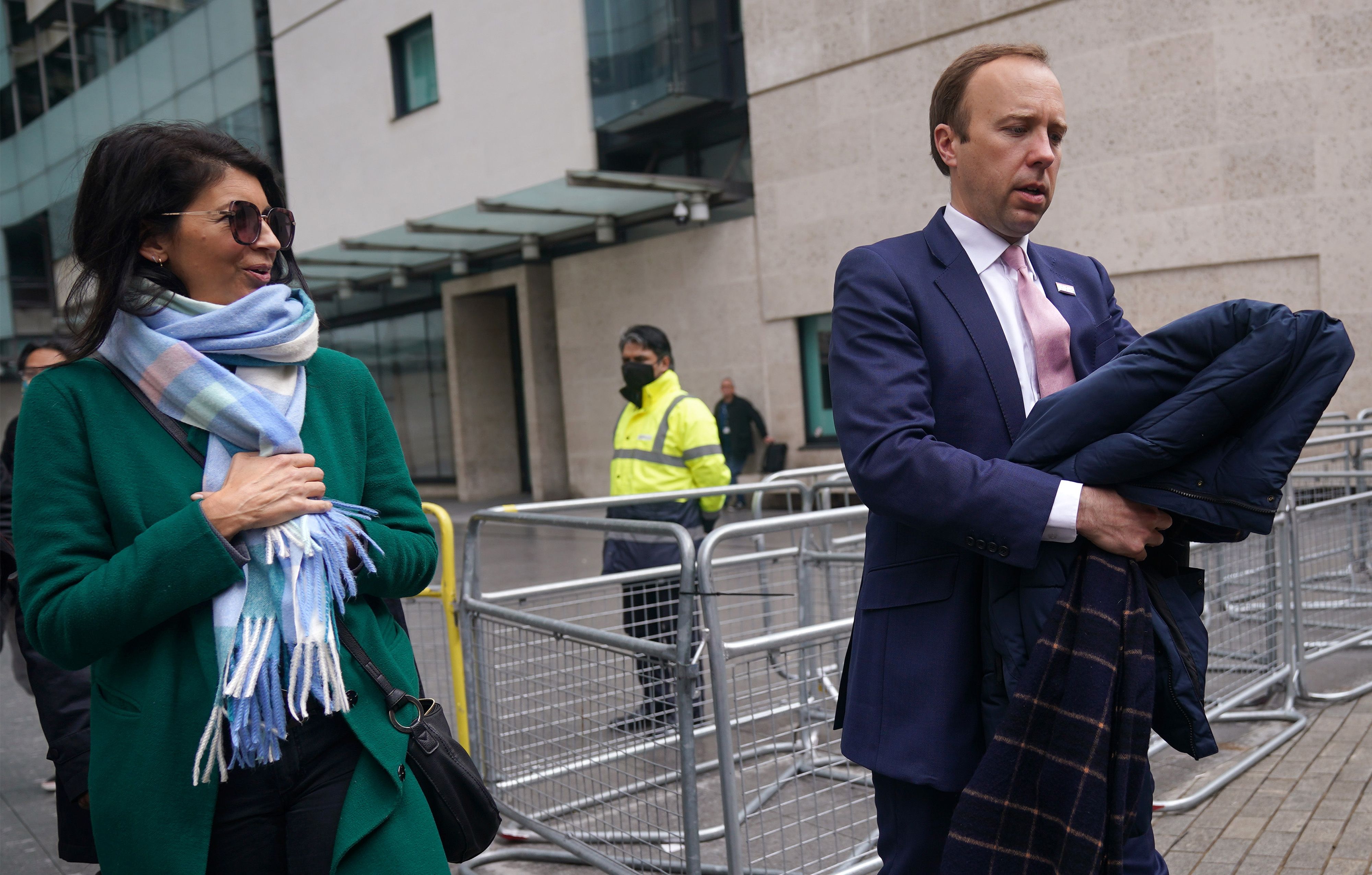
Health Secretary Matt Hancock with adviser Gina Coladangelo

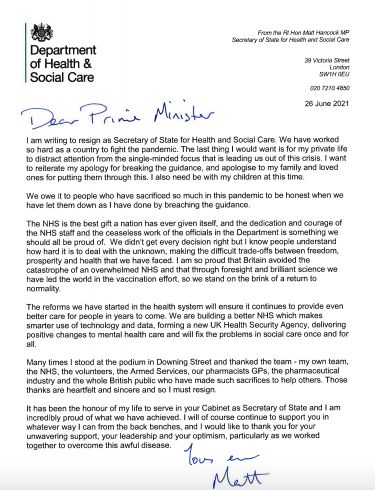
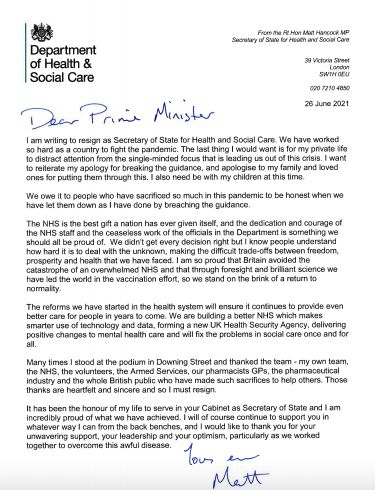
Matt Hancock has resigned as Health Secretary over his breaking of Covid rules during his affair with an aide.

In a letter to Boris Johnson, he said the government “owe it to people who have sacrificed so much in this pandemic to be honest when we have let them down”.

Hancock was swiftly replaced by former chancellor Sajid Javid, who himself resigned from Johnson’s team in 2020 following a stand-off with Dominic Cummings.

He was forced to quit following a growing clamour from Tory MPs over his conduct, which was sensationally revealed when the Sun newspaper printed a photo of him kissing adviser Gina Coladangelo.

The paper published both images and video footage of the pair in a clinch in the minister’s office in the Department of Health last month – before lockdown rules were eased on social contact like hugging.

On Friday, the minister had defied calls to quit, simply saying he was “sorry” for breaching the rules that he had expected millions of others to abide by.

The PM had given him his full backing, but opinion polls showed that the public wanted him to quit.

In his letter, Hancock wrote: “The last thing I would want is for my private life to distract attention from the single-minded focus that is leading us out of this crisis.

“I want to reiterate my apology for breaking the guidance, and apologise to my family and loved ones for putting them through this. I also need (to) be with my children at this time.”

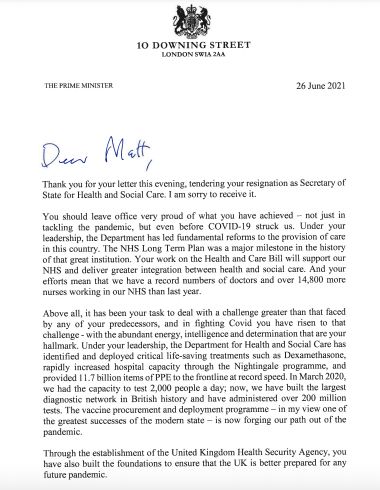
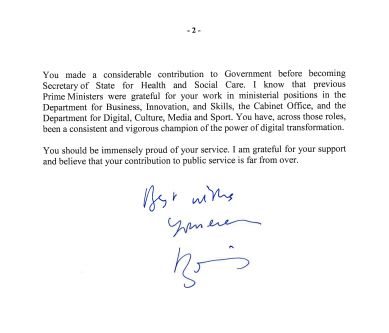
In response, the prime minister wrote: “You should leave office very proud of what you have achieved – not just in tackling the pandemic, but even before Covid-19 struck us.”

Johnson had refused to sack Hancock, with his spokesman saying the PM considered the matter closed after receiving the West Suffolk MP’s apology on Friday.

But a raft of Tory backbenchers demanded action, as their constituents were “seething” at the hypocrisy of the man in charge of Covid restrictions breaching them himself.

Labour leader Keir Starmer tweeted that the resignation was the right thing to do, but that Johnson should have sacked him.

In a video posted on Twitter, Hancock said: “I understand the enormous sacrifices that everybody in this country has made, you have made. And those of us who make these rules have got to stick by them and that’s why I’ve got to resign.

“I want to thank people for their incredible sacrifices and what they’ve done. Everybody working in the NHS, across social care, everyone involved in the vaccine programme and frankly everybody in this country who has risen to the challenges that we’ve seen over this past 18 months.”

Jonathan Ashworth, Labour’s shadow health secretary, said: “It is right that Matt Hancock has resigned. But why didn’t Boris Johnson have the guts to sack him and why did he say the matter was closed?

“Boris Johnson has demonstrated that he has none of the leadership qualities required of a Prime Minister.

“Hancock’s replacement cannot carry on business as usual. On Hancock’s watch waiting times soared, care homes were left exposed to Covid and NHS staff were badly let down. Our NHS deserves much better.”

Javid quit as Chancellor after Cummings persuaded the PM to merge Treasury and Downing Street teams of special advisers. 

Viewing the move as a threat to the independence of his department, Javid walked out despite pleas from Johnson for him to stay.

Cummings tweeted on Saturday that he had “tricked” the PM into firing Javid and suggested his return was due to Carrie Johnson.

Here is the resignation letter from Hancock:

PA

Hancock resignation letter

And here is Johnson’s reply:

Share Button

Will The Ridiculing Of Matt Hancock Skewer Him, Or Spare Him?

One of the tabloid-tastic details of The Sun’s jaw-dropping scoop on Matt Hancock was that “the office where the tryst happened is where Mr Hancock famously hangs his Damien Hirst portrait of the Queen”.

He committed adultery in front of Her Majesty, has the man no shame? Or did he dangle a facemask over the painting to spare her eyes? As one parliamentary source put it to me [in a phrase that now adorns LadBible, of all places]: “Matt Hancock’s new guidance: Hands. Face. A**e.”

The Queen of course namechecked Hancock herself this week, during that audience with Boris Johnson, pitying “the poor man” for his workload in the pandemic. One can only imagine how arched the Royal eyebrow will be when a courtier (or the PM) dares inform her of the news about his latest troubles.

So, yes, the jokes have taken off and the health secretary’s clinch has inevitably become a meme. Within minutes, his reputation was hung, drawn and slaughtered and it can only get worse in coming days. The forbidden snog has the potential to become a new Barnard Castle moment, which itself spawned every possible quip about eye tests.

No.10 will be hoping that the ridicule is where this ends, and that it somehow reduces the seriousness of the breach of Covid rules. Johnson himself knows all too well that being a figure of fun on ‘Have I Got News For You’ is hardly career-ending.

For satire to bite it has to carry an edge of cold anger, rather than offer just titillating laughs. The Thick Of It was superb, but Armando Iannucci had to cancel it when he saw politicians revelling in it, rather than being stung by it. The idea of a minister who banned grandparents from hugging their grandchildren then hugging his mistress is beyond parody.

Still, Cummings’ case showed that sheer fury can accompany mockery. Lots and lots of Tory MPs were emailed by constituents who didn’t find it funny at all that the PM’s former chief adviser had treated strict lockdown rules like the Pirates of the Caribbean code (“more what you’d call ‘guidelines’ than actual rules”).

Hancock has a rhinoceros-like political hide. He has proved in many ways he’s beyond embarrassment, just as his boss has proved he’s often beyond shame. Opposing prorogation of parliament only to back the idea later, brazening out the PM’s “hopeless Hancock” description, defending his claim that he threw a “protective ring” around care homes, all prove that.

Hancock’s statement today – “I accept that I breached the social distancing guidance in these circumstances. I have let people down and am very sorry” – was a masterclass in chutzpah masquerading as contrition. It felt very much like he knew Johnson could never sack any minister over an affair, and that vaccination success was all the public have focused on anyway.

Sorry used to be the hardest word for this government, but this was an apology without action. With the public and businesses suffering from lockdown fatigue, that may have consequences. Any pub that now lets people order at the bar, any shop that allows face masks to be ditched, any nightclub that illicitly opens to snogging couples, may now just say sorry. Then keep on keeping on.

The real difficulty for Hancock will be the one that dogs “beleaguered” ministers through history: the clamour around this affair may make it impossible for him to do his day job.

Whenever he is next putting out a good news story about the vaccine progress, or even trying to keep in place some remaining restrictions, he will face a barrage of questions. Did he share an illegal hotel room stay with ‘another household’ at any point in the past year? Did he breach travel rules to meet that household? Did he have a relationship he failed to declare when hiring her?

A large chunk of the public may be unfazed, and un-outraged, by all this. The danger of the jokes is that they obscure perhaps the bigger failings of the health secretary, not least his Test and Trace service.

One irony of the Sun story is that the truly damning National Audit Office report into Dido Harding’s organisation was rapidly knocked off the headlines. Ministers in the Lords face questions on Monday about that report, and surely Hancock will face an Urgent Commons Question on it too.

In his latest blog, Cummings tried to twist the knife with yet more revelations about testing and tracing failures last year. And for all his tortuous stream-of-consciousness approach (I mean, who would want to read that stuff, rather than a short set of bullet points?), he had some important new revelations.

We learned that Cummings rightly warned that “quarantine must happen fast” and that it should be monitored. He correctly worked out that testing and even tracing was pointless unless people were actually isolating. He also stressed that testing asymptomatic cases was even more valuable than testing those with symptoms.

He also revealed a new Johnson message that confirmed these concerns, but left them unresolved: “The whole track and trace thing feels like whistling in the dark. Legions of imaginary clouseaus and no plan to hire them…And above all no idea how to get new cases down to a manageable level or how long it will take”.

In PMQs next week, Keir Starmer must surely quote Johnson’s own verdict that the lack of a viable test and trace system meant the “uk may have secured double distinction of being the European country w the most fatalities and the biggest economic hit”. Expect that to appear on every Labour leaflet and poster ahead of the next election.

The PM looks like he wants to brazen out the Hancock row as much as Hancock himself. He will try to make a virtue out of his dogged loyalty to his ministers and say “vaccines, vaccines, vaccines” a lot. Yet today’s No.10 stonewalling of Lobby journalists’ questions laid bare a contempt for not just the media but for the public.

That felt like the bullishness of a government with a big polling lead, but it also felt like the complacency of a party that has been in power so long that it thinks the normal rules really don’t apply to it. They may be right for now, but in the long run, that way lies ruin.

Share Button