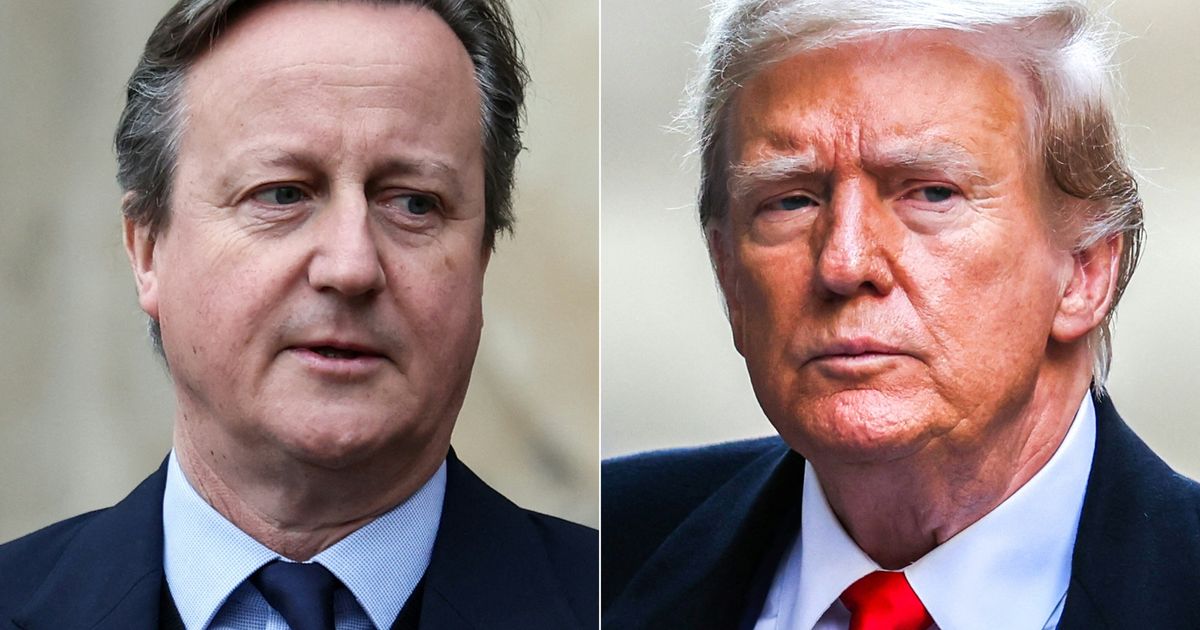
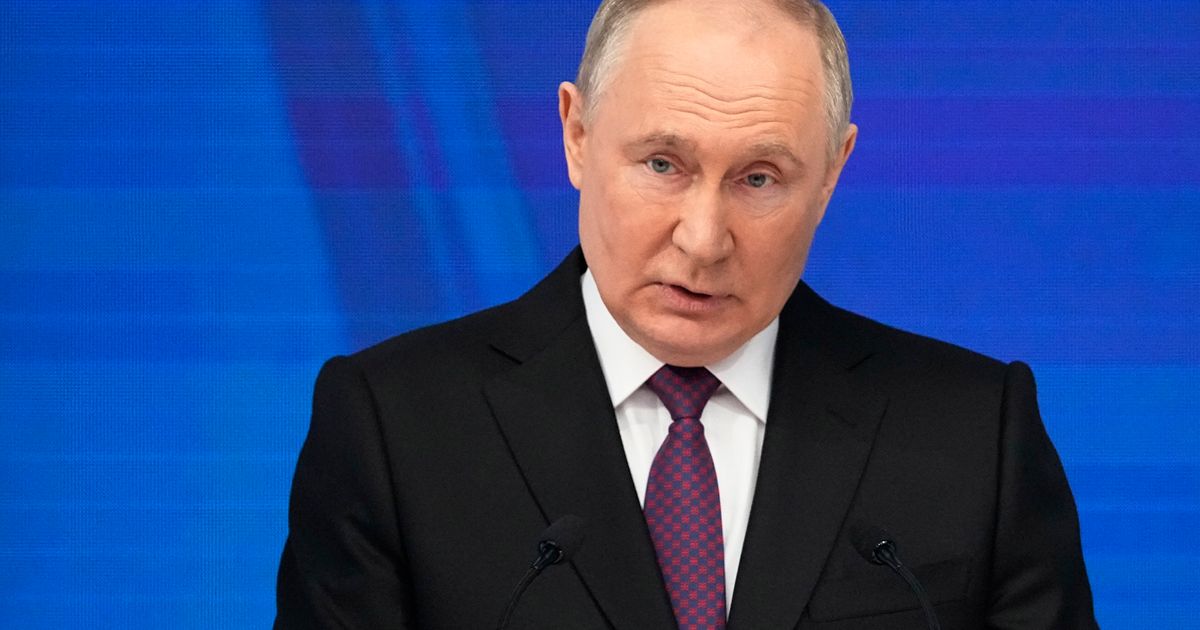
The foreign secretary held talks with the former president as he tries to boost Republican support for Ukraine.
Advertisement
Trump, who will be his party’s presidential candidate in November, has previously said he could end the Russia-Ukraine war “within 24 hours”.
But experts have condemned the plan, which they say would see Kyiv forced to make major concessions to Vladimir Putin in return for an end to the conflict.
Cameron met with Trump overnight at his Mar-a-Lago estate in Florida before heading to Washington for talks with US Secretary of State Anthony Blinken.
Ahead of the meeting, a Foreign Office spokesman said: “It is standard practice for ministers to meet with opposition candidates as part of their routine international engagement.”
Advertisement
However, the meeting had the potential to be awkward given Cameron’s previous comments about Trump – and the former president’s well-known dislike of being criticised.
When he was still prime minister in 2016, Cameron described Trump – who was running to be president first time around – as “divisive, stupid and wrong”.
And in his memoirs after he quit Downing Street, Cameron said Trump was “protectionist, xenophobic, misogynistic”.
The foreign secretary’s talks with the former president came amid mounting concerns that Russia is gaining the upper hand in its war with Ukraine.
President Volodymyr Zelenskyy has called on the west to boost its financial support for his country – but Republicans in America have tried to block President Joe Biden’s multi-billion dollar aid package.
Advertisement
Cameron has previously drawn the ire of leading Republicans over his pro-Ukraine comments.
In February, leading right-winger Marjorie Taylor Greene said Cameron could “kiss my ass” after he drew comparisons between the appeasement of Adolf Hitler when urging the US Congress not to abandon Ukraine.
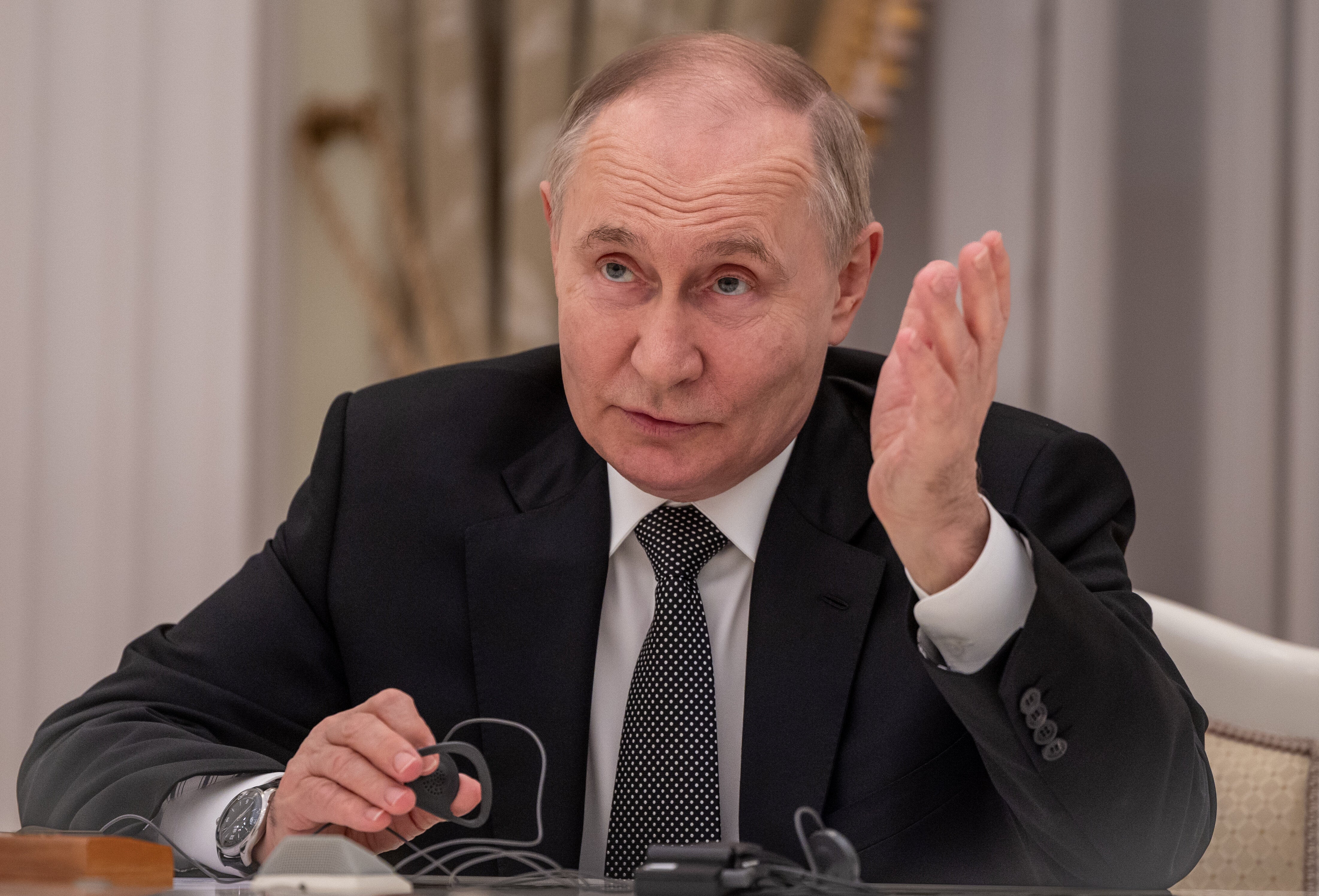
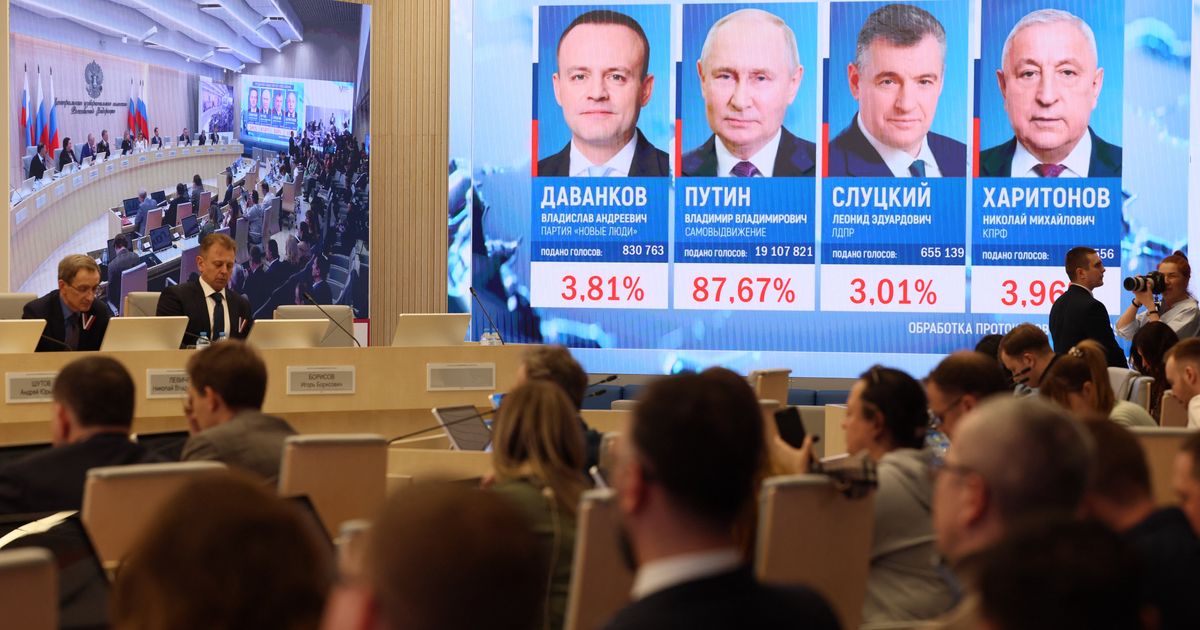
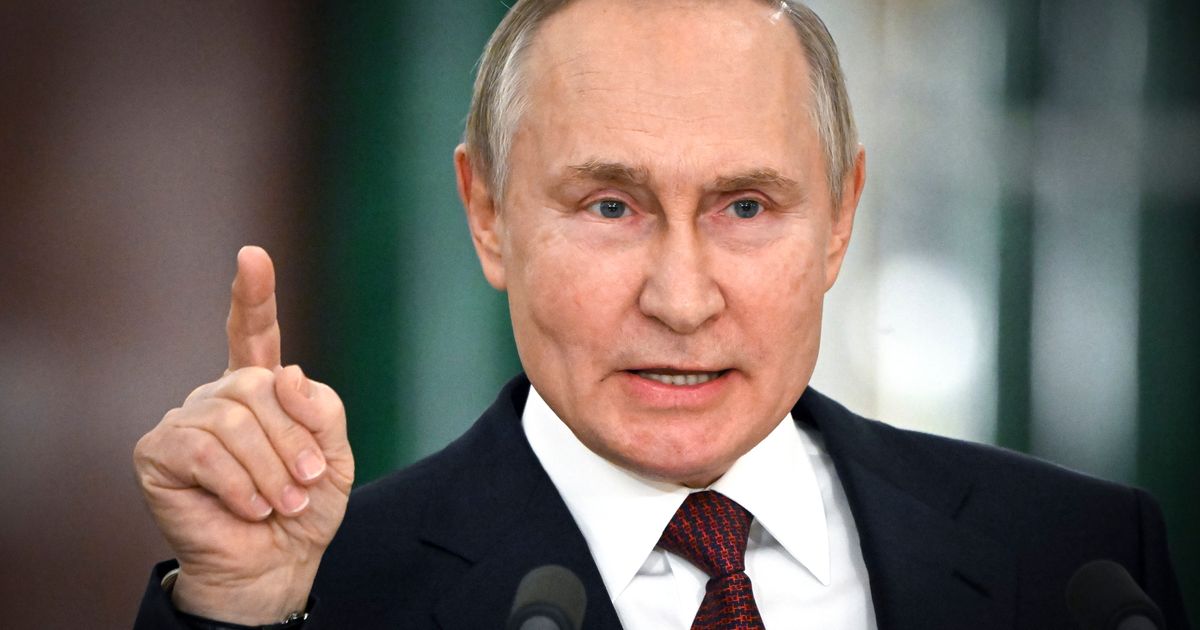
Vladimir Putin has been re-elected Russian president after winning a landslide victory in the country’s election.
In a result that was a surprise to absolutely no one, he won another six-year term in charge after receiving nearly 88% of the vote.
Advertisement
The three other candidates – Nikolai Kharitonov, Vladislav Davankov and Leonid Slutsky – were predictably miles behind, with none of them managing to poll more than 4%.
It will be his fifth term as president of Russia, having first been elected to the post in 2000. He was also the country’s prime minister between 2008 and 2012.
Foreign secretary David Cameron dismissed the result by insisting the elections had not been “free and fair”.
He said: “The polls have have closed in Russia, following the illegal holding of elections on Ukrainian territory, a lack of choice for voters and no independent OSCE [Organisation for Security and Co-operation in Europe] monitoring.
Advertisement
“This is not what free and fair elections look like.”
The polls have closed in Russia, following the illegal holding of elections on Ukrainian territory, a lack of choice for voters and no independent OSCE monitoring.
This is not what free and fair elections look like.
But former Russian president Dmitry Medvedev, a close ally of Putin, took to X (formerly Twitter) shortly after the result was announced.
In a bizarre post, he said: “Congratulations to all Russia’s enemies on Vladimir Putin’s brilliant victory in the election of the President of the Russian Federation. And a thank you to friends for the support.”
Congratulstions to all Russia’s enemies on Vladimir Putin’s brilliant victory in the election of the President of the Russian Federation! And a thank you to friends for the support
People in Russia and occupied Ukraine are heading to the polls over the coming days to vote in the presidential election – and it appears Vladimir Putin has employed some extraordinary measures to encourage a good turnout.
Even though the current president is a shoo-in to get re-elected for his fifth term – having suppressed all of the main opposition – it appears he’s very keen for there to be a large, visible turnout to legitimise his time in office.
Advertisement
The national vote is taking place over three days, running from 15 to 17 March, but early voting was introduced for the occupied parts of Ukraine “for security reasons”.
And while there have been reports of people trying to disrupt the voting system in some way – like starting fires – these are minor shows of disruption unlikely to impact the overall result.
Here’s how Putin has used both the carrot and the stick to force people to vote in Russia and in occupied parts of Ukraine.
1. Putin’s direct appeal to his ‘dear friends’
Earlier this week, Putin urged people to vote, saying: “Dear friends!
:All of us, the multiethnic people of Russia, are a big family.
“We are worried about our country, take care of it, we want it to be wealthy, strong, free and prosperous, we want living standards and the quality of life to improve. So be it.”
According to state media TASS, the authoritarian leader claimed, “we will do everything the way we want”, and claimed: “The only source of power in our country is the people. This is the key legal provision enshrined in the Russian constitution.”
Putin has been in power consistently since before 2000.
He also addressed Ukraine’s flurry of attacks on Friday, saying: “These attacks, pointless from the military point of view and criminal from the humanitarian point of view, as has been said, are geared to hinder presidential election in Russia.
“I am convinced that our people will respond to this by being more consolidated.”
The Kremlin even posted a bizarre video of Putin walking into his office, tapping on his large computer, and then acknowledging the camera after several long seconds and waving.
The screen then cut to the computer to suggest he just voted online.
2. Entertainment at polling stations
According to the BBC’s Francis Scarr, voters can watch traditional dancing and eat a few free pancakes at the ballot box, or pose with cardboard cutout of US commentator Tucker Carlson, after voting.
Advertisement
Other characters showed up at polling stations around the country, too, including Grandfather Frost, Barbie and people dressed in historical outfits.
Scarr claimed on X (formerly Twitter) that the Kremlin has been holding raffles in polling stations, too.
He added: “For residents of this district in Siberia, domestic appliances, bags of sugar, and even vans of firewood are up for grabs.”
3. Armed Russian troops go house-to-house
If neither of these attempts work, it seems Putin had a third, much more menacing option up his sleeve – armed threats.
An investigation from The Guardian earlier this month found Russian troops threatened any Ukrainians in occupied areas with deportation if they chose not to vote.
Other residents also told the BBC that they were coerced into voting by pro-Russia collaborators going from house to house with armed soldiers.
Having the Ukrainian vote supposedly on side would also help to justify his brutal invasion, especially as Putin maintains the country is meant to be part of Russia.
The official emblem of the presidential election this year is the V symbol associated with Putin’s “special military operation”.
Advertisement
Meanwhile, Ukraine has dismissed the vote as illegitimate, saying they would be null and void.
The Russian president was speaking the day after the funeral of Alexei Navalny, who died under mysterious circumstances in a Russian penal colony in the Arctic circle last month.
He was serving a lengthy sentence on charges widely seen as politically motivated at the time.
Putin has not directly addressed Navalny’s passing even though it has become an international news story.
Leaders across the West have also blamed Russian president for his critic’s death – US president Joe Biden said he has “no doubt” it was the “consequence of something that Putin and his thugs did”.
Putin claimed: “I know that these values are shared by the vast majority of the Earth’s inhabitants.
“This is why we must take care of them and defend them together, fulfil our dreams together, and help each other to make the lives of billions of people – let me stress this – billions of people better.
“This world has no place for racism, dictatorship, double standards or lies, and people are free to speak their language and follow the beliefs and traditions of their ancestors.”
Having suppressed his most vocal political opponents over the years, Putin is also a shoo-in to win the upcoming presidential election in Russia. He has already spent more than two decades in power.
Independent media and human rights defence group, OVD-Info reported that more than 400 people were detained at events across 32 Russian cities in the first few days after Navalny’s death – including journalists.
Navalny’s family also claimed they struggled to find a venue to host his funeral in Russia, with many refusing once they found out who the funeral was for.
However, thousands still turned out to show their support for Navalny on Friday, chanting “no to the war” and “Putin is a murderer”.
According to the US-based think tank, the Institute for the Study of War, the Kremlin likely allowed this unusual show of rebellion to happen to “avoid prompting wider outrage”.
The experts suggested: “The Kremlin likely did not order large crackdowns against displays of anti-war sentiment in order to avoid prompting wider outrage while also projecting confidence in public support for Russian President Vladimir Putin and his war effort in Ukraine ahead of presidential elections on March 17.”
Liz Cheney says Donald Trump’s recent threats against NATO allies demonstrate a “dangerous” misunderstanding of America’s foreign diplomacy.
In a Sunday interview on CNN’s “State of the Union,” the former congresswoman told Jake Tapper she was outraged by Trump, who earlier this month said he would “encourage” Russian President Vladimir Putin to attack NATO signatories that aren’t spending enough on defense funding.
Advertisement
“It’s dangerous, it shows a complete lack of understanding of America’s role in the world,” Cheney said. “It’s disgraceful.”
Liz Cheney speaks in New York on June 26, 2023. She tore into Donald Trump for his recent NATO comments during a Sunday appearance on CNN.
Gary Gershoff via Getty Images
While Trump has repeatedly complained about NATO countries being behind on their “bills,” the alliance doesn’t exactly work that way.
NATO is anchored in the principle of mutual defense, meaning each member country must commit to enough defense spending to ensure their nation’s militaries are prepared to step in if another member of the alliance is attacked.
Furthermore, the U.S. president does not have the power to unilaterally withdraw the country from NATO.
“I can’t imagine any other American president of either party since the establishment of NATO saying such a thing,” Cheney continued. “It’s completely uninformed and ignorant and dangerous.”
During her interview, the retired Republican legislator also told Tapper she was worried by where Trump’s sympathy to Russia may lead the Republican Party as a whole.
“We have to take seriously the extent to which you’ve now got a Putin wing of the Republican Party,” she said, calling it critical to keep that faction out of the West Wing.
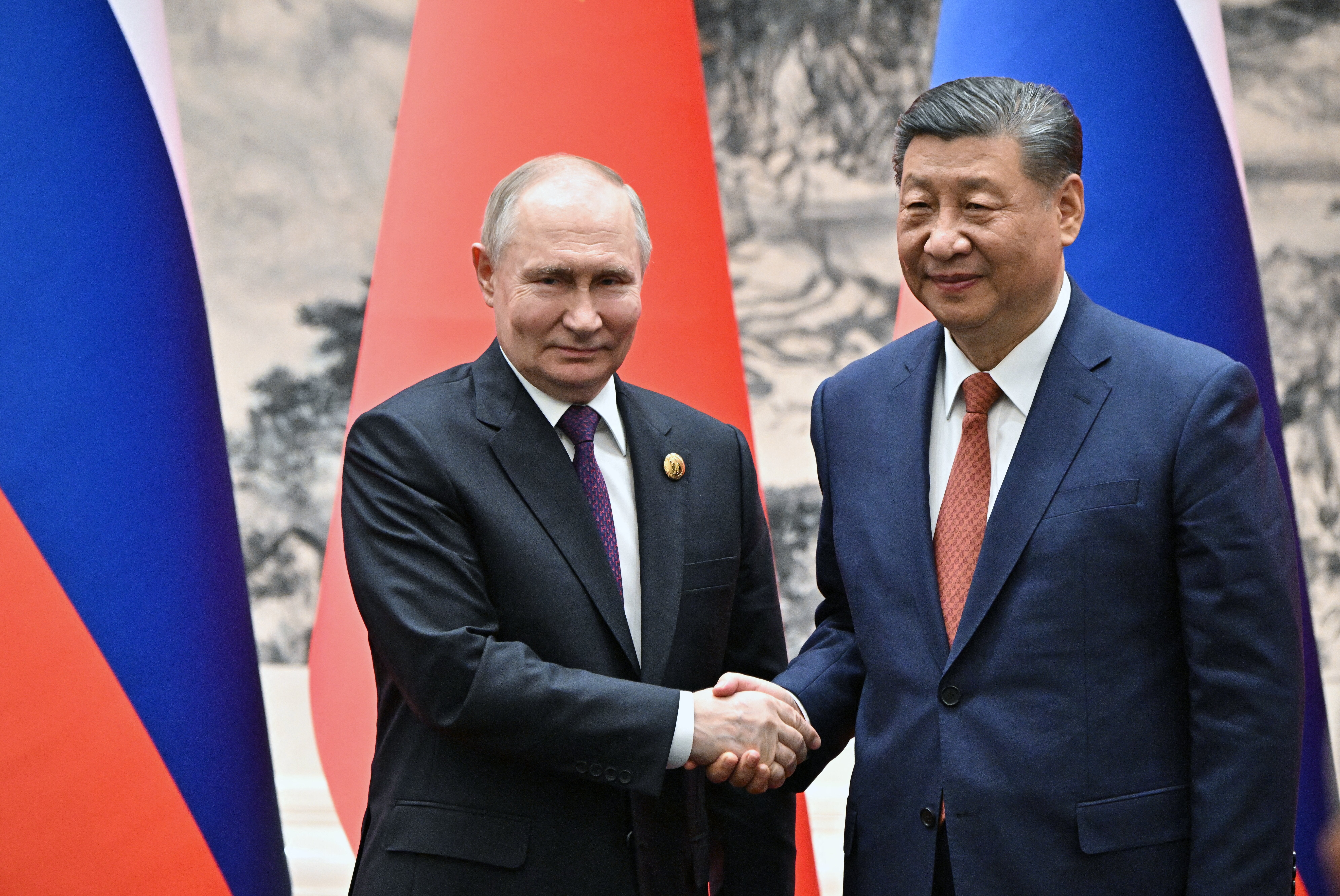
China’s president Xi Jiinping and Russia’s Vladimir Putin have agreed their countries should both try to oppose international interference – something both nations have been actually been accused of.
According to a Kremlin press briefing, they both lashed out at the US in particular, denouncing the “US policy of interfering in the internal affairs of other states”.
Advertisement
The two leaders spoke during an hour-long phone call on Thursday and discussed establishing a “multipolar, fairer world order”.
The Moscow Times reported that the Kremlin aide Yuri Ushakov told journalists: “The leaders of the two countries realise that the US is practically implementing a policy of double containment [toward] both Russia and China.”
The US has sanctions against both Beijing and Moscow right now.
A readout from the Chinese state broadcaster CCTV also reported that Xi suggested the two “should closely collaborate strategically, defend the sovereignty, security and development interests of their respective countries, and resolutely oppose interference in internal affairs by external forces.”
The UK and its allies actually called out Russia for its own sustained attempts to interfere in UK politics and democratic processes only in December 2023.
Advertisement
Meanwhile, China was criticised by Taiwan for “repeated interference” in its elections only in January.
Xi and Putin’s relationship has strengthened significantly since Russia invaded Ukraine, and, according to the Kremlin, the leaders agreed today to continue having “close personal interaction”.
Weeks before the war began, Xi signed up to a “no-limits” friendship with Putin, with a series of long-term energy deals.
Xi went to Moscow last March, and Putin visited Beijing in October – a particularly surprising move from the Russian president, because of the international arrest warrant out against him.
Although the Kremlin’s press service said the bond between their two countries was at “an unprecedentedly high level” right now, they do not have any more visits scheduled.
Advertisement
According to CCTV, Xi said the two countries have “weathered many storms together” and they are “facing new opportunities for development”.
The two also spoke about “the development of Sino-Russian comprehensive partnership and strategic cooperation over the recent period.”
China-Russia trade reached the new high of $218.2 billion (£173.12 billon) during January-November, according to Chinese customs data.
Russia has been able to rely on China as a key economic lifeline since the West imposed unprecedented sanctions on Moscow over its ongoing invasion of Ukraine.
In exchange, China has access to Russia’s cheap energy exports and natural resources.
Speaking to the International Armoured Vehicles conference in Twickenham on Wednesday, Sanders suggested that the UK should expand its forces to 120,000 within three years.
However, even that would not be “enough”, according to Sanders.
The chief also noted that he personally is not in favour of conscription, but suggested UK volunteers could sign up for any land wars.
Advertisement
He called on the government to think about how it would mobilise the UK if there was a war – particularly if the UK ends up in war with Russia.
What’s going on between the UK and Russia?
The UK, along with the rest of Nato, has been supporting Ukraine ever since Russia invaded its European neighbour in 2022.
It has been funding Kyiv, and sending it equipment but stopped short of actually fighting against Russia.
However, Moscow has publicly lashed out at the UK – along with the rest of the West – for supporting Ukraine throughout the war, and has falsely claimed the West started it by expanding Nato membership eastwards.
Defence secretary Grant Shapps also made an ominous warning recently, saying: “If our armed forces are not strong enough to deter future aggression from Moscow or Beijing, it will not be a small war to contend with but a major one.”
President of the UN General Assembly Dennis Francis suggested that the idea of a third world war was not “beyond the realm of possibility” this week.
Top Nato military official, Admiral Rob Bauer, also said that civilians should be ready for an all-out war with Russia in the next two decades.
He said: “We have to realise it’s not a given that we are in peace. And that’s why we [Nato] are preparing for a conflict with Russia.”
Britain’s Chief of the General Staff, General Patrick Sanders (L)talks with Britain’s Defence Secretary Grant Shapps during a visit to STANTA training camp in eastern England
ALASTAIR GRANT via Getty Images
Advertisement
So, could conscription be announced?
No, Rishi Sunak’s official spokesman has promised that military service will remain voluntary.
The spokesperson also dismissed speculation over whether the UK would be strong enough to fight Russia.
He said: “I think these kinds of hypothetical scenarios, talking about a conflict, are not helpful and I don’t think it’s right to engage with them.”
The Telegraph reported that No.10 supposedly did not want Sanders’ comments to go public.
Within months, it was extended to include married men, and in 1918, the upper age limit was increased to 51.
The only exemptions were for single parents, those in exempt professions (like clergymen and teachers) or those deemed “medically unfit” .
Advertisement
Even though the war was over by 1920, it was extended to help the government manage parts of the British Empire.
It was brought back in 1939 when World War 2 broke out. Initially, it was just limited conscription and applied to single men between 20 and 22, but by September that year, it was extended to all men between 18 and 41 who had registered to serve.
This time it included more exemptions like baking, farming, medicine, coal mining and engineering.
In 1941, Parliament widened the scope of conscription. All unmarried women and childless widows between 20 and 30 were liable to call-up.
The service time increased to two years in 1950 due to the Korean War, but time on the reserve list was taken down to 18 months.
Advertisement
During both wars, there were “conscientious objectors”, who refused to serve. They had to explain their argument in front of a tribunal – if approved, they would be put in a non-combatant role. many were jailed , though.
Between 1949, and 1963, the last time the National Serviceman was demobilised, more than two million had been conscripted into the Armed Services.
What could conscription look like in the UK now, hypothetically?
Anyone suffering from senses deprivation – like hearing or sight loss – is not permitted to join the Army now, so they could be exempt.
Neurological conditions, skin conditions, psychiatric and cardiovascular issues are another obstacle, as are bone or joint problems.
Women may also be drafted in to serve on the frontline, as they have been allowed to serve in all combat positions since 2018.
Vladimir Putin seemed to forget he initiated the war in Ukraine during his surprise appearance at a virtual G20 summit on Wednesday.
In his first address to the leaders of the world’s largest economies since the Ukraine-Russia conflict began in 2022, the Russian president called for leaders to “stop the tragedy” occurring in the neighbouring country.
Advertisement
After some leaders said they were shocked by the Russian “aggression” in Ukraine, Putin replied: “Yes, of course, military actions are always a tragedy.
“And of course, we should think about how to stop this tragedy. By the way, Russia has never refused peace talks with Ukraine.”
Back in February 2022, after weeks of growing aggression and building up troops near the Ukrainian border, the Russian president ordered his forces into Ukraine.
He claimed it was important to “demilitarise” the country, and made baseless neo-Nazi allegations about the Ukrainian government to justify the invasion.
Advertisement
It was part of what he dubbed the “special military operation” – he has only referred to the 21-month long fight as a “war” sparingly.
So it was also pretty surprising when Putin used the word “war” to describe the conflict in Ukraine during his G20 meeting.
He said: “I understand that this war, and the death of people, cannot but shock.”
Who did Putin blame for the war, then?
Putin pivoted the G20′s attention to pre-war tensions, by claiming Ukraine had been persecuting people in the east of its country.
This is a reference to the separatist movement which started to gain traction in eastern Ukraine after Ukraine’s 2013 Maidan Revolution and Putin annexed Crimea in 2014.
According to the UN, approximately 14,000 people were killed in the subsequent conflict as Russian-backed separatists fought Ukrainian forces.
Advertisement
Putin also pivoted the conversation towards the ongoing Israel-Hamas war, saying: “And the extermination of the civilian population in Palestine, in the Gaza Strip today, is not shocking?”
This pool photograph distributed by Russian state agency Sputnik shows Russia’s President Vladimir Putin taking part in a virtual G20 leaders’ summit in Moscow on November 22, 2023.
MIKHAIL KLIMENTYEV via Getty Images
What else did Putin’s comments reveal?
Putin’s remarks were correct in that there really is a tragedy still unfolding in Ukraine – it’s Europe’s deadliest conflict since World War 2.
The UN Human Rights Office said on Tuesday that more than 10,000 civilians have been killed in Ukraine since Russia invaded, although the real toll is expected to be “significantly higher”.
Advertisement
According to Reuters, Danielle Bell from the head of the UN monitoring mission, said the “severe human cost” in Ukraine right now is “painful to fathom.”
Russia has been accused of targeting civilian structures in Ukraine too, although Moscow has denied this.
Ukraine has also only agreed to peace negotiations if Russia agrees to hand back all of the Ukrainian land (one fifth of its total land mass) it has illegally annexed since 2014 – which includes the peninsula of Crimea.
He did visit Iran back in July and ventured to Belarus last December, but has steered clear of any NATO country since February 2022 – so his virtual appearance at the summit was a big deal.
He sent his foreign minister Sergey Lavrov to the last two G20 meetings in India and Indonesia, and has not attended a summit meeting in person since 2019.
It said: “Russian sources expressed pronounced concern about ongoing Ukrainian activity on the east bank of Kherson Oblast and framed these activities as part of a potential larger Ukrainian operation.”
Ukraine has previously struggled to reclaim any of this area.
Rybar claimed on Tuesday night that Ukrainian formations near the destroyed Antonisky bridge had moved forwards, and occupied a village.
Increasing its presence on the other side of the river would enable Kyiv to send troops, tanks and artillery across, and apply more pressure to the Russian forces on that long frontline.
The Russian ministry of defence has acknowledged Ukrainian operations too, according to ISW, claiming they stopped four Ukrainian sabotage and reconnaissance groups near Kherson City.
ISW also reported: “The milblogger reacted to the reported [Ukrainian] assault on the night of October 17 to 18 by accusing the Russian MoD of not taking the threat of a Ukrainian crossing seriously.”
Advertisement
In another indication that Ukraine’s progress in Kherson is troubling Moscow, the Russian president Vladimir Putin recently described Ukrainian activity in Kherson as the “next counteroffensive”.
But, as ISW noted, the Russian president has also “continued his typical rhetorical line by painting all Ukrainian offensive operations as a failure”.
The think tank has a policy of not forecasting Ukrainian actions though, so it did not speculate over the possibility that Kyiv will launch an offensive over the Dnipro river any time soon.
Still, ISW added: “It is noteworthy that prominent and generally reliable Russian sources are discussing Ukrainian activities on the east bank as occurring at a larger scale than previously documented.”
Russia is set to dramatically increase the amount of money it spends on defence as the country prepares for “multiple years” of war in Ukraine, according UK intelligence.
The Ministry of Defence’s latest intelligence update on the war said documents apparently leaked from the Russian finance ministry shows its military spending will reach 30% of all public expenditure in 2024.
“The ministry proposes a defence budget of 10.8 trillion roubles (£91.7 billion), equivalent to approximately 6 per cent of GDP and a 68 per cent increase over 2023,” the MoD said.
To put that in context, the UK spends around 2% of its GDP on defence. In 2021/22, that worked out at around £45bn.
The MoD said Russia’s military spending splurge will come “at the expense of the wider economy”.
“Full details on Russian defence spending are always classified, but these figures suggests that Russia is preparing for multiple further years of fighting in Ukraine,” they said.
“This follows public comments by Defence Minister Sergei Shoigu on 27 September 2023, suggesting he was prepared for the conflict to continue into 2025.”
Russia invaded Ukraine in February 2022 in a “special military operation” that Vladimir Putin believed would be over in days.