Labour Will Oppose Boris Johnson Plan for Compulsory Covid Passports For Nightclubs

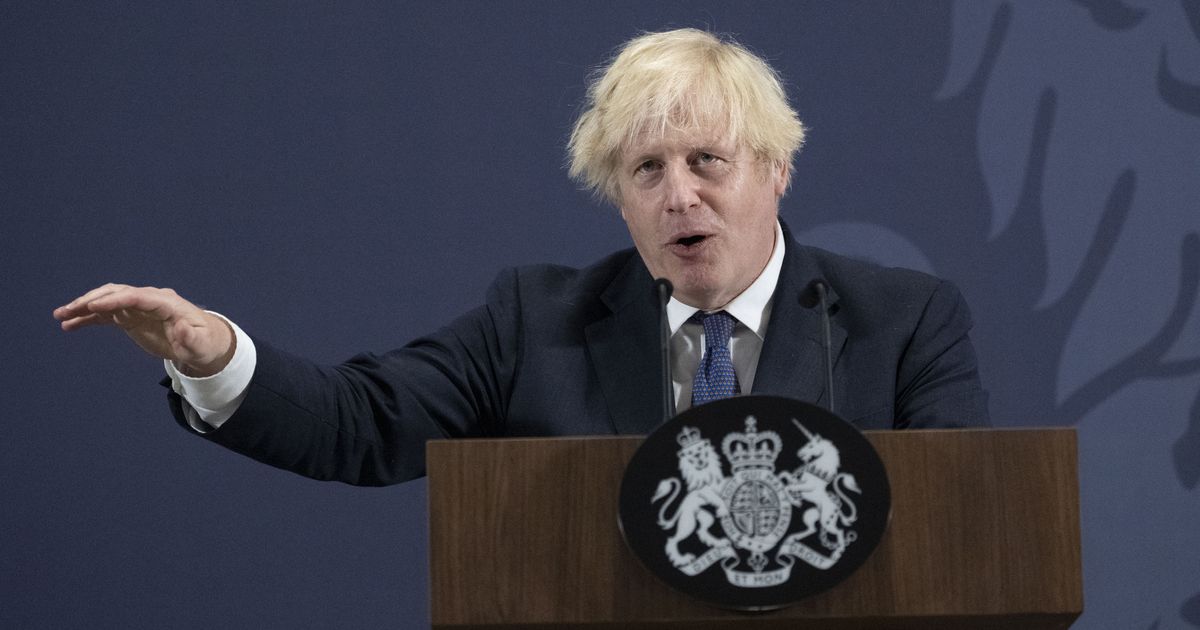
Boris Johnson’s plans to force nightclubs to make Covid ‘passports’ a condition of entry are hanging in the balance after Labour came out against the idea.

The PM’s proposal, which would from the end of September restrict entry to people who have been double-jabbed, has met with a backlash from club owners.

It is already opposed by a number of Tory MPs, who fear it would open the way for similar curbs on pubs, and Labour’s opposition now means that the government cannot be sure of getting it passed by parliament.

Even though the PM has a majority of more than 80, more than 40 Tory MPs have come out against the idea of compulsory ‘Covid passports’ at a time when most other restrictions have been lifted.

Keir Starmer prefers a rival plan to immediately mandate clubbers to get a negative Covid test before entry, believing it would offer better health protection at a time when the Delta variant of the virus is ripping through younger age groups.

Labour believes that proof double-jabbing is no guarantee that people don’t carry the virus, as the forced isolation of health secretary Sajid Javid underlined last weekend.

“We oppose the use of Covid vaccination status for everyday access to venues and services. It’s costly, open to fraud and is impractical,” a spokesperson for Starmer said.

“Being double-jabbed doesn’t prove you aren’t carrying the virus. Testing for access to venues would be more efficient, and would give people and businesses more certainty.”

Under surprise plans announced by the PM on Monday, the day when most restrictions were lifted in England, nightclubs have until the end of September to comply with a new scheme to restrict entry to the double-jabbed.

So far, some 42 Tory MPs have signed a cross-party declaration by the Big Brother Watch lobby group, which states they are against “Covid status certification to deny individuals access to general services, businesses or jobs”.

Several Conservatives are furious because ministers ruled out the idea of compulsory ‘Covid passports’ after a review by Michael Gove’s Cabinet Office.

But this week, neither the PM nor No.10 ruled out introducing mandatory passports for other crowded indoor venues such as pubs – even though Johnson said he was ”keen” to avoid the need to provide “papers for a pint”.

Labour believes that waiting until the end of September means the risk of clubs acting as ‘super spreader’ venues is too high and it wants immediate testing as a condition of entry.

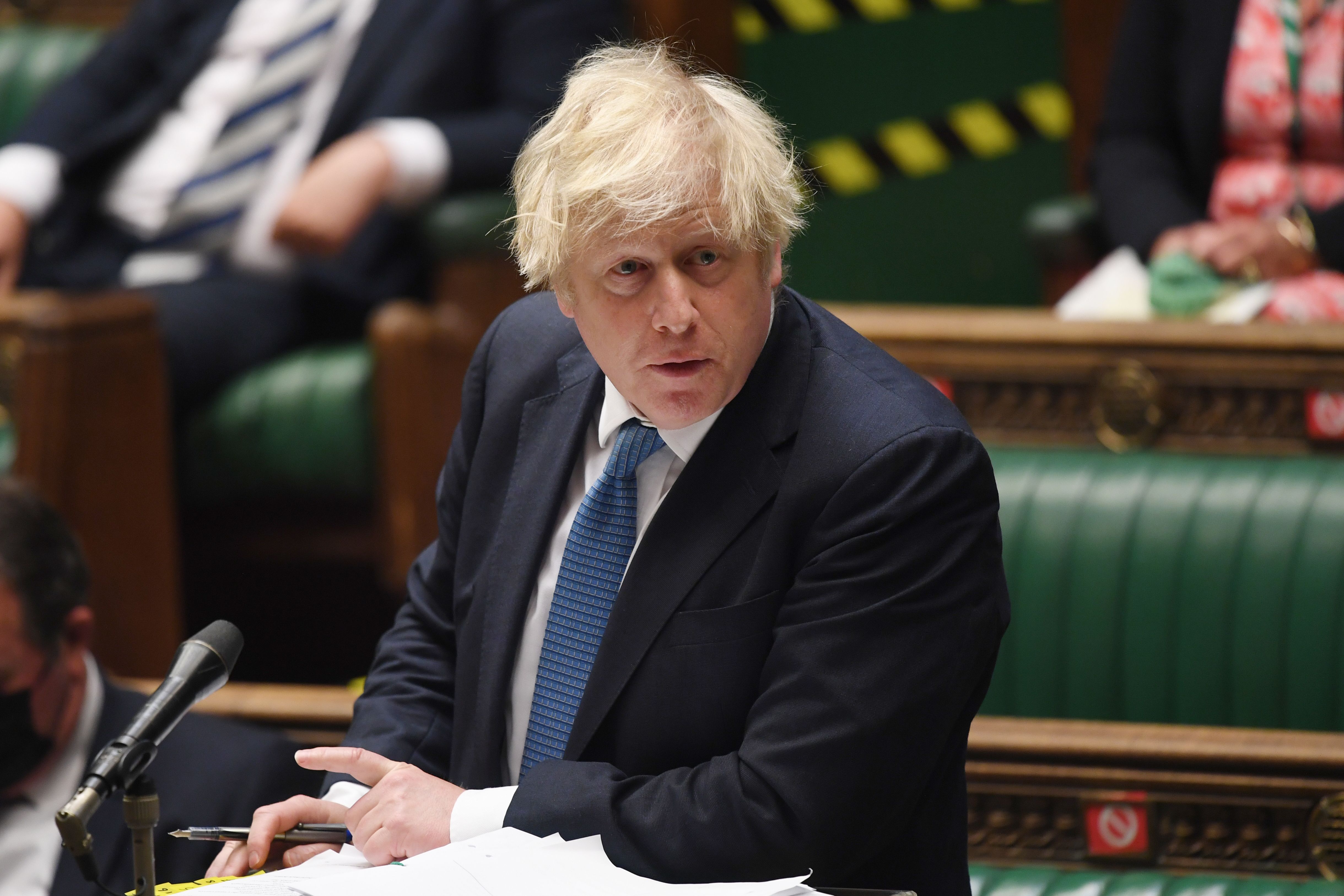
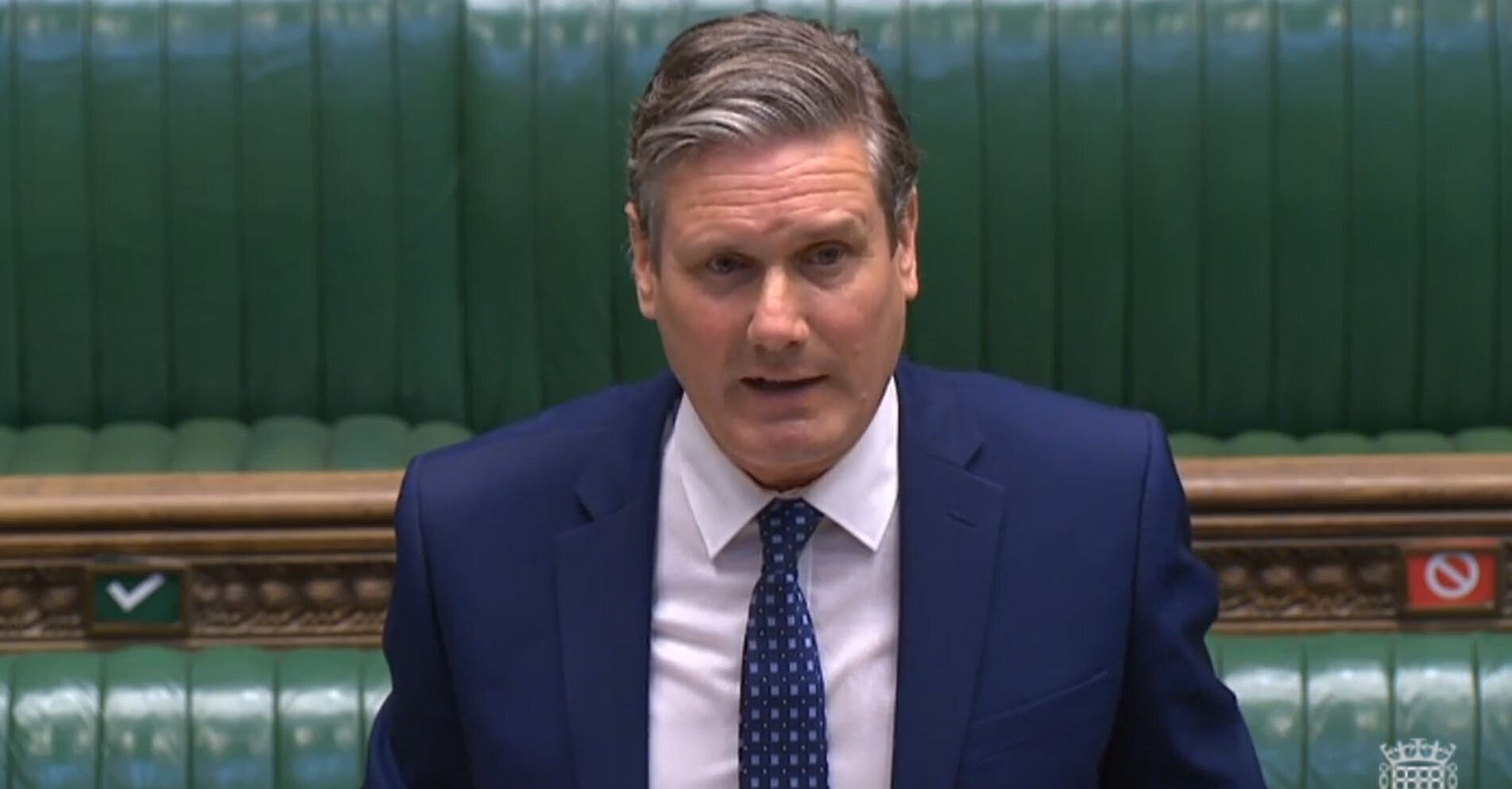
The issue surfaced in prime minister’s question time, when Starmer pointed out that the PM had once promised to “eat an ID card if he ever had to produce one”.

“When it comes to creating confusion, the Prime Minister is a super spreader. Why is it okay to go to a nightclub for the next six weeks without proof of a vaccine or a test, and then from September it will only be okay to get into a nightclub if you’ve’ got a vaccine ID card?”

Johnson hit back: “Everybody can see that we have to wait until the end of September, by which time, it is only fair to the younger generation when they will all have been offered two jabs before we consider something like asking people to be double jabbed before they go into a nightclub.

“That is blindingly obvious to everybody. It is common sense, and I think most people in this country understand it. Most people in this country want to see younger people being encouraged to get vaccinations.”

Shadow domestic violence minister Jess Phillips told TimesRadio: “I just don’t think it will work. I just don’t think that businesses – like your local nightclub or local pub – would be able to police it, and I don’t think it’s fair on them.”

Downing Street confirmed that legislation would be needed to make the passports compulsory.

In a clue to government nervousness over the forthcoming vote on the plans, PoliticsHome reported that cabinet minister Simon Hart had on Wednesday pleaded with rebels to back the PM.

“As far as a rebellion is concerned, if I was in a position to talk to colleagues who are uncomfortable about these proposals [I’d say] that absolutely none of these things are ever done with any degree of enthusiasm or glee,” the Welsh Secretary said.

“It’s always done with the heaviest of hearts and on the basis of what we think is really compelling advice and evidence. I very much hope that if we get to a vote on this that we can take as many colleagues with us as possible.”

Starmer was himself forced to enter self-isolation after one of his children tested positive for coronavirus around the time he was in the Commons for Prime Minister’s Questions.

The Labour leader tested negative on Wednesday morning ahead of his appearance in parliament where he grilled Johnson over his isolation policy.
Share Button

Will Muddy Messaging Spoil Boris Johnson’s End-Of-Term Send Off?

You’re reading The Waugh Zone, our daily politics briefing. Sign up now to get it by email in the evening.

Just before a parliamentary recess, governments often embark on a Take Out The Trash Day. A raft of written ministerial statements will suddenly appear, stuffed full of announcements or data that ministers hope will get buried amid the pile of departmental black bin bags.

Thursday will still inevitably see that mass of information dropped on Westminster, but today the government seemed intent on a different kind of trash talk: soiling its own public health policy with yet more muddied messaging.

In the apparent absence of a coherent pandemic plan for the third wave, both ministers and No.10 fuelled the suspicion that they are simply making things up as they go along. The day after ‘Freedom Day’ felt like free jazz day, with different bits of government riffing and soloing discordantly.

Business minister Paul Scully kicked things off by suggesting the public could make their own “informed decisions” about isolation after being pinged by the Covid app, adding it was ultimately “up to individuals and employers”. Within minutes, No.10 had a not so gentle slapdown, stressing it was “crucial” people isolated when told to by the app. 

It’s worth saying that Scully was absolutely correct that there is no legal requirement to obey the ping, and it’s only if you’re directly contacted by Test and Trace that you need to stay at home. But his natural attempt to stress the needs of business contrasted with Downing Street’s emphasis on the needs of the healthcare system.

Unfortunately, No10 added to the air of confusion by failing to come up with clarity on exactly which ‘critical workers’ would be allowed an exemption from isolation. There will not be any list of individual sectors that qualify, because “we’re not seeking to draw lines specifically around who or who is not exempt”, the PM’s spokesman said. That sounded less gov.uk than confused.com.

Worse still, it appears there will be a fantastically bureaucratic system whereby individual firms have to apply to individual Whitehall departments to seek exemptions for individual staff (though even that is unclear, as the spokesman later talked of “groups of individuals in specific sectors”). 

Unlike the clear definitions used last year for exemptions for overseas travel in the first wave, there is no definition at all. And in what appears to be a form of state planning beloved of Soviet East Germany, civil servants will use a ‘case by case’ approach, with no clue so far as to how long each application will take. No wonder business has said the plan is “unworkable”. 

No.10 is hoping to launch some fresh public health messaging later this week, but I don’t envy them. Instead of ‘Hands, Face, Space’, it seems we now have ‘Plans: Case By Case’.

The sense of chaos was underlined with new figures showing a million schoolchildren were sent home to isolate in England in the past week. The numbers of under-5s in nurseries affected is high too, with all the knock-on effect on working parents. Some 10% of parliament’s armed police officers have been pinged, highlighting the scale of this third wave caseload.

Another alarm bell ringing is the Guardian’s revelation that Border Force staff are so overwhelmed that they have been told they need no longer check negative test or passenger locator forms for airport arrivals from amber list countries. I suspect Keir Starmer may want to add that to his PMQs list on Wednesday. While Channel crossings of migrants alarms ministers, the Covid crossings at airports could end up much more concerning. 

In one early ‘Take Out The Trash’ move, the DWP slipped out its response to a consultation on statutory sick pay tonight and was swiftly accused of reneging on its promise to reform it. Citing the pandemic, the department said now “was not the right time to introduce changes to the rate of SSP or its eligibility criteria”. With increasing numbers asked to isolate, fear of losing income makes this a very live issue again.

As if all that were not enough, there’s new Tory unease at the idea of U-turns on both Covid passports and jacking up national insurance to pay for social care (neither of which may get a Commons majority). They may well ask whether 2019 manifesto pledges being taken out with the trash too. 

Despite the backbench morale boost of an expected 3% pay rise for NHS staff, in some ways it’s probably a good thing Boris Johnson will not be physically present for his end-of-term session at the despatch box, or at the 1922 Committee. With Tory backbenchers, as with Covid, remote control is often no control at all. 

Still, Dominic Cummings could once again ride to the PM’s rescue, though this time not exactly as he intended. Tory MPs’ sheer loathing of the former adviser has gone off the scale after he told the BBC he discussed a ‘coup’ to oust Johnson within days of his 2019 election.

There could be no better way of getting backbenchers to back their leader.  But if the PM continues to upset his troops by breaking his word, they may even start to think Cummings has a point. The right messaging matters to your own party as well as the public.

Share Button

Keir Starmer Expels Far-Left Corbyn Supporters From Labour

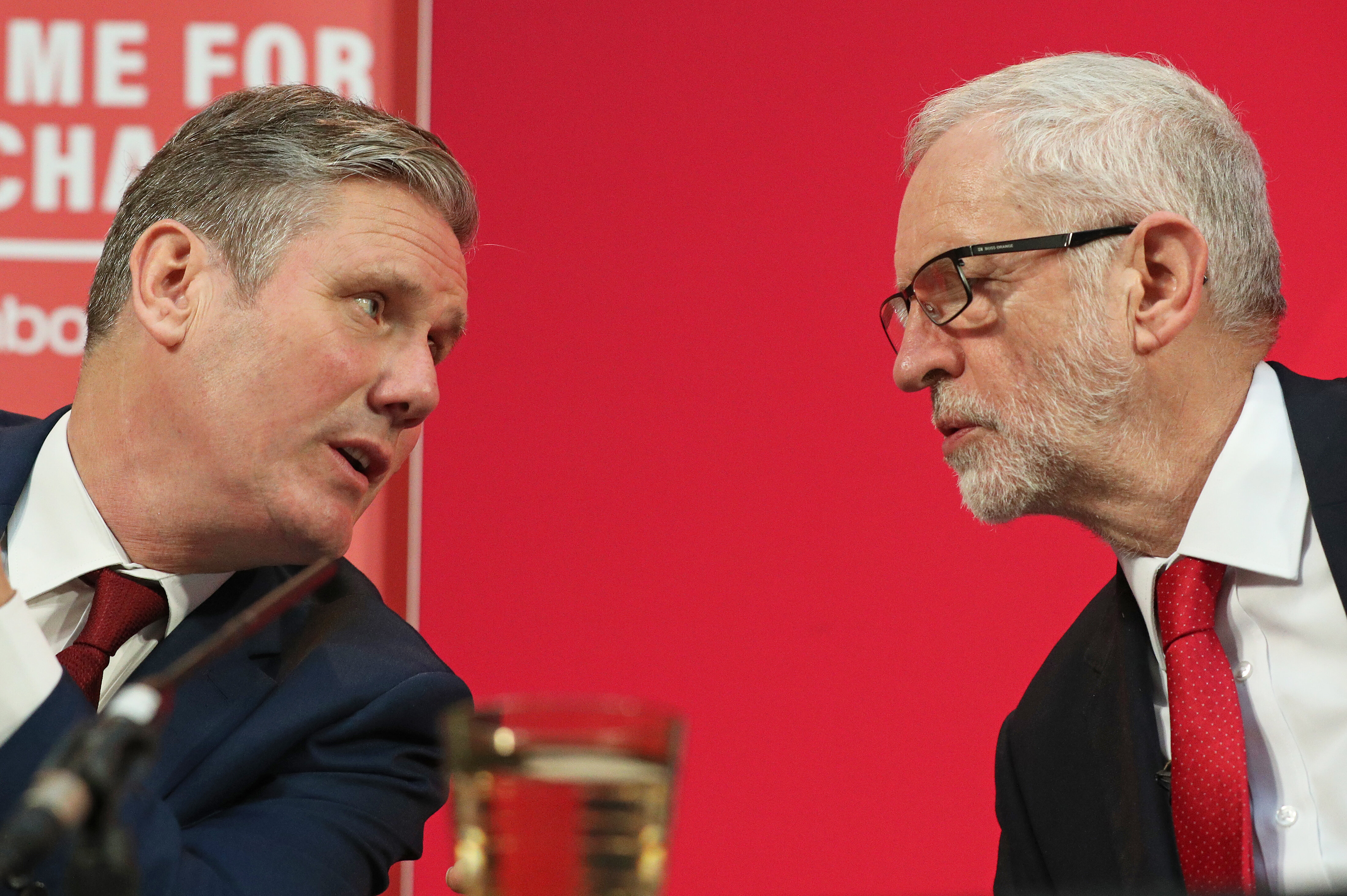
Jonathan Brady – PA Images via Getty Images

Hundreds of far Left supporters of Jeremy Corbyn will be expelled from Labour within days after its ruling body agreed to ban four groups accused of promoting a “toxic culture” within the party.

The ruling National Executive Committee (NEC) decided on Tuesday to proscribe ‘Resist’ and ‘Labour Against the Witchhunt’, factions which both claim anti-Semitism allegations have been politically motivated.

‘Labour In Exile’, which actively welcomes expelled or suspended members, was banned. Another group, ‘Socialist Appeal’, which describes itself as Marxist, was also proscribed.

HuffPost UK understands that letters of “auto-exclusion”, informing members they have effectively expelled themselves by being members of any of the groups, will be sent by the end of this week.

The NEC approved the proscription with a big majority, insiders said.

Many of the members of the four factions were strong supporters of former leader Corbyn, who remains suspended from the party whip following his reaction to an equalities watchdog finding of institutional anti-Semitism.

The NEC also agreed to set up a new panel which would look assess whether other fringe groups operating within the party should also be proscribed.

The panel will be drawn from the Organisation Sub-Committee of the NEC, but insiders said that it would not operate as a “Star Chamber” because once it ruled which groups should be banned, expulsion was automatic.

In one concession to critics, it was agreed that the full NEC would have to ratify any decisions by the “Org Sub” committee.

As the lengthy NEC meeting took place, members of the far-Left groups and others – including Corbyn’s brother Piers – demonstrated outside Labour’s HQ in London.

Grassroots group Momentum and Unite the union had both warned that the attempt to “purge” the groups was an act of “machismo” that was unnecessary.

And former shadow chancellor John McDonnell had tweeted that it was a “standard Blairite” tactic to try and show how strong a leader Starmer was.

Corbyn too had expressed strong opposition to the plan.

But one member of the NEC told HuffPost UK that the move was “morally important” because members of the groups had supported those who had been expelled for anti-Semitism.

‘Socialist Appeal’ has also been described as an “entryist” group and some MPs believe its expulsion had echos of the booting out of Militant under Neil Kinnock in the 1980s.

The margins of the proscription votes on the NEC underlined the strength of support Starmer now has on the ruling body, with two-to-one majorities for most of them.

The narrowest vote was to ban ‘Socialist Appeal’, by a margin of 20 votes to 12.

Share Button

Why Is Boris Johnson Singling Out Nightclubs For A Covid Crackdown?

Alberto PezzaliPA

Boris Johnson

Does Boris Johnson think the way through the third Covid wave is through more injections, more infections or both? Well, on the basis of his latest Downing Street press briefing, you could be forgiven for thinking all three options are very much alive and jostling for attention in the PM’s brain.

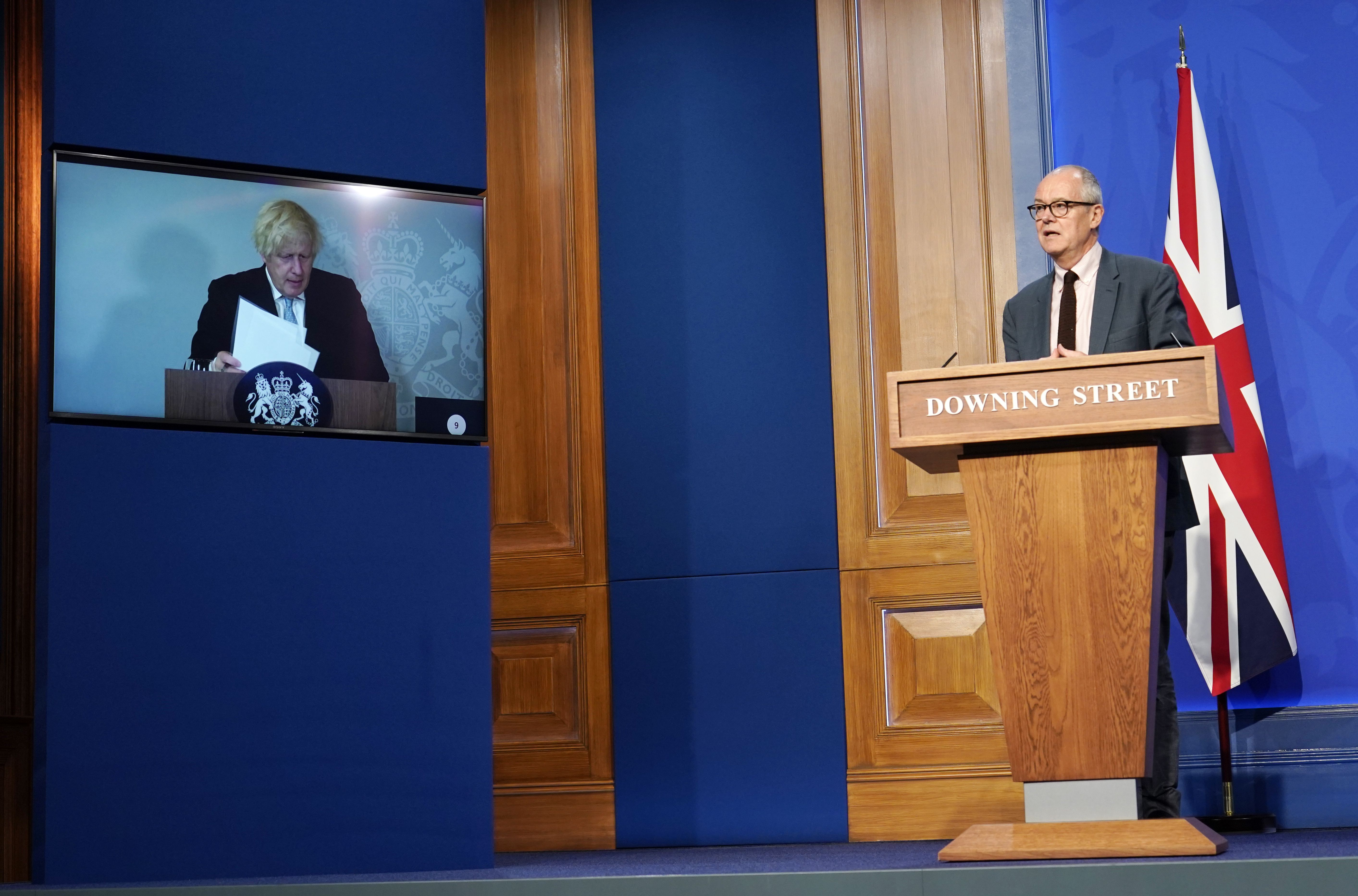
As he dialled in for the first time from Chequers for the event, he looked as remote from clear decision making as he was from the £2.6m briefing room itself.

After days of appearing to turn his public health policy into a giant shrug of the shoulders (“meh, a big wave was gonna happen sometime so why not now?”), the PM had one big, bold new announcement designed to show he wasn’t a let-it-rip, laissez faire leader after all.

Yes, from the end of September, nightclubs and other venues with large gatherings will be forced to turn away people who have not been double jabbed. But the very fact this mandatory measure was being delayed for more than eight weeks itself caused more confusion.

One one reading, this an extra incentive to young people to get double jabbed (turning Ibiza amber last week felt similar) so they can enjoy freedoms. Yet on another reading, it was actually an invitation to the under-30s to cram in as much clubbing as they can now, in turn spreading the virus and building “natural immunity” as well as vaccine immunity.

There’s certainly the whiff of incoherence about the PM’s policy making right now. Asked by The Sun to rule out needing to “produce papers” for a pint, he said “I certainly don’t want to see passports for pubs”. Yet within the same breath he added that in enclosed crowded places with close social contact (yes, that sounds like quite a few pubs) “we reserve the right to do what is necessary to protect the public”.

Similarly, vaccinations will be allowed for 12 to 16 year-olds if they or their parents are vulnerable, but not if (for example) their teachers are. And on the whole idea of compulsion, the government has already crossed the rubicon of forcing care staff to get the jab, while it only edges towards the idea for other settings.

On the very day that almost all restrictions were lifted in England, the requirements on travel were in some cases more draconian (as with arrivals from France). Double jabbed ‘critical workers’ will be allowed exemptions from having to isolate, with a negative PCR followed by daily testing. Yet a similar belt-and-braces regime was not employed for the “events research programme” for Wimbledon or Wembley finals.

As for mask-wearing, while the PM must be pleased Sadiq Khan and Andy Burnham are making it a condition of travel, there’s no real consistency. The Department of Transport’s permanent secretary Bernadette Kelly suggested people travelling from England to Scotland would have to put their masks on, just as people arriving on a train in London would need one for the Tube. Well, spoiler alert: they’re not. 

I travelled by train to and from the capital on Monday, and there was a marked increase in non-mask wearing. Way back in spring 2020, before the first lockdown, Chris Whitty said the pandemic would bring out extraordinary “acts of altruism”, but it seems the 30% (in recent polls) who won’t wear face coverings now have altruism fatigue. 

And those numbers may grow as others will ask themselves why they should bother if others aren’t. As Prof Graham Medley pointed out last week, there’s literally no point in having a mask-wearing regime where a substantial chunk of the population rejects it. Even when mask wearing was a legal requirement, transport and supermarket staff almost never enforced it, so that’s hardly going to happen now.

In some ways, mask-wearing and even working from home are beside the point, though. What really suppresses a Covid case curve is a curb on people meeting indoors. When I asked Jonathan Van-Tam today what measures he’d reintroduce if the NHS was at risk again, he said “close contact indoors” would be his target. The public may be baffled by mixed messaging but it seems the only language the virus understands is a lockdown of one kind or another.

Johnson’s Covid confusion – over whether he wants to offer carrots or sticks, whether he want compulsion or vigorously opposes it, whether pubs are the Englishman’s last liberty or even they are subject to ‘pint passports’ – seems as endemic now as the virus itself. On the one hand the PM backs isolation by App ‘ping’ to restrict the spread of Covid, yet on the other hand he seems resigned to the spread itself.

The best reason for the July 19 unlockdown’s timing is clearly the looming school holiday firebreak. And we had better hope that Sir Patrick Vallance was right when he said August should see a plateauing or even cases “coming down by September”. But it would help if the PM made up his mind about whether he wants those infections, injections or both.

Share Button

The PM Predicted The Case Curve, But Will He Carry The Can For July’s Covid Chaos?

You’re reading The Waugh Zone, our daily politics briefing. Sign up now to get it by email in the evening.

Predictions in politics are a dangerous game, as everyone has hopefully learned in recent years. But predictions in pandemics can be uncannily accurate, and today’s latest figures on the number of Covid cases in the UK are bang in line with forecasts.

The 51,870 cases recorded on Friday bear out Boris Johnson’s own sombre warning just under two weeks ago. “We are seeing cases rise fairly rapidly,” he told us. “There could be 50,000 cases detected per day by the 19th.”

Of course our fantastic vaccine rollout means the key chart to watch is the number of hospitalisations. But the number of infections (cases) is now close to outstripping the number of injections (jabs). And while hospitalisations are nowhere near the levels of January, they are still very concerning. 

On Thursday, Chris Whitty said those hospital admissions were doubling every three weeks and could hit “scary numbers” soon. Well, as self-styled ‘Covid centrist’ maths prof Oliver Johnson points out, we are now looking at a doubling of hospitalisations every two weeks. Which is scary indeed.

For some, July 19 is a distraction from the fact that most of the damage was done several weeks ago. It’s arguable that if the borders had been closed earlier to India, the UK would have bought time to get to mid-September with every adult double jabbed and case still low. Labour has yet to convince the public of that so far.

The key thing is that Whitty and chief scientist Patrick Vallance have given their blessing to the Monday’s unlocking, albeit with the need for strong warnings for the public not to ditch masks or working from home. Moreover, NHS England’s medical director Stephen Powis recently gave the PM a dose of political inoculation by saying the NHS could cope even with this third wave.

It’s the sheer number of forced isolations from the NHS App that is really causing a headache for No.10. With soaring numbers of schoolchildren, factory and health workers ordered to quarantine, the trigger appy virus is disrupting the economy and education. 

The school holidays offer some respite but with cases and isolation on track to keep soaring, even summer breaks within the UK will be cancelled. Overseas trips look iffy too. It all went Pete Tong for young people banking on a Balearic beat this week, as Majorca and other islands were put back on the government’s amber list.

Tonight’s news that double-vaccinated British travellers returning from France will still face a 10-day quarantine from Monday will add to the gloom.

The armed forces are among the latest casualties, with 5,200 personnel “pinged”. But most importantly of all, some hospitals are now on their knees because of Covid admissions but because of NHS staff (most of whom were double jabbed ages ago) told to isolate after contacts with others. 

Although there has been talk about exempting staff if patient care is at risk, no hospitals have been sent explicit guidance on those lines. The Royal College of Anaesthetists and the Faculty of Intensive Care Medicine today urged an exemption, but their sense of urgency is so far not matched by any government announcement.

Lots of people would like to bring forward the August 16 date when double-jabbed people can avoid self-isolation if they test negative. Yet it’s worth remembering that the very reason that date was pencilled in was because of fears of a lack of PCR tests to cope. That fear was made real this week as many areas simply ran out.

Test and Trace’s lack of capacity, given the many billions spent on it, could end up being the real cause of a ruined summer, not just for the double jabbed but also those who end up with long covid or worse. Commons science and tech committee chairman Greg Clark tells me on this week’s Week In Westminster (aired on Saturday) that the latest blunder is unacceptable. 

With Dido Harding no longer around to blame, will ministers start pointing the finger at her replacement Jenny Harries? Or will they perhaps take on some of the responsibility themselves?

With some MPs and staff pinged in recent days (the Press Gallery too, my own office was officially ‘closed’ with Covid today), SW1 is not immune from the “pingdemic” either. Given all the disruption, it will look rather odd next week if MPs cram into the Commons chamber hugger mugger, simply to give Boris Johnson a rousing send-off at the last PMQs before recess. 

The current disruption was not just predictable, but predicted. That doesn’t make it any less painful politically, even with the backing of the scientists. Claiming the mantle of Captain Foresight may therefore backfire on the PM, if the public abandons the forgiving mood it has held to date.

All it takes is for one minister to blurt out that a certain number of long Covid cases or even deaths were ‘a price worth paying’ for wider immunity, and it could be a cruel, cruel summer indeed.

Share Button

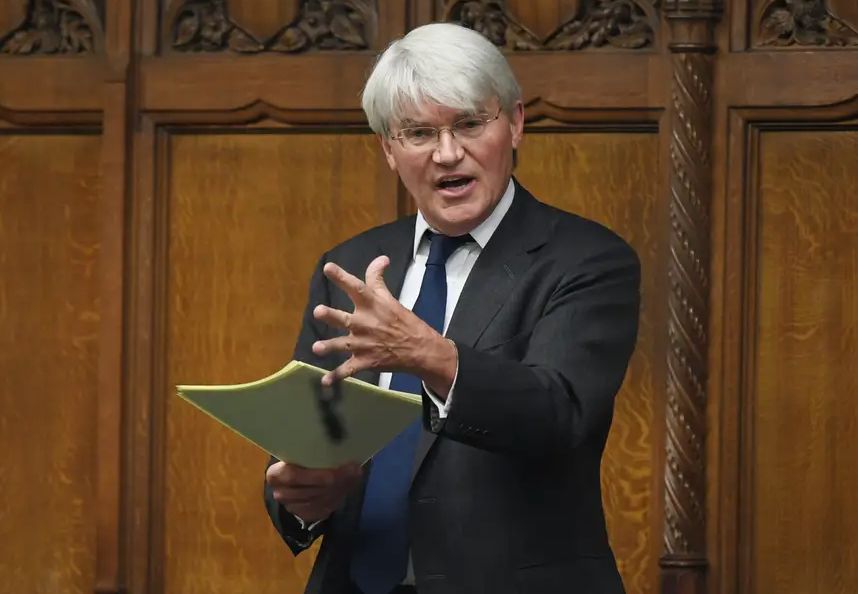
Some Tory MPs Backed Aid Cut After ‘Smell Of A Job’, Says Andrew Mitchell

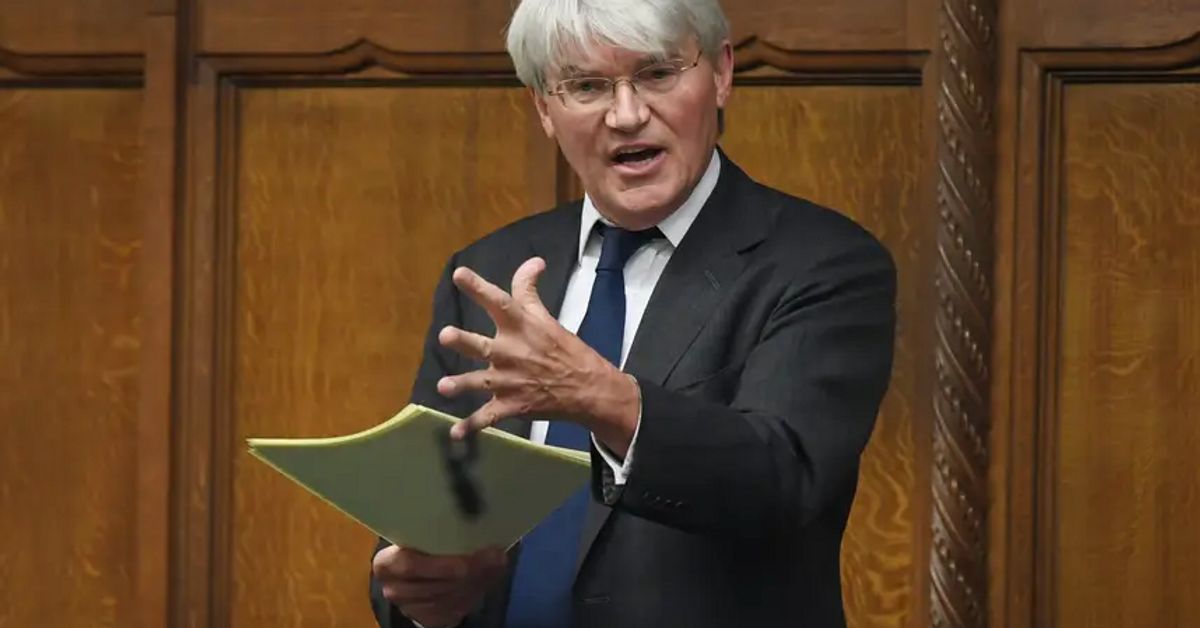
Some Tory MPs who voted to cut the UK’s aid budget, which will take “food off the plates of starving children”, did so because they were given the “smell of a job” in government, Andrew Mitchell has said.

On Tuesday Boris Johnson saw off a Tory rebellion over its decision to slash overseas aid spending from 0.7% to 0.5% of gross national income.

In an interview with HuffPost UK’s Commons People podcast, Mitchell, a former Conservative international development secretary, said the cut would do “great damage” to the party’s electoral chances.

Mitchell praised the 25 Tory MPs who voted against the government as “heroes” after they “stood firm and stood up for Britain’s international reputation” and “for the poorest people in the world”.

But he accused many of the backbenchers who had switched sides and voted with the government as having been won over by the “seduction” of career advancement.

“Some of them agonised,” he said. “Some of them just slipped away and hoped no one would notice.”

Mitchell, who was also previously Tory chief whip, said: “I‘ve been poacher and gamekeeper.

“You prey on the frailty of human nature, you offer people who you know whose principles will be overridden if they have the smell of a job.

“I think countless new ministers for paperclips will no doubt shortly be announced.”

He added: “You prey on people’s insecurities and you know what people’s weaknesses are and that’s how you get the others on board.”

Mitchell said the cut in aid spending meant the UK had “broken our word” to the world.

“We’ve trashed Britain’s reputation,” he said. ”Literally taking food off the plates of starving children. 

“After the war, Britain kept rationing so the famine would not develop and take off in Germany. That’s what Britain is like, after a war.”

Mitchell also warned that as well as having a severe impact on the world’s poor, the move would also hurt the Tories in the polls.

“It will do great damage to the Conservative Party,” he said.

“David Cameron taught us that you don’t get an overall majority, and the Tories didn’t get an overall majority between 1992 an 2015, without being a broad church,” he said.

“Why did we get a majority in 2015? Because we won all those Lib Dem seats.

“Why did we win them? Because socially liberal conservatives, like me, care a lot about this and they felt it was safe to vote for David Cameron’s Conservative Party. 

“They felt comfortable and happy in the Conservative Party. Many of those people won’t feel like that after what has now happened.”

He said: “Boris has been brilliant at adding on the red wall seats and it’s produced some extremely able new colleagues. He has done very well on expanding the Tory DNA in that respect.”

But Mitchell added the party had to be careful not to “lose off the other end” of vot that “won’t be voting for a party” that cut aid when it “didn’t have to”.

Share Button

Will Boris Johnson Ever Admit That ‘Levelling Up’ Is A Soundbite In Search A Policy?

Last year, a former minister confided to me that when he road-tested Boris Johnson’s “levelling up” catchphrase among his constituents, one voter replied with the immortal words: “You mean the potholes?”

So perhaps it was fitting that when the PM tried to explain the concept, his speech was as rutted and cratered as a Mexican ringroad. Full of policy holes and bumpy, meandering stretches, Johnson’s address to the bewildered audience in Coventry was a journey without a destination.

Of course, one very simple interpretation of levelling up is the idea of spending more cash in areas outside London. One of Dominic Cummings’ main achievements in his time in office was persuading the Treasury to rewrite the so-called ‘green book rules’ to allow investment in less affluent places.

The old idea that “investment should always follow success” was indeed ridiculed by the PM as he vowed to tackle towns and cities in decline. But the most notable Cummings influence on display on Thursday was the sheer stream-of-consciousness verbiage deployed. At 4,272 words, the speech made a Cummings blog look the acme of brevity.

In a genuine service to the nation, the Downing Street website published what it described as the “transcript of the speech, exactly as it was delivered”. Listening to it was one thing, seeing it written down in black and white confirmed its long and winding mode. One sentence lasted a full 210 words, and felt longer than the sentence hardened criminals get for armed robbery.

The word blizzard, which whooshed or lulled according to the PM’s mood, seemed designed to bury the fact that there was not a single new definition of what is meant to be the defining policy of his premiership. As for hard cash, the only fresh money was £50m so that “ultimately” (key word that) no one will be more than 15 minutes from a football pitch.

Former No.10 adviser Tim Montgomerie put his finger on the problem earlier this year when he revealed that post-election conversations about levelling up were “vacuous” because no one could “convert a soundbite that tested well in focus groups into something real”. When pressed on Thursday, Johnson admitted he so far only had “the skeleton of what to do”. Dem bones, dem bones, dem dry bones, indeed.

And whenever Johnson has little to say, the gags are always a giveaway. One section of the speech about Heinz investing in Wigan seemed exclusively inserted to tee up a joke about “the magic sauce – the ketchup of catch-up”. Yet it was a punchline in place of a policy, because that key ingredient of levelling up turned out to be “leadership”.

And in true Johnsonian fashion, the key test wasn’t of his own leadership but that of local politicians. They would determine the success of his flagship idea and it was their job to really define levelling up through their actions, he suggested. Reheating old plans to give county councils “metro mayors” like those in big cities, it was devolution but not as you know it.

Featuring another shot in the culture war (“loony left” councils would not get more powers), it felt like an olive branch to southern Tories worried about planning reforms, with the promise of becoming shire versions of Andy Burnham or Sadiq Khan.

He didn’t sound like he was backing down on housing zones, but instead telling the Blue Wall “if you can’t beat em, join em”. The catch was that No.10 would still hold all the cards and decide what made a deserving case.

The fundamental problem with all of the mayoral innovations to date has been their dependence on London for funds, and a very limited ability to raise funds themselves. That was underlined when Johnson joked that even Tory mayor for the West Midlands, Andy Street, couldn’t “extort massive cheques” from the Treasury at will.

We were promised a White Paper on levelling up later this year, but it appeared that the PM wants local politicians to really do the heavy lifting. Just as he has outsourced public health policy on Covid through the mantra of “personal responsibility”, he felt like he was devolving outside government the future blame for any fudge or failure of levelling up.

He may prove the doubters wrong with some detailed, coherent and costed plans later this year. But if progress is slow and unmeasurable, it is likely to be someone else’s fault.

And the way the PM disowned any role in Conservative austerity that some feel has really crippled the regions over the past decade, the way he talked of his “outrage” that life expectancy was inexplicably higher in Hampshire than in Blackpool, suggests someone determined to say “it wasn’t me”.

Share Button

Can Boris Johnson Bridge The Gap Between The Tories And The England Team?

You’re reading The Waugh Zone, our daily politics briefing. Sign up now to get it by email in the evening.

It was Wednesday, just after noon and, in an imposing building overlooking the Thames in Westminster, the questions on football and racism were coming thick and fast.

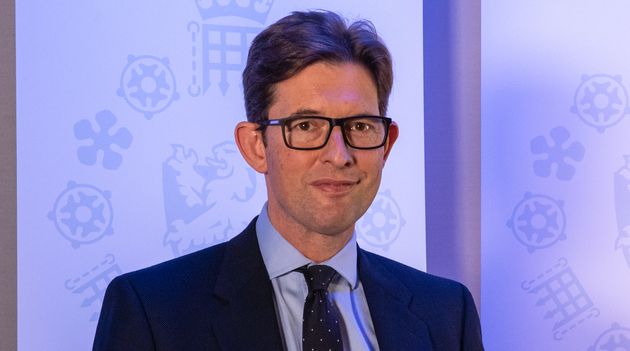
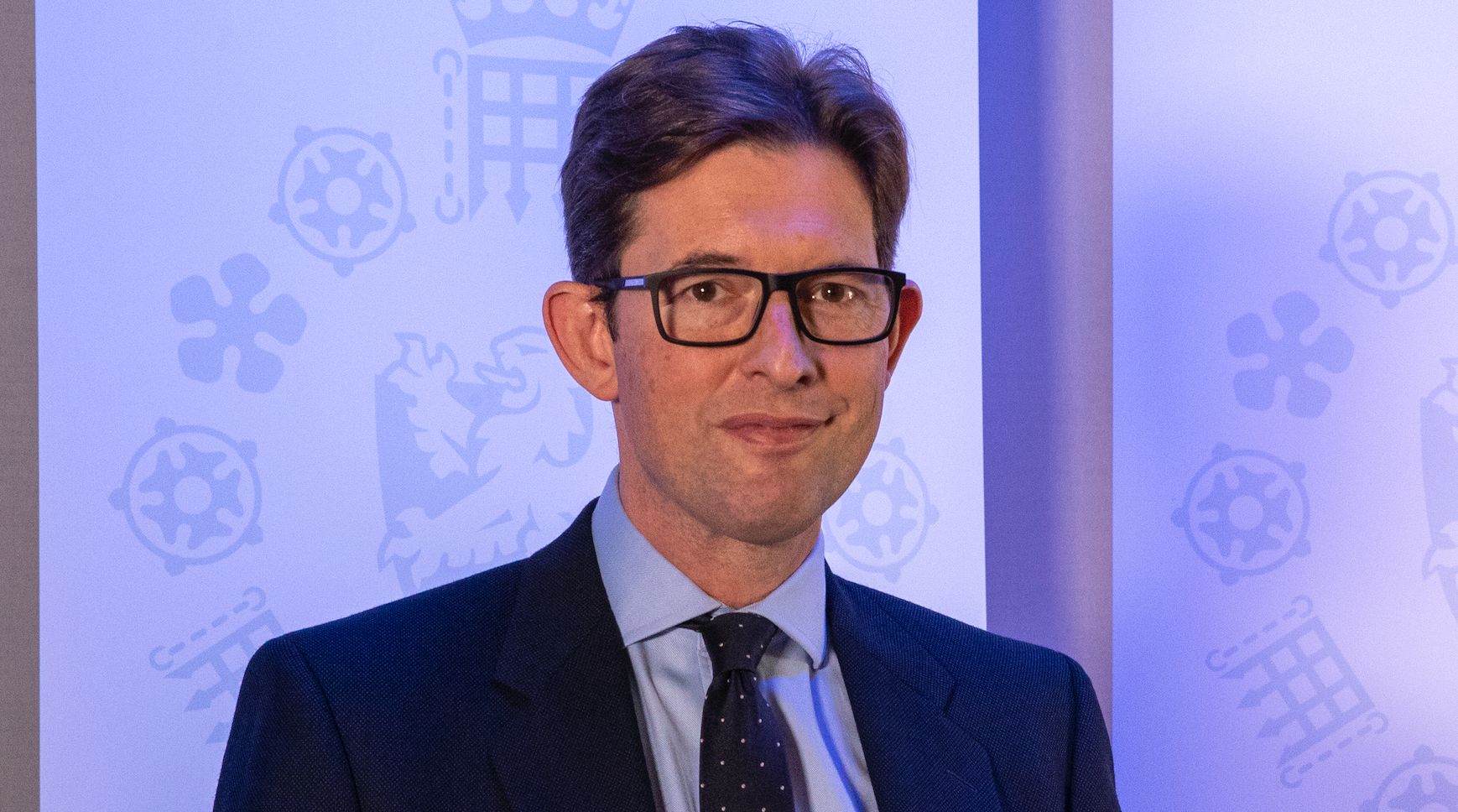
But the venue was not the House of Commons and the speaker was not the prime minister. In the fortified bowels of MI5’s Thames House HQ, director general (aka the ‘DG’) Ken McCallum was answering queries from the media, including yours truly.

Whereas PMQs thrives off the bearpit jeers and cheers, DGQs is an altogether more sober affair, befitting its annual rather than weekly schedule. Yet when McCallum was asked about the problems of online extremism and the impact on young black men in the national team, he sounded more eloquent than many politicians.

At almost exactly the same moment that Boris Johnson was squirming under Keir Starmer’s prosecutorial glare, the domestic spymaster was unambiguously praising the England football team for their conduct over the past few weeks.

And he explicitly compared his own behind-the-scenes team with the one that performed on Europe’s biggest stage last weekend. “As I watched the penalty shootout on Sunday night,” he said, “I was very aware that I’ve got experience, MI5 has got experience, of watching capable, brave young people of all races, giving their all for their country.”

He went on to say that racism was strongly associated with extreme right wing terror groups whose activity has in recent years become a daily, significant part of his agency’s work. And he clearly meant it when he declared: “I’m proud of many of the people in MI5 today, working to deal with the terrorist threat that is fuelled in important ways by toxic racism”.

Even the most determined culture warrior would find it difficult to argue that McCallum, the youngest DG in the agency’s history, is some kind of “woke” Marxist. The Security Service, just like the England football team, benefits from diversity in a very practical sense as well as a symbolic sense. Looking like the nation it serves is a necessity, not ‘PC gone mad’.

But the contrast between the ease with which McCallum spoke about race, and the discomfort of the PM on the same topic just a few hundred yards away, could not have been more stark.

As Starmer marshalled the evidence of senior ministers’ mixed messaging on booing players who ‘take the knee’, Johnson could tell his usual “vaccines-vaccillation-remoaner” distraction technique wouldn’t work.

With Priti Patel having said booing the team was “a choice”, with No10 having said the PM “fully respects” the right of those booing to “make their feelings known”, even the later U-turn was too late to use as a defence. The real problem was that Johnson resembled the wonky trolley of Dominic Cummings’ image.

Drawing a culture war dividing line only works if you don’t keep hopscotching over it yourself. Put another way, “wedge” issues (as the Americans call them) are a bit pointless if they end up giving the instigator a political wedgie (as we British would call it). If they noticed at all, the minority of voters who think booing is ok may have been simply been confused by the PM’s shifting stance.

He did have one concrete policy announcement in his back pocket, namely extending football ground banning orders to be triggered by online as well as offline offences. Yet even that welcome development was obscured by the bigger row over the gulf between the Tory party and the England team.

And when a Tory MP heckled that footballer Tyrone Mings was a “Labour party member” they managed to undermine rather than help the PM’s case (“I do not want to engage in a political culture war of any kind”). Aside from anything else, failing to praise working class black and white kids who go on to become self-made millionaires sounds a strangely un-Tory thing to do.

With key ministers attacking footballers for “gesture politics”, why would any player want to take part in the real gesture politics of visiting No.10 in future? If the whole booing issue and taking the knee issue had not been weaponised by some ministers, Johnson could even have said his own cabinet team mirrored the diversity of the England team and was stronger as a result.

Perhaps the most revealing remark of the week however came not in PMQs but in Tory backbencher Natalie Elphicke’s private message to colleagues: “They lost – would it be ungenerous to suggest Rashford should have spent more time perfecting his game and less time playing politics.”

Note that Elphicke didn’t say “we lost”, she said “they lost”. Despite her subsequent apology, that word “they” was possibly as damaging to the Tory brand as any explicit racist epithet could have been. It exposed a gap between some in her party and the national team in a brutal fashion, just when any normal politician would want to celebrate their achievement.

It’s that gap, which is implicitly also a gap between a party and the public, that worries some Conservatives dismayed by the culture war rhetoric. It’s also why any future visit to No.10 of the England team (to promote our World Cup bid, for example) is now freighted with tension. Maybe MI5 down the road could act as a neutral venue.

Share Button

Public Should Treat Foreign Spy Theat As Seriously As Terrorism, MI5 Chief Warns

HuffPost UK

Ken McCallum MI5 Director General

The public should be as vigilant about the threat of foreign spies as they are about terrorism, MI5 director general Ken McCallum will warn today.

Giving his annual threat update, the intelligence chief will urge Britons to build up the same resilience and awareness of hostile state agents as they have been with Islamist or IRA terrorists.

In the update, the second since he took over the Security Service in April 2020, McCallum will challenge the assumption that the impact of hostile activity is felt only by government, institutions or named individuals.

His speech at MI5’s HQ in Thames House, London, will underline research showing that there have been 10,000 “disguised approaches” from foreign spies to British individuals – particularly researchers in universities or hi-tech companies – over a five year period.

China is understood to be at the forefront of attempts to use networking sites like LinkedIn to make contact with unsuspecting individuals, befriending them in an effort to gain access to research or other valuable information.

The spy chief will warn that the “consequences range from frustration and inconvenience, through loss of livelihood, potentially up to loss of life”.

“We must, over time, build the same public awareness and resilience to state threats that we have done over the years on terrorism,” he will say.

McCallum will explain why the British public are not immune to the tentacles of hostile activity and outline how the constant undercurrent of these actions show why they should care about the covert activities of certain foreign states.

Calling out the pervasive risks from espionage, disruptive cyber-attacks,
misinformation and interference, the Director General will confirm that “we have
seen over 10,000 disguised approaches from foreign spies to regular people in
the UK, seeking to manipulate them.”

“UK victims of state espionage range way wider than just government. We see the UK’s brilliant universities and researchers having their discoveries stolen or copied; we see businesses hollowed out by the loss of advantage they’ve worked painstakingly to build.

“Given half a chance, hostile actors will short-circuit years of patient British research or investment. This is happening at scale. And it affects us all. UK jobs, UK public services, UK futures.

“To speak directly: if you are working in a high-tech business; or engaged in cutting-edge scientific research; or exporting into certain markets, you will be of interest – more interest than you might think – to foreign spies. You don’t have to be scared; but be switched on.”

To confront the threat, McCallum will call for a ‘whole-of-system response’, which includes increased public vigilance.

In the threat update, he will also address the current terrorism threat – including that in Northern Ireland.

He is expected to reference the withdrawal of UK forces from Afghanistan, comment on the scale of the threat from Extreme Right-Wing terrorism and emphasise the challenge posed to public safety by end-to-end encryption in apps such as WhatsApp.

Share Button

Face Masks Will Still Be Required On London Transport, Announces Sadiq Khan

Ian Forsyth via Getty Images

LEEDS, ENGLAND – MAY 19: Sadiq Khan, Mayor of London gives media interviews during a visit to the electric bus manufacturer Switch Mobility in Yorkshire on May 19, 2021 in Leeds, England. The visit comes to see the affects that green investment from Transport for London is having in different parts of the country. There are currently 67 Switch electric buses in operation in London’s London fleet, and Switch estimate that around 50 per cent of their revenue last year was from TfL contracts. (Photo by Ian Forsyth/Getty Images)

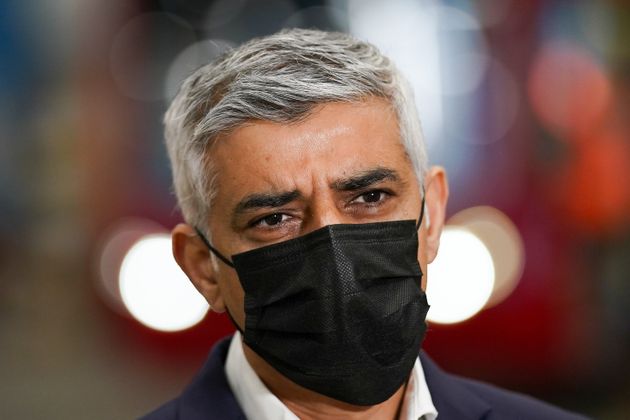
Face coverings will remain mandatory on London’s transport network including the Tube and buses after July 19, Sadiq Khan has announced.

The mayor of London has asked TfL to keep the rule in place when the national law is lifted.

Boris Johnson has confirmed most of the remaining lockdown rules, including the face covering law, in England will end on Monday.

While it will no longer be a legal requirement, the government has said people will still “expected” to wear masks in indoor enclosed spaces.

But Khan said the prime minister’s decision had “put Londoners, and our city’s recovery, at risk”.

“I’ve repeatedly made clear that the simplest and safest option would have been for the government to retain the national requirement for face coverings on public transport,” he said.

“This is why, after careful consideration, I have decided to ask TfL to retain the requirement for passengers to wear a face covering on all TfL services when the national regulations change.

Khan added: “By keeping face masks mandatory we will give Londoners and visitors the reassurance and confidence to make the most of what our city has to offer, while also protecting our heroic transport workers and those who may be vulnerable and rely on the network to get around our city.”

The mayor’s request means masks would remain mandatory on the Tube, buses, trams, the DLR, the Overground and TfL Rail services.

The government’s decision to scrap the face mask law has been criticised by Labour as well as many scientists. 

Keir Starmer, the Labour leader, has said the mask law should remain in place.

Graham Medley, the chairman of the Sage modelling subgroup Spi-M, told the BBC on Tuesday mask-wearing is only effective “if everybody does it”.

“I understand the government’s reluctance to actually mandate it. On the other hand, if it’s not mandated it probably won’t do any good,” he said.

In its most recent advice to ministers, published on Monday, Sage experts said a “very rapid” return by people to pre-pandemic behaviour would put the NHS under pressure.

“Maintaining interventions such as more people working from home, the use of masks in crowded indoor spaces, and increasing ventilation, would contribute to transmission reduction and therefore reduce the number of hospitalisations,” the scientists said.

In Scotland, Nicola Sturgeon has announced she will go ahead with plans to further ease coronavirus restrictions next week.

But she said face masks will likely remain for “some time to come”, as she claimed lifting all restrictions right now “would put all of us at greater risk”

Share Button