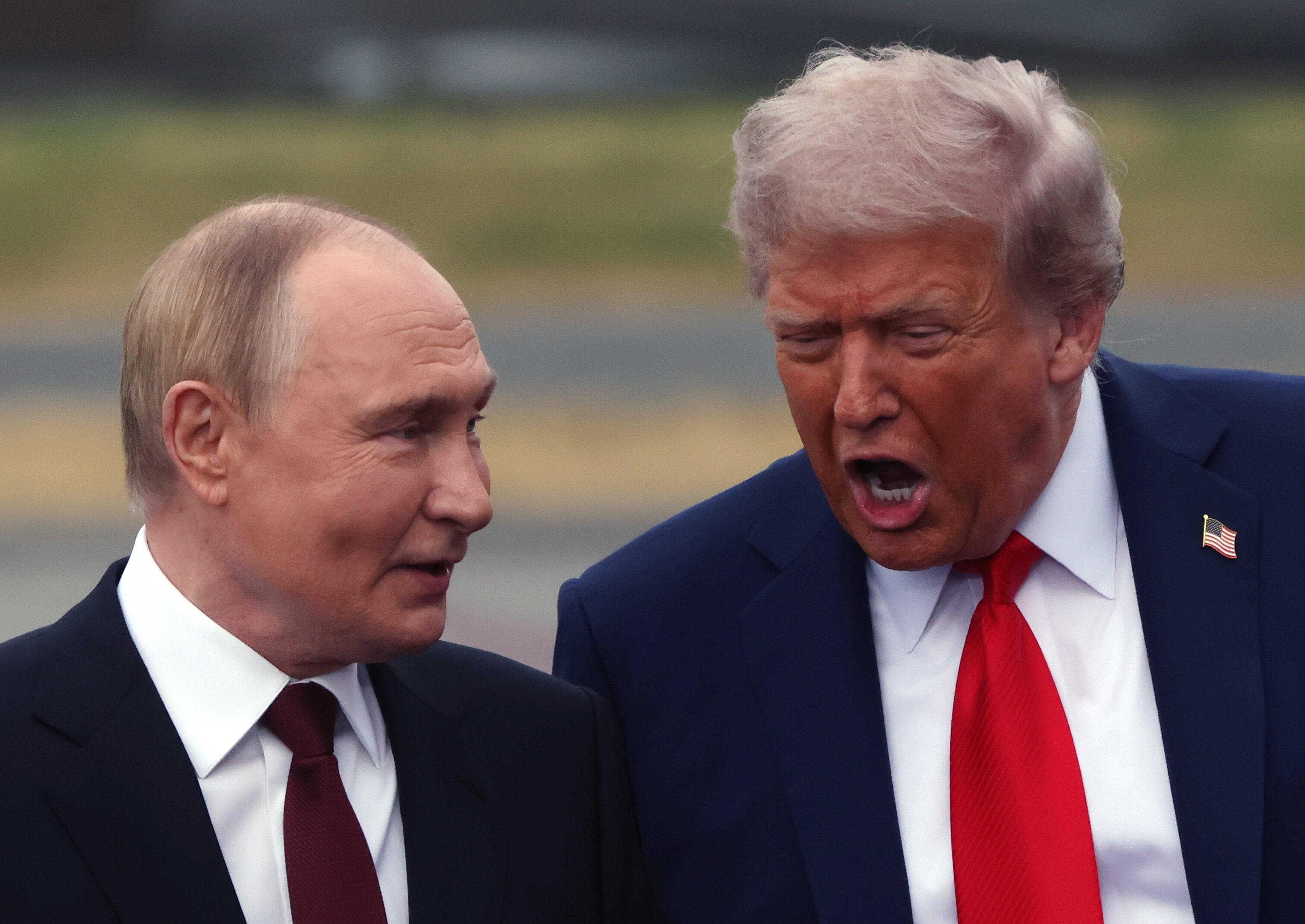
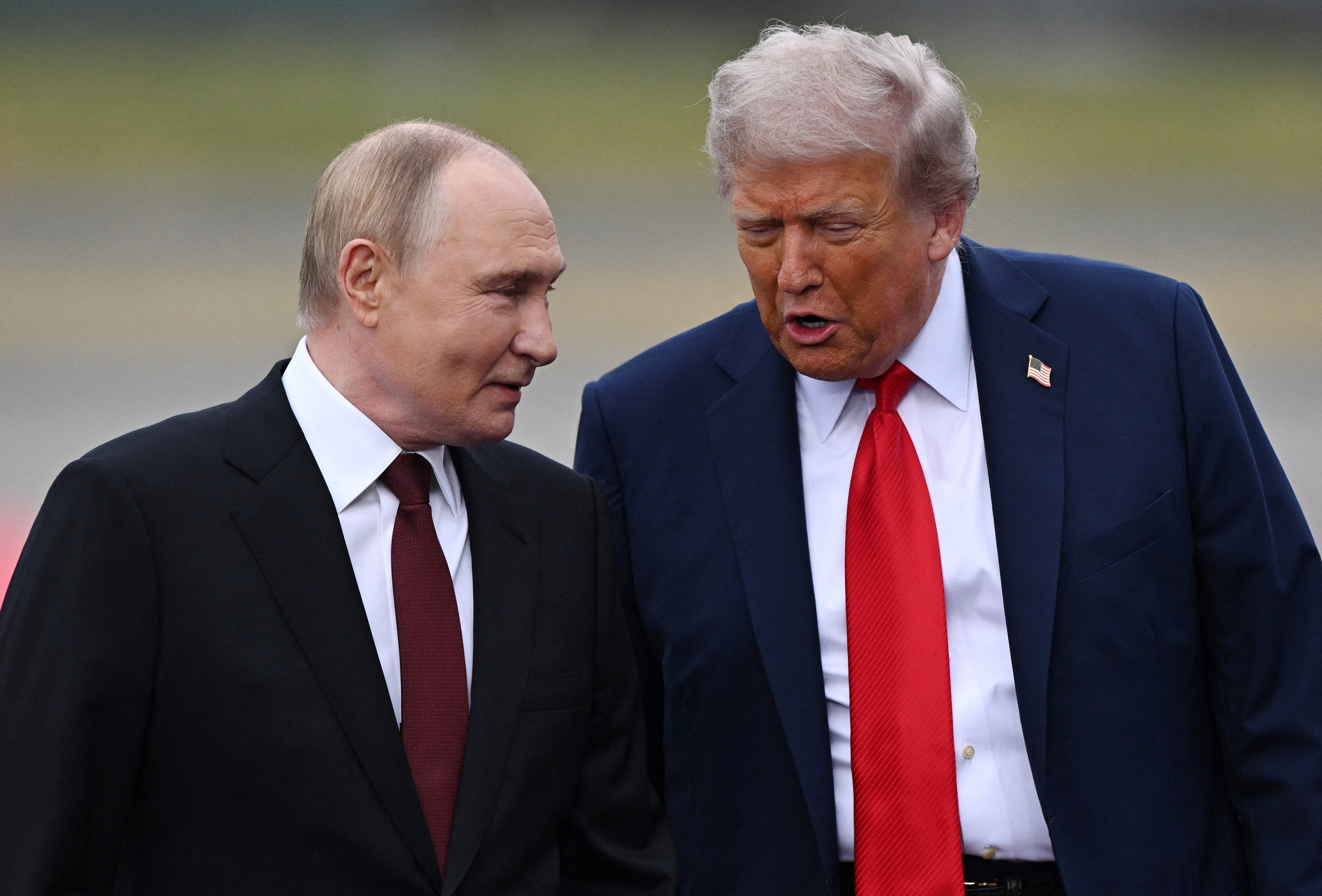
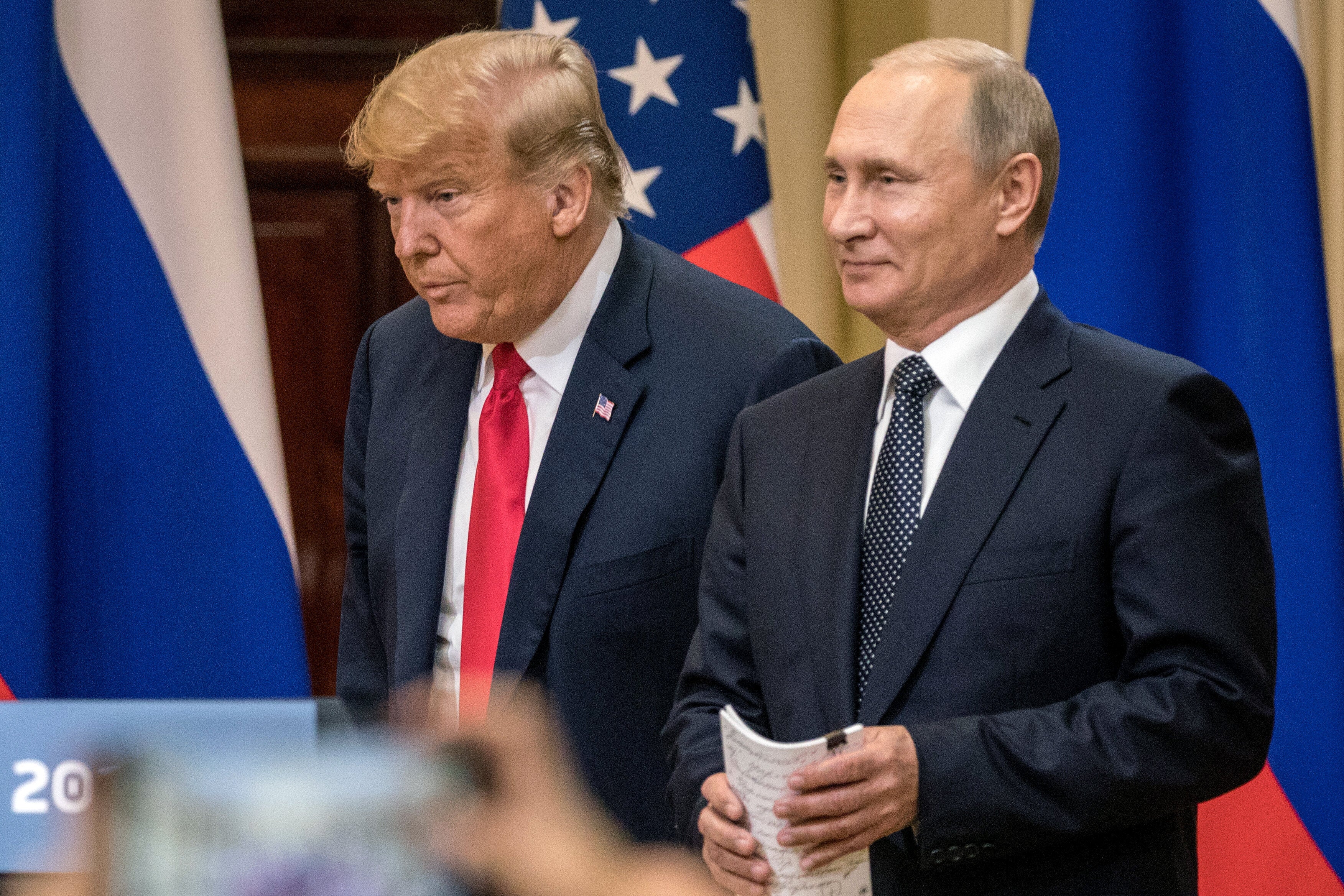
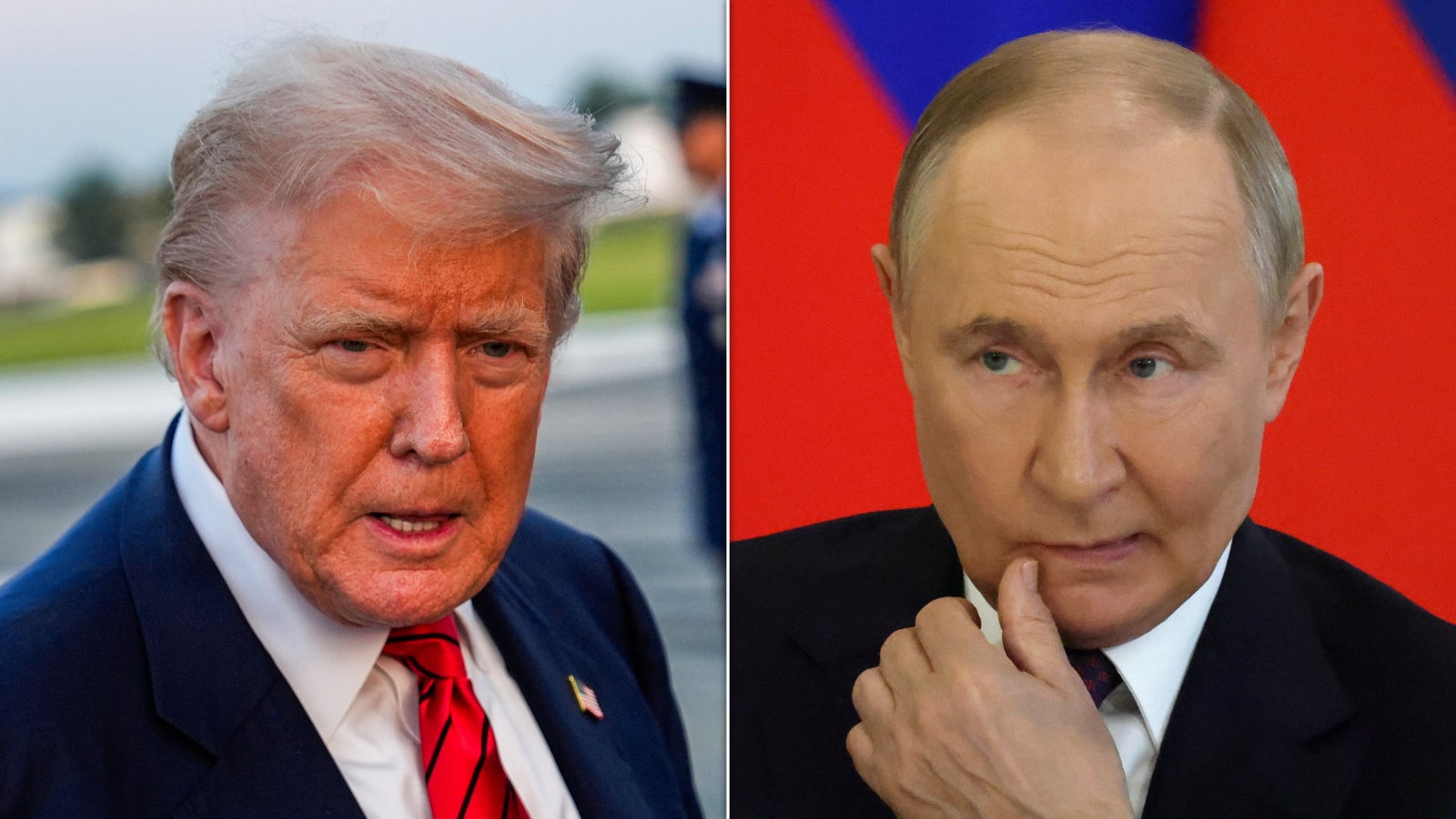
President Donald Trump late Tuesday published an ominous social media post that was directed at the strongmen leaders of Russia, China and North Korea ― who he has all previously lavished praise upon.
Trump appeared to accuse the authoritarian trio of plotting against the United States as China’s Xi Jingping, Russia’s Vladimir Putin and North Korea’s Kim Jong-Un buddied up in Beijing to mark the 80th anniversary of Japan’s surrender in World War II.
Trump, amid commentary that China may be seeking to wipe from history America’s role in helping to end the brutal conflict, fumed on his Truth Social platform:
“The big question to be answered is whether or not President Xi of China will mention the massive amount of support and ‘blood’ that The United States of America gave to China in order to help it to secure its FREEDOM from a very unfriendly foreign invader. Many Americans died in China’s quest for Victory and Glory.”
“I hope that they are rightfully Honored and Remembered for their Bravery and Sacrifice!” he continued. “May President Xi and the wonderful people of China have a great and lasting day of celebration.”
Then Trump darkly concluded:
“Please give my warmest regards to Vladimir Putin, and Kim Jong Un, as you conspire against The United States of America.”
The post came hours after Trump said he was “very disappointed in” Putin after their face-to-face talks in Alaska last month did nothing to end Russia’s invasion of Ukraine, which Putin launched in 2022.
After his highly criticised Alaska summit with Russian President Vladimir Putin ended without reaching a ceasefire agreement in the war in Ukraine, President Donald Trump now says he thinks it would be “better” if Putin and Ukrainian President Volodymyr Zelenskyy met without him.
Speaking on Wednesday on “The Mark Levin Show,” Trump made the statement despite claiming to conservative podcaster Mark Levin that he had “very successful” exchanges with both leaders.
Advertisement
“I had a very successful meeting with President Putin. I had a very successful meeting with President Zelenskyy. And now I thought it would be better if they met without me, just to see. I want to see what goes on. You know, they had a hard relationship, very bad, very bad relationship,” Trump said.
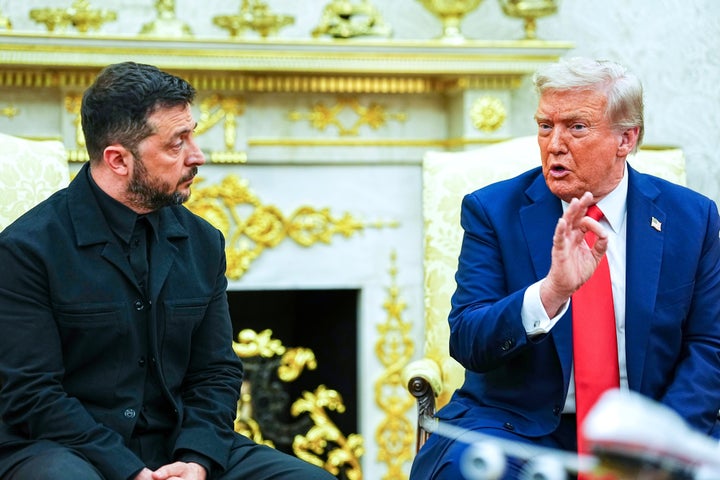
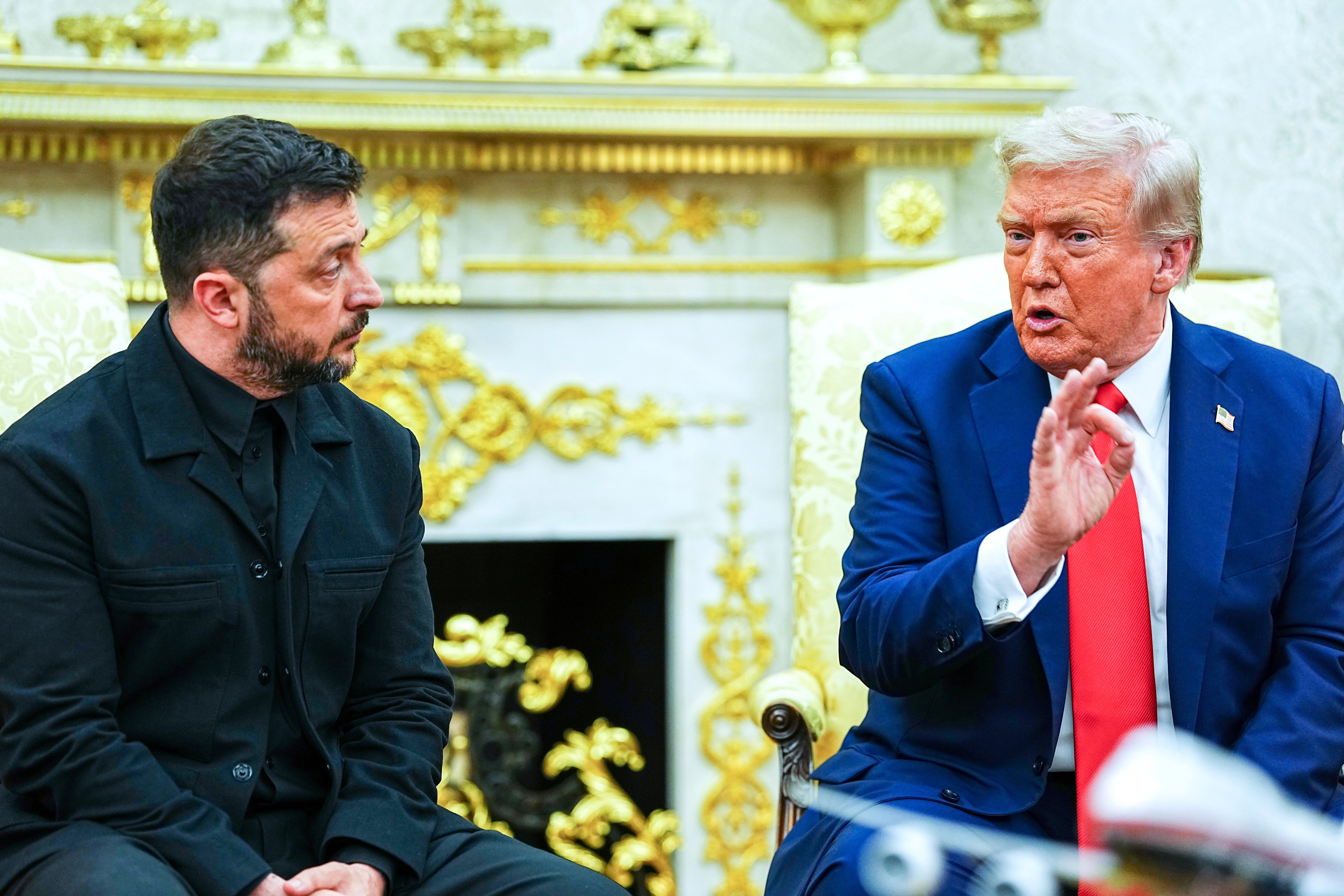
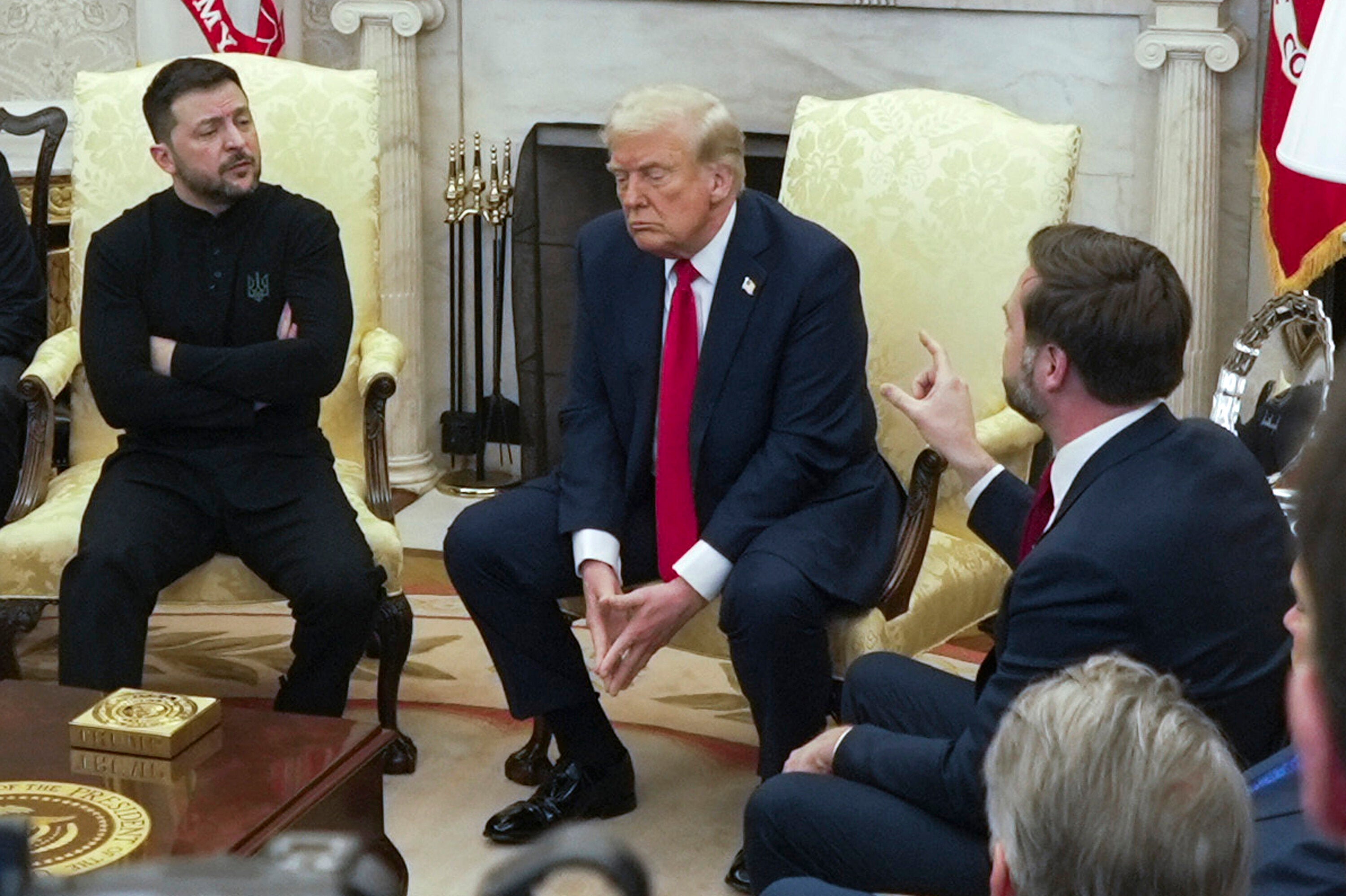
Ukrainian President Volodymyr Zelenskyy (left) and U.S. President Donald Trump during a meeting in the Oval Office of the White House on Monday.
Bloomberg via Getty Images
He continued, “And now we’ll see how they do and, if necessary, and it probably would be, but if necessary, I’ll go and I’ll probably be able to get it close.”
Advertisement
Trump went on to say that “they’re in the process of setting it up and we’re gonna see what happens,” adding, “But you gotta stop the killing, Mark, it’s too much killing.”
The president then said, “Nobody from America is being killed” in the war.
“United States soldiers aren’t involved,” he told Levin. “We have no boots on the ground, but when you lose 6,000, 5,000, 7,000 young people, and then you also lose some people from the towns and cities as missiles get lobbed into them, can you imagine living like that?”
Trump, who had a follow-up meeting with Zelenskyy and top European leaders in the Oval Office on Monday after Friday’s summit with Putin, made the comments after he announced plans to coordinate a summit between Putin and Zelenskyy in a bid to end the more-than-three-year war in Ukraine.
Advertisement
In a Truth Social post on Monday, Trump said he would also plan a trilateral meeting, in which he would take part, as a follow-up to a potential Putin and Zelenskyy meeting.
“At the conclusion of the meetings, I called President Putin, and began the arrangements for a meeting, at a location to be determined, between President Putin and President Zelenskyy,” Trump wrote. “After that meeting takes place, we will have a Trilat, which would be the two Presidents, plus myself.”
“The Fake News has been saying for 3 days that I suffered a ‘major defeat’ by allowing President Vladimir Putin of Russia to have a major Summit in the United States,” Trump wrote on Sunday evening in a Truth Social post that did not mention the outcome of the summit. “Actually, he would have loved doing the meeting anywhere else but the US, and the Fake News knows this. It was a major point of contention!”
Advertisement
Trump argued that his critics wouldn’t have been pleased even “if we had the Summit elsewhere” because “the Democrat run and controlled media would have said what a terrible thing THAT was.”
Claiming “these people are sick,” Trump transitioned into boasting about improving the crime in Washington, DC, and his efforts to “secure [the] Southern Border.”
“They even want CRIME IN D.C., and other BLUE Cities throughout our Country, but don’t worry, I won’t let that happen. Just like our now secure Southern Border (ZERO illegals in last 3 months!), our cities will be Secure and Safe, and D.C. will lead the way!”
Advertisement
The president followed up his lengthy comments by attacking Senator Chris Murphy (Democrat, Connecticut), who had slammed the Trump-Putin summit as an “embarrassment to the United States” Sunday while appearing on NBC’s Meet the Press.
“The very unattractive (both inside and out!) Senator from Connecticut, Chris Murphy, said ‘Putin got everything that he wanted.’ Actually, ‘nobody got anything,’ too soon, but getting close,” Trump wrote in a separate Truth Social post Sunday. “Murphy is a lightweight who thinks it made the Russian President look good in coming to America. Actually, it was very hard for President Putin to do so.”
Wrapping up his post, Trump also called out his former national security adviser John Bolton, who told CNN that Putin had “won the summit” over a “tired” Trump.
Advertisement
“This war can be ended, NOW, but stupid people like Chris Murphy, John Bolton, and others, make it much harder to do so,” Trump added.
U.S. President Donald Trump welcomes Russian President Vladimir Putin to Joint Base Elmendorf-Richardson on Aug. 15, 2025, in Anchorage, Alaska.
Contributor via Getty Images
Just minutes later, Trump directed his attention to Ukrainian President Volodymyr Zelenskyy, arguing that Zelenskyy could “end the war with Russia almost immediately if he wants to.” He then bashed former President Barack Obama.
Advertisement
“President Zelenskyy of Ukraine can end the war with Russia almost immediately, if he wants to, or he can continue to fight,” Trump wrote. “Remember how it started. No getting back Obama given Crimea (12 years ago, without a shot being fired!), and NO GOING INTO NATO BY UKRAINE. Some things never change!!!”
Trump’s slew of pointed posts aimed at his opponents didn’t stop there.
Just hours before he was scheduled to host Zelenskyy at the White House, Trump railed against “badly failing Radical Left Democrats.”
“I am totally convinced that if Russia raised their hands and said, ‘We give up, we concede, we surrender, we will GIVE Ukraine and the great United States of America, the most revered, respected, and powerful of all countries, EVER, Moscow and St. Petersburg, and everything surrounding them for a thousand miles, the Fake News Media and their Democrat Partners would say that this was a bad and humiliating day for Donald J. Trump, one of the worst days in the history of our Country,’” Trump wrote in a Monday Truth Social post.
Advertisement
He added: “But that’s why they are the FAKE NEWS, and the badly failing Radical Left Democrats. Thank you for your attention to this matter!!!”
Minutes later, Trump claimed in a post that the “Russia/Ukraine MESS” is “Sleepy Joe Biden’s war, not mine,” adding, “ I’m only here to stop it, not to prosecute it any further. It would have NEVER happened if I was President.”
Elsewhere in the post, Trump claimed that The Wall Street Journal and “many other” news outlets “don’t have a clue” about the number of conflicts he’s resolved since his second term began.
Advertisement
“I’ve settled 6 Wars in 6 months, one of them a possible Nuclear disaster, and yet I have to read & listen to the Wall Street Journal, and many other who truly don’t have a clue, tell me everything that I am doing wrong…”
Trump’s meeting with Zelenskyy in the Oval Office on Monday marks the Ukrainian leader’s first White House visit since the two had a highly contentious meeting in February.
Meanwhile, Zelenskyy praised Trump’s strength in a post on X, formerly Twitter, on Monday morning ahead of their meeting.
Advertisement
“We discussed the battlefield situation and our strong diplomatic capabilities – Ukraine’s and all of Europe’s together with America,” he wrote. “Russia can only be forced into peace through strength, and President Trump has that strength. We have to do everything right to make peace happen. Thank you!”
President Donald Trump on Sunday really reached to criticise outlets for their coverage of his peace talks with Russian President Vladimir Putin.
“If I got Russia to give up Moscow as part of the Deal, the Fake News, and their PARTNER, the Radical Left Democrats, would say I made a terrible mistake and a very bad deal,” he wrote on Truth Social. “That’s why they are the FAKE NEWS!”
Trump also said on Truth Social Sunday that an announcement on “BIG PROGRESS” in the negotiations was forthcoming, but some observers were still cracking wise over his sarcastic Moscow gripe.
“I get along with Zelenskyy, but, you know, I disagree with what he’s done, very, very severely disagree. This is a war that should have never happened,” Trump said at a White House press conference of Ukraine’s president, Volodymyr Zelenskyy, and his recent statement that he cannot legally cede territory.
Advertisement
“I was a little bothered by the fact that Zelenskyy was saying, ‘Well, I have to get constitutional approval,’” Trump said. “I mean, he’s got approval to go into war and kill everybody, but he needs approval to do a land swap because there will be some land-swapping going on.”
Trump announced last week he would host a meeting with Putin in Alaska to broker a peace agreement, and his comments to reporters Monday are the most detailed about his view of what needs to happen to persuade Putin to end the war.
His insinuation that Zelenskyy was somehow to blame for Putin’s invasion was a repeat of his attacks on the Ukrainian president during his Oval Office visit in February.
Advertisement
“What you’re doing is very disrespectful to the country, this country,” Trump told Zelenskyy then. “You’re not winning this. You have a damn good chance of coming out OK because of us.”
Six weeks later, Trump outright blamed Zelenskyy for starting the war. “You don’t start a war with someone 20 times your size and then hope people give you some missiles,” he said in an Oval Office photo opportunity with Salvadoran president Nayib Bukele.
Trump called the coming summit a “feel-out meeting” and that he would afterward call Zelenskky and America’s NATO allies in Europe, who have since the 2022 invasion been eager to counter Russia and help Ukraine and even more so since Trump returned to office in January.
Advertisement
He added that his discussions with Russia and others led to his belief that Ukraine would have to give away land to end the war. “I know that through Russia and through conversations with everybody,” Trump said.
Trump’s special envoy, his friend from New York real estate days Steve Witkoff, met with Putin last week and apparently misunderstood what Putin was saying. Witkoff reported back that Putin was willing to give up two Ukrainian regions and keep a third, when in fact Putin’s offer was to hang on to all three in return for stopping his attacks.
Trump on Monday also repeated his lie that the US under former President Joe Biden had given far more help to Ukraine than had Western Europe. “Biden approved $350 billion. Europe has spent $100 billion,” he said.
Advertisement
In reality, Europe has provided more assistance to Ukraine from the start, both in weapons and economic help.
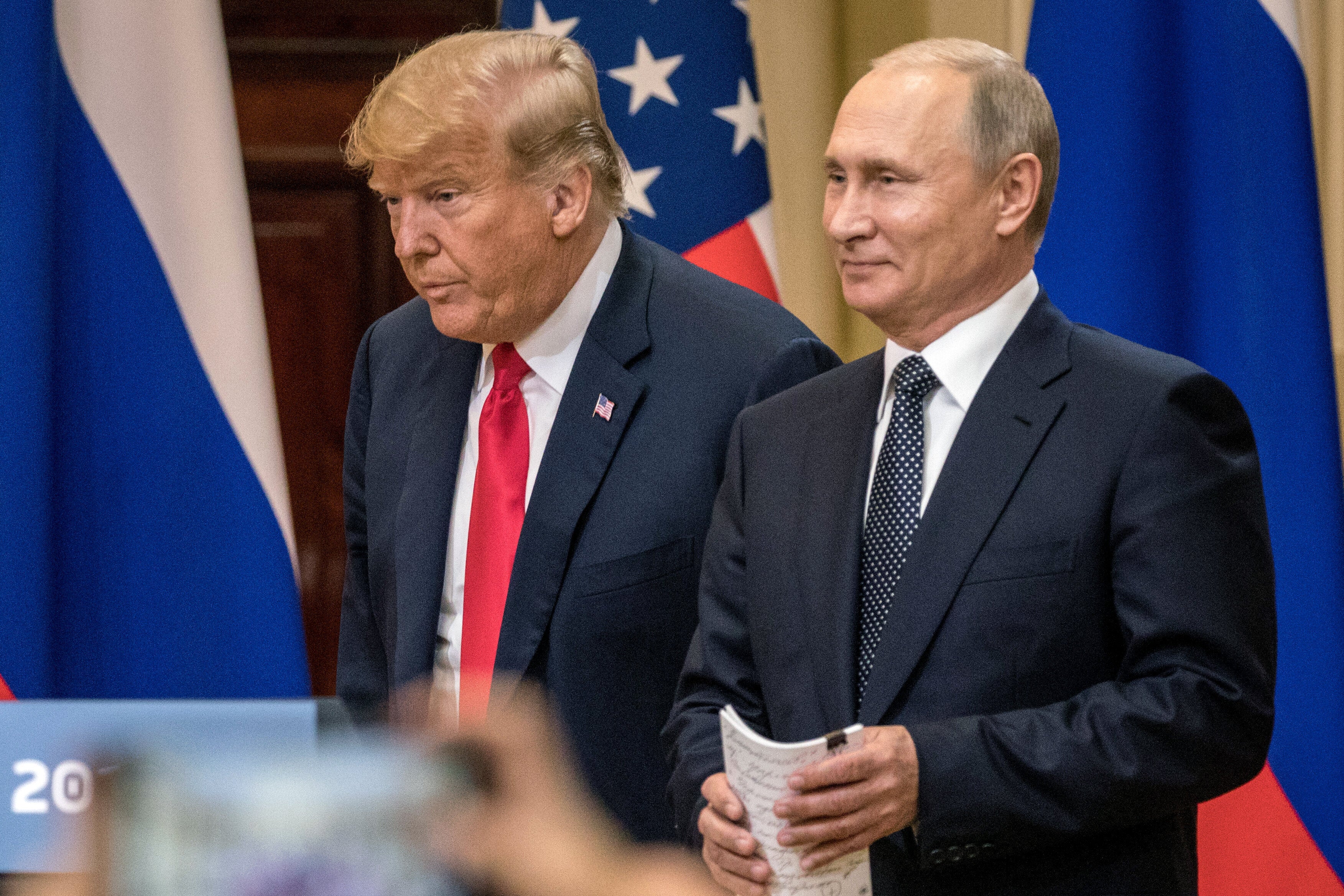
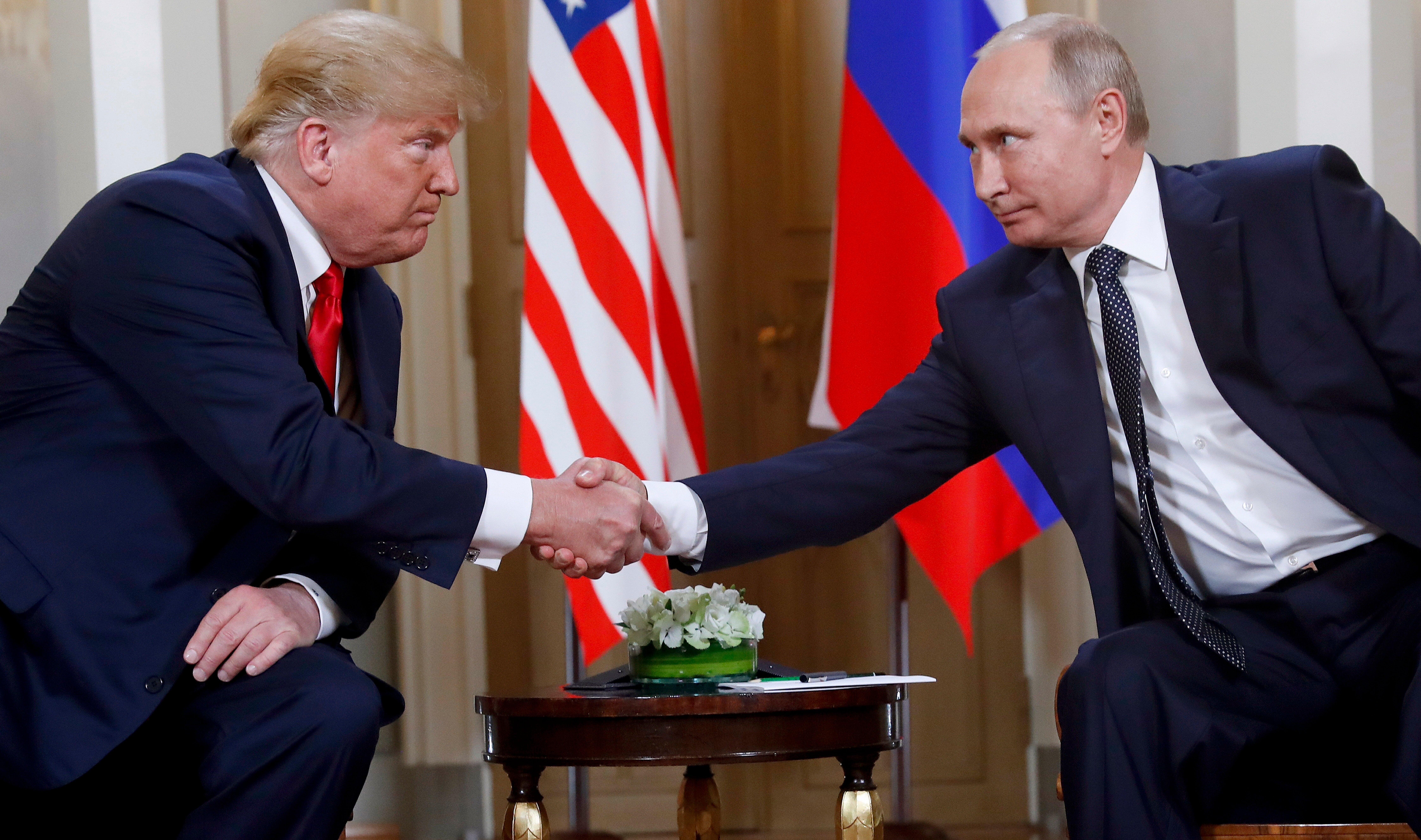
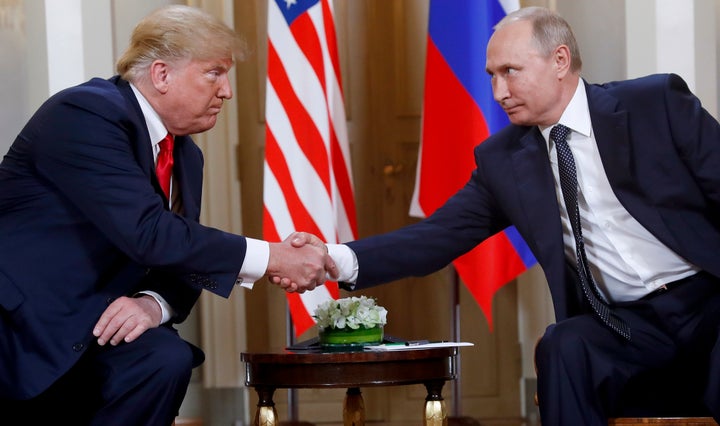
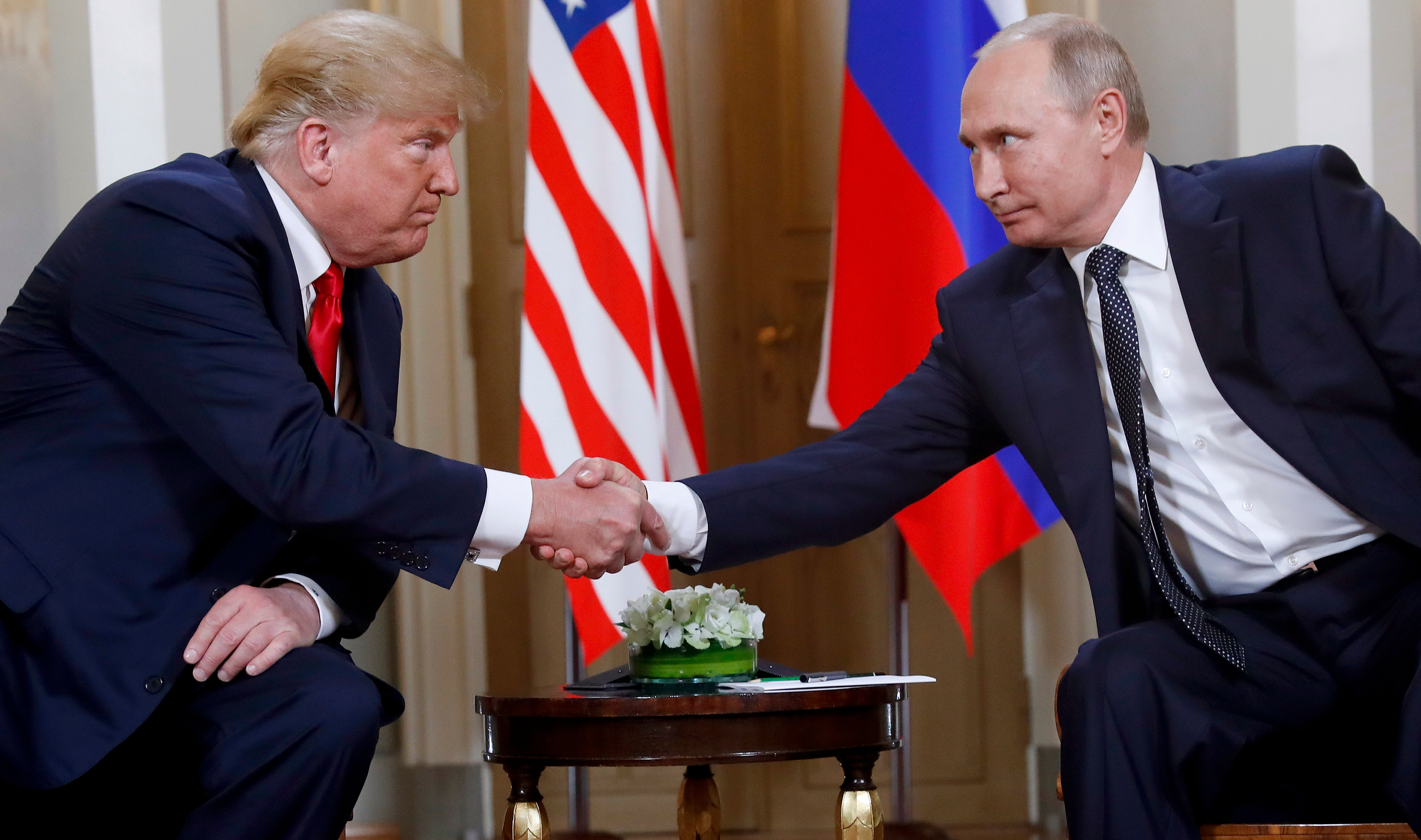
Trump is scheduled to go to Alaska on Friday for his meeting with Putin, his first such summit with him since 2018, when in Helsinki he said he took the word of the former KGB agent over his own intelligence agencies about Russia’s work to help Trump win the 2016 election.
On Monday, though, Trump, who is 79, twice conflated Alaska with Russia itself. Alaska has belonged to the United States since 1867, when it was purchased from Russia, then under the rule of Czar Alexander II.
Advertisement
“I’m going to Russia on Friday,” Trump said, explaining his coming trip. An hour later, preparing to leave the podium, he said it again: “We’re going to Russia.”
Donald Trump has announced that he will be meeting Vladimir Putin in the American state of Alaska on Friday to discuss ending the Ukraine war.
It could be pivotal moment in the conflict, even though no one from Europe – including Ukrainian president Volodymyr Zelenskyy – is thought to be invited to the talks.
The US president has already said there may be a land swap in exchange for peace, evidently overlooking how Russia started the war and occupies 20% of Ukraine.
While the talks themselves will have given the Kremlin a boost, choosing to hold them in Alaska will have caused further celebration in Russia.
Advertisement
Putin’s aide Yuri Ushakov told Russian state news agency TASS: “Russia and the US are close neighbours, sharing a common border.
“It seems quite logical for our delegation simply to fly across the Bering Strait and for the important and anticipated summit of leaders of these two countries to take place precisely in Alaska.”
They were expected to travel to neutral territory – Putin himself suggested the United Arab Emirates – but Trump has persuaded the Russian leader to come to the States.
The US does not recognise the jurisdiction of the ICC so he will not risk arrest in the States.
It will be the first time he has visited the US in a decade, having last travelled to the States during Barack Obama’s second term.
It’s a small victory for Trump too, because it seems like he has the upper hand by forcing Putin to come to him on his territory.
Advertisement
But there’s also a historical element to the meeting place, because Alaska used to Russian territory before it was sold to the US in the 19th Century.
A Russian negotiator, Kirill Dmitriev, who attended US envoy Steve Witkoff’s recent meeting with Putin, even called Alaska “a Russian-born American” which reflects the ties between their countries.
Russian nationalists have also repeatedly called for the land to be returned to Russia over the years.
Advertisement
Former Russian president and Putin ally, Dmitry Medvedev – who is now a senior security official – claimed in January 2024 that the US should return Alaska to Russia.
Donald Trump suddenly announced he was moving two of America’s nuclear submarines closer to Russia after “highly provocative statements” from a senior Kremlin official last week.
The declaration was quite a surprise, especially considering the US president has previously spoken of his fond friendship for Vladimir Putin and even expressed sympathy for his invasion of Ukraine.
Advertisement
As Kyiv’s most powerful ally – and the only major Western figure to show leniency towards Putin – Trump’s words matter.
So how did we get here? And just how concerned is the Kremlin about what might happen next?
Why did US nuclear rhetoric suddenly ramp up?
The US president has been trying to pressure Putin to end his war in Ukraine for months, even offering to oversee a peace deal which would reward the Russian president for his brutal invasion with Ukrainian territory.
Last week, while in Scotland, he said he was going to reduce his previous 50-day deadline for Russia to end the war down to 10 or 12 days – or the US would hit Russia with more sanctions.
Advertisement
Former Russian president, close Putin ally and the deputy chair of Russia’s Security Council, Dmitry Medvedev, lashed out at the news on social media.
He claimed Trump was “playing the ultimatum game with Russia” and said “each new ultimatum is a threat and a step towards war”.
The president responded: “Tell Medvedev, the failed former Russian president who thinks he is still in power, to be careful what he says. He is entering very dangerous territory.”
Advertisement
Hours later, he posted: “Based on the highly provocative statements of the Former President of Russia, Dmitry Medvedev … I have ordered two Nuclear Submarines to be positioned in the appropriate regions, just in case these foolish and inflammatory statements are more than just that.
“Words are very important, and can often lead to unintended consequences, I hope this will not be one of those instances.”
He did not mention if the submarines were nuclear armed or nuclear powered, or where the “appropriate regions” are.
Advertisement
How did Russia respond?
After a weekend of silence, the Kremlin’s press secretary Dmitry Peskov finally addressed Trump’s shifting stance on Monday, telling reporters: “In this case, it is obvious that American submarines are already on combat duty. This is an ongoing process, that’s the first thing.
“But in general, of course, we would not want to get involved in such a controversy and would not want to comment on it in any way.
Advertisement
“Of course, we believe that everyone should be very, very careful with nuclear rhetoric.”
He also claimed Moscow did not see Trump’s remarks as an escalation in nuclear tension, adding: “We do not believe that we are talking about any escalation now. It is clear that very complex, very sensitive issues are being discussed which, of course, are perceived very emotionally by many people.”
So, what does all this mean? HuffPost UK spoke to several experts to find out.
Not so chummy now: Trump, left, and Putin in 2018.
“He tried to put a kind of baseline underneath the escalation conversation with Russia around nuclear weapons,” the expert told HuffPost UK. “This is why the Russians haven’t responded because they’ve actually understood that this is quite a serious step.”
“Trump is the first US president I think to openly challenge this new position of Russia,” he said, explaining that the he two countries are now looking to re-establish a conversation about just what escalation looks like.
Advertisement
Melvin said this was a very different place to where the world was during the Cold War, when the US and the USSR were also in a standoff over nuclear weapons – and everyone used “careful language”.
He pointed out that Trump’s post on TruthSocial was without its usual capital letters or exclamation marks, perhaps indicating it was a more serious and a “calculated response by the United States”.
The specialist said Moscow’s delay in reply probably stemmed from Russia being unable to decide whether to escalate or just make a rhetorical statement.
Advertisement
“Russia has been anxious to avoid direct confrontation with the US, even though they basically talk about being in a war with the States,” he said.
Melvin claimed other western leaders will “will broadly support” Trump’s latest comments, because “there has been some concern that Russia has been blurring the line between conventional wars and nuclear”.
“This is actually a step towards re-imposing a stronger distinction,” he noted.
He said: “With the submarine comment, Trump has discovered another means of appearing ‘tough on Russia’ without actually doing anything that would be of concern to Moscow – and there are plenty of other reasons why he might be seeking headlines that suggest he is taking a firmer line with Putin.”
The specialist said: “Trump has taken every possible step to pressure Russia, short of actually doing something.”
Advertisement
He concluded: “Whatever Trump’s latest verbal salvo at Moscow may be, there’s one thing it isn’t: a strategy for dealing with Russia, let alone a sensible or coherent one.”
Giles claimed the Kremlin will be watching Trump closely, but “perhaps as much out of curiosity as of concern as to what he will do next.”
‘The Kremlin was unprepared’
Russia analyst from the Institute for the Study of War, Christina Harward, told HuffPost UK that Russia’s response has been “incredibly limited thus far”.
Advertisement
She pointed out that there’s been no response from the Russian Ministry of Foreign Affairs or the Russian Ministry of Defence.
“High-ranking Russian officials very often parrot the same phrases as each other, telling us that Russian officials’ public rhetoric is highly coordinated within the Kremlin itself,” she said.
“The Kremlin is also known to disseminate manuals to Russian state media with clear instructions about how to cover certain current events.
Advertisement
“The fact that we didn’t see a coordinated response over the weekend to Trump’s announcement indicates that the Kremlin was unprepared for this move and is likely still working on how to publicly react. We may start to see a more unified official reaction in the coming days.”
What now?
While the specialists seem split over just how much impact Trump’s comments will have on the Kremlin, only one thing seems certain right now: Putin still has no plans to withdraw from Ukraine any time soon.
US special presidential envoy Steve Witkoff is set to visit Moscow this week to discuss peace talks, days before Trump’s new tariffs against Russia are set to kick in (August 9).
Advertisement
But Russia continues to target Ukraine almost every single night with drone and missile attacks, while Putin is still pushing to gain control over four Ukrainian regions to which Moscow currently occupies, and a promise from Kyiv will never join Nato.
Russia’s former transport minister has been found dead in his car just hours after it was revealed he had been sacked by Vladimir Putin.
Initial investigations suggest Roman Starovoit took his own life using a handgun.
In a statement, the Investigative Committee of Russia said: “The body of the former minister of transport of the Russian Federation, Roman Vladimirovich Starovoit, was discovered in his personal vehicle with a gunshot wound today in the Odintsovo city district.”
Advertisement
The statement added: “The main version is suicide.”
Andrei Kartapolov, head of the Russian parliament’s defence committee, said Starovoit had died “quite a while ago”.
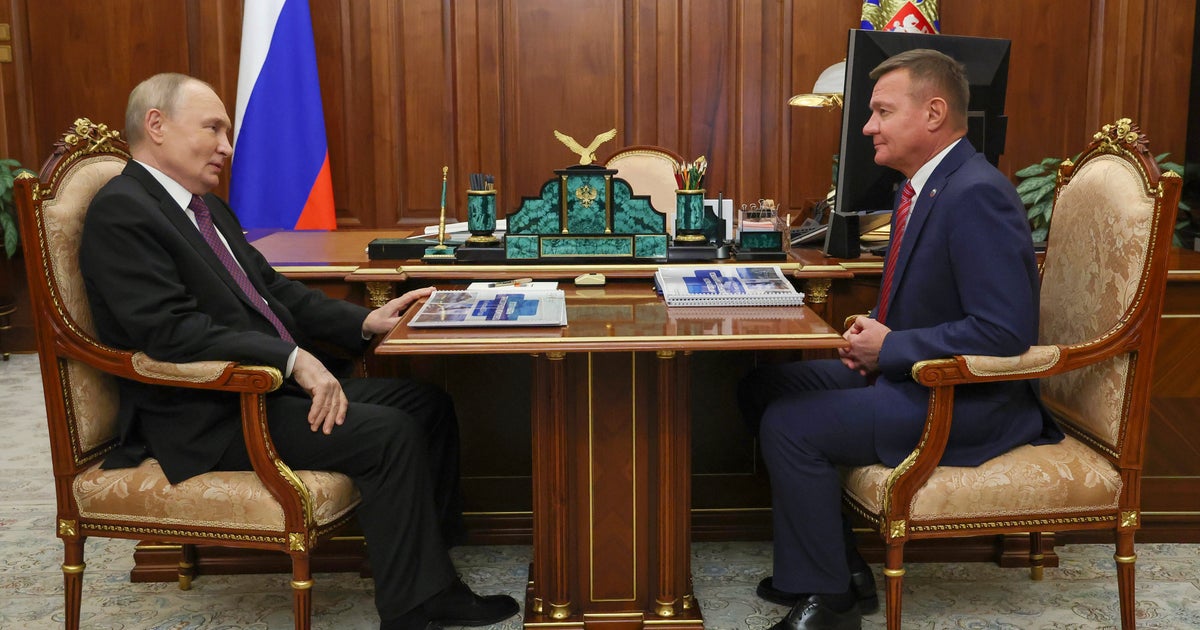
Earlier on Monday, it was announced that Putin had sacked Starovoit after just over a year in the job.
He had been governor of the Kursk region, which borders Ukraine, for nearly five years before taking on his ministerial role.
Advertisement
Before Starovoit’s dismissal, Russian airlines had cancelled nearly 500 flights and delayed almost 2,000 since Saturday because of the threat of Ukrainian drones.
He was replaced as transport minister by his deputy, Andrei Nikitin.
A Kremlin spokesperson said: “At present, in the president’s opinion, Andrei Nikitin’s professional qualities and experience will best contribute to ensuring that this agency, which the president described as extremely important, fulfils its tasks and functions.”
More than 18,000 Russian soldiers have been reported to the courts for being absent without leave since Vladimir Putin invaded Ukraine, the UK says.
According to the latest update on X from the Ministry of Defence (MoD), 18,159 troops have been faced with a decade-long prison sentence for going AWOL between February 2022 and May 2025.
Advertisement
That is a criminal offence in Russia and a staggering 17,721 (86.2%) of those soldiers were prosecuted.
Citing Russian independent news outlet Mediazona, the MoD said a further 2,379 soldiers were reported to the courts for desertion or refusing orders.
The British officials pointed out there are multiple reasons a soldier could desert.
“Brutal discipline in the Russian Armed Forces, poor medical treatment for injured soldiers and inadequate military training all likely contribute,” the MoD said.
Advertisement
Putin’s soldiers could end up serving on the frontline against Ukraine within 14 days of signing a contract – and just five days of relevant military training.
The MoD continued: “This all runs counter to the official narrative that the Russian leadership values the military service of those who fight in Russia’s illegal war in Ukraine.
“It is a realistic possibility that those prosecuted could commute their sentence by serving in the Russian Storm-Z convict assault units.”
Advertisement
There have been multiple reports of low morale among Russian troops ever since Putin invaded.
In 2023, UK intelligence suggested thousands of Russian casualties in Ukraine were linked to “alcohol consumption” and that soldiers could be “coerced” into joining to boost recruitment numbers.
Despite this chaos within the Russian forces, Putin is still dragging his heels over possible ceasefire talks with Ukraine – even when US mediators suggest terms more favourable to Moscow than Kyiv.
It included plans to build up to 12 new nuclear-powered submarines, six new munitions factories and thousands more long-range weapons.
The authors of the SDR have made it clear defence spending will have to increase to 3% of gross domestic product (GDP) for its recommendations to be carried out.
However, Starmer has refused to guarantee that the government will hit that target in the next parliament.
So broadcaster Andrew Neil suggested on Monday that Russia would be “smiling” over the spending plans.
Speaking on Times Radio, he said: “Without a firm commitment to raising defence spending to 3% of GDP early in the next parliament, the defence review is barely worth the paper it’s written on.
Advertisement
“If they don’t put Britain on a war-footing now, the new subs won’t be deployed for at least a decade – by which time, we could all be speaking Russian.”
“The Kremlin must be smiling,” he added.
Former head of the army General Sir Patrick Sanders also told Times Radio he is “really worried” the government is not acting fast enough.
Asked what he believes Putin will be thinking now, Sanders said: “This is one of Europe’s greatest powers, it’s the one that has been the greatest thorn in my side when it comes to challenging me on Ukraine and supporting the Ukrainians, but it doesn’t appear yet to have woken up to the fact that it is not just Ukraine’s fight, this is Europe’s fight and Europe are threatened by Russia.
Advertisement
“We’ve got to be able to deter Russia because that is so much cheaper than fighting a war with them,” he said.
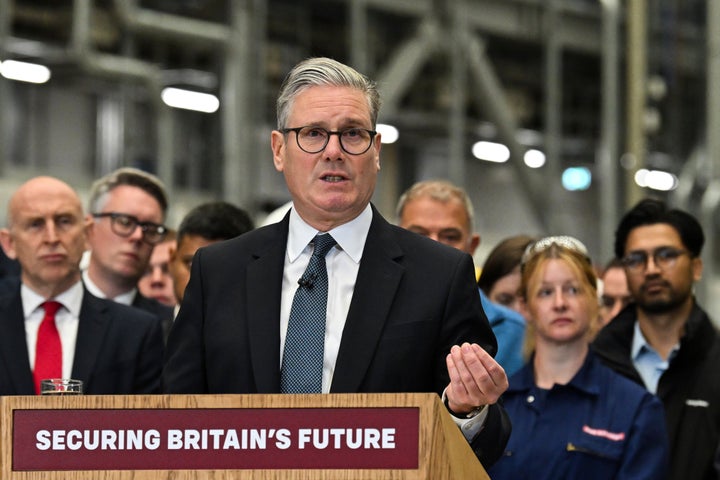
Keir Starmer delivers his speech during a visit to the BAE Systems’Govan facility, in Glasgow, Scotland, Monday June 2, 2025.
via Associated Press
Former Tory defence secretary Ben Wallace also told LBC this morning that Putin will now think the west are “not serious”.
Advertisement
“Putin knows more than anyone how much the war is costing,” Wallace said. “And he will say two things; one, that the west aren’t serious because they’re not really spending the money, and secondly, what we see in Ukraine, is that the west aren’t serious enough because it doesn’t want to put young people in harm’s way and young people are not joining their Armed Forces.”
Pointing to the government’s reluctance to set a time frame for spending 3% of GDP on defence, he said: “Imagine conversations in the Kremlin where they say, ‘no, no, it’s an ambition’.”
Wallace claimed the government has now “resorted to spin and claiming other people’s policies” too, adding: “That is a regret.”
Advertisement
Senior consulting fellow with the Russia and Eurasia programme at Chatham House, Keir Giles, agreed that the “biggest question mark”over the SDR is over how it will be funded.
“With Keir Starmer still refusing to commit to the funding level that is required as a baseline for the review’s recommendations to be met, it will take a change of heart in government to make use of [the SDR’s] most important findings,” Giles told HuffPost UK.