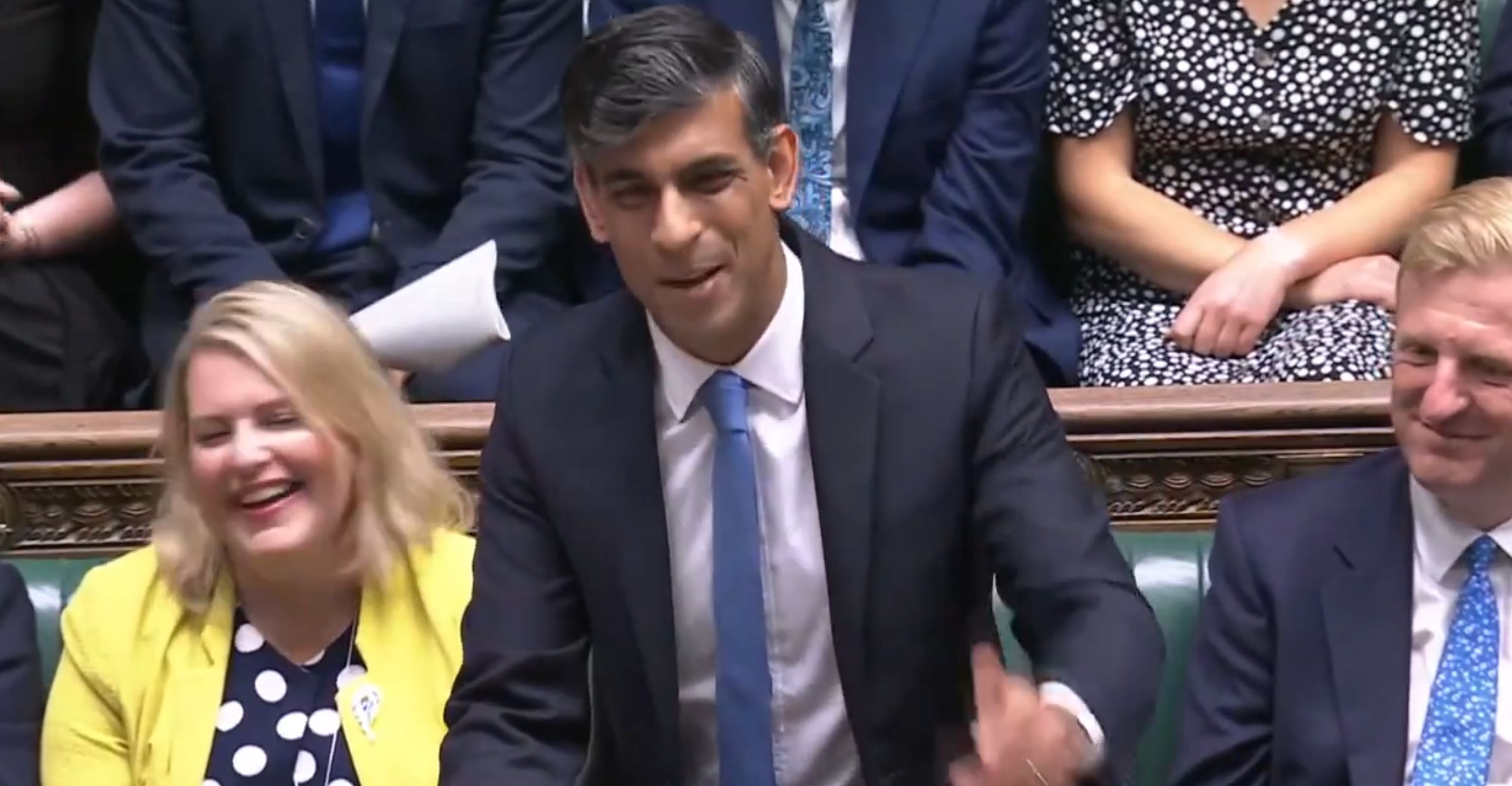
What Is The Garrick Club?

A central London private members’ club has been under the spotlight after its membership list was published in the Guardian newspaper. But what is the Garrick Club, and why is it controversial?

What is the Garrick Club?

The Covent Garden club, named after eighteenth century actor David Garrick, opened in 1831, and is said to have around 1,500 members.

Last week, The Guardian revealed what it describes as “the roll call of (the) British establishment” – a membership list that reportedly includes judges, barristers, MPs, academics, actors and senior figures in the arts.

London’s private members’ clubs are world famous, with some notorious for their men-only rules and strict dress codes. The Garrick is among the best known among scores of clubs across the capital. Other legendary names include Annabel’s, The Groucho Club and the National Liberal Club, with some more political in their membership than others.

So who is actually a member of the Garrick Club?

The Guardian claimed the membership list included King Charles, deputy prime minister Oliver Dowden and Sir Richard Moore, the head of MI6.

Among other names on the members list are actors Matthew Macfadyen, Benedict Cumberbatch and Damian Lewis as well as the chief executive of the Royal Opera House, Alex Beard, and Antonio Pappano, who is now chief conductor of the London Symphony Orchestra.

Others said to be members include Succession star Brian Cox, former England men’s football manager Roy Hodgson and Dire Straits frontman Mark Knopfler. BBC broadcasters John Simpson and Melvyn Bragg are also members, according to the reports.

What’s the controversy?

The row stems from the fact the Garrick Club excludes women, and its refusal to admit female members despite efforts to change the rules. Women can only visit as a guest of a male member.

In 2015, the Garrick’s membership voted 50.5 per cent in favour of allowing female members but the club rules require a two-thirds majority for a change. This year, members will have a chance to vote again on allowing women.

Critics say they have no issue with men hanging out with other men, but have concerns over a club containing so many influential members, highly concentrated in certain professions.

On Wednesday, Simon Case, Britain’s top civil servant, quit the club just a day after being mocked for claiming he had only joined it to help women become members.

Case was asked by a Commons committee how his membership of the Garrick could be squared with his commitment to making the civil service more diverse.

He said: “My position on this one is also clear. If you believe profoundly in reform of an institution, by and large it’s easier to do if you join it to make the change from within rather than chuck rocks from the outside.

“And by the way, maths is also part of this. Every one person who leaves who is in favour of fixing this antediluvian position, every one of us that leaves means these institutions don’t change.

“I think when you want reform you have to participate.”

Meanwhile, MI6 boss Richard Moore also resigned from the club after facing criticism for being a member against the backdrop of the secret service attempting to demonstrate that it is no longer staffed exclusively by white, male Oxbridge graduates.

Share Button

Donald Trump Argues To High Court That He Is Immune From Prosecution In January 6 Case

WASHINGTON — Donald Trump on Tuesday made his case to the US Supreme Court that his January 6, 2021, coup attempt was part of his official duties as president and is therefore immune from prosecution.

“The president cannot function, and the presidency itself cannot retain its vital independence, if the president faces criminal prosecution for official acts once he leaves office,” Trump lawyer John Sauer wrote in a 67-page brief.

Sauer repeated arguments he and other Trump lawyers had tried previously, including the notion that Trump can only be prosecuted for actions if he has previously been impeached for them by the House and convicted by the Senate.

Trump was impeached by the House over January 6, but the 57 votes to convict in the Senate were 10 shy of the supermajority necessary.

Sauer’s brief states that the lack of previous criminal prosecutions against former presidents for their conduct in office is proof that the legal authority to prosecute Trump for the same does not exist. It did not mention that Trump is the first president in the country’s history to not accept defeat after an election and to attempt to remain in office.

Sauer also repeats the previously tried claim that if Trump is not given immunity, every future president would be similarly at risk of prosecution. “A denial of criminal immunity would incapacitate every future president with de facto blackmail and extortion while in office, and condemn him to years of post-office trauma at the hands of political opponents,” he wrote.

Trump’s claims have previously been rejected by both a trial court and a federal appellate court. A rejection by the Supreme Court — which many legal observers say is likely — could force him to undergo trial on conspiracy and fraud charges in the January 6 case this autumn, just as many voters are starting to pay attention to a coming election in which Trump hopes to regain the White House.

In that scenario, a parade of onetime Trump aides, possibly including former Chief of Staff Mark Meadows, would appear on the witness stand almost daily, offering firsthand accounts to the jury and the public about Trump’s actions in the weeks leading up to and on that day, when a mob of his followers attacked the US Capitol to block congressional certification of his 2020 election loss.

Should the high court side with Trump, it would effectively end special counsel Jack Smith’s prosecution against the former president over his coup attempt.

According to Smith, US District Judge Tanya Chutkan and the three judges who heard the case on the U.S. Court of Appeals for the District of Columbia Circuit, it would also effectively allow presidents to commit all manner of crimes in office by claiming that they were carrying out official duties.

“Whatever immunities a sitting president may enjoy, the United States has only one chief executive at a time, and that position does not confer a lifelong ‘get-out-of-jail-free’ pass,” Chutkan wrote in her December 1, 2023, ruling.

“It would be a striking paradox if the president, who alone is vested with the constitutional duty to ‘take Care that the Laws be faithfully executed,’ were the sole officer capable of defying those laws with impunity,” the appeals court judges wrote in their Feb. 6 ruling.

During oral arguments in the case, one of the judges, Florence Pan, got Trump’s lawyer to acknowledge that, under his claim of immunity, a sitting president could order a political opponent to be assassinated by SEAL Team Six and never be prosecuted for it.

Smith’s response to Trump’s brief is due by April 8, and oral arguments in the case are set for April 25. A decision will almost certainly be handed down by the end of the court’s term in late June or early July.

A federal grand jury that indicted Trump last August charged him with conspiring to defraud the United States, conspiring to obstruct an official proceeding, obstructing an official proceeding and conspiring to deprive millions of Americans of having their votes counted.

It is one of four active criminal cases against the presumptive Republican presidential nominee. A second federal prosecution is based on his refusal to turn over secret documents that he took with him to his Florida country club upon leaving the White House; a Georgia state prosecution is based on his attempts to overturn his election loss in that state; and a New York indictment accuses him of falsifying business records to hide hush money payments to a porn star and a Playboy model in the weeks ahead of the 2016 election.

The New York case could go to trial as early as mid-April. If the Supreme Court rules against Trump on his immunity claim, the federal January 6 trial could begin as early as late summer.

Share Button

‘He Just Can’t Do Politics’: Tory Commentator Wants Sunak Out Before Election

A leading Tory commentator has said Rishi Sunak should not lead the Conservative Party into the general election in the latest bodyblow to the prime minister.

Tim Montgomerie, founder of ConservativeHome, told the BBC’s Daily Politics show that the party was in “freefall” amid the Labour Party’s double-digit poll lead.

It comes amid speculation unsettled Tory MPs are lining up Penny Mordaunt as a replacement for Sunak if he faced a no confidence vote before the general election. On Tuesday night, a Telegraph report suggested Tom Tugendhat is also being discussed as a “unity candidate” to replace the PM.

Montgomerie cited Robert Jenrick’s resignation as immigration minister, when he said Sunak wanted to enact a Rwanda policy “that would be enough to look like he was doing something but wouldn’t actually do something to actually solve the problem”.

“That, I’m afraid, is why I’ve reluctantly taken the decision … I think Rishi Sunak has to go as prime minister before the before the general election, because he just can’t do politics.

“I think he’s a good man, a family man, a decent man in public life for the right reasons.

“I study politics incredibly closely. I don’t really know what he wants to be prime minister for, what his ambition is, what legislation he wants to pass.”

He added: “If we have any chance at the next election of minimising the scale of defeat, we need to go into the election with an agenda for the future of this country. At the moment, I don’t even know what that is.”

Chancellor Jeremy Hunt hinted the prime minister could go to the country in October, but Tory plotters may seek to oust him before then if the party’s fortunes do not improve.

Sunak will face prime minister’s Questions and then a behind-closed-doors appearance in front of the Conservative backbench 1922 Committee on Wednesday.

Share Button

Trump Hints He’d Deport Prince Harry From US Over Drug Use

Former US President Donald Trump weighed into the recent scrutiny over Prince Harry’s visa, hinting that if he’s reelected, the Duke of Sussex could face deportation over drug use he admitted to in his 2023 memoir.

Trump, the presumed GOP nominee for president, made the warning in a preview of an interview with British broadcaster GB News that’s set to air on Tuesday evening.

“We’ll have to see if they know something about the drugs, and if he lied they’ll have to take appropriate action,” Trump said of the possibility that Harry falsified portions of his visa application that ask about drug use.

In his 2023 memoir, "Spare," Harry admitted to using drugs such as cocaine, marijuana and psilocybin. Trump hinted that Harry could face deportation for his drug use if Trump is reelected.
In his 2023 memoir, “Spare,” Harry admitted to using drugs such as cocaine, marijuana and psilocybin. Trump hinted that Harry could face deportation for his drug use if Trump is reelected.

Since stepping down from official senior royal duties in 2020, the duke’s primary residence has been in California with his two children and his wife, Meghan Markle, Duchess of Sussex.

But last year, a conservative think tank called the Heritage Foundation sued the Department of Homeland Security for access to Harry’s immigration records, citing admissions in his memoir, Spare, that he’s used cocaine, marijuana and psilocybin. It’s unclear if Harry disclosed the drug use in his visa application. A federal judge is currently deciding whether the records should be made public.

When GB News host Nigel Farage asked Trump to clarify whether he was talking about Harry facing deportation, Trump played coy.

“Oh, I don’t know. You’ll have to tell me. You just have to tell me,” he said. “You would have thought they would have known this a long time ago.”

Other public figures have faced immigration issues over their drug use, including Argentine soccer star Diego Maradona and the late British singer Amy Winehouse.

A spokesperson for the Duke and Duchess of Sussex did not immediately return a request for comment on Trump’s remarks.

Harry said last month that he’s considered becoming an American citizen.

“It’s a thought that has crossed my mind, but it’s not a high priority for me right now,” he told ABC’s Good Morning America.

Share Button

MPs Reverse Lords Amendments To Rwanda Deportation Bill

MPs have reversed all 10 amendments to Rishi Sunak’s flagship Rwanda legislation – setting up a showdown with the House of Lords over the controversial plan to send asylum seekers on a one-way trip to the east African country.

Using its comfortable Commons majority, the Tory government unpicked changes made to the Safety of Rwanda Bill by the Lords.

Peers inserted a series of amendments designed to water down the legislation, but all 10 were removed by MPs during votes in the Commons on Monday night.

The bill, which aims to overcome the Supreme Court’s block on deportation flights, will return to the Lords on Wednesday as part of the game of parliamentary “ping-pong”.

The government is almost certain to prevail because the unelected Lords can’t overrule elected MPs, and the bill could be passed into law within days.

The prime minister hopes that the first deportation flights will take off in the spring.

Britain and Rwanda signed a deal almost two years ago that would see migrants who cross the English Channel in small boats sent to the East African country, where they would remain permanently. So far, no migrant has been sent to Rwanda under the agreement.

The plan is key to Sunak’s pledge to “stop the boats” bringing unauthorised migrants to the UK. He argues that deporting asylum seekers will deter people from making risky journeys and break the business model of people-smuggling gangs.

Just under 30,000 people arrived in Britain in small boats in 2023.

“We need to make it clear that if you come here illegally, you won’t be able to stay and we will be able to remove you. That is the only way to properly solve the issue of illegal migration,” Sunak told reporters on Monday.

Share Button

Rwanda Scheme Will End Up Costing Taxpayers Billions Of Pounds, Claims Think Tank

The government’s Rwanda scheme will end up costing taxpayers billions of pounds, according to a leading think-tank.

A new report by the Institute for Public Policy Research (IPPR) says the UK will have to pay up to £230,000 for every asylum seeker deported to the east African country.

That is around five times as much as it currently costs to house an asylum seeker in the UK.

In total, the IPPR estimates that the Rwanda policy will cost the government between £1.1 and £3.9 billion to deport the 20,000 asylum seekers who have entered the UK via so-called “irregular routes” since last year.

The findings come as MPs prepare to once again debate Rishi Sunak’s flagship Safety of Rwanda Bill.

The prime minister hopes that the first deportation flights will take off in the spring – although transport secretary Mark Harper yesterday refused to guarantee that any deportations will happen before the election.

Marley Morris, the IPPR’s associate director for migration, trade and communities, said: “Aside from the ethical, legal and practical objections, the Rwanda scheme is exceptionally poor value for money.

“For it to break even, it will need to show a strong deterrent effect, for which there is no compelling evidence.

“Under the government’s plans, billions could be sent to Rwanda to remove people who have already arrived irregularly since the Illegal Migration Act was passed.

The only winner from this scheme appears to be the Rwandan government itself, which has already secured hundreds of millions without doing much at all.”

As part of the Rwanda deal agreed by home secretary James Cleverly in December, the UK has to pay £370m up front to the Rwandan government, followed by a further £120m once 300 people are sent there.

The UK also has to pay £20,000 for each person deported, plus up to £150,874 per asylum seeker to cover the costs of asylum processing and integration.

For each person who leaves Rwanda, the UK is also expected to pay an extra £10,000 to facilitate their departure.

According to the IPPR, the total cost of sending one asylum seeker to Rwanda could be as much as £228,000.

But a Home Office spokesperson said: “The report makes a number of assumptions and modelling calculations that we do not recognise.

“Without innovative solutions, the cost of housing asylum seekers could reach up to £11 billion per year by 2026.

“Illegal migration costs lives and perpetuates human trafficking, and it is therefore right that we fund solutions to break this unsustainable cycle.

“The best way of saving taxpayer money is by deterring people from coming here illegally in the first place, and our partnership with Rwanda intends to do just that.”

Share Button

In The Least Surprising News Ever, Vladimir Putin Has Won The Russian Election

Vladimir Putin has been re-elected Russian president after winning a landslide victory in the country’s election.

In a result that was a surprise to absolutely no one, he won another six-year term in charge after receiving nearly 88% of the vote.

The three other candidates – Nikolai Kharitonov, Vladislav Davankov and Leonid Slutskywere predictably miles behind, with none of them managing to poll more than 4%.

It will be his fifth term as president of Russia, having first been elected to the post in 2000. He was also the country’s prime minister between 2008 and 2012.

Foreign secretary David Cameron dismissed the result by insisting the elections had not been “free and fair”.

He said: “The polls have have closed in Russia, following the illegal holding of elections on Ukrainian territory, a lack of choice for voters and no independent OSCE [Organisation for Security and Co-operation in Europe] monitoring.

“This is not what free and fair elections look like.”

But former Russian president Dmitry Medvedev, a close ally of Putin, took to X (formerly Twitter) shortly after the result was announced.

In a bizarre post, he said: “Congratulations to all Russia’s enemies on Vladimir Putin’s brilliant victory in the election of the President of the Russian Federation. And a thank you to friends for the support.”

The result was never in doubt because no candidates opposed to the war in Ukraine were allowed to stand.

One potential opposition candidate who did attract some popular support, Boris Nadezhdin, was barred from running a month ago.

Some voters did register their opposition to Putin’s regime by vandalising voting booths during the three-day election.

Footage emerged online of one woman pouring ink into a ballot box after voting, while there were also arson attacks at some polling stations.

Thousands of voters also took part in a “noon against Putin” protest at polling stations across the country and at Russian embassies around the world.

Share Button

A Video Of Penny Mordaunt Endorsing Liz Truss Has Left People Questioning Her Judgement

A video has re-emerged of Penny Mordaunt backing Liz Truss amid mounting speculation she could be the next prime minister.

The clip, which has been watched more than half a million times in the last 24 hours, shows Mordaunt praising Truss’s “bold economic plan”.

She also claims Truss “embodies the vision and values the British public”.

The video was filmed during the first Tory leadership contest of 2022, after Mordaunt had left the race.

In a speech to Tory members, she says: “Who can lead? Who can build that team and deliver for pour country? Who does have that bold economic plan that our nation needs?

“Who’s got reach, who can relate to people, who understands that people need help with the cost of living now? And who is going to rightly clobber our opponents?

“Who is going to hold seats and win back councils, and who most embodies the vision and values the British public had in their heads and their hearts when they voted in 2016 and 2019?

“At the start of this final phase of the contest I didn’t know the answer to those questions, but I’ve seen enough to know who the person that I’m going to put my faith in is. And that is Liz Truss.”

Truss went on to last just 49 days in No.10 after her chancellor Kwasi Kwarteng’s mini-Budget triggered an economic crisis.

Tory rebels are reportedly planning to oust Rishi Sunak and replace him with with Mordaunt as the opinion polls continue to suggest the party is heading for catastrophe at the general election.

But the video of Mordaunt endorsing Truss has led social media users to question her suitability to lead the country.

Share Button

Sunak’s Titanic Problem: Tory MPs Engage Panic Mode As Party Heads For The Iceberg

It’s not often that a one-word post on X can sum up the mood of an entire parliamentary party, but it happened this week.

Within minutes of prime minister’s questions ending on Wednesday, former cabinet minister Simon Clarke took to the platform formerly known as Twitter and simply said: “Iceberg.”

That was a reference to an interview he gave to the BBC in January when he warned that the Conservatives were heading for disaster under Rishi Sunak.

“No one likes the guy who’s shouting ‘iceberg’,” Clarke said. “But I suspect that people will be even less happy if we hit the iceberg. And we are on course to do that.”

If anything, things have got worse for the Tories in the intervening two months, with the past seven days encapsulating the miserable situation in which the prime minister finds himself.

On Monday, the worst kept secret in Westminster was confirmed when Lee Anderson – until January a Tory deputy chairman, no less – announced that he was defecting to Reform UK.

That led to another round of Conservative blood-letting, with one Tory insider telling HuffPost UK that Sunak had “literally given Anderson” to the right-wing party by suspending him over his attack on Sadiq Khan.

Even worse was to follow, with Downing Street providing a textbook example of how not to handle a political crisis in their response to revelations that the Tories’ biggest donor, Frank Hester, had said Diane Abbott made him “want to hate all black women” and “should be shot”.

Ministers were initially sent out to defend Hester – who has given the party £15 million in the last year – and instruct the country to simply “move on”.

But as the political pressure grew – and after Kemi Badenoch had broken ranks – No.10 bowed to the inevitable and announced that the PM did indeed believe that the remarks were “racist and wrong”.

In an attempt to regain control of the political narrative, Sunak finally put an end to the feverish speculation by finally announcing on Thursday night that the general election will not be held on May 2.

There are few Conservative MPs, however, who do not believe that this will just be a stay of execution for their party, which continued to languish 20 points behind Labour in the opinion polls.

“The death march has begun,” one former cabinet minister told HuffPost UK.

The next political flashpoint for the prime minister comes in less than seven weeks, when local elections take place in England and Wales.

No one expects them to be anything other than catastrophic for the Tories, who face losing around half of the council seats they currently hold.

One senior Conservative MP said Sunak was “certain” to face a leadership challenge in the aftermath, with no guarantee that he will survive.

“Kemi, Penny, Grant, Shapps, Jenrick and presumably others are all on manoeuvres, either to take over now or after the election,” he said.

“The death march has begun.”

A former minister said he believed enough letters will be submitted to Sir Graham Brady, chair of the 1922 committee of backbench Tories, to trigger a vote of confidence in his leadership.

“This feels like the week where it’s started to fall apart completely,” he said.

“But that’s good because it’s been needed to to get people to do something – there is no outcome other than total disaster if we don’t change course.

“The day after the local elections, Rishi will have to explain to people how we can still win a general election five months later, and I don’t think he can.

“The letters of no confidence are already going in, and we only need 52 to trigger a vote. There are then two scenarios; either the PM decides not to contest it and goes gracefully, or he does contest it and he performs very badly.”

Some MPs believe that, if the 1922 Committee is amenable, the party’s rulebook could be changed to allow a leadership election to be wrapped up quickly, with Tory members voting online and a new PM in place by June.

“You would then need to proceed to a general election very quickly, either in July or September,” said one backbencher.

Some Tories mutter darkly about the party being reduced to just 100 MPs after the next election unless drastic action is taken.

And while they don’t seriously believe a new leader can win the election, they think he or she could at least save enough seats to make the Tories competitive again when the next one comes along.

One MP said: “We all love the Conservative Party and it could just die. It really is that serious because if we go down to the sort of numbers we are talking about, we could be eclipsed completely by another party on the right.

“It really is decision time, and it feels like there are enough people now to make it happen.”

Adding to the dark mood in the Conservative parliamentary party is the fact that the Budget, in which Jeremy Hunt slashed another 2p off National Insurance, has failed to give the party any opinion poll bounce at all.

One ex-minister said: “I was in the chamber for it and it was so lacklustre. How could the chancellor expect to win over the country when he couldn’t even win over his own MPs?”

Next week will see Sunak’s flagship Rwanda bill return to the Commons, and Downing Street hope that getting that onto the statute book will finally lead to deportation flights taking off to the east African country and a much-needed political win for the embattled PM.

But with the mood among the PM’s parliamentary colleagues so gloomy, and the opinion polls refusing to shift, it seems highly unlikely to be enough to save Sunak’s political career.

Whether it’s at the hands of his MPs or the voters, his time at the helm of the government is coming to an end.

Share Button

Putin Employs Forceful Carrot And Stick Approach To Get People Voting In Russia’s Election

People in Russia and occupied Ukraine are heading to the polls over the coming days to vote in the presidential election – and it appears Vladimir Putin has employed some extraordinary measures to encourage a good turnout.

Even though the current president is a shoo-in to get re-elected for his fifth term – having suppressed all of the main opposition – it appears he’s very keen for there to be a large, visible turnout to legitimise his time in office.

The national vote is taking place over three days, running from 15 to 17 March, but early voting was introduced for the occupied parts of Ukraine “for security reasons”.

And while there have been reports of people trying to disrupt the voting system in some way – like starting fires – these are minor shows of disruption unlikely to impact the overall result.

Here’s how Putin has used both the carrot and the stick to force people to vote in Russia and in occupied parts of Ukraine.

1. Putin’s direct appeal to his ‘dear friends’

Earlier this week, Putin urged people to vote, saying: “Dear friends!

:All of us, the multiethnic people of Russia, are a big family.

“We are worried about our country, take care of it, we want it to be wealthy, strong, free and prosperous, we want living standards and the quality of life to improve. So be it.”

This is part of his illusion that democracy is going strong in Russia.

According to state media TASS, the authoritarian leader claimed, “we will do everything the way we want”, and claimed: “The only source of power in our country is the people. This is the key legal provision enshrined in the Russian constitution.”

Putin has been in power consistently since before 2000.

He also addressed Ukraine’s flurry of attacks on Friday, saying: “These attacks, pointless from the military point of view and criminal from the humanitarian point of view, as has been said, are geared to hinder presidential election in Russia.

“I am convinced that our people will respond to this by being more consolidated.”

The Kremlin even posted a bizarre video of Putin walking into his office, tapping on his large computer, and then acknowledging the camera after several long seconds and waving.

The screen then cut to the computer to suggest he just voted online.

2. Entertainment at polling stations

According to the BBC’s Francis Scarr, voters can watch traditional dancing and eat a few free pancakes at the ballot box, or pose with cardboard cutout of US commentator Tucker Carlson, after voting.

Other characters showed up at polling stations around the country, too, including Grandfather Frost, Barbie and people dressed in historical outfits.

Scarr claimed on X (formerly Twitter) that the Kremlin has been holding raffles in polling stations, too.

He added: “For residents of this district in Siberia, domestic appliances, bags of sugar, and even vans of firewood are up for grabs.”

3. Armed Russian troops go house-to-house

If neither of these attempts work, it seems Putin had a third, much more menacing option up his sleeve – armed threats.

It’s particularly difficult for people living in one of the four partially-occupied Ukrainian territories, like Zaporizhzhia, which Putin illegally annexed in September 2022 .

An investigation from The Guardian earlier this month found Russian troops threatened any Ukrainians in occupied areas with deportation if they chose not to vote.

Other residents also told the BBC that they were coerced into voting by pro-Russia collaborators going from house to house with armed soldiers.

Having the Ukrainian vote supposedly on side would also help to justify his brutal invasion, especially as Putin maintains the country is meant to be part of Russia.

The official emblem of the presidential election this year is the V symbol associated with Putin’s “special military operation”.

Meanwhile, Ukraine has dismissed the vote as illegitimate, saying they would be null and void.

Share Button