Tory MP Charged With Sexually Assaulting 15 Year-Old Boy

Richard Townshend/UK Parliament

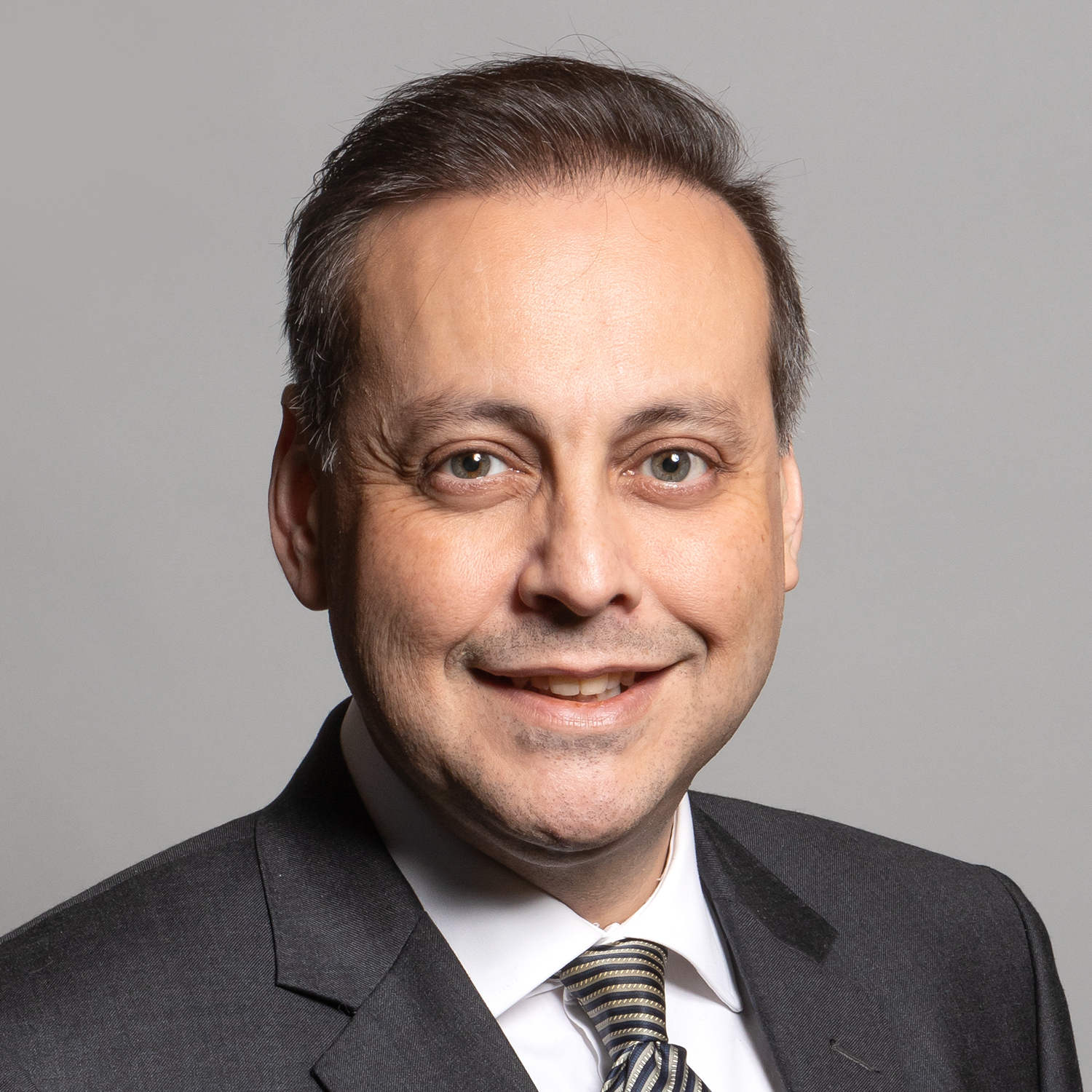
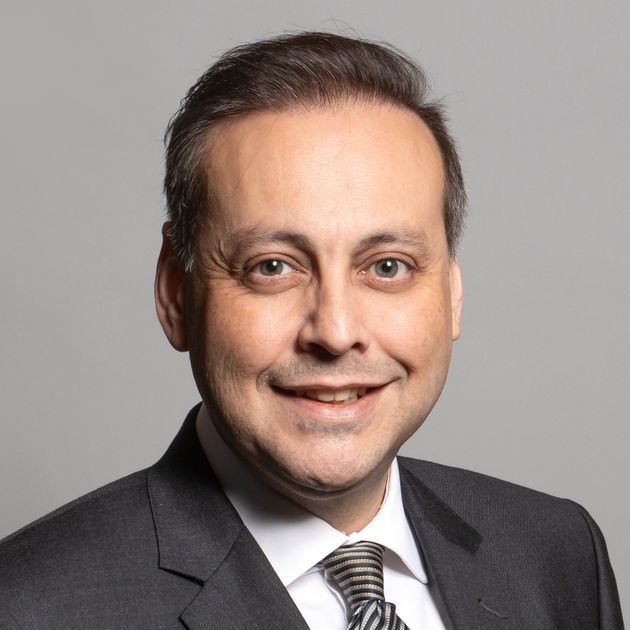
Imran Ahmad Khan, Conservative MP for Wakefield

A Tory MP has been charged with sexually assaulting a 15 year-old boy in 2008.

Imran Ahmad Khan, 47, the Conservative MP for Wakefield, West Yorkshire, is alleged to have groped the teenager in Staffordshire.

He was named on Friday after reporting restrictions were lifted and is now facing trial on a single count of sexual assault against the teenager, who cannot be identified because he is an alleged victim of a sexual offence in 2008.

Khan, who was elected at the 2019 general election, pleaded not guilty while appearing at Westminster Magistrates’ Court via video link from his lawyers’ office.

He now faces trial at the Old Bailey on July 15 at 9.30am, and was granted unconditional bail.

Khan was stripped of the Tory whip.

It is understood that he has not visited the parliamentary estate since the charge.

A Tory whips spokesperson said: “Imran Ahmed Khan has had the whip suspended.

“As there is an ongoing court case we will not be commenting further.” 

The Crown Prosecution Service said it made the decision to charge after reviewing a file of evidence from Staffordshire Police.

Stressing the need for a fair trial, Rosemary Ainslie of the CPS said: “It is extremely important that there should be no reporting, commentary or sharing of information online which could in any way prejudice these proceedings.”

Khan’s lawyer David Janes said in a statement: “The requisition against our client Imran Khan MP relates to a sole allegation of touching which was allegedly sexual, on a single occasion, said to have taken place in… 2008.

“Our client is shocked that he has been requisitioned with this alleged offence. He strenuously denies the accusation and it will be vigorously defended.”

In a statement released on Friday, Khan said: “It is true that an accusation has been made against me.

“May I make it clear from the outset that the allegation, which is from over 13 years ago, is denied in the strongest terms.

“This matter is deeply distressing to me and I, of course, take it extremely seriously.

“To be accused of doing something I did not do is shocking, destabilising and traumatic. I am innocent.

“Those, like me, who are falsely accused of such actions are in the difficult position of having to endure damaging and painful speculation until the case is concluded.

“I ask for privacy as I work to clear my name.”

Share Button

PM’s Planning Reforms In ‘Tatters’ After By-Election Defeat, Tory Rebel Says

Boris Johnson’s planning reforms have been left in “tatters” following the Tories’ humiliating by-election defeat in Chesham and Amersham, a veteran MP has said.

Sir Roger Gale told HuffPost UK the defeat was a “wake up call” for the prime minister amid a significant backbench rebellion over the plans, which MPs fear would concentrate house building in the party’s southern heartlands.

The Liberal Democrats took the Buckinghamshire seat for the first time in its history, winning a majority of 8,028 over the Tories on a stunning 25% swing.

The party focused heavily on the planning reforms in leaflets the seat, quoting Tory rebels including Theresa May attacking the policy.

The defeat has now intensified the rebellion, as MPs fear the pattern could be repeated across so-called “blue wall” southern traditional Tory seats.

Gale said that on Tory WhatsApp groups on Friday “the only thing anybody is talking about is planning”.

“The common theme is ‘me too, me too, me too’ – right across the south of England,” he told HuffPost UK.

“They are worried about the policy.

“But of course they’ve got an eye on their reelection chances.”

Johnson on Friday stressed that there has been “misunderstanding” about the reforms, insisting the government would not build on green belt land.

“What we want is sensible plans to allow development on brownfield sites,” he said. 

“We’re not going to build on green belt sites, we’re not going to build all over the countryside.”

But Gale said the rebels were concerned about building on greenfield sites like agricultural land, stressing: “We’re not talking about green belt.”

He backed calls for the government to instead focus on building houses on brownfield sites, empty commercial properties, and forcing developers to build on around a million unused planning consents.

On the upcoming planning bill, he said: “My personal view is: the policy is in tatters.

“They’ve got to wake up and smell the coffee.”

It came as leading rebel Bob Seely said the by-election result was “the start of a significant push-back from communities on planning”.

“Relentless housing targets – very often the wrong housing in the wrong areas – just feeds the hamster wheel of planning doom,” he told the BBC.

“We need a better way of doing things. 

“We want to work with government to make this a success.  

“But more of them same will be political suicide, and, as Winston Churchill said, the problem with political suicides is that you live to regret them.”

Johnson is facing fresh rebellion over planning after MPs on his own side last year effectively killed off a so-called “mutant algorithm”, which would have dramatically increased house-building in southern Tory cities and shires.

But the PM is believed to think home ownership is key to cementing the party’s gains in the so-called “red wall” in the north and Midlands and returned with fresh proposals to overhaul planning in last month’s Queen’s Speech.

The government has said it wants to speed up the planning process to deliver new homes and infrastructure more quickly, at the same time as protecting the environment, as part of efforts to hit Johnson’s target of building 300,000 homes a year by the mid-2020s.

But Tory rebels and countryside campaigners have warned that the bill will divide places into areas earmarked for either growth or protection, and that growth areas would undermine local democracy and give developers a green light to build on rural land.

Share Button

Will Rishi Sunak Realise That Covid Isolation Is Just As Vital As Vaccination?

When it emerged today that Dido Harding had indeed applied for the top job to run NHS England, the verdict from Labour’s Justin Madders was drier than the Sahara.

“I would hope that all candidates’ applications are judged on the basis of their recent performance in public sector roles, which in her case speaks for itself,” the shadow health minister said. “Failing which, Dominic Cummings WhatsApp ought to provide a candid assessment.”

Trying to replace NHS chief exec Sir Simon Stevens is certainly a bold move by the former head of Test and Trace. The litany of failures is well documented, but it’s worth a swift recap of some. The Commons Public Accounts committee said there was “no clear evidence” her organisation had cut Covid rates despite its huge cost (£22bn last year, £37bn over two years).

Former Treasury permanent secretary Nick Macpherson said Test and Trace “wins the prize for the most wasteful and inept public spending programme of all time”. The National Audit Office discovered the DHSC’s business case for the spending last year was “the avoidance of a second national lockdown”. (Narrator: a second, and third, national lockdown took place).

Harding is characteristically unabashed, however. She recently told Radio 4’s Woman’s Hour that her “one regret” was that the expectations for the service were “set too high”. She suggested that the big mistake at its conception was the hope that “testing and tracing and isolating, on its own, would stop the course of the disease”.

Part of the problem, almost certain to be highlighted in the forthcoming “lessons learned” report by the joint health and tech committees inquiry, was the lack of local expertise in contact tracing. While testing capacity was hugely expanded, much of that progress was undermined if each person’s contacts were not being tracked down quickly or effectively enough.

Yet the real clue to the problem lay in the organisation’s very name. It was always ‘Test and Trace’, never ‘Test, Trace and Isolate’. And all the tests in the world, and all the contact tracing in the world, count for nothing if at the end of the process there are large chunks of people failing to stay at home in self-quarantine.

As Jeremy Hunt has pointed out, there was such an obsession about the numbers of tests done per day that the government failed to focus on the metric that mattered: how many potentially infectious people were isolating. At times, the proportion of those who were not doing so was upto 40%.

To be fair to Harding, she eventually grasped this and admitted in February that perhaps as many as 20,000 people a day were ignoring calls to isolate. There are lots of reasons, from boredom to lack of shopping and childcare, for people breaking 10-day isolation. But lack of cash is certainly a key one, as many in public health will attest.

The Tory peer did manage to get some more state support, notably in offering £500 isolation payments for people on low incomes, often administered locally. But as with most means testing, the take up is far less than it would be if there was a universal, across the board, salary replacement system.

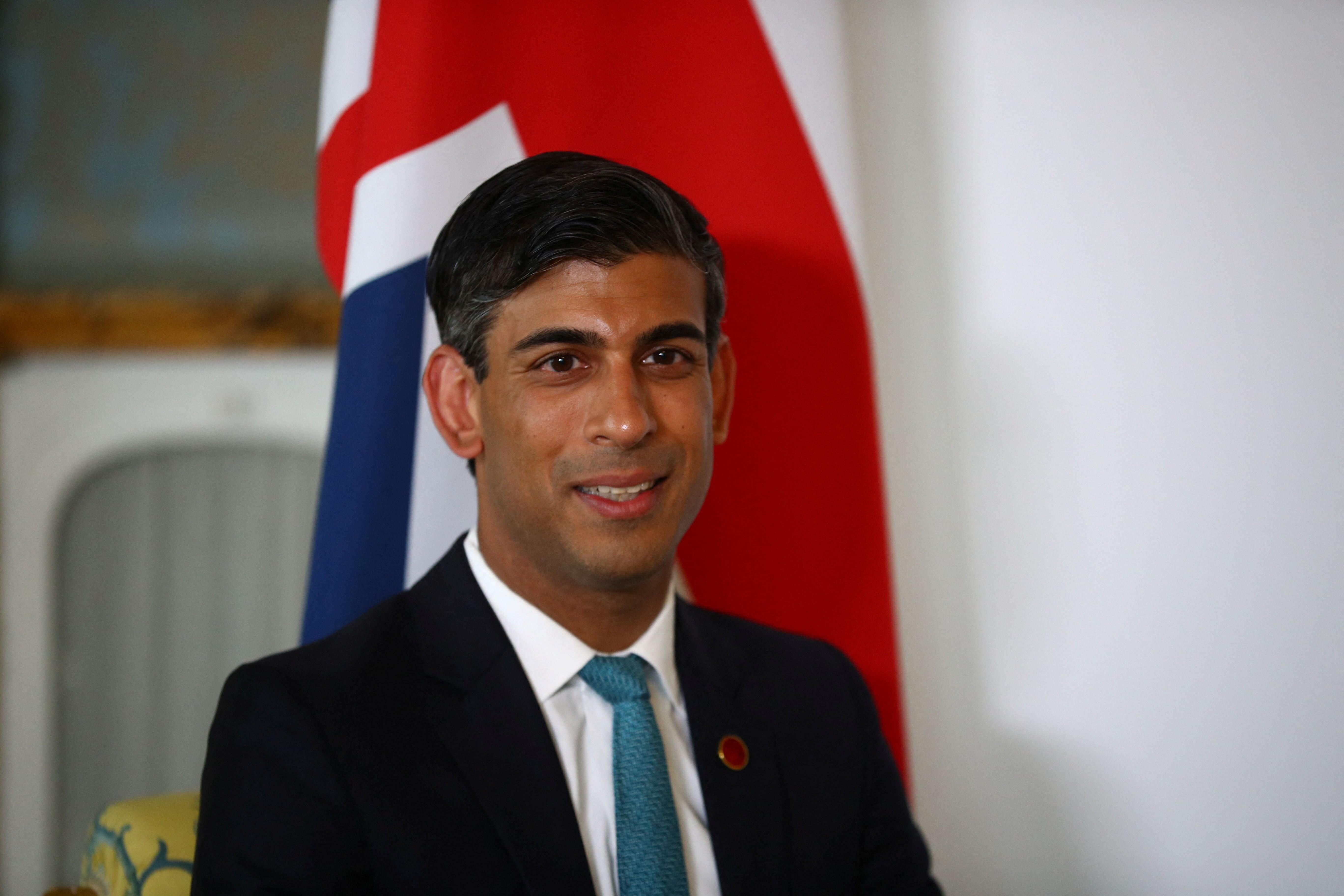
And the blame for that may ultimately lie with chancellor Rishi Sunak. When a flat-rate payment was floated earlier this year, the Treasury ruled it out on the grounds that the cost would be too high because of the sheer numbers who were getting Covid. That ignored both just how dynamic the situation was (the cost reduces as cases reduce) and also the huge savings to the public purse achieved by avoiding lengthy lockdowns.

This whole issue reignited today when Politico revealed emails from senior civil servants complaining that the furlough scheme was being used to help those temporarily off work because of Covid isolation. The most telling line, written in January at the height of the third wave, was this: “Incentive payments are too low to incentivise employees to take tests due to risk of loss of income.”

Even aside from using furlough more flexibly to cope with illness, the chancellor has refused repeated requests to increase statutory sick pay (the UK has one of the lowest rates in Europe).

That seems to be partly because of a fear (possibly misplaced given the government’s majority) that such a hike could not be reversed in future. Yet the sums needed for isolation payments are minor compared to the £37bn earmarked for Test and Trace.

Of course, surge testing still matters (and Test and Trace should get credit for its ability to help councils rapidly boost testing). So too does surge vaccination, although as Blackburn’s public health director today pointed out, jabbing the over-12s is desperately needed particularly in areas with high Asian populations, many of them young.

But it’s the lack of a surge in sick pay that is perhaps the most baffling part of the government’s response. With vaccine protection taking two weeks, getting the infected to swiftly stay at home arguably matters more even than getting them jabbed.

And with Chris Whitty warning today of an “exit wave” that will follow the July 19 unlocking, and “winter surge” later this year, the need for higher levels of self-isolation is as pressing as ever.

The economic risks of further possible lockdowns ought to be enough to prompt a rethink on isolation payments from Sunak, before he’s inevitably urged to do so by the parliamentary inquiry.

If not, he may just gift Keir Starmer the present he desperately needs to tie both No.10 and No.11 in a joint enterprise on Covid failures.

Share Button

Treasury ‘Suppressed’ Access To Furlough Payments For Workers Sick With Covid

HANNAH MCKAY via Getty Images

Keir Starmer has hit out at claims that the government suppressed furlough funding for sick workers self-isolating at the height of the Covid pandemic.

The Labour leader waded into the row after it emerged that senior civil servants had complained that the Treasury was worried about publicising a relatively unknown provision in the furlough rules that allows temporary payments for staff forced to quarantine.

The Politico.eu website said it had seen emails, dated from January and February this year, showing that officials had complained about the failure to make employers and staff aware of the guidance.

“Furlough can be used to cover self-isolation, but [the Treasury] are reluctant to say this explicitly in guidance because it could lead to employees being furloughed who do not need to be,” one email read. “This is a live issue being worked through.”

One senior official explained in their complaint: “Incentive payments are too low to incentivise employees to take tests due to risk of loss of income.”

Both Downing Street and the Treasury insisted that the guidance was clear on the government’s own website that the furlough scheme had never been intended to be used as a substitute for statutory sick pay.

But Labour said the revelations were “shameful and reckless”, with Starmer adding he was “really concerned” about any suggestion of restricting cash help for home quarantine.

“One of the big issues for the 14 months or so we have been in the pandemic has been whether people feel that they can afford to self-isolate,” he told reporters during a visit to Airbus in Bristol.

“Self-isolation is a huge tool in the armoury when it comes to defeating the pandemic, but too many people felt that they couldn’t afford to self-isolate.

“We have been saying this for a year or more, so the idea now that this has been suppressed I think is so wrong in terms of how we fight this pandemic.”

Shadow Treasury minister Bridget Phillipson added: “It is shameful and reckless that the Chancellor ignored professional advice and put countless people and workplaces at unnecessary risk when he had the opportunity to help.”

The government guidance for firms makes clear that short-term illness or isolation “should not be a consideration when deciding if you should furlough an employee”.

But it adds: “If, however, employers want to furlough employees for business reasons and they are currently off sick, they are eligible to do so, as with other employees. In these cases, the employee should no longer receive sick pay and would be classified as a furloughed employee.”

Government sources said that the reason for the rules was that HM Revenue & Customs would have no mechanism or way of identifying those being furloughed for short term sickness, and it could open the whole scheme to fraud risk.

The prime minister’s official spokesperson said: “The guidance on Gov.uk sets out that the furlough scheme is not intended for short-term absences from work due to sickness and self-isolation should not be a consideration when a business is deciding if a business should furlough an employee.”

A Treasury spokesperson added: “It has always been clear that the purpose of the furlough scheme is to support jobs – we’ve been upfront about that from the start.

“We have a specific support package in place for those self-isolating due to coronavirus, including £500 one off payments for those on low incomes.

“If an employer wants to furlough an employee for business reasons and they are currently off sick then they are eligible to do so as with other employees. This has been set out in guidance since April last year.”

Separately, Downing Street tried to play down reports that ministers would legislate to allow a legal right to work from home because of the pandemic.

“We’ve asked people to work from home where they can during the pandemic but there are no plans to make this permanent or introduce a legal right to work from home,” the PM’s spokesperson said.

“There’s no plans to make working from home permanent or introduce a legal right to work from home.”

But he added the government was committed in its manifesto to a possible default right to flexible working. “What we’re consulting on is making flexible working a default option, unless employers have good reasons not to.”

He defined flexible working as “a range of working arrangements around time, place and hours of work including part-time working, flexi-time or compressed hours” but not necessarily working from home.

Share Button

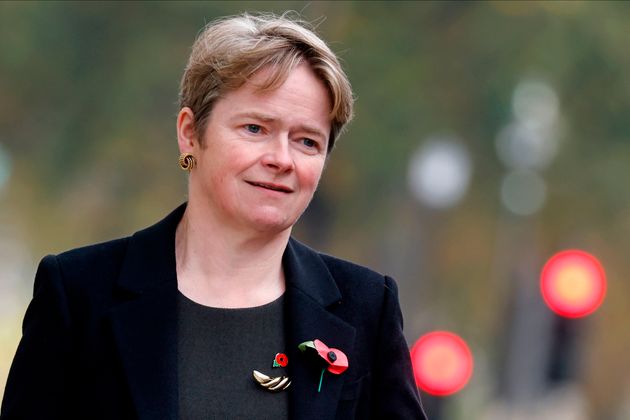

Ex-Test And Trace Chief Dido Harding Has Applied To Run The NHS

TOLGA AKMEN via Getty Images

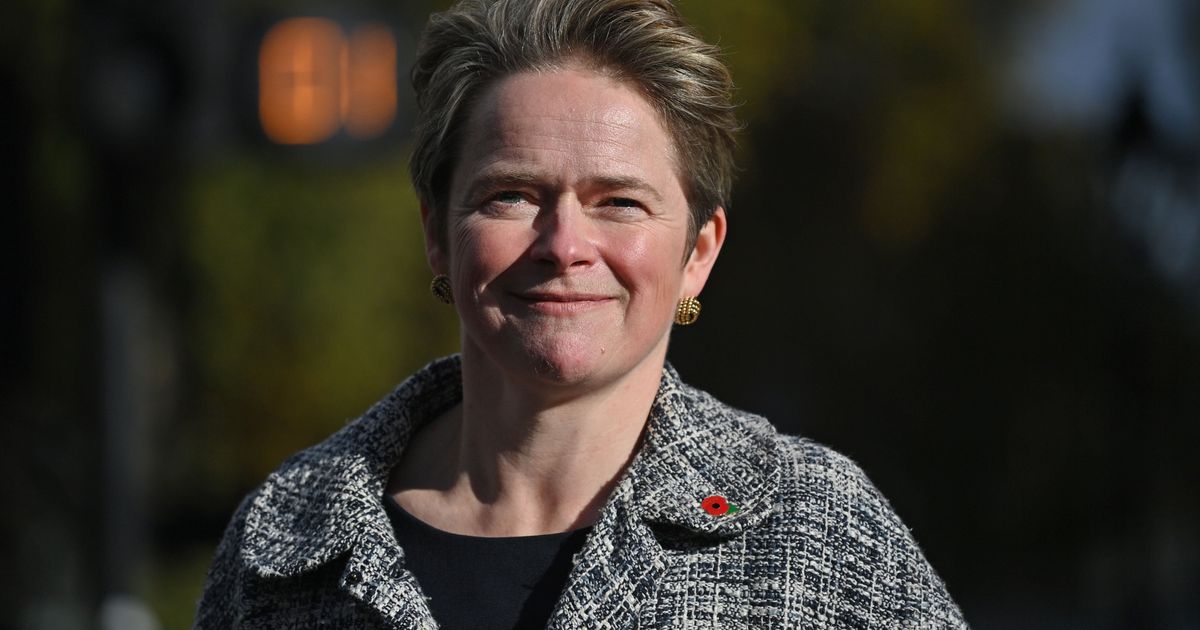
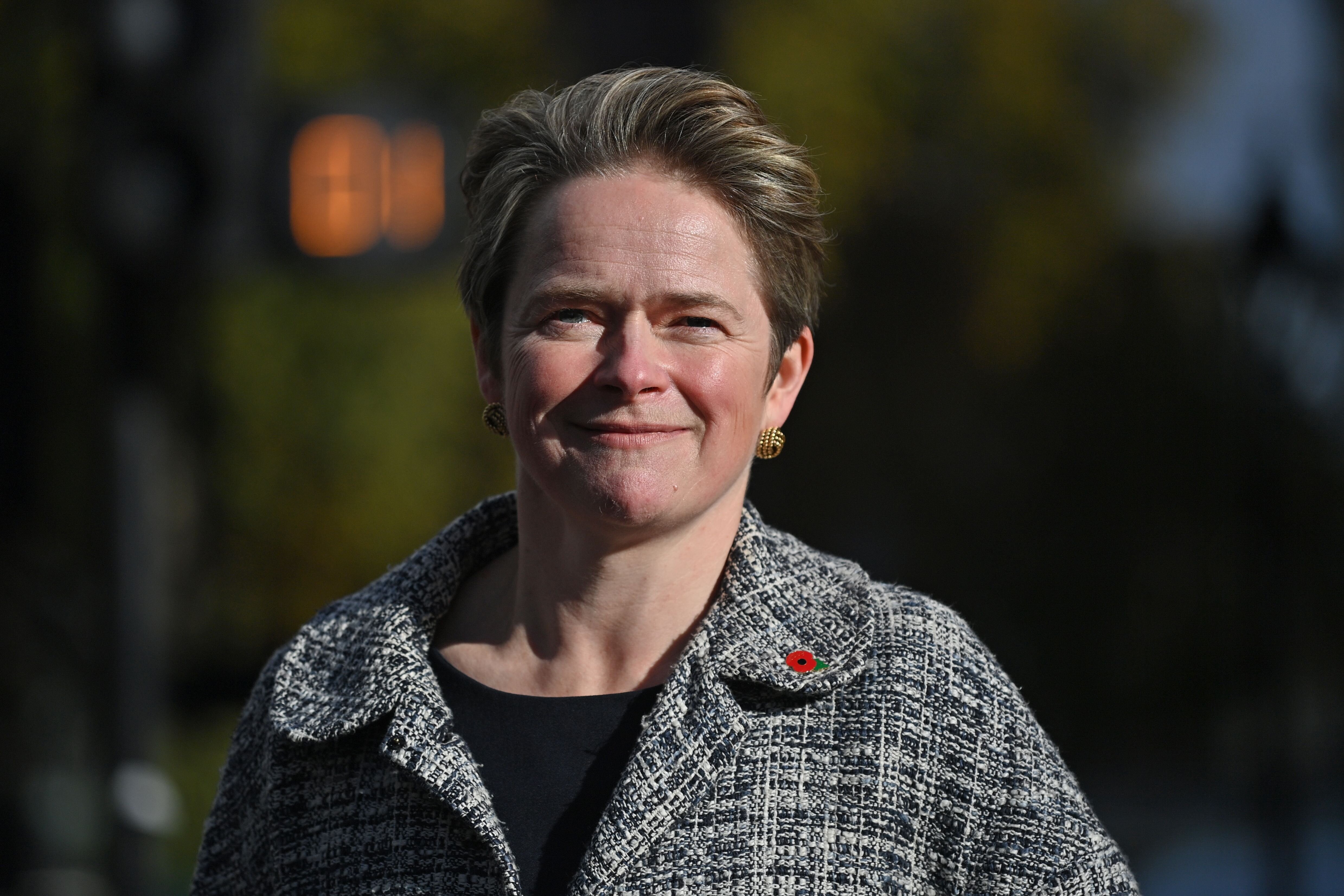
Former Test and Trace chief Dido Harding has applied to become the next head of the NHS.

Current chief executive Sir Simon Stevens will stand down at the end of July, creating a vacancy for a post that often has more power than most Cabinet ministers.

The Tory peer’s move emerged in a new updated biography of her on the NHS England website, which stated she had stepped aside from her position as chair of NHS Improvement pending her application.

The ex-Talk Talk telecoms boss hit the headlines throughout the Covid pandemic when she was appointed by health secretary Matt Hancock, without competition, to run the much-criticised £37bn Test and Trace programme.

Harding was appointed last summer and finally stepped down from the role this April, reverting to her NHS Improvement post only.

Test and Trace was this year criticised by the Commons Public Accounts Committee, which said there was “no clear evidence” it contributed to a reduction in coronavirus infection levels.

Although several NHS officials are expected to go for the top job, Harding’s Tory links plus her lack of experience running hospitals would make her appointment highly controversial.

Harding’s updated biography on the NHS England website states: “Dido has applied to become the next CEO of the NHS and has therefore stood aside as chair of NHS Improvement whilst the recruitment process takes place. Sir Andrew Morris is standing in for her during this time.”

According to the NHS England annual report for 2019/20, the chief executive salary was between £195,000 and £200,000.

Until Thursday, Harding had only said she was “thinking about” applying for the NHS chief executive job.

She was made a Tory peer by David Cameron, a fellow Oxford contemporary, and is married to Tory MP and former minister John Penrose.

Shadow health minister Justin Madders told HuffPost UK: “I would hope that all candidates applications are judged on the basis of their recent performance in public sector roles, which in her case speaks for itself, failing which Dominic Cummings WhatsApp ought to provide a candid assessment”

Share Button

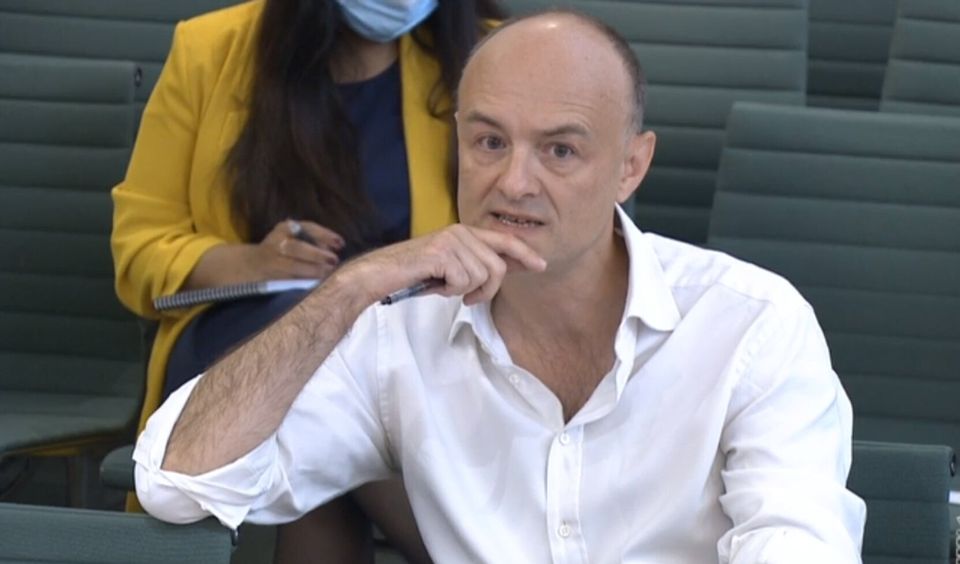
Cummings Wants Hancock’s Scalp, But Keir Starmer Is Right To Focus On The PM

“Brevity is the soul of wit/And tediousness the limbs and outward flourishes.” Thanks to his latest long, long blogpost, Dominic Cummings has perhaps proved one thing beyond doubt: he’s no student of Shakespeare.

With his 7,286 words, wonky screenshots and phone snaps, Boris Johnson’s former chief adviser displayed once more a literary incontinence that only the internet can allow. It was not so much a stream of consciousness as a scream of bumptiousness, laced with venom.

Cummings’ new opus was seen as both tedious and treacherous by many Tory MPs, who share a mutual loathing with the ex-Vote Leave chief. The public too appear to have long ago concluded that he is far from a credible witness in any prosecution case against Johnson’s failings on Covid.

The mastermind of the £350m-a-week-for-the-NHS on that bus, the genius behind the ‘76 million Turks are joining the EU’ poster, is hardly the man to lead the charge against lying in politics.

And there’s no question that Cummings is in many ways his own worst enemy. His renewed character assassination attempt on Matt Hancock was so relentless that it undermined some of the more sensible points he tried to make about the failures of governance at the start of the pandemic. Talk about blogging a dead horse, we get that he hates Hancock already.

Yet if you got beyond the word-blizzard, the repeated use of italics for emphasis, the ACRONYMS and bolded out jargon, the obsessive lists of lettered (A to E) and numbered (1 to 4) paragraphs, there were some nuggets that ought to concern everyone well before the public inquiry begins.

Hancock’s claim in March to have got PPE supplies “all sorted” was undermined by an official telling Cummings that procurement rules and cost concerns meant masks, gloves and gowns being shipped rather than flown from China. Most damning of all was Johnson’s WhatsApp message, “On PPE it’s a disaster. I can’t think of anything except taking Hancock off and putting Gove on.”

Similarly, on delays in getting more ventilators, the PM’s verdict was just as withering: “It’s Hancock. He has been hopeless.” And on the health secretary’s failure to get more Covid testing, Johnson upped the disdain with that eye-catching expletive: “Totally fucking hopless.”

It’s worth saying that on the central charge that Hancock “lied”, the jury remains out because there is no recording of what he actually promised in the Cabinet room. Cummings again claimed cabinet secretary Mark Sedwill said that he and other ministers and officials lacked confidence in Hancock’s “honesty”.

But while saying this conversation was “reinforced in written exchanges”, he failed to publish them. We now await for the Commons select committees to get Sedwill’s own version. I recall No.10 admitting it hadn’t contacted the former cabinet secretary (who, let’s not forget, Cummings helped to oust from his job). Surely the MPs have asked him about such a serious charge?

Given that Cummings’ blog dropped shortly before PMQs, some have accused Keir Starmer of missing an open goal by failing to quote the “fucking hopeless” claim. Yet I can see why the Labour leader opted not to focus on Hancock, partly because blaming him may end up being Johnson’s alibi come any public inquiry. “Hopeless Hancock” could be reshuffled soon, too.

Starmer did quote Cummings, but only on his previous claim that Johnson had a chaotic border policy. He realised that while the personality politics of last year’s sweary WhatsApps may make good newspaper copy, the public are more focused on the here and now of why the Indian variant has been allowed to let rip.

Raising again the issue of proper payments for self-isolation (on the day it seems the Cabinet Office has its own internal document urging just that), plus the ending of business rate relief and full furlough, showed he was talking to immediate concerns not historic ones. Hospitality and small businesses groups contacted Starmer after PMQs thanking him for raising their lack of support and clarity, I’m told.

And Starmer’s strategic target is of course the PM himself. That’s why Labour talks about ‘the Johnson variant’ of the virus and it’s why it will keep hammering its message that lax border controls may have undermined all the hard work of both the public and the NHS’s vaccine programme.

Yet there was material in the Cummings blog that will come in useful in attacking Johnson. We learned for the first time that the PM had texted to his advisers “how do we win the herd immunity argument?” The full text of that was frustratingly not reproduced (and Johnson is bound to argue he didn’t go ahead with that argument anyway).

The account of how Johnson runs meetings, avoiding conflict, failing to ask proper questions to officials, “doing a thumbs-up and pegging it out of the room before anybody can disagree”, sounded all too realistic. This at least proved the PM is as blithe in private as he is in public, but it’s a worrying lack of leadership nevertheless. Starmer, in the G7 statement later, had a wounding line that Johnson was a “host, not a leader, a tour guide, not a statesman”.

For his part, Johnson in PMQs showed again why he’s a formidably cynical politician. Every question was batted away with “Brexit, vaccines, flip-flop Starmer, Brexit, vaccines, flip-flop Starmer”. His jibe that “Captain Hindsight needs to adjust his retrospectoscope” was actually pretty funny.

Faced with such spin and sleight of hand, Starmer can only hope that the public will one day tire of the jokes and the failures of governance. He needs to combine the air of being a grown-up in the room with his own message of optimism, just as Joe Biden persuaded Americans that the crazy years had to be followed by calm good government.

If Labour can at the next election persuade the voters that it is Boris Johnson who was “fucking hopeless” in keeping Covid under control, that’s a much bigger prize than giving Dominic Cummings the scalp of the health secretary. The party needs big answers on big issues like childcare, social care and life chances too. But Starmer at least has his eyes on the real target.

Share Button

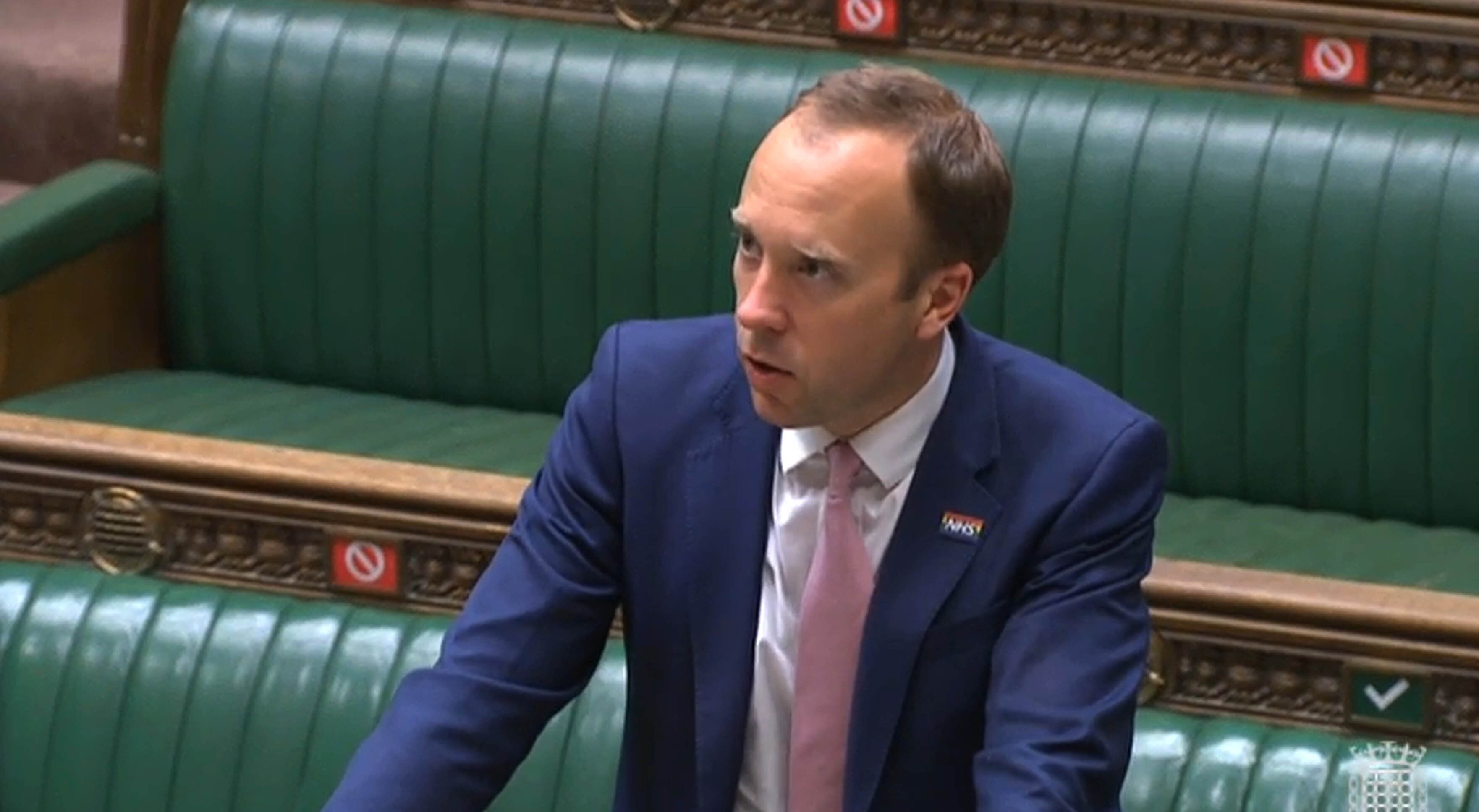
Hancock Confirms Plan To Make Covid Vaccines Compulsory For All NHS And Care Workers

Matt Hancock has confirmed that Covid vaccination is to be a condition of employment for care home staff and that the government will consult on a similar rule for NHS staff.

The health secretary told MPs of the move, despite opposition from Labour, trade unions and others who fear it could prove counter-productive.

Speaking in the Commons, Hancock said: “The vast majority of staff in care homes are already vaccinated but not all, and we know that the vaccine not only protects you but protects those around you.

“Therefore we will be taking forward the measures to ensure the mandation as a condition of deployment for staff in care homes and we will consult on the same approach in the NHS in order to save lives and protect patients from disease.”

He added that he would now consult on whether all healthcare staff, including those in the NHS and domiciliary care, should face similar rules.

“The principle of vaccination for those in a caring responsibility is already embedded and indeed there is a history going back more than a century of vaccination being required in certain circumstances, and I think these are reasonable circumstances.

“So, we will go ahead for those who work in care homes and we will consult for those in domiciliary care and on the NHS.”

He added that he had no wider proposals to make the vaccinations compulsory for the public, but did say that the state had a lesser “duty” toward those who had refused to be jabbed.

Former minister Steve Baker suggested carers should have a right to choose between the vaccine or daily lateral flow tests, but Hancock replied: “It is a matter of risk and we know the vaccine reduces that risk very significantly.”

The prime minister’s official spokesperson said that no vote by MPs would be required to enact the change.  “I don’t believe this is something that would be voted on in parliament,” he said.

England’s chief medical officer, Professor Chris Whitty, has said doctors and care workers have a “professional responsibility” to protect their patients, just as they already have a “duty” to get jabbed for hepatitis B.

But the backlash against making Covid vaccinations effectively compulsory for care home staff began in earnest, with some in the sector warning it would make it harder to attract badly-needed employees and could lead to some quitting.

The GMB union claimed more than a third of carers would consider leaving their jobs if vaccinations become compulsory.

NHS figures to June 6 show overall that 84% of staff in older adult care homes in England have had one dose of vaccine, and almost 69% have had both jabs.

But the data shows that in Hackney, east London, for example, just 66.7% of staff in older adult care homes have had their first dose, with only 58.6% of staff in the borough having both doses.

Dr Susan Hopkins, strategic response director for Covid-19 at Public Health England, told MPs “people may vote with their feet, and not want to have the vaccine, and therefore not work in a care home, and that could lead to staff supply issues in care homes”.

She told the Science and Technology Committee: “I will remain a little bit concerned that we will have shortages of care staff once the mandate has come in, but I’m sure that the vast majority of care workers do want to do the right thing and get vaccinated to protect the elderly under their care.”

Research published last month by the London School of Hygiene & Tropical Medicine (LSHTM) found Black African and mixed Black African staff are almost twice as likely to decline a vaccination as white British and white Irish participants.

Reasons included concerns about a lack of research and distrust in the vaccines, healthcare providers, and policymakers.

Unison general secretary Christina McAnea said: “The only way out of the pandemic is for everyone that can to have their jabs. Encouragement has the best results and research shows coercion makes the nervous less likely to be vaccinated.

“The government’s sledgehammer approach now runs the risk that some care staff may simply walk away from an already understaffed, undervalued and underpaid sector.”

GMB national officer Rachel Harrison said: “The government could do a lot to help care workers: address their pay, terms and conditions, increasing the rate of and access to contractual sick pay, banning zero hours, and ensuring more mobile NHS vaccination teams so those working night shifts can get the jab.

“Instead, ministers are ploughing ahead with plans to strong-arm care workers into taking the vaccine without taking seriously the massive blocks these workers still face in getting jabbed.”

Mike Padgham, chairman of the Independent Care Group (ICG) which represents care homes in Yorkshire, said “it will put people off coming into the service”.

“The second problem is people who are already working in the service who might not want the vaccine. We are so stretched for frontline staff. It sounds easy to redeploy them but it isn’t easy to replace them when you redeploy them. And I think people will be put off.”

Director of public health for Gateshead, Alice Wiseman, told Times Radio she backed the move, saying: “This is a really difficult decision because nobody ever wants to take away an individual’s right to have that choice.

“But we do make some vaccines mandatory in other aspects of healthcare. So, for example, we ensure all surgeons have their hep B vaccination, and it’s really important that we do this where we’re protecting those people who we are caring for.”

Share Button

GB News’ Simon McCoy Addresses ‘Idiot’ Trolls Trying To Prank Show: ‘Grow Up’

GB News presenter Simon McCoy has urged trolls texting into the fledgling broadcaster as a prank to “grow up”.

Since its launch over the weekend, a number of GB News presenters have been tricked into reading out texts from viewers with names like “Mike Hunt” and “Mike Oxlong”.

And it would appear that former BBC News anchor Simon has had enough of it.

Taking the moment to address viewers during his show on Wednesday afternoon, he began: “I’m just going to say something because if you’ve seen the papers, if you’ve seen Twitter, some people think it’s really funny to send in texts and messages on the basis that if we read them out we’ve been had.

“And you’re still doing it, and I’m watching them, and it doesn’t help anybody.”

Co-host Alex Phillips then offered: “We’re just not going to read surnames from now on.

“Well,” Simon continued. “So, to the person that’s just messaged in… grow up!

“We’re a new company, we’re a new broadcaster, there are systems that we’re putting in place that would stop idiots like you getting through. They’re getting through at the minute but… please? We’ve got other things to worry about.”

“Come on, now,” Alex agreed.

Referring to the show’s repeated technical issues, Simon then joked: “Mind you if you can hear us, that’s an improvement. All of you with serious views, we still welcome them.”

Unfortunately, this was then immediately followed by… another of the aforementioned technical issues that have blighted the channel for the past few days.

GB News

Simon McCoy and Alex Phillips earlier this week

Share Button

How Many Deaths Is Boris Johnson Willing To Tolerate To Keep His July 19 Promise?

You’re reading The Waugh Zone, our daily politics briefing. Sign up now to get it by email in the evening.

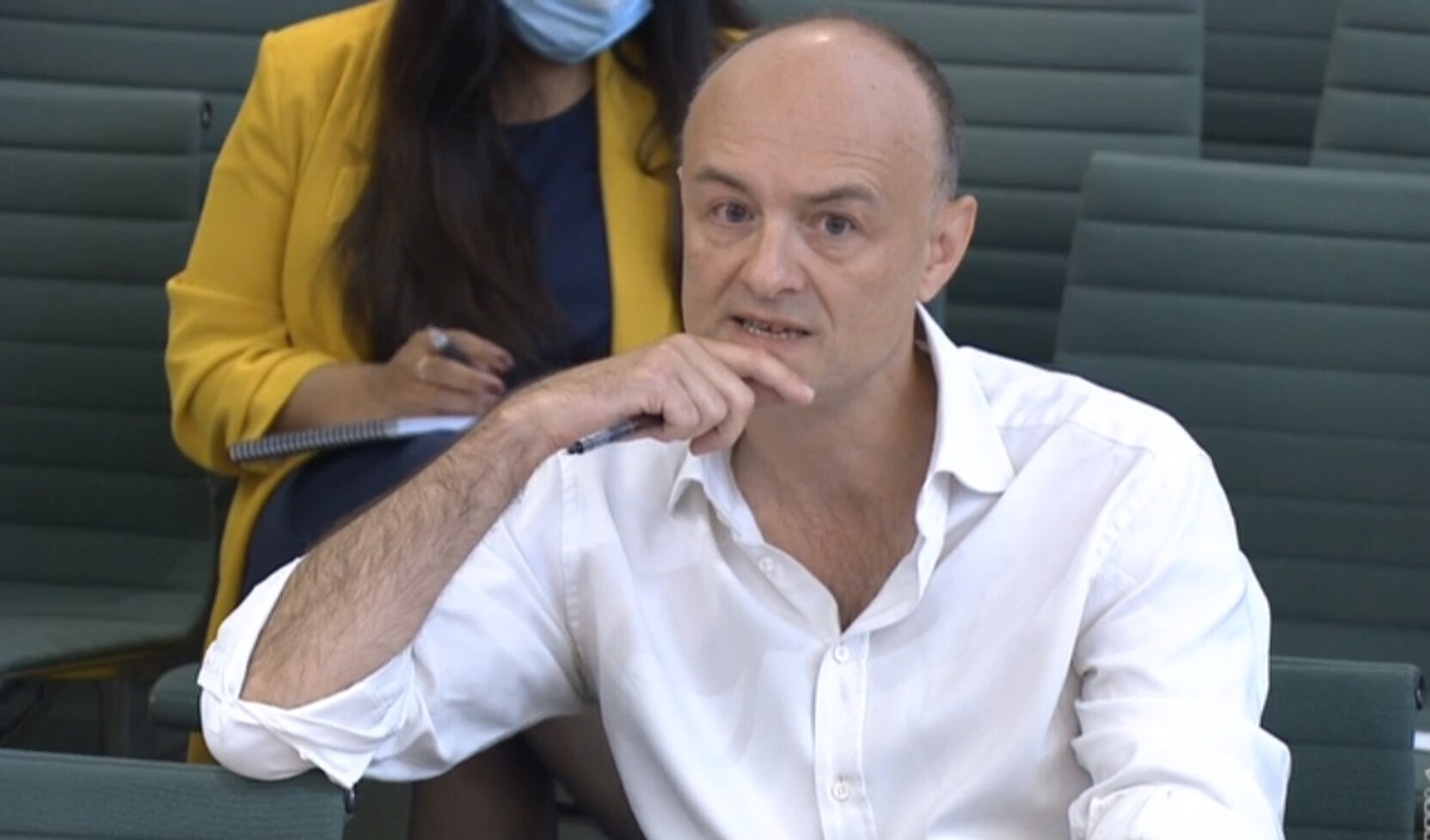
It’s barely three weeks since Dominic Cummings gave his evidence to MPs, yet it already feels like a long time ago. Boris Johnson’s former chief adviser may have electrified Westminster but he left the public just shrugging its shoulders in contempt, leaving barely a trace.

Still, Cummings’ real impact may have been in highlighting the need for the PM to be extra-cautious about Covid, heeding the warning signs when case numbers spike and forcing him to really listen to his medical and scientific advisers.

We also have Cummings’ testimony to thank for getting on record Johnson’s frustration last autumn that he hadn’t acted more like “the Mayor from Jaws”. And today, Labour pounced on that phrase to ram home what it thinks is one of his biggest blunders of the pandemic: not closing the borders to India.

In possibly his best speech since taking the job of shadow home secretary, Nick Thomas-Symonds said that the 14 day delay in putting India on the “red list” was a “fortnight of failure” driven by Johnson’s desire to have a photo-op with Narendra Modi. It was not the India variant, nor the Delta variant, but “the Johnson variant”.

Moreover, Thomas-Symonds said Johnson’s Jaws mayor tribute act had had tragic consequences with “British people..attacked in their thousands” by the shark of Covid. He even conjured up the image of Keir Starmer as police chief Martin Brody from that same movie: “eyes on the shark, doing everything to keep people safe”.

Some in Labour have been pushing hard for months to ram home this attack line about the need for tighter borders. It turns Johnson’s “take back control” Brexit mantra into a judo throw aimed at knocking him off his balance. Allied with more state funded support for the aviation and travel industry, it is at least a coherent strategy and one that anticipated imports like the Delta variant.

Though it avoids the “hindsight” charge, there are pitfalls. One risk is that Labour can appear to be banking on the virus outpacing the vaccines in coming weeks, in the hope of proving itself right about Johnson’s border failure. Without careful handling, that could turn out to be an even worse look than an opposition which relies on increases in unemployment to win power.

Then again, as I mentioned last night, there is a real risk entailed in the PM claiming July 19 is a “terminus” date. Michael Gove highlighted the implicit logic of that approach this morning when he refused to deny that hundreds of deaths would now be tolerated once the final unlocking happens.

“Hundreds” is of course much less than the “thousands” (or “tens of thousands” the PM referred to at one point yesterday) that would have died if the June 21 unlocking had gone ahead. Yet the Sage papers released on Monday night made for grim reading. Even with a five-week delay, one model estimates between 31,200 and 62,900 extra deaths by December 31.

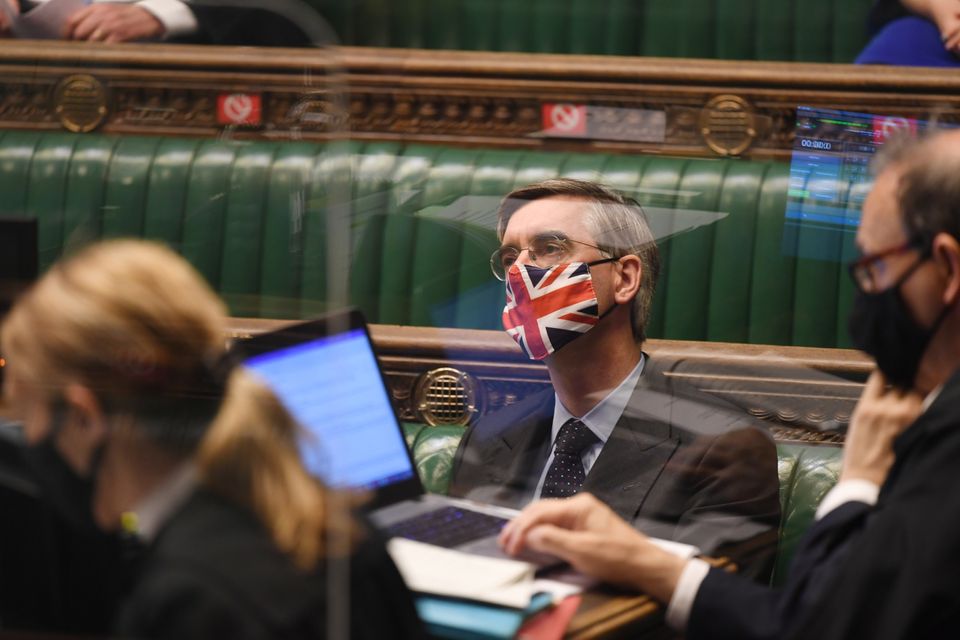
Those death numbers are much, much higher than the worst winter flu outbreaks, even though that’s the comparison increasingly made by ministers. On ConHome’s Moggcast, Jacob Rees-Mogg said “you can’t run society just to stop the hospitals being full”, but he also said deaths were the key metric – and on this measure the Indian variant could yet wreak havoc.

Rees-Mogg has proved he has more lives than Gavin Williamson in his current post and that may in part be because he reflects the lockdown sceptic views of some backbenchers. The PM too is more of a Mayor Vaughn than a Chief Brody. He is clearly braced for more fatalities, the question remains just how many he will tolerate, and whether he will tell us what the number is.

But just how many excess deaths will the public tolerate? The phrase you’ll hear in coming weeks is that we all have to “learn to live with” Covid. For the families of those who fall prey to this awful virus, that may sound like learning to die with Covid. And even Boris Johnson’s famed political skills may have trouble with that soundbite.

Share Button

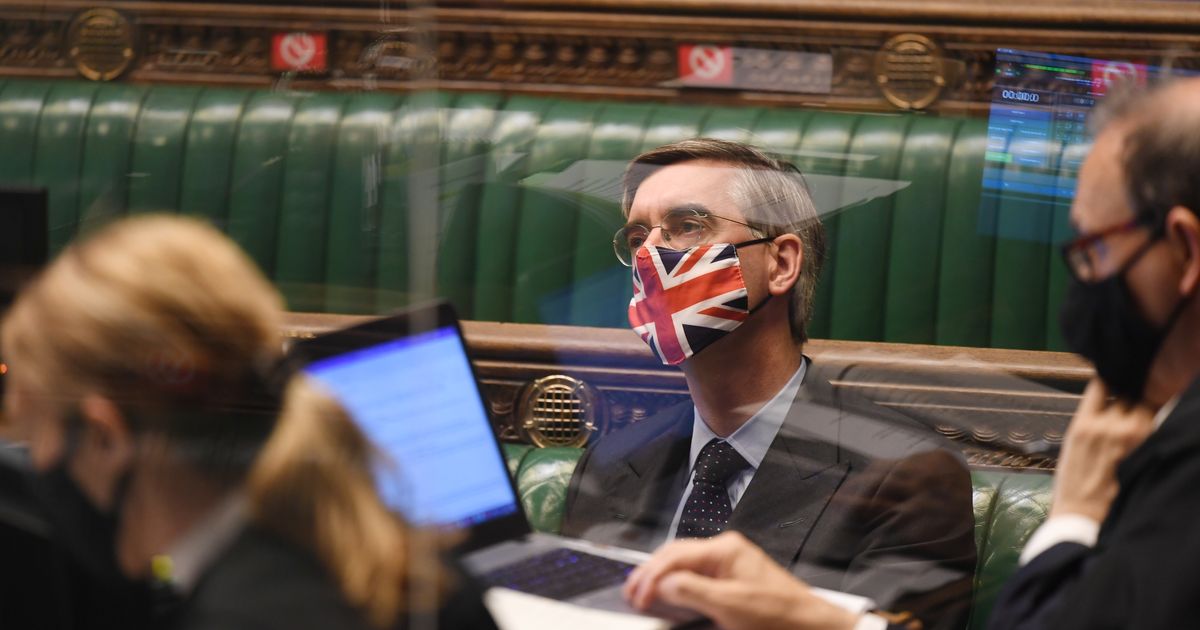
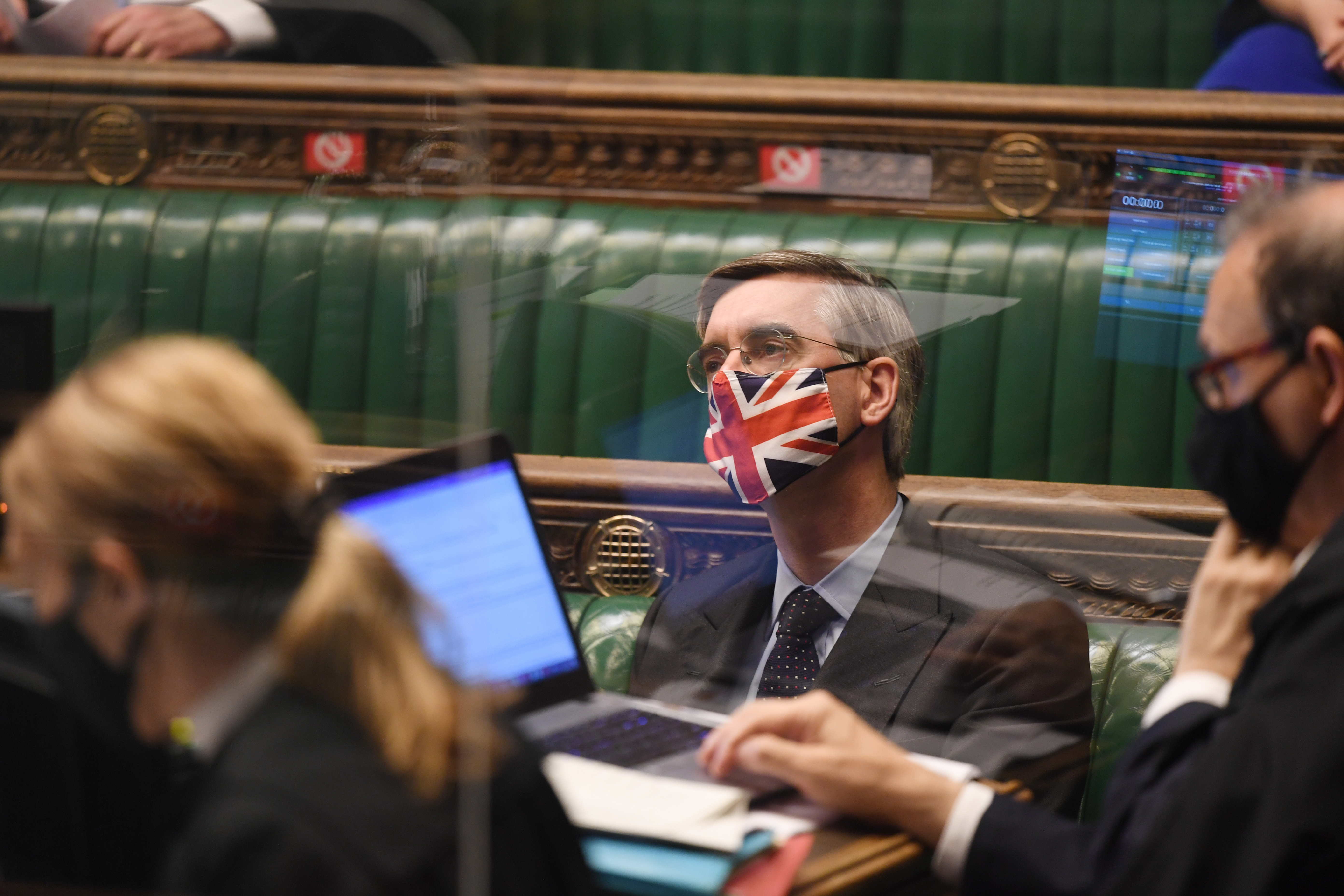
Rees-Mogg Says Lockdown Can’t Continue ‘Just To Stop The Hospitals Being Full’

Leon Neal via Getty Images

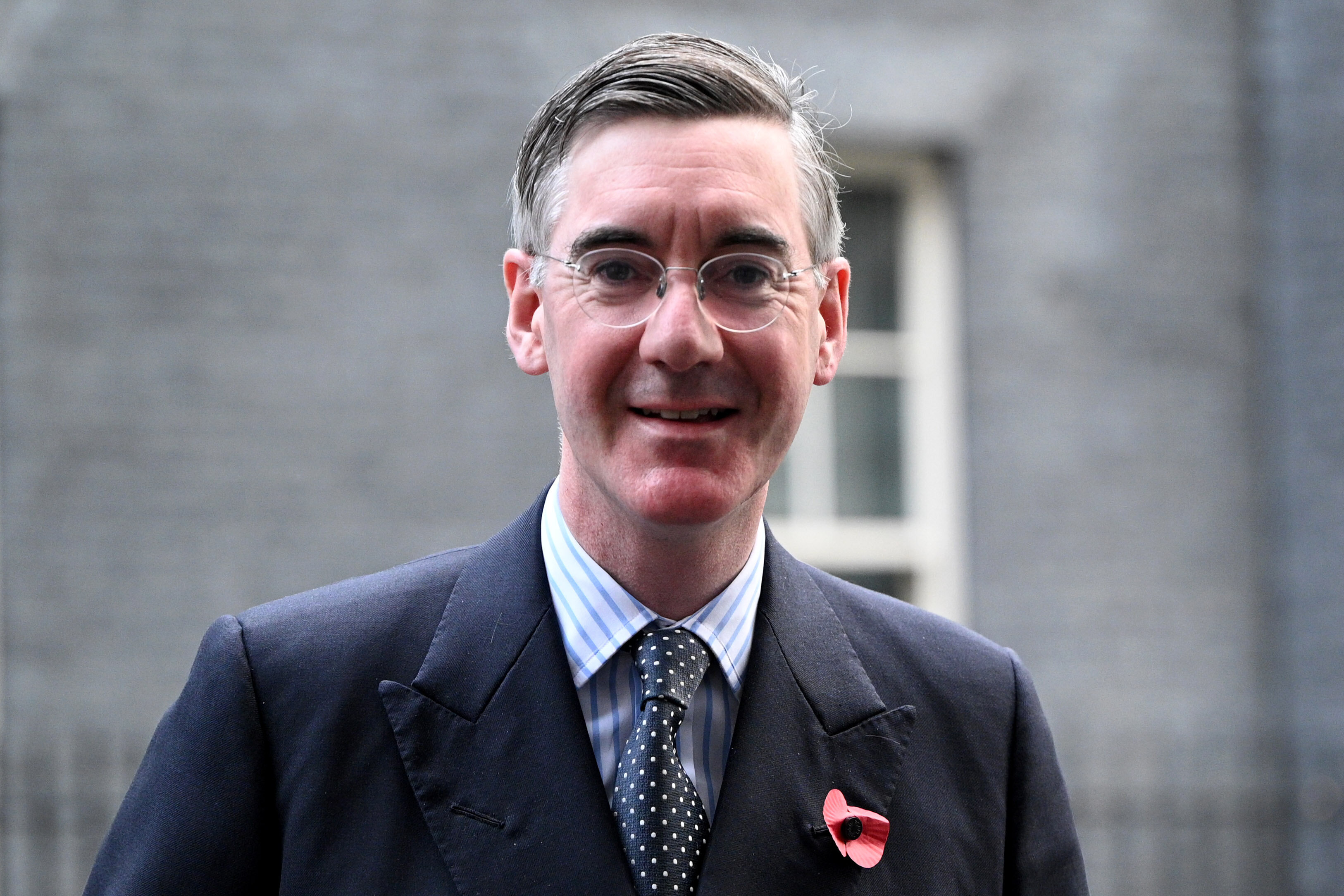
Cabinet minister Jacob Rees-Mogg has come under fire from Labour after he suggested that lockdown curbs can’t continue “just to stop the hospitals being full”.

The Commons Leader told ConservativeHome.com’s “Moggcast” podcast that “the NHS is there to serve the British people, not the British people there to serve the NHS”.

He also suggested that protecting the health service should no longer be the government’s top priority and that patients entering hospital for a few days was “not very important”.

Rees-Mogg said that “infections are not what matters any more”, adding that the number of deaths from Covid should be the key consideration as the UK came out of the pandemic and ministers weighed up the need for personal freedom.

The minister was asked about the prospect of the Indian variant of Covid spreading further in the absence of two doses of vaccines for all adults, and the prospect of hospitals being “clogged up” as they struggled with a backlog of non-Covid cases.

He replied: “Ultimately, the NHS is there to serve the British people, not the British people there to serve the NHS, and therefore we may need to spend more money on hospitals but you can’t run society just to stop the hospitals being full.

“Otherwise you’d never let us get in our cars and drive anywhere or do any of the other things that people want to do. There has to be some proportionality within that. The government doesn’t have the right to take charge of people’s lives purely to prevent them seeing the doctor.”

He went on: “Actually, otherwise we’d never be allowed in our kitchens where a disproportionate number of accidents in the home take place or our bathrooms, so we’d become very hungry and very smelly on that basis.”

Rees-Mogg, who spoke just hours before Boris Johnson confirmed the final removal of Covid restrictions would be delayed from June 21 to July 19, added that with the older population jabbed young people who caught Covid were less of a worry.

“If everybody in the top nine categories has had the double vaccination and has had two weeks afterwards, people below those categories aren’t at a particular risk,” he said.

“Infections are not what matters anymore. Two things that matter: can the NHS cope and the number of deaths. Overwhelmingly important is the number of deaths. People going into hospital for a couple of days and coming out again, it’s not very important. If they’re dying, it’s very important.”

Shadow health minister Justin Madders said: “Rees Mogg spends so much time with nanny he thinks the nanny state lurks around every corner. Comparing a pandemic with accidents at home is a ludicrous analogy to make and shows a complete detachment from how this virus has affected people.

“His statement that it’s not the government’s job to protect the NHS is foolish in the extreme and of course contrary to his own government’s policy for the last year. The mask has slipped if he doesn’t think the NHS is worth protecting. As for his comments that people going into hospital with Covid for a few days is ‘not very important’, has he even heard of Long Covid?

“His claim that ‘infections are not what matters any more’ is plainly contrary to the advice of the government’s scientific advisers, because it is rising infections from the Delta variant that has delayed Freedom Day, which is entirely down to the government’s negligence.”

No.10 refused to endorse the cabinet minister’s remarks, preferring to underline that the government’s four tests for each stage of its “roadmap” out of lockdown still applied.

One of those tests is that “infection rates do not risk a surge in hospitalisations which would put unsustainable pressure on the NHS”, and a rapid increase in hospital admissions in recent weeks has put it in doubt.

The other key test – that “the assessment of the risks is not fundamentally changed by new variants of concern” – has not been passed, chief medical officer Chris Whitty confirmed on Monday.

Asked if Rees-Mogg was representing the government’s position by saying society couldn’t be run to avoid hospitals being full, the PM’s official spokesperson replied: “The position we’re using is the four tests.

“And on that basis, we don’t meet those four tests and so that is why we are not proceeding.”

He added that ahead of the July 19 date: “We will decide using the four tests when we come up to that period a week beforehand.”

Share Button