Care should focus on healthy eating and exercise, not medicines such as weight-loss injections, says the World Health Organization


Care should focus on healthy eating and exercise, not medicines such as weight-loss injections, says the World Health Organization
Rosanna Brown was advised to end her pregnancy because her baby had a life-threatening condition.
For some, a hangover can start an anxious spiral. We spoke to experts about the reasons why.
Relatives of Louise Corbett Gibbons support the campaign for an inquiry into screening services.
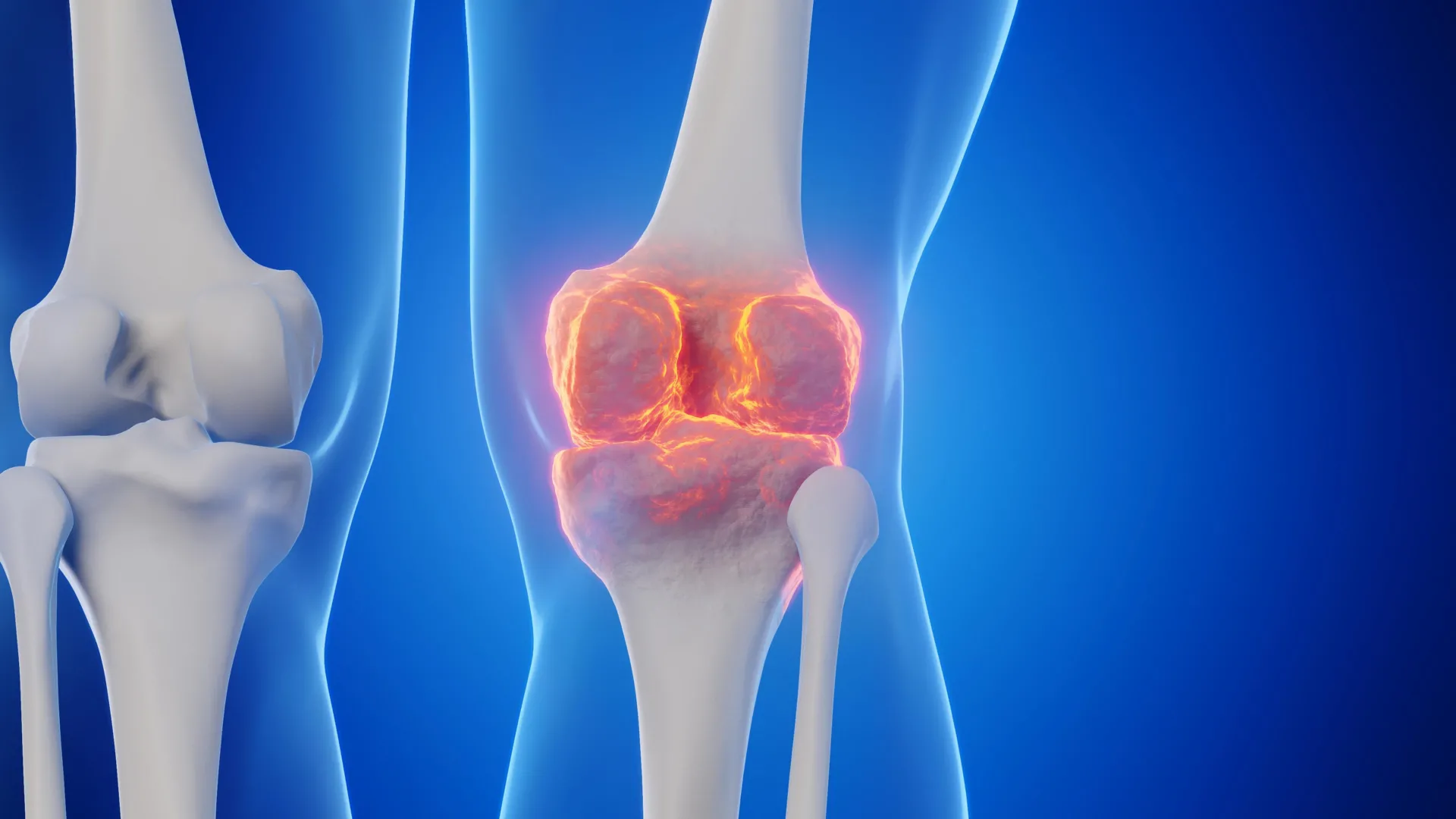
Scientists have identified a way to restore cartilage in aging knee joints, at least in mice, by blocking a protein whose levels rise with age. The approach not only reversed naturally occurring cartilage loss in older animals, but also protected mice from developing arthritis after knee injuries similar to ACL tears in people.
The findings also showed promise in human tissue. Cartilage samples collected during knee replacement surgeries responded to the treatment by beginning to produce new, functional cartilage.
Together, the results suggest that cartilage damaged by aging or arthritis may be more capable of repair than previously thought. If the strategy ultimately works in people, researchers believe it could potentially lead to an oral medicine or injection that regenerates cartilage and reduces the need for knee or hip replacement surgery.
Targeting the damage behind osteoarthritis
Osteoarthritis is a degenerative joint disease in which cartilage gradually breaks down, leaving joints painful, swollen and increasingly difficult to move. It affects about one in five adults in the United States and is estimated to account for roughly $65 billion in direct health care costs each year.
Current treatments mainly focus on controlling pain and other symptoms. Once the disease becomes severe, replacing the damaged joint surgically may be the only remaining option. There is currently no drug that can reliably slow or reverse osteoarthritis itself.
The Stanford Medicine-led study instead focused on a protein called 15-PGDH. The researchers have described it as a gerozyme, a term for enzymes that become more abundant with age and contribute to the gradual loss of tissue function.
Previous work by the same group showed that 15-PGDH acts as an important regulator of aging in multiple tissues. Blocking the protein with a small molecule increased muscle mass and endurance in old mice. Doing the opposite, increasing 15-PGDH in young animals, caused their muscles to shrink and weaken. The protein has also been linked to the regeneration of bone, nerve and blood cells.
In many of those tissues, healing depends on tissue-specific stem cells multiplying and developing into specialized cells. Cartilage turned out to behave differently. Instead of relying on stem cells, existing cartilage cells called chondrocytes changed their patterns of gene activity and shifted toward a more youthful state.
“This is a new way of regenerating adult tissue, and it has significant clinical promise for treating arthritis due to aging or injury,” said Helen Blau, PhD, professor of microbiology and immunology. “We were looking for stem cells, but they are clearly not involved. It’s very exciting.”
Blau, who directs the Baxter Laboratory for Stem Cell Biology and is the Donald E. and Delia B. Baxter Foundation Professor, and Nidhi Bhutani, PhD, associate professor of orthopaedic surgery, are the senior authors of the research, which was published in Science. Instructor of orthopedic surgery Mamta Singla, PhD, and former postdoctoral scholar Yu Xin (Will) Wang, PhD, are the lead authors of the study. Wang is now an assistant professor at the Sanford Burnham Institute in San Diego.
“Dramatic regeneration” of cartilage
“Millions of people suffer from joint pain and swelling as they age,” Bhutani said. “It is a huge unmet medical need. Until now, there has been no drug that directly treats the cause of cartilage loss. But this gerozyme inhibitor causes a dramatic regeneration of cartilage beyond that reported in response to any other drug or intervention.”
Cartilage is not all the same. The human body contains three major types, each designed for a different job.
Elastic cartilage is soft and flexible and helps form structures such as the outer ear. Fibrocartilage is tougher and better suited to absorbing force, including in areas between the vertebrae of the spine. Hyaline cartilage is smooth and slippery, allowing bones to move against one another with very little friction in joints such as the ankles, hips, shoulders and parts of the knee.
In joints, hyaline cartilage is also known as articular cartilage. It is the type most commonly damaged by osteoarthritis.
Osteoarthritis can develop as joints experience stress from aging, injury or obesity. Chondrocytes begin producing inflammatory molecules while also breaking down collagen, a structural protein that gives cartilage much of its strength.
As collagen disappears, cartilage becomes thinner and softer. Inflammation adds swelling and pain, creating the familiar symptoms of osteoarthritis.
The problem is that articular cartilage normally has very little ability to repair itself. Researchers have identified possible stem or progenitor cells capable of forming cartilage in bone, but efforts to find similar cell populations within articular cartilage itself have not been successful.
An aging protein becomes a target
Earlier research from Blau’s laboratory found that a molecule called prostaglandin E2 is important for the function of muscle stem cells. The protein 15-PGDH breaks down prostaglandin E2.
Blocking 15-PGDH, or otherwise raising levels of prostaglandin E2, has been shown to support regeneration in damaged muscle, nerve, bone, colon, liver and blood cells in young mice.
That raised an important question for Blau, Bhutani and their colleagues: Could the same biological pathway contribute to the deterioration of cartilage as animals age or recover from injury?
The researchers compared 15-PGDH levels in knee cartilage from young and old mice. They found that the amount of the gerozyme roughly doubled with age.
They then gave older animals a small molecule drug designed to inhibit 15-PGDH. In one experiment, the drug was injected into the abdomen so it could have effects throughout the body. In another, it was delivered directly into the knee joint.
Both approaches produced striking results.
Cartilage in the knees of older animals had been noticeably thinner and less functional than cartilage in young mice. After treatment, however, it became thicker across the surface of the joint.
Importantly, the cells were making hyaline cartilage, the smooth articular cartilage needed for healthy joint movement, rather than the less suitable fibrocartilage.
“Cartilage regeneration to such an extent in aged mice took us by surprise,” Bhutani said. “The effect was remarkable.”
Protecting knees after ACL injuries
The researchers also tested whether the treatment could help after traumatic knee injuries.
ACL tears are particularly common in sports such as soccer, basketball and skiing, where athletes frequently pivot, stop abruptly or jump. Surgery can repair the torn ligament, but fixing the immediate injury does not necessarily prevent long-term joint damage.
About 50% of people who experience these injuries go on to develop osteoarthritis in the affected joint within approximately 15 years.
In the mouse experiments, researchers administered the gerozyme inhibitor twice a week for four weeks after injury. The treatment dramatically reduced the likelihood that the animals would develop osteoarthritis.
Mice that received a control drug had 15-PGDH levels twice those of animals whose knees had not been injured, and they developed osteoarthritis within four weeks.
The treated mice also moved more normally and placed more weight on the paw attached to the injured leg than untreated animals did.
“Interestingly, prostaglandin E2 has been implicated in inflammation and pain,” Blau said. “But this research shows that, at normal biological levels, small increases in prostaglandin E2 can promote regeneration.”
Making old cartilage cells act younger
To understand what was happening inside the joint, the researchers took a closer look at chondrocytes from young and old mice.
Older cartilage cells showed more activity in genes associated with inflammation and with the unwanted conversion of hyaline cartilage into bone. At the same time, genes involved in normal cartilage development were less active.
Treatment shifted that balance.
One population of old chondrocytes that produced 15-PGDH and expressed genes associated with cartilage degradation dropped from 8% of cells to 3%.
A second population, which did not produce 15-PGDH but expressed genes linked to fibrocartilage formation, fell from 16% to 8%.
Meanwhile, a third group moved sharply in the opposite direction. These cells did not produce 15-PGDH and expressed genes involved in forming hyaline cartilage and maintaining the extracellular matrix needed for healthy cartilage function. Their share increased from 22% to 42%.
The extracellular matrix is the network of proteins and other molecules that surrounds cells and gives tissues their structure. In cartilage, it is especially important because it helps the tissue withstand pressure while maintaining the smooth surface joints need for movement.
Overall, the treatment appeared to push cartilage toward a younger biological state without recruiting stem or progenitor cells.
Human cartilage also responded
The researchers then examined cartilage taken from people with osteoarthritis who were undergoing total knee replacement surgery.
After one week of treatment with the 15-PGDH inhibitor, the human tissue contained fewer chondrocytes expressing 15-PGDH. Activity in genes associated with cartilage degradation and fibrocartilage also declined compared with untreated tissue.
Most notably, the samples began regenerating articular cartilage.
“The mechanism is quite striking and really shifted our perspective about how tissue regeneration can occur,” Bhutani said. “It’s clear that a large pool of already existing cells in cartilage are changing their gene expression patterns. And by targeting these cells for regeneration, we may have an opportunity to have a bigger overall impact clinically.”
The findings do not yet establish that the treatment can regrow cartilage or prevent osteoarthritis in people. The mouse results and experiments on human tissue represent important early evidence, but clinical trials specifically testing cartilage regeneration will be needed to determine whether the approach is safe and effective for patients.
An oral 15-PGDH inhibitor has already reached clinical testing for a different age related problem: muscle weakness.
Blau added, “Phase 1 clinical trials of a 15-PGDH inhibitor for muscle weakness have shown that it is safe and active in healthy volunteers. Our hope is that a similar trial will be launched soon to test its effect in cartilage regeneration. We are very excited about this potential breakthrough. Imagine regrowing existing cartilage and avoiding joint replacement.”
Researchers from the Sanford Burnham Prebys Medical Discovery Institute contributed to the work.
The study was funded by the National Institutes of Health (grants R01AR070864, R01AR077530, R01AG069858 and R00NS120278), the Baxter Foundation for Stem Cell Biology, the Li Ka Shing Foundation, the Stanford Cardiovascular Institute, the Milky Way Research Foundation, the Canadian Institutes of Health Research, a Stanford Translational Research and Applied Medicine Pilot grant, a GlaxoSmithKline Sir James Black Postdoctoral Fellowship, and a Stanford Dean’s Postdoctoral Fellowship.
Blau, Bhutani and other coauthors are inventors on patent applications held by Stanford University involving 15-PGDH inhibition for cartilage and tissue rejuvenation. Those applications are licensed to Epirium Bio. Blau is a cofounder of Myoforte/Epirium and holds equity and stock options in the company.

Exercise is well known for supporting physical fitness and mental well being. New research from BYU suggests it may also offer benefits for marriage, particularly when spouses are active together.
The study, recently published in Family Relations, found that couples who exercised together reported better communication, more effective conflict resolution and less marital stress than couples who did not share physical activity.
The research was led by BYU School of Family Life professor Jeremy Yorgason with co-author Ashlyn Hiatt Mildenhall, who first became involved in the project as an undergraduate researcher at BYU.
“Our findings suggest that conjoint exercise facilitates, in a small but significant way, the ability to resolve conflict peacefully,” Yorgason said. “People reported more positive outcomes in communication and conflict resolution when they exercised together.”
Exercising Together Shows Stronger Relationship Benefits
To investigate the connection between exercise and marriage, researchers examined survey responses from nearly 1,700 young married couples enrolled in the nationally representative Couple Relationships and Transition Experiences (CREATE) study. The BYU project has tracked newly married couples throughout the United States for more than a decade.
The researchers looked at both individual exercise and physical activity done together as a couple. They then compared those habits with three measures of relationship health: communication, conflict resolution and marital stress.
Both individual exercise and shared exercise were associated with healthier marriages. However, physical activity done together consistently showed stronger links to positive relationship outcomes than working out separately.
“About 60% of husbands and wives in the sample said they exercised, but only about a third exercised together,” Yorgason said. “That means about half the people who exercise are not exercising with their spouse. While the impact is not necessarily large, it is very consistent, which gives me confidence that it is influencing relationships in some meaningful way.”
Why Shared Exercise May Help Couples Connect
Previous research has shown that spending leisure time together can benefit couples. This study narrowed the focus specifically to shared physical activity.
Researchers suggest that exercising together may naturally create more opportunities for conversation and positive interactions. Repeated moments of connection like these could help strengthen a relationship over time.
“Out of all three outcomes, exercise had the biggest impact on communication,” Mildenhall said. “That’s why it was interesting that walking was the number one reported exercise. It naturally provides opportunities to communicate.”
Walking was the most common form of shared exercise reported by couples in the study. That finding suggests spouses may not need costly gym memberships or elaborate home workout equipment to experience the potential relationship benefits of being active together.
Couples who exercised together also reported better listening and stronger feelings that their spouse heard and supported them. According to Yorgason, those interactions may help explain why shared physical activity was associated with healthier communication and better conflict resolution.
A Simple Habit, Not a Relationship Cure
The researchers emphasize that exercising together is not a solution for every relationship difficulty. For young couples, particularly those raising children, finding time for shared physical activity may require deliberate planning.
Still, the researchers say conjoint exercise can be one of several healthy habits that give couples regular opportunities to connect. Amid the competing demands of school, daily life and parenting, even something as simple as walking together may create valuable time for conversation and connection.

In the universe’s earliest moments, temperatures reached trillions of degrees, creating an intensely hot mixture of quarks and gluons. These elementary particles raced around at nearly the speed of light in a state of matter known as quark-gluon plasma (QGP). This primordial material existed for only a few millionths of a second before cooling rapidly, allowing quarks and gluons to combine into protons, neutrons, and other particles found throughout the universe today.
At CERN’s Large Hadron Collider in Switzerland, physicists are recreating quark-gluon plasma to investigate the ingredients that filled the young universe. By colliding heavy ions at nearly the speed of light, researchers can briefly separate quarks and gluons and produce tiny amounts of the same kind of matter that existed during the universe’s first microseconds.
Quarks Leave Wakes in Primordial Plasma
A CERN team led by MIT physicists has now found clear evidence that quarks generate wakes as they travel through this plasma, much like a duck creating ripples as it moves across water. The observations provide the first direct evidence that quark-gluon plasma responds to fast-moving particles as a unified fluid, producing waves, splashes, and swirling motion instead of simply behaving as a collection of independently scattering particles.
“It has been a long debate in our field, on whether the plasma should respond to a quark,” says Yen-Jie Lee, professor of physics at MIT. “Now we see the plasma is incredibly dense, such that it is able to slow down a quark, and produces splashes and swirls like a liquid. So quark-gluon plasma really is a primordial soup.”
Lee and his colleagues developed a new method for detecting these quark wakes. They plan to use the technique on additional particle collision data to search for more examples and study them in greater detail.
By measuring how large the wakes become, how quickly they travel, how far they extend, and how long they take to fade, scientists may be able to determine important properties of quark-gluon plasma. Those measurements could also offer clues about how the plasma behaved during the first microseconds after the universe began.
“Studying how quark wakes bounce back and forth will give us new insights on the quark-gluon plasma’s properties,” Lee says. “With this experiment, we are taking a snapshot of this primordial quark soup.”
The study’s co-authors are members of the CMS Collaboration, a worldwide group of particle physicists who conduct and analyze experiments using the Compact Muon Solenoid (CMS), one of the general-purpose particle detectors at CERN’s Large Hadron Collider. Researchers used the CMS experiment to identify signs of quark wakes in this study. The open-access findings appear in Physics Letters B.
The Universe’s First Liquid
Quark-gluon plasma is thought to have been the first liquid in the universe. It was also the hottest liquid ever known, reaching temperatures of several trillion degrees Celsius during its brief existence.
Scientists have also described QGP as a near-“perfect” liquid. In this unusual state, individual quarks and gluons appear to move together as an exceptionally smooth fluid with almost no friction.
This understanding comes from numerous experiments and theoretical studies. One influential model was developed by Krishna Rajagopal, the William A. M. Burden Professor of Physics at MIT, and his collaborators. Known as the hybrid model, it predicts that quark-gluon plasma should react like a fluid when energetic particles travel through it.
According to the model, a fast-moving jet of quarks should disturb the surrounding plasma and leave a wake behind, causing the material to ripple and splash.
Physicists have spent years searching for evidence of these wakes at the Large Hadron Collider and other high-energy particle accelerators. In these experiments, heavy ions such as lead are accelerated to nearly the speed of light and smashed together. The collisions briefly create tiny droplets of primordial matter that usually survive for less than a quadrillionth of a second.
Researchers must effectively capture a snapshot of that fleeting moment and use the resulting particle patterns to reconstruct the properties of the quark-gluon plasma.
Why Quark Wakes Were Difficult to See
Previous searches for quark wakes often focused on pairs consisting of a quark and an “antiquark.” Antiquarks are counterparts to quarks whose certain properties have the same magnitude but opposite signs.
When a quark moves rapidly through the plasma, an antiquark may be produced traveling at the same speed in the opposite direction. Scientists therefore searched for quark and antiquark pairs, expecting both particles to produce detectable wakes in the surrounding plasma.
That approach created a major problem.
“When you have two quarks produced, the problem is that, when the two quarks go in opposite directions, the one quark overshadows the wake of the second quark,” Lee says.
Lee and his colleagues realized that the wake from a single quark would be much easier to identify if there were no second quark creating an overlapping disturbance.
“We have figured out a new technique that allows us to see the effects of a single quark in the QGP, through a different pair of particles,” Lee says.
Using Z Bosons as a Wake Tag
Instead of searching for quark and antiquark pairs after lead ion collisions, the researchers looked for events in which one quark traveled through the plasma in nearly the opposite direction from a “Z boson.”
A Z boson is a neutral elementary particle associated with the weak force. It interacts very little with the surrounding plasma, making it useful as a clean reference point. Z bosons also appear at a distinctive energy, which makes them relatively easy for physicists to identify.
“In this soup of quark-gluon plasma, there are numerous quarks and gluons passing by and colliding with each other,” Lee explains. “Sometimes when we are lucky, one of these collisions creates a Z boson and a quark, with high momentum.”
When such a collision occurs, the quark and Z boson should fly away from each other in opposite directions. The quark can disturb the plasma and produce a wake, while the Z boson should pass through without significantly affecting the material around it.
That means any ripples appearing in the plasma on the quark’s side can be attributed to the quark itself.
Working with Professor Yi Chen’s group at Vanderbilt University, the researchers realized they could use Z bosons as a “tag” for locating and measuring wakes created by individual quarks.
Wakes Found Among Billions of Collisions
The team analyzed data from heavy-ion collisions at the Large Hadron Collider. Among 13 billion collisions, they identified roughly 2,000 events in which a Z boson was produced.
For each of those events, the researchers mapped how energy was distributed throughout the short-lived quark-gluon plasma. They repeatedly found fluid-like patterns of splashes and swirling motion in the direction opposite the Z boson.
Because the Z boson itself barely interacts with the plasma, the researchers could attribute these wake patterns directly to individual quarks traveling through the material.
The observed wakes also matched predictions from Rajagopal’s hybrid model. The results indicate that quark-gluon plasma really does respond collectively like a liquid when energetic particles pass through it.
“This is something that many of us have argued must be there for a good many years, and that many experiments have looked for,” says Rajagopal, who was not directly involved with the new study.
“We’ve gained the first direct evidence that the quark indeed drags more plasma with it as it travels,” Lee adds. “This will enable us to study the properties and behavior of this exotic fluid in unprecedented detail.”
This work was supported, in part, by the U.S. Department of Energy.
Latest statistics also show, for the second year in a row, more over-16s vape than smoke.
Infrared technology is used in patients’ bedrooms and can monitor their breathing and pulse.
The charity recently lost out on a bid for funding and now might have to close its waiting list.
