Emma said donating her breast milk had been “such a worthwhile thing to do”.


Emma said donating her breast milk had been “such a worthwhile thing to do”.

A small preliminary study from UC San Francisco adds to mounting evidence that eating fewer ultra-processed foods may help reduce symptoms of depression.
Published Sept. 23 in JAMA Psychiatry, the study was funded by the National Institutes of Health. Researchers believe it is the first study to compare depression symptoms in the same participants before and after they moved from their usual ultra-processed diet to healthier foods.
The pilot study included only 20 people, but senior author Andrew Krystal, MD, Ray and Dagmar Dolby Distinguished Professor in UCSF’s departments of Psychiatry and Behavioral Sciences and Neurology, said it “successfully established the viability of carrying out this research in a larger-scale trial.”
Depression Symptoms Improved After a Major Diet Shift
Participants cut their intake of ultra-processed foods by more than 85%. After doing so, they showed moderate to large improvements across three different measures of depression. Anxiety scores also improved modestly.
Ultra-processed foods include products such as packaged snacks, fast food, sugary drinks, and other industrially manufactured foods. These products may contain ingredients including preservatives, artificial coloring, flavor enhancers, and emulsifiers.
“Reducing the amount of ultra-processed food in our diet can be challenging, because it’s highly palatable, cheap, and convenient,” said corresponding author Nyasha Chagwedera, MD, PhD, assistant professor in the UCSF Department of Psychiatry and Behavioral Sciences. “Ultra-processed food triggers dopamine, the pleasure hormone, which promotes craving. Food companies work with scientists to find just the right amount of sugar, salt, and fat that make you want to eat more and more.”
Testing the Gut-Brain Connection
The participants had an average age of 44, and 70% were female. Along with depression, 14 participants also had anxiety. Everyone in the study had a high BMI and at least one metabolic disorder — such as hypertension, diabetes, or elevated LDL cholesterol.
Researchers divided the participants into two groups. One group stayed on its usual diet for four weeks, while the other switched to a diet low in ultra-processed foods. Participants selected and bought their own food with guidance from the research team. After four weeks, the groups switched diets.
Chagwedera, who founded the UCSF Metabolic and Mental Health Program, said one possible explanation for the connection between ultra-processed food and depression involves what she described as a “leaky, out-of-balance gut.” According to this idea, ultra-processed foods may damage the protective lining of the gut.
“This gut damage can create low-grade, chronic inflammation throughout the body that either directly causes depression or makes people more vulnerable to it.”
“In other words, junky processing may harm your gut in ways that ripple up to your brain.”
Larger Depression Trial Planned
Because the study was small, the findings are still preliminary. The researchers now plan to investigate the effect in a larger group, with enrollment for phase 2 expected to begin in 2028.
Authors: Additional UCSF authors include Eliana Kim, MD, Dorothy T. Chiu, PhD, Chengshi Jin, PhD, Catherine Lee PhD. Other authors are Susannah Tye, PhD, of the University of Queensland, Australia, Mayo Clinic, and Emory University.
Funding: National Center for Advancing Translational Sciences, National Institutes of Health, through UCSF-CTSI Grant Number UL1 TR001872; NHLBI grant R38AG070171, NIMH grant R38AG070171, and the UCSF Weill Institute of Neurosciences.
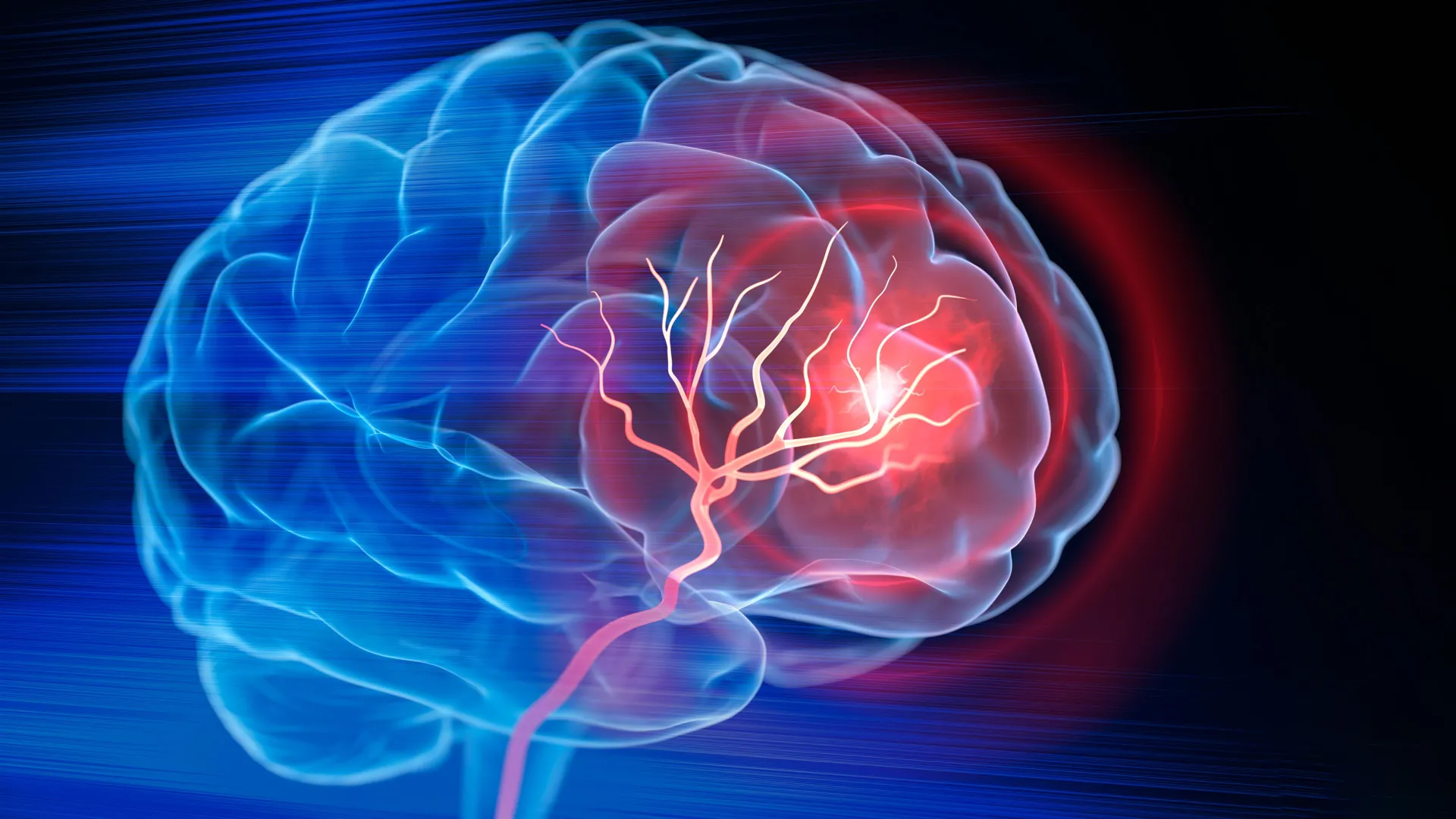
Mount Sinai researchers have uncovered new details about how APOE4, the strongest known genetic risk factor for Alzheimer’s disease, may contribute to brain damage. Two studies published in Cell and Cell Stem Cell show that the gene can damage blood vessels in the brain and encourage the accumulation of abnormal proteins associated with neurodegenerative disease. The findings point to disease processes that may be reversible and also highlight a new human brain tissue platform derived from stem cells that could speed up the search for treatments.
Alzheimer’s disease gradually damages memory, thinking, and behavior and affects more than 7 million older adults in the United States. Researchers have known for years that blood vessels in the brain deteriorate as Alzheimer’s progresses, especially in people who carry APOE4. What has been less clear is why this happens and whether the vascular damage contributes directly to the disease. Because of that uncertainty, damage to the brain’s circulation has often been treated as a consequence of Alzheimer’s rather than as a process that could help drive it.
Mapping How APOE4 Damages Brain Blood Vessels
For the Cell study published on September 24, Mount Sinai scientists combined existing datasets to build a single cell transcriptomic atlas of blood vessels in the human brain. The resulting map showed patterns of gene activity across the different cells that create and support the brain’s vascular system, giving researchers a detailed way to examine how APOE4 contributes to vascular degeneration.
The team found that APOE4 altered the behavior of pericytes. These cells normally help stabilize small blood vessels and support the blood brain barrier. In the presence of APOE4, however, the pericytes changed into myofibroblast-like cells that produce scar tissue.
That transformation promoted vascular fibrosis and increased the buildup of amyloid around blood vessels. These changes could interfere with blood flow and create conditions that encourage neurodegeneration.
The researchers also found evidence that this process could be reversed. Blocking TGF-β signaling, which plays a role in communication between cells and in tissue remodeling, restored pericyte coverage while reducing fibrosis and amyloid around blood vessels. The researchers reproduced the result in aged APOE4 mice, showing that the vascular degeneration associated with APOE4 can be therapeutically reversed.
“Damage to the brain’s blood vessels is not simply a late consequence of Alzheimer’s disease; it is a biologically active process caused by APOE4 that may be reversible,” said corresponding author Joel W. Blanchard, PhD, Associate Professor of Neuroscience, and Stem Cell Biology and Regenerative Medicine, at the Icahn School of Medicine at Mount Sinai. “These findings reveal new therapeutic targets for preserving vascular function and limiting amyloid accumulation.”
“We show that APOE4 converts blood-vessel support cells into scar-producing cells, causing amyloid or abnormal protein buildup to accumulate around the brain’s vessels. Through our experiments, we were able to block this protein buildup process, revealing possible new therapeutic treatment options and strategies for protecting the brain’s circulation in people at high genetic risk for Alzheimer’s disease,” said first author Braxton R. Schuldt, MD/PhD candidate in Neuroscience and researcher in the Blanchard Laboratory at the Icahn School of Medicine at Mount Sinai.
Human miBrains Reveal Disease Mechanisms
A major part of the research relied on miBrains, three dimensional human brain tissue developed by the Mount Sinai team from induced pluripotent stem cells. The model reproduces important features of human brain tissue, including its network of blood vessels.
The Blanchard laboratory combined findings from miBrains with preclinical models, postmortem human brain tissue, and transcriptomic data. Each approach helped confirm and expand on observations made with the others.
By bringing these systems together, the scientists were able to recreate events that occur before the severe vascular abnormalities seen in postmortem human brain tissue. They could then identify the mechanisms behind those changes and quickly test possible treatments.
APOE4 May Also Disrupt the Brain’s Protein Cleanup
In the Cell Stem Cell study, researchers used miBrains to explore another effect of APOE4: its role in the accumulation of abnormal proteins associated with neurodegenerative disease.
Abnormal protein buildup is a defining feature of conditions such as Alzheimer’s and Parkinson’s disease. However, investigating exactly how these deposits form inside a living human brain is extremely difficult. The miBrain system gives scientists a way to observe related processes in complex human brain-like tissue under laboratory conditions.
miBrains include all of the major cell types present in the human brain, including neurons, supporting glial cells, myelin producing cells, and cells that make up blood vessels. Similar to what happens in the human brain, miBrains carrying APOE4 developed higher amounts of abnormal alpha-synuclein. This protein is most strongly associated with Lewy body dementia and Parkinson’s disease.
Although alpha-synuclein has major clinical importance, researchers have not fully understood the cellular processes that cause it to accumulate.
Cholesterol Buildup Disrupts Cellular Waste Removal
The experiments revealed that APOE4 causes cholesterol to accumulate inside astrocytes, support cells that perform several essential functions in maintaining brain health.
That excess cholesterol interfered with the astrocytes’ lysosomal waste-disposal system. As a result, the cells became less effective at breaking down alpha-synuclein. Instead of being cleared away, the protein accumulated and spread to neurons, where it contributed to harmful deposits.
These findings suggest that cholesterol metabolism inside astrocytes, along with lysosomal function, could become important treatment targets for both Alzheimer’s and Parkinson’s disease.
Using miBrains, the researchers were able to follow the chain of events in complex human brain-like tissue. Their experiments connected APOE4 with lipid buildup in astrocytes, weaker clearance of alpha-synuclein, and the formation of toxic protein deposits.
The results point to both lipid metabolism and cellular waste removal systems as potential therapeutic targets in neurodegenerative disease.
A Platform for Testing Personalized Treatments
Another advantage of the miBrain system is that researchers can preserve the tissue for future experiments.
“A key advance of our technology is that miBrains with predefined cellular compositions and disease-related factors can be cryopreserved,” said Louise Mesentier-Louro, PhD, Assistant Professor of Neuroscience, and Stem Cell Biology and Regenerative Medicine, at the Icahn School of Medicine at Mount Sinai and first author of the Cell Stem Cell study. “This capability improves reproducibility and scalability of complex disease modeling and supports more efficient drug development and validation.”
Mount Sinai researchers are also developing miBrains derived from individual patients, which could eventually allow scientists to investigate how neurodegenerative disease develops differently from person to person and how patients might respond to particular treatments.
“At Mount Sinai we are creating and cryopreserving miBrains from patients,” Dr. Blanchard added. “This will enable personalized studies into how neurodegenerative disease develops and how individuals may respond to therapies. By enabling potential therapies to be tested earlier and more efficiently, the miBrain platform could help bridge the gap between laboratory discoveries and treatments for a broad range of disorders.”
Study Funding
The Cell study examining vascular degeneration in the brain received support from the National Aeronautics and Space Administration (80ARC022CA004), the National Institute on Aging at the National Institutes of Health (R01AG089533, UH3NS115064, U54AG090669, T32GM146636), The SWT Foundation, and the CureAlz Fund.
The Cell Stem Cell study examining abnormal protein buildup in the brain received support from the National Aeronautics and Space Administration (80ARC022CA004), Aligning Science Across Parkinson’s (ASAP-024297) through the Michael J. Fox Foundation for Parkinson’s Research, the National Institute of Neurological Disorders and Stroke and the National Institute on Aging at the National Institutes of Health (R01NS114239, UH3NS115064, 1U54AG090669-01, T32AG04968, F31NS13090), the CureAlz Fund, and The SWT Foundation.
At least 32 children have died in India’s Balaghat district since May amid outbreaks of measles and malaria.
A £2.3m study will look at whether a personalised pain management plan can improve the quality of life of women who have the debilitating condition.

A large review led by researchers at King’s College London has found that people who use cannabis are more likely both to commit violent acts and to experience violence themselves.
Researchers from the Institute of Psychiatry, Psychology & Neuroscience (IoPPN) combined data from 63 studies involving more than 265,000 people. They analyzed the general population separately from people receiving psychiatric care.
What the Review Examined
The researchers used the World Health Organization’s broad definition of violence, which includes physical, sexual and psychological violence toward another person, both inside and outside intimate relationships.
They also separated self-reported violence from cases that resulted in criminal convictions. When individual studies measured several forms of violence, the researchers focused on the most serious type reported. The findings were published in Psychological Medicine.
Dr. Marta Di Forti, co-author of the study from the Institute of Psychiatry, Psychology & Neuroscience (IoPPN) at King’s College London, and South London and Maudsley NHS Foundation Trust, said:
“As a clinician, I’ve seen how heavy cannabis use can be a factor in violence. We’ve been cautious for a long time about how far we could go in describing this link, but a review of this size lets us speak with more confidence about the risks, while being careful not to stigmatize people who use cannabis more broadly.”
Cannabis Use and Victimization
The review also found that people who used cannabis were about one and a half times as likely to become victims of violence. This association was stronger among women than among men.
Professor Sir Robin Murray, senior author of the study from the Institute of Psychiatry, Psychology & Neuroscience at King’s College London, said:
“In the general population, people who used cannabis were around twice as likely to have committed a violent act as those who didn’t; for those in psychiatric care, cannabis users were around two and a half times as likely to be violent as other psychiatric patients who didn’t use cannabis. The link held in studies that followed people over time, though it was smaller than in studies that looked at a single point in time. For violence that led to a criminal conviction, people who used cannabis were three to four times as likely to have been convicted.
“As cannabis becomes more commercialized and legalized around the world, the conversation about its risks has focused mostly on the person using it. This review shows that violence, both committing it and experiencing it, needs to be part of that conversation too.”
Implications for Mental Health and Public Health
Based on the findings, the researchers say mental health services should routinely ask about cannabis use when evaluating a person’s risk of violence. They also argue that public health information about cannabis should include the possible connection with violence.
However, the researchers emphasize that the review identifies an association and does not prove that cannabis directly causes violence. Cannabis use often occurs alongside other factors that can also increase the risk of violent behavior or victimization, including alcohol use, other drug use and difficult social circumstances.
Important Limitations
Only a small number of the studies measured how much cannabis people used or how often they used it. The findings involving criminal convictions were also based on a relatively limited number of studies.
Most of the research was conducted before high potency cannabis became common. The researchers suggest that daily use of today’s more potent cannabis products could potentially be associated with stronger effects.
The study was supported by the National Institute for Health and Care Research (NIHR) Biomedical Research Centre: Maudsley and the Medical Research Council (MR/T007818/1). The views expressed are those of the authors and not necessarily those of the NIHR or the Department of Health and Social Care.

Astronomers have long relied on brief bursts of gamma rays to identify collisions between neutron stars. These flashes can vanish in less than two seconds. Now, new research suggests that some neutron star mergers may also produce X-ray flashes that remain visible for several minutes.
A study published in Science Bulletin presents strong evidence for that connection. The findings raise the possibility that some mysterious cosmic flashes, whose sources have been difficult to explain, may actually come from merging neutron stars.
Since the Einstein Probe satellite launched in January 2024, astronomers have detected hundreds of bright X-ray flashes from distant galaxies. These events, called fast X-ray transients, have several possible origins. Some have been connected to the deaths of massive stars, while others remain unexplained.
Determining what causes them can be difficult because astronomers often do not know how far away the events are or how much energy they release.
A Possible Magnetar Birth
Researchers in Professor Eleonora Troja’s group, supported by a European Research Council (ERC) Consolidator grant, obtained observations that helped identify the source of one such X-ray transient.
After receiving an alert from the Einstein Probe satellite, the team rapidly organized follow-up observations with several instruments, including the European Southern Observatory’s Very Large Telescope (VLT) and the Very Large Array. By studying what remained after the explosion, the researchers concluded that they may have witnessed the formation of a magnetar produced by the collision (or merger) of two neutron stars.
Neutron stars are extremely dense stellar remnants left behind after massive stars reach the ends of their lives. When two neutron stars merge, they generate gravitational waves that travel through space. The light produced during these events can help astronomers determine what survives the collision.
Short gamma-ray bursts have traditionally been the main electromagnetic signal associated with neutron star mergers.
“However, if the remnant of the collision is a magnetar, it could keep bursting for longer,” said Prof. Troja, who is part of the Einstein Probe European collaboration and co-corresponding author of the paper. “Magnetars are rapidly spinning neutron stars with huge magnetic fields. When they damp their magnetic power into the surroundings, they can make any explosion brighter and longer-lasting. When I saw the X-ray data from this new event, I realized something was up.”
A Record X-Ray Flash
The event, designated EP250704a/GRB 250704B, was detected on July 4, 2025, by the SVOM, Insight-HXMT and Einstein Probe satellites.
Its gamma-ray burst lasted only about half a second. In contrast, Einstein Probe recorded bright X-ray emission for nearly ten minutes.
“This is the longest lasting prompt X-ray flash ever observed from a neutron star merger,” said graduate student Niccolò Passaleva, who led the follow-up observations using the VLT in Chile. “It is an opportunity to have a front-row seat to the most extreme forces of the Universe and discover more of its secrets.”
The researchers had spent several years looking for a firm connection between fast X-ray transients and neutron star mergers. Previous candidates faded too quickly to provide enough evidence.
This time, Passaleva responded within minutes, allowing observations to begin while the event was still bright enough to study in detail.
“I was traveling home by train,” recalls Passaleva, “and all of a sudden I was rushing against time to commandeer one of the largest telescopes in the world from my laptop.”
Measuring a Flash From More Than 6 Billion Years Away
Using the VLT’s X-Shooter instrument, Passaleva and his colleagues broke the event’s light into its individual components. They identified distinct absorption patterns that allowed them to measure its redshift, which reveals how far away the source is.
The team measured a redshift of z=0.6610. That showed the explosion happened long before our Sun and its planets formed. Its light traveled for more than six billion years before reaching Earth.
The researchers then searched for another important clue.
Using deep observations from the VLT’s FORS2 instrument, they looked for a bright supernova. A supernova would normally be expected if a long-lasting X-ray flash had been produced by the collapse of a massive star.
No supernova appeared.
Taken together, the measured distance, the absence of a supernova and the properties of the burst provided strong evidence that the event came from a neutron star merger.
A New Way To Find Neutron Star Mergers
If additional events like this one are found, astronomers may be able to determine how frequently neutron star mergers produce magnetars.
“Finding more of these X-ray flashes could help reveal how often neutron star mergers create magnetars,” concludes Passaleva, “I am really excited for the next run of gravitational wave observations, when we could finally pair one of these X-ray flashes with a burst of gravitational waves from the same source.”
Additional Information
The research was carried out by an international collaboration of astronomers.
Lead authors are: An Li (Beijing Normal University), Chen-Wei Wang (Chinese Academy of Sciences), Niccolò Passaleva (University of Rome Tor Vergata), Jie An (Chinese Academy of Sciences)
Corresponding authors are: Binbin Zhang (Nanjing University), Eleonora Troja (University of Rome Tor Vergata), Yi-Han Iris Yin (The University of Hong Kong), Jing-Wei Hu (Chinese Academy of Sciences), Hua-Li Li (Chinese Academy of Sciences)
The VLT observations used in this study were conducted as part of the large program 114.27LW (PI: Eleonora Troja) titled “QUEENB: a QUEst for Elusive Neutron star and Black hole mergers.”
When Dean Perryman’s best friend Rob Clancy took his own life, he wanted to create something positive from an unimaginable loss.
His idea was simple; reserve an empty chair in a pub and invite anyone who needed a conversation to sit down.
Charlotte Howard has been turned down for breast reduction surgery by the NHS, despite daily pain.

NASA will offer live coverage of preparations, liftoff, and docking for the SpaceX Crew-13 mission to the International Space Station.
The broadcasts will be available across several NASA platforms. Viewers can find streaming options at:
Crew-13 Launches Oct. 1
Crew-13 is scheduled to lift off at 11:10 a.m. EDT on Thursday, Oct. 1, from Space Launch Complex 40 at Cape Canaveral Space Force Station in Florida. Docking with the International Space Station is targeted for about 7 p.m.
The SpaceX Dragon spacecraft will transport four crew members: NASA astronauts Jessica Watkins and Luke Delaney, CSA (Canadian Space Agency) astronaut Joshua Kutryk, and Roscosmos cosmonaut Sergey Teteryatnikov. They will spend an extended period aboard the station conducting science and other mission activities.
In person events are limited to media representatives who have already received credentials. Media may request details for participating in calls.
NASA’s Crew-13 mission coverage schedule appears below (all times Eastern and subject to change based on real-time operations):
Wednesday, Sept. 30
5 p.m.: Prelaunch news conference
Participants include:
Thursday, Oct. 1
9:20 a.m.: Launch coverage begins
11:10 a.m.: Launch
After the main launch broadcast ends, NASA will provide audio-only communications involving Crew-13, the International Space Station, and flight controllers while Dragon travels toward the orbiting laboratory.
12:45 p.m.: Postlaunch news conference
Participants include:
A Record Fast Trip to the Space Station
NASA’s live coverage will resume as Dragon approaches the station for rendezvous and docking. The planned journey from launch to docking will take 7 hours and 50 minutes on Oct. 1. If completed as scheduled, it will be the fastest trip to the International Space Station by a U.S. spacecraft in the station’s history.
5:20 p.m.: Arrival coverage begins
7 p.m.: Targeted docking to the forward-facing port of the station’s Harmony module
8:45 p.m.: Hatch opening followed by welcome remarks
Crew-13 Begins Its Station Mission
After entering the International Space Station, the Crew-13 astronauts and cosmonaut will complete a brief handover with members of NASA’s SpaceX Crew-12 mission.
Crew-12 is expected to begin its journey back to Earth no earlier than Monday, Oct. 5. NASA plans to release further information about the Crew-12 return after Crew-13 has arrived at the station.
