The chair of the independent commission on social care recommends introducing a full-time dementia tsar, and new fast-track passport system for people diagnosed with motor neurone disease (MND).


The chair of the independent commission on social care recommends introducing a full-time dementia tsar, and new fast-track passport system for people diagnosed with motor neurone disease (MND).
Baroness Heather Hallett said completing the hearings in under four years was an achievement but critics have questioned its cost.
“People have horrendous periods and think they just have to live with it… [but] you don’t,” she says.
The chair of the independent commission on adult social care also says the care system relies on the exploitation of its workforce.
Sum represents £1 out of every £7 they have been given by NHS as dentists opt to chase private work.
Families say the groundbreaking medicine is transforming the lives of children with Dravet syndrome.
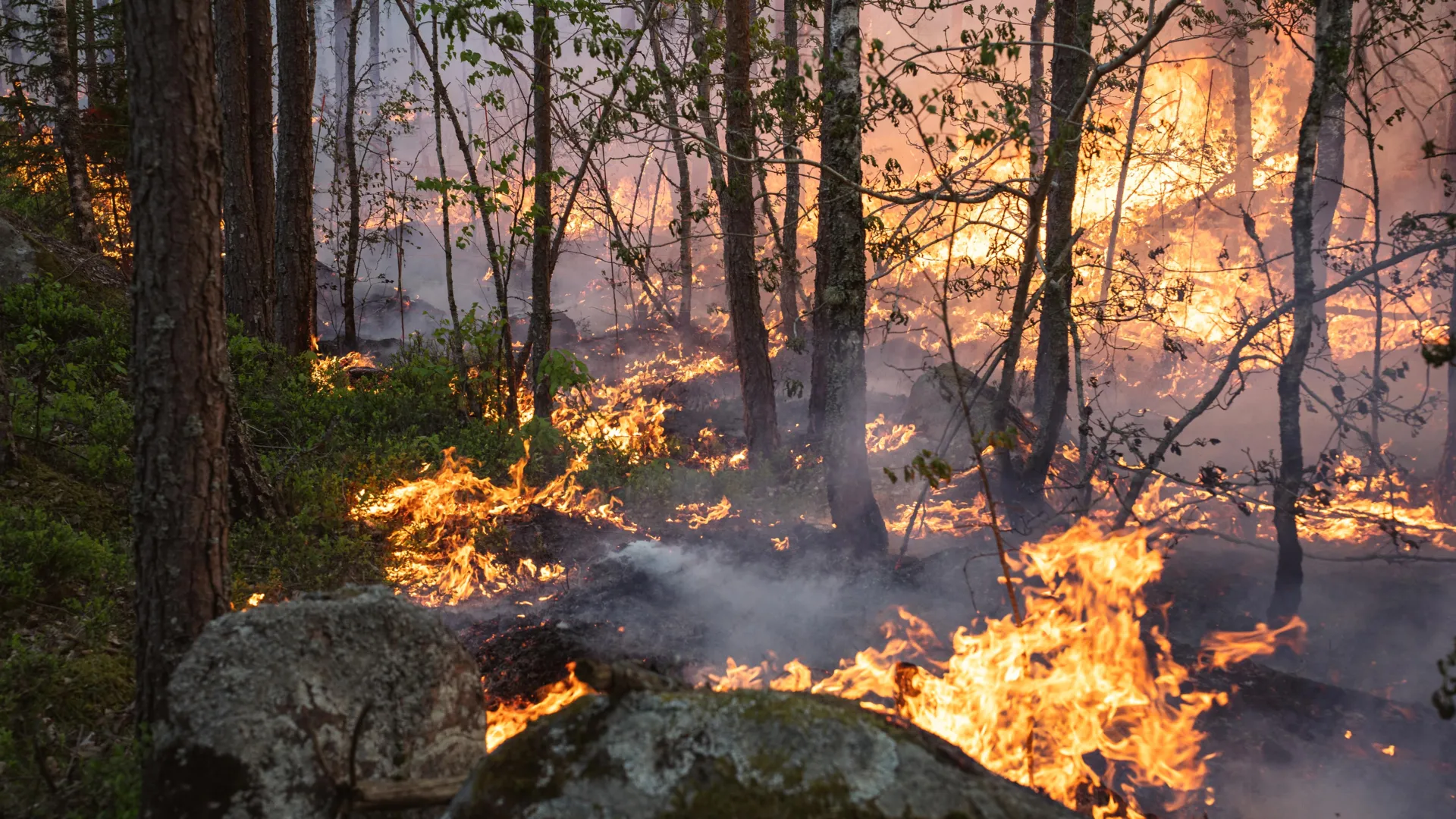
Wildfires sweeping through the vast boreal forests of Alaska, Canada, Scandinavia, and Russia could be having a larger impact on the climate than scientists once believed. A new study led by researchers at UC Berkeley suggests these northern fires may release far more carbon into the atmosphere than current estimates indicate.
The reason is that these fires do not only burn trees. In many boreal regions, flames can spread downward into thick layers of carbon rich soil beneath the forest floor. These soils, known as peat, contain partially decomposed plant material that has accumulated over hundreds or even thousands of years. Because the cold, wet conditions of the far north slow the breakdown of organic matter, these landscapes store enormous amounts of carbon underground.
Satellite Data May Miss Underground Peat Fires
According to the study, many widely used models that estimate wildfire carbon emissions fail to fully capture this underground burning. Most of these models rely heavily on satellite observations of visible flames and are based largely on fires that occur at lower latitudes. As a result, they may overlook slower, less visible fires that smolder deep within peat and organic soils.
“Many of the fires that matter most for the climate don’t look dramatic from space,” said study lead author Johan Eckdahl, a postdoctoral scholar in Berkeley’s Energy and Resources Group. “Peatlands and organic soils can smolder for weeks to years, releasing enormous amounts of ancient carbon.”
Reconstructing Emissions From Swedish Wildfires
The research, published in the journal Science Advances, analyzed 324 wildfires that burned across Sweden in 2018. Eckdahl and his colleagues combined detailed national forest records with direct field measurements to reconstruct the amount of carbon released by each fire.
Using these data, the team created a detailed map of wildfire emissions. Their analysis showed that local conditions such as climate, vegetation, and soil characteristics strongly influence how much carbon is stored in forests and how much is released during a wildfire.
Major Differences From Global Fire Models
When the researchers compared their reconstructed emissions with six widely used global wildfire models, they discovered significant discrepancies. In some places, the models overestimated carbon emissions. In other areas, especially where fires burned deep into soil layers, emissions were dramatically underestimated.
For instance, the models predicted higher emissions in the county of Gävleborg, where intense fires burned through dry forests and were clearly visible from satellites.
However, the situation was very different in neighboring Dalarna County. There, lower intensity fires burned quietly into thick layers of organic soil and were less noticeable from space. In that region, the models underestimated carbon emissions by as much as 14 times.
“Sweden is a very large country, but it’s quite small compared to Siberia and Canada,” Eckdahl said. “We may be severely underestimating the impact of the recent extreme fire seasons in these regions.”
Field Measurements Reveal Soil Carbon Loss
To measure how much carbon wildfires release from soil, the research team collected data from 50 locations affected by fires in 2018. Nineteen sites experienced high intensity fires, while 31 had lower intensity burns.
At each site, the researchers measured the thickness of the organic rich soil layer — which can vary from a few inches to many feet — and collected soil samples. By comparing carbon levels in burned soil with samples from nearby unburned forests, the team calculated how much carbon had been emitted.
“Once you’re out there, it’s a simple task — just dig some holes — but the hard part is getting to the sites,” Eckdahl said. “Sweden has a good network of forest roads, but in Siberia, I hear it’s a real trek, which is one reason why we’re severely missing measurements from that region.”
Expanding Research to Fire Prone U.S. Forests
Eckdahl is now working with colleagues at UC Berkeley and other institutions as part of the Western Fire & Forest Collaborative to apply similar research methods in forests across the Western United States.
Although forests in the western U.S. generally do not contain the same thick peat soils found in northern boreal regions, several other factors still influence wildfire emissions. These include regional climate patterns, the types of trees and vegetation present, and soil conditions. Eckdahl plans to study the role of soil microbes such as bacteria and fungi and how they contribute to forest recovery after wildfire.
“Forests in the Lower 48 and those far up north may look very different, but they share the common currency of carbon,” said Eckdahl. “By improving our understanding of how this element flows between the land and the atmosphere, we can better anticipate the impact of future fire regimes in a warming world and design smarter strategies to reduce climate risks on society.”
Lars Nieradzik of Lund University and Louise Rütting of the Brandenburg University of Technology are co authors of the paper.

Researchers at Kobe University have created an artificial intelligence system that can identify a rare endocrine disease simply by examining photos of the back of the hand and a clenched fist. The approach avoids facial images, helping protect patient privacy while still achieving high diagnostic accuracy. Scientists say the technology could eventually help doctors refer patients to specialists more quickly and improve access to care in underserved areas.
The disease the AI targets is acromegaly, an uncommon condition that usually appears in middle age. It is caused by excessive production of growth hormone, which leads to enlarged hands and feet, changes in facial appearance, and abnormal growth of bones and internal organs. Because the disorder develops gradually over many years, it can be difficult to recognize early.
If untreated, acromegaly can lead to serious health problems and shorten life expectancy by about 10 years. “Because the condition progresses so slowly, and because it is a rare disease, it is not uncommon to take up to a decade for it to be diagnosed,” says Kobe University endocrinologist Hidenori Fukuoka. He adds, “With the progress of AI tools, there have been attempts to use photographs for early detection, but they have not been adopted in clinical practice.”
A Privacy Focused AI Approach Using Hand Images
When the research team reviewed existing AI studies, they found that many systems depend on facial photos to identify disease. However, facial recognition can raise privacy concerns for patients. To address this issue, the scientists chose a different strategy.
Yuka Ohmachi, a graduate student at Kobe University, explains, “Trying to address this concern, we decided to focus on the hands, a body part we routinely examine alongside the face in clinical practice for diagnostic purposes, particularly because acromegaly often manifests changes in the hands.”
To strengthen privacy protections, the researchers limited their images to the back of the hand and a clenched fist. They intentionally avoided palm images because palm line patterns are highly individual and could reveal identity. This careful approach helped recruit a large number of participants. In total, 725 patients from 15 medical institutions across Japan contributed more than 11,000 images used to train and test the AI model.
AI Outperforms Experienced Specialists
The team reported their results in the Journal of Clinical Endocrinology & Metabolism. Their AI model demonstrated very high sensitivity and specificity when identifying acromegaly from the hand images. In direct comparisons, the system even performed better than experienced endocrinologists who evaluated the same photographs.
“Frankly, I was surprised that the diagnostic accuracy reached such a high level using only photographs of the back of the hand and the clenched fist. What struck me as particularly significant was achieving this level of performance without facial features, which makes this approach a great deal more practical for disease screening,” says Ohmachi.
Expanding Medical AI to Other Conditions
The researchers now hope to adapt their system to detect additional medical conditions that produce visible changes in the hands. Possible targets include rheumatoid arthritis, anemia and finger clubbing. Ohmachi says, “This result could be the entry point for expanding the potential of medical AI.”
Supporting Doctors and Improving Access to Care
In real clinical settings, doctors rely on far more than hand images when diagnosing patients. Medical history, lab tests and physical exams all play important roles. The Kobe University researchers see their AI tool as something that could assist physicians rather than replace them. In their study, they describe the technology as a way to “complement clinical expertise, reduce diagnostic oversight and enable earlier intervention.”
Study lead Fukuoka says: “We believe that, by further developing this technology, it could lead to creating a medical infrastructure during comprehensive health check-ups to connect suspected cases of hand-related disorders to specialists. Furthermore, it could support non-specialist physicians in regional healthcare settings, thus contributing to a reduction of healthcare disparities there.”
The research received funding from the Hyogo Foundation for Science Technology. The project also involved collaborators from Fukuoka University, Hyogo Medical University, Nagoya University, Hiroshima University, Toranomon Hospital, Nippon Medical School, Kagoshima University, Tottori University, Yamagata University, Okayama University, Hyogo Prefectural Kakogawa Medical Center, Hokkaido University, International University of Health and Welfare, Moriyama Memorial Hospital and Konan Women’s University.
It is time to move beyond the “baby brain” cliche, say scientists who scanned dozens of women’s brains.
Maternity services at the trust are the subject of the largest inquiry of its kind in NHS history.
