MPs are calling on the prime minister to intervene over the probe into Leeds maternity services.


MPs are calling on the prime minister to intervene over the probe into Leeds maternity services.
Hundreds of TikTok, Instagram and Facebook ads made misleading claims about health benefits, BBC finds.

Autism has traditionally been regarded as a condition that mainly affects males. A large study from Sweden published by The BMJ now suggests that autism may occur at similar rates in males and females.
The researchers observed a clear pattern in which females begin to close the gap during adolescence. They say this trend points to an urgent need to better understand why females are often diagnosed later than males.
Rising Autism Diagnoses Over Time
The prevalence of autism spectrum disorder (ASD) has risen steadily over the past 30 years. Throughout this period, diagnosis rates have shown a pronounced imbalance, with males diagnosed about four times as often as females.
Experts believe the overall rise in autism diagnoses is linked to broader diagnostic definitions and social factors (eg, parental age). The large difference between male and female diagnoses has often been explained by the fact that girls tend to have stronger social and communication skills, which can make autism harder to identify. Until now, however, no large study had followed these patterns across different stages of life.
Following Millions Across the Lifespan
To fill this gap, researchers analyzed national health records covering 2.7 million individuals born in Sweden between 1985 and 2022. Participants were followed from birth for as long as 37 years.
Over more than 35 years of observation, autism was diagnosed in 78,522 individuals, representing 2.8% of the population studied. The average age at diagnosis was 14.3 years.
How Autism Diagnosis Rates Change With Age
Autism diagnosis rates rose with each five year age group throughout childhood. Among males, the highest rate occurred between ages 10-14 years, reaching 645.5 per 100,000 person years. For females, the peak came later, between ages 15-19 years, at 602.6 per 100,000 person years.
While males were more likely to be diagnosed during childhood, females showed a strong increase in diagnoses during adolescence. By about age 20 years, the ratio of males to females diagnosed with autism approached 1:1.
Study Limitations and Strengths
The authors noted that this research was observational. They did not account for other conditions often linked to autism, such as ADHD and intellectual disability. The study also could not fully adjust for shared genetic or environmental influences, including parental mental health.
At the same time, the researchers emphasized that the scale and duration of the study made it possible to analyze data from an entire population. This allowed them to separate the influence of age, calendar period, and birth cohort.
Autism Rates May Equalize by Adulthood
Based on their analysis, the authors wrote: “These findings indicate that the male to female ratio for autism has decreased over time and with increasing age at diagnosis. This male to female ratio may therefore be substantially lower than previously thought, to the extent that, in Sweden, it may no longer be distinguishable by adulthood.”
They added that “These observations highlight the need to investigate why female individuals receive diagnoses later than male individuals.”
Missed Diagnoses and Real-World Consequences
The findings are consistent with recent research suggesting that autism in women is frequently missed or identified much later in life. In a linked editorial, patient and patient advocate Anne Cary said the results support concerns about gaps in current diagnostic practices.
She emphasized that studies like this help challenge the long-standing belief that autism is more common in males than in females. However, she also warned that while autistic female individuals wait for accurate diagnosis, “they are likely to be (mis)diagnosed with psychiatric conditions, especially mood and personality disorders, and they are forced to self-advocate to be seen and treated appropriately: as autistic patients, just as autistic as their male counterparts.”

Methane concentrations in the atmosphere climbed at an unprecedented pace in the early 2020s due to a combination of weaker natural removal and rising emissions from warming wetlands, rivers, lakes, and agricultural areas. An international group of researchers reports these findings in the journal Science, pointing to changes in both atmospheric chemistry and climate conditions.
One of the biggest drivers was a sharp drop in hydroxyl radicals, which are the main chemicals responsible for breaking methane down in the air. During 2020-2021, this atmospheric clean-up process slowed dramatically. According to the research team, which includes Boston College Professor of Earth and Environmental Science Hanqin Tian, this decline explains about 80 percent of the year-to-year changes in how quickly methane accumulated.
Wet Conditions Fueled Methane Production
At the same time, a prolonged La Niña phase from 2020 to 2023 brought wetter-than-average weather to large parts of the tropics. These conditions expanded flooded landscapes, which are ideal environments for microbes that produce methane. As a result, emissions increased from wetlands, rivers, lakes, and farmed land, adding to the buildup of methane, the second-most important greenhouse gas after carbon monoxide.
Measurements show that atmospheric methane rose by 55 parts per billion between 2019 and 2023, reaching a record level of 1921 ppb in 2023. The fastest growth occurred in 2021, when methane levels increased by nearly 18 ppb. That jump was 84 percent higher than the increase seen in 2019.
“As the planet becomes warmer and wetter, methane emissions from wetlands, inland waters, and paddy rice systems will increasingly shape near-term climate change,” said Tian. “Our findings highlight that the Global Methane Pledge must account for climate-driven methane sources alongside anthropogenic controls if its mitigation targets are to be achieved.”
Natural and Managed Systems Both Matter
The surge was not limited to natural wetlands. Managed environments such as paddy rice fields and inland waters also contributed significantly. According to Tian, who serves as Director of the Center for Earth System Science and Global Sustainability in the Schiller Institute for Integrated Science and Society, these sources are often underrepresented in global methane models.
The largest increases in emissions were observed in tropical Africa and Southeast Asia. Arctic wetlands and lakes also showed notable growth as warmer temperatures boosted microbial activity. In contrast, methane emissions from South American wetlands dropped in 2023 during an extreme El Niño-related drought. This contrast highlights how sensitive methane release is to climate extremes, the report notes.
How Researchers Tracked the Methane Spike
Tian and his colleagues played a key role in identifying and measuring how wetlands, rivers, lakes, reservoirs, and global paddy rice farming contributed to the rapid rise in atmospheric methane. By linking land, freshwater, and atmospheric processes in advanced Earth system models, the Boston College team showed how climate variability amplified emissions across connected ecosystems.
The study also found that fossil fuel use and wildfires played only a small role in the recent methane increase. Chemical fingerprinting indicates that microbial sources, including wetlands, inland waters, reservoirs, and agriculture, were responsible for most of the observed changes.
“By providing the most up-to-date global methane budget through 2023, this research clarifies why atmospheric methane rose so rapidly,” said study lead author Philippe Ciais of the University of Versailles Saint-Quentin-en-Yvelines. “It also shows that future methane trends will depend not only on emission controls, but on climate-driven changes in natural and managed methane sources.”
Key Findings From the Study
Every organism alive today traces its lineage back to a single shared ancestor that lived about four billion years ago. Scientists refer to this organism as the “last universal common ancestor,” and it represents the earliest form of life that can currently be examined using established evolutionary methods.
Research on this ancient ancestor shows that many features seen in modern life were already in place at that time. Cells already had membranes, and genetic information was stored in DNA. Because these essential traits were already established, scientists seeking to understand how life first took shape must look even further back in time, to evolutionary events that occurred before this shared ancestor existed.
Studying Life Before the First Common Ancestor
In a study published in the journal Cell Genomics, researchers Aaron Goldman (Oberlin College), Greg Fournier (MIT), and Betül Kaçar (University of Wisconsin-Madison) describe a way to explore that earlier period of evolution. “While the last universal common ancestor is the most ancient organism we can study with evolutionary methods,” said Goldman, “some of the genes in its genome were much older.” The team focuses on a special group of genes called “universal paralogs,” which preserve evidence of biological changes that took place before the last universal common ancestor.
A paralog is a group of related genes that appear multiple times within a single genome. Humans provide a clear example. Our DNA contains eight different hemoglobin genes, all of which produce proteins that carry oxygen through the blood. These genes all originated from a single ancestral globin gene that existed around 800 million years ago. Over long periods of time, repeated copying errors produced extra versions of the gene, and each copy gradually developed its own specialized role.
What Makes Universal Paralogs Unique
Universal paralogs are much rarer. These gene families appear in at least two copies in the genomes of nearly all living organisms. Their widespread presence suggests that the original gene duplication occurred before the last universal common ancestor emerged. Those duplicated genes were then passed down through countless generations and remain present in life today.
Because of this deep evolutionary reach, the authors argue that universal paralogs are a critical yet often overlooked resource for studying the earliest history of life on Earth. This approach is becoming more practical as new AI-based techniques and AI-optimized hardware make it easier to analyze ancient genetic patterns in detail.
“While there are precious few universal paralogs that we know,” says Goldman, “they can give us a lot of information about what life was like before the time of the last universal common ancestor.” Fournier adds, “The history of these universal paralogs is the only information we will ever have about these earliest cellular lineages, and so we need to carefully extract as much knowledge as we can from them.”
Clues to the First Cellular Functions
In their analysis, Goldman, Fournier, and Kaçar reviewed all known universal paralogs. Every one of these genes plays a role in either building proteins or moving molecules across cell membranes. This finding suggests that protein production and membrane transport were among the first biological functions to evolve.
The researchers also emphasize the importance of reconstructing the ancient forms of these genes. In one study from Goldman’s lab at Oberlin, scientists examined a universal paralog family involved in inserting enzymes and other proteins into cell membranes. Using standard methods from evolutionary biology and computational biology, they reconstructed the protein produced by the original ancestral gene.
Their results showed that this simpler, ancient protein could still attach to cell membranes and interact with the machinery that makes proteins. It likely helped early proteins embed themselves into primitive membranes, offering insight into how the earliest cells may have operated.
A New Window Into Life’s Earliest History
The authors hope that continued advances in computational tools will allow scientists to identify additional universal paralog families and study their ancient ancestors in greater detail. “By following universal paralogs,” says Kaçar, “we can connect the earliest steps of life on Earth to the tools of modern science. They provide us a chance to transform the deepest unknowns of evolution and biology into discoveries we can actually test.” Their goal is to build a clearer picture of evolution before the last universal common ancestor, shedding light on how life as we know it first emerged.
Scientists are developing nerve repairing surgical devices from the silk of spiders.
Grieving parents call for better sepsis training to be introduced urgently so no family goes through what they did.
Oxford researchers find that using AI to make medical decisions presents a risk to patients.
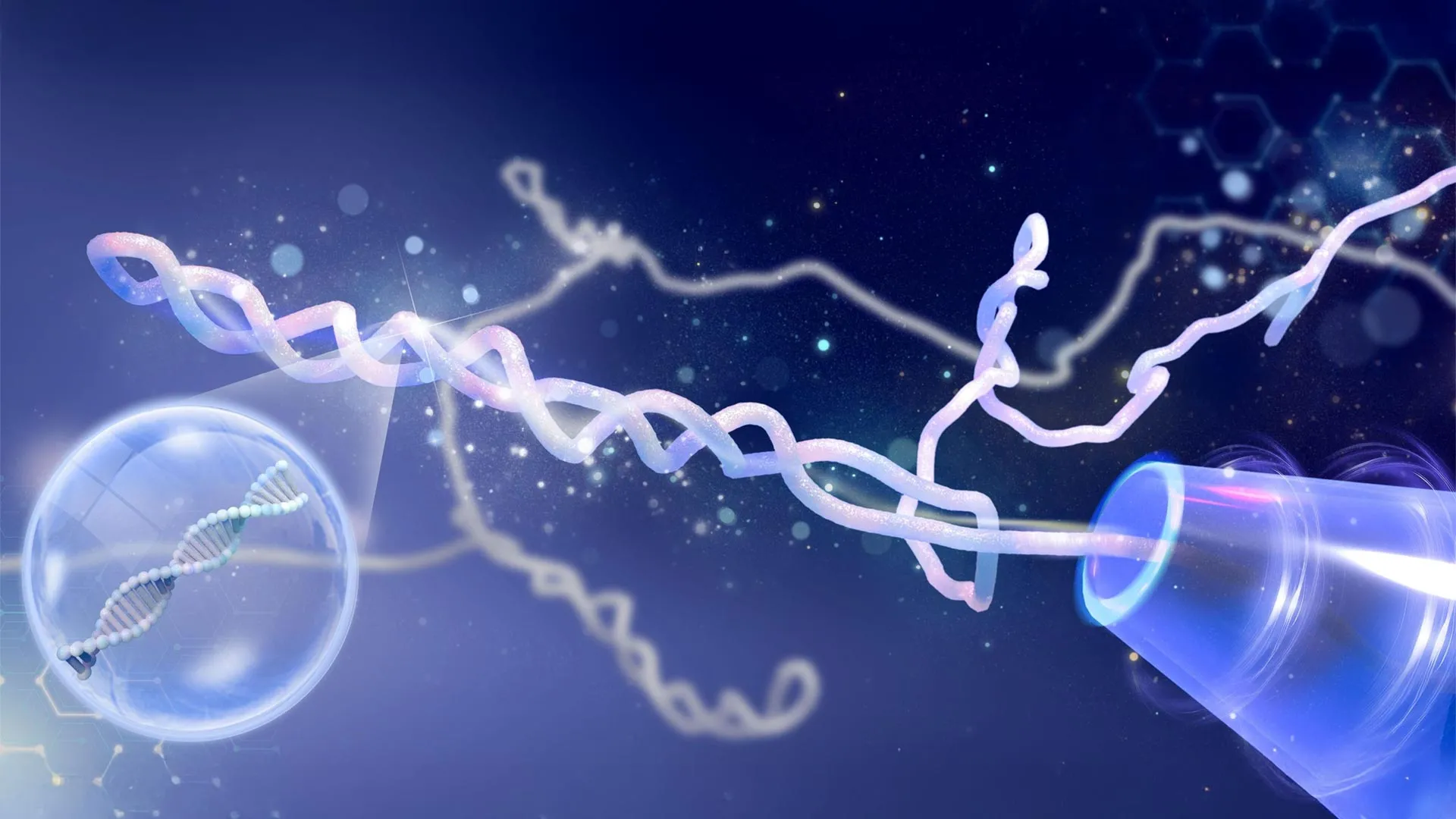
Scientists at the University of Cambridge, working with international collaborators, have identified a crucial process that shapes how DNA behaves as it moves through nanoscale pores. This process is fundamental to many biological activities and to fast-growing DNA sensing technologies. The research highlights a long-overlooked DNA structure called plectonemes, a finding that could influence future advances in genomics and biosensing.
Nanopores are extremely small openings that allow single strands of DNA to pass through while producing electrical signals. These signals help researchers analyze genetic material in detail. Until now, important features of those signals had been misunderstood.
Why Scientists Thought DNA Was Forming Knots
For many years, researchers believed that complex electrical patterns seen during nanopore experiments were caused by DNA forming knots. The idea was easy to picture. Pulling a shoelace through a narrow hole becomes uneven if the lace tangles, and scientists assumed DNA behaved in the same way. Any irregular signal was thought to mean the strand had knotted as it moved through the pore.
That explanation shaped how nanopore data was interpreted for decades.
Twists, Not Knots, Explain the Signals
The new study, published in Physical Review X, shows that this long-standing assumption was often wrong. Instead of forming true knots, DNA frequently twists around itself during nanopore translocation. These twisted structures, known as plectonemes, resemble a coiled phone cord rather than a tied knot.
This distinction matters because twists and knots affect electrical signals in very different ways.
“Our experiments showed that as DNA is pulled through the nanopore, the ionic flow inside twists the strand, accumulating torque and winding it into plectonemes, not just knots. This ‘hidden’ twisting structure has a distinctive, long-lasting fingerprint in the electrical signal, unlike the more transient signature of knots,” explained lead author Dr Fei Zheng from the Cavendish Laboratory.
Experiments Point to a Missing Mechanism
To reach this conclusion, the researchers tested DNA using both glass and silicon nitride nanopores across a wide range of voltages and conditions. They noticed that so-called “tangled” events, when more than one section of DNA occupied the pore at the same time, occurred far more often than knot theory could explain.
These events became even more frequent as voltage increased and as DNA strands grew longer. This pattern suggested that another force was at work.
How Flowing Water Twists DNA
The team found that the twisting comes from electroosmotic flow, the movement of water driven by electric fields inside the nanopore. As water flows past the DNA, it applies a spinning force to the helical molecule. This torque travels along the strand, causing sections outside the pore to coil into plectonemes.
Unlike knots, which tighten under pulling forces and typically disappear quickly, plectonemes can grow larger and remain present throughout the entire translocation process. Computer simulations that applied realistic forces and torques confirmed this behavior and showed that plectoneme formation depends on DNA’s ability to transmit twist along its length.
Blocking Twists Confirms the Discovery
To test the idea further, the researchers created “nicked” DNA, strands that were interrupted at specific points. These interruptions prevented twist from spreading along the molecule and sharply reduced the formation of plectonemes during experiments.
This result confirmed that twist propagation is essential to the process. It also hints at new ways nanopores could be used to detect DNA damage, since breaks in the strand interfere with twisting behavior.
Reading DNA Signals With New Precision
“What’s really powerful here is that we can now tell apart knots and plectonemes in the nanopore signal based on how long they last,” says Prof Ulrich F. Keyser, also from the Cavendish Laboratory and a co-author of the study.
“Knots pass through quickly, just like a quick bump, whereas plectonemes linger and create extended signals. This offers a path to richer, more nuanced readouts of DNA organization, genomic integrity, and possibly damage.”
Broader Implications for Biology and Technology
The findings extend beyond nanopore sensing. In living cells, DNA regularly twists and tangles as enzymes act on it, and both knots and plectonemes play important roles in genome organization and stability. Understanding how these structures form could improve models of cellular DNA behavior.
For diagnostics and biosensing, the ability to detect or control DNA twisting could lead to more sensitive tools capable of identifying subtle genetic changes and early signs of DNA damage linked to disease.
“From the perspective of nanotechnology, the research highlights the power of nanopores, not only as sophisticated sensors but also as tools for manipulating biopolymers in novel ways,” concluded Keyser.

Women who follow a Mediterranean-style eating pattern may face a lower risk of stroke, according to research published on February 4, 2026, in Neurology Open Access, a journal of the American Academy of Neurology. The study found a strong relationship between this diet and reduced stroke risk, though it does not show that the diet directly prevents strokes. Instead, it identifies an association between dietary habits and long-term health outcomes.
Researchers observed lower rates of stroke overall among women who most closely followed the Mediterranean diet. This included both ischemic strokes and hemorrhagic strokes. Ischemic strokes occur when blood flow to part of the brain is blocked and are the most common form of stroke. Hemorrhagic strokes happen when a blood vessel ruptures and causes bleeding in the brain.
What Defines the Mediterranean Diet
The Mediterranean diet centers on eating plenty of vegetables, fruits, legumes, and fish, along with healthy fats such as olive oil. It limits foods like dairy products, meat, and items high in saturated fatty acids.
“Our findings support the mounting evidence that a healthy diet is critical to stroke prevention,” said study author Sophia S. Wang, PhD, of City of Hope Comprehensive Cancer Center in Duarte, California. “We were especially interested to see that this finding applies to hemorrhagic stroke, as few large studies have looked at this type of stroke.”
How the Study Followed More Than 100,000 Women
The study included 105,614 women who had no history of stroke at the beginning of the research and an average age of 53. Each participant completed a detailed diet questionnaire at the start of the study. Researchers then assigned a score ranging from zero to nine based on how closely each person’s diet matched Mediterranean diet guidelines.
Participants earned one point for consuming more than the population average of whole grain cereals, fruits, vegetables, legumes, olive oil, and fish, as well as for drinking a moderate amount of alcohol. They also earned a point for eating less red meat and dairy than average. About 30% of participants scored between six and nine — the highest group. Another 13% scored between zero and two, placing them in the lowest group.
Stroke Outcomes Over 21 Years
Participants were monitored for an average of 21 years. During that period, researchers recorded 4,083 strokes, including 3,358 ischemic strokes and 725 hemorrhagic strokes. Among women in the highest diet score group, 1,058 ischemic strokes occurred, compared with 395 cases in the lowest group. For hemorrhagic stroke, 211 cases were reported in the highest group and 91 in the lowest group.
After accounting for other stroke risk factors such as smoking, physical activity, and high blood pressure, the differences remained significant. Women with the highest Mediterranean diet scores were 18% less likely to experience any stroke than those with the lowest scores. Their risk of ischemic stroke was 16% lower, and their risk of hemorrhagic stroke was 25% lower.
Why the Findings Matter and Study Limitations
“Stroke is a leading cause of death and disability, so it’s exciting to think that improving our diets could lessen our risk for this devastating disease,” said Wang. “Further studies are needed to confirm these findings and to help us understand the mechanisms behind them so we could identify new ways to prevent stroke.”
One limitation of the study is that dietary information was self reported, which means some participants may not have recalled their eating habits accurately.
The research was funded by the National Institute of Neurological Diseases and Stroke.
