Doctors running a dedicated NHS clinic for children with ketamine bladder say they are seeing patients as young as 13.


Doctors running a dedicated NHS clinic for children with ketamine bladder say they are seeing patients as young as 13.
A concerning number of patients are reporting problems from treatment abroad, say doctors.
Physicists at UC Santa Barbara have pushed the search for microscopic black holes at the Large Hadron Collider (LHC) at the European Center for Nuclear Research (CERN) into new territory.
These hypothetical black holes would be extraordinarily small and short-lived. If they could be produced at the LHC, their existence might help physicists address some of the deepest unanswered questions about spacetime and gravity. The search also gave researchers a chance to test a new technique for finding rare and previously unknown particles.
“Had we found evidence, we could have begun to directly study quantum gravity,” said Tamas Vami, a researcher in the Compact Muon Solenoid (CMS) experiment who is conducting his postdoctoral work under the guidance of UCSB physics professor Joe Incandela. “It’s a step toward unifying all of the known fundamental forces, which has been a goal of physicists for more than a century.”
The search did not uncover evidence of quantum black holes. But in particle physics, failing to detect something can still provide important information by ruling out where it could exist.
“It’s not a dead-end,” said Incandela Lab graduate student researcher Danyi Zhang. “The result is an exclusion limit, which is a real, publishable statement: ‘If this thing existed with these properties, we’d have seen it. We didn’t, so we can rule it out here.’ That’s genuine knowledge about how the universe works.”
Why Missing Black Holes Still Matter
One of the major puzzles in fundamental physics involves the enormous difference between the scale of the universe we experience and the Planck scale, the fundamental energy scale associated with quantum gravity.
Some physicists have proposed that new physics or an undiscovered symmetry could explain this difference. Crucially, some of those effects might appear at energy levels the LHC can reach.
Years of experiments have already eliminated many theoretical possibilities, and the continued absence of clear signs of new physics at the LHC has become a major challenge for researchers. But similar situations have happened before. Periods in which existing theories struggled to explain observations have sometimes led to radically new frameworks, including Einstein’s theory of relativity.
For that reason, the researchers say null results are an important part of scientific progress. Each one reduces the number of viable possibilities and helps determine where future experiments should look.
Vami’s and Zhang’s results are published in the journal Progress in High Energy Physics (PHEP).
Could the LHC Create Tiny Black Holes?
The possibility of producing black holes at the LHC emerged roughly two decades ago. Physicists proposed that if enough energy were concentrated into an extremely small region, and if extra spatial dimensions (which are already required in string theory) exist, then quantum black holes might form during the trillions of proton-proton collisions created by the accelerator.
These objects would be nothing like the enormous astrophysical black holes found throughout the universe.
“They wouldn’t stick around very long — if you made one, it would disintegrate immediately,” said UCSB physics theorist Steven Giddings, an expert in the paradoxical implications of combining quantum mechanics with gravity, and one of a few scientists at the time who proposed that under certain conditions these tiny voids in spacetime could exist.
When scientists first discussed the possibility, the idea became widely misunderstood. Public concerns focused on the possibility that the LHC might create stable black holes, even though the quantum black holes being considered by physicists would disappear almost instantly.
“People were more focused on the classical behavior of black holes,” said Giddings, referring to those massive voids in spacetime, areas of extreme gravity that can eat whole stars, grow, merge.
The hypothetical black holes produced at the LHC would instead arise from proton-proton collisions combined with the effects of extra spatial dimensions that have never been observed.
Hidden Dimensions Could Make Gravity Stronger
Creating any black hole requires squeezing a large amount of energy into an extremely small region.
“So what do you need to make a black hole? Well, you have to compress some energy into a really small volume,” Giddings explained.
That “really small volume” might extend through two or more hypothetical spatial dimensions that are too small for humans to detect within our 3 + 1 dimension reality.
Such extra dimensions have been proposed as one possible answer to the hierarchy problem, a longstanding question in physics that asks why gravity is dramatically weaker than the other fundamental forces.
One possibility is that gravity is not intrinsically as weak as it appears. Instead, some of its strength could be “leaking” into these extra dimensions. If that were true, the Planck scale could be much closer to the energy scales physicists can experimentally reach.
“Basically, the gravitational force gets stronger, faster, as you go to shorter distances,” Giddings said.
But stronger gravity alone would not be enough. Scientists would also need to concentrate enormous energy into an exceptionally small volume.
That is where the Large Hadron Collider becomes important.
Colliding Particles at Extreme Energies
The LHC accelerates protons to tremendous energies before smashing them together. These collisions give physicists access to extremely small distance scales.
“At the LHC, we’re colliding particles at extremely high energy, which corresponds to tiny distance scales,” Incandela said. “As with microscopy, higher energies mean smaller wavelengths, allowing one to probe smaller distances.”
Researchers are probing scales as small as 10-20 meters at the LHC, a distance that is to an atom, what an atom is to a human.
“The extra dimensions wouldn’t have to be that small,” Incandela continued, “meaning that the LHC proton-proton collisions could be affected by them.”
If gravity became sufficiently strong at those scales and enough energy were concentrated into a tiny enough region, spacetime could theoretically fold in on itself and produce a quantum black hole.
Safety concerns surrounding this idea were eventually addressed through detailed reports and comparisons with ultra-high-energy cosmic rays. These naturally occurring particles have been striking Earth’s upper atmosphere and other astronomical objects at immense energies without producing dangerous effects.
Those comparisons showed that high energy particle collisions do not pose a black hole threat. Any quantum black holes produced under the proposed models would evaporate essentially immediately.
Even so, their extremely brief existence might leave detectable traces in the particles produced as they decay.
Earlier searches by the ATLAS and CMS experiments failed to find such evidence, but those studies had access to much smaller datasets.
With far more collision data now available, researchers could search at higher energies and increase their chances of seeing an exceptionally rare quantum black hole event if such events occur.
Where Quantum Physics Meets Gravity
The search is ultimately connected to one of the biggest unresolved problems in modern physics.
“We have two big theories that describe nature,” Tamas Vami said. “If you want to describe things that are small, you go to quantum field theory. We have the Standard Model to describe all the particles, and it performs exceptionally well in practice. And when you go to the very, very big you have general relativity that would describe how big and massive objects behave.”
Physicists have spent decades trying to combine these frameworks into a single description of nature.
The difficulty is that quantum physics generally describes extremely small objects, while general relativity becomes most important for very massive ones.
The goal is to somehow merge the two theories into a single, unified theory, Vami said, “and that’s really hard to do because you don’t often have a situation which is really tiny but also extremely heavy.”
Microscopic black holes could provide exactly that combination. They would be small enough for quantum effects to become important while also concentrating enough mass and energy for gravity to matter.
Searching for the Signature of a Black Hole
The researchers analyzed CMS detector data collected between 2016 and 2018 and used two approaches to look for evidence of quantum black holes.
One involved a property called sphericity.
“You form a black hole, and it immediately disintegrates. But it has a very spherical decay signature, lots of things going in all directions.”
Another clue would be an unusually large amount of energy in the particles produced by a collision.
“We know that black holes are very high energy,” Danyi Zhang said. “So we basically just take the energy of these particles that are decay products of whatever was created in the collision and sum them together. And if the sum is large enough, we can say that this is the region where we are likely to find the signal.”
Those unusual event patterns also provided an opportunity to use a new analytical method known as “phase-space distance,” developed by UCSB particle theorist Nathaniel Craig and collaborators.
The method works with a machine learning system called a Support Vector Machine, which helps researchers distinguish possible signal events from the enormous background of conventional high energy particle collisions.
In particle physics, “phase space” is a multidimensional mathematical representation incorporating properties such as space, time, energy and momentum into a description of a particle system.
Machine Learning Joins the Search
“We developed the idea of the phase space between events, which can be combined with SVM to help the search,” Craig said.
The method converts the distances between events into a single measurement called an SVM score. Events with larger scores are more likely to resemble the signal scientists are searching for.
This study marked the first time the phase space distance method had been used in a particle physics data analysis.
“We compared phase space distance with the sphericity variable and our conclusion is that phase space distance outperforms sphericity,” Zhang said.
The approach also differs from some “black box” machine learning systems because it is supervised. Researchers can examine the mathematics that produced the result rather than simply accepting an unexplained output.
New Limits on Quantum Black Holes
The search ultimately found no evidence for quantum black hole production.
Based on the theoretical models examined, the result means quantum black holes are unlikely up to about 12 TeV (Tera-electron volts). It also constrains certain theories involving extra spatial dimensions.
Those restrictions are scientifically valuable because they eliminate parts of the range in which these theoretical models could operate.
String theory, for example, assumes a total of 10 dimensions.
“But these measurements say that, assuming the parameters of the theories we considered, you cannot have more than two,” Vami said.
“Theories don’t predict one exact answer,” Zhang added. “They predict a whole range of places a particle could be hiding. Each search clears out part of that range and says ‘not here,’ and over time the map of where new physics could still be, shrinks.”
That process of elimination has repeatedly played an important role in particle physics. The Higgs boson was discovered in 2012 only after decades of experiments gradually excluded one energy region after another.
By eliminating possibilities, physicists can improve their theories, develop new models and design better experiments and detectors.
The Mystery of Weak Gravity Remains
For now, the hierarchy problem is still unresolved.
Without extra dimensions, Giddings estimates that particle collisions would need to reach roughly a million billion times the energy currently achieved at the LHC to produce even the smallest black holes, which would have masses measured in micrograms.
“Theorists will continue to generate ideas and maybe we will do better in figuring things out without experimental data, but it will be difficult,” Giddings said.
“The best guide is experimental data, and that’s what we’d really like to have,” he said, to study quantum gravity, which he calls “the most profound problem in theoretical physics.”
By testing collisions at some of the highest energies currently available, Vami and Zhang have been able to push the Standard Model toward its limits.
Their results provide new guidance for future searches for quantum black holes as a possible solution to the hierarchy problem. Just as importantly, the work shows that the phase space distance method could be used more broadly to search for unfamiliar particles, unusual interactions and other rare phenomena.
Searching for Another Exotic Phenomenon
The researchers also used the same study to hunt for sphalerons.
Sphalerons are not particles. Instead, they are theoretical unstable configurations of particle fields that, like quantum black holes, would be expected to produce relatively spherical energy patterns.
They could potentially help explain another major mystery: why the universe contains matter.
According to current understanding, the Big Bang should have produced matter and antimatter in equal amounts. Those two forms of matter should then have annihilated one another, leaving behind energy rather than the matter-filled universe we see today.
This mismatch is known as the matter-antimatter asymmetry problem.
Researchers found no evidence of sphaleron processes either. That absence allowed them to place limits on how many particle interactions could potentially involve sphaleron transitions.
A More Powerful LHC Is Coming
Future experiments could push the search considerably further.
“We will be putting constraints on what theories can be true,” said Zhang, who is looking forward to new data obtained in the future at the LHC, which is currently shut down for the installation of an ambitious set of upgrades.
The future High Luminosity Large Hadron Collider (HL-LHC) will provide scientists with far larger datasets and more opportunities to detect extremely rare events.
Those experiments will allow researchers “to study fundamental components of matter in more detail,” including processes that may reveal how the early universe evolved.
Snow drought and unusually warm conditions across the Colorado Basin in 2026 sharply reduced water flowing into major reservoirs across the U.S. West.
By summer, the effects of the weak 2025-2026 mountain snowpack in the Upper Colorado Basin had reached Lake Powell. With far less snowmelt than usual feeding the Colorado River, inflows dwindled, and the second-largest reservoir in the United States fell to record-low levels in late August and early September.
Lake Powell Falls Below Its Previous Record
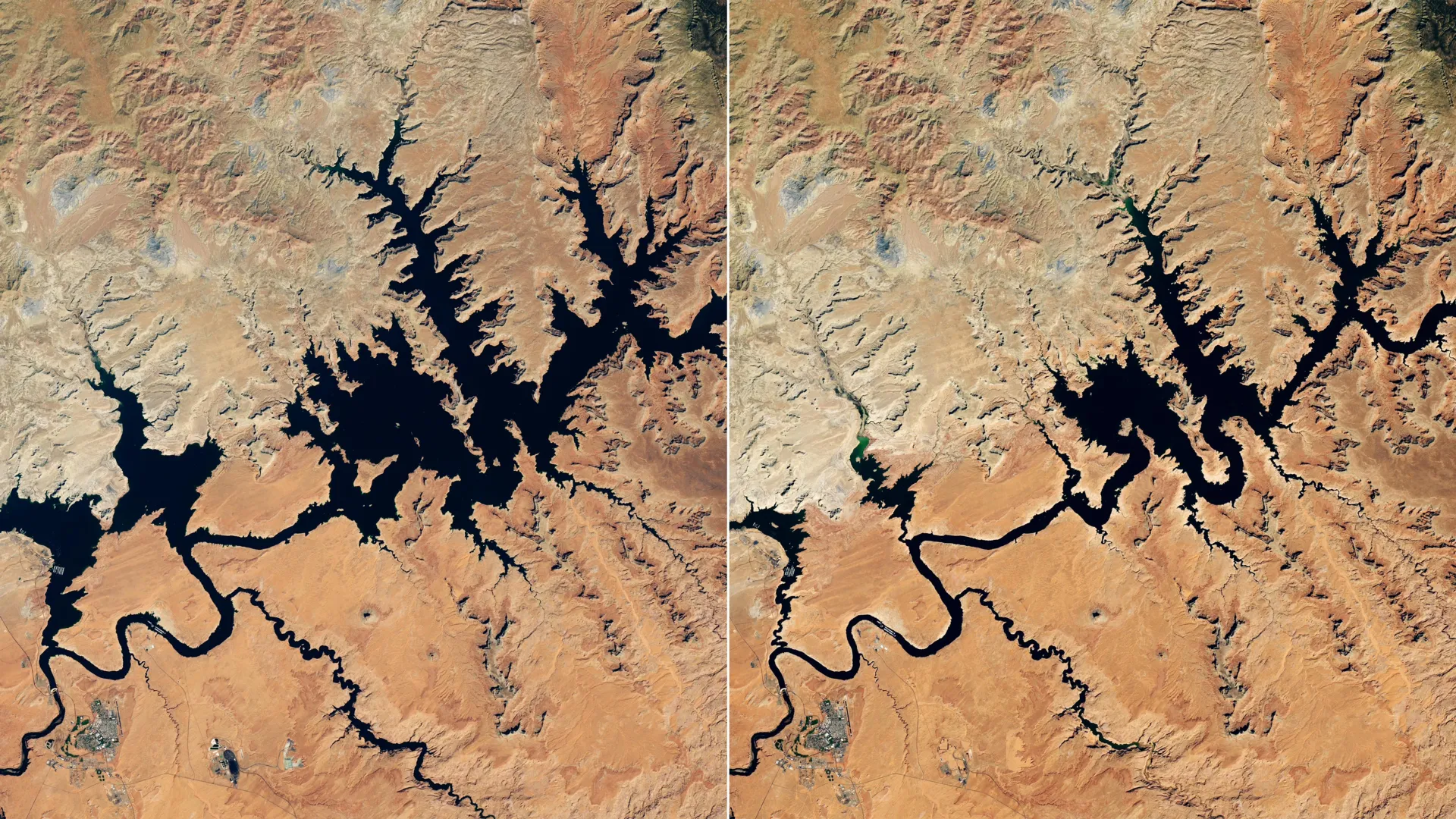
Satellite images captured the dramatic change in Lake Powell near Glen Canyon Dam. The images were collected by the OLI (Operational Land Imager) aboard the NASA-USGS Landsat 8 satellite on September 1, 2017 (left), and September 10, 2026 (right).
In the 2026 image, Lake Powell’s water surface stood at 3,517.24 feet. Roughly a month earlier, the reservoir had already fallen below its previous record low of 3,519.92 feet, which was set on April 13, 2023. Water levels continued declining into early September.
The 2017 image provides a striking contrast, showing Lake Powell during one of its highest water levels of the past decade.
Lake Mead Also Reaches Record Lows
The Colorado River first flows into Lake Powell before continuing downstream toward Lake Mead. In August 2026, Lake Mead also reached record-low levels.
The river system, managed by the U.S. Bureau of Reclamation (USBR) and other agencies, is a critical source of both water and electricity across the Southwest. More than 40 million people depend on it, including residents of Las Vegas, Phoenix, Los Angeles, and San Diego. The river also supplies water to roughly 5 million acres of farmland.
Why Snow Matters So Much to the Colorado River
Much of the Colorado Basin is arid or semi-arid, which makes mountain snow especially important. A substantial share of the Colorado River’s annual flow begins as snow that accumulates at high elevations during winter and melts during spring and early summer.
The Upper Colorado Basin, along with many mountainous regions across the U.S. West, received unusually little snow during winter 2025-2026. The shortage amounted to a snow drought.
Periods of record warmth made conditions worse by further reducing the snowpack. As a result, the spring snowmelt delivered far less water to reservoirs than it normally would, providing little relief for already depleted lake levels.
Emergency Steps to Protect Lake Powell
In April 2026, the USBR began taking measures to stabilize Lake Powell and prevent the reservoir from dropping below the elevation required for hydropower generation.
Without intervention, the agency considered that possibility realistic by August 2026.
To help support Lake Powell, USBR began releasing additional water from Flaming Gorge Reservoir in northern Utah and southern Wyoming. At the same time, officials reduced the amount of water being released from Lake Powell into Lake Mead.
The agency also canceled a “controlled flood” planned for April that was intended to rebuild sandbars used as fish habitat. In August, officials also skipped a “cool mix” release designed to help protect native species.
A Megadrought Continues to Strain the Southwest
Drought in the U.S. Southwest has persisted since around the beginning of the 21st century. Experts have described the prolonged dry period as a megadrought, and it continues to place intense pressure on the region’s limited water supplies.
NASA-supported projects and monitoring systems are giving water managers and other decision-makers across the Colorado Basin more detailed information about drought conditions and how they are changing.
At the Colorado River’s headwaters, for example, a dashboard built around the Western Land Data Assimilation System (WLDAS) provides real-time visualizations of soil moisture, snow water equivalent, and evapotranspiration. The information helps support Colorado’s drought task force and contributes to weekly U.S. Drought Monitor maps.
Satellite Data Helps Track Drought Across the Basin
Closer to Lake Powell, the Drought Severity Evaluation Tool, co-developed with the Navajo Nation, allows leaders to track localized drought indicators, precipitation patterns, and vegetation health across tribal lands. (With funding from NOAA’s National Integrated Drought Information System, its adoption expanded to Oklahoma’s Chickasaw and Choctaw Nations in 2025.)
Another resource, the Colorado River Integrated Assessment tool, was developed by Arizona State University researchers in partnership with the Central Arizona Project. It brings together improved modeling with NASA-satellite-validated measurements of snowpack, surface and groundwater storage, soil moisture, and other conditions throughout the Colorado River Basin in a single interactive system.
Why it’s a good idea to get out for an evening stroll, and other essential sleep advice for students.
For years, people have debated whether drinking coffee in the evening interferes with sleep. Some people can have caffeine late in the day and fall asleep easily, while others may remain awake for hours. But researchers are increasingly finding that simply asking whether coffee delays sleep may miss a more important issue: what caffeine does to the brain after sleep begins.
To investigate those effects, scientists are using EEG, or electroencephalography — a method used to record the brain’s electrical activity. EEG measurements can reveal much more than how long someone sleeps or how often they wake up. They can also provide clues about the biological quality and depth of that sleep.
“EEG allows us to see not only whether a person is sleeping, but also how the brain is sleeping. Classical sleep assessment assesses sleep duration and its stages, whereas quantitative EEG analysis reveals more subtle changes, such as reduced slow-wave activity, which is an important marker of sleep depth and its restorative character,” explains Prof. Donata Kurpas from the Department of Nursing, Wroclaw Medical University.
Slow waves are a major feature of deep sleep — the stage associated with physical recovery, replenishing energy reserves, and maintaining healthy brain function.
Caffeine May Make Sleep Less Restorative
Caffeine does not always affect sleep in obvious ways. A person may still fall asleep at a normal time and remain asleep for what appears to be a full night, yet the quality of that rest may still be altered.
“Caffeine may shorten sleep or make it more difficult to fall asleep; however, even when sleep duration appears normal, it may reduce slow-wave activity and shift the EEG pattern toward a more ‘wakeful’ brain,” says Prof. Kurpas.
In practical terms, someone might spend eight hours in bed without getting the same level of neurological recovery they would normally expect. Because the disruption may not cause obvious awakenings, it can easily go unnoticed.
“The subjective feeling of having slept well does not always correspond to what we observe in neurophysiological recordings. A person may fall asleep without major difficulty and not remember awakenings, while the brain may display fewer features of deep sleep,” the expert adds.
Why Caffeine Affects People Differently
Another major finding from caffeine research is that responses vary considerably from person to person. Genetics, metabolism, age, stress, and chronic fatigue can all influence how strongly caffeine affects sleep.
For some people, even coffee consumed early in the day may still have an impact by nighttime.
“It is not only about coffee consumed just before bedtime. For some people, the total amount of caffeine consumed during the day and whether the body has enough time to metabolize it before nightfall may also be important,” Prof. Kurpas emphasizes.
That possibility may be especially relevant for people who rely on caffeine to improve focus, stamina, or performance, including athletes, people doing mentally demanding work, and anyone who regularly uses coffee or other caffeinated products to stay alert.
Caffeine Can Create a Fatigue Cycle
Caffeine can temporarily increase alertness and make fatigue feel less noticeable. However, experts caution that the boost may sometimes come at the expense of the body’s ability to recover fully during sleep.
In that sense, caffeine can resemble “borrowing energy” from the body. If nighttime recovery becomes less effective, the person may feel more tired the following day and turn to even more caffeine for help.
“If caffeine helps a person function during the day while simultaneously worsening the quality of nighttime recovery, a vicious circle may develop: greater fatigue, greater need for stimulation, and poorer sleep,” says Prof. Kurpas.
These findings are one reason sleep researchers are paying less attention to sleep duration alone. Increasingly, the focus is shifting toward what the brain is actually doing during the night and whether that sleep is biologically restorative.
“Caffeine is neither ‘good’ nor ‘bad’. It is a biologically active substance whose effects depend on dose, time of day, age, lifestyle, sleep quality, stress burden, and individual sensitivity,” the expert concludes.
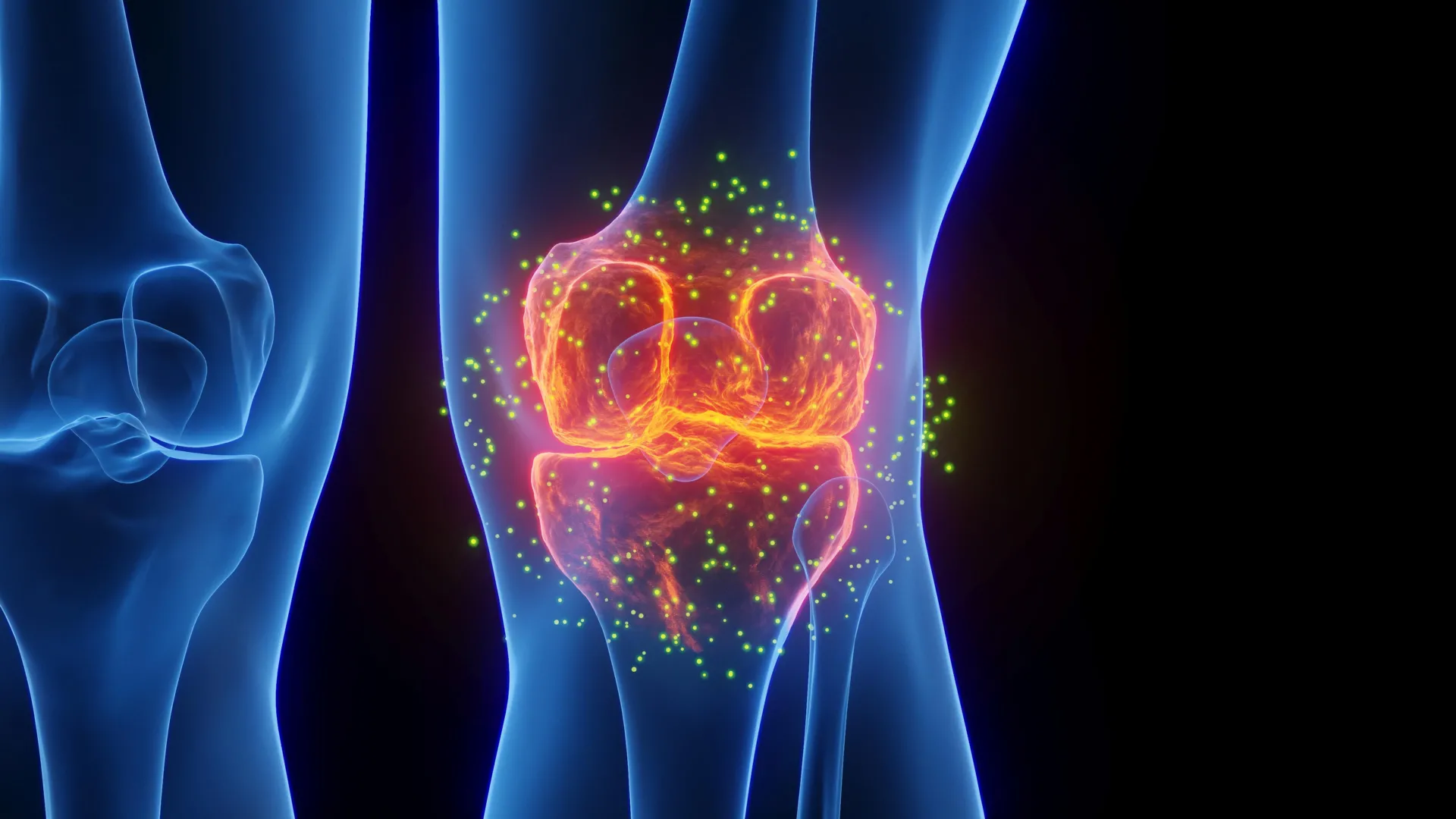
The procedure was “remarkably” successful.
That is how 74-year-old Cynthia Schraf-Fletcher describes genicular artery embolization (GAE), a minimally invasive treatment designed to reduce chronic knee pain. Nearly a year after having the outpatient procedure on her right knee, she says the result feels almost the same as the total knee replacement she previously underwent on her left knee.
“I couldn’t be more pleased,” says Schraf-Fletcher, who turned to Leigh Casadaban, MD, MS, assistant professor of radiology at the University of Colorado Anschutz School of Medicine, for the treatment.
She says everyday activities that once came with substantial discomfort are now much easier. Gardening, riding a stationary bicycle, and enjoying other favorite activities all involve far less pain.
A New Option Between Injections and Knee Replacement
Genicular artery embolization works by reducing blood flow to inflamed areas inside the knee. The goal is to calm inflammation, which can in turn reduce swelling and pain.
That makes the procedure potentially useful for people with osteoarthritis who have exhausted simpler options but are not yet ready for major surgery.
“For treating osteoarthritis in the knees, we often think of medications, physical therapy, maybe a steroid injection, and then on the far end of the spectrum is a total knee replacement. There really hasn’t been anything for patients in between,” Casadaban, a vascular interventional radiologist, says. “GAE is a promising minimally invasive procedure that may fill that spot for people who have failed conservative treatments but are not yet ready to have a major surgery.”
Osteoarthritis is a degenerative joint disease in which cartilage and other structures inside a joint gradually break down. In the knee, that process can cause pain, stiffness, inflammation, and difficulty walking or exercising.
According to Casadaban, people with mild to moderate knee osteoarthritis tend to be the best candidates for GAE. Patients with more advanced disease can also undergo the procedure, but the benefits may not last as long.
“We find about 70% of patients have phenomenal results. They cut their pain scores in half, sometimes more. We have a few patients with no pain at all after the procedure,” Casadaban says. “Patients that have tried a lot of other treatments and haven’t had pain relief are happy to get back to their normal activities.”
For Schraf-Fletcher, the chance to avoid another major knee operation was especially appealing. After experiencing complications from her earlier knee replacement surgery, she says she was eager to try GAE and is glad she did.
How the Procedure Works
GAE typically takes one to two hours and is performed under conscious sedation. That means the patient is relaxed and comfortable but is not placed under full general anesthesia.
An interventional radiology team begins by making a small incision in the crease of the leg. A very thin tube called a catheter is then guided through the femoral artery using X-ray imaging and contrast dye, which allows the doctors to see the blood vessels clearly.
Once the catheter reaches the genicular arteries around the knee, the team releases tiny beads into abnormal blood vessels associated with the painful, inflamed areas identified by the patient. Those beads reduce blood flow to the targeted vessels.
Because the procedure does not involve replacing the joint or making a large surgical incision, recovery is generally much shorter than after knee replacement.
Patients are monitored for several hours afterward and typically return home the same day. They are usually advised to take it easy for the next few days.
A Procedure With Growing Interest
GAE was first developed in Japan a little more than a decade ago and has since attracted increasing attention around the world.
In the United States, the FDA has granted “breakthrough device status” to a number of devices used in this area since 2021. The designation is intended to speed the development and review of certain medical technologies that could offer meaningful advantages for patients.
Early research on GAE has also produced encouraging results.
“The theory is that GAE reduces inflammation inside the knee joint, and symptom relief can last years,” Casadaban says. “Four-year data published in Japan shows that if you have one outpatient procedure, your pain relief can last for those four years. In the U.S., we now have two-year data, which shows that if you have a good response, pain relief can last two years. That really speaks to the theory that we’re hopefully modifying something in the joint.”
The possibility that a single outpatient treatment could provide relief lasting several years is one reason researchers are closely studying what happens inside the knee after GAE.
Researchers Are Testing How GAE Changes the Knee
Casadaban is leading clinical trials at CU Anschutz aimed at learning more about the treatment.
One study is looking at changes in fluid in the knee in people undergoing GAE. By examining those changes, researchers hope to better understand how the procedure affects inflammation and other processes inside the joint.
Another study is evaluating a new temporary treatment device called Nexsphere-F. The device is placed in the arteries and temporarily blocks small blood vessels in the knee that may contribute to inflammation and pain.
Osteoarthritis affects millions of people each year and can develop in many joints throughout the body. For now, GAE is being used to treat knees, but the same general strategy is beginning to expand into treatments for other painful conditions.
Casadaban says similar approaches are being explored for problems including frozen shoulder, tennis elbow, and plantar fasciitis.
If ongoing studies continue to show lasting benefits, GAE could become an important option for patients caught between conservative treatments and major joint surgery.
The rule is named after 13-year-old Martha Mills, whose family’s concerns about her care were not listened to before her death.
Around 631,000 years ago — a geological blink of an eye — catastrophe unfolded in what is now north-western Wyoming, US. During what is thought to have been a series of immense volcanic eruptions, life within hundreds of kilometers of the blasts was shattered. Ash was dispersed across much of North America and the effects were felt worldwide. This was a super-eruption of the massive volcanic system located in what is now the Yellowstone National Park.
Despite the scale, no known human witnessed the cataclysm. As far as we know, early humans had not yet reached the continent. Across oceans, perhaps early humans did wonder at the hazier skies and unusually vivid sunsets. Volcanic particles circulating in the sky cooled their climate and likely affected their weather patterns and lives. Whether they noted these changes – or connected them to any distant event – is unknowable.
Today, humanity would certainly notice. We already know that a super-eruption on this scale would be a threat civilization as we know it. So what exactly would we experience if Yellowstone erupted? We are experts in disasters and volcanoes and what follows is a thought experiment into what might happen in the worst case scenario. We’ve based our hypothesis on research and by examining how countries have dealt with disasters in recent years.
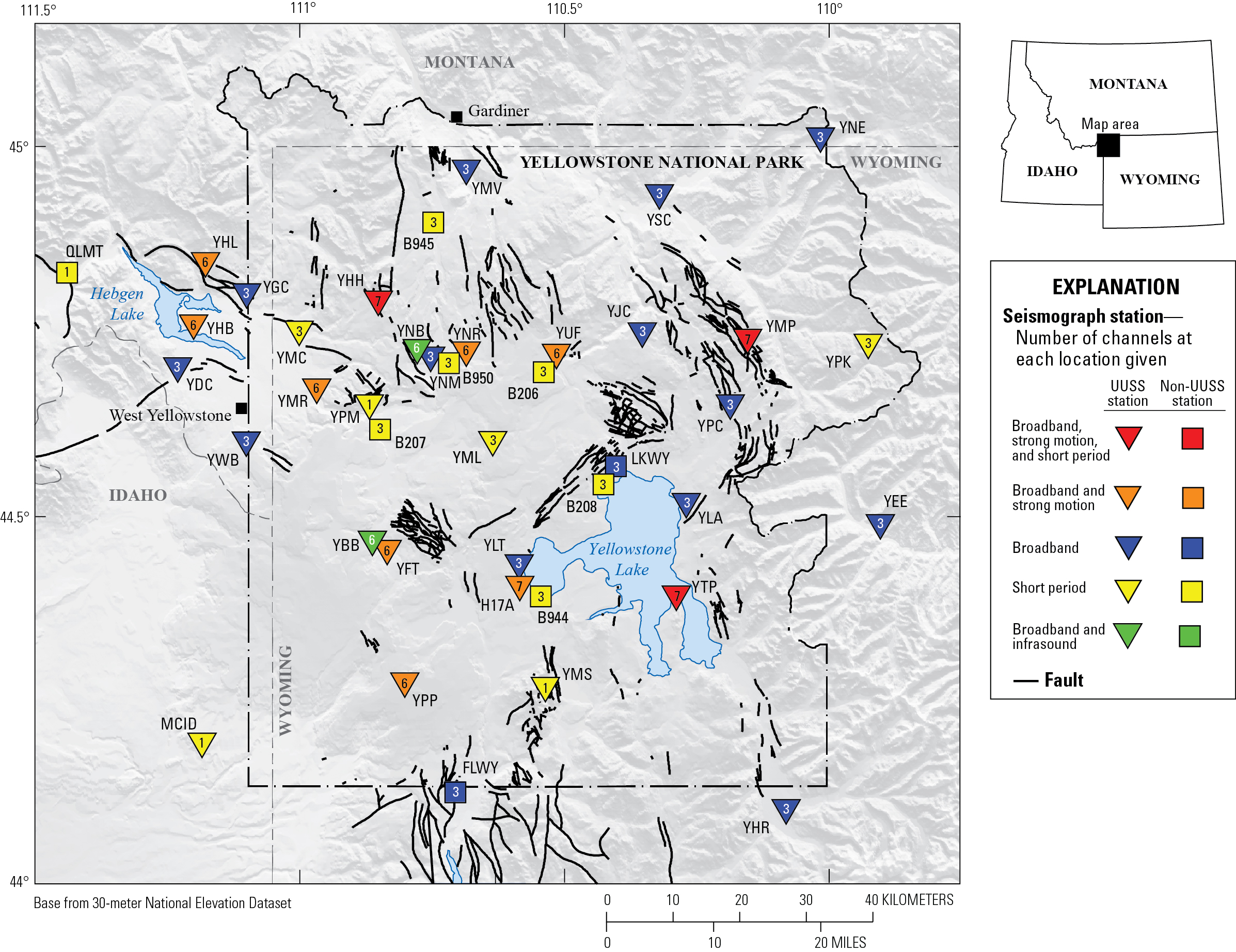
Shortly after 6am, an analyst at the University of Utah Seismograph Stations sees a series of sharp spikes interrupting the usually quiet wavy lines recorded by Yellowstone’s earthquake monitors. The measurements represent earthquakes detected beneath Yellowstone overnight. The scientist raises an eyebrow and takes a deep breath – these observations don’t fit with Yellowstone’s usual behavior.
People often imagine Yellowstone as a sleeping “supervolcano.” It may sleep, but its geological processes never do. An array of instruments monitors its activity – and any changes in it. A dense network of seismometers records earthquakes in the region. Around the clock, data feeds in from GPS stations, strainmeters (instruments which measure deformations and changes in the shape of the Earth’s crust) and sensors positioned within its active geyser areas. Satellite observations, gas sampling and field surveys add plenty more information.
Scientists look at the number of earthquakes along with their location, depth and size. Earthquake “swarms” warrant particular attention, especially when they appear to be migrating through the crust (Earth’s solid, outermost rocky shell) or becoming progressively shallower. Such patterns can indicate that magma or pressurized hydrothermal fluids (hot, mineral-rich water) is moving upwards.
Our scientist is relieved to discover that most of the unusual tremors are tiny — too weak to have been felt. But together, they form an unusually concentrated swarm. The analyst checks the signals against neighboring seismometers and, more out of curiosity than concern, contacts colleagues at several partner organizations comprising the Yellowstone Volcano Observatory (YVO) in order to follow YVO’s response plan.
They deduce that, overnight, instruments have recorded a tightening cluster of earthquakes beneath Yellowstone’s vast caldera, which is roughly 55–70 kilometers across. Yellowstone experiences thousands of earthquakes each year, and swarms are not unusual. But this one appears to be migrating ever so slightly upwards. Still, an earthquake swarm by itself doesn’t mean Yellowstone is preparing to erupt, nor does ground deformation, changing temperatures or gas emissions. Scientists are more concerned about several such changes happening together.
The team of scientists decides to wait and see what happens next.
Four weeks later, the swarm has continued to migrate upwards. New events are also appearing along a narrow zone beneath the caldera, notes the analyst, who has now lost their appetite for both food and caution and is writing reports designed to be alarming. GPS stations above the swarm have begun moving apart. Measurements of strain have increased and satellite radar reveals the cause: there’s a broad area of accelerating uplift of the ground.
Together, the observations are consistent with magma forcing its way into the crust – as seen in places like Hawai’i prior to eruptions. Reassuringly for YVO staff, Yellowstone has produced similarly alarming combinations of signals before with no subsequent eruptions. Between 2013 and 2014, parts of the caldera began rising at rates of more than 15 centimeters a year and earthquake activity increased.
This culminated in a magnitude 4.8 earthquake, the largest recorded at Yellowstone since 1975. Shortly after, the uplift changed to subsidence (the ground moving downward) and scientists concluded that the episode was associated with hydrothermal fluid movements rather than magma.
Mindful of the need to keep the public informed without causing unnecessary alarm, YVO responds cautiously. A duty scientist assumes responsibility for assessing the incoming data. Additional, temporary seismometers and GPS units are deployed to provide more precise data, and gas and water are sampled more frequently.
YVO begins closer coordination with the National Park Service and emergency management authorities, reviewing road closures, public communications and evacuation plans. Perhaps ominously, but to err on the side of caution, Yellowstone’s Volcano Alert Level is raised from “normal” to “advisory,” indicating that unrest is above its established background level.
These developments are worrisome enough that scientists start speculating about a major eruption’s impacts. The media take an interest, but the volcanologists have learned how damaging it can be when volcanic uncertainties morph into a full-blown dispute, played out in public.
Scientists privately discuss differences in interpretations, agreeing on regular updates for the public via media briefings and social media postings. As the volcano’s activity continues to ramp up, high-level decision-makers are alerted that this situation could become a major catastrophe. The probability of it happening within three months increases from 6-9% to 21-27%.
Due to the uncertainties, the politicians make no specific declaration. The US’s Federal Emergency Management Agency nevertheless starts drawing up plans for a large-scale evacuation. They express confidence in public while perhaps fearing in private that a worst-case scenario could make it hopeless to try to save everyone.
Over the following fortnight, the unrest escalates dramatically. Earthquakes become more frequent and shallower. Long-period seismicity (much gentler earthquakes, usually caused by fluid movement rather than faults shifting and known to occur at Yellowstone) and sustained volcanic tremors suggest magma and pressurized fluids are forcing open fractures in the ground.
The uplift accelerates and GPS stations move centimeters in days. Geyser activity becomes increasingly erratic. Even the Old Faithful geyser becomes less faithful: its usually regular eruptions become harder to predict. Meanwhile, gas measurements and changes in spring water chemistry indicate an increased input of carbon dioxide and sulfurous gases into Yellowstone’s hydrothermal system. Taken together with the shallow earthquakes and rapid uplift, the concern is that magma may be moving upwards.
These new observations lead to a press conference describing an 85-92% probability of a cataclysmic eruption within three weeks. At this point, the YVO raises Yellowstone warning to “watch,” and the USGS raises the Aviation Color Code to orange, with aircraft rerouted around the region.
An evacuation zone extending 100 kilometers beyond Yellowstone National Park is announced, affecting roughly 200,000 residents, as well as thousands of visitors in the region. The topic now dominates both traditional and social media. The attention likely spawns detractors as well as conspiracists. The former claim that nothing will happen. The latter spread the disinformation that YVO is being paid by foreign shadow billionaires to bring down the US so that other countries can control the world’s economy.
Now that a super-eruption appears imminent with high confidence, world leaders swing into action. They must make a choice: help each other as a global village or repeat COVID-19 style global shuttering.
If they choose collaboration, then they start evacuations, moving people as far as needed – including across international borders. This would involve supporting them with adequate homes, water, food, electricity and community through schools, jobs, transport and safety. Achieving all this seems unlikely, since most of the world’s population has always lacked it. Nonetheless, the US has the money, skills and goods to evacuate and resettle the huge numbers, if leaders cooperate and use everything available.
More likely, many countries could be reticent to accept “volcano refugees,” making excuses – perhaps legitimate ones – that they don’t have the money, resources or space to safely settle so many people so swiftly. They are further stretched by those who self-evacuate through having more than one passport, along with the wealth or the social network to start afresh.
Charities step in to help some people leave on chartered planes, as well as via long, excruciating journeys on overcrowded trains and buses. The most marginalized and poorest may have no option but to stay behind. Some might join the minorities who do not believe the eruption will happen, who think their well-stocked underground bunkers will protect them (an overly optimistic belief), or who would rather die at home than live in a foreign land with a devastated world.
In an instant, seismic instruments are overwhelmed by an intense burst of shallow earthquakes. Expanding clouds of steam rise from newly opened cracks. The YVO and USGS have no choice but to raise the warning level and Aviation Color Codes to red: a dangerous eruption is imminent.
The eruption does not begin with the entire caldera exploding at once. Instead, rising magma intrudes into Yellowstone’s shallow hydrothermal system, rapidly vaporising immense volumes of water. At atmospheric pressure, water can expand in volume around 1,700 times when converted to steam. Trapped beneath the surface, this rapid expansion triggers violent so-called phreatomagmatic explosions that send superheated steam, mud and shattered blocks of rock kilometers into the air.
There are no human casualties yet, thanks to the wide exclusion zones on land and in the air. Wildlife, livestock and vegetation are not as fortunate. Within roughly 4–6 kilometers of the initial eruption sites, the landscape is battered by falling rock, ash and mud. Beyond the exclusion zone, people watch an impressive two kilometer-high plume rise into the sky – but it rapidly grows larger, and any sense of relief is short-lived.
A few hours later, gas-rich magma, 650-800°C in temperature – well above the melting points of lead and zinc – breaks through the fractured surface. As the confining pressure falls, dissolved gases separate into distinct components from the melt and expand violently. The magma fragments into pumice (porous rock) and ash while tearing away huge fragments of the surrounding rock from the walls of the erupting vent.
Expanding gases and intense heat drive this material upwards, creating a vast eruption column rising 30–50 kilometers into the atmosphere – far above commercial passenger aircraft, which usually cruise at up to about 13 kilometers. On this clear morning, its upper reaches are visible from Denver, some 800 kilometers away.
As the eruption continues and the volume of material expelled mounts, scientists realize it might be the opening stages of a VEI 8 super-eruption (magnitude 8 or greater) – the highest formal notch on a scale used to measure the size of explosive volcanic eruptions. It was 74,000 years ago that humanity last witnessed this scale of eruption with Toba in Indonesia.
The immense umbrella cloud that forms does not behave like a normal ash plume that simply drifts with the prevailing wind. Its momentum initially drives ash outwards in every direction – spreading hundreds of kilometers before high-altitude winds take over and carry fine ash thousands of kilometers downwind within a day.
After a few hours of continuous eruption, parts of the column collapse, generating scorching pyroclastic density currents (extremely hot, fast-moving mixtures of gas, ash and rock fragments). These surge for tens of kilometers, splintering trees, igniting forests and burying the remnants beneath hot ash and pumice.
Anyone within this zone is pulverized by the blasts, crisped by the heat, or asphyxiated by the ash. There may be up to 1,000 immediate human deaths, including people who refused to move. It is too dangerous to recover most bodies. And even if it were possible, many bodies no longer exist to be recovered.
Outside the main pyroclastic density current zone, casualties mount from vehicle crashes as drivers lose visibility or skid due to ash, from heart and breathing difficulties and from suicide. Vegetation fires spreading beyond the immediate burn zone add perhaps hundreds of fatalities from burning, smoke inhalation and vehicle crashes.
As the magma continues to escape, sections of the unsupported ground subside, opening new fractures and vents while feeding further eruptive columns and pyroclastic density currents. Hundreds of kilometers away – in Denver and along the Canadian border – heavy ashfall darkens the sky, obstructs roads and disrupts power, water supplies and communications. This ash devastates farmland across at least eight states.
Further immediate deaths could result from loss of power disrupting traffic and street lights; curtailing health services including surgery and obtaining prescriptions; and electrocution, fire and carbon monoxide poisoning from trying to set up and operate home electricity generators. Looting and increasing crime during disasters is typically rare, but it could happen in a more desperate worst-case scenario, adding to the casualty toll.
Over the coming days, the eruption continues in pulses as sections of the caldera collapse and new vents open. Successive column collapses generate pyroclastic density currents with the resulting deposits reaching several hundred meters in thickness, as they did in the last super-eruption.
Nearby infrastructure is shattered and entombed beneath the deposits. Airports close because ash interferes with aircraft and other transport networks falter. Communities across all states bordering Wyoming face darkness, breathing difficulties and roofs collapsing under accumulated ash. As the eruption eventually begins to weaken, sulphur dioxide high in the atmosphere forms sunlight-reflecting sulfate aerosols that spread around the northern hemisphere to influence the world’s climate for several years.
Three days into the eruption, much of North America is living in the shadow of Yellowstone. Each successive powerful eruptive pulse sends another column tens of kilometers upwards, from where it spreads into a new umbrella cloud.
Within Wyoming and neighboring states, conditions are catastrophic. Billings, Montana, the nearest large city, is disappearing beneath what will eventually exceed a meter of ash (one published model of a Yellowstone supereruption predicts the city as receiving up to 1.8 meters of ash). Salt Lake City, Utah, and Boise, Idaho, receive tens of centimeters. For southern Canada, much of the US and northern Mexico, day becomes twilight and breathing outdoors without masks becomes increasingly difficult. People on other continents watch in trepidation under vivid, red-orange sunrises and sunsets.
Back in the US, electricity networks begin failing. Warnings had not been heeded that damp ash conducts electricity, short circuiting power lines and substations. Ash clogs machinery and generator intakes. Its weight damages cables and weaker structures.
As electricity fails, so do water pumps, sewage treatment, heating systems, fuel stations and mobile phone and internet networks. People are scared and supermarket shelves empty nationwide as regional and national supply chains begin to break down.
Over the following weeks, the crisis becomes one of survival. Repeated ashfall blocks roads, overwhelms drainage systems and damages roofs. During rain, dry ash turns into a dense slurry that makes clearance work harder. Airports remain closed or severely disrupted across much of North America, while railways, freight depots and farms struggle to operate. Livestock and crops die where pasture and water supplies are buried or contaminated by ash.
Large areas close to Yellowstone remain evacuated, while across the US, shelter, fuel, food and clean water become increasingly scarce. Some countries airlift or airdrop humanitarian relief supplies, but are also concerned about stockpiling for themselves. Losses to agriculture, transport and insurance – with many other businesses and services closed – could lead Canada, Mexico and most Caribbean and Central American countries to declare states of emergency. This is partly due to direct impacts on those countries and partly due disruption across the USA and people fleeing from it.
Several months later, eruptions have weakened to intermittent explosions, but the threat of renewed activity remains. For millions, the disaster is far from over. Dry, windy days lift ash back into the air, while rain and snow turn it into a heavy deposit blocking drains and damaging infrastructure. Eye and throat irritation are widespread. People with asthma and other respiratory conditions face serious health risks under reduced and overworked health services.
Water treatment and power plants struggle with ash contamination, equipment failures, lack of spare parts and overwhelming demand, disrupting essential medical and industrial processes. Crops across the most heavily affected regions have been buried. The loss of American and Canadian grain, maize and soya exports drives global food prices upwards.
Flights gradually resume in less affected areas, but airports across North America repeatedly close whenever winds remobilize the ash. The unreliable airspace and transport networks – coupled with agricultural losses, business disruption and reconstruction costs – trigger banking and insurance crises, producing a global recession.
Meanwhile, the atmospheric effects become global. Most volcanic ash has fallen out, but sulfur dioxide injected into the stratosphere produces sulfate aerosols which reflect a significant proportion of the Sun’s energy. Scientists call it a “volcanic cooling episode,” avoiding the term “a new ice age”. Modeling suggests it’s unlikely to cool the global average by more than about 1.5°C, although particular regions and seasons could experience much larger changes. Notably, central North America remains far cooler than before the eruption.
In the years following the eruption, the world moves into long-term recovery and rebuilding. People across the world adapt to a more agrarian lifestyle, learning to fill the land with root vegetables, grains and legumes. With far less leisure time and diminished income, recreational facilities are turned over to food production, notably small-scale greenhouses and vertical farming for producing varied fruits, vegetables, nuts and legumes.
Livestock decreases due to lack of land and feed, opening up more space for crops. People still eating meat typically either hunt big game or trap smaller birds and mammals. Insect farming tends to dominate the re-establishment of bird or mammal farms. People living near coasts, rivers and lakes ramp up fishing, depleting stocks rapidly until controls are enacted in some locations, along with increased farming for seaweed. Where rules are not agreed or enforced, starvation and migration are rampant.
Freshwater availability varies. The world’s climate has changed, providing ample rainfall in some places while drying out others. Large-scale water treatment technology remains known and used, but supply lines for chemicals and spare parts are unreliable. Many people develop local approaches and manage while others suffer contaminated water and disease, including cholera, dengue fever and malaria, just as billions did before the eruption.
Before the eruption, around 4.4 billion people from the world’s population of 8.3 billion lacked full, safe freshwater access. A decade after the eruption, it’s possible that 4.8 billion people lack such freshwater, while the world’s population may have declined to 7.9 billion due to spikes in elderly and infant mortality.
For the eruption’s survivors, disease and death are still rising. The eruption may well provide substantive, long-term evidence for the carcinogenic level of silica in the ash. A small but statistically significant increase in diagnoses of both silicosis (an irreversible lung disease) and lung cancer appears from exposure to ash, with similar results for cardiovascular disease in people breathing in ash particles.
Rates are likely higher than measured, because health systems across a continent were knocked out by the eruption and struggling to recover ten years later. The worst part is that the lack of health systems means that many who are diagnosed cannot be treated properly. Survivable diagnoses become lethal.
Inside the eruption zone, two decades follow of a grey landscape. It appears almost lifeless, with the ash transformed into raging mudflows called lahars in every storm. But vegetation, starting with grasslands and shifting to forests, creeps back into the swathes wiped out in the explosion and people follow. These new pioneers coax the landscape into fertile framing, helping to feed hungry populations.
The dispersed ash eventually settles out of the atmosphere, permitting the Sun’s rays to shine fully on the surface again – reviving agriculture and ecosystems. It also revives fears of human-caused climate change, despite the volcano-induced reduction in greenhouse gas emissions. Scientists work hard to determine whether the global climate has been knocked onto a new trajectory – which might be better or worse for human beings – or whether the heat stored in the atmosphere and oceans from humanity’s greenhouse gas burning will once again force a rapidly heating globe.
Additionally, scientists want to calculate deaths, injuries and loss to quality of life. Excess mortality analyses could suggest 0.7-1.3 billion premature deaths due to the eruption and its impacts. Perhaps double that number experienced temporary or permanent health effects but survived, although some will say that 100% of humanity was directly affected.
The good news, at least for our species, is that this unstoppable power of volcanism changed the planet, but did not end humanity – or come close to doing so.
A creature descends to Earth from a sleek spacecraft, still humanoid but far removed from its ancestor species Homo sapiens sapiens. Tjjze (the pronoun used) has absorbed all the scant information available about ancient “Earth” and is curious to learn more.
The most notable material is the rise of its first technological civilization just over a million years ago. This was followed by the species abandoning the planet as it changed 140,000-160,000 years ago – becoming taller, sleeker, with longer limbs, and with larger hands, heads and brains – having already established itself around the galaxy. In the remaining lore, myths recur of episodes of runaway planetary temperature changes, hot and cold, as well as a series of volcanic blasts that changed the globe.
Tjjze observes that the vegetation is lush and the H2O is plentiful, providing ample food and water for the bizarre animals and ecosystems. A rapid scan reveals much below the surface. In fact, a large roughly ellipse-shaped ridge made of rock appears prominently underneath the top layers. Yes, this particular region, about 24.3 cqurzots in radius, is definitely lower than the vast plains outside the depression. This seems to indicate an ancient volcanic eruption. And to leave a scar this big, it must have been gigantic.
Tjjze warps the equivalent of the face into the equivalent of a frown as more data are revealed. Indeed, this definitely looks like a caldera. And the age is coming in at around a million years (plus/minus).
Could it have erupted during the time of the technological civilization? Or were they lucky to have just missed it? It is impossible to really know.
The bacteria responsible picked up some new genetic material, say experts.