This engineered fungus cuts emissions and tastes like meat

A recent study published November 19 in Trends in Biotechnology reports that scientists used the gene-editing tool CRISPR to improve how efficiently a fungus produces protein while also lowering the environmental footprint of that production by as much as 61% — all without introducing foreign DNA. The modified fungus has a meatlike flavor and is easier for people to digest than the natural strain it originated from.

“There is a popular demand for better and more sustainable protein for food,” says corresponding author Xiao Liu of Jiangnan University in Wuxi, China. “We successfully made a fungus not only more nutritious but also more environmentally friendly by tweaking its genes.”

Sustainable Protein and the Need for Alternatives

Animal agriculture accounts for about 14% of global greenhouse gas emissions. It also requires large amounts of land and fresh water, both of which are increasingly strained by climate change and human activity. Because of these challenges, microbial proteins found in yeast and fungi have gained attention as promising alternatives to meat.

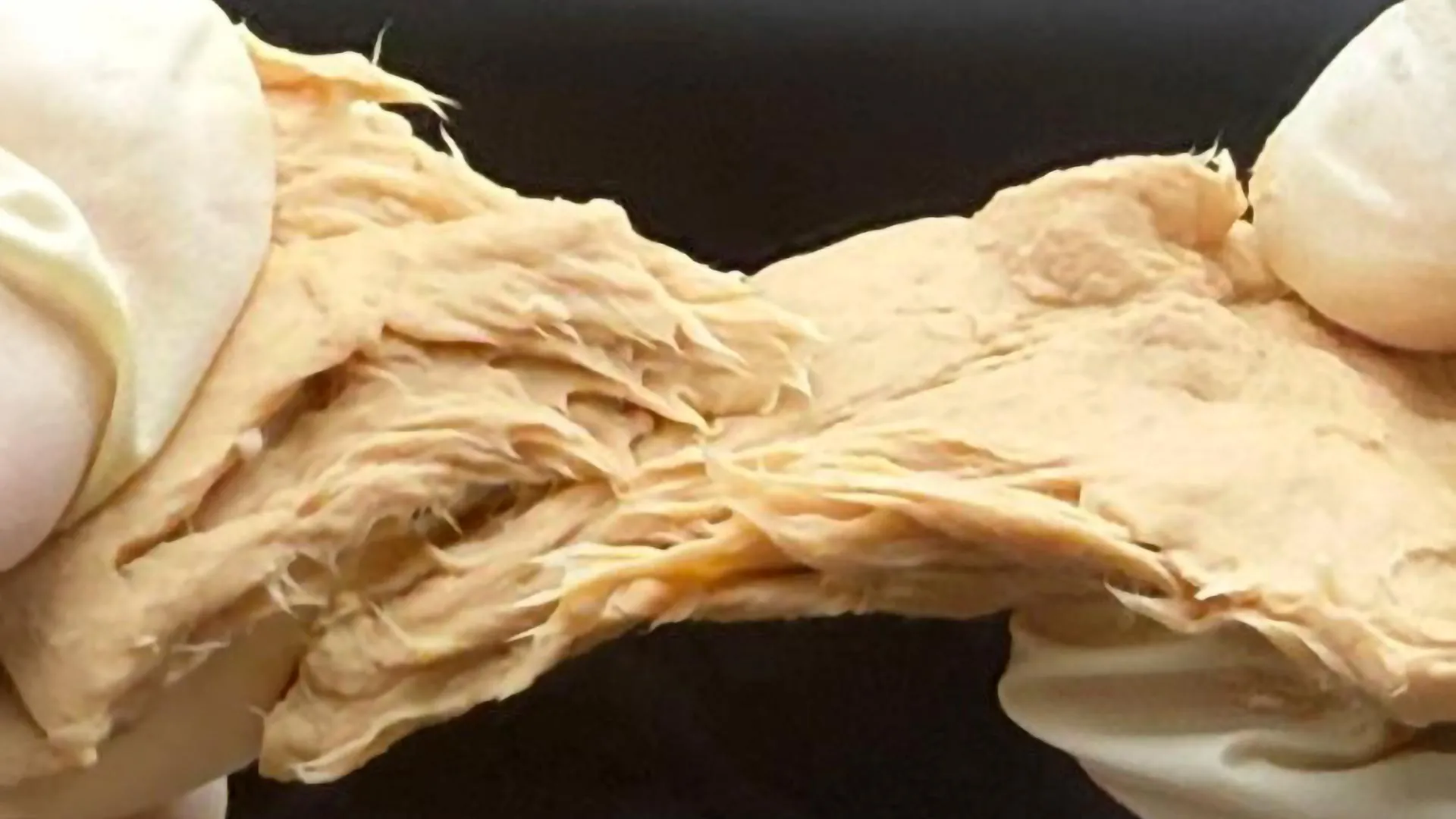
Among the many mycoprotein sources studied so far, the fungus Fusarium venenatum has become a prominent choice because its natural flavor and texture closely mimic meat. It has already been approved for consumption in several regions, including the United Kingdom, China, and the United States.

Why Fusarium venenatum Needed Improvement

Even with its advantages, Fusarium venenatum has thick cell walls that limit how well humans can digest it. Producing it is also resource intensive. Growing even modest quantities of mycoprotein requires significant inputs, and the spores must be cultivated in large metal tanks filled with sugar-rich feedstock and added nutrients such as ammonium sulfate.

Liu and his colleagues wanted to determine whether CRISPR could make this fungus easier to digest and more efficient to grow while still avoiding the introduction of foreign DNA into the organism.

Key Gene Edits That Boost Efficiency

To explore this approach, the researchers removed two genes linked to the enzymes chitin synthase and pyruvate decarboxylase. Removing the chitin synthase gene resulted in a thinner cell wall, which made the internal protein more accessible for digestion. The deletion of the pyruvate decarboxylase gene fine-tuned the fungus’s metabolism, reducing the amount of nutrients needed for protein production.

Their analyses revealed that the modified strain, named FCPD, used 44% less sugar to create the same amount of protein as the original strain and did so 88% more quickly.

“A lot of people thought growing mycoprotein was more sustainable, but no one had really considered how to reduce the environmental impact of the entire production process, especially when compared to other alternative protein products” says first author, Xiaohui Wu of Jiangnan University.

Life Cycle Footprint and Global Comparisons

The team then assessed the environmental footprint of FCPD across its entire life cycle, from laboratory spores to inactivated meat-like products, at an industrial scale. They modeled production in six countries with different energy systems, including Finland, which depends largely on renewable energy, and China, which relies more heavily on coal. In every scenario, FCPD produced lower environmental impacts than conventional Fusarium venenatum. Across its full life cycle, FCPD production reduced greenhouse gas emissions by up to 60%.

How FCPD Compares to Animal Protein

The researchers also compared the impacts of FCPD production to those associated with raising animals for food. Against chicken production in China, FCPD required 70% less land and lowered the potential for freshwater pollution by 78%.

“Gene-edited foods like this can meet growing food demands without the environmental costs of conventional farming,” says Liu.

This work was supported by the Key Research and Development Program of China, the Jiangsu Basic Research Center for Synthetic Biology, the Natural Science Foundation of Jiangsu Province, and the Postgraduate Research & Practice Innovation Program of Jiangsu Province.

Share Button

This tiny pill could change how we diagnose gut health

Move over, colonoscopies — researchers writing in ACS Sensors report that they have created tiny microspheres filled with bacteria that can sense the presence of blood, a key sign of gastrointestinal disease. These microspheres function like miniature “pills” that are swallowed and include magnetic particles so they can be easily collected from stool. After passing through mouse models with colitis, the sensors detected gastrointestinal bleeding within minutes. The team notes that the same bacterial system could eventually be engineered to identify other gut-related conditions.

“This technology provides a new paradigm for rapid and non-invasive detection of gastrointestinal diseases,” says Ying Zhou, a co-author of the study.

Why Easier, Noninvasive Gut Diagnostics Are Needed

In the U.S., millions of people live with colorectal cancer or inflammatory bowel disease, including colitis, which can lead to intestinal bleeding, diarrhea and abdominal pain. Colonoscopy remains the gold-standard diagnostic tool. It relies on an endoscope, a camera-tipped flexible device that is carefully guided through the large intestine. Although it provides valuable medical insight, many individuals hesitate to undergo the procedure because it requires extensive preparation and can feel invasive. To develop an alternative, Zhou, Bang-Ce Ye, Zhen-Ping Zou and colleagues are exploring the use of bacteria that detect biomarkers such as heme, a component of red blood cells that signals bleeding inside the gut.

Building Bacterial Sensors That Survive Digestion

The team previously designed bacteria that emit light when they encounter heme, but the early versions broke down during digestion and were difficult to retrieve afterward. In the new study, the researchers protected the bacteria by enclosing them, along with magnetic particles, inside small droplets of sodium alginate, a thickening ingredient commonly found in foods. This produced sturdy hydrogel microspheres that travel through the digestive tract and can be removed from stool with a magnet. Initial laboratory tests confirmed that the hydrogel shield allowed the bacteria to survive simulated digestive conditions while still letting heme reach the sensor and trigger a glow.

Testing the Microspheres in Mouse Models of Colitis

The researchers then gave the microspheres orally to mice with varying levels of colitis, ranging from no disease activity to severe inflammation. After the spheres moved through the gastrointestinal tract, the team retrieved them using a magnet and reported three key findings:

  • Microsphere cleanup and signal analysis required about 25 minutes.
  • The sensors produced stronger light signals as disease severity increased, indicating higher levels of heme in animals with more advanced colitis.
  • Tests in healthy mice showed that the microspheres were biocompatible and safe.

Future Potential for Human Testing and Disease Monitoring

Although the technology has not yet been evaluated in humans, the researchers suggest that encapsulated bacterial sensors could one day help diagnose gastrointestinal diseases, monitor treatment responses and track changes in disease over time.

The authors acknowledge funding from the National Natural Science Foundation of China, the National Key Research and Development Program of China, and the China Postdoctoral Science Foundation.

Share Button

Delayed action before 2020 Christmas lockdown ‘inexcusable’

Baroness Hallet says ministers failed to take “decisive action” against an “entirely foreseeable” variant.

Share Button

Biggest prostate cancer screening trial in decades begins in UK

The study aims to find the best way to detect prostate cancer – the most common cancer in men in the UK.

Share Button

What’s in the Covid inquiry report… in 68 seconds

The report looks at whether lockdowns were timely and reasonable, and what impact rule-breaking at the heart of government had on public confidence.

Share Button

‘Toxic’ No 10 culture harmed Covid response, inquiry finds

Boris Johnson, Dominic Cummings and Matt Hanock are all criticised for contributing to poor Covid decision-making.

Share Button

UK did ‘too little, too late’, leading to thousands more Covid deaths – inquiry

Report on government decision-making says delays cost 23,000 lives in the first wave in England.

Share Button

Lockdown could have been avoided – key findings from Covid inquiry

The long-awaited report is published into how well or badly the government handled the Covid pandemic.

Share Button

Trans people could be barred from services based on appearance

The new code of practice on access to single-sex services cannot gain legal force until it gets sign-off from ministers.

Share Button

Why saving microbes may be the most important conservation effort ever

A newly released study describes how researchers collaborated to design the first comprehensive roadmap for protecting microbial life. The effort was led by Professor Jack Gilbert, President of Applied Microbiology International.

The work appears in the article titled ‘Safeguarding Microbial Biodiversity: Microbial Conservation Specialist Group (MCSG) within the Species Survival Commission of the International Union for Conservation of Nature (IUCN)’, published in Sustainable Microbiology, an AMI journal.

Launching a New Global Effort Through the IUCN

In July 2025, the IUCN formally created the MCSG within its Species Survival Commission. The group is co-chaired by Professor Gilbert and Raquel Peixoto (KAUST / ISME). Its formation followed a May workshop led by Professor Gilbert that brought together conservation specialists and microbiologists to explore how traditional conservation goals apply in a world driven by microbial processes.

“This is the first global coalition dedicated to safeguarding microbial biodiversity, which is the ‘invisible 99% of life’, to ensure that microbes are recognized as essential to the planet’s ecological, climate, and health systems,” Professor Gilbert said.

He added: “I think this reframes conservation from saving individual species to preserving the networks of invisible life that make visible life possible — a paradigm shift toward planetary health. It also gives us a really good look into the microbial tools that can support conservation action — so that we may use microbiology to solve the world’s biggest problems.”

Why Microbial Biodiversity Matters for the Planet

Microbes are central to soil fertility, carbon cycling, marine productivity, and the health of plants and animals. Despite this, they rarely appear in conservation policy. Professor Gilbert noted that overlooking microbial diversity weakens climate resilience, food security, and ecosystem restoration efforts. He explained: “The MCSG fills this gap by embedding microbiology directly into IUCN’s conservation machinery, i.e. using Red List criteria, ecosystem assessments, and restoration programs, to make microbes visible in policy, not just in science.”

Building a Global Network to Guide Microbial Conservation

Over the past two years, the founding members have assembled an international community of microbiologists, ecologists, legal experts, and Indigenous knowledge holders from more than 30 countries. Together, they created the first microbial conservation roadmap, outlining five core components of the IUCN Species Conservation Cycle:

  • Assessment — develop Red List-compatible metrics for microbial communities and biobanks.
  • Planning — create ethical and economic frameworks for microbial interventions.
  • Action — pilot restoration projects using microbial solutions (coral probiotics, soil carbon microbiomes, pathogen-resistant wildlife).
  • Networking — connect scientists, culture collections, and Indigenous custodians worldwide.
  • Communication & Policy — launch public and policy campaigns, including “Invisible but Indispensable.”

Early work is supported by funding from the Gordon & Betty Moore Foundation, along with in kind support from AMI and ISME. This first phase focuses on mapping microbial hotspots, building conservation indices, and linking existing microbial biobanks into a coordinated global archive.

Overcoming Scientific and Ethical Challenges

Professor Gilbert explained that creating a conservation framework for microscopic life comes with complex scientific and conceptual barriers. These challenges include:

  • Determining what qualifies as a “microbial species” within Red List criteria.
  • Integrating genomic and ecological information into systems originally developed for plants and animals.
  • Addressing the belief that microbes are too resilient or too complicated to require protection.

“Microbial conservation must contend with enormous unseen diversity and highly dynamic community structures that defy classical species concepts. Taxonomic instability, lack of long-term baselines, and the ethical handling of microbial samples (including Indigenous or human-associated microbiota) all require new definitions of ‘loss’, ‘restoration’, and ‘rights of microbes’,” he said.

He added, “But a major landmark came when the IUCN approved the MCSG as a formal Specialist Group — officially extending global conservation to microbes for the first time.”

Plans for the Next Phase of Conservation Work

The group’s upcoming goals include:

  • Developing the first Microbial Red List framework by 2027.
  • Creating global maps of microbial hotspots across soil, marine, and host-associated systems.
  • Testing conservation strategies such as microbial bioremediation, coral probiotics, and soil carbon restoration.
  • Ensuring microbial indicators are incorporated alongside plants and animals in IUCN and UN biodiversity targets by 2030.

What Is Needed for Long-Term Progress

Sustained investment will be essential to expand global microbial monitoring networks. Future progress also depends on integrating microbes into national biodiversity and climate strategies, including “30 by 30” and One Health policies. Another key priority is building “public microbial literacy — recognizing microbes as the foundation of ecosystem and human health.” The roadmap also highlights the importance of digital-twin and AI tools to anticipate how microbial communities will respond to environmental change.

The paper was published today (November 20) in Sustainable Microbiology.

Share Button