The Royal United Hospital in Bath has set up swimming sessions for stoma bag users.


The Royal United Hospital in Bath has set up swimming sessions for stoma bag users.
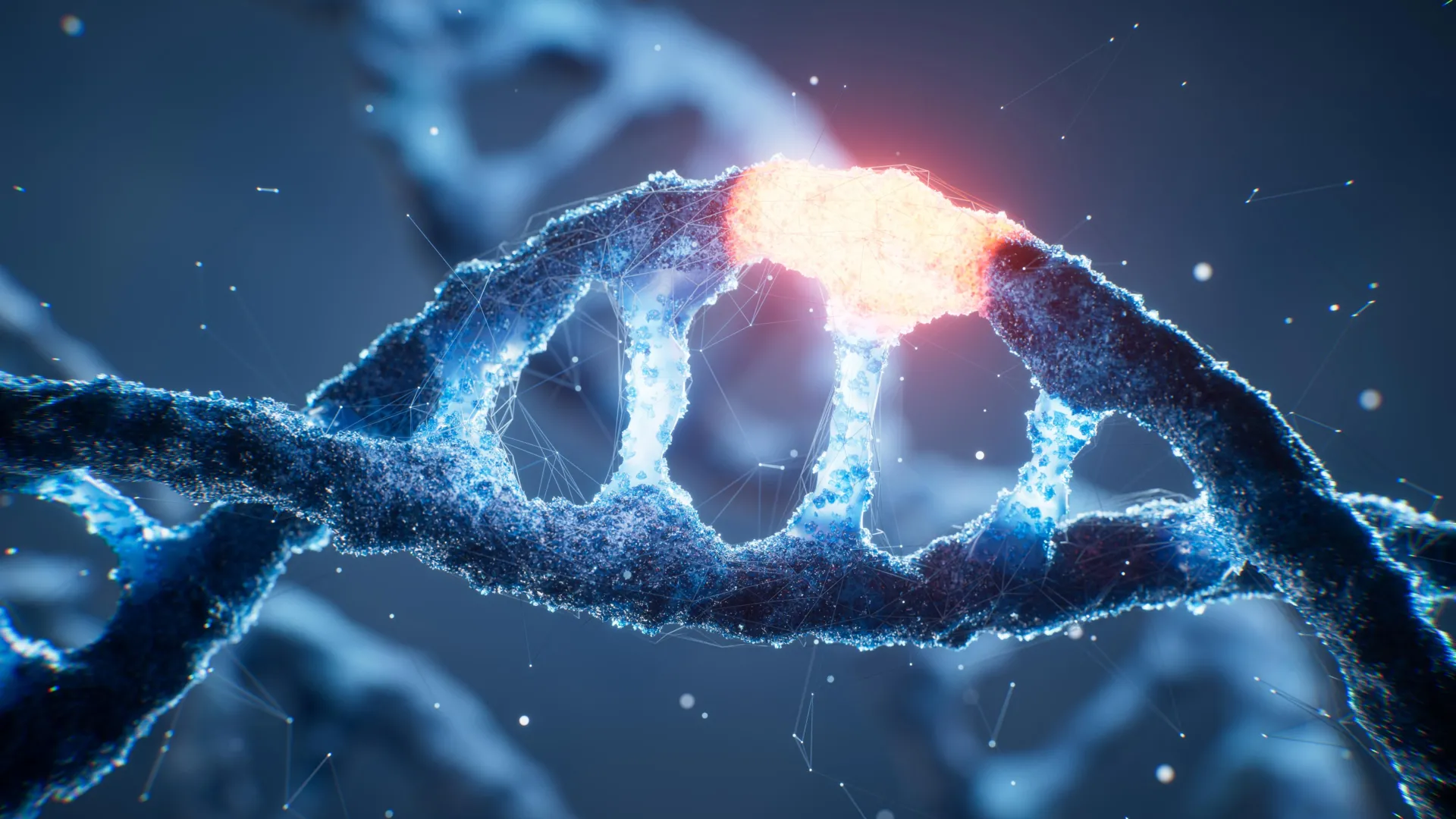
All known life on Earth relies on the same four-letter genetic alphabet. Researchers at the University of California San Diego have now shown that one of biology’s most important enzymes can accurately read and transcribe a much larger version containing eight genetic letters.
The finding suggests that cells can use their existing molecular machinery to handle synthetic genetic information. That marks an important step toward a long-standing goal in synthetic biology: expanding the language of DNA beyond the four letters found in nature. In the future, such systems could help scientists engineer biological machinery that carries out new functions or produces compounds that do not naturally exist.
How Cells Read an Eight-Letter Genetic Alphabet
The researchers focused on RNA polymerase, the enzyme that reads DNA and produces RNA — the first step in gene expression. To see how the enzyme handles synthetic genetic information, the team combined biochemical experiments with high-resolution cryo-electron microscopy capable of revealing structures at scales smaller than the width of a single atom.
The researchers captured detailed structural views of RNA polymerase from Escherichia coli (E. coli) bacteria as it recognized and incorporated two synthetic base pairs. These artificial genetic letters are not found in nature.
The images showed that RNA polymerase identifies the synthetic DNA letters using many of the same biochemical and structural signals it relies on to recognize natural base pairs. That finding helps explain why the enzyme can accurately copy information written using an expanded genetic alphabet.
In a related study published in PNAS, the same research team found that RNA polymerase can also recognize another pair of synthetic base pairs even though they lack the hydrogen bonds that normally help hold DNA base pairs together.
Synthetic DNA Could Enable New Technologies
The potential applications extend well beyond understanding how DNA works. Earlier research has already used expanded genetic alphabets to create synthetic DNA molecules capable of recognizing liver cancer cells.
By showing in molecular detail how RNA polymerase reads and transcribes non-natural DNA letters, the new research provides an important foundation for technologies built around expanded genetic codes. Possible applications include new diagnostic tools, therapeutics, and engineered biological systems with capabilities that do not occur naturally.
Two Studies Explore Expanded Genetic Codes
The Nature Communications study (“Structural Basis of Transcription of the Hachimoji Eight-Letter Alphabet by E. coli RNA Polymerase”), led by Dong Wang, PhD, professor at the UC San Diego Skaggs School of Pharmacy and Pharmaceutical Sciences, was published on Sept. 2, 2026 in Nature Communications.
The PNAS study (“Hydrophobic unnatural base pair promotes trigger loop closure and catalysis in cellular RNA polymerase independent of hydrogen bonding”), published on Aug. 12, 2026, was also led by Wang.
Counterfeit versions of a drug which is still in clinical trials are flooding the black market.

A new study suggests that deliberately changing the rhythm of your breathing can influence how you make decisions by altering activity in both the heart and brain. Researchers from the German Institute of Human Nutrition Potsdam-Rehbruecke (DIfE) and Charité — Universitätsmedizin Berlin found that longer exhalations increased heart rate variability and made the brain more responsive to rewards, which was associated with bolder choices. The findings were published in Neuron.
Fast breathing and an elevated heart rate are often linked with rapid decision-making. Under pressure, people may become more cautious in an effort to avoid losses, whether they are making an investment, handling a tense workplace situation, or choosing a meal quickly. Slower breathing and a calmer cardiovascular state, by contrast, may encourage a more positive assessment of potential outcomes and make people more willing to take risks.
How Breathing Connects the Body and Brain
Decision-making has traditionally been viewed as a process centered mainly in the brain. The new research examined a broader possibility: that signals from other parts of the body can change brain activity and influence the choices people make.
The study was led by Prof. Soyoung Q Park in collaboration with researchers from institutions including the Neuroscience Research Center at Charité — Universitätsmedizin Berlin, Freie Universität Berlin, and the German Naval Institute of Maritime Medicine.
“Our decisions are rarely determined solely by external information. Rather, our judgment emerges from the interplay between cognitive processes and our current bodily state. It was previously unknown how the conscious regulation of our body, for example through targeted breathing, could actively control our decision-making process. We wanted to create a physiological shift using a slow breathing pattern to change the quality of our decisions,” explains Soyoung Q Park, head of the Department of Decision Neuroscience and Nutrition at DIfE, summarizing the research question.
Testing Whether Longer Exhales Change Decisions
The researchers studied 41 healthy participants while they made risky choices under carefully controlled breathing conditions. Participants followed visual breathing instructions and either breathed at their normal individual pace or slowed their breathing while extending the exhalation phase (2:8 inhale-exhale ratio).
As the participants completed a series of risk-related decisions, the research team measured several aspects of their physical and neurological responses. Functional magnetic resonance imaging was used to track brain activity, while breathing patterns, heart activity, skin conductance, and pupil responses were monitored at the same time.
This combination of measurements allowed the researchers to test whether extending the exhale did more than simply lower heart rate. They also wanted to determine whether the breathing pattern directly changed how the brain processed potential rewards.
Longer Exhalation Shifted Choices Toward Reward
The results showed that extended exhalation slowed heart rate and was associated with riskier choices. Importantly, the change appeared to come from greater attention to possible rewards rather than reduced concern about potential losses. Participants still responded to losses in a similar way.
The researchers also detected stronger activity in the ventromedial prefrontal cortex and the precuneus. These brain regions are involved in reward processing and in regulating the timing between heartbeats, a measure known as heart rate variability.
“Our study thus underscores the transformative role of breath-based interventions. The interplay between breathing and cardiac dynamics makes the brain more receptive to rewards,” explains lead author Wenhao Huang, interpreting the results.
What the Findings Could Mean for Breathing Techniques
The work adds to a growing field focused on body-brain communication and supports neurovisceral models, which propose that a person’s physical state can strongly shape cognitive processes.
Park explains: “Breathing techniques have accompanied humanity for millennia across various religions and cultures. With this study, we provide scientific proof that it is a reliable and targeted method capable of controlling our decisions.”
Because controlled breathing is simple, inexpensive, and relatively easy to learn, the researchers say it could have value as a tool for everyday self-regulation. It may also have potential as a supportive, non-pharmacological approach in clinical settings, particularly for conditions such as anxiety disorders or depression, which can involve disrupted autonomic regulation and altered responses to reward.
Could Breathing Influence Eating Behavior?
Future studies will need to determine whether the same effects appear in broader clinical populations, including people with overweight. The researchers are particularly interested in whether breathing techniques could influence food-related decisions, since eating behavior is strongly affected by both reward processing and a person’s physical state.
“Since dietary decisions are strongly influenced by reward assessment and physical state, targeted breath regulation could also play a role in consciously perceiving and more effectively managing eating behavior,” Park summarizes for future research activities.
This study was supported by the Federal Ministry for Research, Technology and Space [Grant 01GP2210C (DecEnt-Project), Grant 01EE2301E for the conceptual development of the German Center for Mental Health; Grant 82DZD03D03 (German Center for Diabetes Research)], the Ministry for Science, Research and Culture of the State of Brandenburg (MWFK). Ignacio Rebollo was supported by the Marie Skłodowska-Curie Action (MSCA) BRAINSTOM (grant agreement no. 101028203).

Summer is the busiest time of year for iceberg activity in Greenland’s glacier-fed fjords, and 2026 delivered a particularly dramatic example. In August, a huge iceberg broke away from Petermann Glacier on Greenland’s northwest coast. About the size of St. Thomas in the U.S. Virgin Islands, it marked the largest calving event from any Arctic glacier since 2020.
Iceberg calving is a normal part of the life cycle of outlet glaciers, but scientists monitor these events closely for clues about longer-term signs of instability. Petermann is one of Greenland’s largest marine-terminating glaciers and helps control the flow of ice from the Greenland Ice Sheet into the ocean. Because of that role, changes in its stability could have implications for sea level rise.
A Giant Ice Island Breaks From Petermann Glacier
The summer 2026 calving was first identified on August 4 by Adam Garbo, a doctoral student in glaciology at the University of Ottawa, using imagery from the European Space Agency’s Sentinel-1 mission. Garbo and an international group of researchers have been relying on remote sensing to monitor Petermann Glacier and follow changes in its floating ice tongue.
According to the team, the large flat-topped iceberg, known as an “ice island,” measured just over 76 square kilometers (29 square miles) when it separated from the glacier. That made it the largest iceberg to break from Petermann since the 2012 event, which produced an ice island covering 130 square kilometers. Earlier major calving events occurred in 2008 (31 square kilometers) and 2010 (just over 250 square kilometers).
Scientists had actually been preparing for an even larger break. Garbo and his colleagues were watching one of several major rifts that appeared likely to eventually cut across the entire ice tongue. Instead, the glacier fractured along a different crack.
“What surprised us was that the calving instead followed a different fracture, producing a smaller ice island than we had originally anticipated,” Garbo said.
As of late August, two large rifts were still present. Researchers expect them to eventually release new ice islands measuring roughly 94 square kilometers and 84 square kilometers, although no one knows exactly when those breaks will occur.
The Iceberg Heads Toward Nares Strait
Glaciologist Mauri Pelto of Nichols College has also been tracking the iceberg using imagery from NASA-USGS Landsat satellites. After separating from the glacier, the berg moved down Petermann Fjord toward Nares Strait at an average speed of about 3 kilometers per day during its first week.
It eventually approached the point where the fjord meets Nares Strait and collided with a small rocky outcrop called Joe Island (Joe Ø). The encounter was captured by the OLI (Operational Land Imager) aboard Landsat 9 on August 23 and August 24. A closer look at the August 24 scene is shown at the top of this article.
Joe Island sits near the entrance to Petermann Fjord, putting it directly in the path of many ice islands leaving the glacier. Such collisions can trigger the beginning of an iceberg’s breakup. One notable example occurred when a 2010 ice island struck Joe Island and split into two pieces.
Pelto noted that icebergs from Petermann are generally thinner and more fragile than those produced by Greenland glaciers such as Jakobshavn and Helheim. They are also much thinner than the enormous icebergs that break away from Antarctica.
A Collision That Failed to Break It Apart
Despite that fragility, the new Petermann ice island remained intact after striking Joe Island.
“We were certainly watching closely as it interacted with Joe Island and were impressed that it survived the interaction without further fragmentation,” Garbo said.
At the time it broke away, the ice island was estimated to be less than 150 meters thick. Winds and surface currents later carried it out of Petermann Fjord, while satellite observations showed it pivoting away from Joe Island and moving southwest through Nares Strait.
Its journey will gradually become more destructive. Tides, winds, ocean currents, and melting will continue weakening the iceberg until it eventually fractures into smaller pieces.
Where Greenland’s Ice Islands Can Go Next
Some thicker icebergs that break from tidewater glaciers without floating ice shelf extensions can scrape along the seabed or become grounded inside a fjord. Ice islands from Petermann may instead travel farther before running aground. Many have eventually become “grounded” near the coasts of Coburg and Baffin islands.
Garbo and his colleagues noted that Petermann ice islands and the fragments they produce can travel long distances through Arctic waters. Along the way, they can create hazards for ships, marine operations, and infrastructure.
At the same time, they play another role in the ocean. As the ice slowly melts, it releases freshwater into surrounding waters, carrying the influence of Greenland’s glaciers far beyond the fjord where the iceberg first broke free.

For nearly a century, scientists have been trying to identify dark matter, the invisible material thought to account for about 85% of all matter in the universe. Its gravitational effects can be seen throughout the cosmos, yet no experiment has directly detected the substance itself. Discovering what dark matter is made of remains one of the most important unresolved problems in modern physics.
A new analysis from the LUX-ZEPLIN (LZ) experiment has now uncovered a particularly intriguing event. Researchers recorded a single particle interaction that has proven difficult to explain using known background signals produced by ordinary matter.
The finding is not statistically strong enough to qualify as a discovery. Even so, researchers say it represents the most compelling potential dark matter signal LZ has reported so far.
A Giant Detector Nearly a Mile Underground
LZ is an international project involving 250 scientists and engineers from 39 institutions. The experiment is managed by the U.S. Department of Energy’s Lawrence Berkeley National Laboratory (Berkeley Lab) and operates nearly one mile underground at the Sanford Underground Research Facility (SURF) in South Dakota.
At the heart of the detector are 10 tonnes of extremely pure liquid xenon. The instrument was designed primarily to search for WIMPs, or weakly interacting massive particles, one of the leading candidates proposed to explain dark matter.
The new results were presented during a scientific talk at the 2026 TeV Particle Astrophysics conference in Japan. The paper will also be posted to arXiv and submitted to Physical Review Letters.
“We’re very intrigued to see this event in the data, in the region where we expect dark matter to show up and the competing backgrounds are very low,” said Rick Gaitskell, a professor at Brown University and the spokesperson for LZ. “With only one event, we don’t want to get ahead of ourselves. We are not claiming to have seen dark matter. But we have seen something interesting that we want to share with the scientific community for their input.”
Searching a New Part of the Data
The LZ collaboration examines its experimental results in batches. For this latest study, scientists analyzed 220 live days of observations gathered between March 2023 and April 2024.
Researchers had previously searched the same dataset for very faint signatures associated with the simplest forms of WIMP interactions. This time, they expanded the search to include a wider variety of possible WIMP interactions capable of depositing larger amounts of energy inside the detector.
LZ is especially sensitive to events of this kind, while its design also helps scientists reduce the chances of mistaking ordinary particle interactions for dark matter.
“This was a detailed study in a region we hadn’t explored within this dataset, and we spent months of additional effort to understand all the possible causes of background events,” said Sam Eriksen, a senior research associate at the University of Bristol in the U.K. and lead author of the study. “We understand our detector and the backgrounds so well that even a single outstanding event, like the one we found, is important. We expect dark matter events to be extremely rare, so only a handful could mark the first detection of WIMP dark matter.”
What the Mysterious Event Could Mean
If dark matter really did produce the unusual signal, the responsible WIMP would probably have a mass of at least 200 GeV/c2 (gigaelectronvolts). That would make it more than 200 times as massive as a proton.
Such a result would also point toward a particular type of interaction between WIMPs and ordinary matter that goes beyond the simplest models typically considered in dark matter searches.
There is an important reason scientists are remaining cautious. Particle physics generally requires a result to reach “5-sigma” statistical significance before it is considered a discovery. The new LZ finding currently sits at 2.6 sigma.
According to the researchers, that corresponds to roughly a 0.5% chance that the unusual event could be produced by known background sources.
More observations will be crucial. As LZ collects additional data, scientists will be able to see whether the statistical significance of the event increases or whether the apparent signal eventually disappears.
LZ has already assembled the world’s largest dataset for dark matter searches and will continue gathering WIMP data at SURF, giving researchers much stronger statistics in the future.
How LZ Separates Dark Matter From Background Noise
The experiment searches for dark matter by watching for characteristic flashes of light created when particles deposit energy inside the detector.
The challenge is that ordinary matter can also produce particle interactions. LZ therefore uses several layers of protection and analysis to identify these background events and prevent them from being mistaken for dark matter.
Its underground location provides one of the first defenses. Nearly a mile of rock above the experiment blocks much of the cosmic ray radiation arriving from space. A surrounding water tank and additional outer detectors help shield the central detector from background neutrons.
Researchers also use sophisticated computational techniques to distinguish different kinds of particle interactions and reject events that imitate the signatures expected from dark matter.
The unusual event has attracted particular attention because, so far, it has not revealed the kinds of problems scientists normally find when they investigate an outlier more closely.
“Outlier events in the data are not unexpected, but they usually stand out as a background of some kind when you look at them deeper,” said Aaron Manalaysay, a physicist at Berkeley Lab and the chair of LZ’s Institutional Board. “This is the first example in any experiment I’ve worked on of an outlier that appears valid in every way. Of course, we’re still twisting our brains trying to think if there’s a rare background mechanism we could’ve missed, but it’s thrilling to wonder if this could be the first hint of a dark-matter observation.”
For now, one unexplained event is not enough to say that dark matter has finally been detected. But because the signal appeared in a region where dark matter could be expected and has survived extensive scrutiny, researchers believe it deserves close attention as the experiment continues collecting data.
International Support for the Dark Matter Search
LZ is supported by the U.S. Department of Energy, Office of Science, Office of High Energy and Nuclear Physics, and the National Energy Research Scientific Computing Center, a DOE Office of Science user facility.
Additional support comes from the Science & Technology Facilities Council of the United Kingdom; the Portuguese Foundation for Science and Technology; the Swiss National Science Foundation; the Australian Research Council Centre of Excellence for Dark Matter Particle Physics; and the Institute for Basic Science, Korea.
Thirty-nine institutions of higher education and advanced research provided support to LZ. The LZ collaboration also acknowledges the assistance of the Sanford Underground Research Facility.
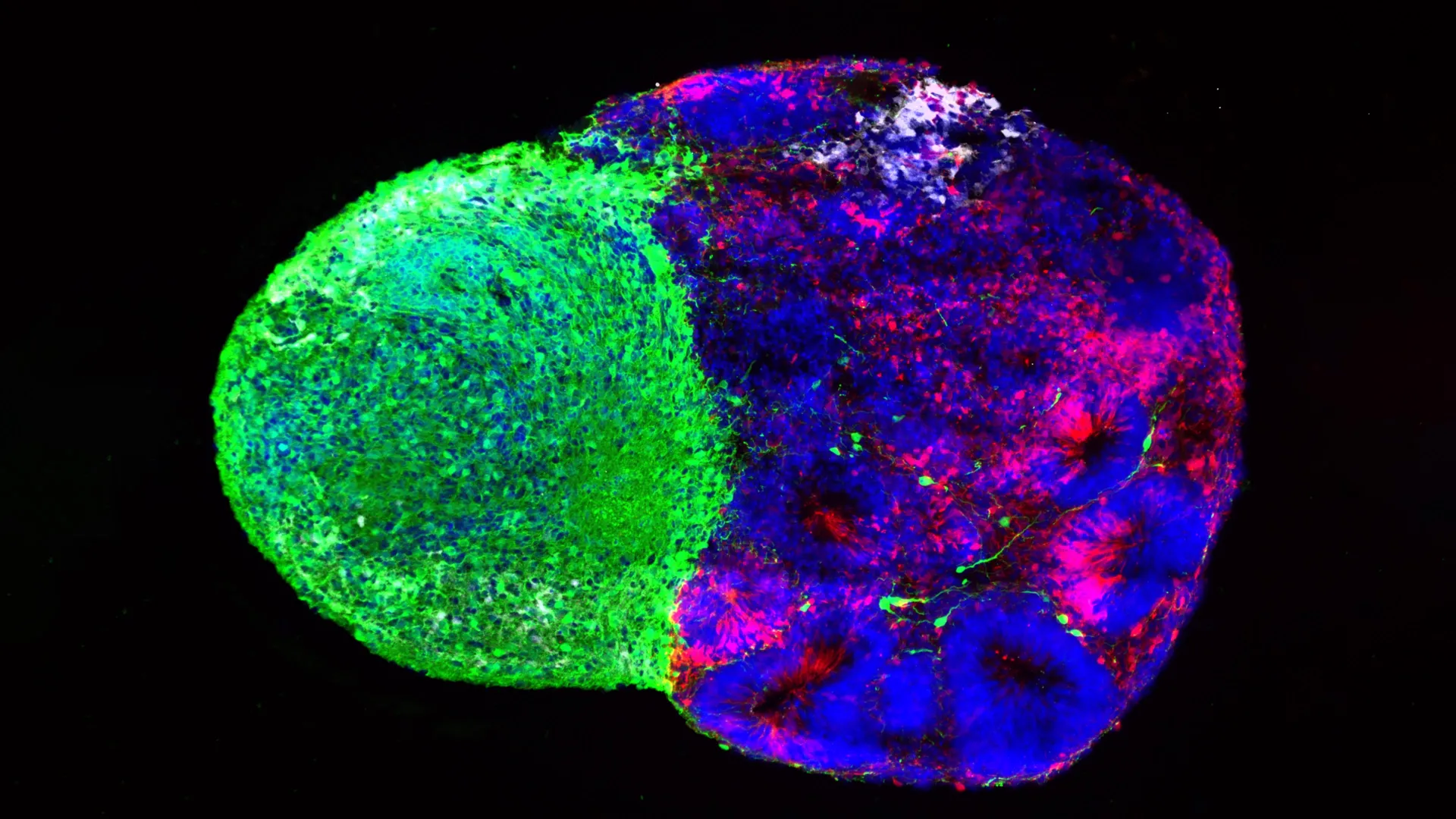
Before birth, the human brain is assembled through an enormous series of cellular choices. At the center of this process are radial glia, a special type of stem cell that helps create many of the features that distinguish the human brain.
These cells produce large numbers of the neurons and support cells that make up the cerebral cortex, the brain region involved in thought, memory, and language. Radial glia are also believed to contribute to the unusually large expansion of the human cortex compared with that of other species. Although most disappear before birth, similar cells can later appear again in brain cancers for reasons scientists still do not fully understand.
“Radial glia are the coolest cells that have ever existed,” said Aparna Bhaduri, an assistant professor of biological chemistry at the David Geffen School of Medicine at UCLA. “They’re really key to making us human. But they’re also at the center of many neurodevelopmental and neuropsychiatric disorders, as well as cancer — so understanding how they make their decisions is one way to start understanding how those conditions arise.”
Two new studies published in Cell and Science now provide a closer look at how radial glia make those developmental choices. Bhaduri and her colleagues found that the cells respond to two very different kinds of information: the way they process nutrients and direct physical signals from another part of the developing brain. Together, these findings offer new insight into how the human cortex produces its remarkable variety of cell types.
Metabolism helps direct brain stem cells
In the Cell study, researchers built a detailed map of metabolism in the developing human cortex. The project was a collaboration between Bhaduri’s lab and Heather Christofk’s lab and was led by co-first authors Jessenya Mil and Jose Soto.
To create the atlas, the team analyzed donated human tissue along with brain organoids grown from stem cells. Their results pointed to an unexpected conclusion: metabolism does not simply support brain development in the background. It can actively influence which kinds of cells are produced.
The researchers found that radial glia depend heavily on the pentose phosphate pathway, a metabolic process that uses glucose to make materials needed by cells that are dividing rapidly.
When the scientists lowered the amount of available glucose or interfered with this pathway, the stem cells changed what they produced. They began generating more inhibitory neurons and other cell types that normally appear later in development.
“What was surprising is that metabolism isn’t just a passive thing that happens in the background,” said Bhaduri, a member of both the UCLA Broad Stem Cell Research Center and the UCLA Health Jonsson Comprehensive Cancer Center. “It can really control how stem cells make decisions.”
The results could help scientists investigate how maternal nutrition, metabolic disorders, and other environmental influences affect the developing brain. The metabolic atlas also provides one of the most detailed resources yet for researchers studying metabolism during human brain development.
A signal arrives early from the thalamus
The second study, published in Science and led by first author Claudia Nguyen, examined a completely different source of developmental information. This time, the researchers focused on signals coming from the thalamus, a structure deep inside the brain that helps relay information throughout the nervous system.
Scientists have known for years that neurons in the thalamus send long projections toward the cortex. These wire-like fibers eventually form connections with specific cortical neurons. However, anatomical studies have shown that in humans, the projections reach the cortex long before those final connections are established.
That raised an important question: Why do the fibers arrive so early?
Using human stem cell-derived brain “assembloids,” the UCLA researchers found part of the answer. The thalamic projections physically touch radial glia while the brain is still developing.
That contact changed the behavior of the stem cells. It caused them to produce more excitatory neurons, the primary signal-carrying neurons in the cortex. The effect was especially strong for upper-layer neurons, which are particularly expanded in the human brain.
“We already knew that these projections influence how the cortex develops,” Bhaduri said. “What we specifically found is that this influence comes through an actual physical connection between the projections and the radial glia — a point of contact that just hasn’t been identified before, and one that very likely does not exist in rodents.”
A gene linked to autism enters the picture
The researchers connected this physical interaction to NRXN1, a gene already known for helping neurons form connections with one another. Mutations in NRXN1 have previously been associated with autism spectrum disorder.
To investigate its role, the team created assembloids from patient-derived cells carrying an NRXN1 mutation. In these models, the altered thalamic signals behaved differently from signals made by unaffected cells.
Those changes shifted the balance between the number of stem cells and the neurons they generated. The result offers researchers a possible way to study how disturbances early in brain development could influence the formation of the cortex.
The developing brain is in constant communication
Although the two studies focused on very different mechanisms, they point toward the same broader idea. One examined metabolism, while the other explored neural connections, yet both showed that radial glia do not make their decisions in isolation. Their behavior is continuously shaped by signals from the environment around them.
The studies also demonstrate how dramatically organoid technology has changed the study of human brain development. About a decade ago, scientists had few practical ways to directly investigate how uniquely human neural stem cells behave.
Today, brain organoids and related models allow researchers to recreate important features of human brain development in the laboratory. These systems also make it possible to test questions that cannot be addressed through animal models alone.
Bhaduri hopes the findings will encourage scientists to view metabolism and physical cellular connections as active drivers of development rather than as background processes.
“Ultimately, these studies give us a glimpse under the hood of how these cells make decisions,” she said. “Understanding those decisions is a first step toward understanding normal brain development, disease vulnerability and, potentially, how similar stem-cell programs operate in brain cancer.”
This research was supported by the National Institutes of Health, the National Science Foundation, the Brain & Behavior Research Foundation, the Alfred P. Sloan Foundation, the Rose Hills Foundation, the Esther A. & Joseph Klingenstein Fund, the Simons Foundation, the Chan Zuckerberg Initiative, the NIH BRAIN Initiative Cell Atlas Network, the International Foundation for Ethical Research, the UCLA Broad Stem Cell Research Center’s Stem Cell Research Training Program, and the UCLA Health Jonsson Comprehensive Cancer Center and UCLA Broad Stem Cell Research Center Ablon Scholars Program.

Scientists have identified a remarkable new species of leafless flowering plant growing on the forest floor of a national park in western Thailand. Its unusual, almost supernatural appearance inspired its name: Thismia daemona, the “devil flower.”
The plant belongs to Thismia, a genus of tiny species sometimes known as “fairy lanterns.” These plants lack chlorophyll and do not carry out photosynthesis. Instead, they obtain nutrients through underground fungi and remain concealed beneath layers of leaf litter for nearly their entire lives.
A Surprising Discovery in Thailand
Botanists from Chulalongkorn University and Prince of Songkla University discovered the new species while surveying Thong Pha Phum National Park. The plant was growing at an elevation of nearly 1,000 meters, an unusually high and seasonally dry environment for members of the genus.
“Finding Thismia daemona in Thong Pha Phum National Park was indeed a major surprise,” said Dr. Sahut Chantanaorrapint of Prince of Songkla University. “Typically, Thismia species are known to occur in perennially humid lowland rainforests. However, this population was discovered in a seasonal, montane evergreen forest at an elevation of nearly 1,000 meters above sea level.”
The discovery also changes scientists’ understanding of the geographic range of this plant group. Thismia daemona belongs to Thismia section Geomitra, which had previously been documented only in Peninsular Malaysia, Borneo and Sumatra. Finding it in Thailand extends the known distribution of the entire section farther north for the first time.
Why It Is Called the “Devil Flower”
The plant’s striking appearance helps explain its dramatic name. Its flower is mostly black and topped with horn-like appendages that rise from a dome-shaped “miter.” Bright reddish-orange patches near the base resemble glowing eyes, adding to its demon-like appearance.
“Combined with its hidden, subterranean, and mysterious lifestyle on the forest floor, our team unanimously agreed that naming it Thismia daemona perfectly captured its enigmatic and devil-like essence,” Dr. Chantanaorrapint said.
Fewer Than 50 Plants Are Known
Although the new species is visually striking, its survival may be at risk. Scientists know of only one population, consisting of fewer than 50 individuals in an area smaller than a football pitch. The species has therefore been provisionally assessed as Critically Endangered. One concern is that its habitat lies inside a national park that receives substantial tourist traffic.
Dr. Chantanaorrapint believes involving nearby communities will be important for protecting the plant and its fragile habitat.
“A key next step is adopting a sustainable conservation approach aligned with the UNESCO Man and the Biosphere concept, harmonizing biodiversity conservation with human engagement. Inspiring local people to take pride in their natural heritage not only safeguards the microhabitat, but also supports sustainable, community-led ecotourism.”
The research was published in the open-access journal PhytoKeys. With the addition of Thismia daemona, Thailand is now known to be home to sixteen species of Thismia.
A man has lived for a record nine months with a transplanted pig kidney while waiting for a human transplant.
The £21m hub brings together primary care, community wellbeing and leisure services in one location.