Your brain has a hidden beat — and smarter minds sync to it

When the brain is under pressure, certain neural signals begin to move in sync – much like a well-rehearsed orchestra. A new study from Johannes Gutenberg University Mainz (JGU) is the first to show how flexibly this neural synchrony adjusts to different situations and that this dynamic coordination is closely linked to cognitive abilities. “Specific signals in the midfrontal brain region are better synchronized in people with higher cognitive ability – especially during demanding phases of reasoning,” explained Professor Anna-Lena Schubert from JGU’s Institute of Psychology, lead author of the study recently published in the Journal of Experimental Psychology: General.

The researchers focused on the midfrontal area of the brain and the measurable coordination of the so-called theta waves. These brainwaves oscillate between four and eight hertz and belong to the group of slower neural frequencies. “They tend to appear when the brain is particularly challenged such as during focused thinking or when we need to consciously control our behavior,” said Schubert, who heads the Analysis and Modeling of Complex Data Lab at JGU.

Being able to focus even next to a buzzing phone

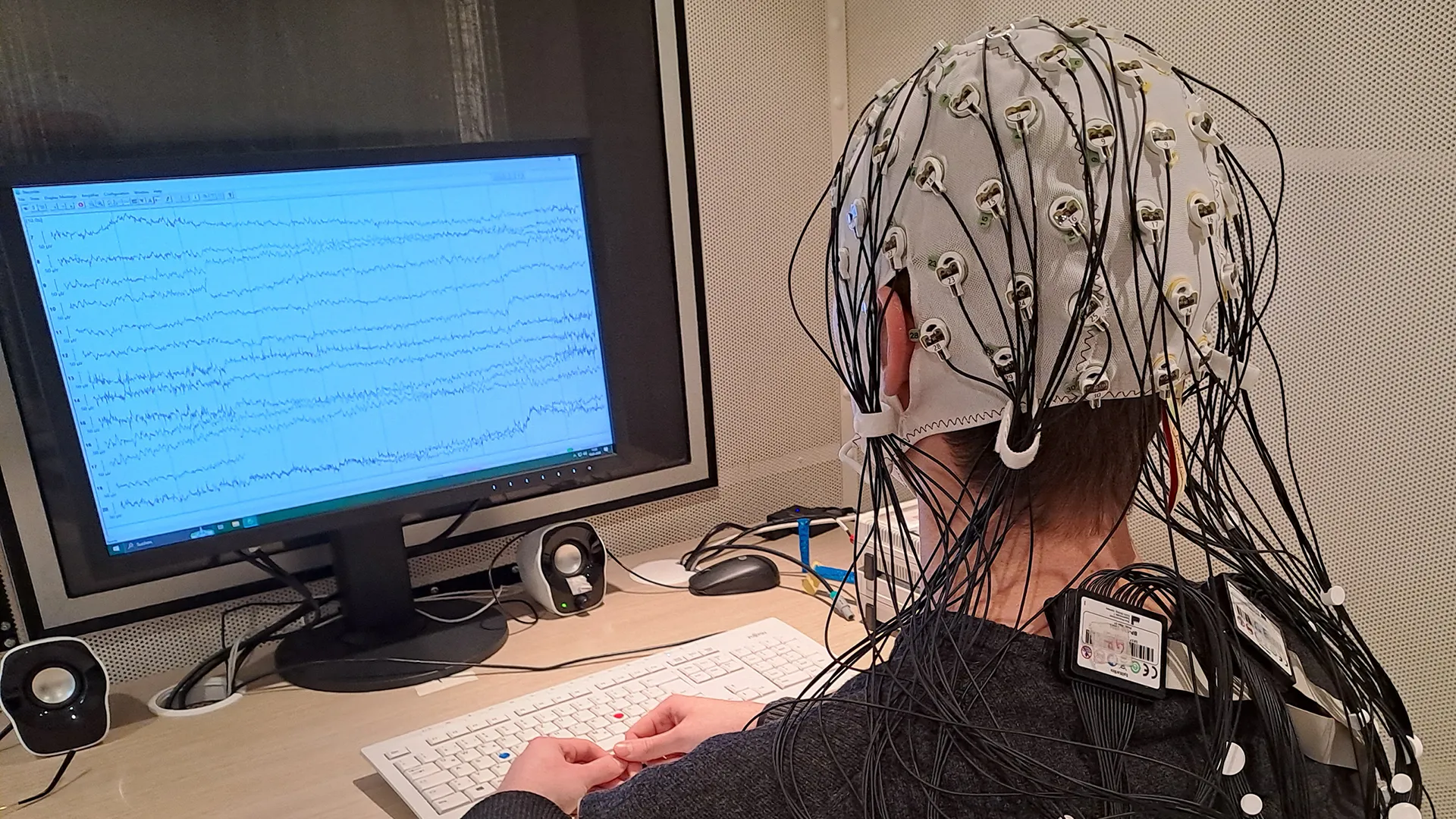
The 148 participants in the study, aged between 18 and 60, first completed tests assessing memory and intelligence before their brain activity was recorded using electroencephalography (EEG). This method measures tiny electrical signals in the brain using electrodes placed on the scalp and is a well-established technique for gaining precise insights into cognitive processes. During EEG recording, participants completed three mentally demanding tasks designed to assess cognitive control.

The researchers were interested in the participants’ ability to flexibly shift between changing rules, which is an essential aspect of intelligent information processing. For example, participants had to press a button to decide whether a number was even or odd, and moments later whether it was greater or less than five. Each switch of rules required rapid adjustment of mental strategies – a process that allowed researchers to closely observe how the brain’s networks coordinate in real time.

As a result, individuals with higher cognitive abilities showed especially strong synchronization of theta waves during crucial moments, particularly when making decisions. Their brains were better at sustaining purposeful thought when it mattered most. “People with stronger midfrontal theta connectivity are often better at maintaining focus and tuning out distractions, be it that your phone buzzes while you’re working or that you intend to read a book in a busy train station,” explained Schubert.

A flexible rhythm in the brain

Professor Anna-Lena Schubert was particularly surprised by how closely this brain rhythm coordination was tied to cognitive abilities. “We did not expect the relationship to be this clear,” she said. What mattered most was not continuous synchronization, but the brain’s ability to adapt its timing flexibly and contextually – like an orchestra that follows a skilled conductor. The midfrontal region often sets the tone in this coordination but works in concert with other areas across the brain. This midfrontal theta connectivity appears to be particularly relevant during the execution of decisions, however not during the preparatory mental adjustment to new task rules.

Previous EEG studies on cognitive ability mostly examined activity in isolated brain regions. In contrast, this study took a network-level approach, examining how different areas interact across multiple tasks to identify stable, overarching patterns. The findings show that individual differences in cognitive ability are linked to the brain’s dynamic network behavior.

“Potential applications such as brain-based training tools or diagnostics are still a long way off,” emphasized Schubert. “But our study offers important groundwork for understanding how intelligence functions at a neural level.” A follow-up study, now seeking participants aged 40 and older from the Rhine-Main region, will explore which biological and cognitive factors further support this kind of efficient brain coordination and the role of additional cognitive abilities, such as processing speed and working memory.

Share Button

‘My cancer was dismissed as a pulled muscle’

Former footballer Mel Tottoh was diagnosed with myeloma after months of rib and back pain.

Share Button

Cervical screening changes set to start in Jersey

New testing methods which are more accurate than previous tests lead to the changes.

Share Button

Hospices are at centre of debate over assisted dying bill – what do they think?

As MPs debate whether to legalise assisted dying, we speak to those providing end-of-life care.

Share Button

My dad gave me a kidney – now I can have my dream wedding

Kieran Innes was worried he would have to curtail his future plans when his kidneys failed.

Share Button

I quit TikTok to avoid eating disorder relapse

Eve Jones, who had anorexia, says banning “skinnytok” only scratches the surface of a larger issue.

Share Button

How to stay safe at festivals this summer

The UKHSA and Somerset Council have put together a list on how to stay safe at festivals this summer.

Share Button

Galactic mystery: Why massive stars struggle to form in the Milky Way’s center

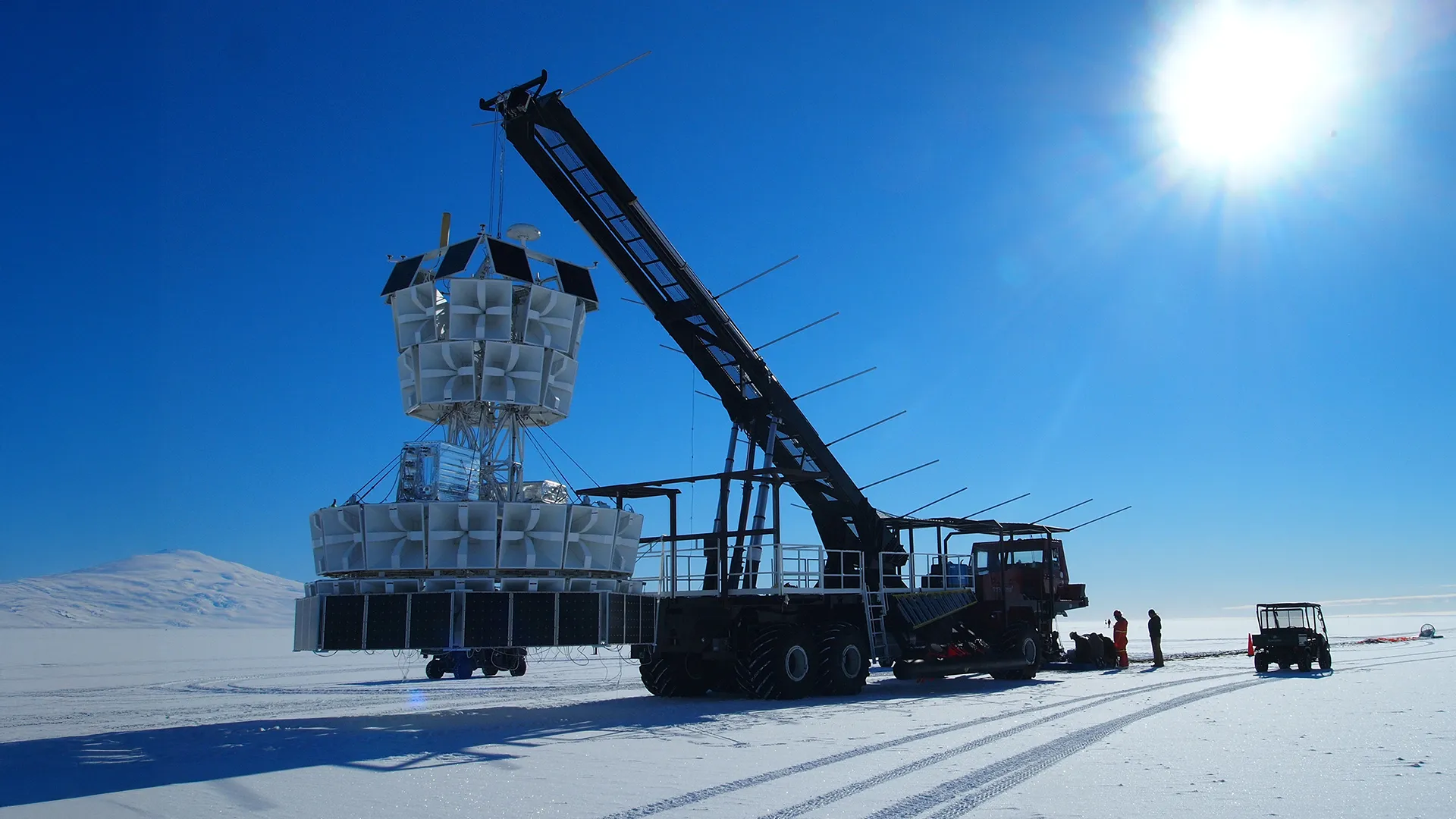
New research led by Dr. James De Buizer at the SETI Institute and Dr. Wanggi Lim at IPAC at Caltech revealed surprising results about the rate at which high-mass stars form in the Galactic Center of the Milky Way. The researchers based their study primarily on observations from NASA’s now-retired SOFIA airborne observatory, focusing on three star-forming regions — Sgr B1, Sgr B2, and Sgr C — located at the heart of the Galaxy. Although the central part of our Galaxy has a much higher density of star-forming material than the rest of the Milky Way, in the Galactic Center, the current rate of formation of massive stars (those larger than 8 times the mass of our Sun) appears to be lower compared to the rest of the Galaxy.

The team compared these three Galactic Center star-forming regions to similar-sized regions further out in the Galaxy, including those closer to our Sun, and confirmed that the rate of star formation is below average near the Galactic Center. Their study finds that despite the Galactic Center’s dense clouds of gas and dust, conditions that typically produce stars with high masses, these star-forming regions struggle to form high-mass stars. Furthermore, the studied areas appear to lack sufficient material for continued star formation, suggesting such regions effectively produce just one generation of stars, unlike typical star-forming regions.

“Recent studies have concluded that star formation is likely depressed near the Galactic Center, and even that there may be no present star formation occurring there,” said De Buizer, lead author of the study. “Since presently-forming massive stars are brightest at long infrared wavelengths, we obtained the highest resolution infrared images of our Galaxy’s central-most star-forming regions. The data show that, contrarily, massive stars are presently forming there, but confirm at a relatively low rate.”

The study suggests that the reason for the slowdown in star formation is due to the extreme conditions in the Galactic Center. These regions orbit swiftly around the black hole at the center of the Galaxy, interacting with older stars and possibly with other material falling toward the black hole. These conditions could inhibit gas clouds from holding together long enough to form stars in the first place and prevent those that do form stars from staying together long enough for continued future star formation.

However, Sgr B2 appears to be the exception. Although its rate of present massive star formation is unusually low, like the other Galactic Center regions studied, it seems to have maintained its reservoir of dense gas and dust, allowing for a future emergent star cluster to be born.

Traditionally, astronomers have viewed giant H II regions — large clouds of gas, mainly hydrogen, in space like Sgr B1 and Sgr C — as hosts of massive star clusters still embedded in their birth clouds. This study challenges that assumption. The team argues these two regions may not fit the classical definition at all, or they may represent a new, previously unrecognized category of stellar nursery.

Enshrouded in gas and dust that obscure these star-forming regions from view in all but the longest infrared wavelengths, SOFIA’s high-resolution infrared eyes allowed the team to identify more than six dozen presently-forming massive stars within the Galactic Center regions. However, these regions formed fewer stars — and topped out at a lower stellar mass — than the Galactic average.

“These Galactic Center star-forming regions are in many ways very similar to the massive star-forming regions in the relatively calm backwaters of our galaxy,” said Lim. “However, the most massive stars we are finding in these Galactic Center regions, though still remarkably large, fall short in both size and quantity compared to those found in similar regions elsewhere in our Galaxy. Furthermore, such star-forming regions typically hang on to large reservoirs of star-forming material and continue to produce multiple epochs of stars, but that appears to not be the case for these Galactic Center regions.”

Lim will present the results of this study at the 246th meeting of the American Astronomical Society in Anchorage, AK.

Share Button

Sainsburys and Morrisons told to stop tobacco ads

The government has written to the supermarkets to say the adverts are banned by a law passed in 2002.

Share Button

AI Reveals Milky Way’s Black Hole Spins Near Top Speed

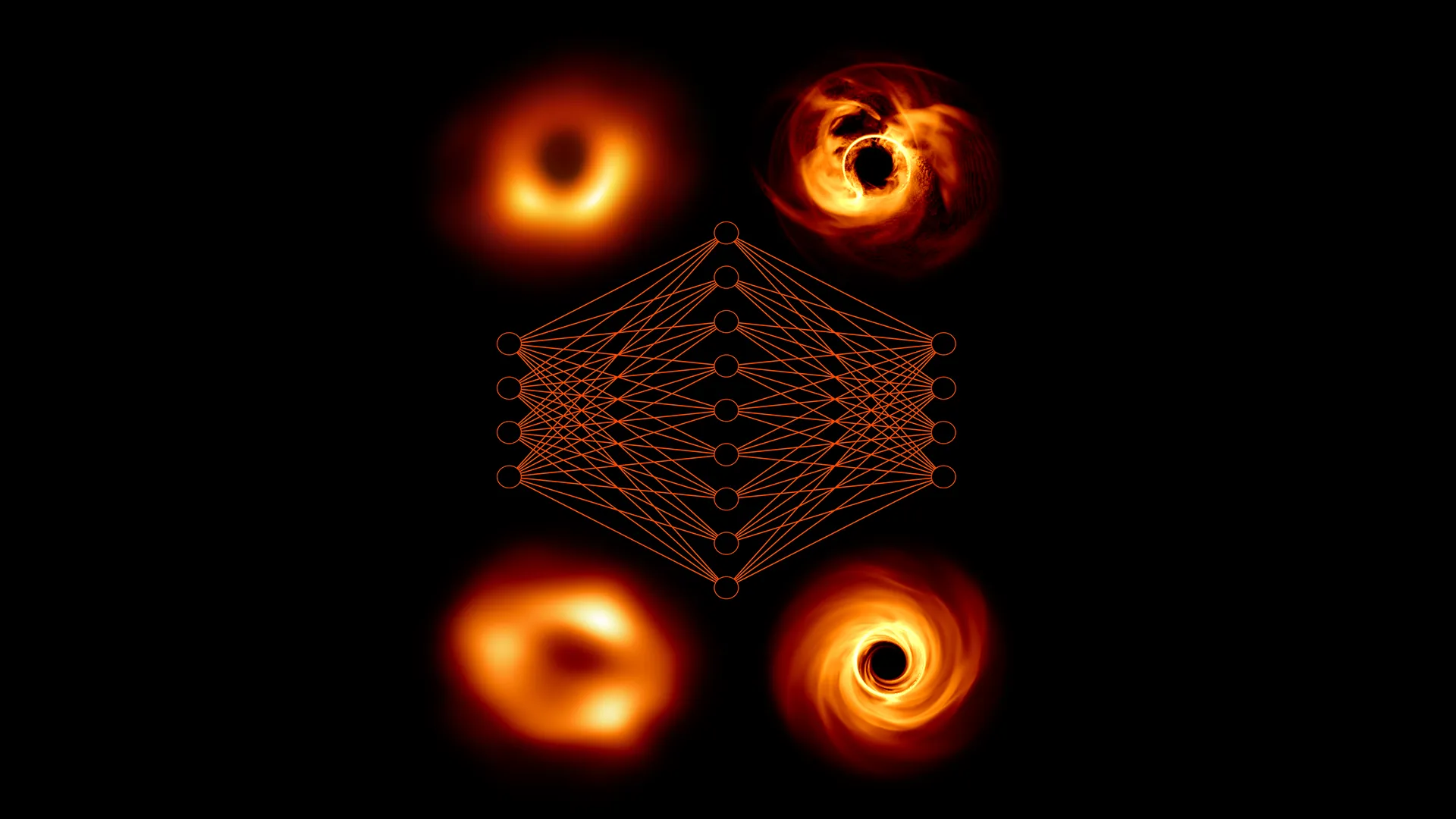
An international team of astronomers has trained a neural network with millions of synthetic simulations and artificial intelligence (AI) to tease out new cosmic curiosities about black holes, revealing the one at the center of our Milky Way is spinning at nearly top speed.

These large ensembles of simulations were generated by throughput computing capabilities provided by the Center for High Throughput Computing (CHTC), a joint entity of the Morgridge Institute for Research and the University of Wisconsin-Madison. The astronomers published their results and methodology today in three papers in the journal Astronomy & Astrophysics.

High-throughput computing, celebrating its 40th anniversary this year, was pioneered by Wisconsin computer scientist Miron Livny. It’s a novel form of distributed computing that automates computing tasks across a network of thousands of computers, essentially turning a single massive computing challenge into a supercharged fleet of smaller ones. This computing innovation is helping fuel big-data discovery across hundreds of scientific projects worldwide, including the search for cosmic neutrinos, subatomic particles and gravitational waves as well as to unravel antibiotic resistance.

In 2019, the Event Horizon Telescope (EHT) Collaboration released the first image of a supermassive black hole at the center of the galaxy M87. In 2022, they presented the image of the black hole at the center of our Milky Way, Sagittarius A*. However, the data behind the images still contained a wealth of hard-to-crack information. An international team of researchers trained a neural network to extract as much information as possible from the data.

From a handful to millions

Previous studies by the EHT Collaboration used only a handful of realistic synthetic data files. Funded by the National Science Foundation (NSF) as part of the Partnership to Advance Throughput Computing (PATh) project, the Madison-based CHTC enabled the astronomers to feed millions of such data files into a so-called Bayesian neural network, which can quantify uncertainties. This allowed the researchers to make a much better comparison between the EHT data and the models.

Thanks to the neural network, the researchers now suspect that the black hole at the center of the Milky Way is spinning at almost top speed. Its rotation axis points to the Earth. In addition, the emission near the black hole is mainly caused by extremely hot electrons in the surrounding accretion disk and not by a so-called jet. Also, the magnetic fields in the accretion disk appear to behave differently from the usual theories of such disks.

“That we are defying the prevailing theory is of course exciting,” says lead researcher Michael Janssen, of Radboud University Nijmegen, the Netherlands. “However, I see our AI and machine learning approach primarily as a first step. Next, we will improve and extend the associated models and simulations.”

Impressive scaling

“The ability to scale up to the millions of synthetic data files required to train the model is an impressive achievement,” adds Chi-kwan Chan, an Associate Astronomer of Steward Observatory at the University of Arizonaand a longtime PATh collaborator. “It requires dependable workflow automation, and effective workload distribution across storage resources and processing capacity.”

“We are pleased to see EHT leveraging our throughput computing capabilities to bring the power of AI to their science,” says Professor Anthony Gitter, a Morgridge Investigator and a PATh Co-PI. “Like in the case of other science domains, CHTC’s capabilities allowed EHT researchers to assemble the quantity and quality of AI-ready data needed to train effective models that facilitate scientific discovery.”

The NSF-funded Open Science Pool, operated by PATh, offers computing capacity contributed by more than 80 institutions across the United States. The Event Horizon black hole project performed more than 12 million computing jobs in the past three years.

“A workload that consists of millions of simulations is a perfect match for our throughput-oriented capabilities that were developed and refined over four decades” says Livny, director of the CHTC and lead investigator of PATh. “We love to collaborate with researchers who have workloads that challenge the scalability of our services.”

Scientific papers referenced

Deep learning inference with the Event Horizon Telescope I. Calibration improvements and a comprehensive synthetic data library. By: M. Janssen et al. In: Astronomy & Astrophysics, 6 June 2025.

Deep learning inference with the Event Horizon Telescope II. The Zingularity framework for Bayesian artificial neural networks. By: M. Janssen et al. In: Astronomy & Astrophysics, 6 June 2025.

Deep learning inference with the Event Horizon Telescope III. Zingularity results from the 2017 observations and predictions for future array expansions. By: M. Janssen et al. In: Astronomy & Astrophysics, 6 June 2025.

Share Button