The UK is seeing a sharp rise in cases – 67 since April – with many of them among travellers returning from Mexico.


The UK is seeing a sharp rise in cases – 67 since April – with many of them among travellers returning from Mexico.
The psychological effect of a herpes diagnosis can be greater than the physical symptoms, experts say.

About 210 million years ago, two early relatives of modern crocodiles stood near each other among the low ferns of a humid riverbank in what is now northern New Mexico. Each animal was roughly the size of a jackal, but their bodies suggest they were adapted to hunt in different ways.
One was Hesperosuchus agilis, a fast land predator with a long snout, powerful hind legs, and smaller, more slender front limbs. It likely searched for prey along rivers and streams.
The second animal had a noticeably different head. Its snout was shorter, its skull was more strongly reinforced, and its enlarged jaw muscles would have helped it snap down on larger prey.
Neither animal escaped the sudden event that followed. Researchers believe both died at the same time, possibly during a flash flood or mudslide. Their remains were buried together, and favorable chemical conditions preserved their bones through the “Age of Reptiles,” the later rise of mammals, and their eventual excavation in large blocks of rock now housed at the Peabody Museum of Natural History at Yale.
A New Species Emerges From an Old Fossil
After closely examining the short-snouted animal, Yale paleontologists determined that it belonged to a previously unknown species. They named it Eosphorosuchus lacrimosa in a new study.
“This speaks to the diversification of proto-crocs toward the beginning of the ‘Age of Reptiles,'” said Bhart-Anjan Bhullar, associate professor of Earth and planetary sciences in Yale’s Faculty of Arts and Sciences (FAS), associate curator of vertebrate paleontology and vertebrate zoology at the Peabody Museum, and senior author of the new study published in the journal Proceedings of the Royal Society B.
“During this period, the late Triassic, there were two reptile dynasties vying for dominance: the line that would produce crocodiles and alligators on one side, and that which would produce birds, which of course are dinosaurs, on the other,” Bhullar added. “The dinosaurs at this time were slim, delicate animals that walked on two slender legs almost like herons, and the crocodiles were fast-running, four-legged predators, low-slung and more heavily built — analogous to a jackal, a big fox, or a dog.”
During the late Triassic, the ancestors of crocodiles and the lineage that produced dinosaurs were both beginning to expand into new ecological roles. Unlike today’s mostly aquatic crocodilians, many early crocodile relatives were agile predators that ran across land.
A Rare Window Into the Late Triassic
Reconstructing the diversity of life in a particular place and time can be difficult for paleontologists. Fossils are often incomplete, and researchers cannot always determine whether animals found in the same rock layer actually lived together.
Exceptionally preserved fossil sites can provide much clearer evidence. Ghost Ranch in New Mexico is one such location.
For about a century, scientists have studied fossils from Ghost Ranch that include near-crocodiles, lizard relatives, fish, and dinosaurs (most prominently, the carnivorous Coelophysis bauri). The Yale Peabody Museum holds two large sections of rock from the “Ghost Ranch Bone Bed.” Together, the blocks are roughly the size of a car.
The fossil containing the two crocodile relatives was excavated in 1948. Although it had been available to scientists for about 75 years, it had never been fully analyzed or formally identified.
“I had been staring at this fossil for a while,” Bhullar said. “For years, both Ghost Ranch crocs were thought to be examples of Hesperosuchus, but it looked like the Yale animal had a different facial structure.”
CT Scans Reveal Hidden Anatomy
To investigate those differences, Miranda Margulis-Ohnuma, a Ph.D. student in Earth and planetary sciences in Yale’s Graduate School of Arts and Sciences (GSAS), studied a computed tomography (CT) scan of the animal. The scan was performed at the Yale Chemical and Biophysical Imaging Center by former Peabody Museum senior preparator Marilyn Fox.
CT imaging allowed Margulis-Ohnuma to examine structures that remained embedded in the rock. She digitally “disassembled” the fossil one bone at a time and uncovered several anatomical features that differed from known Hesperosuchus specimens.
Those differences supported the identification of Eosphorosuchus as a separate genus and species.
The name combines Eosphorus, the Greek god known as the “dawn-bringer,” with the Greek word “soukhos,” meaning crocodile.
“Eosphorosuchus is one of only a handful of well-preserved early crocodile relatives, and its coexistence with Hesperosuchus represents the ‘dawn’ of functional diversification in the lineage that would give rise to modern crocodiles,” said Margulis-Ohnuma, who is first author of the new study. “In addition to its unique anatomy and preservational history, the specimen demonstrates the potential of existing museum collections to continue revealing novel insights into the history of life.”
Early Crocodile Relatives Hunted Differently
The discovery is especially valuable because the two animals appear to have lived in the same ecosystem at the same time. Their contrasting skulls and jaws suggest that closely related predators were already dividing up available food resources by developing different feeding strategies.
Hesperosuchus had a longer, narrower snout, while Eosphorosuchus had a shorter and more heavily reinforced skull with stronger jaw muscles. These differences may have reduced direct competition by allowing the animals to pursue different kinds of prey.
“It’s a time-slice of a single moment 210 million years ago,” Bhullar said. “These two individuals had to compete and interact with each other. They were quite possibly looking at each other when they died.”
Co-authors of the study are Alexander Ruebenstahl, a current student at Yale GSAS, and recent Yale graduate Dalton Meyer ’25 Ph.D., who is now a lecturer at Roanoke College.
What Is Eosphorosuchus lacrimosa?
Eosphorosuchus lacrimosa was an extinct proto-crocodile identified by Yale University researchers. It was a fast-running land predator that lived near rivers and lakes about 210 million years ago.
Why Is Eosphorosuchus lacrimosa Important?
Eosphorosuchus lacrimosa offers evidence that early crocodile relatives were already developing different feeding adaptations near the beginning of the “Age of Reptiles,” during the late Triassic Period, 252 to 201 million years ago.
Its presence beside Hesperosuchus gives researchers a rare view of two related predators occupying different ecological roles within the same ancient environment.
What Did Eosphorosuchus lacrimosa Look Like?
According to Yale paleontologists, Eosphorosuchus lacrimosa had a short snout, a heavily reinforced skull, and enlarged jaw muscles suited for snapping shut on large prey. It also had large hind legs and smaller, thinner front limbs.
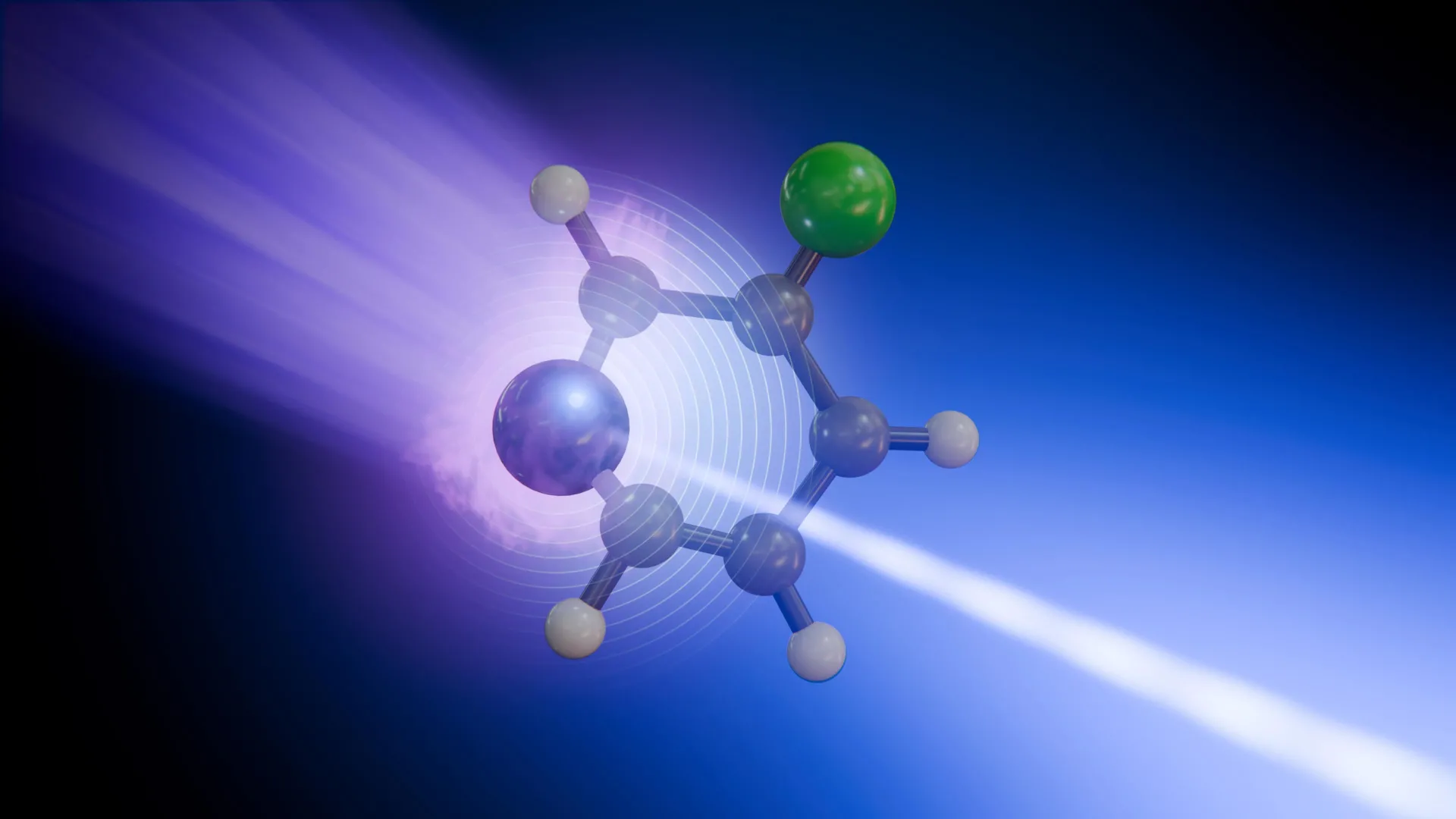
Scientists have observed how energy moves through a molecule immediately after it absorbs light, revealing that individual atoms can record very different parts of the transformation.
Using rapid X-ray flashes produced at the European XFEL, the researchers followed changes at specific atoms as the molecule released and redistributed the absorbed energy. Their results show that exposure to light can make an atom more responsive to the movement of neighboring atoms.
The technique gives scientists a way to examine extremely fast chemical reactions at the atomic scale and in real time. It could eventually improve understanding of how DNA withstands light exposure, how energy travels through materials designed to harvest light, and how other fundamental light-driven processes occur.
Following Energy Through a Molecule
The researchers studied 3-fluoropyridine, a small ring-shaped molecule containing both nitrogen and fluorine atoms.
When the molecule absorbs energy from a brief ultraviolet laser pulse, its electrons enter a higher energy state. The molecule then quickly bends out of its normally flat structure.
As it changes shape, it passes through what scientists call a conical intersection: a short-lived but crucial crossing point where movements of electrons and the atoms’ cores become strongly coupled. These intersections play an important role in many reactions triggered by light because they allow energy to move rapidly between electronic and structural motion.
After crossing this region, the molecule returns to its ground state. The excess electronic energy is then converted into vibrations that travel through the molecular structure.
Different Atoms Reveal Different Changes
The conversion of energy produced distinct signals at different locations within the molecule. The fluorine atom served as a relatively clear indicator of how the molecule’s vibrations relaxed over time.
The nitrogen atom told a more complicated story. Because it played a more direct role in the original electronic excitation, its signal reflected both the redistribution of electrons and the molecule’s changing structure.
“We can now see that not every atomic site tells the same story in the signals we capture from our X-ray pulses,” says Antonio Picón from the Instituto de Ciencia de Materiales de Madrid Consejo Superior de Investigaciones Científicas (ICMM-CSIC), co-author of the study. “Some atoms report where the charge is going, while others reveal how the whole molecule vibrates.”
Reconstructing a Picosecond Transformation
To capture the process, the team used time-resolved X-ray photoelectron spectroscopy (tr-XPS) at the Small Quantum Systems instrument (SQS) of European XFEL.
First, an ultraviolet laser pulse delivered energy to the molecules. A carefully timed soft X-ray pulse then ionized them by removing deeply bound electrons from either the nitrogen or fluorine atoms.
The researchers repeated the measurement with the X-ray pulse arriving at many different delays after the initial laser pulse. By recording the energies of the released electrons, they reconstructed how the chemical environment surrounding each atom changed over just a couple of picoseconds (trillionths of seconds).
Advanced computer simulations and theoretical models were then used to interpret the experimental signals and connect them with the underlying electronic and structural changes.
A New View of Ultrafast Photochemistry
The findings demonstrate how the ultrashort, high-brightness X-ray pulses available at European XFEL can separate some of the fastest interconnected motions in matter.
Although the experiment focused on one relatively simple molecule, the same approach could be applied to increasingly complex systems. Possible targets include functional organic molecules, biomolecular building blocks, and materials designed to capture or transfer energy from light.
“This is what European XFEL was built to enable: watching chemical change where it begins, at specific atomic sites and on its natural timescale,” says Daniel Rivas, former instrument scientist, now guest scientist at SQS and co-author of the study. “By combining multi-site sensitivity with femtosecond resolution, we are opening a new window on the microscopic mechanisms that govern photochemistry.”
Neon is on trend, but some make-up products pose a serious risk to your health. Here’s what to check for, and how to dazzle.
Niamh Smyth and her husband Justyn have spent over a decade trying to start a family, undergoing four rounds of IVF, with three unsuccessful attempts and one pregnancy which ended in miscarriage.
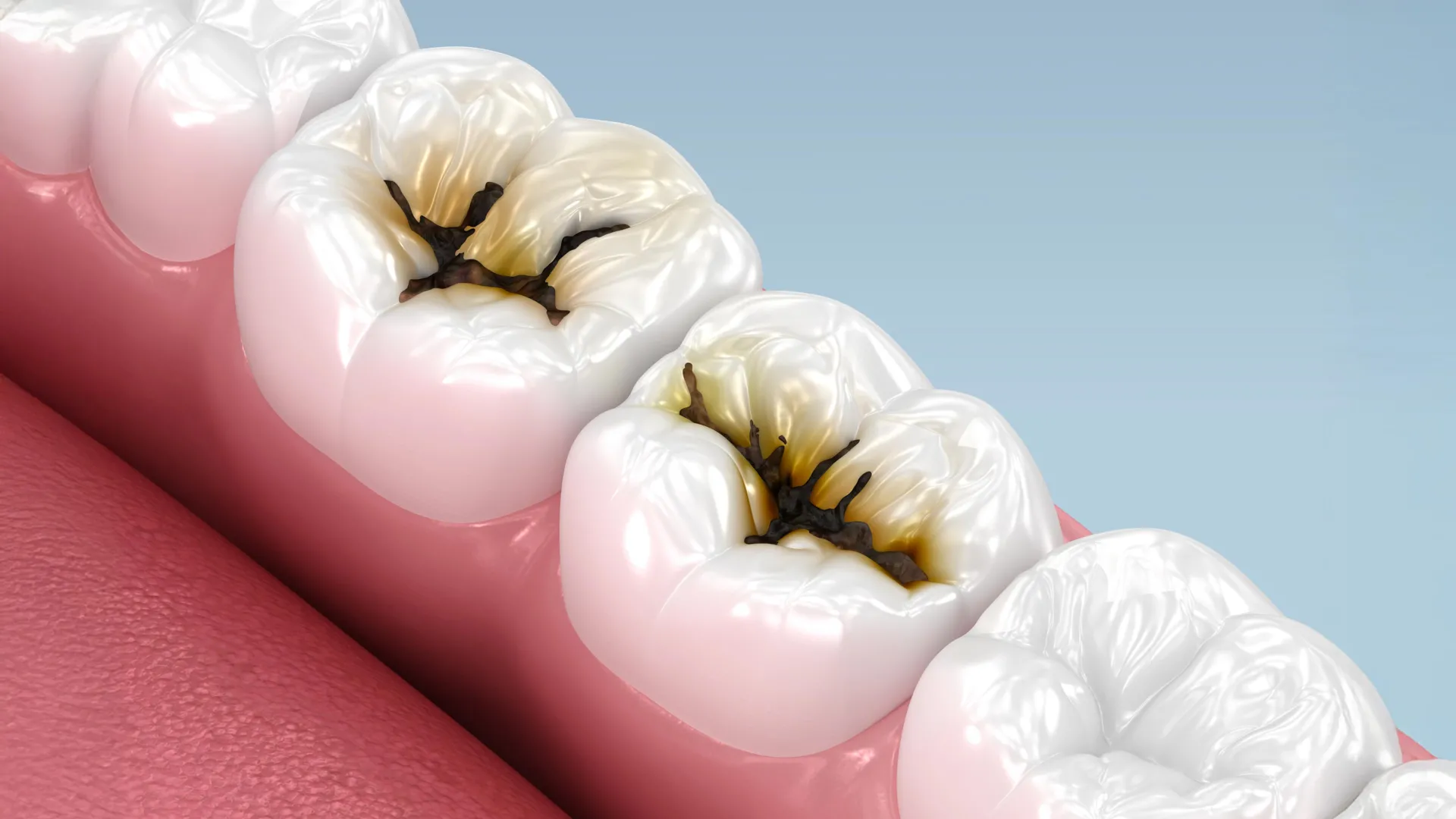
Untreated cavities send thousands of young children in the United States to emergency departments each year. Because hospital doctors usually cannot repair the underlying dental problem, some children continue to suffer from pain and infection, while others eventually need surgery under general anesthesia.
A low-cost liquid known as silver diamine fluoride, or SDF, may offer a much simpler option. Dentists apply it directly to a cavity with a small sponge-tipped applicator, a process that takes only a few seconds for each tooth. The treatment can stop decay without drilling, injections, or sedation.
A Long-Used Treatment Gains Stronger Evidence
SDF has been used successfully in many countries for decades. In the United States, dentists have used it off-label since 2014, when it was approved as a medical device for reducing tooth sensitivity.
However, researchers had not yet completed the large U.S. clinical trials needed to demonstrate its safety and effectiveness as a cavity treatment. That evidence would be necessary for the Food and Drug Administration to approve SDF as a drug for treating tooth decay.
A clinical trial led by the University of Michigan has now supplied those data.
The Phase III study, published in JAMA Pediatrics, included 830 children younger than age 6. Participants were recruited through dental offices, pediatric medical practices, Head Start and Early Head Start programs in Michigan, New York and Iowa.
SDF Stopped Decay in Many Baby Teeth
The researchers found that 38% SDF stopped tooth decay in more than half of the affected baby teeth when the treatment was applied every six months.
Traditional cavity treatment usually involves removing damaged tooth material and placing a filling. SDF requires no removal of the tooth. Instead, the liquid is painted directly onto the decayed area.
“This is a very effective and safe treatment — even in children as young as 1,” said Margherita Fontana, professor of dentistry at the University of Michigan School of Dentistry and the study’s lead investigator.
Tooth decay is the most common chronic disease among children and affects more than 40% of children in the United States. Cavities that are not treated can lead to intense pain, infections, difficulty sleeping or eating, missed school days and repeated medical appointments.
A Potential Option for Hard-to-Treat Patients
Fontana said SDF could be particularly useful for very young children, older adults, people with developmental or physical disabilities, and patients with severe dental anxiety. It may also help people who have limited access to conventional dental care or cannot easily tolerate standard procedures.
The treatment does have a visible drawback. The silver permanently turns the decayed part of the tooth dark.
“If we want more children and families to benefit from this treatment, we need rigorous evidence showing both that it works and that it’s safe. From a public health perspective, if we want broader implementation across the United States, including in medical settings, we need carefully collected data in U.S. populations, and we now have that,” Fontana said.
The research began in 2018 and continued despite disruptions caused by the COVID-19 pandemic.
“In medicine, clinicians want high-quality evidence before changing practice,” Fontana said. “It is important to have data they can refer to because young children often see pediatricians years before they ever visit a dentist; broader acceptance could allow many more cavities to be treated while a referral to a dental home is successful, and before they become painful, infected, or require surgery.”
Findings Could Support FDA Approval
Fontana worked with researchers from New York University, the University of Iowa and Indiana University, as well as the NIH’s National Institute of Dental and Craniofacial Research. The institute provided more than $12 million to support the study.
The trial generated the clinical evidence the manufacturer needs to submit a dental caries drug application to the FDA. Elevate Oral Care supplied Advantage Arrest 38% SDF, the product tested in the study.
Amr Moursi, professor of pediatric dentistry at New York University College of Dentistry, said the findings could help expand access to the treatment.
“Our results support FDA approval of SDF for managing arrest of tooth decay in young children. Removing SDF from off-label status would be an important innovation which could lead to increased utilization by providers, enhanced payments by insurers and more consistent product quality,” said Moursi, a co-principal investigator on the study.
A Bridge or Long-Term Treatment
For some children, applying SDF again every few months may control the cavity until the baby tooth falls out naturally. In adults, it could function as a long-term treatment or provide temporary protection until a restorative procedure becomes affordable or practical.
“For almost anyone, this can arrest the decay and stop the infection and the pain it causes,” Fontana said. “This could benefit many people.”
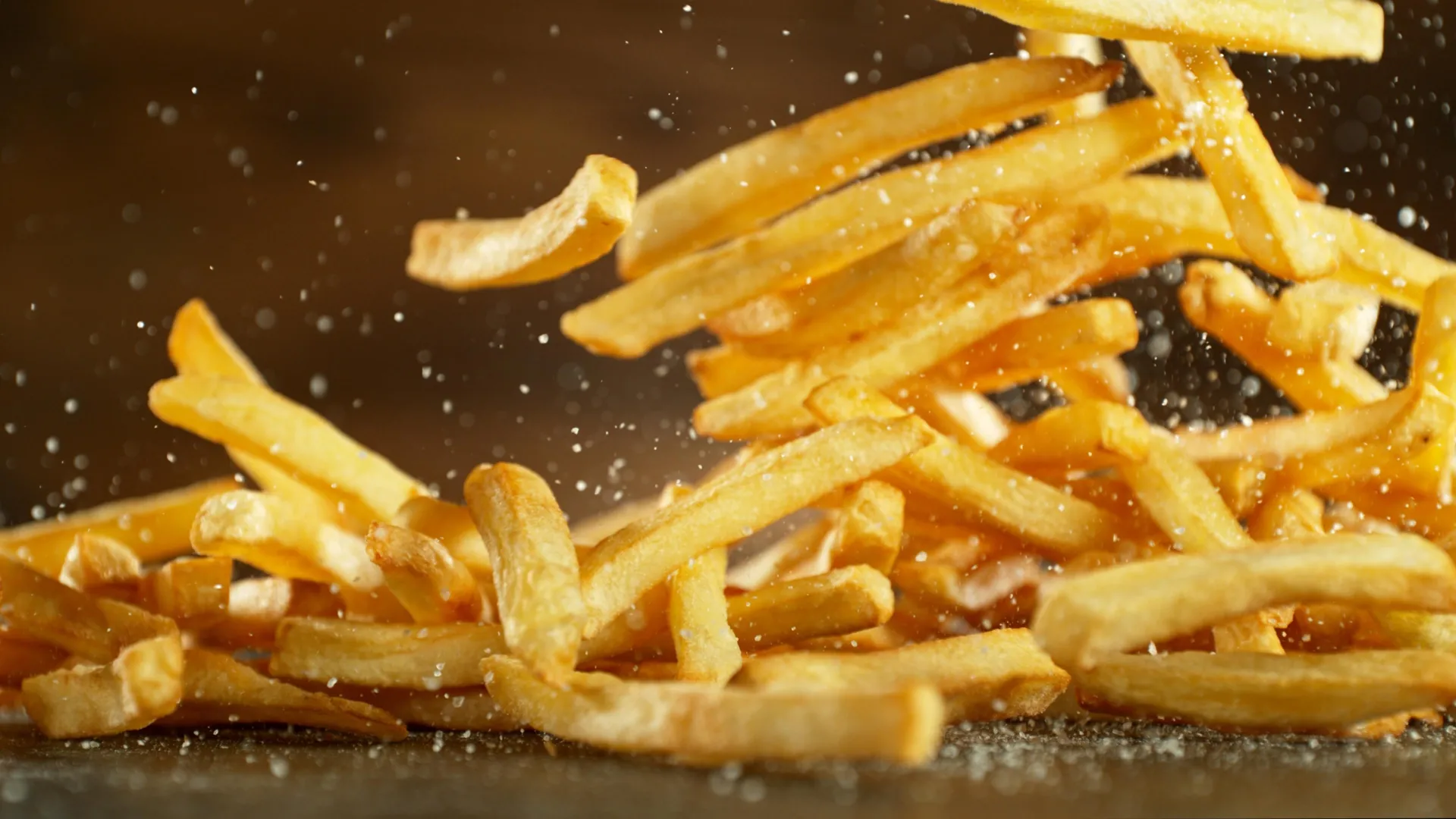
French fries and other fried foods are popular largely because of their crisp texture and rich flavor. However, they can absorb large amounts of oil during cooking, increasing their fat and calorie content. Regularly consuming foods high in fat can contribute to health problems such as obesity and hypertension.
Researchers at the University of Illinois Urbana-Champaign are investigating whether microwave energy could help produce French fries that absorb less oil without losing the qualities consumers expect. Their findings suggest that combining microwave frying with conventional frying could shorten cooking time, limit oil uptake, and still create the crisp exterior and satisfying texture associated with traditional fries.
Creating Healthier Fries Without Sacrificing Flavor
“Consumers want healthy foods, but at the time of purchase, their cravings often take over. High oil content adds flavor, but it also contains a lot of energy and calories. My research team studies frying with the aim of obtaining lower fat content without significant differences in taste and texture,” said principal investigator Pawan Singh Takhar, professor of food engineering in the Department of Food Science and Human Nutrition, part of the College of Agricultural, Consumer and Environmental Sciences at U of I.
Takhar and Yash Shah, a doctoral student in FSHN, reported their results in two new publications examining the physical changes that occur when French fries are cooked with microwave energy.
For the first study, the Illinois researchers worked with scientists at Washington State University who had developed a specialized microwave fryer. The device could operate at both 2.45 gigahertz (similar to a regular microwave oven) and 5.8 gigahertz.
Gigahertz is a unit used to describe the frequency of electromagnetic waves. Different microwave frequencies can affect how energy moves through food and how quickly water molecules respond during cooking.
Tracking What Happens Inside a French Fry
The researchers rinsed and peeled potatoes before cutting them into strips. The strips were then blanched, salted, and fried in soybean oil that had been heated to 180 degrees Celsius.
Blanching briefly exposes food to hot water or steam. For potatoes, this step can begin softening the tissue and help prepare the surface for frying.
During and after cooking, the team measured temperature, internal pressure, volume, texture, moisture, and oil content. These measurements helped reveal how water escaped from the potatoes and how oil entered the spaces it left behind.
According to Takhar, one of the central challenges in frying is preventing oil from moving into food both during cooking and immediately afterward.
At the start of frying, the tiny pores inside a potato are still filled with water, leaving little room for oil. As the potato heats up, however, that water turns into vapor and escapes. Empty spaces begin to form, and negative pressure can pull oil into the potato.
“Think about a straw in a drink. If you push air into the straw, it creates positive pressure and any liquid will be pushed out. But if you suck on the straw, the liquid moves upward. Now imagine food materials have lots of tiny straws. When there is positive pressure, the oil stays out. But if there is negative pressure, the oil starts moving in,” Takhar explained.
Why Pressure Determines Oil Absorption
The researchers found that as much as 90% of frying occurs while the food is under negative pressure. That creates a prolonged suction effect, allowing oil to move into the newly opened pores.
A more effective frying process would keep pressure inside the potato positive for a longer period and reduce the amount of time spent under negative pressure. This could limit the amount of oil drawn into the food.
Microwave energy may help by heating water throughout the potato rather than relying only on heat moving inward from the surface. As water molecules absorb microwave energy, they move more rapidly and generate additional vapor. That vapor raises the pressure inside the food and makes it harder for oil to enter.
“When we heat something in a conventional oven, the heat moves from outside to inside, but a microwave oven heats from the inside out, because the microwaves penetrate everywhere in the material. The microwaves oscillate water molecules, causing more vapor formation and thus shifting the pressure profile towards the positive side. The higher pressure in microwaves helps reduce oil penetration,” Takhar said.
Microwave Frying Cuts Cooking Time and Oil Uptake
Alongside the laboratory tests, the researchers used mathematical modeling to examine the frying process in greater detail. Computer models allowed them to explore how different variables interacted and to predict changes that would be difficult to measure directly in every experiment.
The team compared temperature, pressure, volume, texture, moisture, and oil absorption during frying at 2.45 GHz, 5.8 GHz, and under conventional conditions.
Across the experiments and simulations, microwave frying caused moisture to leave the potatoes more quickly. It also reduced total cooking time and lowered the amount of oil absorbed by the fries.
Microwave frying by itself, however, did not produce the desired texture. Fries cooked only with microwave energy tended to remain soft rather than developing the crisp surface consumers expect.
“However, if you just use microwave frying, you get soggy food. To obtain a crispy texture and taste, you need conventional heating. Therefore, we propose combining the two approaches in the same unit. Conventional heating maintains the crispiness, while microwave heating lowers the oil intake,” Takhar said.
A Hybrid Fryer Could Offer the Best of Both Methods
The proposed system would use conventional frying to brown the surface and create crunch, while microwave energy would speed moisture removal and help prevent excess oil from entering the potato.
This combined approach could allow manufacturers to produce fries with less oil while preserving the flavor and texture that make fried foods appealing. Faster cooking could also improve production efficiency.
The researchers noted that continuous fryers used in large food processing facilities could be modified to include microwave generators. Because these components are widely available and relatively inexpensive, the system may be economically practical for commercial production.
The first paper, “The Effect of Conventional and Microwave Frying on the Quality Characteristics of French Fries,” is published in the Journal of Food Science.
The second paper “Predicting the quality changes during microwave frying of food biopolymers by solving the hybrid mixture theory-based unsaturated transport, and electromagnetics equations,” was published in Current Research in Food Science.
The research was funded by USDA National Institute of Food and Agriculture (Awards 2020-67017-31194, ILLU-698-308, and ILLU-698-926).
When temperatures rise, sleep often suffers. Hot nights can make it harder to fall asleep, increase waking during the night and leave people feeling less rested the next day.
One reason is thermoregulation, the body’s ability to keep its internal temperature within a safe range. Sleep is closely linked to body temperature: to fall asleep and stay asleep, the body usually needs to lose some heat. Hot bedrooms make that harder.
And UK summers are becoming hotter. The Met Office has reported that the chance of exceeding 40°C in the UK is now more than 20 times higher than it was in the 1960s, with a 50% chance of another 40°C day in the next 12 years.
Humidity can make the problem worse. Research on humidity and heat stress shows that high humidity can increase the strain heat places on the body. The body cools itself partly by sweating. As sweat evaporates from the skin, it carries heat away. But when the air is already humid, evaporation becomes less efficient.
So how can you sleep better in hot weather?
Air conditioning is one answer, but it is not affordable or practical for many households. According to the Energy Saving Trust, the electricity unit rate under the July to September 2026 price cap is 26.11p per kWh for direct debit customers. A small portable air-conditioning unit using about 1kW for seven hours a night over 30 nights would cost around £54.83 in electricity alone, before buying the unit.
Research on overheating in homes shows that shading and ventilation can be important passive cooling strategies: reducing indoor heat without mechanical cooling. Before cooling the air, then, it helps to reduce the heat entering the home. Overheating usually comes from sunlight entering through windows, known as solar gain, and warm outside air.
These eight steps can help keep bedrooms cooler before nightfall.
On sunny days, keep curtains or blinds closed on sun-facing windows. This reduces sunlight entering the room and heating up floors, walls and furniture. External shading, such as shutters, awnings or shades, can be even more effective because it stops some sunlight before it reaches the glass.
Be careful with windows. If the air outside is hotter than the air inside, opening windows can bring heat in. Open windows when the outside air is cooler than indoors, often early in the morning, evening or overnight. Close them during the hottest part of the day if the outside air is warmer.
Cross-ventilation means opening windows or doors on different sides of a home so air can flow through. When outdoor air is cooler, this can help remove heat that has built up indoors. Studies of passive cooling in homes have found that night-time ventilation can reduce overheating, although effectiveness depends on the building, outdoor temperature, safety, noise and air quality.
Conservatories can become very hot because sunlight passes through the glass and warms the surfaces inside. Keep them ventilated during the day and, where possible, close internal doors between the conservatory and the rest of the house. Reflective films, blinds, shutters, awnings and shaded roofs can all reduce heat gain.
Loft spaces and top-floor rooms can also become hot because roofs absorb solar heat. Loft ventilation or reflective roof materials may help in some homes, although these are usually more substantial interventions. For example, solar panels on the roof can generate electricity and at the same time act as a barrier to reduce heat transfer to the building.
If your bedroom is on an upper floor or faces south or west, it may be one of the hottest rooms in the house. Heat rises through the building, and sun-facing walls and roofs can continue releasing stored heat after sunset.
During a heatwave, sleeping on the ground floor or north-facing side of the home may help.
Ovens, hobs, tumble dryers, washing machines and dishwashers can all make indoor spaces warmer. Cooking and drying clothes indoors can also increase humidity, making it harder for sweat to evaporate.
On very hot days, use heat-producing appliances earlier in the day or later in the evening. Use extractor fans when cooking or showering because they remove warm, moist air before it spreads through the home. Research on moisture movement and extractor fans has shown that fans can reduce the movement of moisture from kitchens and bathrooms to other rooms.
A review of sleepwear and bedding fibre types found that bedding and clothing can affect thermal comfort during sleep. Light, loose sleepwear and bedding can help the body lose heat. Cotton and linen are often comfortable because they absorb moisture and allow air movement, although fabric weave, thickness and moisture handling also matter. Avoid heavy bedding, thick duvets and tight synthetic fabrics that trap heat and moisture.
Evidence on electric fan use in hot weather suggests that fans can be useful in many hot conditions, but their safety depends on temperature, humidity, age, hydration and health.
Fans do not cool the air. They move air across the skin, which can help sweat evaporate and make people feel cooler.
In very high temperatures, especially for older adults or people who are dehydrated or unwell, fans alone may not be enough. If using a fan, drink water, avoid directing it continuously at the face while sleeping, and stop using it if it makes you feel hotter, dizzy or unwell.
Reusable ice packs, freezer blocks or cooling pillows may help some people feel more comfortable. Wrap ice packs in a cloth or place them on a tray to avoid condensation soaking bedding or direct cold contact with skin.
Cooling mattress toppers and bedding that use water or phase change materials may also help. These materials absorb, store and release heat as they change state, although cost and effectiveness vary.
In hot weather, better sleep starts long before bedtime.
The most effective approach is usually a combination: block sunlight during the day, ventilate when outside air is cooler, reduce heat from appliances, sleep in the coolest room available and use bedding that allows the body to lose heat.
Ed Butler investigates one of Europe’s most wanted drug smugglers
