A team of researchers at the Medical University of South Carolina (MUSC) report in Frontiers in Immunology that they have identified a type of fat known as a sphingolipid that could predict the severity of heart disease in African American patients with lupus.
The team was led by Samar M. Hammad, Ph.D., associate professor in the MUSC College of Medicine, and the study was funded in part by a pilot project grant from the South Carolina Clinical & Translational Research Institute.
“The most exciting finding of this study is that we may be able to find another way to better diagnose and eventually treat the African American lupus patients who are at increased risk of developing heart disease,” said Hammad.
Systemic lupus erythematosus (SLE), or lupus, is a chronic autoimmune disease that can affect many different organs in the body. Our immune system typically acts like our personal bodyguard. When it senses danger from a virus or infection, it attacks and eliminates the threat. In patients with SLE, the “bodyguard” attacks and damages the person’s own cells, mistaking them as foreign invaders. As a result, patients with SLE can develop complications, such as cardiovascular disease (CVD).
Cholesterol, a type of fat circulating in our blood, is carried on lipid particles called high-density lipoproteins (HDL, the good cholesterol carrier) and low-density lipoprotein (LDL, the bad cholesterol carrier) and typically used to screen for CVD. High levels of LDL cholesterol are commonly used to predict a patient’s risk for developing heart disease because this fat accumulates in the walls of blood vessels.
Despite being at an increased risk of CVD, healthy African Americans have a lipid profile with higher HDL (good) cholesterol and lower triglyceride levels compared with healthy persons of European ancestry. Therefore, the efficacy of the standard screening method for CVD has been called into question for African American patients. Further, approximately 90% of lupus patients are females, and African American women are three times more likely than white women to develop severe symptoms associated with SLE. Thus, the standard screening panels, developed with the white patient in mind, lack efficacy for the African American patient. With the standard method of screening for CVD potentially being unreliable for African American SLE patients, additional biomarkers are needed to improve health outcomes in this group.
advertisement
Sphingolipids are molecules carried in the blood on lipoproteins. They are important structural components of cells, can act as key signaling molecules and, when disrupted, are associated with several diseases. Recently, serum sphingolipids have been shown to be potential biomarkers for clinical lupus complications.
Notably, the Hammad lab previously found that the sphingolipid profile of healthy African Americans differs from that of healthy whites. They also observed differences in the sphingolipid profiles of African American lupus patients with or without heart disease.
“Treatments for SLE and heart disease are often given as a one-size-fits-all, and they can have major side effects for the patient,” said Hammad.
The purpose of this study was to determine whether sphingolipids are predictive biomarkers for preclinical CVD and CVD severity in African American patients with SLE. At study start (visit 1) and after one year (visit 2), the researchers measured levels of five different sphingolipid classes, with several sphingolipid species in each class, in plasma samples of 51 patients with SLE but without a history of clinical heart disease.
Hammad and her lab established a methodology for profiling sphingolipids in human plasma in 2010 that is now widely used in sphingolipid studies. Using this method, Hammad and her team found that a particular class of sphingolipid in the plasma samples, called lactosylceramide (Lac-Cer), was positively correlated with the change in plaque area over one year. Plaques are clumps of cholesterol found at injury sites of walls of major arteries. Thus, higher levels of Lac-Cer are associated with increased disease activity in African American patients with SLE.
advertisement
“This finding showed us that the Lac-Cer levels in the circulation could have predictive value for a patient,” explained Hammad. “We could use this as a readout for how a patient is progressing while on medication and get a good indication of his or her heart disease.”
High LDL cholesterol content in the serum is typically used to determine the risk of developing heart disease. The study found no correlation between LDL concentrations and the concentrations of the measured Lac-Cer species, indicating that the traditional biomarker for heart disease was ineffective in predicting disease severity in the African American lupus population.
Ultimately, Hammad believes that studies like these emphasize the need for teamwork between basic scientists and clinicians.
“I’m a basic scientist who has almost 20 years of experience in investigating the role of sphingolipids in health and disease,” said Hammad. “This study was possible, thanks to the organized and well thought out collection and banking of patient samples from the clinical side, led by Dr. Jim Oates, division director of Rheumatology and Immunology.”
Future objectives of the team will include determining whether their findings can be applied to the general population.
“Using sphingolipids as a tool to complement other diagnostic modalities will be important because SLE is often hard to diagnose,” said Hammad. “I think sphingolipids can play a major role in the diagnosis, prognosis and treatment of lupus.”
A new study shows urbanization is causing many mammal species to grow bigger, possibly because of readily available food in places packed with people.
The finding runs counter to many scientists’ hypothesis that cities would trigger mammals to get smaller over time. Buildings and roads trap and re-emit a greater degree of heat than green landscapes, causing cities to have higher temperatures than their surroundings, a phenomenon known as the urban heat island effect. Animals in warmer climates tend to be smaller than the same species in colder environments, a classic biological principle called Bergmann’s Rule.
But Florida Museum of Natural History researchers discovered an unexpected pattern when they analyzed nearly 140,500 measurements of body length and mass from more than 100 North American mammal species collected over 80 years: City-dwelling mammals are both longer and heftier than their rural counterparts.
“In theory, animals in cities should be getting smaller because of these heat island effects, but we didn’t find evidence for this happening in mammals,” said study lead author Maggie Hantak, a Florida Museum postdoctoral researcher. “This paper is a good argument for why we can’t assume Bergmann’s Rule or climate alone is important in determining the size of animals.”
Hantak and her collaborators created a model that examined how climate and the density of people living in a given area — a proxy for urbanization — influence the size of mammals. As temperatures dropped, both body length and mass increased in most mammal species studied, evidence of Bergmann’s Rule at work, but the trend was stronger in areas with more people.
Surprisingly, mammals in cities generally grew larger regardless of temperature, suggesting urbanization rivals or exceeds climate in driving mammal body size, said Robert Guralnick, Florida Museum curator of biodiversity informatics.
advertisement
“That wasn’t what we expected to find at all,” he said. “But urbanization represents this new disturbance of the natural landscape that didn’t exist thousands of years ago. It’s important to recognize that it’s having a huge impact.”
About a decade ago, scientists began to raise the alarm that warmer temperatures brought by climate change are causing many animal species to grow smaller over time. While many of the consequences of shifting body size are unknown, researchers cautioned that smaller animals may have smaller or fewer offspring, creating a feedback loop, and shrinking prey could also put pressure on meat-eaters to find more resources.
Guralnick and Hantak said they hope their findings will lead more researchers to add urbanization to their analyses of changing body size.
“When we think about what’s going to happen to mammalian body size over the next 100 years, a lot of people frame that as global warming causing animals to get smaller,” Guralnick said. “What if that isn’t the biggest effect? What if it’s that urbanization is going to lead to fatter mammals?”
Not all animals respond to human-induced environmental changes in the same way, Hantak added. The researchers also investigated how the effects of climate and urbanization may be tempered or amplified by the behavior and habits of certain species.
advertisement
They found animals that use hibernation or torpor, a temporary way of slowing metabolic rate and dropping body temperature, shrank more dramatically in response to increases in temperature than animals without these traits. The finding could have important implications for conservation efforts, Hantak said.
“We thought species that use torpor or hibernation would be able to hide from the effects of unfavorable temperatures, but it seems they’re actually more sensitive,” she said.
While cities radically transform the landscape, they provide animals with new opportunities as well as threats, Guralnick said. The abundance of food, water and shelter and relative lack of predators in cities may help certain species succeed in comparison with their neighbors in rural areas. The results of the 2020 U.S. Census show that almost all human population growth over the past decade has occurred in the nation’s metro areas. As urbanization ramps up, animals could be divided into “winners and losers,” and mammal distributions may shift, he said.
“Animals that like living in urban environments could have a selective advantage while other species may lose out because of the continued fragmentation of landscapes,” Guralnick said. “This is relevant to how we think about managing suburban and urban areas and our wildlands in 100 years.”
While bigger is often better biologically, the long-term consequences to urban mammals of eating a diet of human food waste have yet to be determined, Hantak said.
“When you change size, it could change your whole lifestyle,” she said.
Hantak and her collaborators were able to conduct the study thanks to thousands of measurements collected by natural historians in the field and museums. The research team used information from three databases: VertNet, the National Science Foundation’s National Ecological Observatory Network (NEON) and the North American Census of Small Mammals (NASCM). Cumulatively, this data offers a broadscale view of how increasing urbanization is impacting mammals with very different life histories, from wolves, bobcats and deer to bats, shrews and rodents, Guralnick said.
“Museum collections have the power to tell us stories about the natural world,” he said. “Because we have these collections, we can ask questions about what mammals looked like before humans dominated the landscape. Digitizing specimen data unlocks these resources so that everyone can make discoveries about our planet.”
The researchers published their findings in Communications Biology.
Bryan McLean of the University of North Carolina Greensboro and Daijiang Li of Louisiana State University also co-authored the study. McLean and Li are former Florida Museum postdoctoral researchers.
Messenger-RNA (mRNA) vaccines against the coronavirus that causes COVID-19 provoke a swift and strong response by the immune system’s T cells — the heavy armor of the immune system — according to a study from researchers in the Perelman School of Medicine at the University of Pennsylvania. Although recent studies of vaccines tend to focus on the antibody response, the T-cell response is also an important and potentially more durable source of protection — yet little has been reported so far on the T-cell response to COVID-19 vaccines.
In the new study, which appears in the journal Immunity, the Penn Medicine researchers analyzed the T-cell responses in 47 healthy people who received two doses of the Moderna and Pfizer/BioNTech mRNA vaccines.
The results reveal the complex details of how the T-cell response to these vaccines unfolds, and underline the importance of a second dose for people with no history of COVID-19. The findings showed, however, that in people with a history of COVID-19, the T-cell response was already robust after the first vaccine dose, with no significant increase after the second dose, which may have implications for potential future booster shots.
“Our findings underscore the fact that we need to look at T cells, not just antibodies, if we want a complete picture of the vaccine response for those who have not had COIVD-19 and for those who have recovered from the disease,” said senior author E. John Wherry, PhD, chair of the department of Systems Pharmacology and Translational Therapeutics and director of the Penn Institute of Immunology in the Perelman School of Medicine at the University of Pennsylvania.
Antibodies are forked proteins secreted by immune cells called B cells; they can bind tightly to specific viral structures on virus-infected cells. T cells also have antibody-like receptors that enable tight binding to specific viral structures, but they are whole cells, some of which — called “killer” T-cells — are capable of directly killing virus-infected cells they encounter. T cells therefore have long been regarded as the heavy armor of the immune system. Their responses to vaccines are harder to study than antibody responses, though, so less is known about those responses, including in the case of COVID-19.
Researchers examined in detail the T-cell responses to mRNA vaccination in 36 healthy people who had no history of COVID-19, and 11 people who had previously recovered from COVID-19.
In the group of participants who did not previously have COVID-19, they found that the first vaccine dose elicited a rapid and strong response from helper T cells called CD4 T cells — some of which help marshal an antibody response, while others stimulate the proliferation of CD8 killer T cells. The strengths of those initial CD4 T cell responses generally predicted the later strengths of antibody and killer T-cell responses. However, the killer T cells tended not to appear in large numbers until after the second vaccine dose — confirming the importance of that second dose for people with no COVID-19 history.
By contrast, in the prior-COVID-19 group, helper and killer T cells specific for the COVID-19 coronavirus were already substantially present before the first dose. After that first dose, T cell numbers rose somewhat, but did not significantly increase after the second dose.
“For people who haven’t had COVID-19, the first dose powerfully primes the pump, and the second dose turns on the whole engine — but having had COVID-19 is like having had that first vaccine dose already,” Wherry said. “It is important to point out, however, that a complete understanding of the relative importance of these T cell responses, compared to antibody, in protection from future infections will require larger clinical studies.”
The results also showed that the T-cell response in the weeks after mRNA vaccination includes T-cell types normally elicited by natural infection — and in general, natural viral infection is known to be capable of inducing T-cell protection that lasts years and even decades.
“We need to do follow-up studies to confirm the longevity of the T-cell response to vaccination, but our results here support the idea that that response can be long-lasting,” Wherry said.
Support for the research was provided by the National Institutes of Health (AI105343, AI082630, AI108545, AI155577, AI149680, AI152236, AI082630, HL143613, P30-AI0450080, T32 AR076951-01, T32 CA009140, T32 AI055400, U19AI082630), the Allen Institute for Immunology, the Cancer Research Institute, the Chen Family Research Fund, the Parker Institute for Cancer Immunotherapy, the Penn Center for Research on Coronavirus and Other Emerging Pathogens, the University of Pennsylvania Perelman School of Medicine COVID Fund, the University of Pennsylvania Perelman School of Medicine 21st Century Scholar Fund, and Jeffrey Lurie, Joel Embiid, Josh Harris, and David Blitzer.
As part of my garage decluttering project this summer, I refactored and upgraded my hardware tools. I thought some readers might enjoy seeing the before and after pics of this part of the project, especially since it’s easy to see the changes visually.
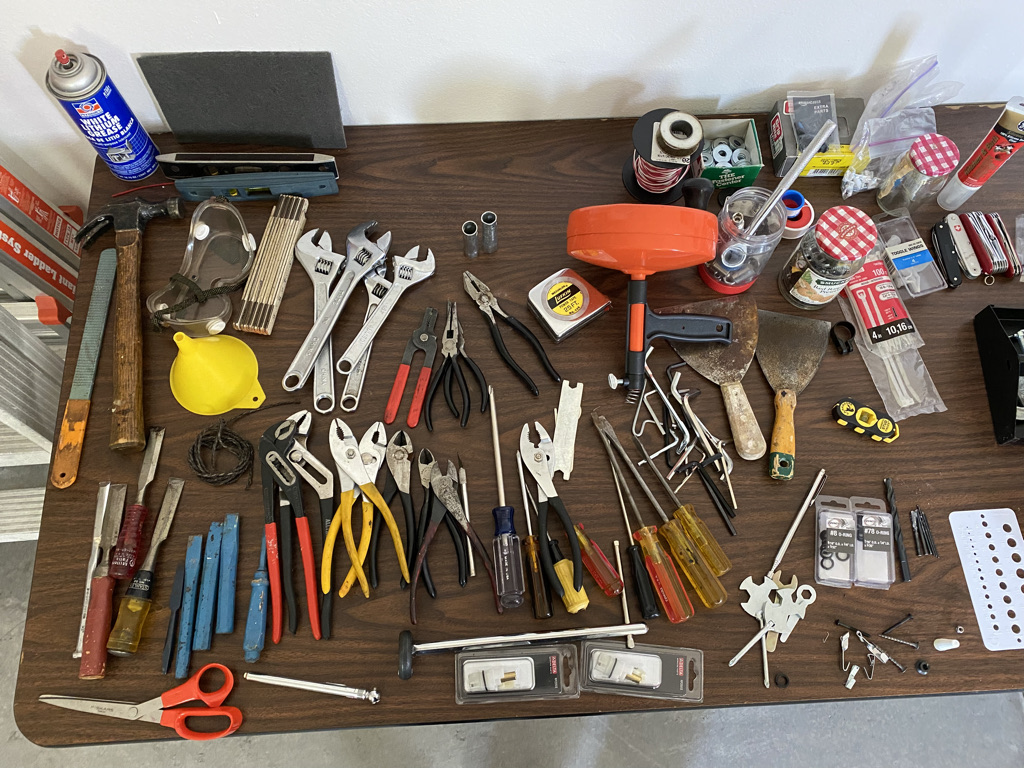
I hadn’t personally selected or bought most of my old tools. They were almost entirely hand-me-downs from my dad and grandfather, most of them decades old. A few items I picked up at swap meets last century. The overall collection was a mishmash of ugly items with some redundancy, consisting of odds and ends that other people no longer wanted.
While most of these tools were technically functional (if I lower my standards for defining the word functional), my inner relationship with this assortment of tools was pretty blah. I typically saw this collection as ugly and disorderly baggage from the past.
Did these tools spark joy? That’s an easy no. Actually it’s an easy hell no. With few exceptions this felt like someone else’s tool collection, not really my own. So I saw an opportunity to remake this part of my life in a more deliberate way.
When I began sorting through these tools, I learned that I had 17 different hex wrenches (aka Allen wrenches) but only in 6 different sizes. I had two 10″ adjustable wrenches and two 8″ adjustable wrenches, none of which were good at holding their positions when used, so I had to keep my thumb on the adjuster when using them. I had a bunch of crusty wood chisels that I’ve never used in my life. In a long line of male relatives, apparently I’m the first who isn’t into making his own furniture.
Many items were coated in substances that were last seen in Voldemort’s rez pot… if you were to remove baby V and simmer the soupy remains into a thick sludge, smear it on tools, and then bake at 450º F for 35-45 minutes.
It’s possible that some of these tools might violate California’s Prop 65 if they were sold today, not necessarily from what they were originally made of but from whatever has coated them over the years.
Old Tools
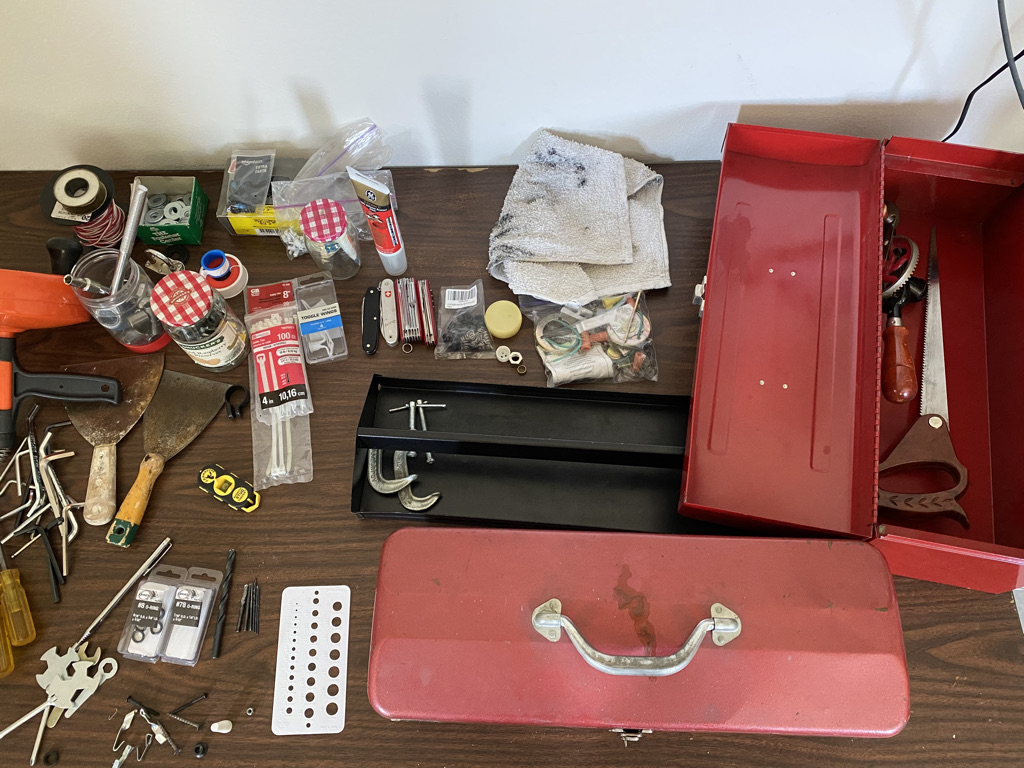
Here are some pics of the old collection. Welcome to the Island of Misfit Toys!
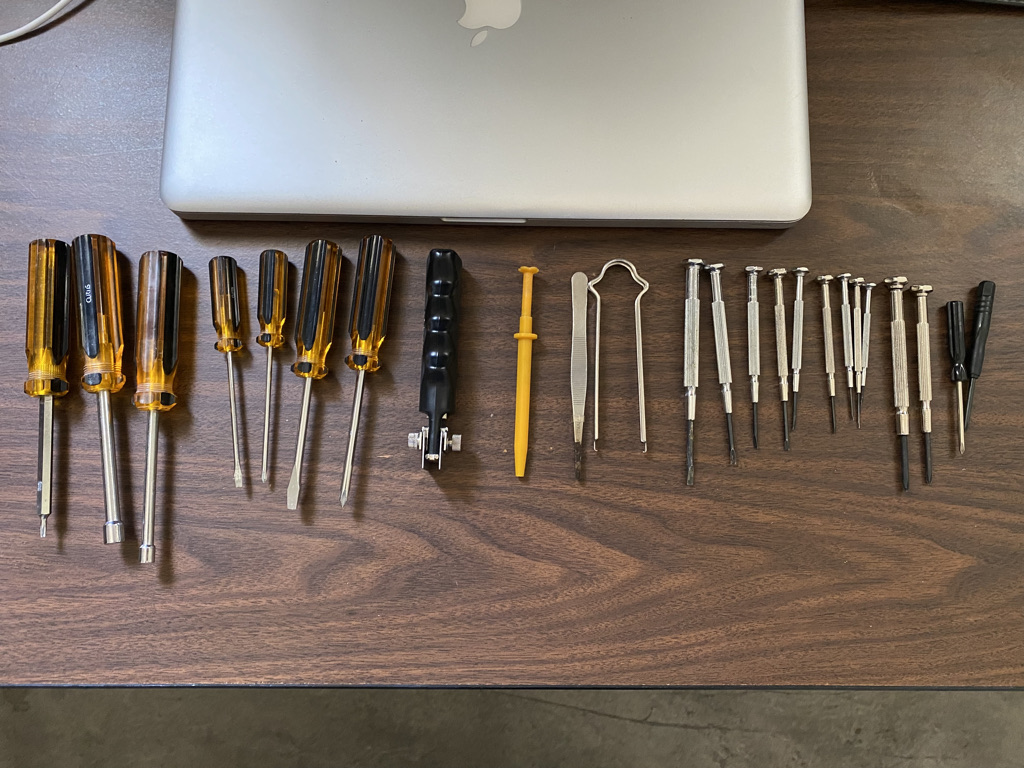
I remember using these small screwdrivers (below) when I built my own PC in 2004.
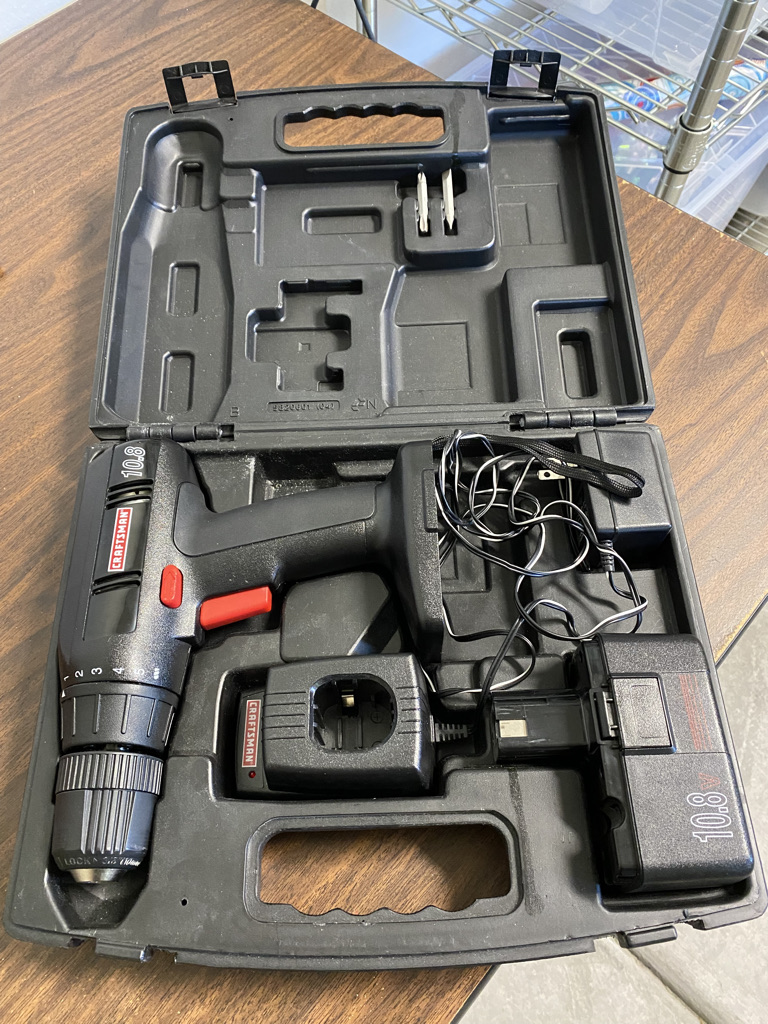
This old power drill’s battery keeps its charge for just a few minutes, and it’s so slow that I can only use it on drywall… maybe particle board on a good day. If I ever want to use it, I always have to charge the battery first since the battery won’t hold a charge in storage.
I’d normally feel a mild sense of dread whenever I had to use this drill, so sometimes I’d prefer to use an ancient hand-crank drill instead. That hand drill wasn’t a great choice either since it was designed for right-handers, and I’m a leftie, so I either have to use it right-handed or turn the drill in a way that feels unnatural for me. That isn’t so good for safety reasons.
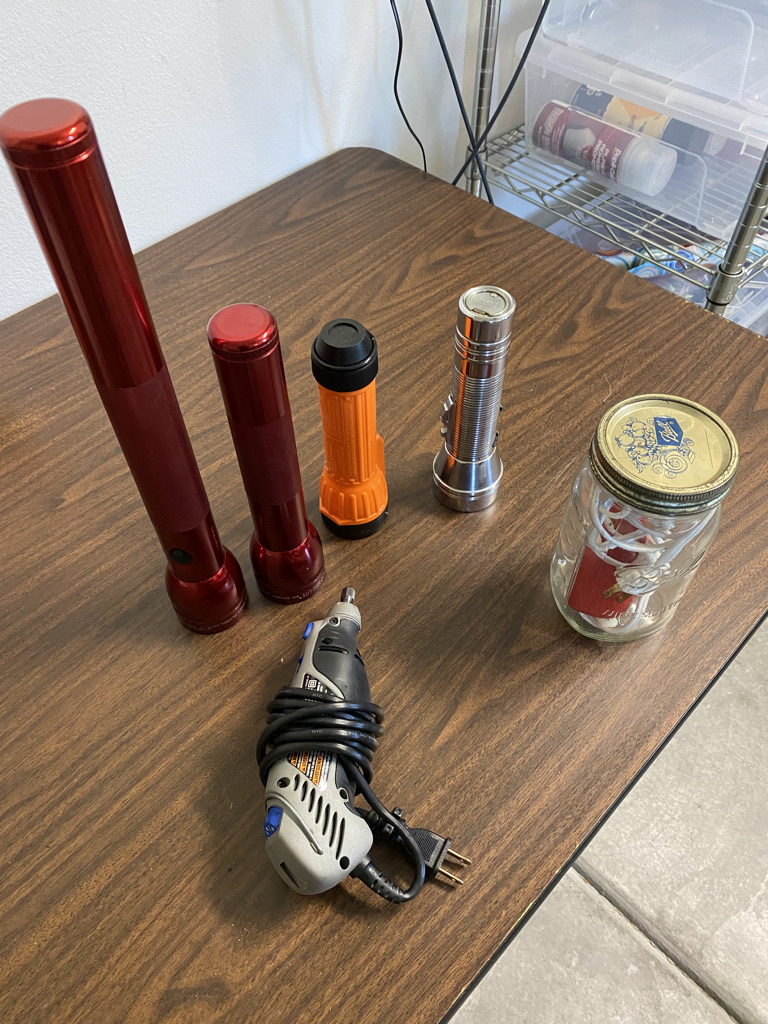
Here are some old flashlights, an etcher that I’ve never used, and a plug-in drill that only takes tiny bits.
Remember when Maglites were cool? Yes – the 80s. Admittedly I bought those myself… couldn’t resist the 2-pack. And I did at least use them a lot.
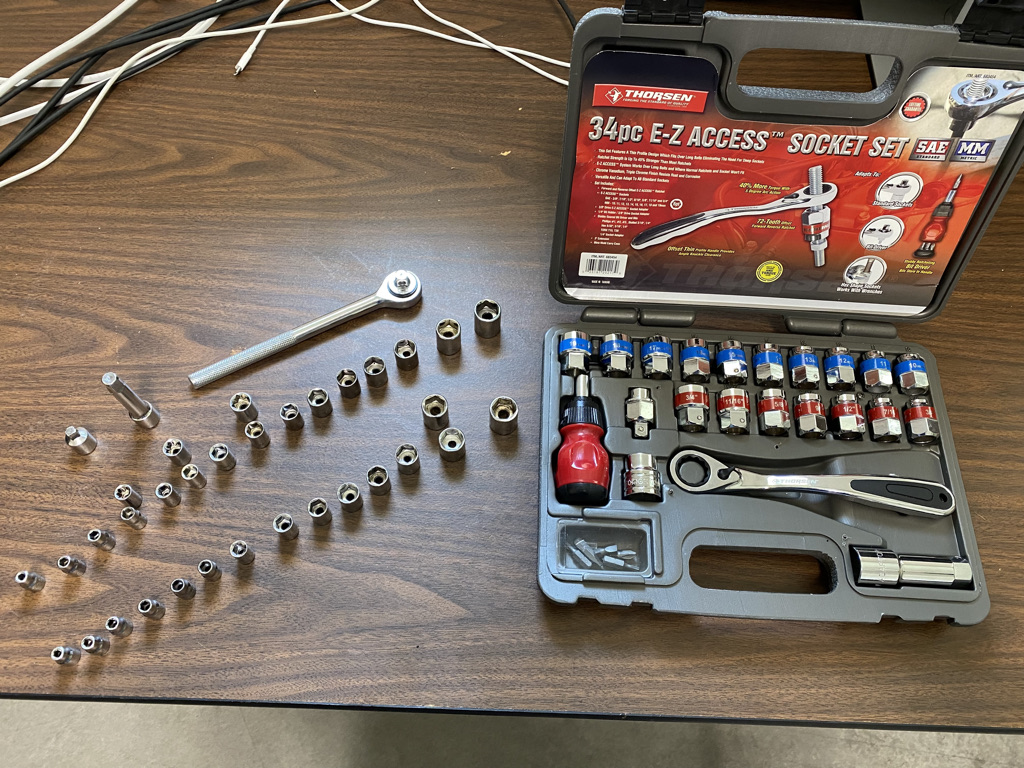
I had 2 old socket wrench sets, neither of which I liked. One had a broken extender – the small metal ball bearing fell out of it, so it wouldn’t stay in place.
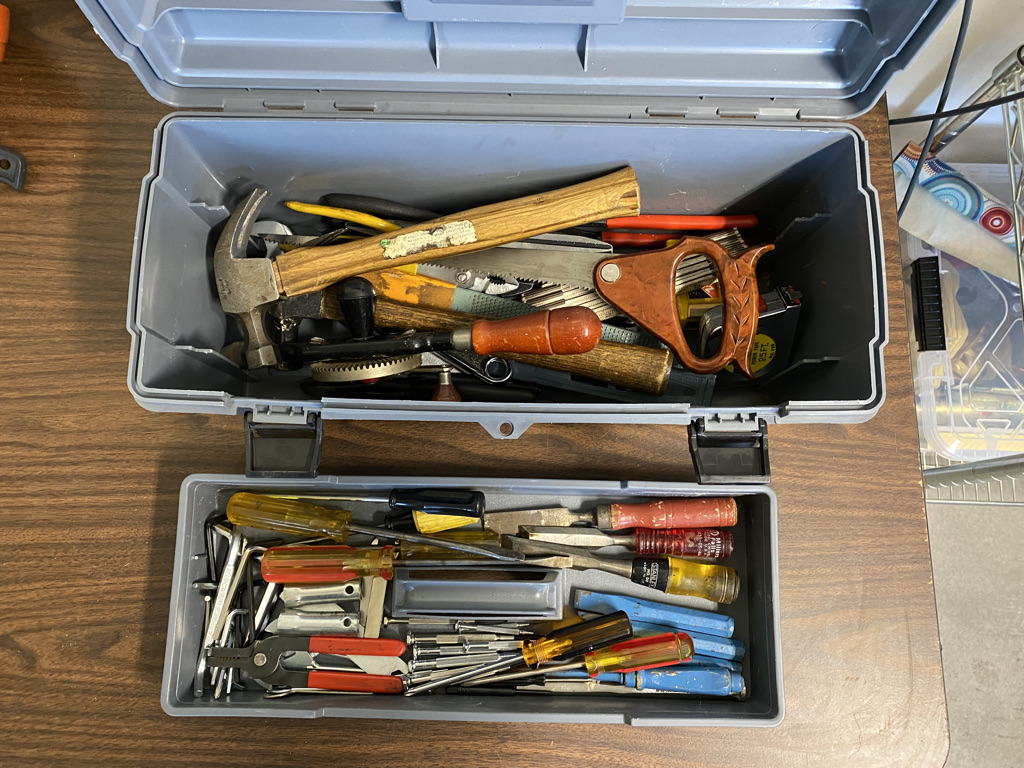
At the bottom of this toolbox was a gooey substance I couldn’t identify – I think that substance may have moved by itself one time, and I’m pretty sure it would emit light on Tuesdays.
I didn’t love these old metal toolboxes, but at least they were functional. My dad is from Indiana, so I’m sure the Indy 500 toolbox was something he bought.
Almost all of the old items have been sorted and donated (and cleaned to the extent possible without resorting to magic). Hopefully they’ll be appreciated by someone somewhere.
Starting Fresh
I decided to start fresh by building a tool collection that I would like, based on the kinds of projects I typically do around the house and garage. I spent a good bit of time researching the latest tools and decided what would be a good fit.
I’m not an auto mechanic or a carpenter, so I don’t need the most amazing or durable items, but I didn’t want dirt cheap items that were likely to disappoint me. I wanted tools that I would like and appreciate, both when I saw them and when I used them. So I used appreciation as my main standard for making selections. I kept asking, “Am I likely to appreciate this?”
I wanted to compile a set of tools that would feel abundant and empowering but not excessive for my needs. I appreciate abundance but not to the point of ridiculous excess. I didn’t replace some items with equivalent tools if I sensed that I would probably never need those types of tools (such as wood chisels). If I felt I would later regret a purchase, I avoided it.
I made a few mistakes and did some returns / exchanges, but overall I’ve been pleased with my initial picks. I’ve only had a chance to test some of these tools so far, but I look forward to a healthy relationship with them for many years to come.
I got most of these items via Amazon, and some I picked up locally at Lowe’s, Home Depot, and Costco.
New Tools
Here are some pics of the new tools I gradually acquired. After decades of used tools, I wanted to start with fresh energy.
I got new 3 new tape measures (two 16’ and one 12’), all self-locking. I tend to use these a lot, so I got one for my home office, one for the garage (toolbox), and one for upstairs.
Why aren’t all tape measures self-locking? When do you ever want to pull it out and have it immediately slide back into the housing? When I pull mine out, I want it to stay long and strong by default… till I’m ready to release it.
There are two new 12-piece ratcheting wrench sets (SAE and metric) and a new Dewalt socket wrench set (with SAE and metric sockets in a nice case). Between those is a universal socket – I tried it out, and it works surprisingly well. I love these wrench sets. This might be a tad overkill for my needs, but it’s really nice to have the perfect size for any job instead of having to over-rely on an adjustable wrench that might slip.
I got two sets of Allen wrenches (SAE and standard) that include nice rubbery holding cases to keep them organized by size. I like tools that self-organize with some sense of order or symmetry – they just seem smarter to me.
I got a new 16 oz mallet, which is nice for situations when a steel hammer might be too harsh.
I added new eye protection goggles (to replace the old ones that looked like something I used in high school chemistry). These fit nicely with or without glasses, and they’re anti-fogging.
I got two good utility knives – okay, just one knife is new, and the other I had bought previously. I liked the previous one so much that I decided to add another, so I could keep one in the house and one in the garage. I tend to use these a lot.
I got 9″ and 16″ levels, both magnetic. The smaller one has a built-in ruler. The larger one is nice for marking off spots for hanging a painting or poster. I considered getting a 24″ one, but that seemed like overkill, and I like that the 16″ one still fits in the toolbox.
In the back left, there are two LED flashlights. both of which are WAY brighter and much smaller and lighter than my old flashlights. They use AAA batteries instead of the D batteries in the Maglites, so they’re more energy efficient too. These flashlights lights have 3 brightness settings, and the beams can tighten or widen just by twisting the top. I actually got 4 of these since a 2-pack was only $10. I keep one in the garage, one in the car, and two in the house. They feel very solid, made of “military grade” aluminum (whatever that means).
There are also 2 rechargeable LED work lights (picked up at Costco on sale for $10 off the pair). These are nice and bright, and they have built in stands, hooks, and strong magnets, so they’re very versatile to position. Each light also has a built-in USB charger, so it can be used as a battery to charge a phone or other USB device as well – I don’t need that feature while at home, but it could be handy on a camping trip.
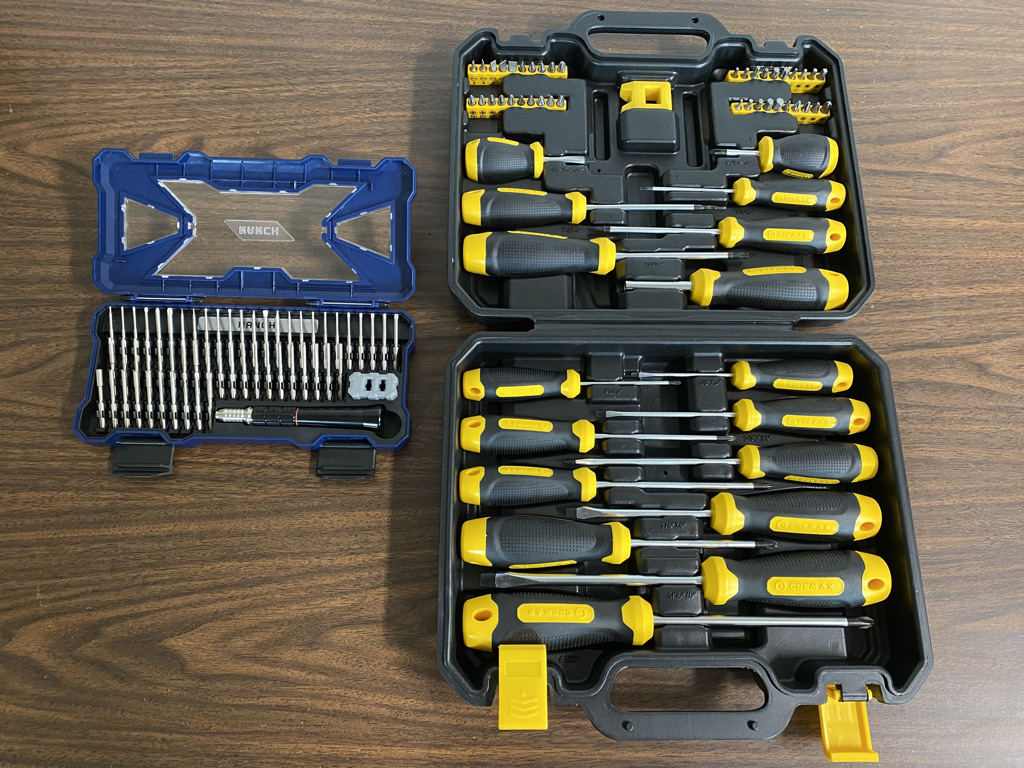
I got two new screwdriver sets, each with 57 pieces and their own storage cases. The left one is a precision set for working with small screws like on electronics or eye glasses. It has many different kinds of bits. I like that each bit has a long shaft, and the handle has a built-in extender as well, which is good for screwing in deep holes. I will never use all of these bits, but it feels nice to have such a good collection in a compact space – an excellent replacement for my old set.
The set on the right has nice grippy handles, and I like that it sorts the screwdrivers by type and size. It also includes many other assorted bits at the top of the case (which can be used with a power drill as well).
Both kits come with a magnetizer / demagnetizer, so you can magnetize or demagnetize the tips.
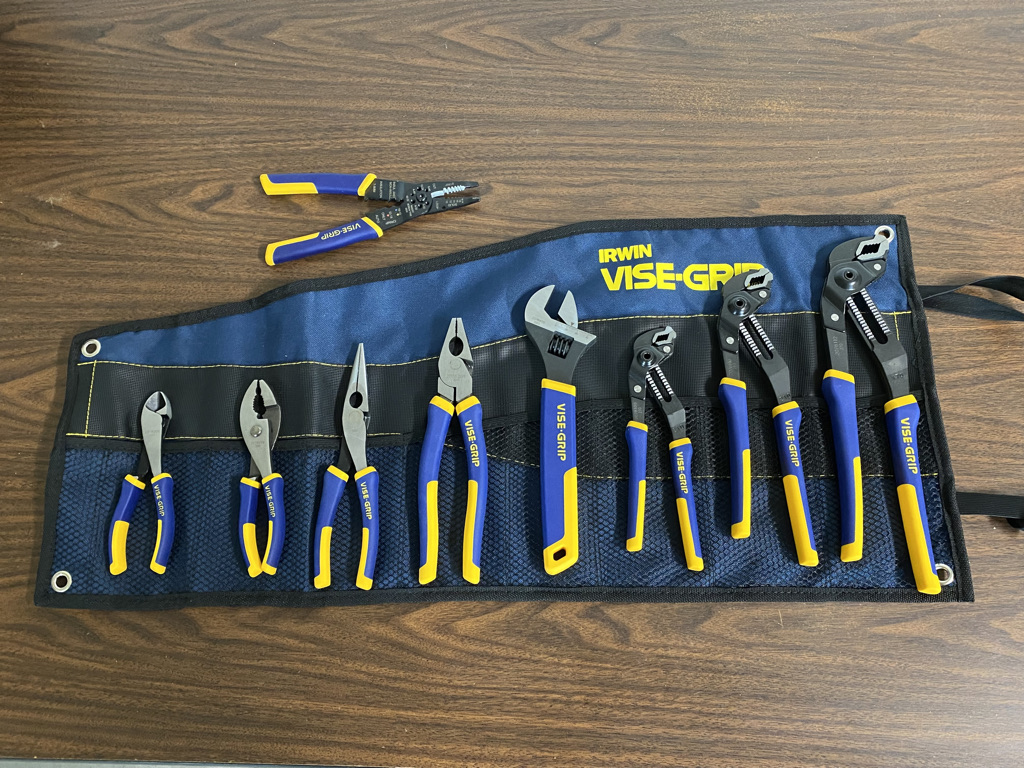
I love this set of pliers and wrenches. It comes with a strong cloth carrying case with pouches for each tool, and it easily rolls up and has elastic straps to secure it into a nice bundle. I prefer to put the tools in a toolbox though for faster access. Unlike my old adjustable wrenches, the adjustable wrench in this set is very good at holding its position.
I also added a new wire stripper, which is capable of cutting screws too.
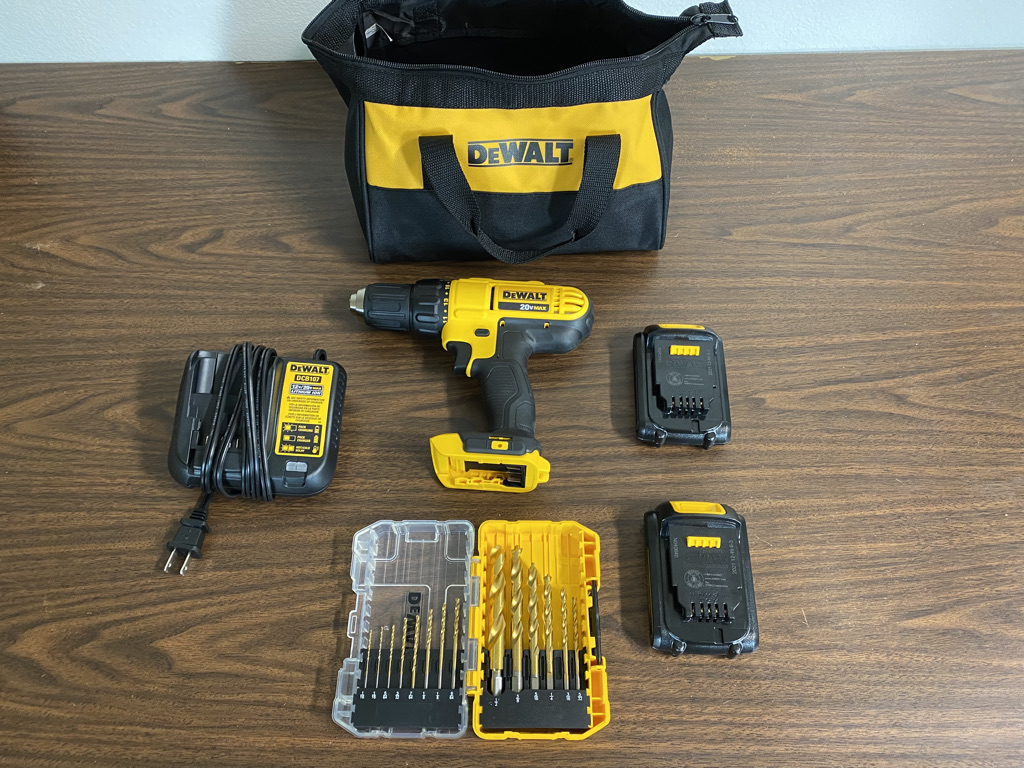
This new Dewalt power drill / driver is so nice. It comes with 2 rechargeable batteries, each of which should last for hours. Apparently these batteries can hold their charge for 18 months when not in use, so I can simply pop in a battery and use this drill without having to charge it first. Two batteries is overkill for my needs, but that’s what the set came with.
I also picked up a set of 14 titanium drill bits, which seem way nicer than the few sad drill bits I previously had.
This drill comes with a nice carrying bag that fits everything shown with room to spare.
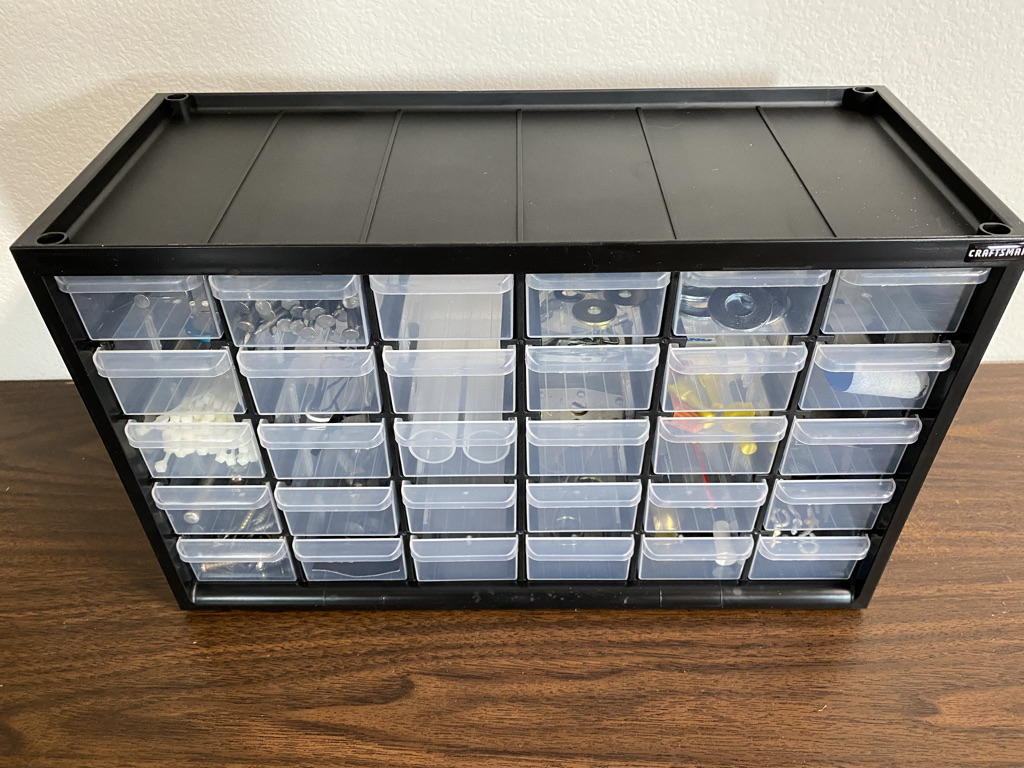
This small 30-drawer cabinet is great for storing odds and ends like nails, screws, washers, zip ties, etc. No more mega jar with everything mixed together.
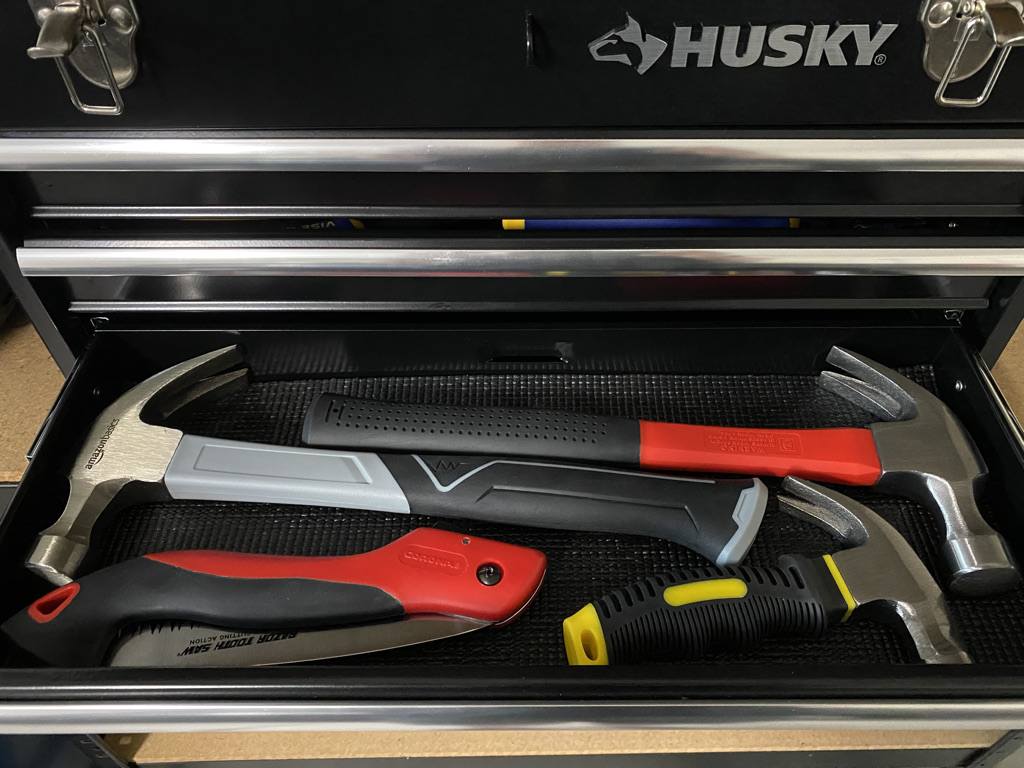
I replaced two crusty wood-handle hammers (both of which had tops that were coming loose) with these fiberglass-handle hammers: a 20-oz hammer, a 16-oz hammer, and a small stubby hammer.
In the same drawer is a 7″ folding hand saw (useful for trimming small branches). I’ve never needed a power saw or chainsaw.
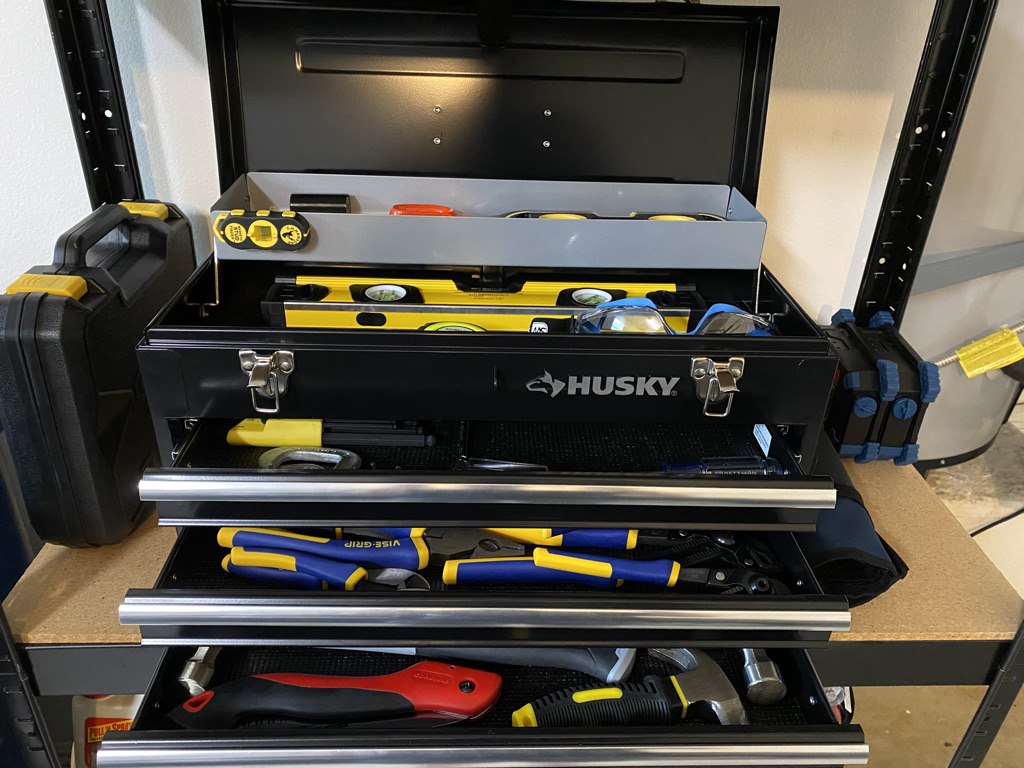
Here’s my new toolbox. I got one larger one to replace the three smaller boxes I had previously. It has a top area and 3 drawers. I added some padded drawer liners to it, so the drawers are lined with a soft but durable material. It’s like all of the tools now rest on a thin yoga mat.
Somehow it feels like giving the tools a nice home with cushy padding is a nice way to show them respect and appreciation. This is surely better than how I treated my old tools. I even talked to the new tools to welcome them into my home. In my journal this week, I wrote a private letter saying goodbye to my old tools, releasing their energy back to the simulator.
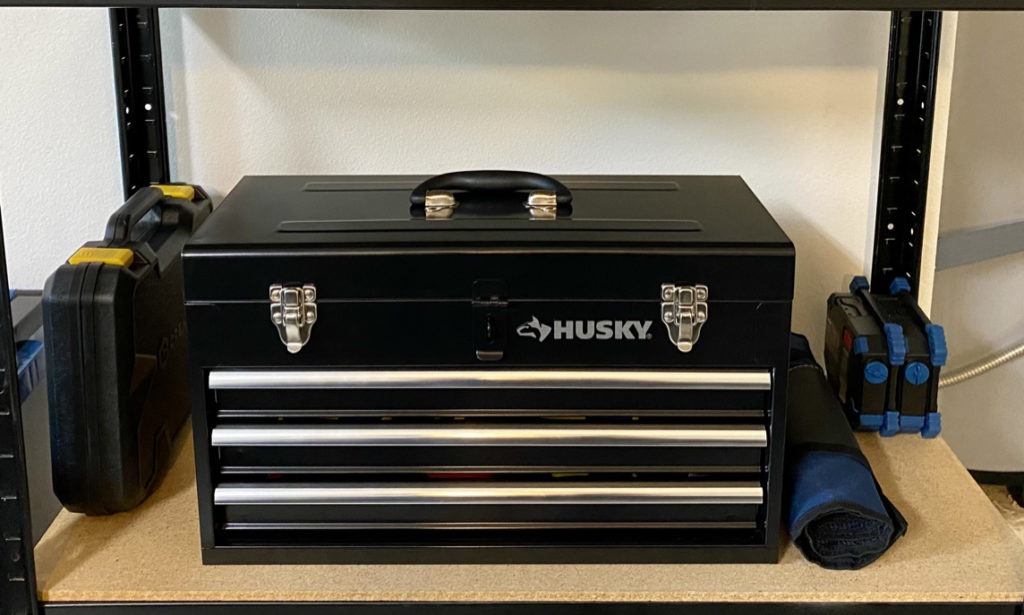
This is what the toolbox looks like when closed. It’s about 12″ tall. Not bad for $50. The drawers open and close very smoothly too. I don’t intend to carry it around, so this is its permanent home on a shelf in my garage.
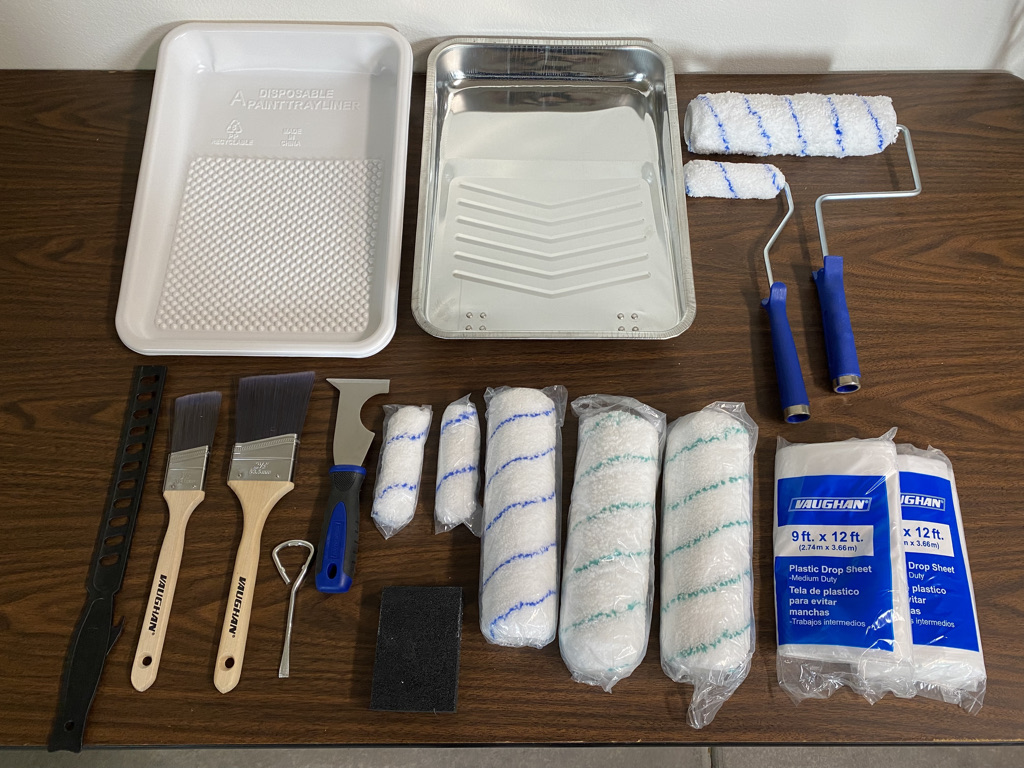
I also got this painting set, which I keep elsewhere in the garage. It’s currently $15 at Costco.
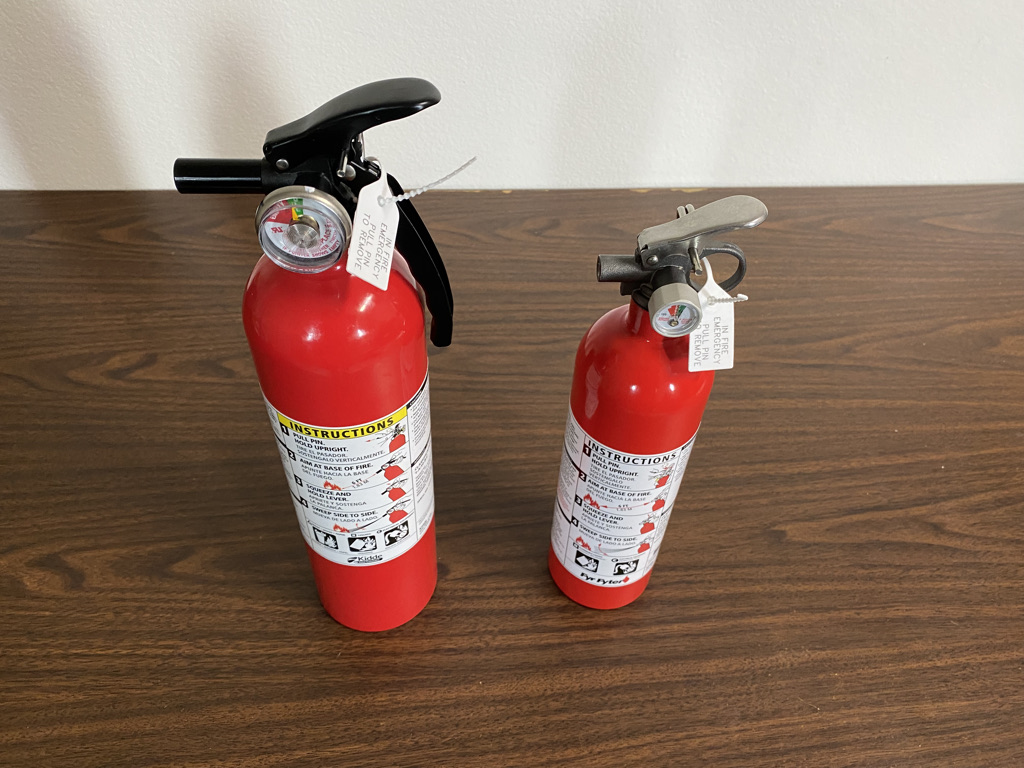
I bought two new fire extinguishers, one for the house and one for the garage as a backup. I had some old ones in my house that apparently expired in 1999 (seriously). The new ones say they’ll last for a good 12 years, so I wonder if the old ones were from the 80s – that is possible.
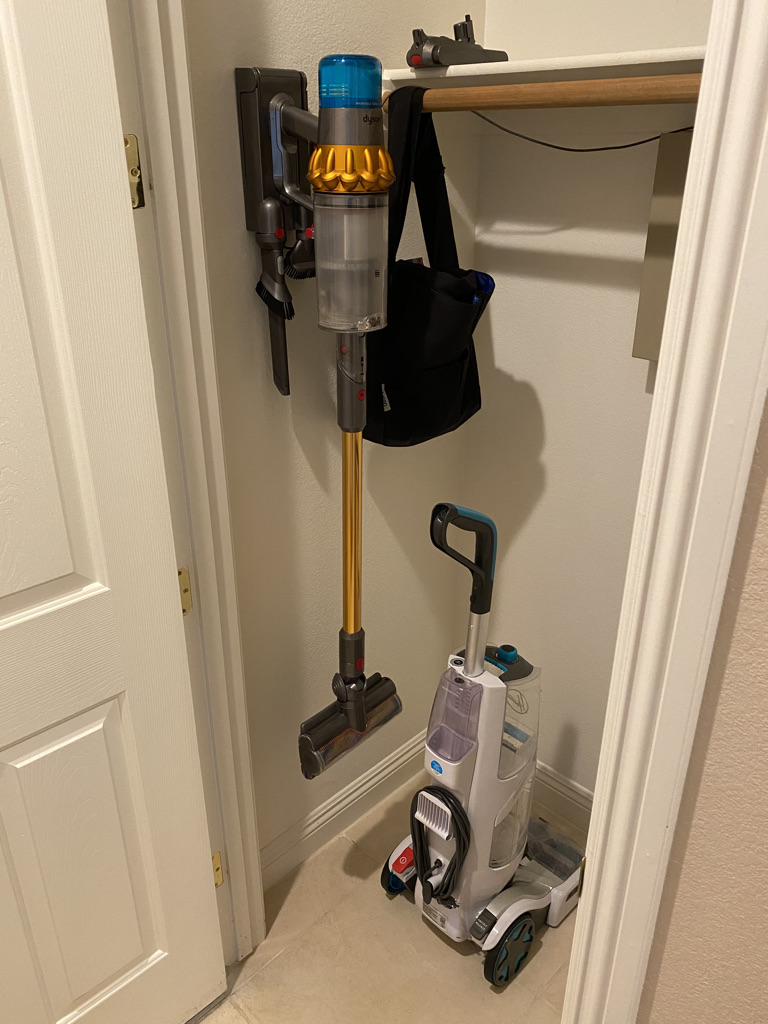
We’ve been making some other upgrades too this summer to help keep the house in better shape. Here’s a new Dyson V15 Detect vacuum that I got in June. I like it so far and picked up an extra battery for it. It’s the first Dyson I’ve ever owned, and I dare say that it’s even fun to use. Previously I was using a Roomba, but it’s not nearly as powerful as the Dyson. I like that the transparent bin easily shows what’s being sucked out of the carpet. This fairly recent model also has a display that shows the particle count of what it’s picking up (actually 3 different counts for different particle sizes). That feature seems like mostly a gimmick, but I still find it very satisfying to see the numbers go up, especially when it passes 1 billion. Having a vacuum that provides this extra visual feedback makes other vacuums seems a lot dumber… like what are they trying to hide by not sharing their performance data?
At least I now know for sure that Roomba is shit… at least as far as actual cleanliness goes.
On the floor there’s a new Hoover Smartwash+ carpet cleaner – I’ve tested it on one room so far, and it worked really well. I like that it automatically washes when I push it forward and dries when I pull it back, so there’s no need to hold down a trigger. It’s very easy to use. This combo of the new vacuum and carpet cleaner is nicely transforming the floors in my house.
This is the kind of project that I always could have put off by telling myself that there are more important things to do. But it felt good to finally do it.
I like and appreciate the new tools. I like that I no longer have to deal with the old misaligned mess of tools that I had before. I like that I took my time with this project and did it patiently, without rushing, and free of deadlines.
I especially like that I got the framing right before I started, so I was able to take action with ease. I felt nicely motivated the whole way through and even had fun with it. While doing the tools research, I learned some things I didn’t know before, so it was educational as well.
I framed this as an upgrade project – an invitation to completely transform my old tool collection into a new collection that I would henceforth appreciate. Purge the energy of disgust and irritation, and replace it with gratitude.
So there was an inner journey from having a poor relationship with my tool collection to discovering how to create a positive and healthy relationship. This permanently changes how I feel towards a small (but not insignificant) slice of my reality. Now every time I enter the garage and notice the different toolbox and tools, I feel differently. There’s a newfound sense of ease and even a little excitement. And admittedly there’s a little bit of discomfort since I’m still getting to know the new tools, but I imagine that will pass in time.
This also changes how I relate to home maintenance projects going forward. Now those projects seem a little more attractive because I look forward to using the nice new tools. Yesterday I noticed a loose screw on a towel hangar in the laundry room, and I happily grabbed one of the new screwdrivers to fix it, which felt more rewarding than I expected.
One key that I found is the importance of maintaining the right pacing. I can’t rush because that just makes such a project feel stressful, and I will doubt my decisions if I try to decide too quickly. It’s best to do the research patiently and then let my mind incubate some options till I have a strong sense of clarity. I held off on buying items when I was in doubt about what to get.
On the other hand, I can’t go too slowly either since then the energy of the project will die on me. I have to keep nudging it forward day by day to maintain a sense of progress. On a single day, I might figure out one or two items, like which screwdriver set to get. But over the course of a few weeks, all of those little decisions add up to a bigger transformation.
Think about some area of life where you’ve been tolerating misalignments. Could you undertake a complete transformation of that part of life, gradually chipping away at the misalignments one by one and upgrading or replacing them with changes that you’d appreciate?
What if you allowed such a project to take as long as it needs to take with no deadlines or time pressure? Could you approach it as an exploration and a learning experience, doing whatever you need to do to make reasonably good decisions at each step, so day by day you’re advancing towards a bigger transformation that you’ll really appreciate?
Remember that you don’t have to make perfect decisions in order to create significant improvement. I can’t say that I have the perfect tool set for me, but it’s a clear improvement over what I was dealing with before, and that’s good enough to call it done.