Menopause linked to grey matter loss in key brain regions

New findings from the University of Cambridge suggest that menopause is associated with changes in brain structure, along with higher levels of anxiety, depression, and sleep difficulties. Researchers found reduced grey matter volume in several important brain regions among women who had gone through menopause.

The study, published in Psychological Medicine, also examined the effects of hormone replacement therapy (HRT). While HRT did not appear to prevent these brain or mental health changes, it was associated with a slower decline in reaction speed.

Understanding Menopause and Its Symptoms

Menopause marks the stage of life when a woman’s menstrual periods permanently stop due to declining hormone levels. It most commonly occurs between ages 45 and 55 and is often accompanied by symptoms such as hot flushes, low mood, and disrupted sleep. Previous research has also linked menopause to changes in cognitive abilities, including memory, attention, and language.

To help manage menopause related symptoms, particularly depression and sleep problems, many women are prescribed HRT. In England, 15% of women were prescribed HRT in 2023. Despite its widespread use, scientists still have limited insight into how menopause and HRT affect the brain, thinking skills, and mental health.

A Large Study Using UK Biobank Data

To better understand these effects, researchers analyzed data from the UK Biobank involving nearly 125,000 women. Participants were divided into three groups: women who had not yet reached menopause, women who were post-menopause and had never used HRT, and women who were post-menopause and had used HRT.

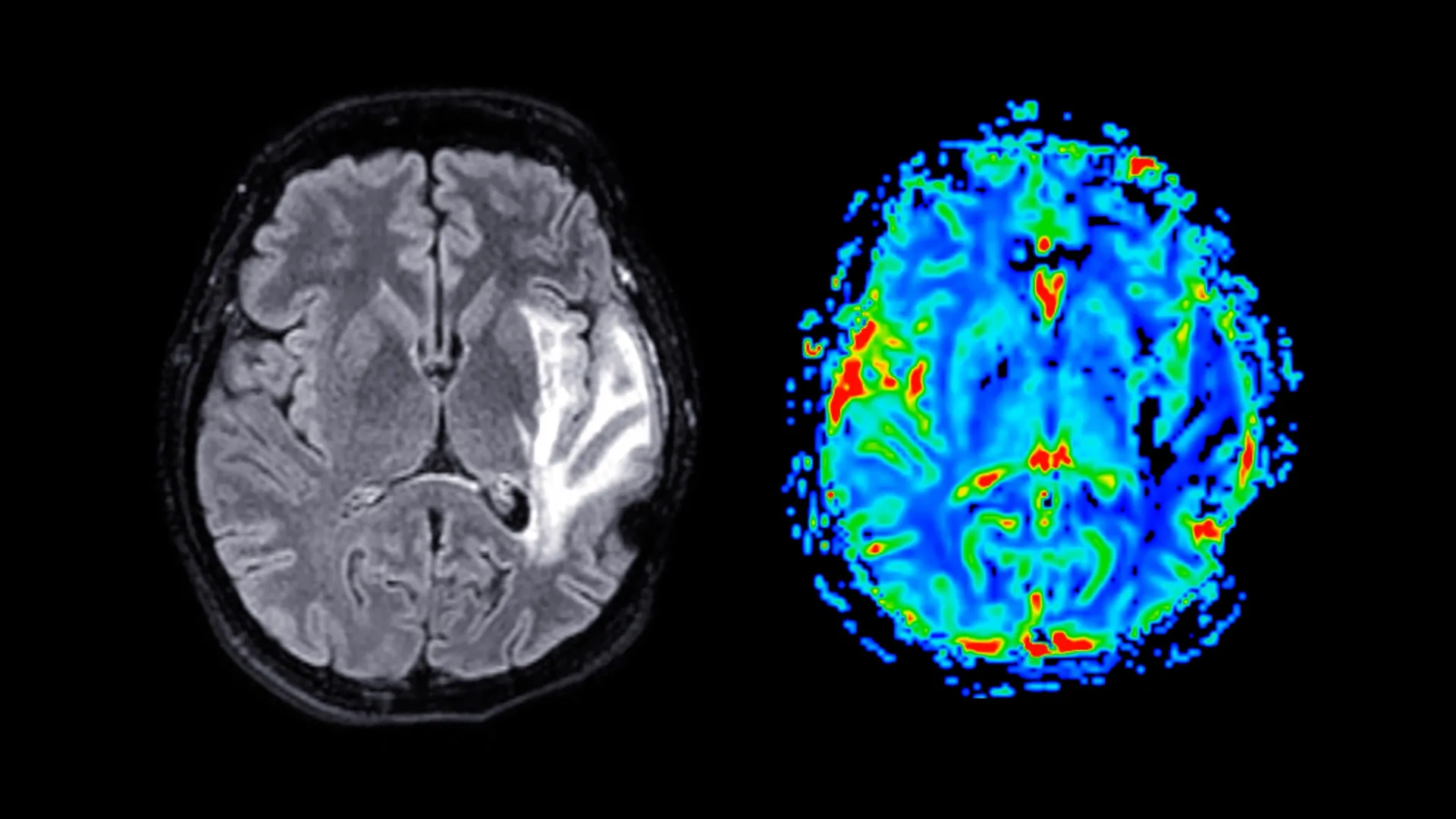
Participants completed questionnaires about menopause symptoms, mental health, sleep patterns, and overall health. Some also completed cognitive tests measuring memory and reaction time. In addition, around 11,000 women underwent magnetic resonance imaging (MRI) scans, which allowed researchers to examine differences in brain structure.

The average age at menopause among participants was about 49.5 years. Women who were prescribed HRT typically began treatment at around age 49.

Anxiety Depression and Sleep After Menopause

Women who had gone through menopause were more likely than those who had not to seek help from a GP or psychiatrist for anxiety, nervousness, or depression. They also scored higher on depression questionnaires and were more likely to have been prescribed antidepressant medications.

Women in the HRT group showed higher levels of anxiety and depression compared with women who did not use HRT. However, further analysis revealed that these differences were already present before menopause began. According to the researchers, this suggests that some GPs may have prescribed HRT in anticipation that menopause could worsen existing symptoms.

Sleep problems were also more common after menopause. Post-menopausal women were more likely to report insomnia, reduced sleep, and ongoing tiredness. Women using HRT reported feeling the most fatigued of all three groups, even though their total sleep duration did not differ from post-menopausal women who were not taking HRT.

The Importance of Lifestyle and Mental Health Support

Dr. Christelle Langley from the Department of Psychiatry said: “Most women will go through menopause, and it can be a life-changing event, whether they take HRT or not. A healthy lifestyle — exercising, keeping active and eating a healthy diet, for example — is particularly important during this period to help mitigate some of its effects.

“We all need to be more sensitive to not only the physical, but also the mental health of women during menopause, however, and recognize when they are struggling. There should be no embarrassment in letting others know what you’re going through and asking for help.”

Reaction Time Slows While Memory Remains Stable

Menopause was also linked to changes in cognitive performance. Women who were post-menopause and not using HRT showed slower reaction times compared with women who had not yet reached menopause and those who were using HRT. Memory performance did not differ significantly among the three groups.

Dr. Katharina Zühlsdorff from the Department of Psychology at the University of Cambridge, said: “As we age, our reaction times tend to get slower — it’s just a part of the natural ageing process and it happens to both women and men. You can imagine being asked a question at a quiz — while you might still arrive at the correct answer as your younger self, younger people would no doubt get there much faster. Menopause seems to accelerate this process, but HRT appears to put the brakes on, slowing the ageing process slightly.”

Grey Matter Loss in Brain Regions Linked to Memory and Emotion

Brain imaging revealed that women who were post-menopause showed significant reductions in grey matter volume, regardless of whether they had used HRT. Grey matter contains nerve cell bodies and plays a key role in processing information, controlling movement, and supporting memory and emotional regulation.

The most affected areas included the hippocampus (responsible for forming and storing memories), the entorhinal cortex (the ‘gateway’ for passing information between the hippocampus and the rest of the brain), and the anterior cingulate cortex (part of the brain that helps you manage emotions, make decisions, and focus your attention).

Possible Clues to Dementia Risk in Women

Professor Barbara Sahakian, the study’s senior author from the Department of Psychiatry, added: “The brain regions where we saw these differences are ones that tend to be affected by Alzheimer’s disease. Menopause could make these women vulnerable further down the line. While not the whole story, it may help explain why we see almost twice as many cases of dementia in women than in men.”


Share Button

A century of hair shows how lead exposure collapsed

Before the Environmental Protection Agency was formed in 1970, lead pollution was a routine part of daily life across the United States. It came from factories, lead-based paint, drinking water pipes, and most of all from vehicle exhaust. Lead is a toxic metal that builds up in the body over time and has been linked to learning and developmental problems in children. As environmental rules tightened in the decades that followed, lead in the environment dropped sharply, and human exposure declined with it.

The evidence for that change can still be found today.

It is embedded in human hair.

Hair Samples Trace Lead Exposure Back to 1916

Scientists at the University of Utah analyzed hair samples and discovered steep declines in lead levels going back more than a century. Their results show a clear downward trend beginning after environmental regulations were introduced.

“We were able to show through our hair samples what the lead concentrations are before and after the establishment of regulations by the EPA,” said demographer Ken Smith, a distinguished professor emeritus of family and consumer studies. “We have hair samples spanning about 100 years. And back when the regulations were absent, the lead levels were about 100 times higher than they are after the regulations.”

A Metal That Was Useful and Dangerous

The study, published in PNAS, highlights how environmental protections have shaped public health outcomes. It also points out that some lead regulations are now being weakened by the Trump administration as part of a broader effort to loosen environmental safeguards.

“We should not forget the lessons of history. And the lesson is those regulations have been very important,” said co-author Thure Cerling, a distinguished professor of both geology and biology. “Sometimes they seem onerous and mean that industry can’t do exactly what they’d like to do when they want to do it or as quickly as they want to do it. But it’s had really, really positive effects.”

Lead is the heaviest of the heavy metals and, like mercury and arsenic, it accumulates in living tissue and is harmful even at low concentrations. Despite these risks, it was widely used for decades because of its practical advantages. Lead was commonly used in pipes and added to paint to improve durability, speed drying, and create brighter colors. It was also blended into gasoline to improve engine performance by preventing pistons from “knocking.”

By the 1970s, the health dangers were well established, prompting the EPA to begin removing lead from paint, plumbing materials, gasoline, and other consumer products.

How Family Keepsakes Became Scientific Evidence

To find out whether these policy changes truly reduced lead exposure in people, Smith worked with geologist Diego Fernandez and Cerling. Fernandez and Cerling had developed methods to determine where animals lived and what they ate by analyzing the chemistry of hair and teeth.

The lead study grew out of earlier research funded by the university’s Center on Aging and the National Institutes of Health. That earlier work involved Utah residents who agreed to provide blood samples along with detailed family health information.

For the new research, participants were asked to submit hair samples from adulthood and from earlier in life. Some went a step further, locating hair preserved in family scrapbooks that dated back as much as a century. Altogether, the team collected hair from 48 individuals, creating a valuable record of lead exposure along Utah’s Wasatch Front, an area that once faced heavy industrial pollution.

“The Utah part of this is so interesting because of the way people keep track of their family history. I don’t know that you could do this in New York or Florida,” said Smith, who led the U’s Pedigree and Population Program at the Huntsman Cancer Center while the studies were underway.

Much of this region supported a major smelting industry throughout the 20th century, particularly in Midvale and Murray. Most of Utah’s smelters closed by the 1970s, around the same time the EPA began enforcing stricter limits on lead use.

Why Hair Preserves Lead So Well

The researchers analyzed the samples using mass spectrometry equipment at a facility overseen by Fernandez.

“The surface of the hair is special. We can tell that some elements get concentrated and accumulated in the surface. Lead is one of those. That makes it easier because lead is not lost over time,” said Fernandez, a research professor in the Department of Geology & Geophysics. “Because mass spectrometry is very sensitive, we can do it with one hair strand, though we cannot tell where the lead is in the hair. It’s probably in the surface mostly, but it could be also coming from the blood if that hair was synthesized when there was high lead in the blood.”

While blood tests offer a more precise snapshot of exposure at a specific moment, hair is far easier to collect and preserve. More importantly, it provides insight into past exposure for people who are now older or no longer alive.

“It doesn’t really record that internal blood concentration that your brain is seeing, but it tells you about that overall environmental exposure,” Cerling said. “One of the things that we found is that hair records that original value, but then the longer the hair has been exposed to the environment, the higher the lead concentrations are.”

Leaded Gasoline Left a Clear Chemical Record

The decline in lead found in hair closely mirrors the reduction of lead in gasoline after the EPA was created under President Richard Nixon.

Before 1970, gasoline typically contained about 2 grams of lead per gallon. Although that amount may seem small, the scale of fuel consumption made it significant. With billions of gallons burned each year, this resulted in nearly 2 pounds of lead entering the environment per person annually.

“It’s an enormous amount of lead that’s being put into the environment and quite locally,” Cerling said. “It’s just coming out of the tailpipe, goes up in the air and then it comes down. It’s in the air for a number of days, especially during the inversions that we have and it absorbs into your hair, you breathe it and it goes into your lungs.”

After the 1970s, even as gasoline use continued to rise in the United States, lead levels measured in hair fell sharply. Concentrations dropped from as high as 100 parts per million (ppm) to about 10 ppm by 1990. By 2024, average levels had fallen to less than 1 ppm.

The study, titled “Lead in archived hair documents decline in human lead (Pb) exposure since establishment of the US Environmental Protection Agency,” was published in PNAS, or Proceedings of the National Academy of Sciences. Support came from the Huntsman Cancer Foundation and the National Cancer Institute through a grant to the Utah Population Database and the University of Utah.

Share Button

I was full of shame at being sacked after having endometriosis surgery

Sanju Pal wins an employment appeal tribunal that could affect how employers can treat staff with endometriosis.

Share Button

I was full of shame after being sacked for having endometriosis

Sanju Pal wins an employment appeal tribunal that could affect how employers can treat staff with endometriosis.

Share Button

I inhaled traffic fumes to find out where air pollution goes in my body

BBC health correspondent James Gallagher gets his blood analysed to understand how air pollution is killing us.

Share Button

Scientists create smart synthetic skin that can hide images and change shape

Synthetic materials are widely used across science, engineering, and industry, but most are designed to perform only a narrow range of tasks. A research team at Penn State set out to change that. Led by Hongtao Sun, assistant professor of industrial and manufacturing engineering (IME), the group developed a new fabrication technique that can produce multifunctional “smart synthetic skin.” These adaptable materials can be programmed to perform a wide variety of tasks, including hiding or revealing information, enabling adaptive camouflage, and supporting soft robotic systems.

Using this new approach, the researchers created a programmable smart skin made from hydrogel, a soft, water-rich material. Unlike conventional synthetic materials with fixed behaviors, this smart skin can be tuned to respond in multiple ways. Its appearance, mechanical behavior, surface texture, and ability to change shape can all be adjusted when the material is exposed to external triggers such as heat, solvents, or physical stress.

The findings were published in Nature Communications, where the study was also selected for Editors’ Highlights.

Inspired by Octopus Skin and Living Systems

Sun, the project’s principal investigator, said the concept was inspired by cephalopods such as octopuses, which can rapidly alter the look and texture of their skin. These animals use such changes to blend into their surroundings or communicate with one another.

“Cephalopods use a complex system of muscles and nerves to exhibit dynamic control over the appearance and texture of their skin,” Sun said. “Inspired by these soft organisms, we developed a 4D-printing system to capture that idea in a synthetic, soft material.”

Sun also holds affiliations in biomedical engineering, material science and engineering, and the Materials Research Institute at Penn State. He described the process as 4D printing because the printed objects are not static. Instead, they can actively change in response to environmental conditions.

Printing Digital Instructions Into Material

To achieve this adaptability, the team used a method called halftone-encoded printing. This technique converts image or texture data into binary ones and zeros and embeds that information directly into the material. The approach is similar to how dot patterns are used in newspapers or photographs to create images.

By encoding these digital patterns within the hydrogel, the researchers can program how the smart skin reacts to different stimuli. The printed patterns determine how various regions of the material respond. Some areas may swell, shrink, or soften more than others when exposed to temperature changes, liquids, or mechanical forces. By carefully designing these patterns, the team can control the material’s overall behavior.

“In simple terms, we’re printing instructions into the material,” Sun explained. “Those instructions tell the skin how to react when something changes around it.”

Hiding and Revealing Images on Demand

One of the most eye-catching demonstrations involved the material’s ability to conceal and reveal visual information. Haoqing Yang, a doctoral candidate in IME and the paper’s first author, said this capability highlights the potential of the smart skin.

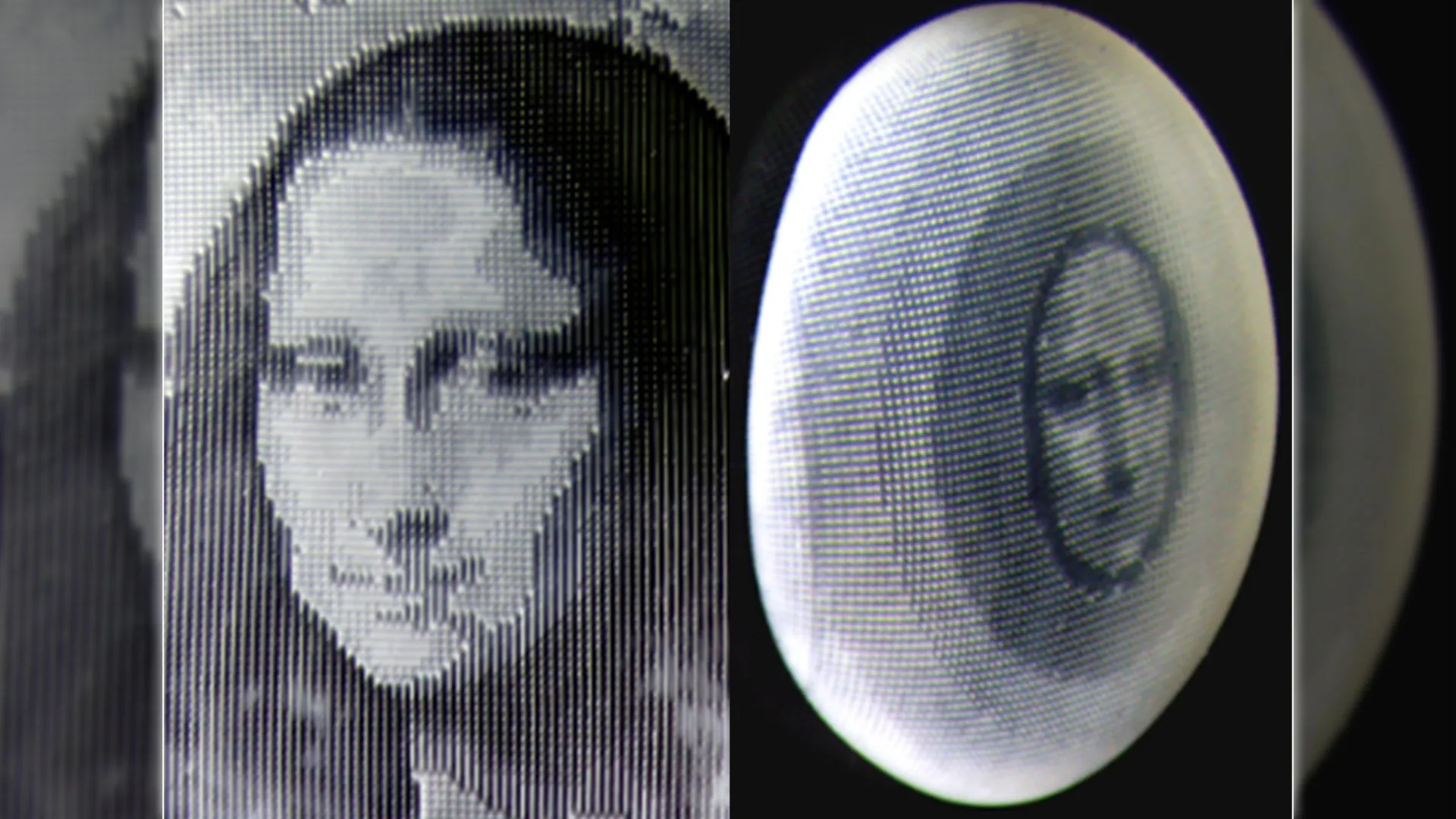
To demonstrate the effect, the team encoded an image of the Mona Lisa into the hydrogel film. When the material was washed with ethanol, it appeared transparent and showed no visible image. The hidden image became clear only after the film was placed in ice water or gradually heated.

Yang noted that the Mona Lisa was used only as an example. The printing technique allows virtually any image to be encoded into the hydrogel.

“This behavior could be used for camouflage, where a surface blends into its environment, or for information encryption, where messages are hidden and only revealed under specific conditions,” Yang said.

The researchers also showed that concealed patterns could be detected by gently stretching the material and analyzing how it deforms using digital image correlation analysis. This means information can be revealed not only visually, but also through mechanical interaction, adding an extra level of security.

Shape Shifting Without Multiple Layers

The smart skin also demonstrated remarkable flexibility. According to Sun, the material can easily shift from a flat sheet into complex, bio-inspired shapes with detailed surface textures. Unlike many other shape-changing materials, this transformation does not require multiple layers or different substances.

Instead, the changes in shape and texture are controlled entirely by the digitally printed halftone patterns within a single sheet. This allows the material to replicate effects similar to those seen in cephalopod skin.

Building on this capability, the team showed that multiple functions can be programmed to work together. By carefully designing the halftone patterns, they encoded the Mona Lisa image into flat films that later transformed into three-dimensional forms. As the sheets curved into dome-like shapes, the hidden image slowly appeared, showing that changes in shape and visual appearance can be coordinated within one material.

“Similar to how cephalopods coordinate body shape and skin patterning, the synthetic smart skin can simultaneously control what it looks like and how it deforms, all within a single, soft material,” Sun said.

Expanding the Potential of 4D-Printed Hydrogels

Sun said the new work builds on earlier research by the team on 4D-printed smart hydrogels, which was also published in Nature Communications. That earlier study focused on combining mechanical properties with programmable transitions from flat to three-dimensional forms. In the current research, the team expanded the approach by using halftone-encoded 4D printing to integrate even more functions into a single hydrogel film.

Looking ahead, the researchers aim to create a scalable and versatile platform that allows precise digital encoding of multiple functions within one adaptive material.

“This interdisciplinary research at the intersection of advanced manufacturing, intelligent materials and mechanics opens new opportunities with broad implications for stimulus-responsive systems, biomimetic engineering, advanced encryption technologies, biomedical devices and more,” Sun said.

The study also included Penn State co-authors Haotian Li and Juchen Zhang, both doctoral candidates in IME, and Tengxiao Liu, a lecturer in biomedical engineering. H. Jerry Qi, professor of mechanical engineering at Georgia Institute of Technology, also collaborated on the project.

Share Button

Court upholds return of surgeon who harassed staff

James Gilbert, who was based in Oxford, was previously suspended for sexual harassment.

Share Button

More baby formula products recalled over toxin fears

Danone has recalled 15 more batches of Aptamil and Cow&Gate first infant milk because a toxin called cereulide may be present.

Share Button

Olive oil and bone broth: Do viral gut health foods actually work?

Many trending foods contain a “small seed of truth” but are often oversold as miracle products.

Share Button

A hidden brain effect of prenatal alcohol exposure

A new study published in JNeurosci reports how experiences before birth may shape the brain and behavior later in life. Led by Mary Schneider and Alexander Converse at the University of Wisconsin-Madison, the interdisciplinary research examined how exposure to alcohol and stress during pregnancy affects rhesus monkey offspring once they reach adulthood.

How Alcohol and Stress Were Studied Before Birth

In the study, pregnant rhesus monkeys were placed into different conditions. Some consumed moderate amounts of alcohol, some were exposed to mild stress, and others experienced both. When the offspring became adults, researchers examined changes in the brain’s dopamine system and measured how the animals consumed alcohol.

Both prenatal alcohol exposure and prenatal stress altered the dopamine system in the adult offspring. Monkeys exposed to alcohol before birth also drank alcohol more quickly as adults. Notably, measurements of the dopamine system taken before the animals had any alcohol were able to predict their later drinking behavior. These findings align with evidence from human studies of alcohol use disorder and suggest that certain brain differences may be present even before problematic drinking begins.

Brain Changes That Continue With Drinking

As the adult offspring consumed alcohol, researchers observed additional changes in the dopamine system. These changes influenced how much alcohol each individual drank and differed from one animal to another. The research team suggests that these individualized brain responses to alcohol may help drive the shift from typical drinking patterns to alcohol use disorder in some individuals.

Implications for Pregnancy and Human Health

According to the researchers, the findings reinforce the message that drinking during pregnancy is not advisable, linking prenatal alcohol exposure to unhealthy drinking patterns later in life. While the study did not find a direct association between prenatal stress and adult drinking behavior, the authors note that prenatal stress may still affect other behaviors not examined in this work.

The researchers also emphasize that their experimental design closely reflects how prenatal alcohol exposure and stress occur in humans. This strengthens the clinical relevance of the findings and helps bridge the gap between animal research and human health outcomes

Share Button