NHS bosses say the fall is welcome, but expect freezing temperatures to increase pressure on the health service.


NHS bosses say the fall is welcome, but expect freezing temperatures to increase pressure on the health service.
As temperatures fall across much of the UK, the best ways to keep people and pets warm and dry.
For the first time, children will be offered vaccination on the NHS against the common infection which, in rare cases, can be very serious.
The standard NHS childhood vaccination programme will include chickenpox from 2 January 2026.
Lesson 17 of the free Engage course explores how to embrace your inner paradox – the seemingly conflicting parts of your nature – and integrate them into a more unified sense of self. This expands your range, increases your freedom, and helps you make clearer choices about what to deepen and what to release.
You’ll find the rest of the Engage course videos in the Video section.
Join the Engage notification list to get an email whenever a new Engage lesson is published. I also encourage you to subscribe to my YouTube channel to follow the course there.
Enjoy!
Many clinical trials to test the use of psychedelic medicines for conditions such as depression have been underway since 2022 – with surprising results

In July 2024, a magnitude 7.4 earthquake hit near the city of Calama in northern Chile. The shaking damaged buildings and disrupted electrical power across the region.
Chile is no stranger to major earthquakes. The country experienced the strongest earthquake ever recorded in 1960, when a magnitude 9.5 megathrust event struck central Chile, triggering a massive tsunami and killing between 1,000 and 6,000 people. While devastating earthquakes are often linked to these massive megathrust events, the Calama earthquake stood apart from that familiar pattern.
Why This Earthquake Was Different
Megathrust earthquakes typically occur relatively close to the Earth’s surface, where tectonic plates collide. In contrast, the Calama earthquake originated far deeper underground. It ruptured at a depth of about 125 kilometers beneath the surface, inside the subducting tectonic plate itself.
Earthquakes that occur at these depths usually produce weaker shaking at the surface. However, the Calama event broke that expectation. Researchers at The University of Texas at Austin discovered that a rare sequence of underground processes significantly boosted the earthquake’s strength. Their findings were recently published in Nature Communications.
Beyond explaining why this earthquake was unusually intense, the study may also improve how scientists assess earthquake hazards in the future.
“These Chilean events are causing more shaking than is normally expected from intermediate-depth earthquakes, and can be quite destructive,” said the study’s lead author Zhe Jia, a research assistant professor at the UT Jackson School of Geosciences. “Our goal is to learn more about how these earthquakes occur, so our research could support emergency response and long-term planning.”
How Scientists Thought Deep Earthquakes Worked
Earthquakes at intermediate depths, including the Calama event, were long believed to be triggered mainly by a process known as “dehydration embrittlement.” This occurs as an oceanic tectonic plate sinks deeper into the Earth’s interior. As temperatures and pressures rise, water trapped in minerals is released.
When the rock loses this water, it becomes weaker and more brittle. Cracks can form, allowing the rock to suddenly rupture and generate an earthquake within the slab.
Scientists have generally believed that this dehydration process stops once temperatures exceed about 650 degrees Celsius.
A Rare Heat Driven Process Takes Over
The Calama earthquake challenged that assumption. According to the research team, the rupture continued well beyond the expected temperature limit. It traveled roughly 50 kilometers deeper into much hotter rock due to a second process known as “thermal runway.”
During this process, intense friction from the initial rupture generates extreme heat at the front of the fault. That heat weakens the surrounding material, allowing the rupture to keep moving forward and grow stronger as it spreads.
“It’s the first time we saw an intermediate-depth earthquake break assumptions, rupturing from a cold zone into a really hot one, and traveling at much faster speeds,” said Jia, who is part of the University of Texas Institute for Geophysics (UTIG), a research unit of the Jackson School. “That indicates the mechanism changed from dehydration embrittlement to thermal runaway.”
Tracking the Rupture Deep Underground
To understand how the earthquake unfolded and how far the rupture traveled, the University of Texas team worked with scientists in Chile and across the United States. They combined several lines of evidence to build a detailed picture of the event.
The researchers examined seismic records from Chile to track how fast and how far the rupture spread. They also used data from the Global Navigation Satellite System to measure ground movement and fault slip. Computer models helped estimate the temperatures and rock properties at the depths where the earthquake occurred.
Improving Earthquake Risk Forecasts
“The fact that another large earthquake is overdue in Chile has motivated earthquake research and the deployment of multiple seismometers and geodetic stations to monitor earthquakes and how the crust is deforming in the region,” said Thorsten Becker, a co-author of the study and a professor at the Jackson School’s Department of Earth and Planetary Sciences and a senior research scientist at UTIG.
Becker and Jia emphasized that understanding how earthquakes behave at different depths could improve predictions of future seismic events. Better models could help estimate how strong shaking might be, while also guiding infrastructure design, early warning systems, and rapid emergency response planning.
Research Support and Funding
The research was supported by the National Science Foundation, Agencia Nacional de Investigación y Desarrollo (ANID), Chile, UC Open Seed Fund, Fundamental Research Funds for the Central Universities, and the University of Texas Institute for Geophysics.
Physical activity continues to affect the body even after the movement itself has ended.
A new study published in the Proceedings of the National Academy of Sciences reports that being physically active increases the total amount of energy a person uses each day. The research, led by scientists at Virginia Tech working with colleagues from the University of Aberdeen and Shenzhen University, found that this increase happens without the body cutting back energy use in other areas.
The finding matters because while the health benefits of exercise are well established, scientists know less about how physical activity influences a person’s overall “energy budget,” which refers to how energy is divided among the body’s many functions.
How the Body Manages Energy
For years, researchers have debated whether the body treats energy like a fixed paycheck or a flexible bonus system. One idea suggests that when people move more, the body shifts energy away from other tasks to pay for that activity. The other model proposes that energy use can expand, allowing total daily expenditure to rise as activity increases. The researchers set out to learn which of these ideas best reflects what actually happens across different activity levels.
To answer that question, the team measured total energy expenditure, meaning the total number of calories burned in a day, among people with widely varying levels of physical activity.
“Our study found that more physical activity is associated with higher calorie burn, regardless of body composition, and that this increase is not balanced out by the body reducing energy spent elsewhere,” said Kevin Davy, professor in the Department of Human Nutrition, Foods, and Exercise and the principal investigator of the study.
Measuring Calories Burned in Real Life
Participants drank special forms of oxygen and hydrogen and provided urine samples over a two-week period. Oxygen leaves the body as both water and carbon dioxide, while hydrogen exits only as water. By comparing how much of each isotope was lost, researchers could estimate how much carbon dioxide participants produced and, in turn, how much energy they used. Physical activity was tracked using a small waist-worn sensor that recorded movement in multiple directions.
The study included 75 participants between the ages of 19 and 63. Activity levels ranged from largely inactive lifestyles to ultra-endurance running.
No Evidence the Body Cancels Out Exercise
The results showed that as people moved more, their total energy use increased accordingly. The body did not appear to compensate by dialing down energy use elsewhere. Essential functions such as breathing, blood circulation, and temperature regulation continued to require the same amount of energy, even as physical activity rose.
This means the body does not clearly offset or “cancel out” the extra calories burned through movement.
“Energy balance was a key piece of the study,” said Kristen Howard, senior research associate at Virginia Tech and the article’s lead author. “We looked at folks who were adequately fueled. It could be that apparent compensation under extreme conditions may reflect under-fueling.”
Less Sitting, More Moving
The researchers also observed a strong connection between higher activity levels and reduced time spent sitting. Simply put, people who move more tend to spend less time being inactive overall.
Taken together, the findings suggest that the long-debated idea that increased movement leads to increased calorie burn may be more accurate than some experts have assumed. While the results support the additive energy model, the researchers note that more work is needed. “We need more research to understand in who and under what conditions energy compensation might occur,” said Davy.
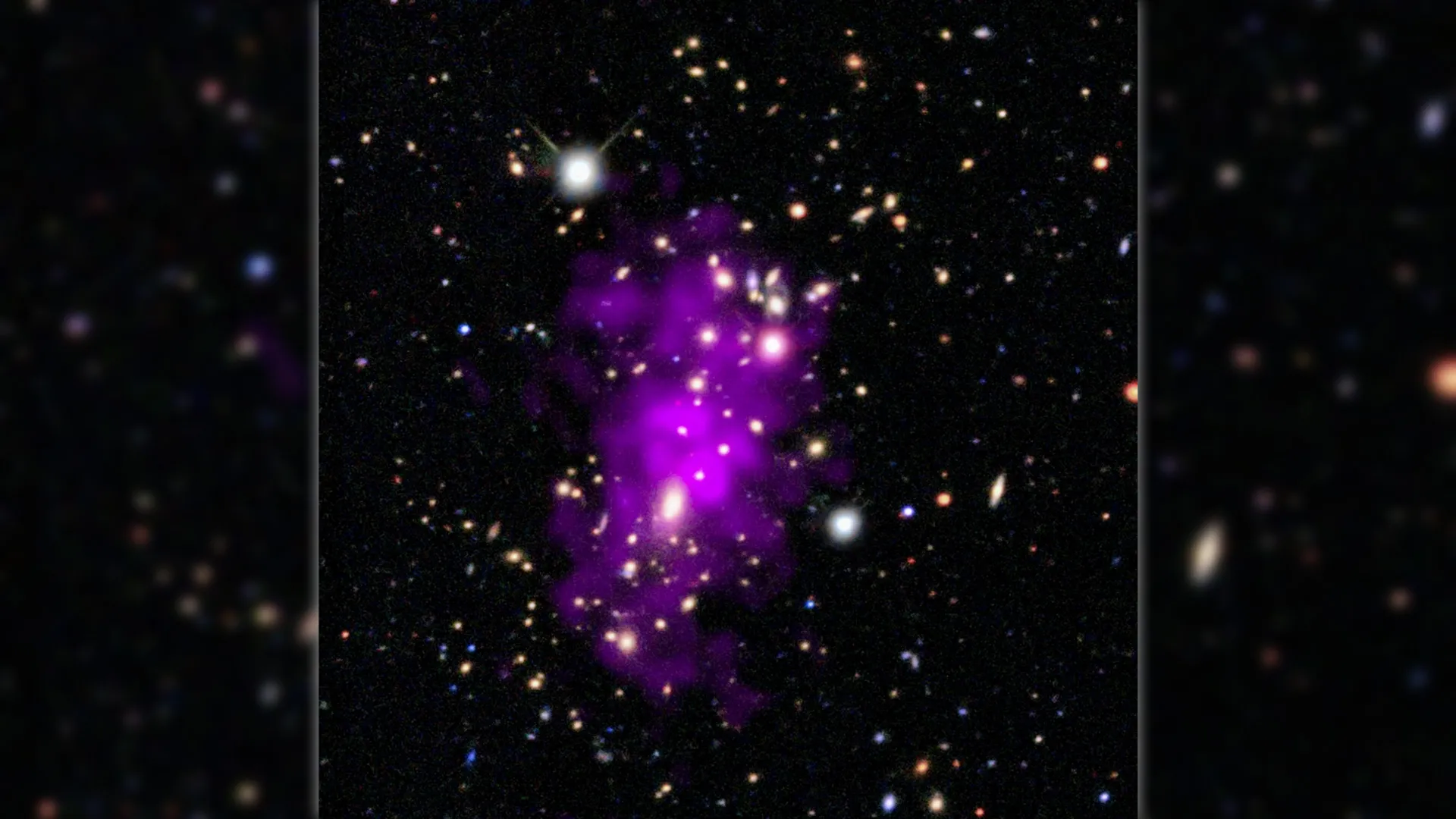
Ring in the New Year with the “Champagne Cluster,” a distant galaxy cluster featured in a new image that combines data from NASA’s Chandra X-ray Observatory and optical telescopes.
Astronomers first identified this galaxy cluster on Dec. 31, 2020. That date, along with the cluster’s bubbly look and the superheated gas detected by Chandra (represented in purple), led researchers to give it the memorable nickname “Champagne Cluster” instead of its formal name, RM J130558.9+263048.4.
Two Galaxy Clusters Colliding and Merging
The composite view reveals that the Champagne Cluster is not a single cluster at all. It is two galaxy clusters merging into a larger structure. In most clusters, gas heated to millions of degrees appears roughly circular or slightly oval in images. Here, the hot gas stretches much more from top to bottom, a clue that two clusters are colliding. You can also see two concentrations of galaxies, one above the center and one below it, marking the two groups involved in the merger. (The image has been rotated clockwise by 90 degrees so that North points to the right.)
Hot Gas and Dark Matter Dominate the Mass
In this forming cluster, the mass of the hot gas exceeds the combined mass of all the hundred-plus galaxies. Beyond that, the clusters hold even larger quantities of dark matter, the invisible material believed to be spread throughout the universe.
Alongside the Chandra X-ray observations, the image includes optical measurements from the Legacy Surveys (red, green, and blue). The Legacy Surveys bring together three complementary surveys using multiple telescopes located in Arizona and Chile.
A Rare Merger Like the Bullet Cluster
The Champagne Cluster belongs to an uncommon category of merging galaxy clusters. This group includes the famous Bullet Cluster, where the hot gas in each cluster has slammed together and slowed down, creating a clear offset between the hot gas and the most massive galaxy in each cluster.
To understand what happened, astronomers compared the observations with computer simulations and proposed two scenarios. In one, the two clusters collided more than two billion years ago, moved apart, and were pulled back together by gravity, with a second collision now underway. In the other, the clusters experienced a single collision about 400 million years ago and are currently moving away from each other. Researchers say additional studies of the Champagne Cluster could help show how dark matter behaves during a high-speed collision.
Research Paper and Chandra Mission Operations
A study presenting these findings recently appeared in The Astrophysical Journal. The paper’s authors are Faik Bouhrik, Rodrigo Stancioli, and David Wittman from the University of California, Davis.
NASA’s Marshall Space Flight Center in Huntsville, Alabama, oversees the Chandra program. The Smithsonian Astrophysical Observatory’s Chandra X-ray Center runs science operations from Cambridge, Massachusetts, and manages flight operations from Burlington, Massachusetts.
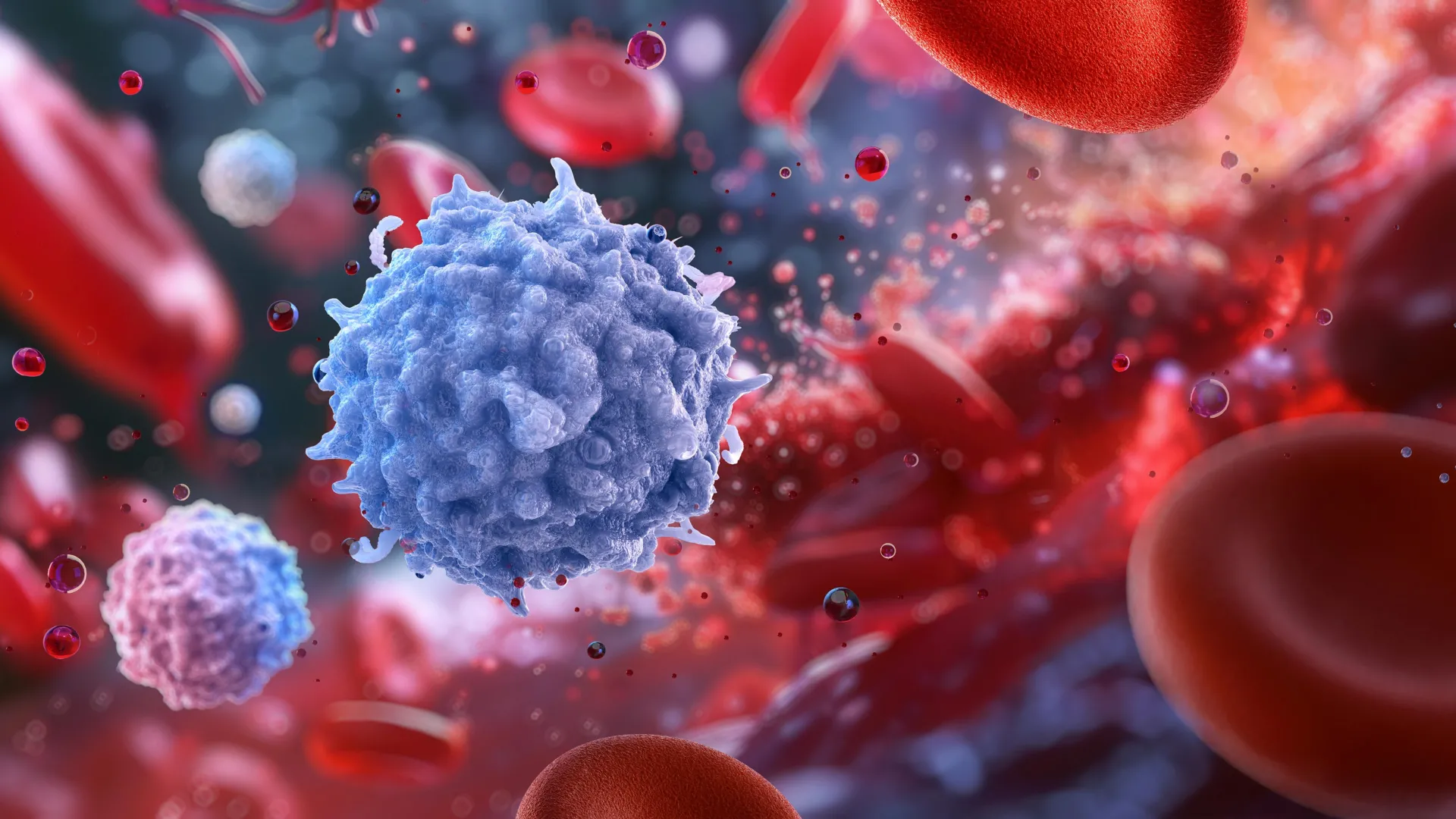
As people grow older, visible changes like gray hair and weaker muscles are only part of the story. Aging also affects the immune system. One major reason is that the stem cells responsible for producing blood and immune cells can accumulate genetic mutations over time, increasing the risk of cancer and other health problems.
Scientists at the University of Illinois Chicago have identified a key biological process behind this shift. Writing in the journal Blood, the researchers report that aging is linked to declining levels of a protein called platelet factor 4. Even more striking, restoring this protein in older blood cells reversed several signs of cellular aging. The findings suggest a potential new target for treating age-related disorders of the blood and immune system.
The Role of Blood Stem Cells in Immune Health
Hematopoietic stem cells, often called blood stem cells, reside in the bone marrow and serve as the foundation of the body’s blood and immune systems. These rare cells generate all major types of blood and immune cells needed for oxygen transport and protection against infection.
“Our hematopoietic stem cells are very rare,” said UIC’s Sandra Pinho, associate professor of pharmacology and regenerative medicine in the College of Medicine. “We call them the Holy Grail of the immune system.”
In younger individuals, these stem cells maintain a healthy balance. They produce myeloid cells, which include red blood cells and some immune cells, as well as lymphoid cells, such as T and B cells that play a central role in fighting infections.
Why Aging Stem Cells Lose Balance
As the body ages, blood stem cells begin to favor the production of myeloid cells while generating fewer lymphoid cells. This shift alters immune function and weakens the body’s ability to respond to disease.
“That’s one of the reasons why, normally, older individuals are not used as donors for bone marrow transplantation, because their stem cells are not as potent,” Pinho said.
This imbalance not only affects immunity but also increases vulnerability to age-related diseases.
Platelet Factor 4 and Stem Cell Control
Through studies in mice and human bone marrow samples, the researchers found that platelet factor 4 plays a central role in regulating blood stem cell behavior. In younger people and animals, the protein acts as a signaling molecule that limits how often stem cells divide. This control is especially important for stem cells that produce myeloid cells.
With age, immune cells produce less platelet factor 4. As a result, stem cells divide more frequently and without proper regulation.
“When stem cells start to divide more often than they should, and if their proliferation is not regulated, they can accumulate mutations over time,” said Pinho.
In humans, these mutations are linked to chronic inflammation, a higher risk of blood cancers, and even cardiovascular disease.
Reversing Signs of Immune Aging in the Lab
The team discovered that restoring platelet factor 4 could counteract these age-related changes. Older mice received daily blood infusions of the protein for more than a month. After treatment, their blood and immune cells showed behavior and characteristics more typical of much younger animals.
Similar effects were observed in laboratory experiments using human stem cells. When platelet factor 4 was added to aged human cells, the researchers saw a clear improvement in stem cell function.
“It rejuvenated the aging of the blood system,” Pinho said.
What This Means for Aging and Disease
While the results are promising, platelet factor 4 alone is not expected to reverse aging throughout the entire body or significantly extend human lifespan.
Though the effect was strong, platelet factor 4 won’t be a silver bullet that reverses the aging of all tissues and prolongs the lifespan of elderly human patients alone, Pinho said. However, it could become part of broader strategies aimed at improving age-related conditions.
“It’s clear evidence that it’s possible to reverse, intrinsically, certain age-associated disorders,” Pinho said.
Sen Zhang, a postdoctoral fellow in the Pinho lab, is the study’s first author. The research was co-led by Constantinos Chronis from the Department of Biochemistry and Molecular Genetics, who also served as a co-corresponding author. Additional contributors from UIC include Charles Ayemoba, Anna Di Staulo, Kenneth Joves, Chandani Patel, Eva Leung, Maura Bueno, Xiaoping Du and Sang-Ging Ong.
