Emma Giannuzzi used sunbeds throughout her late teens and was twice diagnosed with melanoma.


Emma Giannuzzi used sunbeds throughout her late teens and was twice diagnosed with melanoma.

A large comparative study published online in the open access journal BMJ Global Health has found that even low daily alcohol consumption is linked to a much higher risk of mouth cancer in India. Drinking just 9 g of alcohol per day, about the amount in one standard drink, was associated with a 50% increase in risk. The strongest link was seen among people who consumed locally brewed alcoholic beverages.
When alcohol use occurred alongside chewing tobacco, the combined effect was especially severe. Researchers estimate that this pairing may be responsible for 62% of all mouth (buccal mucosa) cancer cases in the country.
Mouth Cancer Rates Continue to Climb in India
Mouth cancer ranks as the second most common cancer in India, with an estimated 143,759 new diagnoses and 79,979 deaths each year. According to the researchers, incidence rates have steadily increased and now sit just below 15 cases per 100,000 Indian men.
The most common form affects the soft pink tissue lining the cheeks and lips (buccal mucosa). Survival outcomes remain poor, with only 43% of patients living five years or longer after diagnosis.
Untangling the Roles of Alcohol and Tobacco
Alcohol use and tobacco consumption frequently occur together, making it difficult to separate their individual effects on mouth cancer risk. This is particularly true in India, where smokeless tobacco use is widespread, the researchers note. They also point out that the health effects of locally brewed alcohol, which is especially common in rural areas, have received little attention until now.
To better understand these risks, the researchers compared 1,803 people diagnosed with buccal mucosa cancer with 1,903 randomly selected individuals without the disease (controls). Participants were recruited from five study centers between 2010 and 2021. Most were between 35 and 54 years old, and nearly 46% of cancer cases occurred among people aged 25 to 45.
Tracking Drinking Habits and Tobacco Use
Participants provided detailed information about how long they had been drinking alcohol, how often they drank, and the types of alcohol they consumed. This included 11 internationally recognized drinks such as beer, whisky, vodka, rum and breezers (flavored alcoholic drinks), along with 30 locally brewed options including apong, bangla, chulli, desi daru, and mahua.
They were also asked about their tobacco use, including duration and type, allowing researchers to examine how alcohol and tobacco interact to influence mouth cancer risk.
Among those with cancer, 781 reported drinking alcohol, while 1,019 said they did not. In the control group, 481 drank alcohol and 1,420 did not.
Higher Exposure Linked to Greater Risk
People with buccal mucosa cancer reported longer tobacco use on average, about 21 years compared with roughly 18 years among the control group. They were also more likely to live in rural areas and to consume larger amounts of alcohol each day, nearly 37 g compared with about 29 g.
Frequent alcohol consumption was strongly associated with increased cancer risk, with locally brewed drinks showing the greatest effect.
Compared with people who did not drink alcohol, those who did had a 68% higher risk of developing buccal mucosa cancer. The risk rose to 72% among individuals who favored internationally recognized drinks and climbed to 87% among those who consumed locally brewed alcohol.
No Safe Threshold Identified
Even very small amounts of alcohol appeared to matter. Drinking less than 2 g of beer per day was still linked to an increased risk of buccal mucosa cancer. Consuming 9 g of alcohol daily, roughly one standard drink, was associated with an approximately 50% higher risk.
Using alcohol and tobacco at the same time produced a dramatic effect. The combined exposure was linked to more than a fourfold increase in risk. Based on their calculations, the researchers estimate that 62% of buccal mucosa cancer cases in India are attributable to the interaction between alcohol and chewing tobacco.
How Alcohol May Increase Vulnerability
Alcohol increased mouth cancer risk regardless of how long a person had used tobacco. The researchers suggest that ethanol may change the fat content of the mouth’s inner lining, making it more permeable and more susceptible to carcinogens found in chewing tobacco products.
Overall, the analysis indicates that more than one in ten buccal mucosa cancer cases in India, nearly 11.5%, can be attributed to alcohol consumption. In states with particularly high disease rates, including Meghalaya, Assam, and Madhya Pradesh, that proportion rises to about 14%.
Concerns About Unregulated Local Alcohol
The higher risk associated with locally brewed alcohol may be partly due to contamination with toxic substances such as methanol and acetaldehyde. The researchers note that production of these drinks is largely unregulated.
“The current legal framework for alcohol control in India is complex and involves both central and state laws. Central legislation provides protection of citizens where alcohol is included in the State List under the Seventh Schedule of the Indian Constitution, giving states the power to regulate and control alcohol production, distribution and sale. However, the locally-brewed liquor market is unregulated, with some forms used by participants containing up to 90% alcohol content,” they point out.
Implications for Prevention
They conclude: “In summary, our study demonstrates that there is no safe limit of alcohol consumption for [buccal mucosa cancer] risk…Our findings suggest that public health action towards prevention of alcohol and tobacco use could largely eliminate [buccal mucosa cancer] from India.”
Five-year-old Edward can walk independently, his mum says, and she hopes he will lead a happy life.

On Earth, finding the exact time is effortless. Our planet relies on a sophisticated global system that combines atomic clocks, GPS satellites, and ultra-fast communication networks to keep everything in sync.
That precision does not extend naturally beyond Earth. Albert Einstein showed that time does not move at the same pace everywhere in the universe. The rate at which a clock ticks depends on gravity, meaning clocks run slightly slower in stronger gravity and faster in weaker gravity. Even coordinating time across Earth is complex. Extending that coordination across the solar system is far more challenging. For future explorers hoping to live and work on Mars, one fundamental question must be answered first: What time is it on Mars?
Scientists Calculate Mars Time for the First Time
Physicists at the National Institute of Standards and Technology (NIST) have now produced a precise answer. Their calculations show that, on average, clocks on Mars tick 477 microseconds (millionths of a second) faster per day than clocks on Earth. That difference is not constant. Because of Mars’ stretched orbit and gravitational influences from other bodies, the time difference can vary by as much as 226 microseconds per day throughout the Martian year.
The research was recently published in The Astronomical Journal and builds on a 2024 study in which NIST scientists outlined a framework for highly precise timekeeping on the Moon.
Understanding how time passes on Mars is essential for future missions, said NIST physicist Bijunath Patla. As NASA prepares for more advanced Mars exploration, accurate timing will be critical for navigation, communication, and coordination across planetary distances.
“The time is just right for the Moon and Mars,” Patla said. “This is the closest we have been to realizing the science fiction vision of expanding across the solar system.”
Mars Time Zone
Mars operates on a different schedule than Earth in more ways than one. A single Martian day lasts about 40 minutes longer than an Earth day, and a Martian year stretches across 687 Earth days compared with 365 days on Earth. Beyond those obvious differences, scientists needed to determine whether each second on Mars passes at the same rate as it does on Earth.
An atomic clock placed on the surface of Mars would function normally. The clock itself would tick just as it does on Earth. The problem appears when that Mars clock is compared with one on Earth. Over time, the two clocks drift apart. The task for scientists was to determine exactly how large that offset becomes, similar to defining a planetary time zone.
That calculation proved more complicated than expected. According to Einstein’s theory of relativity, gravity alters the flow of time. Clocks slow down in stronger gravity and speed up where gravity is weaker. A planet’s motion through space also affects how time passes, with orbital speed contributing additional changes.
Gravity, Orbits, and Relativity
To make the calculations possible, NIST researchers selected a specific reference point on the Martian surface, comparable to sea level at Earth’s equator. Using data gathered from years of Mars missions, Patla and fellow NIST physicist Neil Ashby estimated surface gravity on Mars, which is about five times weaker than Earth’s.
Gravity from Mars alone was not enough to explain the full picture. The solar system is a dynamic environment filled with massive objects that constantly pull on one another. The Sun contains more than 99% of the solar system’s total mass, and its gravitational influence dominates planetary motion.
Mars’ location in the solar system — its distance from the Sun, its neighbors like Earth, the Moon, Jupiter and Saturn — forces it into a more elongated and eccentric orbit. By contrast, Earth and the Moon follow relatively stable paths. As a result, time on the Moon consistently runs 56 microseconds faster per day than time on Earth.
“But for Mars, that’s not the case. Its distance from the Sun and its eccentric orbit make the variations in time larger. A three-body problem is extremely complicated. Now we’re dealing with four: the Sun, Earth, the Moon and Mars,” Patla explained. “The heavy lifting was more challenging than I initially thought.”
After accounting for Martian surface gravity, orbital motion, and the gravitational effects of the Sun, Earth, and Moon, Patla and Ashby arrived at their final calculation.
Paving the Way for Solar System Internet
A difference of 477 millionths of a second may seem insignificant. It is roughly one thousandth of the time it takes to blink. Yet such tiny differences matter greatly in modern technology. For example, 5G communication systems require timing accuracy within a tenth of a microsecond.
Today, messages sent between Earth and Mars take anywhere from four to 24 minutes to arrive, and sometimes even longer. Patla compared the situation to communication before the telegraph, when handwritten letters crossed oceans by ship and replies took weeks or months to return.
Developing a reliable framework for timekeeping between planets could eventually allow for synchronized communication networks across the solar system.
“The time is just right for the Moon and Mars. This is the closest we have been to realizing the science fiction vision of expanding across the solar system.” Bijunath Patla, NIST physicist
“If you get synchronization, it will be almost like real-time communication without any loss of information. You don’t have to wait to see what happens,” Patla said.
Preparing for Future Mars Exploration
Fully synchronized interplanetary networks remain far in the future, as do permanent human settlements on Mars. Still, studying these timing challenges now helps scientists anticipate the obstacles ahead, Ashby noted.
“It may be decades before the surface of Mars is covered by the tracks of wandering rovers, but it is useful now to study the issues involved in establishing navigation systems on other planets and moons,” Ashby said. “Like current global navigation systems like GPS, these systems will depend on accurate clocks, and the effects on clock rates can be analyzed with the help of Einstein’s general theory of relativity.”
Patla added that the research also advances fundamental science. Measuring how time behaves on distant worlds provides new tests of Einstein’s theories of special and general relativity.
“It’s good to know for the first time what is happening on Mars timewise. Nobody knew that before. It improves our knowledge of the theory itself, the theory of how clocks tick and relativity,” he said. “The passage of time is fundamental to the theory of relativity: how you realize it, how you calculate it, and what influences it. These may seem like simple concepts, but they can be quite complicated to calculate.”
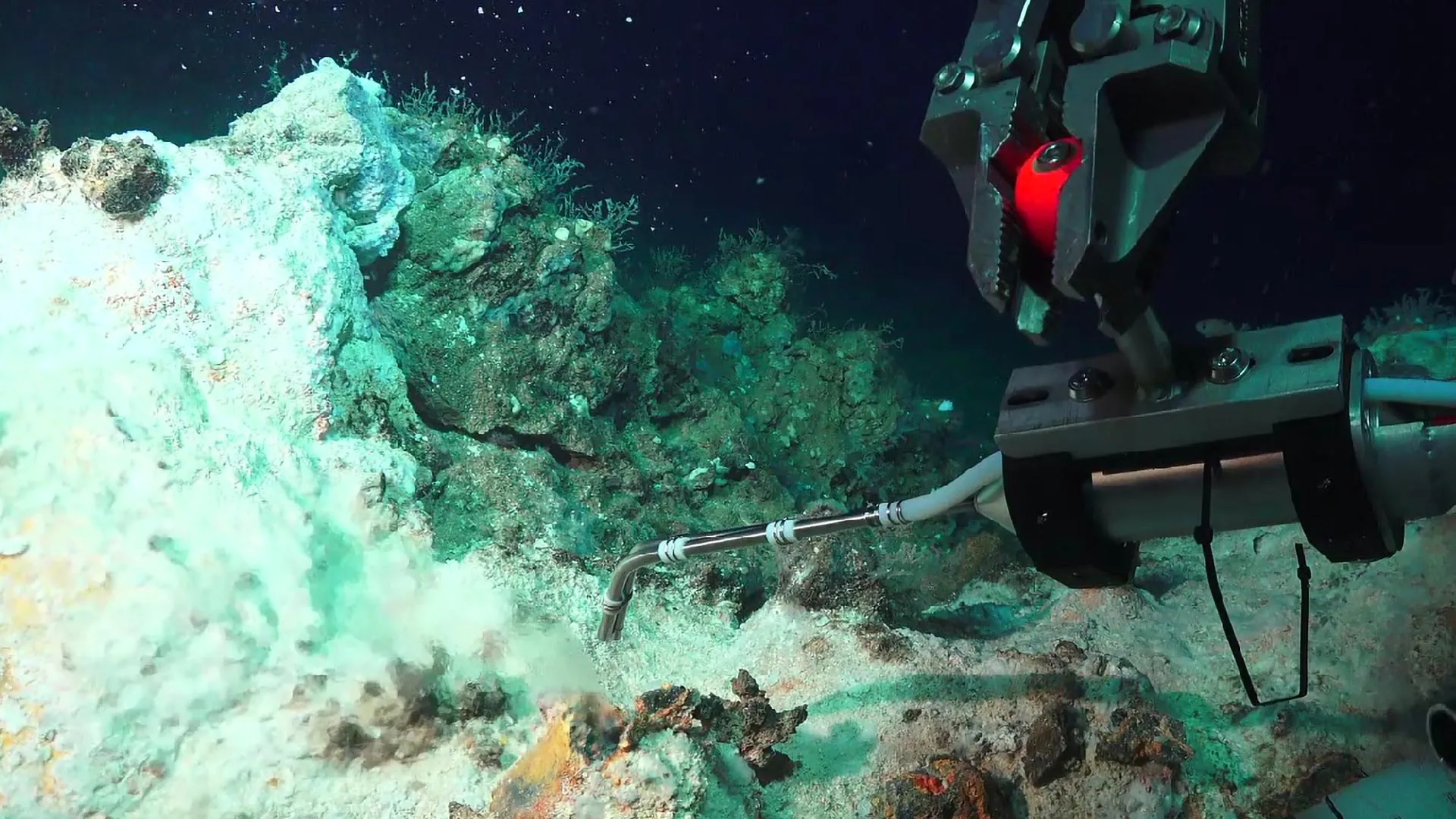
A new study published in Scientific Reports describes the discovery of an unusually large hydrothermal vent field on the shallow seafloor surrounding the Greek island of Milos. The vents were found during the METEOR expedition M192, when scientists carried out detailed surveys using multiple techniques. These included underwater mapping tools as well as autonomous and remotely operated vehicles, which allowed the team to closely examine the seafloor.
The surveys revealed previously unknown hydrothermal activity at depths ranging from 100 to 230 meters. As a result, Milos is now recognized as hosting one of the largest shallow to intermediate depth hydrothermal systems in the Mediterranean, significantly reshaping scientists’ understanding of vent activity in this region.
Fault Zones Shape Where Vents Appear
Researchers identified three main vent regions known as Aghia Kiriaki, Paleochori-Thiorychia, and Vani. All three are positioned along active fault zones that cut across the Milos shelf. These faults are part of a broader geological structure called the Milos Gulf-Fyriplaka graben, a tectonic depression that has caused sections of the seafloor to sink to depths of up to 230 meters. The close match between the locations of the vents and these fault systems highlights the strong influence of tectonic forces on where hydrothermal fluids are able to reach the seafloor.
A Surprising and Visually Striking Discovery
“We never expected to find such a large field of gas flares off Milos,” says Solveig I. Bühring, senior author of the study and scientist at the MARUM — Center for Marine Environmental Sciences, University of Bremen, who led the expedition M192 during which the vents were discovered. “When we first observed the vents through the ROV cameras, we were stunned by their diversity and beauty — from shimmering, boiling fluids to thick microbial mats covering the chimneys.”
Tectonic Controls Revealed in Vent Patterns
First author Paraskevi Nomikou of the National and Kapodistrian University of Athens explains that the arrangement of the vent clusters closely mirrors the island’s underlying fault structure.
“Our data clearly show that the gas flares follow the patterns of the major fault systems around Milos,” Nomikou explains. “Different fault zones influence different vent clusters, especially where several faults meet. These tectonic structures strongly control how and where hydrothermal fluids reach the seafloor.”
Why Milos Matters for Earth Science
Together, the findings show how ongoing fault movement and long term geological activity have guided the formation and evolution of these vent fields. With this discovery, Milos stands out as one of the most important natural sites in the Mediterranean for exploring how tectonics, volcanism, and hydrothermal processes interact beneath the sea.
The results are also significant for the MARUM-based Cluster of Excellence “The Ocean Floor — Earth’s Uncharted Interface.” Building on this work, researchers are planning a follow up expedition to Milos, the Kolumbo submarine volcano near Santorini, and Nisyros. The study reflects close cooperation between Greek and German research institutions, including the National and Kapodistrian University of Athens, MARUM — University of Bremen, Friedrich-Alexander-Universität Erlangen-Nürnberg, ICBM — Institute for Chemistry and Biology of the Marine Environment Oldenburg, and Constructor University Bremen.
Participating institutions:
The Food Chain’s Ruth Alexander on what helps – and what doesn’t – if you’ve overindulged.

Earth’s climate is shifting worldwide, but the fastest changes are happening near the poles. New research from Penn State offers a detailed look at how chemical reactions in the Arctic atmosphere are unfolding, revealing that several distinct processes are interacting at the same time and reshaping the region’s climate.
Scientists used two specially equipped research aircraft along with ground-based instruments during a two-month field campaign. Their goal was to compare atmospheric chemistry in two Arctic regions, as well as near the largest oil field in North America, with nearby surrounding areas. From this effort, the researchers identified three major findings. Openings in sea ice — known as leads — strongly affect atmospheric chemistry and cloud development. Pollution from oil field operations measurably changes the makeup of the regional atmosphere. Together, these factors form a feedback loop that speeds up sea ice loss and intensifies Arctic warming.
The CHACHA Project and Its Broader Goals
The findings were recently published in the Bulletin of the American Meteorological Society and are part of a broader collaboration known as CHemistry in the Arctic: Clouds, Halogens, and Aerosols, or CHACHA. This multi-institutional project, led by five research organizations, focuses on how chemical changes occur when air near the surface rises into the lower atmosphere. These changes drive interactions between water droplets, low clouds, and pollution.
“This field campaign is an unprecedented opportunity to explore chemical changes in the boundary layer — the atmospheric layer closest to the planet’s surface — and to understand how human influence is altering the climate in this important region,” said Jose D. Fuentes, professor of meteorology in the Department of Meteorology and Atmospheric Science and corresponding author of the paper. “The resulting datasets are producing an improved understanding of the interactions between sea-spray aerosols, surface-coupled clouds, oil field emissions and multiphase halogen chemistry in the new Arctic.”
To examine chemical activity in the Arctic boundary layer, the research team collected air samples over snow-covered and newly frozen sea ice in the Beaufort and Chukchi Seas. Measurements were also taken over open leads and across the snow-covered tundra of Alaska’s North Slope, including areas near the Prudhoe Bay oil and gas fields. The campaign operated out of Utqiaġvik, Alaska, from February 21 to April 16, 2022. This period followed the polar sunrise — a stretch of continuous daylight after months of darkness — when increased ultraviolet light intensifies chemical reactions at the surface and in the lower atmosphere.
How Sea Ice Cracks Accelerate Warming
The researchers discovered that leads, which can range from just a few feet wide to several miles across, generate strong upward air currents and cloud formation. These plumes lift potentially harmful chemicals, aerosol pollutants, and water vapor hundreds of feet into the air — all factors that can enhance warming. According to Fuentes, this process increases heat and moisture transfer, accelerates sea ice loss, and promotes the formation of even more leads, reinforcing the cycle.
Another feedback loop was identified along Arctic coastlines, where chemicals in salty snowpacks interact with emissions from oil field operations. During the CHACHA campaign, scientists observed bromine production in these saline snowpacks — a process unique to polar environments. Bromine rapidly removes ozone from the boundary layer, allowing more sunlight to reach the surface. This additional sunlight warms the snow, releasing even more bromine and strengthening the feedback loop.
Pollution and Smog in a Remote Region
The field campaign also revealed major changes in the boundary layer above the Prudhoe Bay oil fields. Gas plumes from extraction activities reacted in the lower atmosphere, increasing acidity and producing harmful compounds and smog, Fuentes said. Researchers also found that halogens interact with oil field emissions to form free radicals, which later become more stable compounds capable of traveling long distances. These substances can contribute to environmental changes well beyond the oil fields themselves.
Fuentes noted that CHACHA scientists are now studying how these chemical reactions affect the broader Arctic environment. One area of concern is the formation of smog plumes that, despite occurring in a region often viewed as pristine, can reach pollution levels similar to major cities such as Los Angeles. During the campaign, nitrogen dioxide concentrations reached about 60-70 parts per billion, levels commonly associated with urban smog.
Improving Climate Models
The next phase of the research will focus on producing detailed datasets that climate modelers can use to better understand how these localized Arctic processes may influence global climate patterns in the future.
The CHACHA team also included researchers from Stony Brook University, the University at Albany, University of Michigan, and the University of Alaska Fairbanks. Funding for the project was provided by the U.S. National Science Foundation.
A rising number of patients in hospitals could affect the level of treatment carried out this winter, a group of regional NHS leaders have been told.
Research shows women are 27% less likely than men to receive CPR from bystanders.
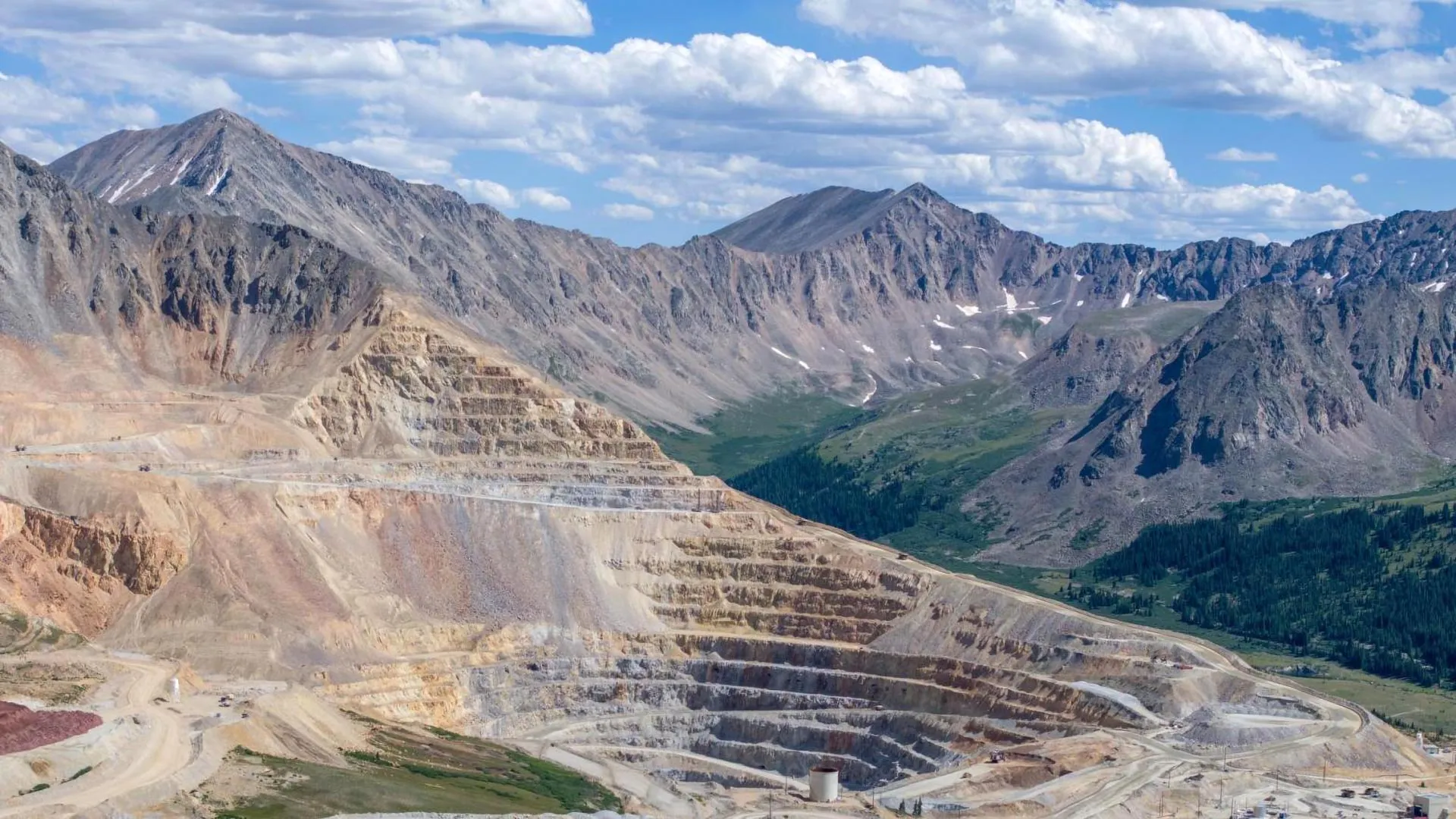
The United States may already be producing most of the critical minerals it needs, but much of that material is currently going unused. A new statistical study led by Elizabeth Holley and her research team shows that valuable minerals could be recovered as byproducts from active U.S. metal mines, sharply reducing the nation’s reliance on foreign imports.
Critical mineral byproducts are elements that occur naturally alongside metals like copper, gold, zinc, or nickel. These secondary minerals are not the main target of mining operations, so they are often separated out and discarded during processing. According to the researchers, recovering even small amounts of these overlooked materials could have a major impact on U.S. supply chains.
The researchers found that if 90 percent of these byproducts were recovered, they “could meet nearly all U.S. critical mineral needs; one percent recovery would substantially reduce import reliance for most elements evaluated.” This means that even modest improvements in recovery technology could significantly reduce dependence on overseas sources.
What Are Critical Minerals and Why They Matter
Critical minerals are materials that are essential to the economy and national security but face supply risks due to limited domestic production or geopolitical instability. In the United States, this category includes minerals such as cobalt, nickel, manganese, lithium, tellurium, germanium, and many others.
These elements play key roles in modern technology. They are used in rechargeable batteries for electric vehicles, magnets for wind turbines, semiconductors for electronics, and solar panels for renewable energy. Some are also vital for defense systems, medical devices, and communications equipment.
Demand for these materials is growing rapidly as clean energy technologies expand. At the same time, many critical minerals are currently imported from regions affected by political tension or trade uncertainty. Developing entirely new mines can take decades, making alternative domestic sources especially attractive.
How Researchers Measured Untapped Mineral Potential
To estimate how much of these minerals could be recovered inside the United States, Holley and her colleagues combined two large datasets. One database tracked the main commodities produced at federally permitted U.S. metal mines. The other included detailed geochemical measurements showing the concentrations of 70 critical minerals found in ore samples across the country.
By pairing production data with mineral chemistry data, the team was able to estimate how much of each critical mineral is already being mined and processed, but not recovered. Instead, these materials end up in mine waste, also known as tailings, which must be stored and monitored to prevent environmental harm.
In many cases, the study found that recovering less than 10 percent of these byproducts would generate a higher total dollar value than the primary metals currently being sold by U.S. mines. This suggests that what is treated as waste today could become a major economic resource.
Economic, Strategic, and Environmental Benefits
The potential benefits of recovering critical mineral byproducts extend beyond economics. Reducing import dependence would strengthen supply security for industries tied to energy, technology, and defense. It could also help protect the U.S. from supply disruptions caused by international conflicts or trade restrictions.
There are environmental advantages as well. Recovering valuable minerals instead of discarding them would reduce the volume and long term impact of mine waste. It could also create new opportunities to reuse processed materials in construction and other applications.
Despite the promise, challenges remain. Recovering small amounts of minerals from complex ore mixtures requires advanced technology, additional processing steps, and supportive policies. As Holley has explained, the difficulty lies in making recovery practical and cost effective at scale.
Still, the findings point to a largely untapped opportunity. Active U.S. mines are already handling the materials needed for batteries, clean energy systems, and high tech manufacturing. With targeted investment, research, and policy incentives, these hidden byproducts could become a powerful domestic resource rather than a discarded one.
