AI learns to decode the diseases written in your DNA

Scientists at the Icahn School of Medicine at Mount Sinai have created a new artificial intelligence system that can do more than flag harmful genetic mutations. The tool can also forecast the types of diseases those mutations are most likely to cause.

The approach, known as V2P (Variant to Phenotype), is intended to speed up genetic testing and support the development of new therapies for rare and complex illnesses. The research was published in the December 15 online issue of Nature Communications.

Predicting disease from genetic variation

Most existing genetic analysis tools are able to estimate whether a mutation is potentially damaging, but they typically stop there. They do not explain what kind of disease may result. V2P is designed to overcome this limitation by using advanced machine learning to connect genetic variants with their expected phenotypic outcomes — meaning the diseases or traits a mutation may produce. In this way, the system helps predict how a person’s DNA could affect their health.

“Our approach allows us to pinpoint the genetic changes that are most relevant to a patient’s condition, rather than sifting through thousands of possible variants,” says first author David Stein, PhD, who recently completed his doctoral training in the labs of Yuval Itan, PhD, and Avner Schlessinger, PhD. “By determining not only whether a variant is pathogenic but also the type of disease it is likely to cause, we can improve both the speed and accuracy of genetic interpretation and diagnostics.”

Training the AI to find the right mutation

To build the model, the researchers trained V2P on a large dataset containing both harmful and harmless genetic variants, along with detailed disease information. This training allowed the system to learn patterns linking specific variants to health outcomes. When tested using real, de-identified patient data, V2P frequently ranked the true disease-causing mutation within the top 10 candidates, demonstrating its potential to simplify and accelerate genetic diagnosis.

“Beyond diagnostics, V2P could help researchers and drug developers identify the genes and pathways most closely linked to specific diseases,” says Dr. Schlessinger, co-senior and co-corresponding author, Professor of Pharmacological Sciences, and Director of the AI Small Molecule Drug Discovery Center at the Icahn School of Medicine at Mount Sinai. “This can guide the development of therapies that are genetically tailored to the mechanisms of disease, particularly in rare and complex conditions.”

Expanding precision medicine and drug discovery

At present, V2P sorts mutations into broad disease categories, such as nervous system disorders or cancers. The research team plans to enhance the system so it can make more detailed predictions and combine its results with additional data sources to further assist drug discovery.

The researchers say this advance marks meaningful progress toward precision medicine, where treatments are selected based on an individual’s genetic profile. By linking genetic variants to their likely disease effects, V2P could help clinicians reach diagnoses faster and help scientists uncover new targets for therapy.

“V2P gives us a clearer window into how genetic changes translate into disease, which has important implications for both research and patient care,” says Dr. Itan, co-senior and co-corresponding author, Associate Professor of Artificial Intelligence and Human Health, and Genetics and Genomic Sciences, a core member of The Charles Bronfman Institute for Personalized Medicine, and a member of The Mindich Child Health and Development Institute at the Icahn School of Medicine at Mount Sinai. “By connecting specific variants to the types of diseases they are most likely to cause, we can better prioritize which genes and pathways warrant deeper investigation. This helps us move more efficiently from understanding the biology to identifying potential therapeutic approaches and, ultimately, tailoring interventions to an individual’s specific genomic profile.”

The paper is titled “Expanding the utility of variant effect predictions with phenotype-specific models.”

The study’s authors, as listed in the journal, are David Stein, Meltem Ece Kars, Baptiste Milisavljevic, Matthew Mort, Peter D. Stenson, Jean-Laurent Casanova, David N. Cooper, Bertrand Boisson, Peng Zhang, Avner Schlessinger, and Yuval Itan.

This research was supported by National Institutes of Health (NIH) grants R24AI167802 and P01AI186771, funding from the Fondation Leducq, and the Leona M. and Harry B. Helmsley Charitable Trust grant 2209-05535. Additional support came from NIH grants R01CA277794, R01HD107528, and R01NS145483. The work also received partial support through Clinical and Translational Science Awards (CTSA) grant UL1TR004419 from the National Center for Advancing Translational Sciences, as well as support from the Office of Research Infrastructure of the NIH under award numbers S10OD026880 and S10OD030463.


Share Button

Man died from sepsis after 34-hour medication delay

The man could have survived had he been given the correct antibiotics, a report finds.

Share Button

Children with cancer scammed out of millions fundraised for their treatment, BBC finds

Huge amounts appear to have been raised for seriously ill children who never received the money.

Share Button

Doctors vote to go ahead with this week’s five-day strike in England

It comes after ministers made fresh offer amid warning the walkout is risky as NHS battles wave of flu.

Share Button

‘We don’t blame dad for killing mum, he was ill’

Chris Stone-Houghton had been experiencing paranoia when he killed his wife Ruth, an inquest heard.

Share Button

Furlough not perfect but prevented mass unemployment, Sunak says

The former PM, who was chancellor during the crisis, says there was no “playbook” of how to respond to the pandemic.

Share Button

Why consciousness exists at all

Our everyday lives are shaped by conscious experience. At times, this experience is pleasant, such as feeling sunlight on your skin, hearing birds sing, or simply enjoying a peaceful moment. At other times, it is painful, whether from a physical injury like hurting your knee on the stairs or from ongoing emotional struggles such as chronic pessimism. This raises a fundamental question: why did living beings evolve a form of perception that includes pleasure, pain, and even intense suffering?

Albert Newen and Carlos Montemayor describe consciousness as having three distinct forms, each serving a different role: 1. basic arousal, 2. general alertness, and 3. a reflexive (self-)consciousness. According to Newen, basic arousal was the first to emerge in evolutionary history. “Evolutionarily, basic arousal developed first, with the base function of putting the body in a state of ALARM in life-threatening situations so that the organism can stay alive,” he explains. Pain plays a crucial role here. “Pain is an extremely efficient means for perceiving damage to the body and to indicate the associated threat to its continued life. This often triggers a survival response, such as fleeing or freezing.”

How Attention and Learning Evolved

A later evolutionary development is general alertness. This form of consciousness allows an individual to focus on one important signal while filtering out others. For example, if someone is talking to you and you suddenly notice smoke, your attention shifts immediately to the smoke as you look for its source. As Carlos Montemayor explains, “This makes it possible to learn about new correlations: first the simple, causal correlation that smoke comes from fire and shows where a fire is located. But targeted alertness also lets us identify complex, scientific correlations.”

Self Awareness and Social Life

Humans and some other animals go a step further by developing reflexive (self-)consciousness. In its more advanced form, this ability allows individuals to think about themselves, remember the past, and anticipate the future. It also makes it possible to build a mental image of oneself and use that image to guide decisions and plans. Newen notes, “Reflexive consciousness, in its simple forms, developed parallel to the two basic forms of consciousness. In such cases conscious experience focuses not on perceiving the environment, but rather on the conscious registration of aspects of oneself.” These aspects include bodily states, perceptions, sensations, thoughts, and actions.

A simple example of reflexive consciousness is recognizing oneself in a mirror. Human children usually develop this ability around 18 months of age. It has also been observed in certain animals, including chimpanzees, dolphins, and magpies. At its core, reflexive conscious experience supports social integration and coordination with others, helping individuals function within groups.

What Birds Perceive

Research by Gianmarco Maldarelli and Onur Güntürkün suggests that birds may also possess basic forms of conscious perception. Their work highlights three main areas where birds show strong similarities to mammals: sensory consciousness, underlying brain structures, and forms of self-consciousness.

Evidence of Sensory Experience in Birds

Studies of sensory consciousness show that birds do more than automatically react to stimuli. They appear to have subjective experiences. When pigeons are shown visually ambiguous images, they alternate between different interpretations, much like humans do. Research on crows provides further evidence. Certain nerve signals in their brains reflect what the animal perceives rather than the physical stimulus itself. When a crow sometimes consciously detects a stimulus and sometimes does not, specific nerve cells respond in line with that internal experience.

Bird Brains and Conscious Processing

Bird brains also contain structures that support conscious processing, even though their anatomy differs from that of mammals. Güntürkün explains, “The avian equivalent to the prefrontal cortex, the NCL, is immensely connected and allows the brain to integrate and flexibly process information.” He adds, “The connectome of the avian forebrain, which presents the entirety of the flows of information between the regions of the brain, shares many similarities with mammals. Birds thus meet many criteria of established theories of consciousness, such as the Global Neuronal Workspace theory.”

Signs of Self Perception in Birds

More recent experiments indicate that birds may also show forms of self-perception. While some corvid species pass the classic mirror test, other studies use alternative approaches that better reflect birds’ natural behaviors. These experiments reveal additional forms of self-consciousness in different species. Güntürkün notes, “Experiments indicate that pigeons and chickens differentiate between their reflection in a mirror and a real fellow member of their species, and react to these according to context. This is a sign of situational, basic self-consciousness.”

Taken together, these findings suggest that consciousness did not emerge recently or exclusively in humans. Instead, it appears to be an ancient and widespread feature of evolution. Birds demonstrate that conscious processing can occur without a cerebral cortex and that very different brain structures can arrive at similar functional outcomes.

Share Button

Hidden dimensions could explain where mass comes from

The geometry of space itself may play a far more central role in physics than previously thought. Instead of serving only as the backdrop where forces act, spacetime may be responsible for the forces and particles that make up the universe.

New theoretical work suggests that the fundamental behavior of nature could arise directly from the structure of spacetime, pointing to geometry as the common origin of physical interactions.

Hidden Dimensions and Seven-Dimensional Geometry

In a paper published in Nuclear Physics B, physicist Richard Pincak and collaborators examine whether the properties of matter and forces can emerge from the geometry of unseen dimensions beyond everyday space.

Their research proposes that the universe includes additional dimensions that are not directly observable. These dimensions may be compact and folded into complex seven-dimensional shapes called G2-manifolds. Until now, such geometric structures were typically treated as fixed and unchanging. The new study instead explores what happens when these shapes are allowed to evolve over time through a mathematical process known as the G2-Ricci flow, which gradually alters their internal geometry.

Twisting Geometry and Stable Structures

“As in organic systems, such as the twisting of DNA or the handedness of amino acids, these extra-dimensional structures can possess torsion, a kind of intrinsic twist,” explains Pincak. This torsion introduces a built-in rotation within the geometry itself.

When the researchers modeled how these twisted shapes change over time, they found that the geometry can naturally settle into stable patterns called solitons. “When we let them evolve in time, we find that they can settle into stable configurations called solitons. These solitons could provide a purely geometric explanation of phenomena such as spontaneous symmetry breaking.”

Rethinking the Origin of Mass

In the Standard Model of particle physics, mass arises through interactions with the Higgs field, which gives weight to particles such as the W and Z bosons. The new theory suggests a different possibility. Instead of relying on a separate field, mass may result from torsion within extra-dimensional geometry itself.

“In our picture,” Pincak says, “matter emerges from the resistance of geometry itself, not from an external field.” In this view, mass reflects how spacetime responds to its own internal structure rather than the influence of an added physical ingredient.

Cosmic Expansion and a Possible New Particle

The researchers also connect geometric torsion to the curvature of spacetime on large scales. This relationship could help explain the positive cosmological constant associated with the accelerating expansion of the universe.

Beyond these cosmological implications, the team speculates about the existence of a previously unknown particle linked to torsion, which they call the “Torstone.” If real, it could potentially be detected in future experiments.

Extending Einstein’s Geometric Vision

The broader ambition of the work is to push Einstein’s idea further. If gravity arises from geometry, the authors ask whether all fundamental forces might share the same origin. As Pincak puts it, “Nature often prefers simple solutions. Perhaps the masses of the W and Z bosons come not from the famous Higgs field, but directly from the geometry of seven-dimensional space.”

The article published in the journal Nuclear Physics B.

The research was supported by R3 project No.09I03-03-V04-00356.

Share Button

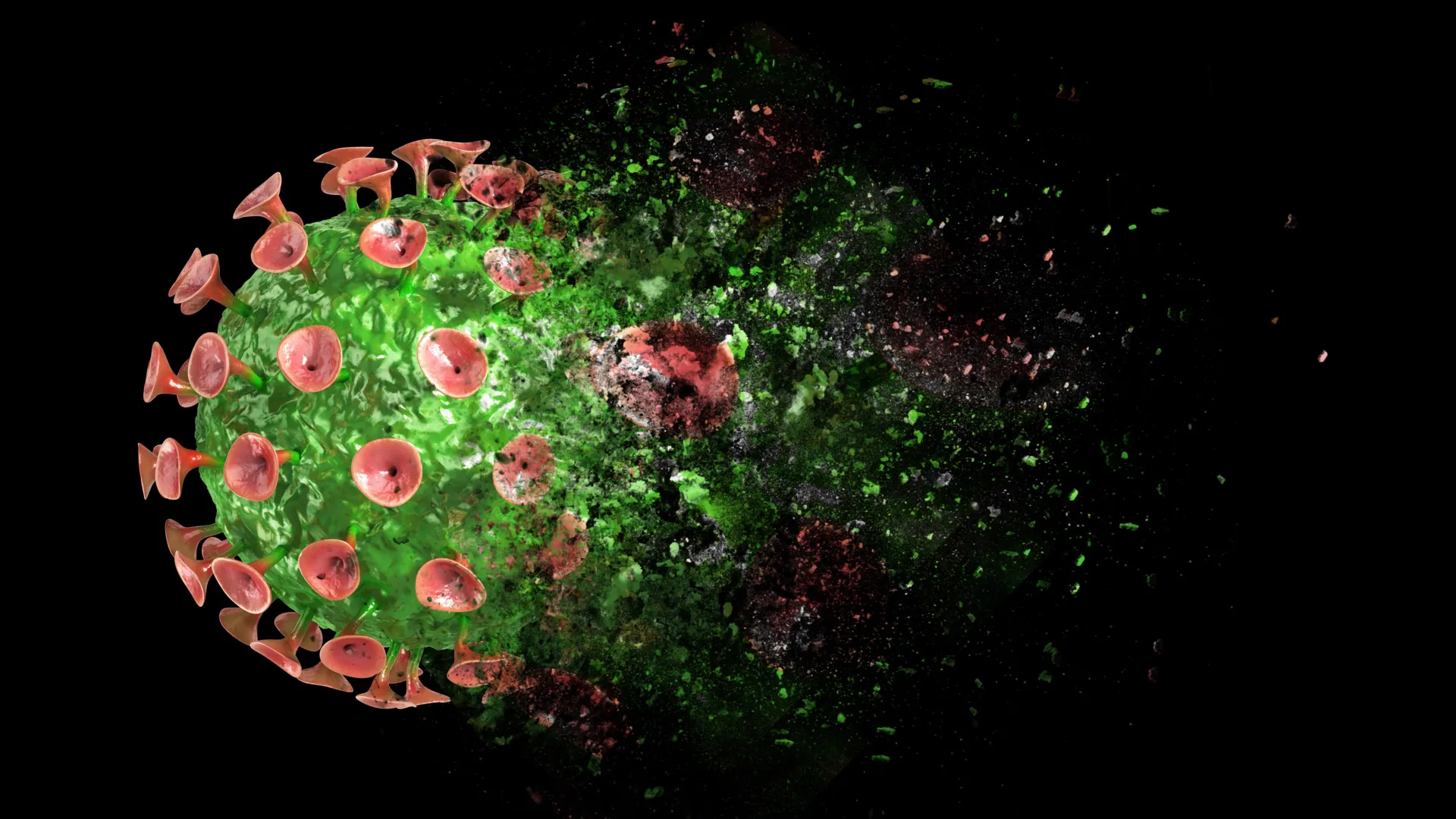
AI found a way to stop a virus before it enters cells

Washington State University scientists have identified a way to interfere with a key viral protein, stopping viruses from entering cells where they can trigger disease. The finding points to a potential new direction for antiviral therapies in the future.

The study, published in the journal Nanoscale, focused on uncovering and blocking a specific molecular interaction that herpes viruses rely on to gain access to cells. The work brought together researchers from the School of Mechanical and Materials Engineering and the Department of Veterinary Microbiology and Pathology.

“Viruses are very smart,” said Jin Liu, corresponding author of the study and a professor in the School of Mechanical and Materials Engineering. “The whole process of invading cells is very complex, and there are a lot of interactions. Not all of the interactions are equally important — most of them may just be background noise, but there are some critical interactions.”

Understanding the Viral Fusion Process

The team examined a viral “fusion” protein that herpes viruses use to merge with and enter cells, a process responsible for many infections. Scientists still have limited insight into how this large and complex protein changes shape to make cell entry possible, which helps explain why vaccines for these widespread viruses have been difficult to develop.

To tackle this challenge, researchers turned to artificial intelligence and detailed molecular simulations. Professors Prashanta Dutta and Jin Liu analyzed thousands of potential interactions within the protein to identify a single amino acid that plays an essential role in viral entry. They created an algorithm to examine interactions among amino acids, the basic components of proteins, and then applied machine learning to sort through them and pinpoint the most influential ones.

Using AI to Pinpoint a Critical Weak Spot

After identifying the key amino acid, the research team moved to laboratory experiments led by Anthony Nicola from the Department of Veterinary Microbiology and Pathology. By introducing a targeted mutation to this amino acid, they found that the virus could no longer successfully fuse with cells. As a result, the herpes virus was blocked from entering the cells altogether.

According to Liu, the use of simulations and machine learning was essential because experimentally testing even a single interaction can take months. Narrowing down the most important interaction ahead of time made the experimental work far more efficient.

“It was just a single interaction from thousands of interactions. If we don’t do the simulation and instead did this work by trial and error, it could have taken years to find,” said Liu. “The combination of theoretical computational work with the experiments is so efficient and can accelerate the discovery of these important biological interactions.”

What Researchers Still Need to Learn

Although the team confirmed the importance of this specific interaction, many questions remain about how the mutation changes the structure of the full fusion protein. The researchers plan to continue using simulations and machine learning to better understand how small molecular changes ripple through the entire protein.

“There is a gap between what the experimentalists see and what we can see in the simulation,” said Liu. “The next step is how this small interaction affects the structural change at larger scales. That is also very challenging for us.”

The research was carried out by Liu, Dutta, and Nicola along with PhD students Ryan Odstrcil, Albina Makio, and McKenna Hull. Funding for the project was provided by the National Institutes of Health.

Share Button

‘More victims in NHS child abuse probe’ – police

Probe into historical abuse at former units in Sussex could lead to more alleged victims coming forward.

Share Button