At the end of September, the backlog stood at 7.39 million in England.


At the end of September, the backlog stood at 7.39 million in England.

A commonly used, low-cost medication for gout may help lower the chances of heart attacks and strokes in people with cardiovascular disease, according to a new Cochrane review.
Researchers evaluated the impact of taking small doses of colchicine, a standard gout treatment, and reported no rise in serious side effects.
Cardiovascular disease is often linked to long-term, low-level inflammation that increases the likelihood of repeat events such as heart attacks and strokes. Because colchicine reduces inflammation, it has emerged as a potentially useful option for people living with heart disease.
A promising effect on cardiovascular risk
The review assessed 12 randomized controlled trials that followed nearly 23,000 individuals with a history of heart disease, heart attack or stroke. Participants took colchicine for at least six months, usually at doses of 0.5 mg once or twice daily. About 80% of those enrolled were male (~80%), and their average age ranged from 57 to 74 years. Half received colchicine, while the rest were given either a placebo or no added medication on top of their typical care.
People taking low-dose colchicine experienced fewer heart attacks and strokes overall. For every 1,000 individuals treated, 9 heart attacks and 8 strokes were avoided compared with those who did not receive the drug. No serious adverse events were seen, although mild and short-lived stomach or digestive discomfort was more common among colchicine users.
“Among 200 people with cardiovascular disease — where we would normally expect around seven heart attacks and four strokes — using low-dose colchicine could prevent about two of each,” says Dr. Ramin Ebrahimi, co-lead author from the University Medicine Greifswald, Germany. “Reductions like this can make a real difference for patients who live with ongoing, lifelong cardiovascular risk.”
A new use for a long-established medicine
Since cardiovascular diseases remain the leading cause of death worldwide, colchicine offers a potentially affordable and widely available strategy for preventing additional heart problems in high-risk patients.
“These results come from publicly funded trials repurposing a very old, low-cost drug for an entirely new use,” says Lars Hemkens, senior author from the University of Bern, Switzerland. “It shows the power of academic research to reveal treatment opportunities that traditional drug development often overlooks.”
Questions still remain about whether colchicine influences overall mortality or reduces the need for procedures such as coronary revascularization. The trials also did not determine whether the drug improves quality of life or shortens hospital stays. The authors emphasize that more research is required to address these gaps.
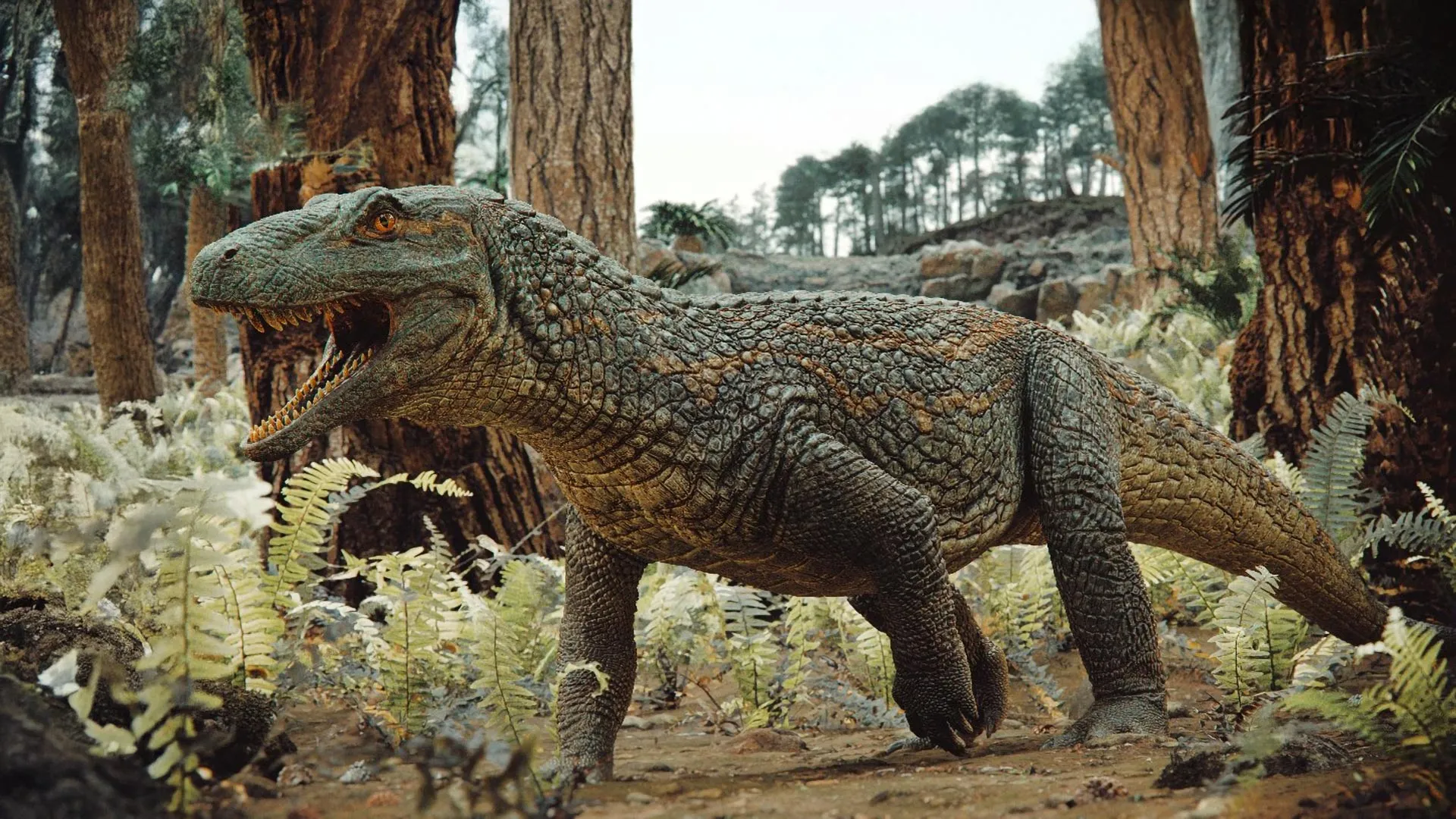
A newly identified carnivorous reptile may look like a dinosaur at first glance, but researchers have confirmed that it was actually an early relative of modern crocodiles.
The species is named Tainrakuasuchus bellator, a title partly inspired by the Latin word for “warrior” or “fighter.” This armored animal lived 240 million years ago, during a time just before dinosaurs appeared.
As a member of the Pseudosuchia (the precursors of modern crocodiles and alligators), it belonged to a dominant group of predators that thrived in the Triassic Period.
Size, Hunting Skills, and Early Ecosystem Role
Details of the discovery appear in the peer-reviewed Journal of Systematic Palaeontology. According to the study, the creature measured about 2.4m in length and weighed around 60kg.
Its long neck and agile body allowed it to strike quickly at prey. Once it closed in, it used slender jaws filled with sharp, recurved teeth to secure its target and prevent escape.
“This animal was an active predator, but despite its relatively large size, it was far from the largest hunter of its time with the same ecosystem home to giants as big as seven meters long,” explains lead author Dr. Rodrigo Temp Müller, who led the paleontology team at the Universidade Federal de Santa Maria in Brazil.
“Pseudosuchia were a diverse group of animals capable of tackling robust prey, as well as small hunters specialized in catching swift animals.
“Although its appearance superficially resembles that of a dinosaur, Tainrakuasuchus bellator does not belong to that group. One of the clearest ways for us to distinguish it from dinosaurs lies in the structure of the pelvis where the characteristics of its hip and femur joints are very different.”
A Glimpse Into Pre-Dinosaur Biodiversity
Dr. Müller notes: “Tainrakuasuchus bellator‘s discovery represents the complexity of the ecosystem at the time, with different pseudosuchia species — varying in sizes and hunting strategies — occupying specific ecological niches.
“Its discovery helps illuminate a key moment in the history of life, the period that preceded the rise of the dinosaurs.”
The fossils were uncovered during a May 2025 excavation in the municipality of Dona Francisca in southern Brazil. The team found a partial skeleton encased in rock that included portions of the lower jaw, vertebrae, and pelvic girdle.
Analysis of the bones revealed details about the animal’s behavior and confirmed that Tainrakuasuchus bellator was protected by bony plates called osteoderms, which are also found in today’s crocodiles.
Although its limbs were not preserved, the researchers believe it moved on all fours, similar to related species.
Meaning Behind the Name
The name ‘Tainrakuasuchus’ blends the Guarani words tain (“tooth”) and rakua (“pointed”) with the Greek suchus (“crocodile”), referring to its sharp teeth.
The second part, ‘bellator,’ comes from the Latin word for “warrior” or “fighter” and, according to the authors, “honors the people of Rio Grande do Sul, symbolizing their strength, resilience, and fighting spirit, especially in light of the recent floods that have affected the state.”
Rare Fossil With Links Across Ancient Pangaea
Dr. Müller describes the find as “extremely rare” and says it provides more evidence of the ancient connection between Brazil and Africa during the Triassic Period — when the world’s landmasses were joined into the supercontinent Pangaea.
“Despite the diversity of pseudosuchians, they remain poorly understood, as fossils of some their lineages are extremely rare in the fossil record,” Dr. Müller says.
“The fossils we found underwent a meticulous preparation process in the laboratory, during which the surrounding rock was carefully removed.
“Once the anatomical details were revealed, we were delighted and really excited to reveal that the specimen represented a species previously unknown to science.
“What we uncovered was a species that belongs to a predator closely related to one (Mandasuchus tanyauchen) found in Tanzania.
“This connection between animals from South America and Africa can be understood in light of the Triassic Period’s paleogeography.
“At that time, the continents were still united, which allowed the free dispersal of organisms across regions that are now separated by oceans. As a result, the faunas of Brazil and Africa shared several common elements, reflecting an intertwined evolutionary and ecological history.
“Tainrakuasuchus bellator would have lived in a region bordering a vast, arid desert — the same setting as where the first dinosaurs emerged.
“It shows that, in what is now southern Brazil, reptiles had already formed diverse communities adapted to various survival strategies. Moreover, this discovery reveals that such diversity was not an isolated phenomenon.”
They show cells that control blood sugar are more vulnerable in early childhood.
Almost half of patients given a heart pump, after the NHS had raised concerns about it, died soon after.
The health secretary launches strongest criticism yet of the union ahead of Friday’s strike by resident doctors.

A new study from the University of California San Diego suggests that glucagon-like peptide-1 (GLP-1) receptor agonists, a class of medications originally developed for type 2 diabetes, may have benefits that extend far beyond blood sugar and weight management. These drugs, which include semaglutide (sold as Ozempic and Wegovy) and tirzepatide (known as Mounjaro), are already well known for helping people lose weight and manage metabolic conditions. Now, researchers have discovered that they might also be linked to better survival outcomes in colon cancer patients.
The study analyzed medical records from more than 6,800 people diagnosed with colon cancer across University of California Health facilities. Patients who were taking GLP-1 medications were less than half as likely to die within five years compared to those not using the drugs (15.5% versus 37.1%). This striking difference points to a potentially powerful new use for drugs that are already transforming diabetes and obesity treatment.
The research was led by Raphael Cuomo, Ph.D., an associate professor in the Department of Anesthesiology at UC San Diego School of Medicine and a member of the UC San Diego Moores Cancer Center. His team used the University of California Health Data Warehouse to review outcomes across the state’s academic medical centers.
After accounting for important factors such as age, body mass index (BMI), cancer severity, and other health conditions, the team found that people taking GLP-1 drugs still had a significantly lower risk of death. This consistency suggests the protective benefit of GLP-1 therapy may be independent of other medical or lifestyle variables.
Why GLP-1 Drugs Might Protect Against Cancer
The benefit appeared strongest in patients with obesity (BMI over 35). This finding hints that GLP-1 drugs may help offset some of the inflammation and metabolic stress that can make cancer harder to treat.
Scientists are exploring several possible explanations for this effect. GLP-1 receptor agonists are known to lower inflammation throughout the body, enhance insulin sensitivity, and promote weight loss — all factors that can influence cancer growth and progression. Experimental studies in laboratories also indicate that GLP-1 drugs may directly inhibit the growth of tumor cells, encourage cancer cell death, and alter the surrounding environment within tumors to make them less supportive of disease spread.
However, researchers caution that it is still unclear whether the lower death rate seen in this study reflects a direct anti-cancer action or an indirect result of improved overall metabolic health.
Next Steps: Clinical Trials Needed
Dr. Cuomo emphasized that the findings are observational, meaning they do not yet prove that GLP-1 drugs directly improve cancer outcomes. These results highlight an urgent need for clinical trials to test whether GLP-1 medications can actually enhance cancer survival, particularly among patients with obesity-related cancers.
The study was published in Cancer Investigation on November 11, 2025.

In a finding that could change how scientists understand the spread of life’s ingredients across space, astronomers have detected large organic molecules frozen in ice around a forming star called ST6 in a galaxy beyond the Milky Way.
Using the James Webb Space Telescope’s (JWST) Mid-Infrared Instrument (MIRI), the research team identified five carbon-based compounds in the Large Magellanic Cloud, our closest neighboring galaxy. The study, led by University of Maryland and NASA scientist Marta Sewilo, was published in the Astrophysical Journal Letters on October 20, 2025.
Detecting Life’s Chemical Ingredients in Alien Ice
Sewilo’s group found five complex organic molecules (COMs) within the ice surrounding the young protostar. These included methanol and ethanol (both types of alcohol), methyl formate and acetaldehyde (industrial chemicals on Earth), and acetic acid (the main ingredient in vinegar). One of the compounds, acetic acid, had never before been definitively observed in space ice, while the others — ethanol, methyl formate, and acetaldehyde — were detected in ices outside the Milky Way for the first time.
The team also spotted signs of glycolaldehyde, a sugar-related molecule linked to RNA formation, though further analysis is required to confirm it.
JWST’s Sharp Vision Opens a New Window on Cosmic Chemistry
“It’s all thanks to JWST’s exceptional sensitivity combined with high angular resolution that we’re able to detect these faint spectral features associated with ices around such a distant protostar,” Sewilo said. “The spectral resolution of JWST is sufficiently high to allow for reliable identifications.”
Before the Webb telescope, methanol was the only complex organic molecule ever confirmed in ice around protostars — even within our own galaxy. According to Sewilo, the extraordinary precision of the new data allowed her team to extract an unprecedented amount of information from a single spectrum.
A Harsh Galaxy as a Laboratory for Life’s Origins
The discovery is especially striking because of where the molecules were found. The Large Magellanic Cloud, located about 160,000 light-years from Earth, is an ideal environment for studying how stars form in conditions resembling those of the early universe. This small galaxy has only about one-third to one-half the heavy elements (those with atomic numbers greater than helium) of our solar system and endures far more intense ultraviolet radiation.
“The low metallicity environment, meaning the reduced abundance of elements heavier than hydrogen and helium, is interesting because it’s similar to galaxies at earlier cosmological epochs,” Sewilo explained. “What we learn in the Large Magellanic Cloud, we can apply to understanding these more distant galaxies from when the universe was much younger. The harsh conditions tell us more about how complex organic chemistry can occur in these primitive environments where much fewer heavy elements like carbon, nitrogen and oxygen are available for chemical reactions.”
How Complex Molecules Form on Cosmic Dust
Study co-author Will Rocha of Leiden University in the Netherlands noted that COMs can form in both the gas phase and in icy layers coating interstellar dust grains. Once formed, these ices can later release their molecules back into the gas. Methanol and methyl formate had already been observed in the gas phase within the Large Magellanic Cloud, but this is the first evidence that such molecules are also forming in the solid ice itself.
“Our detection of COMs in ices supports these results,” Rocha said. “The detection of icy COMs in the Large Magellanic Cloud provides evidence that these reactions can produce them effectively in a much harsher environment than in the solar neighborhood.”
Life’s Ingredients May Have Formed Early in the Universe
The presence of these complex molecules in a low-metallicity environment similar to those found in the early universe suggests that the building blocks of life may have begun forming much earlier — and in a wider range of conditions — than scientists once thought.
While this discovery does not prove that life exists elsewhere, it indicates that organic compounds can endure through the process of planetary formation and potentially be incorporated into young planets, creating conditions where life might one day emerge.
Expanding the Search for Cosmic Chemistry
Sewilo and her collaborators plan to extend their work by examining more protostars in both the Large and Small Magellanic Clouds to explore how widespread these molecules may be.
“We currently only have one source in the Large Magellanic Cloud and only four sources with detection of these complex organic molecules in ices in the Milky Way. We need larger samples from both to confirm our initial results that indicate differences in COM abundances between these two galaxies,” Sewilo said. “But with this discovery, we’ve made significant advancements in understanding how complex chemistry emerges in the universe and opening new possibilities for research into how life came to be.”
The compromise deal would allow the NHS to overspend this year.

An international group of scientists has confirmed the discovery of three Earth-sized planets within the binary stellar system known as TOI-2267, located roughly 190 light-years from Earth. The finding, published in Astronomy & Astrophysics, offers new insight into how planets can form and remain stable in double-star systems, which were once thought too chaotic for complex planetary development.
“Our analysis shows a unique planetary arrangement: two planets are transiting one star, and the third is transiting its companion star,” explains Sebastián Zúñiga-Fernández, a researcher at the University of Liège (ULiège) and first author of the paper. “This makes TOI-2267 the first binary system known to host transiting planets around both of its stars.”
A Compact and Unusual Double-Star System
TOI-2267 consists of two stars locked in a close orbital dance, forming what astronomers call a compact binary system. Such systems create gravitational forces that typically disrupt planet formation. Despite this, researchers have detected three Earth-sized planets in tight orbits, a surprising outcome that challenges long-held theories about where rocky worlds can exist.
“Our discovery breaks several records, as it is the most compact and coldest pair of stars with planets known, and it is also the first in which planets have been recorded transiting around both components,” says Francisco J. Pozuelos, a co-leader of the study and researcher at the Instituto de Astrofísica de Andalucía (IAA-CSIC).
Combining Space and Ground Observations
NASA’s TESS space telescope first provided the data leading to this discovery. Two of the planets were initially identified by astronomers at ULiège and IAA-CSIC using their custom software tool, SHERLOCK. This early detection prompted ground-based observations to confirm the findings.
The confirmation process required a major effort involving several observatories. Among the most important were the SPECULOOS and TRAPPIST telescopes operated by ULiège (PI: Michaël Gillon). Designed to detect small exoplanets around cool, dim stars, these robotic instruments were vital for verifying the planets and studying their characteristics in detail.
A Natural Testbed for Planet Formation
“Discovering three Earth-sized planets in such a compact binary system is a unique opportunity,” says Zúñiga-Fernández. “It allows us to test the limits of planet formation models in complex environments and to better understand the diversity of possible planetary architectures in our galaxy.”
Pozuelos adds, “This system is a true natural laboratory for understanding how rocky planets can emerge and survive under extreme dynamical conditions, where we previously thought their stability would be compromised.”
Looking Ahead to Future Exploration
The discovery opens up new questions about how planets form and persist in binary systems. Upcoming observations with the James Webb Space Telescope (JWST) and next-generation ground-based observatories could reveal more details, such as the planets’ masses, densities, and even their atmospheric compositions.
Beyond its scientific importance, the finding underscores the value of combining data from space-based observatories like TESS with precise ground-based instruments such as SPECULOOS and TRAPPIST. Together, they continue to expand our understanding of how planetary systems form and evolve across the galaxy.
