Tammy McDaid is raising funds to help her make memories with her son Tate.


Tammy McDaid is raising funds to help her make memories with her son Tate.
Closing submissions are being made in an employment tribunal brought by eight female nurses.
Alice Figueiredo, 22, took her own life at Goodmayes Hospital, east London, in July 2015.
Brittany Miller is known for posting food and lifestyle content to her three-and-a-half million followers.

Researchers at Osaka Metropolitan University have developed a promising new method to repair spinal fractures using stem cells extracted from adipose tissue, or body fat. In animal studies, the treatment successfully healed spinal injuries in rats that mimic osteoporosis-related fractures seen in humans. Because these cells are easy to collect, even from older adults, and cause minimal strain on the body, the technique could provide a gentle, non-invasive alternative for treating bone diseases.
Osteoporosis weakens bones, making them fragile and more likely to break. As Japan’s population continues to age, the number of people affected is projected to surpass 15 million. Among the various types of fractures caused by osteoporosis, compression fractures of the spine, known as osteoporotic vertebral fractures, are the most common. These injuries can result in long-term disability and severely reduce quality of life, highlighting the need for safer and more effective treatments.
How Fat-Derived Stem Cells Help Rebuild Bone
Stem cells derived from adipose tissue (ADSCs) show strong potential for repairing bone damage. These multipotent cells can develop into various types of tissue, including bone. When ADSCs are cultivated into three-dimensional spherical groups called spheroids, their ability to promote tissue repair increases. Pre-differentiating these spheroids toward bone-forming cells further enhances their effectiveness in stimulating bone regeneration.
Led by Graduate School of Medicine student Yuta Sawada and Dr. Shinji Takahashi, the Osaka research team used ADSCs to create bone-differentiated spheroids and combined them with β-tricalcium phosphate, a material commonly used in bone reconstruction. The mixture was applied to rats with spinal fractures, resulting in significant improvements in bone healing and strength.
The researchers also observed that genes responsible for bone formation and regeneration became more active after the treatment, suggesting that the approach stimulates the body’s natural healing processes.
Promising Outlook for Future Treatments
“This study has revealed the potential of bone differentiation spheroids using ADSCs for the development of new treatments for spinal fractures,” said Sawada. “Since the cells are obtained from fat, there is little burden on the body, ensuring patient safety.”
Dr. Takahashi added, “This simple and effective method can treat even difficult fractures and may accelerate healing. This technique is expected to become a new treatment that helps extend the healthy life of patients.”
The findings were published in Bone & Joint Research.
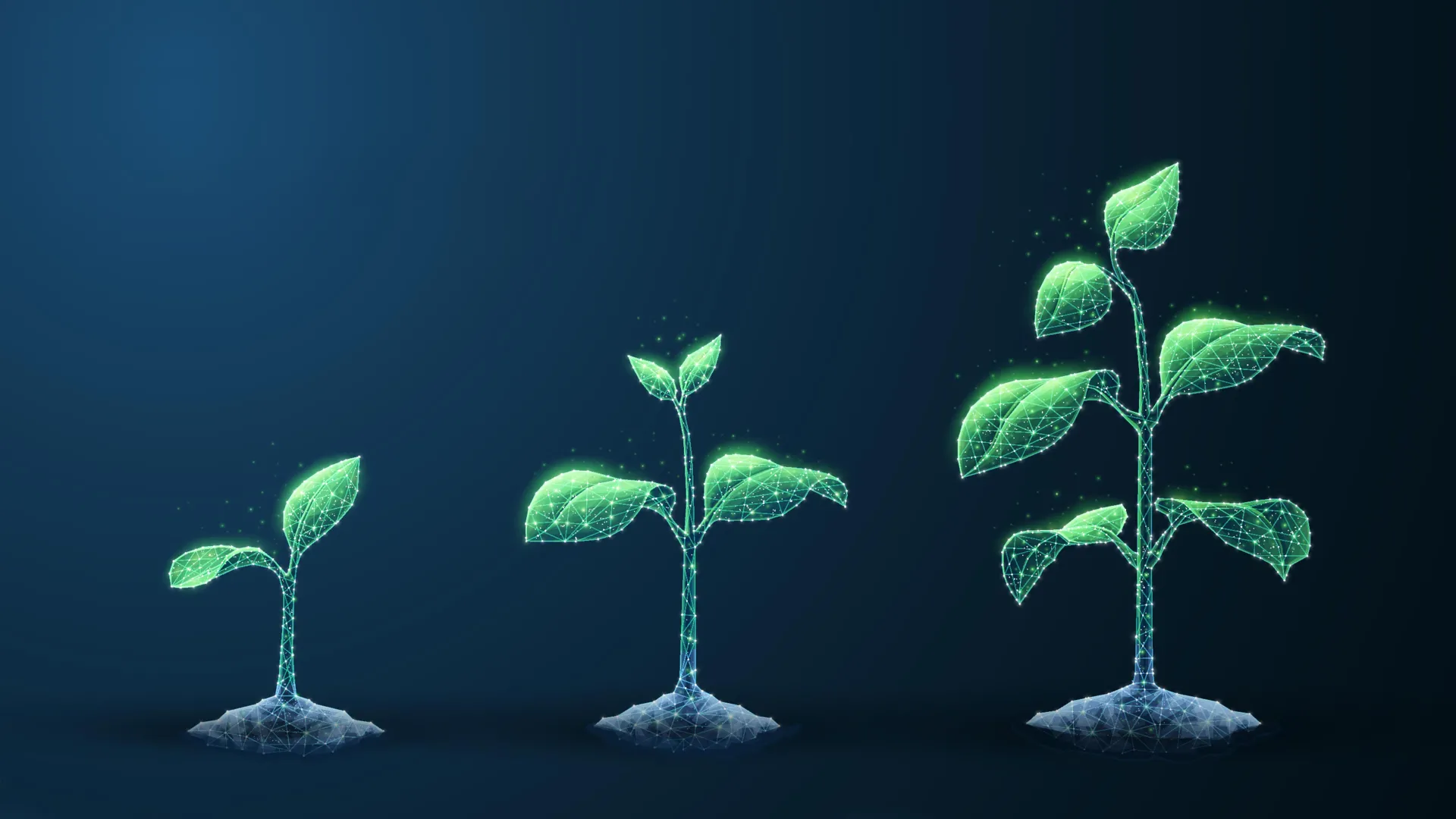
A team of researchers, including a scientist from the Earth-Life Science Institute (ELSI) at the Institute of Science Tokyo in Japan, has identified a new principle in biology that mathematically explains why the growth of living organisms slows down when nutrients become plentiful. This well-known phenomenon is referred to as the “law of diminishing returns.”
How organisms grow in response to changing nutrient conditions has long been one of biology’s central questions. Across all forms of life — from microbes to plants and animals — growth depends on access to nutrients, energy, and the internal machinery of cells. Although scientists have studied how these factors affect growth, most research has focused on individual nutrients or specific biochemical pathways. What has remained unclear is how all these interconnected processes within a cell work together to control growth when resources are limited.
A Global Principle That Unites Living Systems
To explore this mystery, ELSI’s Specially Appointed Associate Professor Tetsuhiro S. Hatakeyama and RIKEN Special Postdoctoral Researcher Jumpei F. Yamagishi discovered a new unifying concept that describes how all living cells manage growth under resource constraints. Their work introduces what they call the global constraint principle for microbial growth — a framework that could reshape how scientists understand biological systems.
Since the 1940s, microbiologists have relied on the “Monod equation” to describe how microbes grow. This model shows that growth rates increase with added nutrients until they level off. However, the Monod equation assumes that only one nutrient or biochemical reaction limits growth at a time. In reality, cells perform thousands of simultaneous chemical processes that must share finite resources.
A Network of Constraints Inside Every Cell
According to Hatakeyama and Yamagishi, the traditional model captures only a small part of what’s happening. Instead of a single bottleneck, cellular growth is shaped by a complex network of limitations that interact to slow growth as nutrients accumulate. The global constraint principle explains that when one limiting factor — such as a nutrient — is alleviated, other constraints like enzyme production, cell volume, or membrane space begin to take over.
Using a technique known as “constraint-based modeling,” the team simulated how cells distribute and manage internal resources. Their results showed that while each additional nutrient helps microbes grow, its benefit gradually decreases — each one contributes less than the last.
“The shape of growth curves emerges directly from the physics of resource allocation inside cells, rather than depending on any particular biochemical reaction,” explains Hatakeyama.
Uniting Classic Laws of Biology
This new principle brings together two of biology’s foundational growth laws: the Monod equation and Liebig’s law of the minimum. Liebig’s law states that a plant’s growth is limited by whichever nutrient is scarcest (for example, nitrogen or phosphorus). Even if all other nutrients are plentiful, the plant can only grow as much as the least available one allows.
By merging these two concepts, the researchers created what they call a “terraced barrel” model. In this model, new limiting factors appear in stages as nutrient availability increases. This explains why organisms — from single-celled microbes to complex plants — experience diminishing growth returns even when conditions seem ideal, as each new stage reveals a fresh constraint.
Hatakeyama compares this to an updated version of Liebig’s famous barrel analogy, in which a plant’s growth is limited by its shortest stave, representing the scarcest resource. “In our model, the barrel staves spread out in steps,” he says, “each step representing a new limiting factor that becomes active as the cell grows faster.”
To test their hypothesis, the researchers built large-scale computer models of Escherichia coli bacteria. These models incorporated details about how cells use proteins, how crowded they are inside, and the physical limits of their membranes. The simulations accurately predicted the observed slowing of growth as nutrients were added and showed how oxygen and nitrogen levels affected the results. Laboratory experiments confirmed that the model’s predictions matched real biological behavior.
Toward Universal Laws of Life’s Growth
The discovery offers a new way to understand how life grows, without the need to model every molecule or reaction in detail. The global constraint principle provides a framework that unifies many aspects of biology. “Our work lays the groundwork for universal laws of growth,” says Yamagishi. “By understanding the limits that apply to all living systems, we can better predict how cells, ecosystems, and even entire biospheres respond to changing environments.”
This principle could have far-reaching applications. It may lead to more efficient microbial production in biotechnology, improved crop yields through better nutrient management, and stronger models for predicting how ecosystems respond to climate change. Future research may explore how this principle applies to different types of organisms and how multiple nutrients interact to influence growth. By bridging cellular biology with ecological theory, this study moves science closer to a universal framework for understanding life’s growth limits.
Earth-Life Science Institute (ELSI) is one of Japan’s prominent World Premiere International (WPI) research centers. It aims to drive breakthroughs in interdisciplinary science by attracting top researchers from around the world to collaborate on challenging scientific problems. ELSI’s mission focuses on studying the origin and co-evolution of Earth and life.
The Institute of Science Tokyo (Science Tokyo) was established on October 1, 2024, through the merger of Tokyo Medical and Dental University (TMDU) and Tokyo Institute of Technology (Tokyo Tech). Its mission is “Advancing science and human wellbeing to create value for and with society.”
Japan’s World Premier International Research Center Initiative (WPI), launched in 2007 by the Ministry of Education, Culture, Sports, Science and Technology (MEXT), supports a network of elite research centers that operate with a high degree of independence and global collaboration. The program is managed by the Japan Society for the Promotion of Science (JSPS).
RIKEN, Japan’s largest research institute for basic and applied science, produces over 2,500 papers each year in leading journals across physics, chemistry, biology, engineering, and medicine. Known for its interdisciplinary and international approach, RIKEN has earned a worldwide reputation for scientific excellence.

If you’re one of the 620 million people who regularly go for a run, you probably like to get an early start. But if you haven’t slept well the night before, you could be putting yourself at greater risk of injury.
A new study led by Professor Jan de Jonge, a work and sports psychologist at Eindhoven University of Technology in the Netherlands (and Adjunct Professor at the University of South Australia), found that insufficient and poor-quality sleep significantly increases the chance of getting hurt while running.
In a survey of 425 recreational runners, the researchers discovered that participants who reported shorter sleep duration, lower sleep quality, or frequent sleep problems were almost twice as likely to experience an injury compared to those who slept well.
The results, published in Applied Sciences, provide what Prof de Jonge calls “compelling evidence that sleep is a critical yet often overlooked component of injury prevention.”
“While runners specifically focus on mileage, nutrition and recovery strategies, sleep tends to fall to the bottom of the list,” he explains. “Our research shows that poor sleepers were 1.78 times more likely to report injuries than those with stable, good quality sleep, with a 68% likelihood of sustaining an injury over a 12-month period. That’s a strong reminder that how well you rest is just as important as how hard you train.”
Sleep: The Missing Element in Runner Recovery
Recreational running remains one of the most popular sports worldwide, yet it carries a substantial risk of injury. Studies estimate that up to 90% of runners will be injured at some point, resulting in millions of dollars lost each year in medical bills and missed work.
Prof de Jonge’s team took a comprehensive approach, examining sleep not only in terms of duration but also quality and disorders. This broader view helped identify how different aspects of sleep contribute to physical vulnerability.
“Sleep is a vital biological process that allows the body and mind to recover and adapt to the physical and mental demands of training,” says Prof de Jonge. “When sleep is disrupted or insufficient, the body’s ability to repair tissues, regulate hormones and maintain focus diminishes, all of which can increase injury risk.”
The study revealed that runners who struggled with falling asleep, woke up frequently during the night, or rarely felt rested were the most prone to injury. In contrast, those who maintained consistent sleep schedules and felt well-rested reported significantly fewer injuries.
Rethinking Training: Why Sleep Deserves Equal Priority
Prof de Jonge emphasizes that the research carries important lessons for both recreational and competitive runners, as well as for coaches and health professionals.
“We often assume that more training equals better performance, but that’s not necessarily the case,” he notes. “Runners (especially those balancing training with work, family and social commitments) may actually need more sleep than average adults to recover properly. Sleep should be treated as a performance priority, not an afterthought.”
Experts generally recommend seven to nine hours of sleep per night, though athletes often benefit from additional rest, including short naps, to enhance both physical and mental recovery.
To improve sleep quality, consistent bedtimes, limiting screen use before sleep, reducing caffeine and alcohol, and maintaining a quiet, cool environment are all advised.
“Sleep quality and sleep duration are both important, but quantity often provides the bed-rock,” Prof de Jonge concludes. “Sleep should be recognized not only as a recovery tool, but also as a potential predictor of injury vulnerability in recreational sports.”
The study, “Sleep Matters: Profiling Sleep Patterns to Predict Sports Injuries in Recreational Runners,” was published in Applied Sciences.
Cornelius Agoye was filmed supplying Botox to an undercover BBC researcher in a breach of the rules.
Experts say patients are being harmed by cancer diagnosis and treatment delays.
It’s easy to feel gloomy in winter, but here are three ways to help you manage the darker days and even embrace them.
