
Vitamin D3 breakthrough halves risk of second heart attack

A new study from Intermountain Health in Salt Lake City reports that a personalized vitamin D3 treatment plan for patients who have suffered a heart attack can greatly reduce their chances of another one.

In a large randomized clinical trial, researchers found that managing patients’ vitamin D levels through a “target-to-treat” approach — where blood levels were monitored and dosages were adjusted to reach an optimal range — cut the likelihood of a second heart attack by 50%.

The findings were presented on Nov. 9 at the 2025 American Heart Association Scientific Sessions in New Orleans.

Encouraging Early Results from Intermountain Researchers

These results are very encouraging, said Heidi May, PhD, cardiovascular epidemiologist at Intermountain Health and the study’s principal investigator. “We observed no adverse outcomes when giving patients higher doses of vitamin D3 supplementation, and to significantly reduce the risk of another heart attack, which are exciting results,” said Dr. May. “We’re excited with these results but know we have further work to do to validate these findings.”

According to researchers, the results carry global importance, as between one-half and two-thirds of people worldwide have low levels of vitamin D.

In the past, most individuals received sufficient vitamin D through sunlight exposure. Today, with lifestyle changes and medical advice aimed at reducing skin cancer risk, people spend less time in the sun and must rely more on dietary supplements such as vitamin D3 to maintain healthy levels.

From Observation to Precision Treatment

Low vitamin D levels have long been linked to poor cardiovascular outcomes in observational studies. However, earlier clinical trials that provided standard supplementation doses failed to show measurable reductions in heart disease risk. Intermountain scientists wanted to test a different idea: rather than giving everyone the same dose, what if supplementation was adjusted to reach a specific, healthy vitamin D level?

“Previous studies just gave patients supplementation without regularly checking blood levels of vitamin D to determine what supplementation achieved,” said Dr. May. “With more targeted treatment, when we checked exactly how supplementation was working and made adjustments, we found that patients had their risk of another heart attack cut in half.”

Inside the TARGET-D Clinical Trial

The Intermountain study, called the TARGET-D trial, ran from April 2017 to May 2023 and included 630 patients who had suffered a heart attack within a month of enrolling. Participants were followed until March 2025 to monitor cardiovascular outcomes.

Patients were randomly assigned to one of two groups: one received no vitamin D management, and the other underwent active, targeted vitamin D3 treatment.

The goal for the treatment group was to raise blood vitamin D levels to above 40 nanograms per milliliter (ng/mL). At the start, 85% of participants had vitamin D3 levels below that threshold (<40 ng/mL).

Dosing, Monitoring, and Results

More than half of the patients receiving targeted therapy required an initial dose of 5,000 international units (IU) of vitamin D3, compared to typical supplement recommendations of 600-800 IU.

Vitamin D blood levels were checked annually for those maintaining healthy levels. Patients with lower levels were tested every three months and had their dosage adjusted until reaching the 40 ng/mL target. Afterward, their levels were monitored once a year.

Researchers tracked major cardiac events (MACE), including heart attacks, strokes, heart failure hospitalizations, or deaths. Out of 630 participants, 107 experienced such events. While there was no significant difference in the overall risk of MACE between the two groups, the chance of having a second heart attack was cut in half among those receiving targeted vitamin D treatment.

Next Steps for Heart and Vitamin D Research

Researchers plan to expand their work with a larger clinical trial to confirm and build upon these findings.

A larger study group will allow us to more fully evaluate whether targeted vitamin D management can reduce not only repeat heart attacks but also other forms of cardiovascular disease, said Dr. May.

Share Button

A neutron star’s weird wind rewrites space physics

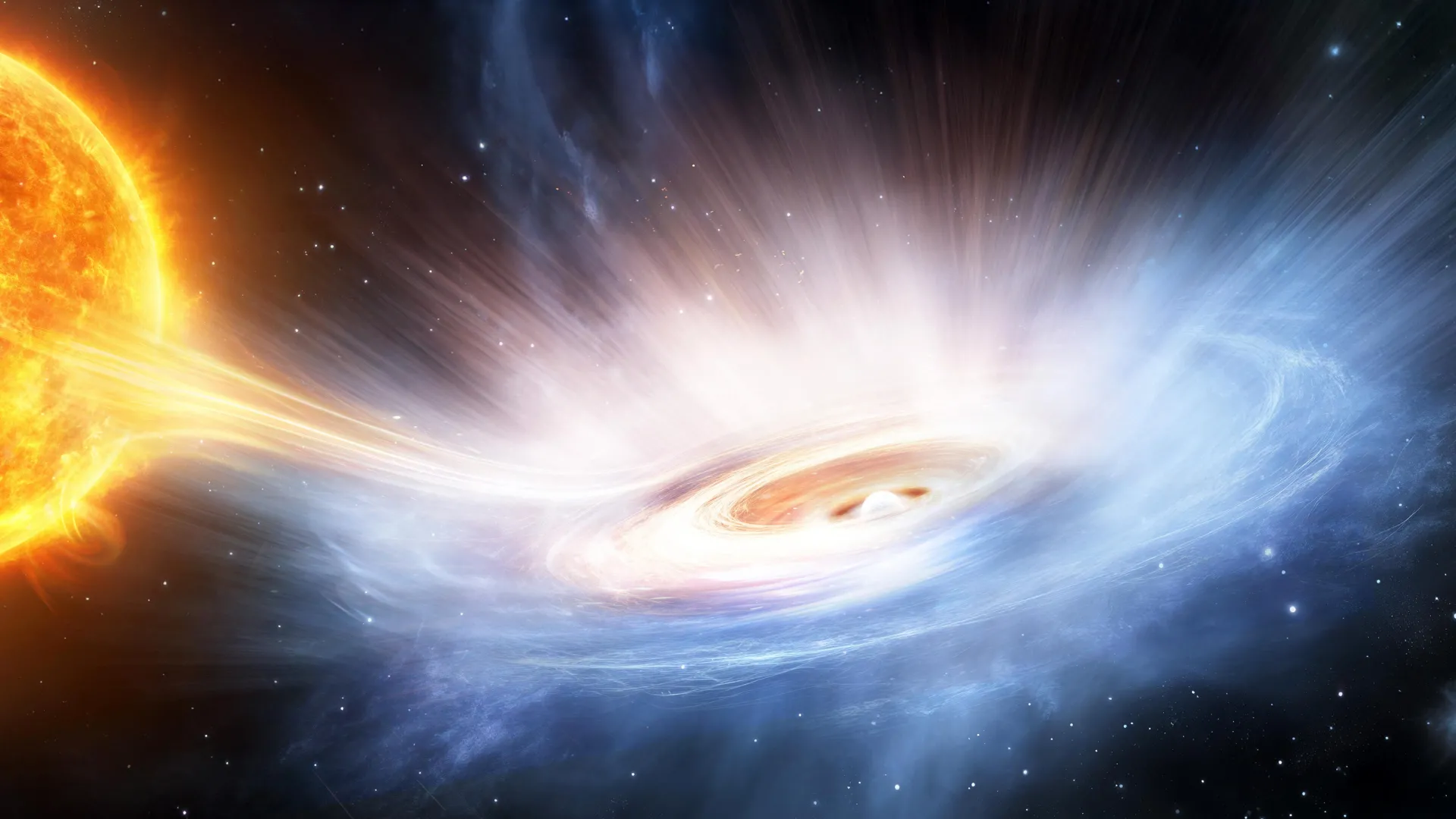
The X-Ray Imaging and Spectroscopy Mission (XRISM) has identified a surprising contrast between the winds blasting away from a disk around a neutron star and those seen near supermassive black holes. The neutron star system produces an unusually dense outflow that challenges current ideas about how these winds form and how they reshape their surroundings.

On February 25, 2024, XRISM used its Resolve instrument to observe the neutron star GX13+1, the compact remnant of a once larger star. GX13+1 shines brightly in X-rays that come from an accretion disk of superheated material spiraling inward and striking the star’s surface.

These inward flows can also launch powerful outflows that alter the space around them. How these outflows arise is still under investigation, which is why the team targeted GX13+1.

Resolve can precisely measure the energy of individual X-ray photons, so the scientists anticipated seeing fine-grained details that had never been captured before.

“When we first saw the wealth of details in the data, we felt we were witnessing a game-changing result,” says Matteo Guainazzi, ESA XRISM project scientist. “For many of us, it was the realization of a dream that we had chased for decades.”

Why cosmic winds matter

These winds are not just curiosities. They drive large-scale change in the universe.

Similar winds also blow from systems with supermassive black holes at galaxy centers. They can compress giant molecular clouds to trigger star birth or heat and disperse those clouds to halt star formation. Astronomers refer to this push and pull as feedback, and in extreme cases the wind from a central black hole can regulate the growth of its entire host galaxy.

Because the processes around supermassive black holes might mirror those near GX13+1, the team chose this neutron star system as a closer, brighter target that could reveal the underlying physics in sharper detail.

A timely surge to the Eddington limit

Just before the planned observations, GX13+1 unexpectedly brightened and reached or even surpassed the Eddington limit.

This limit describes what happens as matter falls onto a compact object such as a black hole or a neutron star. More infalling matter releases more energy. As the energy output rises, the radiation exerts pressure on the incoming material and pushes it outward. At the Eddington limit, the high-energy light being produced can drive almost all of the infalling matter back into space as a wind.

Resolve recorded GX13+1 during this dramatic phase.

“We could not have scheduled this if we had tried,” said Chris Done, Durham University, UK, the lead researcher on the study. “The system went from about half its maximum radiation output to something much more intense, creating a wind that was thicker than we’d ever seen before.”

A slow, dense wind defies expectations

Despite the intense outburst, the wind’s speed remained near 1 million km/h. That is swift on Earth but slow compared with winds near the Eddington limit around supermassive black holes, where outflows can reach 20 to 30 percent of light speed, more than 200 million km/h.

“It is still a surprise to me how ‘slow’ this wind is,” says Chris, “as well as how thick it is. It’s like looking at the Sun through a bank of fog rolling towards us. Everything goes dimmer when the fog is thick.”

Neutron star vs black hole winds

This was not the only contrast. Earlier XRISM observations of a supermassive black hole at the Eddington limit revealed an ultrafast, clumpy wind. By comparison, the outflow from GX13+1 appears slow and smooth.

“The winds were utterly different but they’re from systems which are about the same in terms of the Eddington limit. So if these winds really are just powered by radiation pressure, why are they different?” asks Chris.

Accretion disk temperature as the key

The team suggests the answer lies in the temperature of the accretion disk around the central object. Counterintuitively, disks around supermassive black holes tend to be cooler than those in stellar-mass systems with neutron stars or black holes.

Disks around supermassive black holes are much larger. They can be extremely luminous, yet that power is spread over a vast area, so the typical radiation they emit peaks in ultraviolet light. Stellar-mass systems radiate more strongly in X-rays.

Ultraviolet light interacts with matter more readily than X-rays. Chris and colleagues propose that this difference allows ultraviolet radiation to push material more efficiently, generating the much faster winds seen near supermassive black holes.

What this means for galaxy evolution

If this explanation holds, it will refine how scientists think about the exchange of energy and matter in extreme environments. It could also clarify how these processes influence the growth of galaxies and the broader evolution of the cosmos.

“The unprecedented resolution of XRISM allows us to investigate these objects — and many more -in far greater detail, paving the way for the next-generation, high-resolution X-ray telescope such as NewAthena,” says Camille Diez, ESA Research fellow.

XRISM mission at a glance

XRISM (pronounced krizz-em) launched on September 7, 2023. The mission is led by the Japan Aerospace Exploration Agency (JAXA) in partnership with NASA and ESA. It flies with two instruments: Resolve, an X-ray calorimeter that measures the energy of individual X-ray photons to deliver an unprecedented level of energy resolution (the capability of an instrument to distinguish the X-ray ‘colors’), and Xtend, a wide-field X-ray CCD camera that images the surrounding region.

Share Button

Physicists prove the Universe isn’t a simulation after all

The idea that our universe might be nothing more than an elaborate computer simulation has been a favorite theme in science fiction for decades. Yet new research from UBC Okanagan suggests that not only is this concept implausible — it is mathematically impossible.

Dr. Mir Faizal, an Adjunct Professor at UBC Okanagan’s Irving K. Barber Faculty of Science, and his collaborators, Drs. Lawrence M. Krauss, Arshid Shabir, and Francesco Marino, have shown that the underlying fabric of reality operates in a way no computer could ever replicate.

Their study, published in the Journal of Holography Applications in Physics, doesn’t just dispute the idea of a simulated universe like The Matrix. It goes further, demonstrating that the cosmos itself is built upon a kind of understanding that lies outside the reach of any algorithm.

The Simulation Hypothesis Meets Mathematics

“It has been suggested that the universe could be simulated. If such a simulation were possible, the simulated universe could itself give rise to life, which in turn might create its own simulation. This recursive possibility makes it seem highly unlikely that our universe is the original one, rather than a simulation nested within another simulation,” says Dr. Faizal. “This idea was once thought to lie beyond the reach of scientific inquiry. However, our recent research has demonstrated that it can, in fact, be scientifically addressed.”

The team’s findings rest on the evolving understanding of what reality truly is. Physics has moved far beyond Isaac Newton’s view of solid objects moving through space. Einstein’s theory of relativity replaced that classical model, and quantum mechanics transformed it yet again. Now, at the forefront of theoretical physics, quantum gravity proposes that even space and time are not fundamental elements. Instead, they arise from something deeper — pure information.

The Hidden Realm Beneath Reality

Physicists describe this informational layer as a “Platonic realm,” a mathematical foundation more real than the physical world we perceive. According to the new research, it is from this realm that space and time themselves emerge.

However, the scientists demonstrated that even this information-based structure cannot fully describe reality through computation alone. By applying advanced mathematical principles, including Gödel’s incompleteness theorem, they proved that any consistent and complete model of existence requires what they call “non-algorithmic understanding.”

To grasp this idea, imagine how a computer works — it follows a set of defined instructions step by step. Yet, some truths exist that cannot be reached by following any sequence of logical operations. These are known as “Gödelian truths,” and while they are real, they cannot be proven using computation.

Where Computation Fails

Consider the statement, “This true statement is not provable.” If it were provable, it would be false, contradicting logic. If it cannot be proven, then it is true, which means any logical system attempting to prove it is incomplete. In either case, computation alone falls short.

“We have demonstrated that it is impossible to describe all aspects of physical reality using a computational theory of quantum gravity,” says Dr. Faizal. “Therefore, no physically complete and consistent theory of everything can be derived from computation alone. Rather, it requires a non-algorithmic understanding, which is more fundamental than the computational laws of quantum gravity and therefore more fundamental than spacetime itself.”

Why the Universe Cannot Be Simulated

If the underlying rules of the Platonic realm seem similar to those governing a computer simulation, could that realm itself be simulated? The answer, according to the researchers, is no.

“Drawing on mathematical theorems related to incompleteness and indefinability, we demonstrate that a fully consistent and complete description of reality cannot be achieved through computation alone,” explains Dr. Faizal. “It requires non-algorithmic understanding, which by definition is beyond algorithmic computation and therefore cannot be simulated. Hence, this universe cannot be a simulation.”

Co-author Dr. Lawrence M. Krauss notes that the implications of this finding extend deep into the foundations of physics. “The fundamental laws of physics cannot be contained within space and time, because they generate them. It has long been hoped, however, that a truly fundamental theory of everything could eventually describe all physical phenomena through computations grounded in these laws. Yet we have demonstrated that this is not possible. A complete and consistent description of reality requires something deeper — a form of understanding known as non-algorithmic understanding.”

Reality Beyond Algorithms

As Dr. Faizal summarizes, “Any simulation is inherently algorithmic — it must follow programmed rules. But since the fundamental level of reality is based on non-algorithmic understanding, the universe cannot be, and could never be, a simulation.”

For years, the simulation hypothesis was regarded as untestable, confined to the realms of philosophy and speculative fiction. This new research, however, anchors it firmly in mathematical and physical theory — delivering what may be the final, definitive answer to one of science’s most intriguing questions.

Share Button

Dundee and US surgeons achieve world-first stroke surgery using robot

A Dundee professor carried out the first remote thrombectomy on a human cadaver.

Share Button

Surgical menopause like a ‘hormonal cliff edge’

Surgical menopause is the immediate onset of menopause caused by the removal of both ovaries.

Share Button

Hospital failings continued after Alice Figueiredo death, leaked documents show

Four months after a young woman died in a mental health unit, another patient tried to harm herself in similar circumstances, leaked documents show.

Share Button

Nursing watchdog ‘should’ve acted faster on Letby’

Lucy Letby was free to work without any restrictions imposed by the regulator until she was charged.

Share Button

New flu virus mutation could see ‘worst season in a decade’

Leading flu experts say they will not be surprised if this year’s is the worst flu season for a decade.

Share Button

Meet the desert survivor that grows faster the hotter it gets

In California’s Death Valley, where summer heat often surpasses 120 degrees Fahrenheit, survival appears almost impossible. Yet, among the cracked soil and intense sunlight, one native plant not only endures but flourishes.

That plant, Tidestromia oblongifolia, has helped scientists at Michigan State University reveal how life can persist in such extreme conditions. Their findings offer a potential guide for developing crops that can survive in an increasingly hot climate.

In a study published in Current Biology, Research Foundation Professor Seung Yon “Sue” Rhee and Research Specialist Karine Prado report that T. oblongifolia actually grows more quickly under Death Valley’s summer conditions. The plant accomplishes this by fine-tuning its photosynthetic system to resist the damaging effects of heat.

A Plant That Grows Stronger in the Heat

For Prado, the project began with a simple question: how can this plant remain green and healthy when most others would wither within hours?

“When we first brought these seeds back to the lab, we were fighting just to get them to grow,” Prado said. “But once we managed to mimic Death Valley conditions in our growth chambers, they took off.”

Working with colleagues in the Rhee lab at MSU’s Plant Resilience Institute, Prado used custom-built growth chambers to reproduce the desert’s harsh light and extreme daily temperature shifts. The results were astonishing. In just 10 days, T. oblongifolia tripled its biomass. Meanwhile, other related species known for their heat tolerance stopped growing entirely.

The World’s Most Heat-Tolerant Plant

After only two days in extreme heat, T. oblongifolia expanded its photosynthetic comfort zone, allowing it to keep producing energy efficiently. Within two weeks, its optimal photosynthetic temperature rose to 45 degrees Celsius (113 degrees Fahrenheit) — higher than that of any major crop on record.

“This is the most heat-tolerant plant ever documented,” Rhee said. “Understanding how T. oblongifolia acclimates to heat gives us new strategies to help crops adapt to a warming planet.”

How the Desert Survivor Works

Using a combination of physiological tests, live imaging, and genomic analysis, the research team uncovered how T. oblongifolia coordinates multiple biological systems to survive.

Under Death Valley-level heat, the plant’s mitochondria — the structures that generate energy — move closer to the chloroplasts, where photosynthesis occurs. At the same time, the chloroplasts reshape into distinctive “cup-like” forms never before observed in higher plants. These adaptations may help the plant capture and recycle carbon dioxide more efficiently, maintaining energy production even under stress.

Within 24 hours of heat exposure, thousands of genes adjust their activity. Many are involved in shielding proteins, membranes, and photosynthetic machinery from damage. The plant also increases production of an enzyme known as Rubisco activase, which helps keep photosynthesis functioning smoothly at high temperatures.

Lessons for Future Agriculture

With global temperatures expected to rise by as much as 5 degrees Celsius by the end of the century, extreme heat is already reducing yields for essential crops like wheat, maize, and soybeans. As the global population grows, scientists are racing to find ways to sustain food production.

T. oblongifolia shows us that plants have the capacity to adapt to extreme temperatures,” Rhee said. “If we can learn how to replicate those mechanisms in crops, it could transform agriculture in a hotter world.”

Learning From Nature’s Toughest Survivors

For decades, plant biology has centered on model species that are easy to cultivate, such as Arabidopsis, rice, and maize. Rhee believes it is time to look beyond these familiar plants and study species that have evolved to endure the world’s harshest environments.

“Desert plants have spent millions of years solving the challenges we’re only beginning to face,” she said. “We finally have the tools, such as genomics, high-resolution live imaging and systems biology, to learn from them. What we need now is broader support to pursue this kind of research.”

Her lab is already applying these insights, studying how the genes and cellular structures that give T. oblongifolia its extraordinary resilience might be used to make food crops more heat-tolerant.

“This research doesn’t just tell us how one desert plant beats the heat,” Prado said. “It gives us a roadmap for how all plants might adapt to a changing climate.”

Share Button

9,000-year-old ice melt shows how fast Antarctica can fall apart

A new study published in Nature Geoscience reveals that the East Antarctic Ice Sheet (EAIS) experienced a major retreat about 9,000 years ago, triggered by a powerful feedback between melting ice and ocean currents. Led by Professor Yusuke Suganuma of the National Institute of Polar Research (NIPR) and the Graduate University for Advanced Studies (SOKENDAI), the research team discovered that warm deep water flowing into coastal East Antarctica caused ice shelves to collapse, which in turn sped up inland ice loss.

The findings suggest that Antarctic ice retreat is not confined to one area but can spread across regions through oceanic links, amplifying ice loss on a continental scale. This process, in which meltwater from one region accelerates melting elsewhere, is known as a “cascading positive feedback.” Understanding this chain reaction offers crucial insight into why Antarctic ice sheets may be inherently unstable, both in the distant past and in the modern era.

Reconstructing Ancient Ice-Sheet Collapse

The study set out to identify what caused the large-scale ice loss in East Antarctica thousands of years ago.

The East Antarctic Ice Sheet, which holds over half of Earth’s freshwater, is already losing ice in some coastal zones today. Knowing how these massive ice systems responded to earlier warm periods provides valuable clues to their future under modern climate change. To trace this history, the team analyzed marine sediment cores collected from Lützow-Holm Bay, near Japan’s Syowa Station along the Sôya Coast. These were combined with geological and geomorphological surveys across Dronning Maud Land.

The sediments were obtained through decades of Japanese Antarctic Research Expeditions (JARE) between 1980 and 2023, including recent sampling from the icebreaker Shirase. Using sedimentological, micropaleontological, and geochemical analyses, along with measurements of beryllium isotope ratios (10Be/9Be), the researchers reconstructed past environmental changes in the bay. Their data show that around 9,000 years ago, warm Circumpolar Deep Water (CDW) surged into the bay, leading to the collapse of floating ice shelves. Once these shelves broke apart, their loss of structural support allowed inland ice to accelerate toward the sea.

Modeling Reveals a Cascading Ocean Feedback

To determine why warm deep water intensified during that period, the researchers ran climate and ocean circulation models. These simulations showed that meltwater from other Antarctic regions, including the Ross Ice Shelf, spread throughout the Southern Ocean. This influx of freshwater freshened the surface ocean, strengthening vertical stratification and preventing cold surface water from mixing downward.

As a result, warm deep water was able to move more easily toward East Antarctica’s continental shelf. This created a reinforcing cycle: meltwater increased stratification, which in turn enhanced warm-water inflow, causing even more melting. The models demonstrate that this kind of interconnected “cascading feedback” could allow melting in one sector of Antarctica to trigger or accelerate ice loss in others through large-scale ocean circulation patterns.

A Warning Echoing Across Millennia

The research provides some of the clearest evidence yet that Antarctica’s ice sheet can undergo self-reinforcing, widespread melting when the planet warms. Although the event occurred in the early Holocene epoch, when global temperatures were naturally higher than during the last Ice Age, the same physical processes are relevant today.

Modern observations show that parts of the West Antarctic Ice Sheet — such as the Thwaites and Pine Island glaciers — are already retreating rapidly as warm deep water intrudes beneath them. If similar cascading feedbacks are happening now, localized melting could spread and accelerate overall ice loss, contributing to faster global sea-level rise.

International Collaboration and Global Implications

The project involved more than 30 institutions, including NIPR, the Geological Survey of Japan (AIST), the Japan Agency for Marine-Earth Science and Technology (JAMSTEC), the University of Tokyo, Kochi University, Hokkaido University, and partners from New Zealand, Spain, and other countries.

This large-scale collaboration combined field surveys, marine sediment studies, cosmogenic nuclide dating, and advanced coupled climate-ocean modeling to reconstruct how the Antarctic ice-ocean system evolved.

Professor Suganuma emphasized the broader meaning of the findings: “This study provides essential data and modeling evidence that will facilitate more accurate predictions of future Antarctic ice-sheet behavior. The cascading feedbacks identified in this study serve to underscore the notion that minor regional alterations can potentially engender global ramifications.”

Share Button