Campaigners hope the new words will lead to less body shaming and more sex positivity.


Campaigners hope the new words will lead to less body shaming and more sex positivity.
Common Bond has emailed customers announcing its locations were closed “until further notice”.
Doctors running a dedicated NHS clinic for children with ketamine bladder say they are seeing patients as young as 13.
A concerning number of patients are reporting problems from treatment abroad, say doctors.
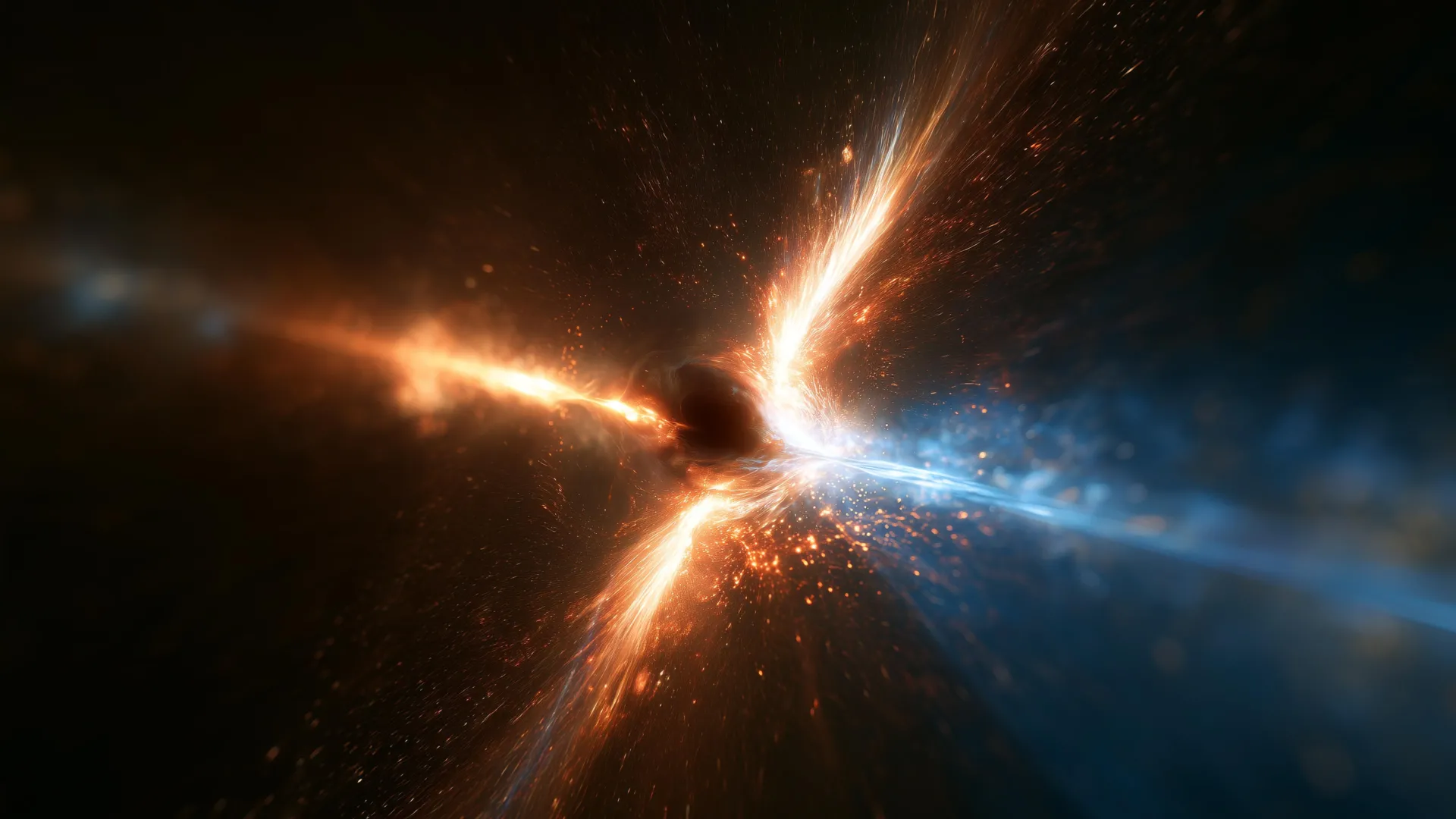
Physicists at UC Santa Barbara have pushed the search for microscopic black holes at the Large Hadron Collider (LHC) at the European Center for Nuclear Research (CERN) into new territory.
These hypothetical black holes would be extraordinarily small and short-lived. If they could be produced at the LHC, their existence might help physicists address some of the deepest unanswered questions about spacetime and gravity. The search also gave researchers a chance to test a new technique for finding rare and previously unknown particles.
“Had we found evidence, we could have begun to directly study quantum gravity,” said Tamas Vami, a researcher in the Compact Muon Solenoid (CMS) experiment who is conducting his postdoctoral work under the guidance of UCSB physics professor Joe Incandela. “It’s a step toward unifying all of the known fundamental forces, which has been a goal of physicists for more than a century.”
The search did not uncover evidence of quantum black holes. But in particle physics, failing to detect something can still provide important information by ruling out where it could exist.
“It’s not a dead-end,” said Incandela Lab graduate student researcher Danyi Zhang. “The result is an exclusion limit, which is a real, publishable statement: ‘If this thing existed with these properties, we’d have seen it. We didn’t, so we can rule it out here.’ That’s genuine knowledge about how the universe works.”
Why Missing Black Holes Still Matter
One of the major puzzles in fundamental physics involves the enormous difference between the scale of the universe we experience and the Planck scale, the fundamental energy scale associated with quantum gravity.
Some physicists have proposed that new physics or an undiscovered symmetry could explain this difference. Crucially, some of those effects might appear at energy levels the LHC can reach.
Years of experiments have already eliminated many theoretical possibilities, and the continued absence of clear signs of new physics at the LHC has become a major challenge for researchers. But similar situations have happened before. Periods in which existing theories struggled to explain observations have sometimes led to radically new frameworks, including Einstein’s theory of relativity.
For that reason, the researchers say null results are an important part of scientific progress. Each one reduces the number of viable possibilities and helps determine where future experiments should look.
Vami’s and Zhang’s results are published in the journal Progress in High Energy Physics (PHEP).
Could the LHC Create Tiny Black Holes?
The possibility of producing black holes at the LHC emerged roughly two decades ago. Physicists proposed that if enough energy were concentrated into an extremely small region, and if extra spatial dimensions (which are already required in string theory) exist, then quantum black holes might form during the trillions of proton-proton collisions created by the accelerator.
These objects would be nothing like the enormous astrophysical black holes found throughout the universe.
“They wouldn’t stick around very long — if you made one, it would disintegrate immediately,” said UCSB physics theorist Steven Giddings, an expert in the paradoxical implications of combining quantum mechanics with gravity, and one of a few scientists at the time who proposed that under certain conditions these tiny voids in spacetime could exist.
When scientists first discussed the possibility, the idea became widely misunderstood. Public concerns focused on the possibility that the LHC might create stable black holes, even though the quantum black holes being considered by physicists would disappear almost instantly.
“People were more focused on the classical behavior of black holes,” said Giddings, referring to those massive voids in spacetime, areas of extreme gravity that can eat whole stars, grow, merge.
The hypothetical black holes produced at the LHC would instead arise from proton-proton collisions combined with the effects of extra spatial dimensions that have never been observed.
Hidden Dimensions Could Make Gravity Stronger
Creating any black hole requires squeezing a large amount of energy into an extremely small region.
“So what do you need to make a black hole? Well, you have to compress some energy into a really small volume,” Giddings explained.
That “really small volume” might extend through two or more hypothetical spatial dimensions that are too small for humans to detect within our 3 + 1 dimension reality.
Such extra dimensions have been proposed as one possible answer to the hierarchy problem, a longstanding question in physics that asks why gravity is dramatically weaker than the other fundamental forces.
One possibility is that gravity is not intrinsically as weak as it appears. Instead, some of its strength could be “leaking” into these extra dimensions. If that were true, the Planck scale could be much closer to the energy scales physicists can experimentally reach.
“Basically, the gravitational force gets stronger, faster, as you go to shorter distances,” Giddings said.
But stronger gravity alone would not be enough. Scientists would also need to concentrate enormous energy into an exceptionally small volume.
That is where the Large Hadron Collider becomes important.
Colliding Particles at Extreme Energies
The LHC accelerates protons to tremendous energies before smashing them together. These collisions give physicists access to extremely small distance scales.
“At the LHC, we’re colliding particles at extremely high energy, which corresponds to tiny distance scales,” Incandela said. “As with microscopy, higher energies mean smaller wavelengths, allowing one to probe smaller distances.”
Researchers are probing scales as small as 10-20 meters at the LHC, a distance that is to an atom, what an atom is to a human.
“The extra dimensions wouldn’t have to be that small,” Incandela continued, “meaning that the LHC proton-proton collisions could be affected by them.”
If gravity became sufficiently strong at those scales and enough energy were concentrated into a tiny enough region, spacetime could theoretically fold in on itself and produce a quantum black hole.
Safety concerns surrounding this idea were eventually addressed through detailed reports and comparisons with ultra-high-energy cosmic rays. These naturally occurring particles have been striking Earth’s upper atmosphere and other astronomical objects at immense energies without producing dangerous effects.
Those comparisons showed that high energy particle collisions do not pose a black hole threat. Any quantum black holes produced under the proposed models would evaporate essentially immediately.
Even so, their extremely brief existence might leave detectable traces in the particles produced as they decay.
Earlier searches by the ATLAS and CMS experiments failed to find such evidence, but those studies had access to much smaller datasets.
With far more collision data now available, researchers could search at higher energies and increase their chances of seeing an exceptionally rare quantum black hole event if such events occur.
Where Quantum Physics Meets Gravity
The search is ultimately connected to one of the biggest unresolved problems in modern physics.
“We have two big theories that describe nature,” Tamas Vami said. “If you want to describe things that are small, you go to quantum field theory. We have the Standard Model to describe all the particles, and it performs exceptionally well in practice. And when you go to the very, very big you have general relativity that would describe how big and massive objects behave.”
Physicists have spent decades trying to combine these frameworks into a single description of nature.
The difficulty is that quantum physics generally describes extremely small objects, while general relativity becomes most important for very massive ones.
The goal is to somehow merge the two theories into a single, unified theory, Vami said, “and that’s really hard to do because you don’t often have a situation which is really tiny but also extremely heavy.”
Microscopic black holes could provide exactly that combination. They would be small enough for quantum effects to become important while also concentrating enough mass and energy for gravity to matter.
Searching for the Signature of a Black Hole
The researchers analyzed CMS detector data collected between 2016 and 2018 and used two approaches to look for evidence of quantum black holes.
One involved a property called sphericity.
“You form a black hole, and it immediately disintegrates. But it has a very spherical decay signature, lots of things going in all directions.”
Another clue would be an unusually large amount of energy in the particles produced by a collision.
“We know that black holes are very high energy,” Danyi Zhang said. “So we basically just take the energy of these particles that are decay products of whatever was created in the collision and sum them together. And if the sum is large enough, we can say that this is the region where we are likely to find the signal.”
Those unusual event patterns also provided an opportunity to use a new analytical method known as “phase-space distance,” developed by UCSB particle theorist Nathaniel Craig and collaborators.
The method works with a machine learning system called a Support Vector Machine, which helps researchers distinguish possible signal events from the enormous background of conventional high energy particle collisions.
In particle physics, “phase space” is a multidimensional mathematical representation incorporating properties such as space, time, energy and momentum into a description of a particle system.
Machine Learning Joins the Search
“We developed the idea of the phase space between events, which can be combined with SVM to help the search,” Craig said.
The method converts the distances between events into a single measurement called an SVM score. Events with larger scores are more likely to resemble the signal scientists are searching for.
This study marked the first time the phase space distance method had been used in a particle physics data analysis.
“We compared phase space distance with the sphericity variable and our conclusion is that phase space distance outperforms sphericity,” Zhang said.
The approach also differs from some “black box” machine learning systems because it is supervised. Researchers can examine the mathematics that produced the result rather than simply accepting an unexplained output.
New Limits on Quantum Black Holes
The search ultimately found no evidence for quantum black hole production.
Based on the theoretical models examined, the result means quantum black holes are unlikely up to about 12 TeV (Tera-electron volts). It also constrains certain theories involving extra spatial dimensions.
Those restrictions are scientifically valuable because they eliminate parts of the range in which these theoretical models could operate.
String theory, for example, assumes a total of 10 dimensions.
“But these measurements say that, assuming the parameters of the theories we considered, you cannot have more than two,” Vami said.
“Theories don’t predict one exact answer,” Zhang added. “They predict a whole range of places a particle could be hiding. Each search clears out part of that range and says ‘not here,’ and over time the map of where new physics could still be, shrinks.”
That process of elimination has repeatedly played an important role in particle physics. The Higgs boson was discovered in 2012 only after decades of experiments gradually excluded one energy region after another.
By eliminating possibilities, physicists can improve their theories, develop new models and design better experiments and detectors.
The Mystery of Weak Gravity Remains
For now, the hierarchy problem is still unresolved.
Without extra dimensions, Giddings estimates that particle collisions would need to reach roughly a million billion times the energy currently achieved at the LHC to produce even the smallest black holes, which would have masses measured in micrograms.
“Theorists will continue to generate ideas and maybe we will do better in figuring things out without experimental data, but it will be difficult,” Giddings said.
“The best guide is experimental data, and that’s what we’d really like to have,” he said, to study quantum gravity, which he calls “the most profound problem in theoretical physics.”
By testing collisions at some of the highest energies currently available, Vami and Zhang have been able to push the Standard Model toward its limits.
Their results provide new guidance for future searches for quantum black holes as a possible solution to the hierarchy problem. Just as importantly, the work shows that the phase space distance method could be used more broadly to search for unfamiliar particles, unusual interactions and other rare phenomena.
Searching for Another Exotic Phenomenon
The researchers also used the same study to hunt for sphalerons.
Sphalerons are not particles. Instead, they are theoretical unstable configurations of particle fields that, like quantum black holes, would be expected to produce relatively spherical energy patterns.
They could potentially help explain another major mystery: why the universe contains matter.
According to current understanding, the Big Bang should have produced matter and antimatter in equal amounts. Those two forms of matter should then have annihilated one another, leaving behind energy rather than the matter-filled universe we see today.
This mismatch is known as the matter-antimatter asymmetry problem.
Researchers found no evidence of sphaleron processes either. That absence allowed them to place limits on how many particle interactions could potentially involve sphaleron transitions.
A More Powerful LHC Is Coming
Future experiments could push the search considerably further.
“We will be putting constraints on what theories can be true,” said Zhang, who is looking forward to new data obtained in the future at the LHC, which is currently shut down for the installation of an ambitious set of upgrades.
The future High Luminosity Large Hadron Collider (HL-LHC) will provide scientists with far larger datasets and more opportunities to detect extremely rare events.
Those experiments will allow researchers “to study fundamental components of matter in more detail,” including processes that may reveal how the early universe evolved.

Snow drought and unusually warm conditions across the Colorado Basin in 2026 sharply reduced water flowing into major reservoirs across the U.S. West.
By summer, the effects of the weak 2025-2026 mountain snowpack in the Upper Colorado Basin had reached Lake Powell. With far less snowmelt than usual feeding the Colorado River, inflows dwindled, and the second-largest reservoir in the United States fell to record-low levels in late August and early September.
Lake Powell Falls Below Its Previous Record
Satellite images captured the dramatic change in Lake Powell near Glen Canyon Dam. The images were collected by the OLI (Operational Land Imager) aboard the NASA-USGS Landsat 8 satellite on September 1, 2017 (left), and September 10, 2026 (right).
In the 2026 image, Lake Powell’s water surface stood at 3,517.24 feet. Roughly a month earlier, the reservoir had already fallen below its previous record low of 3,519.92 feet, which was set on April 13, 2023. Water levels continued declining into early September.
The 2017 image provides a striking contrast, showing Lake Powell during one of its highest water levels of the past decade.
Lake Mead Also Reaches Record Lows
The Colorado River first flows into Lake Powell before continuing downstream toward Lake Mead. In August 2026, Lake Mead also reached record-low levels.
The river system, managed by the U.S. Bureau of Reclamation (USBR) and other agencies, is a critical source of both water and electricity across the Southwest. More than 40 million people depend on it, including residents of Las Vegas, Phoenix, Los Angeles, and San Diego. The river also supplies water to roughly 5 million acres of farmland.
Why Snow Matters So Much to the Colorado River
Much of the Colorado Basin is arid or semi-arid, which makes mountain snow especially important. A substantial share of the Colorado River’s annual flow begins as snow that accumulates at high elevations during winter and melts during spring and early summer.
The Upper Colorado Basin, along with many mountainous regions across the U.S. West, received unusually little snow during winter 2025-2026. The shortage amounted to a snow drought.
Periods of record warmth made conditions worse by further reducing the snowpack. As a result, the spring snowmelt delivered far less water to reservoirs than it normally would, providing little relief for already depleted lake levels.
Emergency Steps to Protect Lake Powell
In April 2026, the USBR began taking measures to stabilize Lake Powell and prevent the reservoir from dropping below the elevation required for hydropower generation.
Without intervention, the agency considered that possibility realistic by August 2026.
To help support Lake Powell, USBR began releasing additional water from Flaming Gorge Reservoir in northern Utah and southern Wyoming. At the same time, officials reduced the amount of water being released from Lake Powell into Lake Mead.
The agency also canceled a “controlled flood” planned for April that was intended to rebuild sandbars used as fish habitat. In August, officials also skipped a “cool mix” release designed to help protect native species.
A Megadrought Continues to Strain the Southwest
Drought in the U.S. Southwest has persisted since around the beginning of the 21st century. Experts have described the prolonged dry period as a megadrought, and it continues to place intense pressure on the region’s limited water supplies.
NASA-supported projects and monitoring systems are giving water managers and other decision-makers across the Colorado Basin more detailed information about drought conditions and how they are changing.
At the Colorado River’s headwaters, for example, a dashboard built around the Western Land Data Assimilation System (WLDAS) provides real-time visualizations of soil moisture, snow water equivalent, and evapotranspiration. The information helps support Colorado’s drought task force and contributes to weekly U.S. Drought Monitor maps.
Satellite Data Helps Track Drought Across the Basin
Closer to Lake Powell, the Drought Severity Evaluation Tool, co-developed with the Navajo Nation, allows leaders to track localized drought indicators, precipitation patterns, and vegetation health across tribal lands. (With funding from NOAA’s National Integrated Drought Information System, its adoption expanded to Oklahoma’s Chickasaw and Choctaw Nations in 2025.)
Another resource, the Colorado River Integrated Assessment tool, was developed by Arizona State University researchers in partnership with the Central Arizona Project. It brings together improved modeling with NASA-satellite-validated measurements of snowpack, surface and groundwater storage, soil moisture, and other conditions throughout the Colorado River Basin in a single interactive system.
Why it’s a good idea to get out for an evening stroll, and other essential sleep advice for students.
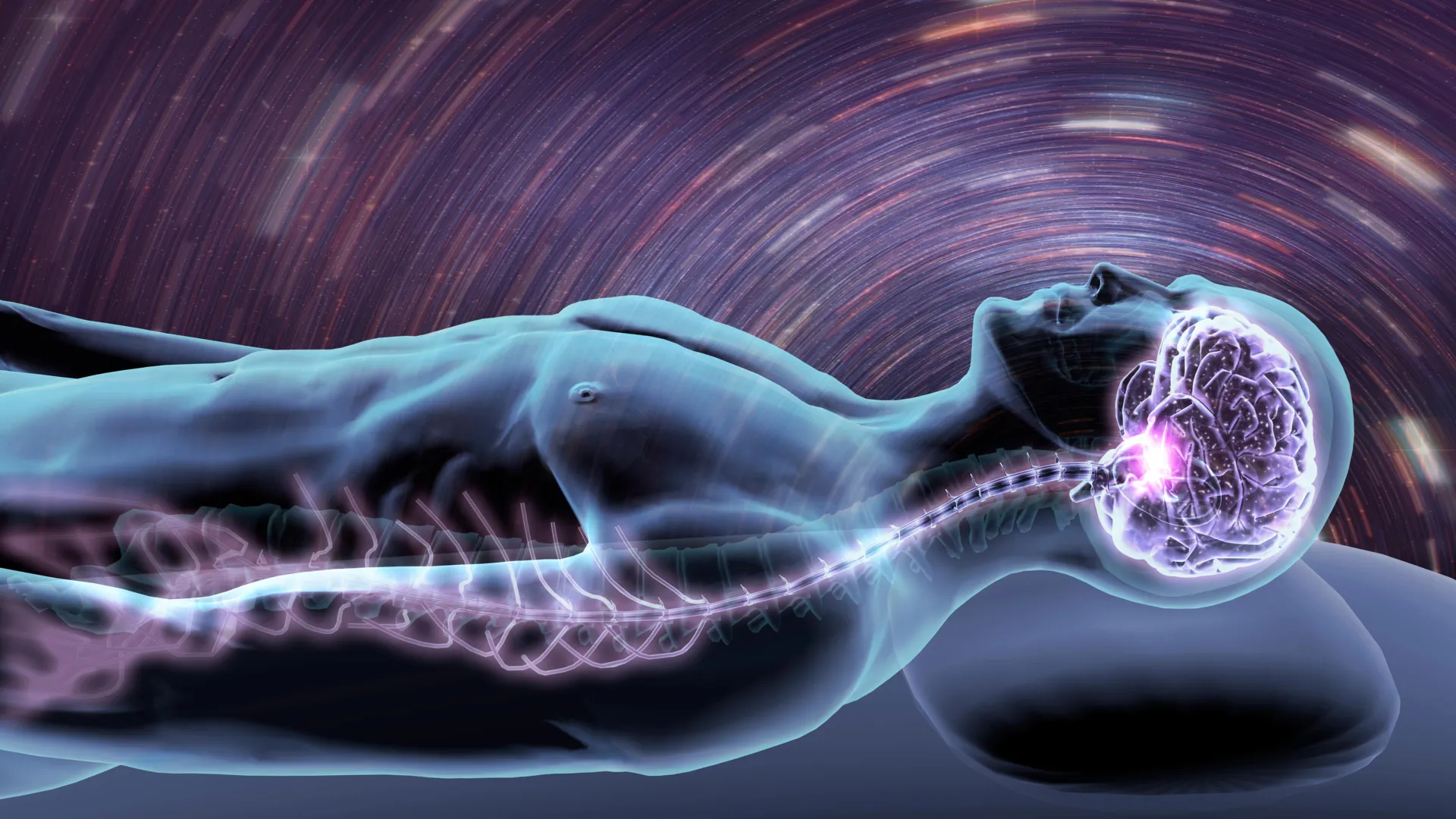
For years, people have debated whether drinking coffee in the evening interferes with sleep. Some people can have caffeine late in the day and fall asleep easily, while others may remain awake for hours. But researchers are increasingly finding that simply asking whether coffee delays sleep may miss a more important issue: what caffeine does to the brain after sleep begins.
To investigate those effects, scientists are using EEG, or electroencephalography — a method used to record the brain’s electrical activity. EEG measurements can reveal much more than how long someone sleeps or how often they wake up. They can also provide clues about the biological quality and depth of that sleep.
“EEG allows us to see not only whether a person is sleeping, but also how the brain is sleeping. Classical sleep assessment assesses sleep duration and its stages, whereas quantitative EEG analysis reveals more subtle changes, such as reduced slow-wave activity, which is an important marker of sleep depth and its restorative character,” explains Prof. Donata Kurpas from the Department of Nursing, Wroclaw Medical University.
Slow waves are a major feature of deep sleep — the stage associated with physical recovery, replenishing energy reserves, and maintaining healthy brain function.
Caffeine May Make Sleep Less Restorative
Caffeine does not always affect sleep in obvious ways. A person may still fall asleep at a normal time and remain asleep for what appears to be a full night, yet the quality of that rest may still be altered.
“Caffeine may shorten sleep or make it more difficult to fall asleep; however, even when sleep duration appears normal, it may reduce slow-wave activity and shift the EEG pattern toward a more ‘wakeful’ brain,” says Prof. Kurpas.
In practical terms, someone might spend eight hours in bed without getting the same level of neurological recovery they would normally expect. Because the disruption may not cause obvious awakenings, it can easily go unnoticed.
“The subjective feeling of having slept well does not always correspond to what we observe in neurophysiological recordings. A person may fall asleep without major difficulty and not remember awakenings, while the brain may display fewer features of deep sleep,” the expert adds.
Why Caffeine Affects People Differently
Another major finding from caffeine research is that responses vary considerably from person to person. Genetics, metabolism, age, stress, and chronic fatigue can all influence how strongly caffeine affects sleep.
For some people, even coffee consumed early in the day may still have an impact by nighttime.
“It is not only about coffee consumed just before bedtime. For some people, the total amount of caffeine consumed during the day and whether the body has enough time to metabolize it before nightfall may also be important,” Prof. Kurpas emphasizes.
That possibility may be especially relevant for people who rely on caffeine to improve focus, stamina, or performance, including athletes, people doing mentally demanding work, and anyone who regularly uses coffee or other caffeinated products to stay alert.
Caffeine Can Create a Fatigue Cycle
Caffeine can temporarily increase alertness and make fatigue feel less noticeable. However, experts caution that the boost may sometimes come at the expense of the body’s ability to recover fully during sleep.
In that sense, caffeine can resemble “borrowing energy” from the body. If nighttime recovery becomes less effective, the person may feel more tired the following day and turn to even more caffeine for help.
“If caffeine helps a person function during the day while simultaneously worsening the quality of nighttime recovery, a vicious circle may develop: greater fatigue, greater need for stimulation, and poorer sleep,” says Prof. Kurpas.
These findings are one reason sleep researchers are paying less attention to sleep duration alone. Increasingly, the focus is shifting toward what the brain is actually doing during the night and whether that sleep is biologically restorative.
“Caffeine is neither ‘good’ nor ‘bad’. It is a biologically active substance whose effects depend on dose, time of day, age, lifestyle, sleep quality, stress burden, and individual sensitivity,” the expert concludes.

The procedure was “remarkably” successful.
That is how 74-year-old Cynthia Schraf-Fletcher describes genicular artery embolization (GAE), a minimally invasive treatment designed to reduce chronic knee pain. Nearly a year after having the outpatient procedure on her right knee, she says the result feels almost the same as the total knee replacement she previously underwent on her left knee.
“I couldn’t be more pleased,” says Schraf-Fletcher, who turned to Leigh Casadaban, MD, MS, assistant professor of radiology at the University of Colorado Anschutz School of Medicine, for the treatment.
She says everyday activities that once came with substantial discomfort are now much easier. Gardening, riding a stationary bicycle, and enjoying other favorite activities all involve far less pain.
A New Option Between Injections and Knee Replacement
Genicular artery embolization works by reducing blood flow to inflamed areas inside the knee. The goal is to calm inflammation, which can in turn reduce swelling and pain.
That makes the procedure potentially useful for people with osteoarthritis who have exhausted simpler options but are not yet ready for major surgery.
“For treating osteoarthritis in the knees, we often think of medications, physical therapy, maybe a steroid injection, and then on the far end of the spectrum is a total knee replacement. There really hasn’t been anything for patients in between,” Casadaban, a vascular interventional radiologist, says. “GAE is a promising minimally invasive procedure that may fill that spot for people who have failed conservative treatments but are not yet ready to have a major surgery.”
Osteoarthritis is a degenerative joint disease in which cartilage and other structures inside a joint gradually break down. In the knee, that process can cause pain, stiffness, inflammation, and difficulty walking or exercising.
According to Casadaban, people with mild to moderate knee osteoarthritis tend to be the best candidates for GAE. Patients with more advanced disease can also undergo the procedure, but the benefits may not last as long.
“We find about 70% of patients have phenomenal results. They cut their pain scores in half, sometimes more. We have a few patients with no pain at all after the procedure,” Casadaban says. “Patients that have tried a lot of other treatments and haven’t had pain relief are happy to get back to their normal activities.”
For Schraf-Fletcher, the chance to avoid another major knee operation was especially appealing. After experiencing complications from her earlier knee replacement surgery, she says she was eager to try GAE and is glad she did.
How the Procedure Works
GAE typically takes one to two hours and is performed under conscious sedation. That means the patient is relaxed and comfortable but is not placed under full general anesthesia.
An interventional radiology team begins by making a small incision in the crease of the leg. A very thin tube called a catheter is then guided through the femoral artery using X-ray imaging and contrast dye, which allows the doctors to see the blood vessels clearly.
Once the catheter reaches the genicular arteries around the knee, the team releases tiny beads into abnormal blood vessels associated with the painful, inflamed areas identified by the patient. Those beads reduce blood flow to the targeted vessels.
Because the procedure does not involve replacing the joint or making a large surgical incision, recovery is generally much shorter than after knee replacement.
Patients are monitored for several hours afterward and typically return home the same day. They are usually advised to take it easy for the next few days.
A Procedure With Growing Interest
GAE was first developed in Japan a little more than a decade ago and has since attracted increasing attention around the world.
In the United States, the FDA has granted “breakthrough device status” to a number of devices used in this area since 2021. The designation is intended to speed the development and review of certain medical technologies that could offer meaningful advantages for patients.
Early research on GAE has also produced encouraging results.
“The theory is that GAE reduces inflammation inside the knee joint, and symptom relief can last years,” Casadaban says. “Four-year data published in Japan shows that if you have one outpatient procedure, your pain relief can last for those four years. In the U.S., we now have two-year data, which shows that if you have a good response, pain relief can last two years. That really speaks to the theory that we’re hopefully modifying something in the joint.”
The possibility that a single outpatient treatment could provide relief lasting several years is one reason researchers are closely studying what happens inside the knee after GAE.
Researchers Are Testing How GAE Changes the Knee
Casadaban is leading clinical trials at CU Anschutz aimed at learning more about the treatment.
One study is looking at changes in fluid in the knee in people undergoing GAE. By examining those changes, researchers hope to better understand how the procedure affects inflammation and other processes inside the joint.
Another study is evaluating a new temporary treatment device called Nexsphere-F. The device is placed in the arteries and temporarily blocks small blood vessels in the knee that may contribute to inflammation and pain.
Osteoarthritis affects millions of people each year and can develop in many joints throughout the body. For now, GAE is being used to treat knees, but the same general strategy is beginning to expand into treatments for other painful conditions.
Casadaban says similar approaches are being explored for problems including frozen shoulder, tennis elbow, and plantar fasciitis.
If ongoing studies continue to show lasting benefits, GAE could become an important option for patients caught between conservative treatments and major joint surgery.
The rule is named after 13-year-old Martha Mills, whose family’s concerns about her care were not listened to before her death.
