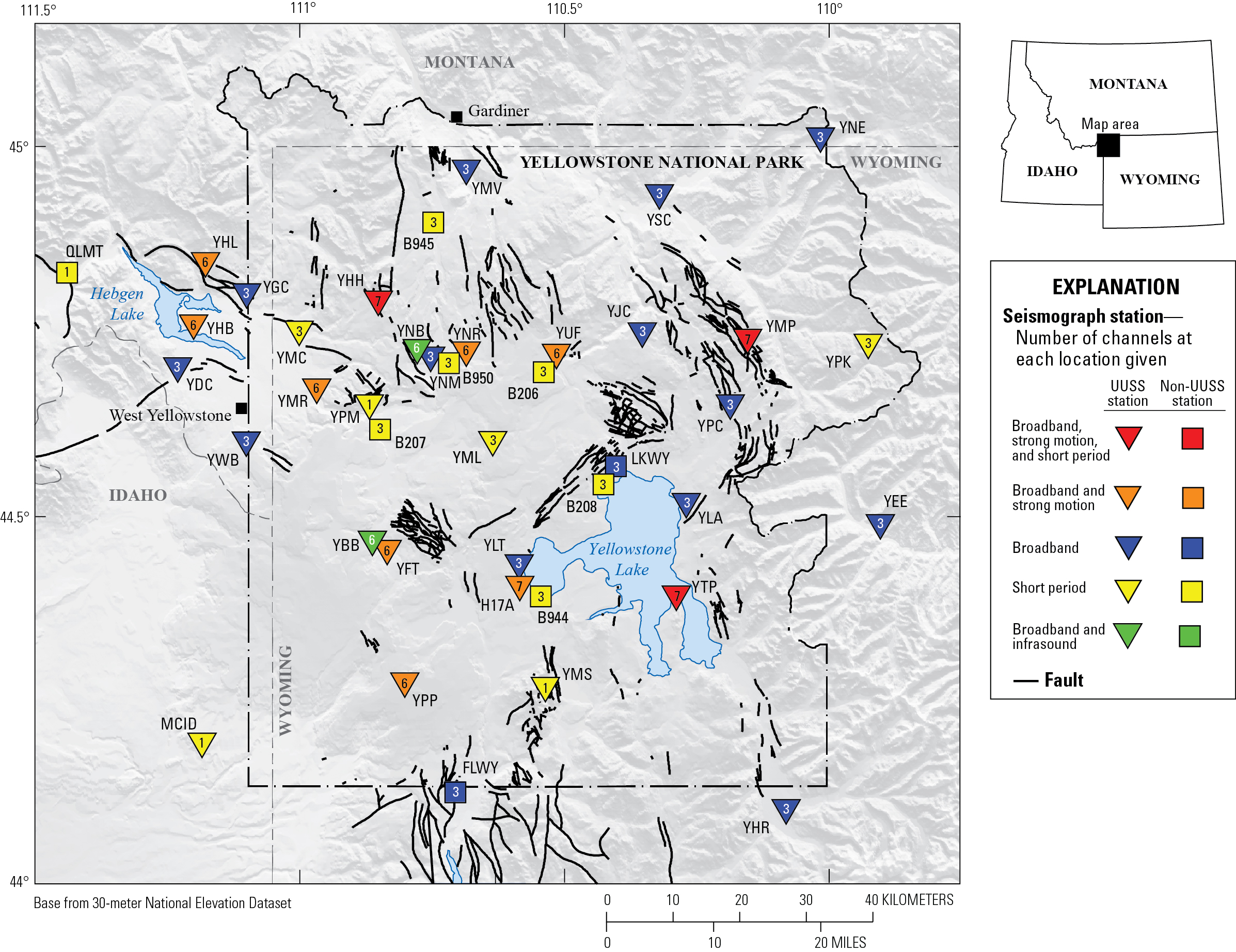
Around 631,000 years ago — a geological blink of an eye — catastrophe unfolded in what is now north-western Wyoming, US. During what is thought to have been a series of immense volcanic eruptions, life within hundreds of kilometers of the blasts was shattered. Ash was dispersed across much of North America and the effects were felt worldwide. This was a super-eruption of the massive volcanic system located in what is now the Yellowstone National Park.
Despite the scale, no known human witnessed the cataclysm. As far as we know, early humans had not yet reached the continent. Across oceans, perhaps early humans did wonder at the hazier skies and unusually vivid sunsets. Volcanic particles circulating in the sky cooled their climate and likely affected their weather patterns and lives. Whether they noted these changes – or connected them to any distant event – is unknowable.
Today, humanity would certainly notice. We already know that a super-eruption on this scale would be a threat civilization as we know it. So what exactly would we experience if Yellowstone erupted? We are experts in disasters and volcanoes and what follows is a thought experiment into what might happen in the worst case scenario. We’ve based our hypothesis on research and by examining how countries have dealt with disasters in recent years.
T-2 months
Shortly after 6am, an analyst at the University of Utah Seismograph Stations sees a series of sharp spikes interrupting the usually quiet wavy lines recorded by Yellowstone’s earthquake monitors. The measurements represent earthquakes detected beneath Yellowstone overnight. The scientist raises an eyebrow and takes a deep breath – these observations don’t fit with Yellowstone’s usual behavior.
People often imagine Yellowstone as a sleeping “supervolcano.” It may sleep, but its geological processes never do. An array of instruments monitors its activity – and any changes in it. A dense network of seismometers records earthquakes in the region. Around the clock, data feeds in from GPS stations, strainmeters (instruments which measure deformations and changes in the shape of the Earth’s crust) and sensors positioned within its active geyser areas. Satellite observations, gas sampling and field surveys add plenty more information.
Scientists look at the number of earthquakes along with their location, depth and size. Earthquake “swarms” warrant particular attention, especially when they appear to be migrating through the crust (Earth’s solid, outermost rocky shell) or becoming progressively shallower. Such patterns can indicate that magma or pressurized hydrothermal fluids (hot, mineral-rich water) is moving upwards.
Our scientist is relieved to discover that most of the unusual tremors are tiny — too weak to have been felt. But together, they form an unusually concentrated swarm. The analyst checks the signals against neighboring seismometers and, more out of curiosity than concern, contacts colleagues at several partner organizations comprising the Yellowstone Volcano Observatory (YVO) in order to follow YVO’s response plan.
They deduce that, overnight, instruments have recorded a tightening cluster of earthquakes beneath Yellowstone’s vast caldera, which is roughly 55–70 kilometers across. Yellowstone experiences thousands of earthquakes each year, and swarms are not unusual. But this one appears to be migrating ever so slightly upwards. Still, an earthquake swarm by itself doesn’t mean Yellowstone is preparing to erupt, nor does ground deformation, changing temperatures or gas emissions. Scientists are more concerned about several such changes happening together.
The team of scientists decides to wait and see what happens next.
T−1 month
Four weeks later, the swarm has continued to migrate upwards. New events are also appearing along a narrow zone beneath the caldera, notes the analyst, who has now lost their appetite for both food and caution and is writing reports designed to be alarming. GPS stations above the swarm have begun moving apart. Measurements of strain have increased and satellite radar reveals the cause: there’s a broad area of accelerating uplift of the ground.
Together, the observations are consistent with magma forcing its way into the crust – as seen in places like Hawai’i prior to eruptions. Reassuringly for YVO staff, Yellowstone has produced similarly alarming combinations of signals before with no subsequent eruptions. Between 2013 and 2014, parts of the caldera began rising at rates of more than 15 centimeters a year and earthquake activity increased.
This culminated in a magnitude 4.8 earthquake, the largest recorded at Yellowstone since 1975. Shortly after, the uplift changed to subsidence (the ground moving downward) and scientists concluded that the episode was associated with hydrothermal fluid movements rather than magma.
Mindful of the need to keep the public informed without causing unnecessary alarm, YVO responds cautiously. A duty scientist assumes responsibility for assessing the incoming data. Additional, temporary seismometers and GPS units are deployed to provide more precise data, and gas and water are sampled more frequently.
YVO begins closer coordination with the National Park Service and emergency management authorities, reviewing road closures, public communications and evacuation plans. Perhaps ominously, but to err on the side of caution, Yellowstone’s Volcano Alert Level is raised from “normal” to “advisory,” indicating that unrest is above its established background level.
These developments are worrisome enough that scientists start speculating about a major eruption’s impacts. The media take an interest, but the volcanologists have learned how damaging it can be when volcanic uncertainties morph into a full-blown dispute, played out in public.
Scientists privately discuss differences in interpretations, agreeing on regular updates for the public via media briefings and social media postings. As the volcano’s activity continues to ramp up, high-level decision-makers are alerted that this situation could become a major catastrophe. The probability of it happening within three months increases from 6-9% to 21-27%.
Due to the uncertainties, the politicians make no specific declaration. The US’s Federal Emergency Management Agency nevertheless starts drawing up plans for a large-scale evacuation. They express confidence in public while perhaps fearing in private that a worst-case scenario could make it hopeless to try to save everyone.
Over the following fortnight, the unrest escalates dramatically. Earthquakes become more frequent and shallower. Long-period seismicity (much gentler earthquakes, usually caused by fluid movement rather than faults shifting and known to occur at Yellowstone) and sustained volcanic tremors suggest magma and pressurized fluids are forcing open fractures in the ground.
The uplift accelerates and GPS stations move centimeters in days. Geyser activity becomes increasingly erratic. Even the Old Faithful geyser becomes less faithful: its usually regular eruptions become harder to predict. Meanwhile, gas measurements and changes in spring water chemistry indicate an increased input of carbon dioxide and sulfurous gases into Yellowstone’s hydrothermal system. Taken together with the shallow earthquakes and rapid uplift, the concern is that magma may be moving upwards.
T-2 weeks: ‘It’s gonna blow!’
These new observations lead to a press conference describing an 85-92% probability of a cataclysmic eruption within three weeks. At this point, the YVO raises Yellowstone warning to “watch,” and the USGS raises the Aviation Color Code to orange, with aircraft rerouted around the region.
An evacuation zone extending 100 kilometers beyond Yellowstone National Park is announced, affecting roughly 200,000 residents, as well as thousands of visitors in the region. The topic now dominates both traditional and social media. The attention likely spawns detractors as well as conspiracists. The former claim that nothing will happen. The latter spread the disinformation that YVO is being paid by foreign shadow billionaires to bring down the US so that other countries can control the world’s economy.
Now that a super-eruption appears imminent with high confidence, world leaders swing into action. They must make a choice: help each other as a global village or repeat COVID-19 style global shuttering.
If they choose collaboration, then they start evacuations, moving people as far as needed – including across international borders. This would involve supporting them with adequate homes, water, food, electricity and community through schools, jobs, transport and safety. Achieving all this seems unlikely, since most of the world’s population has always lacked it. Nonetheless, the US has the money, skills and goods to evacuate and resettle the huge numbers, if leaders cooperate and use everything available.
More likely, many countries could be reticent to accept “volcano refugees,” making excuses – perhaps legitimate ones – that they don’t have the money, resources or space to safely settle so many people so swiftly. They are further stretched by those who self-evacuate through having more than one passport, along with the wealth or the social network to start afresh.
Charities step in to help some people leave on chartered planes, as well as via long, excruciating journeys on overcrowded trains and buses. The most marginalized and poorest may have no option but to stay behind. Some might join the minorities who do not believe the eruption will happen, who think their well-stocked underground bunkers will protect them (an overly optimistic belief), or who would rather die at home than live in a foreign land with a devastated world.
T=0
In an instant, seismic instruments are overwhelmed by an intense burst of shallow earthquakes. Expanding clouds of steam rise from newly opened cracks. The YVO and USGS have no choice but to raise the warning level and Aviation Color Codes to red: a dangerous eruption is imminent.
The eruption does not begin with the entire caldera exploding at once. Instead, rising magma intrudes into Yellowstone’s shallow hydrothermal system, rapidly vaporising immense volumes of water. At atmospheric pressure, water can expand in volume around 1,700 times when converted to steam. Trapped beneath the surface, this rapid expansion triggers violent so-called phreatomagmatic explosions that send superheated steam, mud and shattered blocks of rock kilometers into the air.
There are no human casualties yet, thanks to the wide exclusion zones on land and in the air. Wildlife, livestock and vegetation are not as fortunate. Within roughly 4–6 kilometers of the initial eruption sites, the landscape is battered by falling rock, ash and mud. Beyond the exclusion zone, people watch an impressive two kilometer-high plume rise into the sky – but it rapidly grows larger, and any sense of relief is short-lived.
A few hours later, gas-rich magma, 650-800°C in temperature – well above the melting points of lead and zinc – breaks through the fractured surface. As the confining pressure falls, dissolved gases separate into distinct components from the melt and expand violently. The magma fragments into pumice (porous rock) and ash while tearing away huge fragments of the surrounding rock from the walls of the erupting vent.
Expanding gases and intense heat drive this material upwards, creating a vast eruption column rising 30–50 kilometers into the atmosphere – far above commercial passenger aircraft, which usually cruise at up to about 13 kilometers. On this clear morning, its upper reaches are visible from Denver, some 800 kilometers away.
As the eruption continues and the volume of material expelled mounts, scientists realize it might be the opening stages of a VEI 8 super-eruption (magnitude 8 or greater) – the highest formal notch on a scale used to measure the size of explosive volcanic eruptions. It was 74,000 years ago that humanity last witnessed this scale of eruption with Toba in Indonesia.
The immense umbrella cloud that forms does not behave like a normal ash plume that simply drifts with the prevailing wind. Its momentum initially drives ash outwards in every direction – spreading hundreds of kilometers before high-altitude winds take over and carry fine ash thousands of kilometers downwind within a day.
After a few hours of continuous eruption, parts of the column collapse, generating scorching pyroclastic density currents (extremely hot, fast-moving mixtures of gas, ash and rock fragments). These surge for tens of kilometers, splintering trees, igniting forests and burying the remnants beneath hot ash and pumice.
Anyone within this zone is pulverized by the blasts, crisped by the heat, or asphyxiated by the ash. There may be up to 1,000 immediate human deaths, including people who refused to move. It is too dangerous to recover most bodies. And even if it were possible, many bodies no longer exist to be recovered.
Outside the main pyroclastic density current zone, casualties mount from vehicle crashes as drivers lose visibility or skid due to ash, from heart and breathing difficulties and from suicide. Vegetation fires spreading beyond the immediate burn zone add perhaps hundreds of fatalities from burning, smoke inhalation and vehicle crashes.
As the magma continues to escape, sections of the unsupported ground subside, opening new fractures and vents while feeding further eruptive columns and pyroclastic density currents. Hundreds of kilometers away – in Denver and along the Canadian border – heavy ashfall darkens the sky, obstructs roads and disrupts power, water supplies and communications. This ash devastates farmland across at least eight states.
Further immediate deaths could result from loss of power disrupting traffic and street lights; curtailing health services including surgery and obtaining prescriptions; and electrocution, fire and carbon monoxide poisoning from trying to set up and operate home electricity generators. Looting and increasing crime during disasters is typically rare, but it could happen in a more desperate worst-case scenario, adding to the casualty toll.
Over the coming days, the eruption continues in pulses as sections of the caldera collapse and new vents open. Successive column collapses generate pyroclastic density currents with the resulting deposits reaching several hundred meters in thickness, as they did in the last super-eruption.
Nearby infrastructure is shattered and entombed beneath the deposits. Airports close because ash interferes with aircraft and other transport networks falter. Communities across all states bordering Wyoming face darkness, breathing difficulties and roofs collapsing under accumulated ash. As the eruption eventually begins to weaken, sulphur dioxide high in the atmosphere forms sunlight-reflecting sulfate aerosols that spread around the northern hemisphere to influence the world’s climate for several years.
T+3 days
Three days into the eruption, much of North America is living in the shadow of Yellowstone. Each successive powerful eruptive pulse sends another column tens of kilometers upwards, from where it spreads into a new umbrella cloud.
Within Wyoming and neighboring states, conditions are catastrophic. Billings, Montana, the nearest large city, is disappearing beneath what will eventually exceed a meter of ash (one published model of a Yellowstone supereruption predicts the city as receiving up to 1.8 meters of ash). Salt Lake City, Utah, and Boise, Idaho, receive tens of centimeters. For southern Canada, much of the US and northern Mexico, day becomes twilight and breathing outdoors without masks becomes increasingly difficult. People on other continents watch in trepidation under vivid, red-orange sunrises and sunsets.
Back in the US, electricity networks begin failing. Warnings had not been heeded that damp ash conducts electricity, short circuiting power lines and substations. Ash clogs machinery and generator intakes. Its weight damages cables and weaker structures.
As electricity fails, so do water pumps, sewage treatment, heating systems, fuel stations and mobile phone and internet networks. People are scared and supermarket shelves empty nationwide as regional and national supply chains begin to break down.
T+2 weeks
Over the following weeks, the crisis becomes one of survival. Repeated ashfall blocks roads, overwhelms drainage systems and damages roofs. During rain, dry ash turns into a dense slurry that makes clearance work harder. Airports remain closed or severely disrupted across much of North America, while railways, freight depots and farms struggle to operate. Livestock and crops die where pasture and water supplies are buried or contaminated by ash.
Large areas close to Yellowstone remain evacuated, while across the US, shelter, fuel, food and clean water become increasingly scarce. Some countries airlift or airdrop humanitarian relief supplies, but are also concerned about stockpiling for themselves. Losses to agriculture, transport and insurance – with many other businesses and services closed – could lead Canada, Mexico and most Caribbean and Central American countries to declare states of emergency. This is partly due to direct impacts on those countries and partly due disruption across the USA and people fleeing from it.
T+4 months
Several months later, eruptions have weakened to intermittent explosions, but the threat of renewed activity remains. For millions, the disaster is far from over. Dry, windy days lift ash back into the air, while rain and snow turn it into a heavy deposit blocking drains and damaging infrastructure. Eye and throat irritation are widespread. People with asthma and other respiratory conditions face serious health risks under reduced and overworked health services.
Water treatment and power plants struggle with ash contamination, equipment failures, lack of spare parts and overwhelming demand, disrupting essential medical and industrial processes. Crops across the most heavily affected regions have been buried. The loss of American and Canadian grain, maize and soya exports drives global food prices upwards.
Flights gradually resume in less affected areas, but airports across North America repeatedly close whenever winds remobilize the ash. The unreliable airspace and transport networks – coupled with agricultural losses, business disruption and reconstruction costs – trigger banking and insurance crises, producing a global recession.
Meanwhile, the atmospheric effects become global. Most volcanic ash has fallen out, but sulfur dioxide injected into the stratosphere produces sulfate aerosols which reflect a significant proportion of the Sun’s energy. Scientists call it a “volcanic cooling episode,” avoiding the term “a new ice age”. Modeling suggests it’s unlikely to cool the global average by more than about 1.5°C, although particular regions and seasons could experience much larger changes. Notably, central North America remains far cooler than before the eruption.
T+10 years
In the years following the eruption, the world moves into long-term recovery and rebuilding. People across the world adapt to a more agrarian lifestyle, learning to fill the land with root vegetables, grains and legumes. With far less leisure time and diminished income, recreational facilities are turned over to food production, notably small-scale greenhouses and vertical farming for producing varied fruits, vegetables, nuts and legumes.
Livestock decreases due to lack of land and feed, opening up more space for crops. People still eating meat typically either hunt big game or trap smaller birds and mammals. Insect farming tends to dominate the re-establishment of bird or mammal farms. People living near coasts, rivers and lakes ramp up fishing, depleting stocks rapidly until controls are enacted in some locations, along with increased farming for seaweed. Where rules are not agreed or enforced, starvation and migration are rampant.
Freshwater availability varies. The world’s climate has changed, providing ample rainfall in some places while drying out others. Large-scale water treatment technology remains known and used, but supply lines for chemicals and spare parts are unreliable. Many people develop local approaches and manage while others suffer contaminated water and disease, including cholera, dengue fever and malaria, just as billions did before the eruption.
Before the eruption, around 4.4 billion people from the world’s population of 8.3 billion lacked full, safe freshwater access. A decade after the eruption, it’s possible that 4.8 billion people lack such freshwater, while the world’s population may have declined to 7.9 billion due to spikes in elderly and infant mortality.
For the eruption’s survivors, disease and death are still rising. The eruption may well provide substantive, long-term evidence for the carcinogenic level of silica in the ash. A small but statistically significant increase in diagnoses of both silicosis (an irreversible lung disease) and lung cancer appears from exposure to ash, with similar results for cardiovascular disease in people breathing in ash particles.
Rates are likely higher than measured, because health systems across a continent were knocked out by the eruption and struggling to recover ten years later. The worst part is that the lack of health systems means that many who are diagnosed cannot be treated properly. Survivable diagnoses become lethal.
Inside the eruption zone, two decades follow of a grey landscape. It appears almost lifeless, with the ash transformed into raging mudflows called lahars in every storm. But vegetation, starting with grasslands and shifting to forests, creeps back into the swathes wiped out in the explosion and people follow. These new pioneers coax the landscape into fertile framing, helping to feed hungry populations.
The dispersed ash eventually settles out of the atmosphere, permitting the Sun’s rays to shine fully on the surface again – reviving agriculture and ecosystems. It also revives fears of human-caused climate change, despite the volcano-induced reduction in greenhouse gas emissions. Scientists work hard to determine whether the global climate has been knocked onto a new trajectory – which might be better or worse for human beings – or whether the heat stored in the atmosphere and oceans from humanity’s greenhouse gas burning will once again force a rapidly heating globe.
Additionally, scientists want to calculate deaths, injuries and loss to quality of life. Excess mortality analyses could suggest 0.7-1.3 billion premature deaths due to the eruption and its impacts. Perhaps double that number experienced temporary or permanent health effects but survived, although some will say that 100% of humanity was directly affected.
The good news, at least for our species, is that this unstoppable power of volcanism changed the planet, but did not end humanity – or come close to doing so.
T+1 million years
A creature descends to Earth from a sleek spacecraft, still humanoid but far removed from its ancestor species Homo sapiens sapiens. Tjjze (the pronoun used) has absorbed all the scant information available about ancient “Earth” and is curious to learn more.
The most notable material is the rise of its first technological civilization just over a million years ago. This was followed by the species abandoning the planet as it changed 140,000-160,000 years ago – becoming taller, sleeker, with longer limbs, and with larger hands, heads and brains – having already established itself around the galaxy. In the remaining lore, myths recur of episodes of runaway planetary temperature changes, hot and cold, as well as a series of volcanic blasts that changed the globe.
Tjjze observes that the vegetation is lush and the H2O is plentiful, providing ample food and water for the bizarre animals and ecosystems. A rapid scan reveals much below the surface. In fact, a large roughly ellipse-shaped ridge made of rock appears prominently underneath the top layers. Yes, this particular region, about 24.3 cqurzots in radius, is definitely lower than the vast plains outside the depression. This seems to indicate an ancient volcanic eruption. And to leave a scar this big, it must have been gigantic.
Tjjze warps the equivalent of the face into the equivalent of a frown as more data are revealed. Indeed, this definitely looks like a caldera. And the age is coming in at around a million years (plus/minus).
Could it have erupted during the time of the technological civilization? Or were they lucky to have just missed it? It is impossible to really know.