New guidance for doctors says focusing on fruit in our diets can help with a really common complaint.


New guidance for doctors says focusing on fruit in our diets can help with a really common complaint.

Scientists from the Indian Institute of Science (IISc) and the California Institute of Technology (Caltech) have finally solved a long-standing puzzle about the earliest moments of photosynthesis — the vital process through which plants, algae, and certain bacteria capture sunlight to generate oxygen and energy-rich compounds.
Their research reveals why the first movements of electrons, which are crucial for transferring energy, occur through only one side of a key protein-pigment structure. The findings were published in the Proceedings of the National Academy of Sciences.
Photosynthesis is a sequence of reactions in which electrons pass between multiple pigment molecules. Although it has been examined for decades, the process remains difficult to fully explain because it involves numerous intricate components, operates at extremely fast timescales, and varies slightly across different species. Gaining a deeper understanding of these steps could help scientists develop efficient artificial systems, such as synthetic leaves and solar-based fuel technologies, that replicate nature’s design.
In most life forms that use photosynthesis, the process begins with a protein-pigment complex known as Photosystem II (PSII). This complex captures sunlight and splits water molecules, releasing oxygen and sending electrons onward to other molecules in the chain of energy transfer.
PSII contains two nearly identical branches, known as D1 and D2, surrounded by four chlorophyll molecules and two related pigments called pheophytins. These are symmetrically arranged and connected to electron carriers known as plastoquinones. In theory, electrons should move from chlorophyll to pheophytin and then to plastoquinone along both branches.
However, experiments have consistently shown that electrons move only through the D1 branch — a finding that has baffled scientists for years. “Despite the structural symmetry between the D1 and D2 protein branches in PSII, only the D1 branch is functionally active,” explains Aditya Kumar Mandal, the study’s first author and a PhD student in the Department of Physics at IISc.
To investigate this imbalance, the team combined molecular dynamics simulations, quantum mechanical analyses, and Marcus theory (a Nobel Prize-winning model that describes how electrons are transferred) to chart the energy patterns in both pathways. “We assessed the electron transfer efficiency step-by-step through both D1 and D2 branches,” says Shubham Basera, PhD student in the Department of Physics and one of the authors.
The team found that the D2 branch has a much higher energy barrier, which makes electron transport energetically unfavourable. Specifically, the transfer of electrons from pheophytin to plastoquinone in D2 requires twice as much activation energy as D1 — a barrier that electrons seem unable to overcome, preventing energy from flowing forward.
The researchers also simulated the current-voltage characteristics of both branches and found that the resistance against electron movement in D2 was two orders of magnitude higher than that in D1.
The asymmetry in electron flow may also be influenced by subtle differences in the protein environment around the PSII and how the pigments are embedded in it, the researchers suggest. For example, the chlorophyll pigment in D1 has an excitation state at a lower energy than its D2 counterpart, suggesting that the D1 pigment has a better chance of attracting and transferring electrons.
The researchers also suggest that tweaking some of these components can boost or rewire electron flow across PSII. For example, swapping chlorophyll and pheophytin in D2 could overcome the electron block, because chlorophyll needs lower activation energy than pheophytin.
“Our research presents a significant step forward in understanding natural photosynthesis,” says Prabal K Maiti, Professor at the Department of Physics and one of the corresponding authors of the study. “These findings may help design efficient artificial photosynthetic systems capable of converting solar energy into chemical fuels, contributing to innovative and sustainable renewable energy solutions.”
This is a beautiful combination of theory at various levels to address a long-standing problem culminating in a new level of understanding, but still leaving mysteries to be challenged, says Bill Goddard, Professor at Caltech and one of the corresponding authors.
BBC researchers caught pharmacists trying to sell Botox without assessing patients first.

Eating a Mediterranean-style diet with fewer calories, adding moderate physical activity, and receiving professional guidance for weight management can lower the risk of developing type 2 diabetes by 31%. That is the key finding of PREDIMED-Plus, a large clinical trial led in Spain by the University of Navarra together with more than 200 researchers from 22 universities, hospitals, and research institutes. The project was carried out in over 100 primary care centers within Spain’s National Health System.
Launched in 2013 after the University of Navarra received an Advanced Grant of over €2 million from the European Research Council (ERC), PREDIMED-Plus is the largest nutrition trial ever conducted in Europe. Between 2014 and 2016, additional institutions joined the effort, bringing total funding above 15 million euros. Most of the support came from the Carlos III Health Institute (ISCIII) and the Center for Biomedical Research Network (CIBER), through its divisions on Physiopathology of Obesity and Nutrition (CIBEROBN), Epidemiology and Public Health (CIBERESP), and Diabetes and Associated Metabolic Diseases (CIBERDEM).
The study, published in Annals of Internal Medicine, followed 4,746 adults between the ages of 55 and 75 who were overweight or obese and had metabolic syndrome but no prior history of cardiovascular disease or diabetes. Over six years, researchers compared two groups. One group adopted a calorie-reduced Mediterranean diet (about 600 fewer kilocalories per day), engaged in moderate exercise such as brisk walking and strength and balance training, and received professional counseling. The other group continued a traditional Mediterranean diet without calorie limits or exercise advice.
The results revealed that the participants who followed the calorie-reduced diet and exercise plan not only reduced their diabetes risk but also lost more weight and trimmed more from their waistlines. On average, they lost 3.3 kg and 3.6 cm from their waist, compared to 0.6 kg and 0.3 cm in the control group. This translated to preventing about three new cases of type 2 diabetes for every 100 participants — a meaningful benefit for public health.
“Diabetes is the first solid clinical outcome for which we have shown — using the strongest available evidence — that the Mediterranean diet with calorie reduction, physical activity and weight loss is a highly effective preventive tool,” said Miguel Ángel Martínez-González, Professor of Preventive Medicine and Public Health at the University of Navarra, Adjunct Professor of Nutrition at Harvard University, and one of the principal investigators of the project. “Applied at scale in at-risk populations, these modest and sustained lifestyle changes could prevent thousands of new diagnoses every year. We hope soon to show similar evidence for other major public health challenges.”
Type 2 Diabetes: A Preventable Global Epidemic
According to the International Diabetes Federation, type 2 diabetes now affects over 530 million people around the world. Its rise is fueled by urbanization (unhealthy diets, sedentary lifestyles, reduced physical activity), an aging population, and increasing rates of overweight and obesity. In Spain, an estimated 4.7 million adults live with diabetes — mostly type 2 — giving the country one of the highest rates in Europe, where total cases exceed 65 million. In the United States, roughly 38.5 million people have diabetes, and the disease carries some of the highest per-patient healthcare costs worldwide. Experts emphasize that prevention is crucial to slow this escalating crisis, which greatly increases the risk of heart, kidney, and metabolic complications.
“The Mediterranean diet acts synergistically to improve insulin sensitivity and reduce inflammation. With PREDIMED-Plus, we demonstrate that combining calorie control and physical activity enhances these benefits,” explained Miguel Ruiz-Canela, Professor and Chair of Preventive Medicine and Public Health Department at the University of Navarra’s School of Medicine and first author of the study. “It is a tasty, sustainable and culturally accepted approach that offers a practical and effective way to prevent type 2 diabetes — a global disease that is, to a large extent, avoidable.”
International Relevance and Support for a Realistic and Scalable Strategy
Annals of Internal Medicine accompanied the publication with an editorial by Sharon J. Herring and Gina L. Tripicchio, nutrition and public health experts at Temple University (Philadelphia, USA). They praised the intervention’s clinical relevance and its potential as a preventive model for type 2 diabetes. Furthermore, they warn that replicating similar strategies outside the Mediterranean context — such as in the U.S. — requires overcoming structural barriers, including unequal access to healthy foods, the limitations of the urban environment, and the lack of professional guidance. In this scenario, they advocate strengthening public policies that promote more nutritious and more equitable environments. At a time when new drugs against obesity and diabetes are grabbing headlines, PREDIMED-Plus demonstrates that modest, sustained lifestyle changes can still deliver powerful health benefits.
The PREDIMED-Plus project (2013-2024), which involves different patients, is a continuation of the PREDIMED study (2003-2010). This study demonstrated that following a Mediterranean diet enriched with extra-virgin olive oil or nuts reduces the risk of cardiovascular disease by 30%. Researchers emphasize that primary care providers can integrate the new intervention as a sustainable, cost-efficient strategy to prevent type 2 diabetes on a large scale.
Participating Institutions
The PREDIMED-Plus trial has assembled a broad network of investigators from across Spain. In order of the number of participants, the study included researchers from the following institutions: the University of Navarra and the Navarra Health Service (2 centers), Hospital Clínic de Barcelona (2 centers), University of Valencia, Rovira i Virgili University (Reus), IMIM-Hospital del Mar, Miguel Hernández University (Alicante), Son Espases Hospital (Palma de Mallorca), University of Malaga, Reina Sofía Hospital (Córdoba) and University of Granada. In addition, Bioaraba and the UPV/EHU (Vitoria), the University of the Balearic Islands, the Hospital Virgen de la Victoria (Malaga), the University of Las Palmas de Gran Canaria, the University of Leon, the Primary Health Care District of Seville, the Fundación Jiménez Díaz (Madrid), the Hospital de Bellvitge, the Hospital Clínico San Carlos (Madrid), the University of Jaen, and the IMDEA Food Institute (Madrid) have also participated.
The project also benefited from international collaboration with the Harvard T.H. Chan School of Public Health (USA). Most of the participating researchers are affiliated with the CIBEROBN, CIBERESP, or CIBERDEM research networks.

Researchers from the Statewide California Earthquake Center at USC Dornsife are warning that extremely fast and powerful earthquakes could strike California and are calling for tougher building standards and improved fault monitoring.
Most residents of the state are accustomed to the idea of earthquakes, but scientists say a particularly dangerous type has been largely ignored: “supershear” earthquakes that move so quickly they overtake their own seismic waves.
In an opinion article in Seismological Research Letters, experts from the USC Dornsife College of Letters, Arts and Sciences explained that these rare events cause far stronger shaking across a wider region than typical quakes. They argue that California needs to strengthen its hazard planning and update building codes to address the greater potential for destruction.
“While California is no more likely to have supershear earthquakes than other, similar regions with large fault systems like the San Andreas, the threat has gone unnoticed for too long,” said Yehuda Ben-Zion, professor of Earth sciences and director of the Statewide California Earthquake Center (SCEC), based at USC Dornsife. “The frequency of these supershear ruptures has been greatly underappreciated.”
Scientists describe supershear earthquakes as being similar to sonic booms. When a jet surpasses the speed of sound, it produces a shock wave in the air. Likewise, when a supershear rupture travels faster than seismic shear waves, it creates powerful ground shock fronts, said Ahmed Elbanna, professor of Earth sciences and director-designate of SCEC. “It breaks the shear wave speed barrier in the rocks and produces destructive waves that are stronger than what’s generated by a normal earthquake,” he said.
This added energy can cause severe damage. Supershear quakes send intense shaking farther from the epicenter and strike twice, according to Elbanna — a sharp initial blow from the shock front followed by the trailing waves.
Globally, about one in three major strike-slip earthquakes are supershear. This is especially significant for California, where many faults near large cities are strike-slip and capable of producing magnitude 7 or higher events.
“We cannot say exactly when and where the next earthquake will be and which one will be supershear,” Ben-Zion said, “but we can say with certainty that over the next few decades, we will have multiple magnitude 7 earthquakes in California.
“They are coming, whether we are prepared or not,” he added.
The authors warn that current design standards don’t fully account for a supershear quake’s extra punch. Buildings and infrastructure are generally engineered for the strongest shaking perpendicular to faults, but supershear quakes direct their energy along the fault line itself.
“Critical structures should be built to this higher standard, and so far, they are not,” Ben-Zion said.
To prepare, the team calls for denser monitoring near major faults, advanced computer simulations of supershear scenarios, and stronger building codes.
“This is a collaborative effort where everybody has to chip in,” Elbanna said. “And I think here at USC and SCEC, with their reputation in the community, this is the right time and right place to get this effort started.”
Elbanna and Ben-Zion co-authored the opinion piece with researchers from Caltech and the University of Illinois Urbana-Champaign.
Psychologists subjected a BBC reporter to a carefully designed thermal camera stress test.

According to new research presented at the EPSC-DPS2025 Joint Meeting in Helsinki, the nearest technological civilization in the Milky Way could be roughly 33,000 light years away. For such a civilization to exist at the same time as humanity, it would need to have lasted for at least 280,000 years — and potentially millions of years.
These findings highlight the overwhelming odds against discovering Earth-like planets that possess both plate tectonics and a nitrogen-oxygen atmosphere containing the right balance of oxygen and carbon dioxide.
Taking these planetary requirements into account, the chances of success for SETI (Search for Extraterrestrial Intelligence) appear slim, say Dr. Manuel Scherf and Professor Helmut Lammer of the Space Research Institute at the Austrian Academy of Sciences in Graz.
“Extraterrestrial intelligences, ETIs, in our galaxy are probably pretty rare,” says Scherf.
A planet’s carbon dioxide level plays a key role in sustaining life. Higher levels of CO₂ help maintain photosynthesis and keep the atmosphere from leaking into space, but too much can trigger a runaway greenhouse effect or make the air toxic. Plate tectonics are essential because they regulate carbon dioxide through the carbon-silicate cycle, recycling the gas between the atmosphere and the planet’s crust. Over time, however, carbon dioxide becomes trapped in rocks and is no longer returned to the atmosphere.
“At some point enough carbon dioxide will be drawn from the atmosphere so that photosynthesis will stop working,” says Scherf. “For the Earth, that’s expected to happen in about 200 million to roughly one billion years.”
Today, Earth’s atmosphere consists mostly of nitrogen (78 percent) and oxygen (21 percent), with only a trace of carbon dioxide (0.042 percent). Scherf and Lammer modeled what would happen on other worlds. A planet with ten percent carbon dioxide — if located farther from its sun or orbiting a dimmer, younger star — could support a biosphere for up to 4.2 billion years. By comparison, a planet with one percent carbon dioxide would remain habitable for about 3.1 billion years.
For advanced life to emerge, such planets would also need at least 18 percent oxygen. Complex animals require higher oxygen levels, and earlier studies have shown that if oxygen drops below this threshold, there would not be enough free oxygen for open-air combustion. Without fire, metalworking would be impossible, preventing the rise of any technological civilization.
Scherf and Lammer compared these potential biosphere lifetimes with how long it took life on Earth to evolve technology — about 4.5 billion years — and with the expected longevity of intelligent species. The longer a civilization endures, the higher the likelihood that it overlaps in time with another.
From these calculations, the researchers concluded that a technological species on a planet with ten percent carbon dioxide would need to persist for at least 280,000 years for even one other civilization to exist in the Milky Way at the same time as ours.
“For ten civilizations to exist at the same time as ours, the average lifetime must be above 10 million years,” says Scherf. “The numbers of ETIs are pretty low and depend strongly upon the lifetime of a civilization.”
This means that if we do detect an ETI, it is almost certainly going to be much older than humanity.
It’s these numbers that also lead to the estimate that the next closest technological civilization is about 33,000 light years away. Our Sun is about 27,000 light years from the galactic center, which means that the next closest technological civilization to our own could be on the other side of the Milky Way.
These numbers are not absolutes – Scherf points out that there are other factors that should be included, such as the origin of life, the origin of photosynthesis, the origin of multi-cellular life and the frequency with which intelligent life develops technology, but they cannot be quantified at present. If each of these factors has a high probability, then ETIs might not be as rare. If each of these factors has a low probability, then a more pessimistic outlook is required.
Nevertheless, Scherf strongly believes that SETI should continue the search.
“Although ETIs might be rare there is only one way to really find out and that is by searching for it,” says Scherf. “If these searches find nothing, it makes our theory more likely, and if SETI does find something, then it will be one of the biggest scientific breakthroughs ever achieved as we would know that we are not alone in the Universe.”
Mark Hutchinson was only 52 when he died unexpectedly last year after suffering two strokes “out of the blue”.
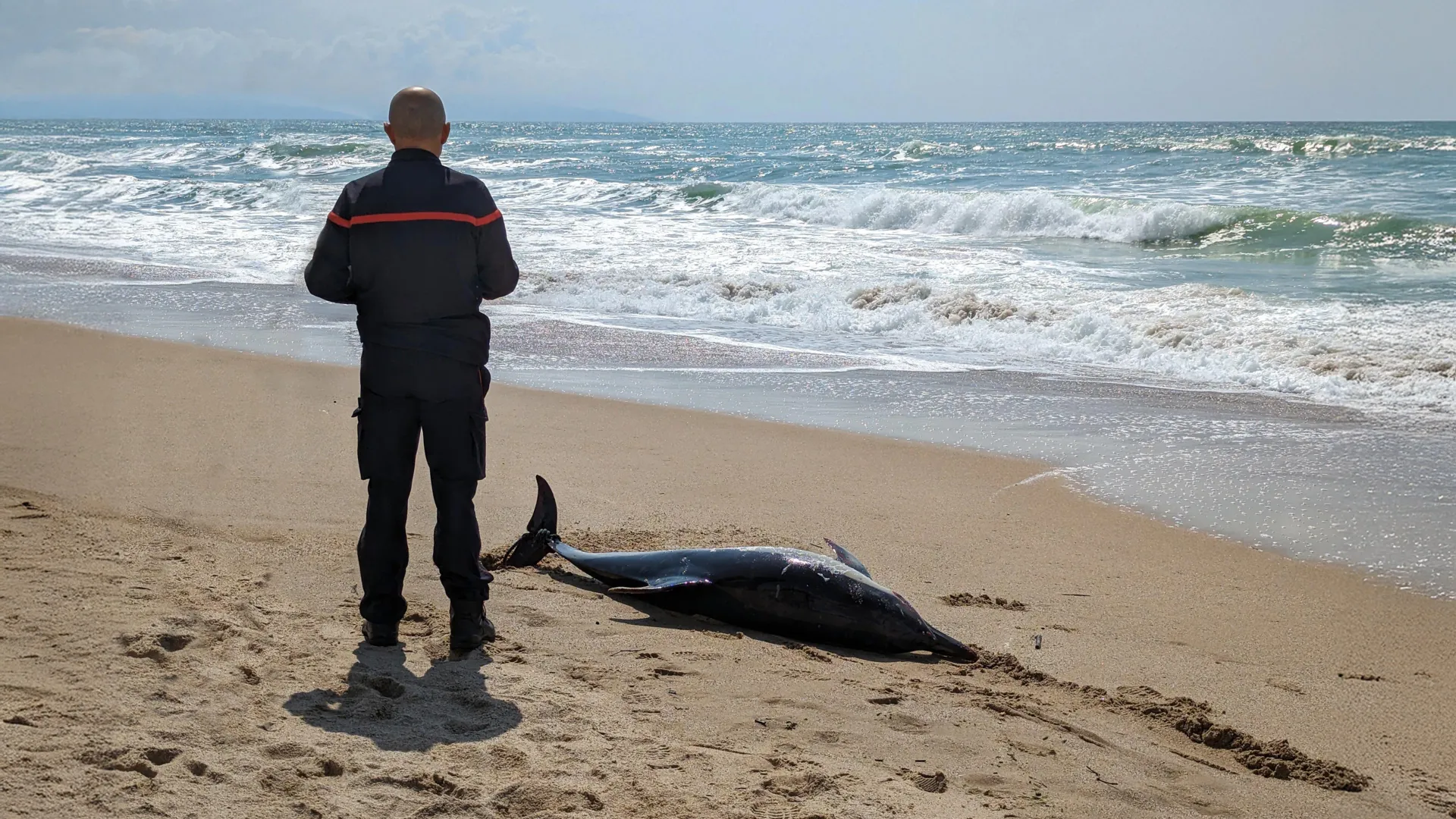
For many nature enthusiasts, few scenes are as distressing as finding a stranded whale or dolphin lying helpless on the beach. When these animals are still alive, marine biologists and volunteers rush to assist, shielding them from the sun and preventing their skin from drying out by pouring seawater over them or draping them with wet towels. Others work tirelessly to guide the animal back to deeper waters once the tide returns.
Tragically, not every rescue attempt comes in time. Some dolphins and whales are discovered already dead, leaving behind a haunting mystery that has puzzled scientists for decades: what drives these intelligent creatures to beach themselves in the first place?
A team of researchers from Florida to Wyoming believes they may have uncovered a surprising explanation. They suggest that, much like humans with dementia who sometimes wander away from familiar places, dolphins might also become disoriented due to a form of Alzheimer’s-like disease. Their findings point to a connection between this disorientation and long-term exposure to harmful compounds produced by cyanobacteria — microscopic organisms that thrive in warm, nutrient-rich waters.
Research involving residents of Guam has shown that people who regularly consume foods containing cyanobacterial toxins are more likely to develop the same brain abnormalities seen in Alzheimer’s disease, including misfolded tau proteins and amyloid plaques. One of the most concerning of these toxins is β-N-methylamino-L-alanine (BMAA), along with its chemical relatives 2,4-Diaminobutyric acid (2,4-DAB) and N-2-aminoethylglycine (AEG). These compounds are known to be highly toxic to nerve cells. Experiments in animals demonstrate that BMAA exposure can lead to Alzheimer’s-like brain damage and cognitive decline. Once released into marine ecosystems, these toxins can build up in the food chain, eventually reaching top predators such as dolphins.
When researchers examined the brains of twenty bottlenose dolphins that had stranded along Florida’s Indian River Lagoon, they found significant levels of BMAA and its related toxins, especially 2,4-DAB. Dolphins that washed ashore during peak cyanobacterial bloom periods contained up to 2,900 times more 2,4-DAB than those stranded at other times of the year. Their brains showed many of the same pathological features seen in humans with Alzheimer’s disease, including β-amyloid plaques and hyperphosphorylated tau proteins. The scientists also identified TDP-43 protein inclusions, a marker associated with more aggressive forms of Alzheimer’s, along with 536 genes expressed in patterns consistent with the disease.
The duration of cyanobacterial blooms is increasing with climate warming and nutrient inputs associated with agricultural runoff and sewage discharges. Cyanobacterial-laden waters have often been released down the St. Lucie River from Lake Okeechobee into the Indian River Lagoon. “Since dolphins are considered environmental sentinels for toxic exposures in marine environments,” Dr. David Davis at the Miller School of Medicine explains, “there are concerns about human health issues associated with cyanobacterial blooms.”
In 2024, Miami Dade County had the highest prevalence of Alzheimer’s disease in the United States. “Although there are likely many paths to Alzheimer’s disease, cyanobacterial exposures increasingly appear to be a risk factor,” adds Dr. Davis.
“Among Guam villagers, exposure to cyanobacterial toxins appeared to trigger neurological disease,” said Dr. Paul Alan Cox of the Brain Chemistry Labs in Jackson Hole.
This research was published in the current Nature journal Communication Biology by researchers at Hubbs-SeaWorld Research Institute in Melbourne Beach, Florida, The Blue World Research Institute in Cocoa, Florida, The University of Miami Miller School of Medicine, Miami, Florida, Brain Chemistry Labs, Jackson Hole, Wyoming, Rosenstiel School of Marine, Atmospheric, and Earth Science, University of Miami, Miami, Florida.
Several of the hostages will be brought from Gaza to the Rabin Medical Center in Petah Tikva.
