JWST spots a hidden red supergiant just before it exploded

A team of astronomers led by Northwestern University has captured the clearest and most detailed view ever of a dying star before its dramatic explosion.

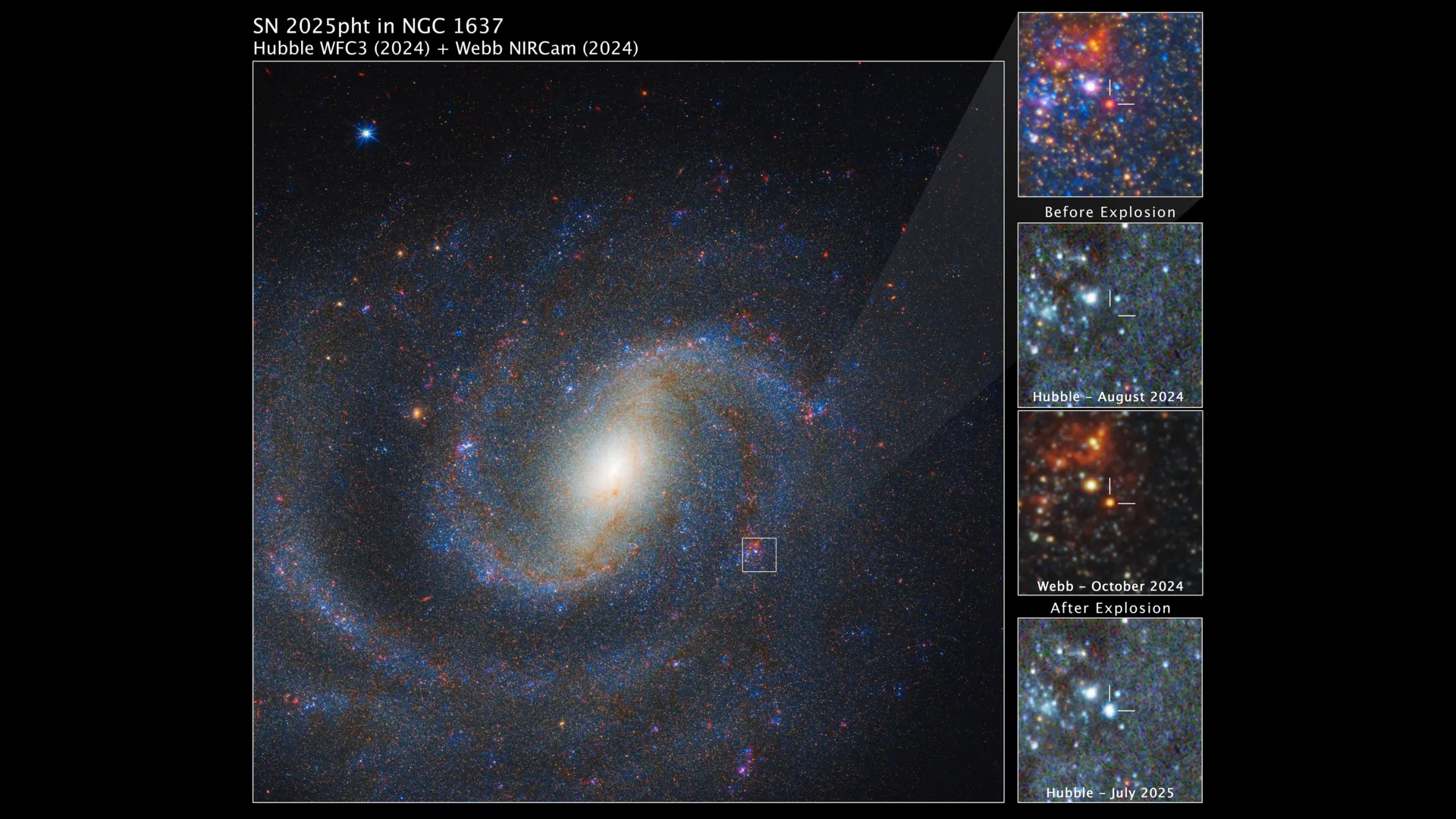
Using NASA’s James Webb Space Telescope (JWST), the international group identified the source of a supernova, known as its progenitor, in mid-infrared light for the first time. When combined with archival observations from the Hubble Space Telescope, the data revealed that the blast originated from a massive red supergiant star wrapped in an unexpected blanket of dust.

This breakthrough may finally explain why astronomers rarely see red supergiants explode, even though models predict they should account for most core-collapse supernovae. The new findings suggest these enormous stars do explode but are often hidden from view by thick dust clouds. Thanks to JWST’s powerful infrared vision, scientists can now see through the obscuring dust, bridging the long-standing gap between theory and observation.

The research, published on Oct. 8 in The Astrophysical Journal Letters, represents JWST’s first confirmed detection of a supernova’s progenitor star.

“For multiple decades, we have been trying to determine exactly what the explosions of red supergiant stars look like,” said Northwestern’s Charlie Kilpatrick, who led the study. “Only now, with JWST, do we finally have the quality of data and infrared observations that allow us to say precisely the exact type of red supergiant that exploded and what its immediate environment looked like. We’ve been waiting for this to happen — for a supernova to explode in a galaxy that JWST had already observed. We combined Hubble and JWST data sets to completely characterize this star for the first time.”

Kilpatrick, a research assistant professor at Northwestern’s Center for Interdisciplinary Exploration and Research in Astrophysics, is an expert on the life cycles of massive stars. His coauthor, Aswin Suresh, a graduate student in physics and astronomy at Northwestern’s Weinberg College of Arts and Sciences, played a key role in the analysis.

Reddest, dustiest progenitor ever observed

The team first detected the supernova, named SN2025pht, on June 29, 2025, using the All-Sky Automated Survey of Supernovae. The event’s light traveled from the nearby spiral galaxy NGC 1637, located about 40 million light-years from Earth.

By comparing Hubble and JWST images of NGC 1637 taken before and after the explosion, Kilpatrick, Suresh, and their collaborators pinpointed the progenitor star. It immediately stood out as both brilliant and intensely red. Although the star radiated roughly 100,000 times more light than the Sun, much of its glow was hidden by surrounding dust. The layer of dust was so dense that it made the star appear over 100 times dimmer in visible light than it would otherwise look. Because the dust blocked shorter, bluer wavelengths, the star’s appearance shifted dramatically toward red.

“It’s the reddest, dustiest red supergiant that we’ve seen explode as a supernova,” Suresh said.

Massive stars in the late stages of their lives, red supergiants are among the largest stars in the universe. When their cores collapse, they explode as Type II supernovae, leaving behind either a neutron star or black hole. The most familiar example of a red supergiant is Betelguese, the bright reddish star in the shoulder of the constellation Orion.

“SN2025pht is surprising because it appeared much redder than almost any other red supergiant we’ve seen explode as a supernova,” Kilpatrick added. “That tells us that previous explosions might have been much more luminous than we thought because we didn’t have the same quality of infrared data that JWST can now provide.”

Clues hidden in dust

The deluge of dust could help explain why astronomers have struggled to find red supergiant progenitors. Most massive stars that explode as supernovae are the brightest and most luminous objects in the sky. So, theoretically, they should be easy to spot before they explode. But that hasn’t been the case.

Astronomers posit that the most massive aging stars also might be the dustiest. These thick cloaks of dust might dim the stars’ light to the point of utter undetectability. The new JWST observations support this hypothesis.

“I’ve been arguing in favor of that interpretation, but even I didn’t expect to see such an extreme example as SN2025pht,” Kilpatrick said. “It would explain why these more massive supergiants are missing because they tend to be dustier.”

In addition to the presence of dust itself, the dust’s composition was also surprising. While red supergiants tend to produce oxygen-rich, silicate dust, this star’s dust appeared rich with carbon. This suggests that powerful convection in the star’s final years may have dredged up carbon from deep inside, enriching its surface and altering the type of dust it produced.

“The infrared wavelengths of our observations overlap with an important silicate dust feature that’s characteristic of some red supergiant spectra,” Kilpatrick said. “This tells us that the wind was very rich in carbon and less rich in oxygen, which also was somewhat surprising for a red supergiant of this mass.”

A new era for exploding stars

The new study marks the first time astronomers have used JWST to directly identify a supernova progenitor star, opening the door to many more discoveries. By capturing light across the near- and mid-infrared spectrum, JWST can reveal hidden stars and provide missing pieces for how the most massive stars live and die.

The team now is searching for similar red supergiants that may explode as supernovae in the future. Observations by NASA’s upcoming Nancy Grace Roman Space Telescope may help this search. Roman will have the resolution, sensitivity and infrared wavelength coverage to see these stars and potentially witness their variability as they expel out large quantities of dust near the end of their lives.

“With the launch of JWST and upcoming Roman launch, this is an exciting time to study massive stars and supernova progenitors,” Kilpatrick said. “The quality of data and new findings we will make will exceed anything observed in the past 30 years.”

The study, “The Type II SN 2025pht in NGC 1637: A red supergiant with carbon-rich circumstellar dust as the first JWST detection of a supernova progenitor star,” was supported by the National Science Foundation (award number AST-2432037).

Share Button

Tiny asteroid flew right over Antarctica, and no one saw it coming

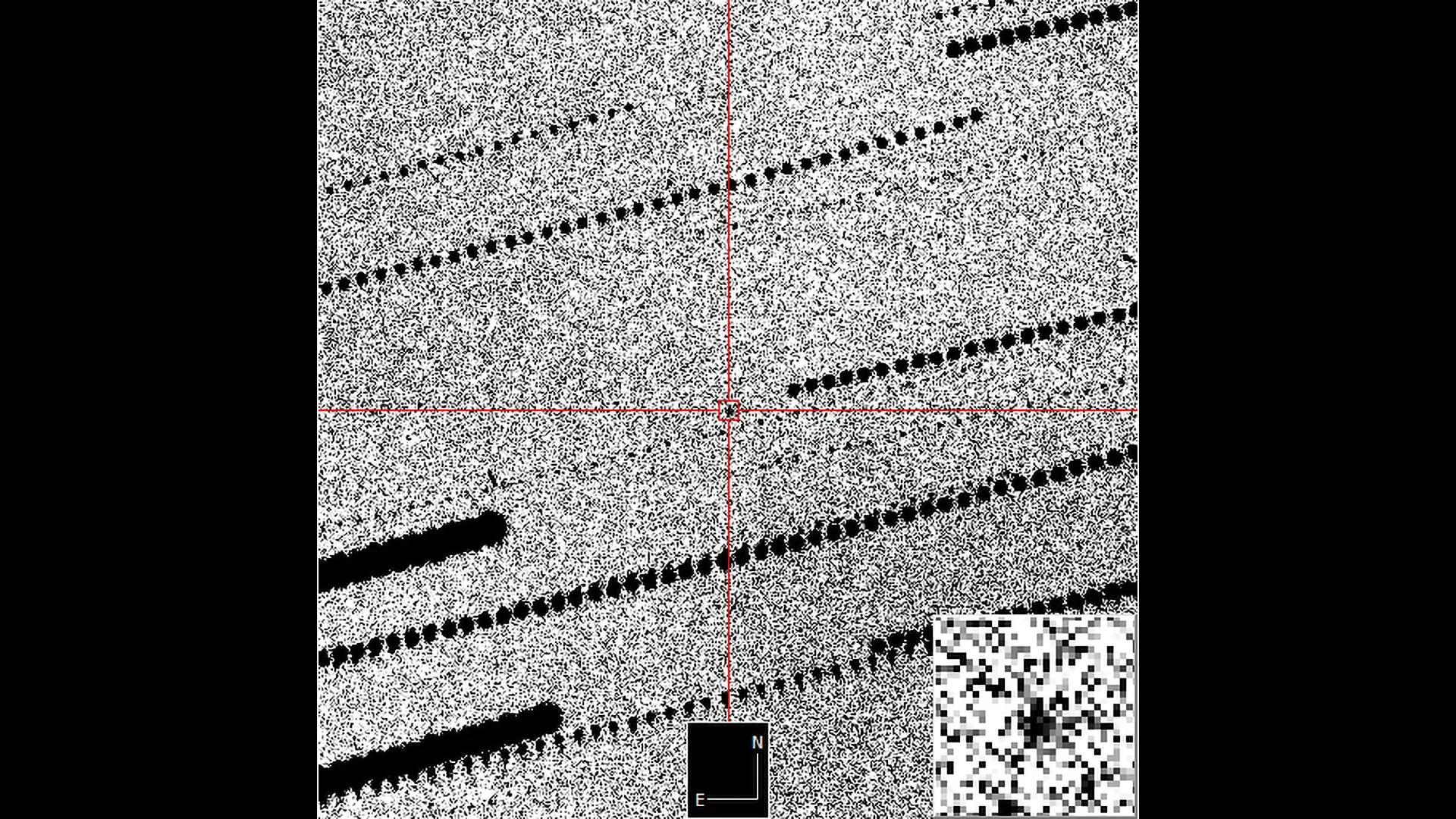
Asteroid 2025 TF passed over Antarctica at 00:47:26 UTC ± 18 seconds on October 1, coming within 428 ± 7 km of Earth’s surface. That distance is nearly the same as the orbit of the International Space Station (approx. 370 — 460 km).

Measuring about 1 to 3 meters in diameter, the asteroid was detected by the Catalina Sky Survey only a few hours after it had already passed by Earth. Space rocks of this size do not present any real threat. If one enters the atmosphere, it can create a bright fireball and sometimes leave behind small meteorites on the ground.

Soon after its detection, astronomers from ESA’s Planetary Defence Office observed the object using the Las Cumbres Observatory telescope at Siding Spring in Australia.

Finding and tracking such a small object in the vastness of space, especially when its position is still uncertain, is a remarkable achievement. These follow-up observations allowed scientists to determine the asteroid’s distance and timing of closest approach with outstanding precision.

Understanding the Risk: How Size Shapes the Threat

Asteroid 2025 TF, only a few meters wide, belongs to a class of near-Earth objects that are considered harmless on a planetary scale. Space rocks this small enter Earth’s atmosphere several times each year, usually breaking apart high above the surface. When they do reach lower altitudes, the result is typically a spectacular fireball, sometimes followed by tiny meteorites scattered across the ground. Events of this scale rarely cause damage and often help scientists learn more about asteroid composition.

By comparison, objects measuring around 20 meters across — such as the one that exploded over Chelyabinsk, Russia, in 2013 — can generate powerful airbursts capable of damaging buildings and injuring people with shockwaves. That explosion released energy equivalent to hundreds of kilotons of TNT, reminding scientists that even modestly sized asteroids can have local effects.

Larger asteroids, those hundreds of meters or more in diameter, pose a much greater risk. While such events are rare, they have the potential to cause regional or even global consequences. For this reason, international efforts like ESA’s Planetary Defence Office and NASA’s Planetary Defense Coordination Office monitor and catalog these objects to predict potential impacts years or decades in advance.

Global Eyes on the Sky

Worldwide networks of observatories continually scan the heavens for moving objects, from bright comets to faint, fast-moving asteroids like 2025 TF. Surveys such as the Catalina Sky Survey and Pan-STARRS regularly discover new near-Earth objects, while dedicated follow-up telescopes refine their orbits.

These coordinated efforts form the backbone of planetary defense. When astronomers detect an object passing extremely close to Earth, even one just a few meters wide, they can test their detection systems and improve prediction models. Each observation strengthens our ability to identify potential hazards early, giving scientists valuable data for future encounters.

Why Close Passes Matter

Although Asteroid 2025 TF never posed a threat, flybys like this one highlight how dynamic and watchful our solar neighborhood is. Every close encounter serves as both a reminder of Earth’s vulnerability and a demonstration of the growing precision of modern astronomy. The successful tracking of such a tiny object so soon after its discovery shows just how far planetary defense efforts have come — and how prepared the global scientific community is to respond to whatever space sends our way.

Share Button

NHS waiting list rises for third month in row

Numbers waiting for treatment hit 7.41 million in England at the end of August.

Share Button

My eating disorder made me good at lying, says Victoria Beckham

The former Spice Girl’s new Netflix documentary has landed – under the shadow of a reported family feud.

Share Button

‘I missed a £100 council tax bill while in hospital – the debt ballooned to £6k’

The government says it is taking action to protect people from “aggressive collection practices”.

Share Button

Scientists suggest the brain may work best with 7 senses, not just 5

Skoltech scientists have devised a mathematical model of memory. By analyzing its new model, the team came to surprising conclusions that could prove useful for robot design, artificial intelligence, and for better understanding of human memory. Published in Scientific Reports, the study suggests there may be an optimal number of senses — if so, those of us with five senses could use a couple more!

“Our conclusion is of course highly speculative in application to human senses, although you never know: It could be that humans of the future would evolve a sense of radiation or magnetic field. But in any case, our findings may be of practical importance for robotics and the theory of artificial intelligence,” said study co-author Professor Nikolay Brilliantov of Skoltech AI. “It appears that when each concept retained in memory is characterized in terms of seven features — as opposed to, say, five or eight — the number of distinct objects held in memory is maximized.”

In line with a well-established approach, which originated in the early 20th century, the team models the fundamental building blocks of memory: the memory “engrams.” An engram can be viewed as a sparse ensemble of neurons across multiple regions in the brain that fire together. The conceptual content of an engram is an ideal abstract object characterized with regard to multiple features. In the context of human memory, the features correspond to sensory inputs, so that the notion of a banana would match up with a visual image, a smell, the taste of a banana, and so on. This results in a five-dimensional object that exists and evolves in a five-dimensional space populated by all the other concepts retained in memory.

The evolution of engrams refers to concepts becoming more focused or blurred with time, depending on how often the engrams get activated by a stimulus acting from the outer world via the senses, triggering the memory of the respective object. This models learning and forgetting as a result of interaction with the environment.

“We have mathematically demonstrated that the engrams in the conceptual space tend to evolve toward a steady state, which means that after some transient period, a ‘mature’ distribution of engrams emerges, which then persists in time,” Brilliantov commented. “As we consider the ultimate capacity of a conceptual space of a given number of dimensions, we somewhat surprisingly find that the number of distinct engrams stored in memory in the steady state is the greatest for a concept space of seven dimensions. Hence the seven senses claim.”

In other words, let the objects that exist out there in the world be described by a finite number of features corresponding to the dimensions of some conceptual space. Suppose that we want to maximize the capacity of the conceptual space expressed as the number of distinct concepts associated with these objects. The greater the capacity of the conceptual space, the deeper the overall understanding of the world. It turns out that the maximum is attained when the dimension of the conceptual space is seven. From this the researchers conclude that seven is the optimal number of senses.

According to the researchers, this number does not depend on the details of the model — the properties of the conceptual space and the stimuli providing the sense impressions. The number seven appears to be a robust and persistent feature of memory engrams as such. One caveat is that multiple engrams of differing sizes existing around a common center are deemed to represent similar concepts and are therefore treated as one when calculating memory capacity.

The memory of humans and other living beings is an enigmatic phenomenon tied to the property of consciousness, among other things. Advancing the theoretical models of memory will be instrumental to gaining new insights into the human mind and recreating humanlike memory in AI agents.

Share Button

Scientists just found a molecule that could stop Parkinson’s in its tracks

Researchers at the University of Bath, in collaboration with the Universities of Oxford and Bristol, have developed a molecule that prevents the clumping and build-up of a protein linked to Parkinson’s disease and related dementias. The team has successfully demonstrated it works in an animal model of Parkinson’s and hopes that in the future this could lead to a treatment that slows the progression of the disease.

Alpha-synuclein is a protein naturally found mainly in brain cells (neurons) where it regulates the release of neurotransmitters such as dopamine, allowing communication between the neurons.

In Parkinson’s disease, this protein sticks together into toxic clumps that cause nerve cell death and leads to patients suffering from symptoms such as tremors, difficulties moving and muscle stiffness. Whilst there are treatments available to relieve symptoms, there is currently no cure.

Normally, alpha-synuclein’s natural or “native state” is like a flexible strand, but when active it shapes itself into a helix, which is critical for its function in binding and transporting parcels of dopamine.

The team engineered a peptide fragment that locks alpha-synuclein into its healthy shape, blocking its conversion into the toxic clumps that cause nerve cell death.

Laboratory tests showed the peptide is stable, penetrates brain-like cells, and restores movement while reducing protein deposits in a worm model of Parkinson’s.

This breakthrough, published in the journal JACS Au, demonstrates the potential of rational peptide design to transform large, unstable proteins into compact drug-like molecules.

The findings mark a significant step towards developing new peptide-based treatments for currently untreatable neurodegenerative conditions. Professor Jody Mason, from the Department of Life Sciences at the University of Bath, said: “Our work shows that it is possible to rationally design small peptides that not only prevent harmful protein aggregation but also function inside living systems.

“This opens an exciting path towards new therapies for Parkinson’s and related diseases, where treatment options remain extremely limited.”

Dr Julia Dudley, Head of Research at Alzheimer’s Research UK, which funded the research, said:

“Dementia isn’t an inevitable part of ageing; it’s caused by diseases like Alzheimer’s. To make progress towards a cure for all forms of dementia, we need research focused on developing a broad range of treatments that can slow, stop and ultimately reverse these diseases.

“Although this is early research in an animal model, it’s exciting to see that this new molecule can prevent the build-up of misfolded alpha-synuclein.

“By stabilizing alpha-synuclein in its healthy form, this could open the door to a new class of treatments that could slow progression in diseases like Parkinson’s and dementia with Lewy bodies. We look forward to seeing this research taken to the next stage, potentially exploring how it would work in people.

“We’re delighted to see such promising advances from Alzheimer’s Research UK funded work opening up new avenues for treatments of the future, and the potential to change the lives of those affected by neurodegenerative diseases.”

Further research is needed, but the team hopes that continued progress will enable these and similar molecules to advance towards clinical testing in the coming years.

Share Button

‘My eyesight might have been saved if I’d gone to the optician sooner’

Gail Cairns started experiencing sight loss, headaches, and eye pain, but did not go to an optician when she first had symptoms.

Share Button

Scientists reveal green tea’s fat-burning secret

Green tea is an ancient beverage recognized for its medicinal and antioxidant properties. It has been widely studied for its beneficial effects on metabolic diseases, such as obesity and type 2 diabetes. Recent studies funded by FAPESP have deepened our understanding of the mechanisms of action of this infusion and revealed that green tea treatment reduced weight and significantly improved glucose sensitivity and insulin resistance in obese mice. These results reinforce the potential relevance of the beverage as an adjunct in the treatment of obesity in humans.

Rosemari Otton led the studies from the Interdisciplinary Graduate Program in Health Sciences at Cruzeiro do Sul University in São Paulo, Brazil. The scientist, who has dedicated more than 15 years to green tea research, explains that her initial motivation came from curiosity about the truth behind the popular belief that the drink aids in weight loss. The results of her most recent study were published in the journal Cell Biochemistry & Function.

To study the effects of green tea on obesity, the research team fed mice a high-calorie diet for four weeks, with both fat and what they call a “cafeteria diet,” which mimics the Western diet. “We give them chocolate, filled cookies, dulce de leche, condensed milk… In other words, the same type of food that many people consume on a daily basis,” says Otton.

After this initial phase, the animals underwent the green tea experiment for another 12 weeks. During this period, they continued on the high-calorie diet, but some of them began receiving standardized green tea extract at a dose of 500 mg per kilogram of body weight, administered intragastrically (via gavage).

“It’s a method that ensures they all receive the exact dose we want to study. If we put it in water, for example, we’d have no way of knowing how much the animal actually ingested,” says the researcher. For humans, this amount would be equivalent to consuming about 3 grams of green tea per day, or three cups.

However, according to the researcher, not all commercial green tea meets the necessary quality standards. “Ready-made tea bags do not always guarantee the quantity or quality of the compounds. The ideal for consumption would be to use standardized green tea extract, like those found in compounding pharmacies. This is a concentrated way of using the plant, with a guarantee of the presence of flavonoids, which are the health-beneficial compounds present in the green tea plant,” Otton points out.

One methodological difference in the study was the controlled room temperature. The animals were kept in a thermoneutral environment (28 °C) throughout the experiment. Animal facilities generally maintain an average temperature of 22 °C, which represents chronic cold for mice.

“Excessive cold activates compensatory regulatory mechanisms in the animals’ bodies, causing them to expend more energy to stay warm. This can mask the real effects of any substance,” explains the researcher. “If the animals are in a colder environment, the effect of the tea is enhanced by the activation of energy expenditure due to the cold. But by maintaining thermoneutrality, we were able to see the effects of green tea in a ‘clean’ way, without environmental interference,” she explains.

A previous study published in August 2022 in the European Journal of Nutrition found that obese mice treated with green tea experienced a reduction of up to 30% in body weight. “If a person loses 5% to 10% of their body weight, that’s already a lot. So this result in animals is very significant,” says the professor.

Muscular effect

Another highlight of the most recent study was the preservation of muscle morphology. Obesity typically causes a reduction in muscle fiber diameter, but green tea prevented this muscle atrophy. “One way to assess muscle function is to look at fiber diameter. If it increases, we have more active muscle components. Green tea managed to maintain this diameter, showing that it protects muscle against the harmful effects of obesity,” Otton explains.

In addition to morphological data, the researchers evaluated the expression of genes related to glucose metabolism. Treatment with green tea increased the expression of Insr, Irs1, Glut4, Hk1, and Pi3k – genes that are important for glucose uptake and use in muscles. The activity of lactate dehydrogenase (LDH), an enzyme that is essential for glucose metabolism, was also restored.

According to Otton, there is evidence indicating that green tea does not affect the weight of lean animals, suggesting that it acts selectively against excess body fat. “It makes obese animals lose weight but keeps lean animals at a balanced weight. This shows that the tea seems to need an environment with excess nutrients to act, which supports the hypothesis that it acts directly on fat cells.”

Another aspect investigated by the team was the action of the compounds in isolation. “Green tea is a complex matrix with dozens of bioactive compounds. We’ve tried to separate these compounds and study their effects individually, but the whole extract is always more effective. There’s a synergy between the compounds that we can’t reproduce when they’re isolated,” she says.

According to the scientist, one hypothesis explaining the mechanism by which green tea affects obesity involves adiponectin, a protein produced by adipocytes that has anti-inflammatory and metabolic regulation functions. “We conducted a study with adiponectin-knockout mice, meaning they don’t produce it. And in these animals, green tea had no effect. This suggests that adiponectin is a key player in the mechanism of action of the tea,” she comments.

Real-life effects

Despite the encouraging results of the mouse study, Otton points out that it is not yet possible to determine a safe and effective dose of green tea for humans. This is mainly due to the variability of the extracts and the fact that each person behaves differently. “The ideal is chronic consumption, as we see in Asian countries. In Japan, for example, people consume green tea every day, throughout their lives, and obesity rates are low. But this is different from drinking tea for five months and expecting a miraculous weight loss effect,” she ponders.

The researcher argues that natural and accessible treatments should gain ground in the fight against obesity, especially as alternatives to expensive medications that often have side effects. “The idea is to have safe, natural, effective, and high-quality compounds. The Camellia sinensis plant offers this. We’re still studying all the compounds involved, but there’s no doubt that green tea, as a plant matrix rich in flavonoids, has important therapeutic potential.”

The researcher emphasizes that science always seeks to develop practical solutions. “What we see in animals doesn’t always reproduce in humans. But if we want to make this translation to real life, we need to think about all the details, such as ambient temperature. It’s these precautions that increase the validity of our data. We’re far from having all the answers, but we’re getting closer and closer.”

Share Button

Children harmed by decision to redeploy health visitors, Covid inquiry hears

Some children paid “the highest price” of death because of redeployments, says health visiting charity head.

Share Button