An undercover BBC team catch a fake doctor, a pharmacist and a nurse supplying Botox illegally without checks.


An undercover BBC team catch a fake doctor, a pharmacist and a nurse supplying Botox illegally without checks.
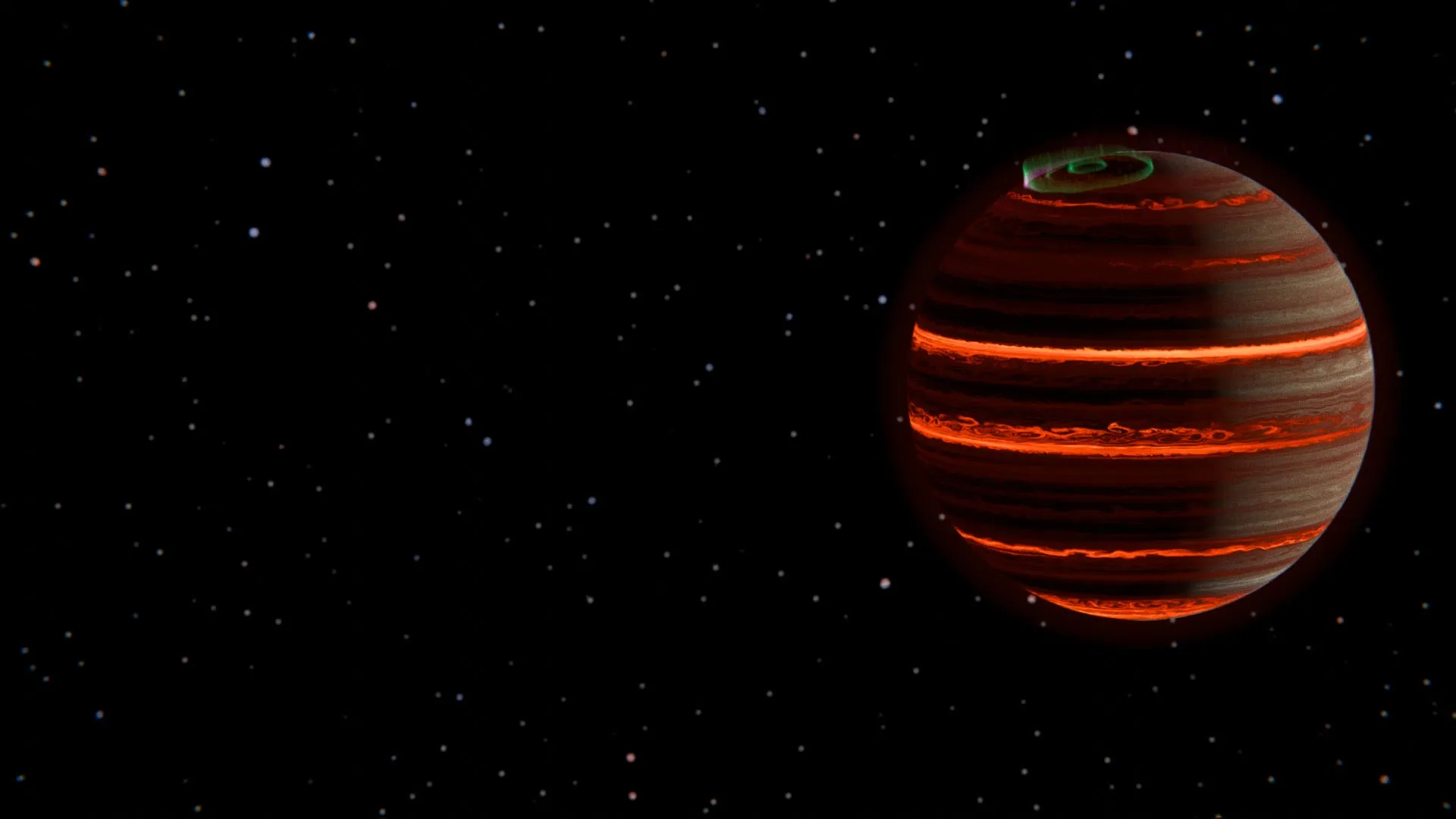
Strong Northern Lights-like activity is the standout feature of today’s weather report, which is coming at you from a strange, extrasolar world, instead of a standard TV studio. That is thanks to astronomers from Trinity College Dublin, who used the NASA/ESA/CSA James Webb Space Telescope to take a close look at the weather of a toasty nearby rogue planet, SIMP-0136.
The exquisite sensitivity of the instruments on board the space-based telescope enabled the team to see minute changes in brightness of the planet as it rotated, which were used to track changes in temperature, cloud cover and chemistry.
Surprisingly, these observations also illuminated SIMP-0136’s strong auroral activity, similar to the Northern Lights here on Earth or the powerful aurora on Jupiter, which heat up its upper atmosphere.
“These are some of the most precise measurements of the atmosphere of any extra-solar object to date, and the first time that changes in the atmospheric properties have been directly measured,” said Dr Evert Nasedkin, a Postdoctoral Fellow in Trinity College Dublin’s School of Physics, who is the lead author of the research article just published in leading international journal, Astronomy & Astrophysics.
“And at over 1,500 °C, SIMP-0136 makes this summer’s heat wave look mild,” he continued. “The precise observations we made meant we could accurately record temperature changes smaller than 5 °C. These changes in temperature were related to subtle changes in the chemical composition of this free-floating planet, which is suggestive of storms – similar to Jupiter’s Great Red Spot – rotating into view.”
Another surprise finding was the lack of variability of the clouds on SIMP-0136. One might expect changes in the cloud coverage to lead to changes in the atmosphere, similar to observing patches of clouds and blue sky here on Earth. Instead, the team found that the cloud coverage was constant over the surface of SIMP-0136. At the temperatures of SIMP-0136 these clouds are unlike those on earth, instead composed of silicate grains, similar to sand on a beach.
This is the first publication from the new ‘Exo-Aimsir’ group led by Prof. Johanna Vos in Trinity’s School of Physics, and includes contributions from all the group members, including PhD candidates Merle Schrader, Madeline Lam and Cian O’Toole.
These data were initially published by a similar team led by Allison McCarthy at Boston University, but the new analysis has revealed more details about the atmosphere.
“Different wavelengths of light are related to different atmospheric features. Similar to observing the changes in colour over the surface of the earth, the changes in the colour of SIMP-0136 are driven by changes in the atmospheric properties,” added Dr. Nasedkin. “So by using cutting-edge models, we could infer the temperature of the atmosphere, the chemical composition, and the position of the clouds.”
Prof. Vos said: “This work is exciting because it shows that by applying our state-of-the-art modelling techniques to cutting-edge datasets from JWST, we can begin to piece together the processes that drive weather in worlds beyond our solar system. Understanding these weather processes will be crucial as we continue to discover and characterize exoplanets in the future.”
“While for now these types of spectroscopic variability observations are limited to isolated brown dwarfs, like this one, future observations with the Extremely Large Telescope and eventually the Habitable Worlds Observatory will enable the study of the atmospheric dynamics of exoplanets, from Jupiter-like gas giants to rocky worlds.”
This part of the inquiry is looking at the impact the pandemic had on children and young people.
GPs are concerned they will be at the end of an “online triage tsunami” when the new system launches.
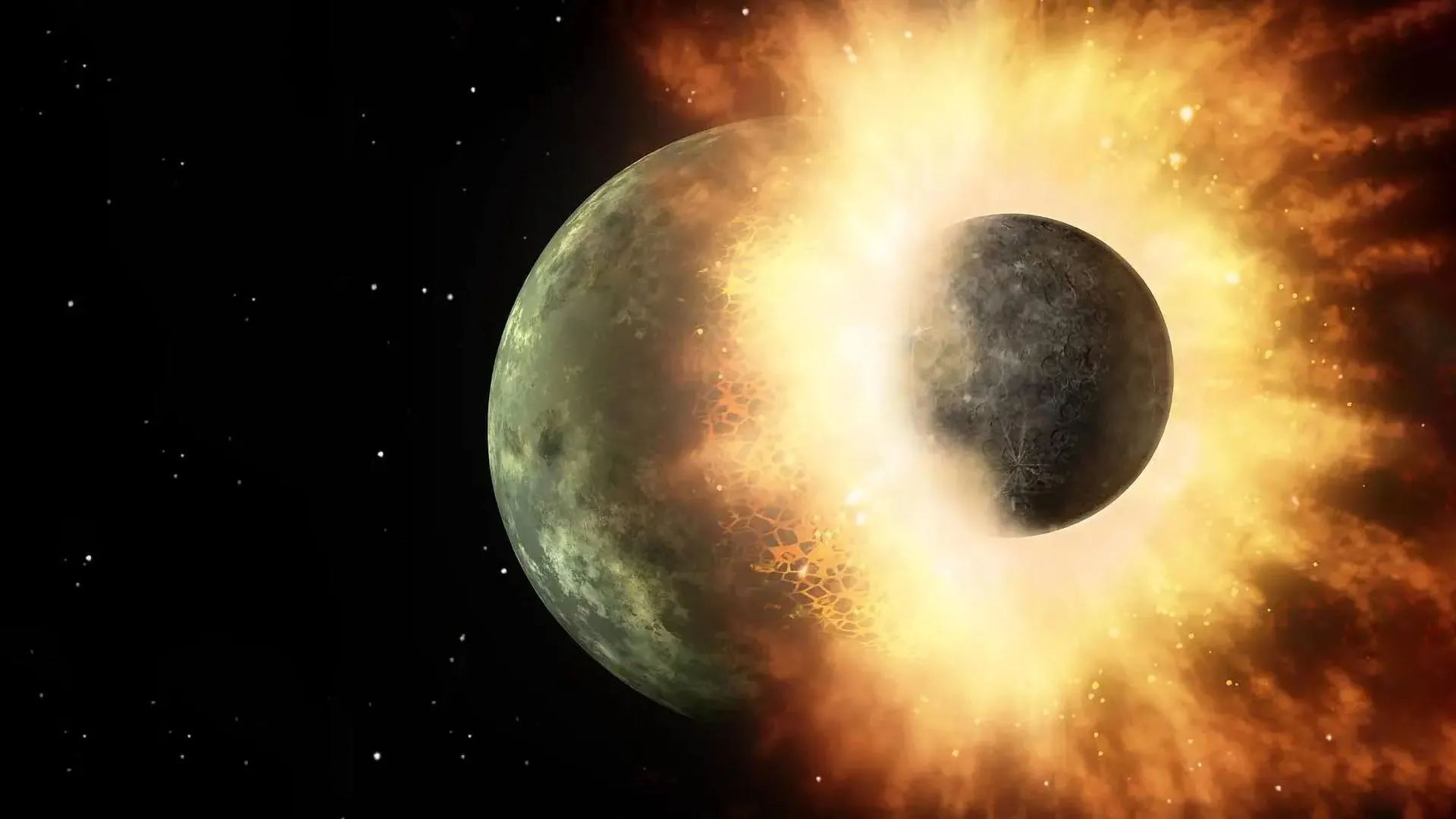
After the formation of the Solar System, it took a maximum of three million years for the chemical composition of the Earth’s precursor to be completed. This is shown by a new study by the Institute of Geological Sciences at the University of Bern. At this time, however, there were hardly any elements necessary for life such as water or carbon compounds on the young planet. Only a later planetary collision probably brought water to Earth, paving the way for life.
Earth is so far the only known planet on which life exists — with liquid water and a stable atmosphere. However, the conditions were not conducive to life when it formed. The gas-dust cloud from which all the planets in the Solar System formed was rich in volatile elements essential for life, such as hydrogen, carbon and sulphur. However, in the inner Solar System — the part closest to the Sun, where the four rocky planets Mercury, Venus, Earth and Mars and the asteroid belt are located today — these volatile elements could hardly exist: Due to the high temperature of the Sun, they did not condense and initially remained largely in the gas phase. As these gaseous substances were not incorporated into the solid rocky materials from which the planets were formed, the early precursor of the Earth, the so-called proto-Earth, also contained very little of these vital substances. Only celestial bodies that formed further away from the Sun in cooler regions were able to incorporate these components. When and how the Earth became a life-friendly planet is still not fully understood.
In a new study, researchers from the Institute of Geological Sciences at the University of Bern have now been able to show for the first time that the chemical composition of the early Earth was complete no later than three million years after the formation of the Solar System — and in a way that initially made the emergence of life impossible. Their results, recently published in the journal Science Advances, suggest that life on Earth was only made possible by a later event. Dr. Pascal Kruttasch is first author of the study, which was part of his dissertation at the Institute of Geological Sciences and was financially supported by the Swiss National Science Foundation. Kruttasch is now an SNSF Postdoc Mobility Fellow at Imperial College London.
Using a precise clock to measure the history of the Earth’s formation
The research team used a combination of isotope and element data from meteorites and terrestrial rocks to reconstruct the process of the Earth’s formation. Using model calculations, the researchers were able to narrow down in time how the chemical composition of the Earth developed in comparison to other planetary building blocks.
Kruttasch explains: “A high-precision time measurement system based on the radioactive decay of manganese-53 was used to determine the precise age. This isotope was present in the early Solar System and decayed to chromium-53 with a half-life of around 3.8 million years.” This method allowed ages to be determined with an accuracy of less than one million years for materials that are several billion years old. “These measurements were only possible because the University of Bern has internationally recognized expertise and infrastructure for the analysis of extraterrestrial materials and is a leader in the field of isotope geochemistry,” says co-author Klaus Mezger, Professor Emeritus of Geochemistry at the Institute of Geological Sciences at the University of Bern.
Life on Earth thanks to a cosmic coincidence?
Using model calculations, the research team was able to show that the chemical signature of the proto-Earth, i.e. the unique pattern of chemical substances of which it is composed, was already complete less than three million years after the formation of the Solar System. Their study thus provides empirical data on the time of formation of the original material of the young Earth. “Our Solar System formed around 4,568 million years ago. Considering that it only took up to 3 million years to determine the chemical properties of the Earth, this is surprisingly fast,” says first author Kruttasch.
The results of the study thus support the assumption that a later collision with another planet — Theia — brought the decisive turning point and made the Earth a life-friendly planet. Theia probably formed further out in the Solar System, where volatile substances such as water accumulated. “Thanks to our results, we know that the proto-Earth was initially a dry rocky planet. It can therefore be assumed that it was only the collision with Theia that brought volatile elements to Earth and ultimately made life possible there,” says Kruttasch.
Life-friendliness in the universe cannot be taken for granted
The new study contributes significantly to our understanding of the processes in the early phase of the Solar System and provides clues as to when and how planets on which life is possible can form. “The Earth does not owe its current life-friendliness to a continuous development, but probably to a chance event — the late impact of a foreign, water-rich body. This makes it clear that life-friendliness in the universe is anything but a matter of course,” says Mezger.
The next step would be to investigate the collision event between proto-Earth and Theia in more detail. “So far, this collision event is insufficiently understood. Models are needed that can fully explain not only the physical properties of the Earth and Moon, but also their chemical composition and isotope signatures,” concludes Kruttasch.
With claims of a ‘two-tier system’, could it be that these drugs are exacerbating health inequalities?
Sports groups hope England Women’s Rugby World Cup success can boost girls playing sport.
Bereaved Thomas and Ewa Hender are querying why a report completed 18 months ago is only now available.
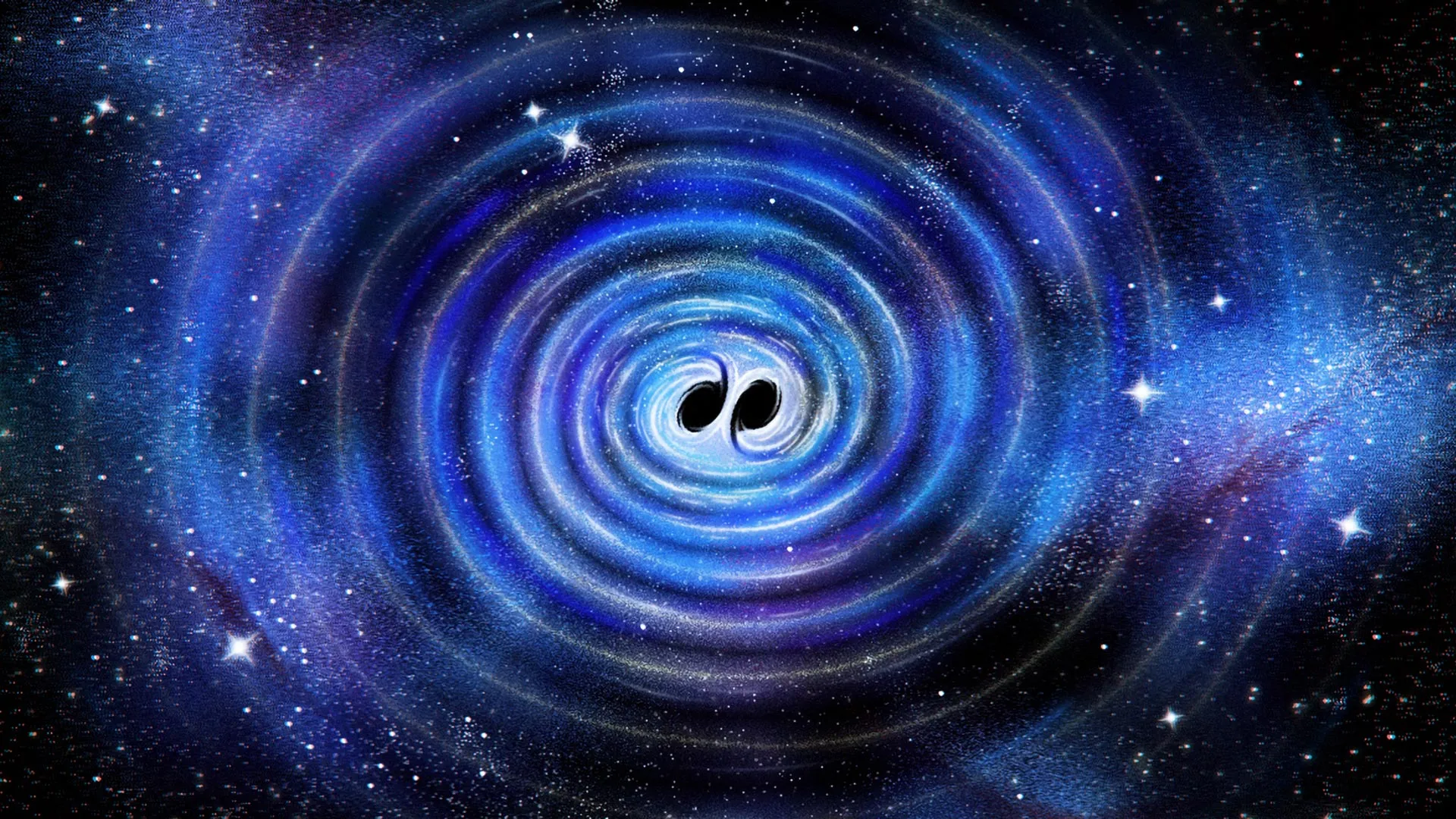
A decade ago, scientists first detected ripples in the fabric of space-time, called gravitational waves, from the collision of two black holes. Now, thanks to improved technology and a bit of luck, a newly detected black hole merger is providing the clearest evidence yet of how black holes work — and, in the process, offering long-sought confirmation of fundamental predictions by Albert Einstein and Stephen Hawking.
The new measurements were made by the Laser Interferometer Gravitational-Wave Observatory (LIGO), with analyses led by astrophysicists Maximiliano Isi and Will Farr of the Flatiron Institute’s Center for Computational Astrophysics in New York City. The results reveal insights into the properties of black holes and the fundamental nature of space-time, hinting at how quantum physics and Einstein’s general relativity fit together.
“This is the clearest view yet of the nature of black holes,” says Isi, who is also an assistant professor at Columbia University. “We’ve found some of the strongest evidence yet that astrophysical black holes are the black holes predicted from Albert Einstein’s theory of general relativity.”
The results were reported in a paper published September 10 in Physical Review Letters by the LIGO-Virgo-KAGRA Collaboration.
For massive stars, black holes are the final stage in their evolution. Black holes are so dense that even light cannot escape their gravity. When two black holes collide, the event distorts space itself, creating ripples in space-time that fan out across the universe, like sound waves ringing out from a struck bell.
Those space-deforming ripples, called gravitational waves, can tell scientists a great deal about the objects that created them. Just as a large iron bell makes different sounds than a smaller aluminum bell, the “sound” a black hole merger makes is specific to the properties of the black holes involved.
Scientists can detect gravitational waves with special instruments at observatories such as LIGO in the United States, Virgo in Italy and KAGRA in Japan. These instruments carefully measure how long it takes a laser to travel a given path. As gravitational waves stretch and compress space-time, the length of the instrument, and thus the light’s travel time, changes minutely. By measuring those tiny changes with great precision, scientists can use them to determine the black holes’ characteristics.
The newly reported gravitational waves were found to be created by a merger that formed a black hole with the mass of 63 suns and spinning at 100 revolutions per second. The findings come 10 years after LIGO made the first black hole merger detection. Since that landmark discovery, improvements in equipment and techniques have enabled scientists to get a much clearer look at these space-shaking events.
“The new pair of black holes are almost twins to the historic first detection in 2015,” Isi says. “But the instruments are much better, so we’re able to analyze the signal in ways that just weren’t possible 10 years ago.”
With these new signals, Isi and his colleagues got a complete look at the collision from the moment the black holes first careened into each other until the final reverberations as the merged black hole settled into its new state, which happened only milliseconds after first contact.
Previously, the final reverberations were difficult to capture, as by that point, the ringing of the black hole would be very faint. As a result, scientists couldn’t separate the ringing of the collision from that of the final black hole itself.
In 2021, Isi led a study showcasing a cutting-edge method that he, Farr and others developed to isolate certain frequencies — or ‘tones’ — using data from the 2015 black hole merger. This method proved powerful, but the 2015 measurements weren’t clear enough to confirm key predictions about black holes. With the new, more precise measurements, though, Isi and his colleagues were more confident they had successfully isolated the milliseconds-long signal of the final, settled black hole. This enabled more unambiguous tests of the nature of black holes.
“Ten milliseconds sounds really short, but our instruments are so much better now that this is enough time for us to really analyze the ringing of the final black hole,” Isi says. “With this new detection, we have an exquisitely detailed view of the signal both before and after the black hole merger.”
The new observations allowed scientists to test a key conjecture dating back decades that black holes are fundamentally simple objects. In 1963, physicist Roy Kerr used Einstein’s general relativity to mathematically describe black holes with one equation. The equation showed that astrophysical black holes can be described by just two characteristics: spin and mass. With the new, higher-quality data, the scientists were able to measure the frequency and duration of the ringing of the merged black hole more precisely than ever before. This allowed them to see that, indeed, the merged black hole is a simple object, described by just its mass and spin.
The observations were also used to test a foundational idea proposed by Stephen Hawking called Hawking’s area theorem. It states that the size of a black hole’s event horizon — the line past which nothing, not even light, can return — can only ever grow. Testing whether this theorem applies requires exceptional measurements of black holes before and after their merger. Following the first black hole merger detection in 2015, Hawking wondered if the merger signature could be used to confirm his theorem. At the time, no one thought it was possible.
By 2019, a year after Hawking’s death, methods had improved enough that a first tentative confirmation came using techniques developed by Isi, Farr, and colleagues. With four times better resolution, the new data gives scientists much more confidence that Hawking’s theorem is correct.
In confirming Hawking’s theorem, the results also hint at connections to the second law of thermodynamics. This law states that a property that measures a system’s disorder, known as entropy, must increase, or at least remain constant, over time. Understanding the thermodynamics of black holes could lead to advances in other areas of physics, including quantum gravity, which aims to merge general relativity with quantum physics.
“It’s really profound that the size of a black hole’s event horizon behaves like entropy,” Isi says. “It has very deep theoretical implications and means that some aspects of black holes can be used to mathematically probe the true nature of space and time.”
Many suspect that future black hole merger detections will only reveal more about the nature of these objects. In the next decade, detectors are expected to become 10 times more sensitive than today, allowing for more rigorous tests of black hole characteristics.
“Listening to the tones emitted by these black holes is our best hope for learning about the properties of the extreme space-times they produce,” says Farr, who is also a professor at Stony Brook University. “And as we build more and better gravitational wave detectors, the precision will continue to improve.”
“For so long this field has been pure mathematical and theoretical speculation,” Isi says. “But now we’re in a position of actually seeing these amazing processes in action, which highlights how much progress there’s been — and will continue to be — in this field.”

An international research team from Switzerland and Germany, led by Gaël Spicher (JURASSICA Museum, Porrentruy, Switzerland), has described a new ichthyosaur species based on fossils curated at the Urwelt-Museum Oberfranken (Bayreuth, Germany). The study was published in Museum für Naturkunde Berlin’s open-access journal Fossil Record.
The new species was named Eurhinosaurus mistelgauensis, in reference to the clay pit of Mistelgau in Upper Franconia – a fossil site that has yielded numerous important finds. “We wanted to highlight the scientific importance of the Mistelgau locality,” explains lead author and doctoral student Gaël Spicher.
Excavations in the clay pit have been conducted regularly since 1998 by the Urwelt-Museum Oberfranken, which recovered and prepared the fossils prior to their scientific study. One specimen originates from a so-called “belemnite battleground” – dense accumulations of Jurassic cephalopod remains that are characteristic of the site.
Ichthyosaurs – marine reptiles that lived during the time of the dinosaurs – show striking similarities in body shape to dolphins or tuna. The newly described species shares the elongation of the upper jaw typical for eurhinosaurs, producing a pronounced “overbite” similar to that of modern swordfish. Eurhinosaurus mistelgauensis differs from previously known species by its notably robust ribs and special features in the joint connecting the skull and the neck.
“The naming of a new species emphasizes the significance of the Urwelt-Museum Oberfranken’s fossil collections for understanding Jurassic marine ecosystems,” says museum director Dr. Serjoscha Evers, who was not involved in the study. “The Mistelgau site continues to provide rare insights into a time period that is otherwise scarcely documented worldwide.”
Further studies on the Mistelgau material are in preparation. These include analyses of injuries preserved in the ichthyosaur skeletons, which may shed light on the ecology and life history of these ancient marine reptiles.
