Children aged two and three-years-old can received the flu nasal spray in pharmacies for the first time from October 1.


Children aged two and three-years-old can received the flu nasal spray in pharmacies for the first time from October 1.
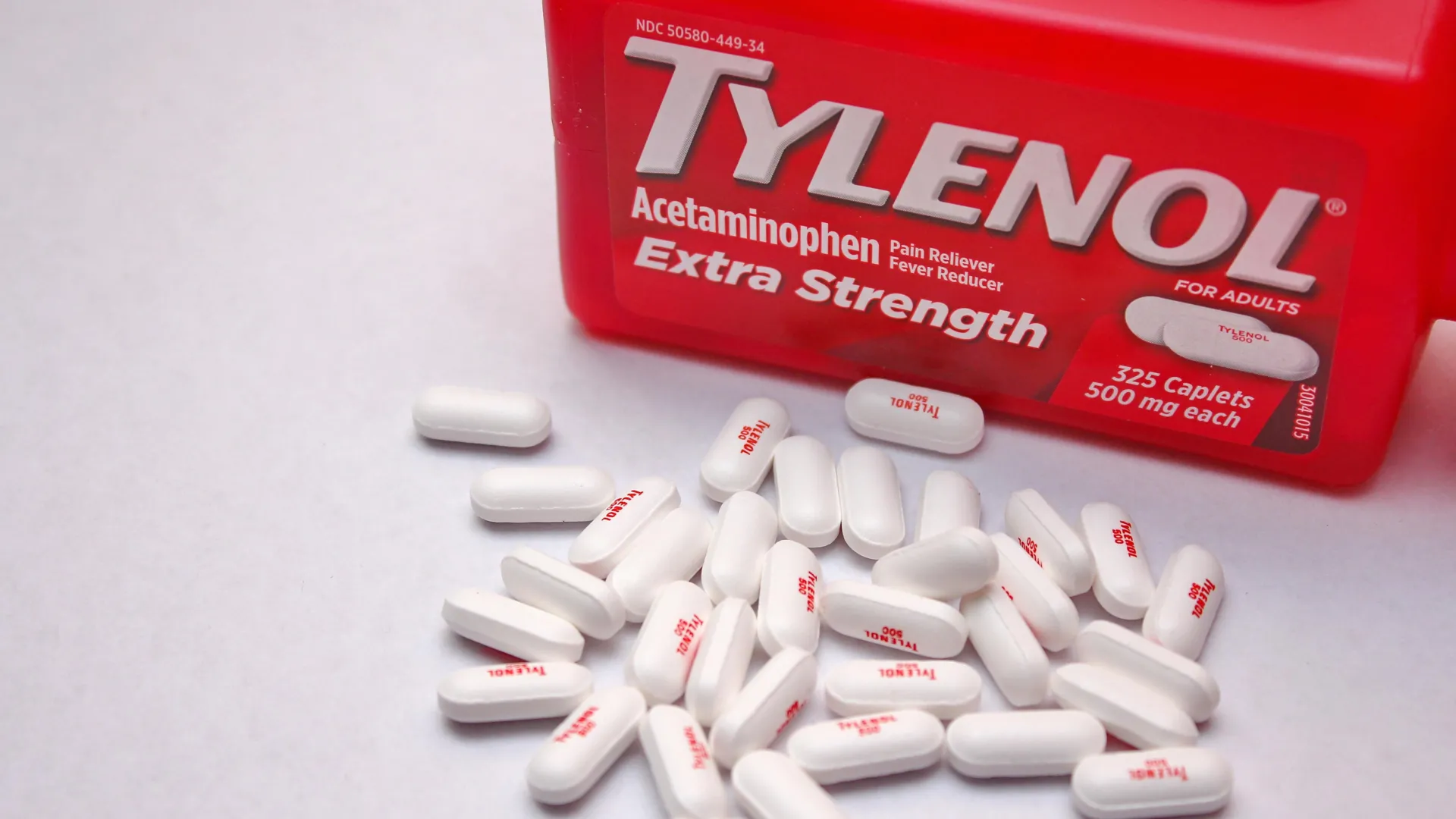
When children are exposed to acetaminophen — also known by the brand name Tylenol or as paracetamol — during pregnancy, they may be more likely to develop neurodevelopmental disorders (NDDs) including autism and ADHD, according to a new study.
The study was published recently in BMC Environmental Health. Andrea Baccarelli, dean of the faculty at Harvard T.H. Chan School of Public Health and professor of environmental health, was senior author. The study was led by the Icahn School of Medicine at Mount Sinai and also included co-authors from other institutions.
The researchers analyzed results from 46 previous studies worldwide that investigated the potential link between prenatal acetaminophen use and subsequent NDDs in children. The researchers used the Navigation Guide Systematic Review methodology — a gold-standard framework for synthesizing and evaluating environmental health data — which enabled them to conduct a rigorous, comprehensive analysis that supported evidence of an association between acetaminophen exposure during pregnancy and increased incidence of NDDs.
The researchers noted that while steps should be taken to limit acetaminophen use, the drug is important for treating pain and fever during pregnancy, which can also harm the developing fetus. High fever can raise the risk of neural tube defects and preterm birth. “We recommend judicious acetaminophen use — lowest effective dose, shortest duration — under medical guidance, tailored to individual risk-benefit assessments, rather than a broad limitation,” they wrote.
In late September, the Food and Drug Administration announced it would issue a letter to clinicians urging them to be cautious about the use of acetaminophen in pregnancy. Baccarelli said he had discussed his study with Health and Human Services Secretary Robert F. Kennedy Jr. in the weeks leading up to that announcement and provided the White House team with an statement noting his research found “evidence of an association” between prenatal exposure to acetaminophen and neurodevelopmental disorders. “That association is strongest when acetaminophen is taken for four weeks or longer,” Baccarelli said.
The statement continued: “Further research is needed to confirm the association and determine causality, but based on existing evidence, I believe that caution about acetaminophen use during pregnancy — especially heavy or prolonged use — is warranted.”
Baccarelli noted in the “competing interests” section of the research paper that he has served as an expert witness for plaintiffs in a case involving potential links between acetaminophen use during pregnancy and neurodevelopmental disorders.
The study was conducted in collaboration with the University of California, Los Angeles; University of Massachusetts Lowell; and Harvard T.H. Chan School of Public Health.
Funding for this study was provided by the National Cancer Institute (U54CA267776), the National Institute of Environmental Health Sciences (R35ES031688), and the National Institute on Aging (U01AG088684).

Diamonds from South Africa’s Voorspoed mine have revealed the first natural evidence of nickel-rich metallic alloys forming deep in Earth’s mantle, between 280-470 km (174-292 miles). A new study reveals that these inclusions coexist with nickel-rich carbonates, capturing a rare snapshot of a “redox-freezing” reaction whereby oxidized melts infiltrate reduced mantle rock. The growing diamond trapped both reactants and products of a diamond-forming reaction. This finding not only confirms long-standing predictions about mantle redox conditions but also highlights how such processes may fuel diamond formation of volatile-rich magmas that erupt from hundreds of kilometers and bring the diamond to the surface.
The Earth’s mantle is a restless, enigmatic engine that powers volcanism, recycles crust, and regulates the long-term evolution of the planet. But one of its most elusive characteristics — the redox state, or the balance of oxidized and reduced chemical species — remains difficult to measure directly. A new study led by Yael Kempe and Yaakov Weiss, from the Hebrew University’s Institute of Earth Sciences, offers a rare glimpse into these deep processes, captured within nano- and micro-inclusions in diamonds from South Africa’s Voorspoed mine.
A Rare Discovery in the Depths
For decades, models and high-pressure experiments have suggested that nickel-rich metallic alloys should stabilize in the mantle at depths of roughly 250-300 km. Yet, natural samples confirming these predictions have been vanishingly scarce.
Working with colleagues from the University of Nevada, the University of Cambridge, and the Nanocenter at the Hebrew University, Weiss’s team has now identified nickel-iron metallic nanoinclusions and nickel-rich carbonate microinclusions preserved inside diamonds that formed between 280-470 km below Earth’s surface. These inclusions represent the first direct evidence of nickel-rich alloys at their predicted depth — a long-sought validation of mantle redox models.
The diamonds’ mineral cargo also includes coesite, K-rich aluminous phases, and molecular solid nitrogen inclusions, providing multiple pressure markers that firmly constrain their origin to the deep upper mantle and shallow transition zone.
Redox Snapshots Frozen in Carbon
The significance of the find goes beyond simple confirmation of theoretical models. The coexistence of nickel-iron alloy and nickel-rich carbonate points to a metasomatic redox-freezing reaction — a dynamic interaction in which an oxidized carbonatitic-silicic melt infiltrated reduced, metal-bearing peridotite. It joins earlier evidence from shallower depths that this is the main mode of formation of natural diamonds.
In this environment, preferential oxidation of iron relative to nickel drove enrichment of the residual alloy in nickel. At the same time, nickel-rich carbonates and diamonds crystallized from the melt. In effect, the diamonds froze a fleeting geochemical moment: the conversion of a reduced mantle rock into a more oxidized, volatile-rich domain and the reduction of carbonates to form diamonds.
“This is a rare snapshot of mantle chemistry in action,” says Weiss. “The diamonds act as tiny time capsules, preserving a reaction that would otherwise vanish as minerals re-equilibrate with their surroundings.”
Implications for Mantle Dynamics and Magmatism
These findings carry broad implications. If localized metasomatic reactions periodically oxidize small portions of the mantle, they may help explain why some inclusions in other superdeep diamonds record unexpectedly high oxidized conditions.
Such processes also shed light on the origins of volatile-rich magmas. The enrichment of mantle peridotite in carbonate, potassium, and incompatible elements during these redox events could prime the mantle for the later formation of kimberlites, lamprophyres, and even some ocean island basalts. In other words, the tiny inclusions in Voorspoed diamonds hint at large-scale links between subduction, mantle redox dynamics, and the generation of magmas that shape continents and bring diamonds to the surface.
Diamonds as Mantle Witnesses
The study underscores the scientific value of diamonds as more than just gemstones. Their inclusions — whether nanometer-scale alloys or high-pressure minerals — offer one of the only natural records of conditions hundreds of kilometers beneath our feet.
Kempe and Weiss’s work marks a milestone: the first natural confirmation of nickel-rich alloys at mantle depths predicted by theory, and a vivid illustration of how the deep Earth’s redox landscape evolves through melt-rock interaction.
As researchers continue to probe these mineral time capsules, we may find that diamonds, once symbols of permanence, are also storytellers of change — bearing witness to the mantle’s hidden chemistry and the processes that continue to shape our dynamic planet.
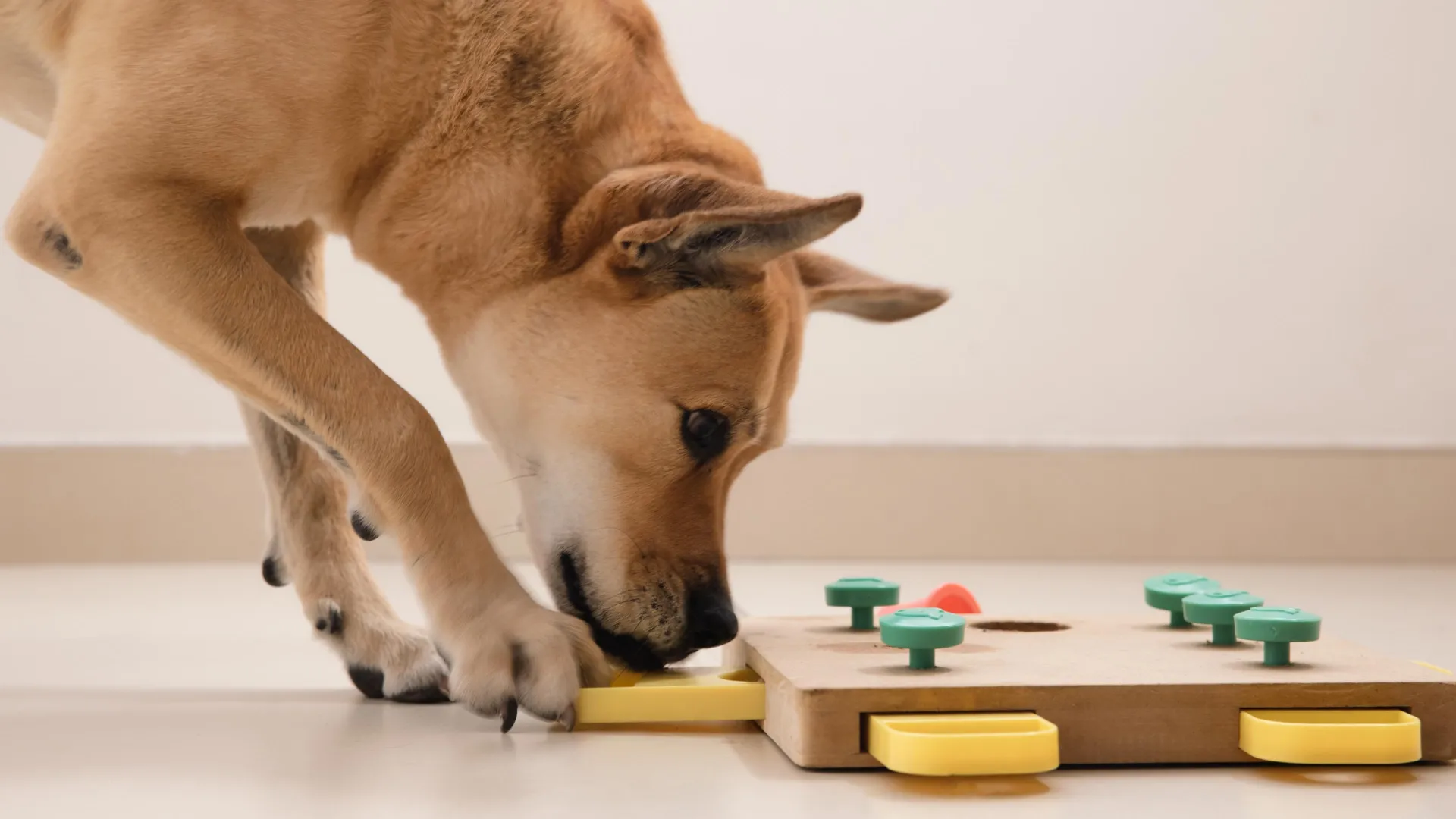
As infants, humans naturally learn new words and their associations — like the fact that forks are related to bowls because both are used to consume food. In a study published in the Cell Press journal Current Biology on September 18, a team of animal behavior experts demonstrate that dogs can categorize objects by function, too. In a series of playful interactions with their owners, a group of Gifted Word Learner (GWL) dogs were able to distinguish between toys used for tugging versus fetching, even when the toys in question didn’t share any obvious physical similarities — and then could remember those categorizations for long periods of time, all with no prior training.
“We discovered that these Gifted Word Learner dogs can extend labels to items that have the same function or that are used in the same way,” says author Claudia Fugazza of Eötvös Loránd University, Budapest, Hungary. It’s like a person calling both a traditional hammer and a rock by the same name, says Fugazza.
“The rock and the hammer look physically different, but they can be used for the same function,” she says. “So now it turns out that these dogs can do the same.”
The studies took place in the dogs’ natural home environments with their human owners. At the beginning, the dogs spent time getting familiar with verbal labels for two functional groups of objects: pull and fetch. Their owners used these words with specific toys and played with them accordingly even though the toys didn’t share any similar physical features.
Next, the dogs were tested to see if they had learned to connect the functional labels to the correct group of toys before playing with more novel toys in the two distinct categories. However, this time, their owners didn’t use the “pull” and “fetch” labels for the dogs.
The team found that the dogs were able to extend the functional labels they’d learned previously to the new toys based on their experience playing with them. In the final test, the dogs showed that they could successfully apply the verbal labels to the toys by either pulling or fetching accordingly, even when their owners hadn’t named them.
“For these new toys, they’ve never heard the name, but they have played either pull or fetch, and so the dog has to choose which toy was used to play which game,” Fugazza says. “This was done in a natural setup, with no extensive training. It’s just owners playing for a week with the toys. So, it’s a natural type of interaction.”
The authors note that the dogs’ ability to connect verbal labels to objects based on their functional classifications and apart from the toys’ physical attributes suggests that they form a mental representation of the objects based on their experience with their functions, which they can later recall. These findings provide insight into the evolution of basic skills related to language and their relationship to other cognitive abilities, including memory, the researchers say.
More research is needed to understand the scope and flexibility of dogs’ language categorization abilities. The researchers suggest future studies to explore whether dogs that don’t learn object labels may nevertheless have an ability to classify objects based on their functions.
“We have shown that dogs learn object labels really fast, and they remember them for a long period, even without rehearsing,” Fugazza says. “And I think the way they extend labels also beyond perceptual similarities gives an idea of the breadth of what these labels could be for dogs.”
This work was supported by National Brain Research Program NAP 3.0 of the Hungarian Academy of Sciences, MTA-ELTE Comparative Ethology Research Group, and TRIXIE.
Leeds NHS Trust was paid the money after claiming services met safe standards of care.
Here is a guide to how each product works and the pros and cons to help you decide what might suit you.
He tells expectant mothers to ignore Trump’s claims of a link between use of the painkiller and autism.
Some studies have suggested an association between the two, but experts say there is no causal relationship.
Both women and men can experience a loss of libido after having a child, here’s what can help.
Some studies have suggested an association between the two, but experts say there is no causal relationship.
