Two ambulance workers have been arrested over the deaths of six adults, Wiltshire Police have said.


Two ambulance workers have been arrested over the deaths of six adults, Wiltshire Police have said.
Some Jhoots pharmacies are accused of not paying staff, as patients face closures and low stock.
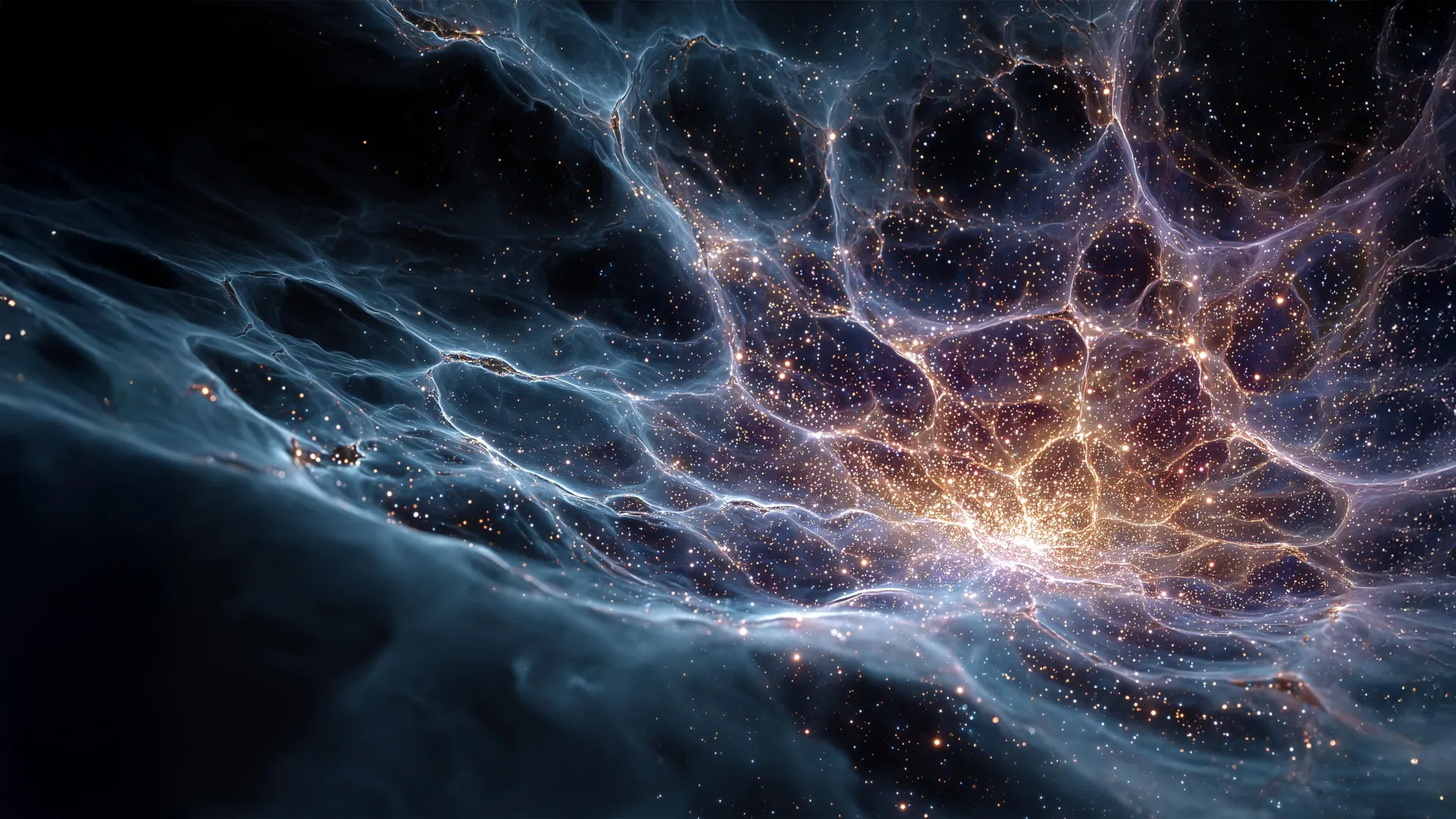
A Rutgers-led team of scientists has uncovered evidence of how galaxies expand by tracing the invisible scaffolding of the universe created by a mysterious substance known as dark matter.
In a newly published study in Astrophysical Journal Letters, researchers used what they said are the largest-ever samples of special galaxies called Lyman-alpha emitters to study how galaxies clumped together over billions of years. In doing so, they gained an improved understanding of how galaxies relate to the surrounding dark matter and how they evolve over time.
“Analyzing these fingerprints gives us insight into the mass of dark matter surrounding the galaxies,” said Eric Gawiser, a Distinguished Professor with the Department of Physics and Astronomy in the Rutgers School of Arts and Sciences and an author of the study. “The dark matter masses revealed by this study are consistent with the idea that Lyman-alpha emitting galaxies evolved into present-day galaxies like our own Milky Way.”
The analysis, which assessed wide-field images across three different eras of the universe’s history shortly after the Big Bang, revealed distinct patterns, akin to cosmic fingerprints. These patterns point to where dark matter is most concentrated, the researchers said.
Dark matter, a mysterious substance that doesn’t emit light or energy, cannot be seen, but makes up most of the matter in the universe, according to scientists. They know dark matter exists because its gravity affects how galaxies move and how these vast cosmic systems are arranged in space.
The study, led by Rutgers doctoral student Dani Herrera, used data from the ODIN (One-hundred-square-degree DECam Imaging in Narrowbands) survey, which is a large astronomical project designed to analyze more than 100,000 Lyman-alpha emitting galaxies.
The researchers focused on data taken from a region of the sky known as the Cosmic Evolution Survey Deep Field (COSMOS), in one of the largest deep-sky surveys ever conducted. Looking deep into space and into the distant past, they viewed three time periods, some 2.8 billion, 2.1 billion and 1.4 billion years after the Big Bang. During these periods, Lyman-alpha emitter galaxies were young and actively forming stars, making them ideal markers for study. They also contain hydrogen gas that emits a special glow, which allows scientists to discover large numbers of them in the distant universe.
“We wanted to find the dark matter whose gravity drives galaxies to merge and grow,” Herrera said. “Understanding where it is and how it has evolved helps us understand how the universe itself has evolved.”
Dark matter plays a crucial role in galaxy formation by acting as a gravitational “glue” that helps pull gas together to form galaxies, Herrera said. Its invisible mass creates deep wells in space where galaxies can grow, merge and evolve, forming the large-scale structure of the universe.
“We used the clumpiness of these galaxies to identify where the dark matter was densest,” Gawiser said. “Visualizing that with a contour map, much the way that a hiking map shows elevations, lets us observe the ‘fingerprints’ of dark matter in the distant universe.”
One result stood out. Three percent to 7% of the dense regions of dark matter capable of hosting galaxies contain Lyman-alpha emitting galaxies, they found. This means that Lyman-alpha emitting galaxies represent a small percentage of the galaxies forming where the dark matter is densest. The low percentage hints that the galaxies were observed during a short-lived phase, glowing in Lyman-alpha light for tens to hundreds of millions of years.
To uncover these results, the researchers used a technique called clustering which measures how galaxies are grouped compared with random distributions. They calculated the angular correlation function, a method of counting pairs of galaxies.
This research, the scientists said, not only deepens understanding of galaxy evolution but also helps scientists refine models of the universe’s structure. As the ODIN survey continues, future studies will expand to more galaxies, offering a more complete view of the cosmic web, they said.
“While invisible to our telescopes, dark matter shapes the universe through interactions with visible material,” Gawiser said. “While some try to understand what it is, others like this research team try to understand where it is and what that implies about the evolution of the universe.”
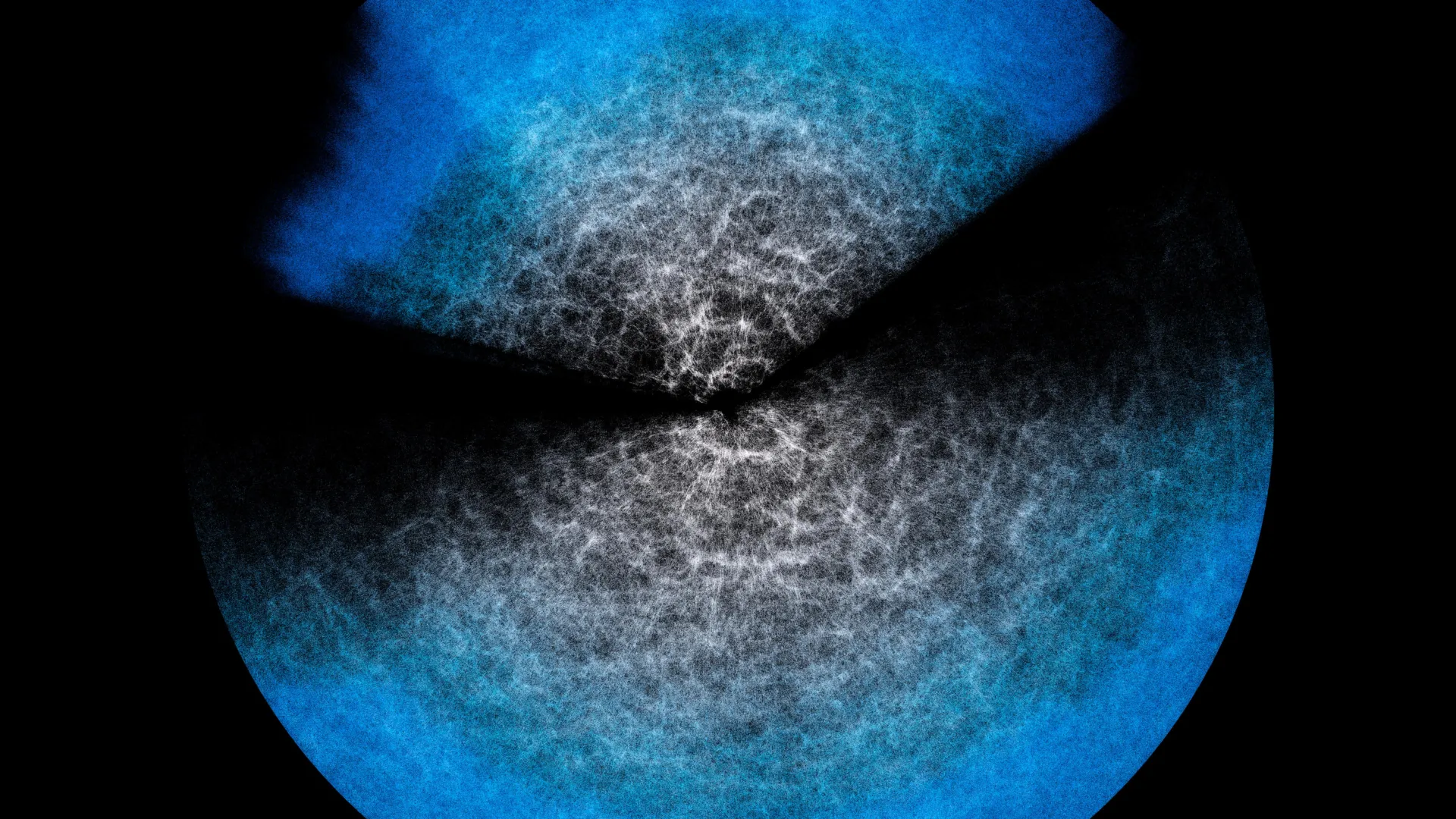
If you think a galaxy is big, compare it to the size of the Universe: it’s just a tiny dot which, together with a huge number of other tiny dots, forms clusters that aggregate into superclusters, which in turn weave into filaments threaded with voids — an immense 3D skeleton of our Universe.
If that gives you vertigo and you’re wondering how one can understand or even “see” something so vast, the answer is: it isn’t easy. Scientists combine the physics of the Universe with data from astronomical instruments and build theoretical models, such as EFTofLSS (Effective Field Theory of Large-Scale Structure). Fed with observations, these models describe the “cosmic web” statistically and allow its key parameters to be estimated.
Models like EFTofLSS, however, demand a lot of time and computing resources. Since the astronomical datasets at our disposal are growing exponentially, we need ways to lighten the analysis without losing precision. This is why emulators exist: they “imitate” how the models respond, but operate much faster.
Since this is a kind of “shortcut,” what’s the risk of losing accuracy? An international team including, among others, INAF (Italy), The University of Parma (Italy) and the University of Waterloo (Canada) has published in the Journal of Cosmology and Astroparticle Physics (JCAP) a study testing the emulator Effort.jl, which they designed. It shows that Effort.jl delivers essentially the same correctness as the model it imitates — sometimes even finer detail — while running in minutes on a standard laptop instead of a supercomputer.
“Imagine wanting to study the contents of a glass of water at the level of its microscopic components, the individual atoms, or even smaller: in theory you can. But if we wanted to describe in detail what happens when the water moves, the explosive growth of the required calculations makes it practically impossible,” explains Marco Bonici, a researcher at the University of Waterloo and first author of the study. “However, you can encode certain properties at the microscopic level and see their effect at the macroscopic level, namely the movement of the fluid in the glass. This is what an effective field theory does, that is, a model like EFTofLSS, where the water in my example is the Universe on very large scales and the microscopic components are small-scale physical processes.”
The theoretical model statistically explains the structure that gives rise to the data collected: the astronomical observations are fed to the code, which computes a “prediction.” But this requires time and substantial compute. Given today’s data volume — and what is expected from surveys just begun or coming soon (such as DESI, which has already released its first batch of data, and Euclid) — it’s not practical to do this exhaustively every time.
“This is why we now turn to emulators like ours, which can drastically cut time and resources,” Bonici continues. An emulator essentially mimics what the model does: its core is a neural network that learns to associate the input parameters with the model’s already-computed predictions. The network is trained on the model’s outputs and, after training, can generalize to combinations of parameters it hasn’t seen. The emulator doesn’t “understand” the physics itself: it knows the theoretical model’s responses very well and can anticipate what it would output for a new input. Effort.jl’s originality is that it further reduces the training phase by building into the algorithm knowledge we already have about how predictions change when parameters change: instead of making the network “re-learn” these, it uses them from the start. Effort.jl also uses gradients — i.e., “how much and in which direction” predictions change if you tweak a parameter by a tiny amount — another element that helps the emulator learn from far fewer examples, cutting compute needs and allowing it to run on smaller machines.
A tool like this needs extensive validation: if the emulator doesn’t know the physics, how sure are we that its shortcut yields correct answers (i.e., the same ones the model would give)? The newly published study answers exactly this, showing that Effort.jl’s accuracy — on both simulated and real data — is in close agreement with the model. “And in some cases, where with the model you have to trim part of the analysis to speed things up, with Effort.jl we were able to include those missing pieces as well,” Bonici concludes. Effort.jl thus emerges as a valuable ally for analyzing upcoming data releases from experiments like DESI and Euclid, which promise to greatly deepen our knowledge of the Universe on large scales.
The study “Effort.jl: a fast and differentiable emulator for the Effective Field Theory of the Large Scale Structure of the Universe” by Marco Bonici, Guido D’Amico, Julien Bel and Carmelita Carbone is available in the Journal of Cosmology and Astroparticle Physics (JCAP).
Sanctions for UK doctors guilty of sexual misconduct are too lenient in around a quarter of cases, reports suggest.
Using the cafe to treat patients “will not be allowed to happen again”, the trust’s boss says.
The play area also has a calming room for children to relax in.
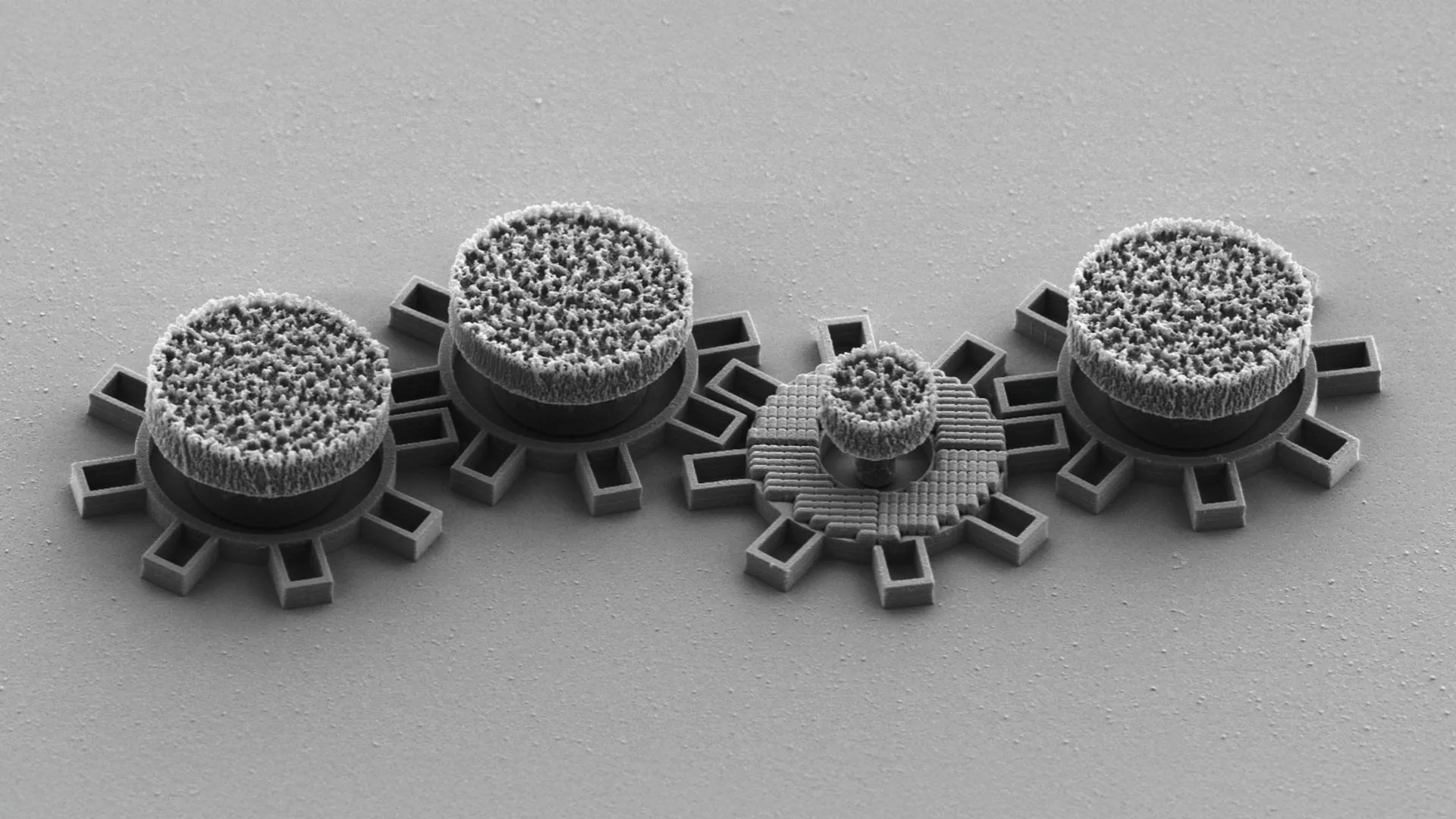
Researchers at the University of Gothenburg have made light-powered gears on a micrometer scale. This paves the way for the smallest on-chip motors in history, which can fit inside a strand of hair.
Gears are everywhere – from clocks and cars to robots and wind turbines. For more than 30 years, researchers have been trying to create even smaller gears in order to construct micro-engines. But progress stalled at 0.1 millimeters, as it was not possible to build the drive trains needed to make them move any smaller.
Researchers from Gothenburg University, among others, have now broken through this barrier by ditching traditional mechanical drive trains and instead using laser light to set the gears in motion directly.
Gears powered by light
In their new study, the researchers shows that microscopic machines can be driven by optical metamaterials – small, patterned structures that can capture and control light on a nanoscale. Using traditional lithography, gears with an optical metamaterial are manufactured with silicon directly on a microchip, with the gear having a diameter of a few tens of micrometers. By shining a laser on the metamaterial, the researchers can make the gear wheel spin. The intensity of the laser light controls the speed, and it is also possible to change the direction of the gear wheel by changing the polarization of the light.
The researchers are thus close to creating micromotors.
A new way of thinking
“We have built a gear train in which a light-driven gear sets the entire chain in motion. The gears can also convert rotation into linear motion, perform periodic movements and control microscopic mirrors to deflect light,” says the study’s first author, Gan Wang, a researcher in soft matter physics at the University of Gothenburg.
The ability to integrate such machines directly onto a chip and drive them with light opens up entirely new possibilities. Since laser light does not require any fixed contact with the machine and is easy to control, the micromotor can be scaled up to complex microsystems.
“This is a fundamentally new way of thinking about mechanics on a microscale. By replacing bulky couplings with light, we can finally overcome the size barrier,” says Gan Wang.
Cell size
With these advances, researchers are beginning to imagine micro- and nanomachines that can control light, manipulate small particles or be integrated into future lab-on-a-chip systems. A gear wheel can be as small as 16-20 micrometers, and there are human cells of that size. Medicine is a field that is within reach, believes Gan Wang.
“We can use the new micromotors as pumps inside the human body, for example to regulate various flows. I am also looking at how they function as valves that open and close.”
They have filed a lawsuit against US right-wing influencer Candace Owens who claims the French first lady was born male.
A survey shows that 90% people say they are not given plans to help manage menopause.
