Martine Barons, 65, has three world titles under her belt after only starting weightlifting in 2024.


Martine Barons, 65, has three world titles under her belt after only starting weightlifting in 2024.
Sara Kahsai was 29 when she found out she had FGM as a baby.
Patients in England with an incurable breast cancer can now access a life-extending drug on the NHS, two years after it was deemed too expensive by a health body.
Enhertu, which can give patients an extra seven months to live on average, has been prescribed in Scotland for more than two years and is available.

New research suggests that an overactive immune sensor may play a major role in severe genetic disorders linked to rapid aging. By reducing the activity of this sensor, scientists were able to improve tissue health across several biological systems, challenging long-held ideas about how DNA damage drives degeneration.
The immune system is designed to recognize and eliminate threats such as viruses. But under certain conditions, that protective machinery can mistakenly react to the body’s own damaged DNA. When fragments of DNA are treated as if they came from an invading virus, the resulting immune response can trigger chronic inflammation that harms healthy tissue.
An international research team led by Dr. Marva Bergman and Prof. Itamar Harel at Hebrew University, working with Prof. Yehuda Tzfati, Prof. Ido Ben-Ami (Hebrew University and Sha’are Zedek Medical Center), and Prof. Bérénice Benayoun (University of Southern California), found that this misplaced immune reaction is a major contributor to tissue degeneration in severe, rapid-aging disorders.
When the researchers reduced this immune false alarm, they saw improvements across multiple biological systems.
Rethinking DNA Damage and Rapid Aging
The study focused on rare DNA damage-repair (DDR) syndromes such as Ataxia-Telangiectasia (A-T) and Bloom syndrome. In these disorders, the cellular systems responsible for repairing routine DNA damage do not work properly.
As a result, damaged DNA can accumulate throughout the body, creating genomic instability and contributing to neurodegeneration, increased cancer risk, and premature aging.
For decades, researchers largely assumed that the unrepaired DNA itself was the main force driving cellular decline. The new findings suggest the picture is more complicated.
“Our results show that the damage isn’t acting alone,” said Prof. Harel. “It’s the body’s response to that damage, an exaggerated, chronic inflammatory reaction, that drives much of the degeneration.”
When Damaged DNA Triggers an Immune False Alarm
When DNA repair breaks down, pieces of DNA can escape into the cell’s cytosol. Once there, they can activate a molecular sensor called cGAS.
Under normal circumstances, cGAS helps defend the body by detecting viral DNA. The problem is that the sensor cannot always distinguish foreign genetic material from fragments of the body’s own DNA.
That confusion can lead to persistent sterile inflammation, meaning inflammation that occurs without an infection. Instead of protecting the body, the prolonged immune response begins damaging tissues.
The researchers also identified another unexpected role for cGAS.
In addition to activating inflammation, cGAS can move into the cell nucleus and directly disrupt DNA repair. That means the same molecule can contribute to degeneration in two ways: by promoting inflammation and by interfering with the cellular machinery that fixes damaged DNA.
Under normal conditions, cGAS is an important part of the body’s defenses. But when DNA damage becomes overwhelming, its activity may become harmful.
Turning Down cGAS Restored Tissue Function
To determine whether reducing this response could change the course of disease, the researchers used a fast-aging vertebrate model that makes it possible to study aging-related biological changes over a relatively short period.
When cGAS activity was lowered, several major disease features improved. These included neuroinflammation, tissue degeneration, and loss of reproductive capacity.
“We weren’t just slowing decline,” said Dr. Bergman. “We saw broad restoration of tissue function. It suggests that the body can cope with more DNA damage than we assumed, if the inflammatory response is kept in check.”
The results raise the possibility that treating disorders caused by DNA damage may not require repairing every individual DNA lesion.
Instead, future therapies could potentially focus on controlling how the body responds to that damage.
A Potential New Treatment Strategy
That approach could offer a different way to treat severe DNA repair disorders. Rather than trying to correct every damaged piece of genetic material, researchers may be able to reduce the harmful inflammatory reaction that follows.
There is an important complication, however. cGAS is also essential for detecting viral infections, so simply shutting the pathway down could weaken antiviral immunity.
Any future treatment would therefore need to reduce the damaging effects of cGAS without eliminating its protective role.
The findings may also have implications beyond rare genetic conditions. Chronic inflammation and genomic instability are both common features of many age-related diseases, raising the possibility that similar mechanisms could contribute to broader forms of degeneration.
Aging, Reproduction, and Long-Term Health
Other studies from the same research group have explored how basic biological programs, including reproduction and developmental timing, interact with aging and lifespan.
Taken together, the work supports a broader idea: biological systems that help organisms survive, grow, and reproduce early in life may also influence how long tissues remain healthy later on.
The researchers emphasize that reversing severe disease-related degeneration is not the same as slowing the fundamental biological rate of aging.
Even so, the study points to a potentially important shift in how scientists think about DNA damage. The damage itself may be only part of the problem. The body’s own response to that damage can also drive decline, and controlling that response could open new possibilities for treating some of the most difficult degenerative disorders.

An international research team has identified a previously unknown prehistoric animal that lived in what is now Tanzania roughly 240 million years ago during the Triassic period.
The species, named Dinodontosaurus isiyavamanda, could do more than add a new animal to the fossil record. According to researchers led by the University of Bristol, the discovery may help scientists more accurately date one of the world’s most important fossil regions and refine the timeline for the earliest stages of dinosaur evolution.
The findings were published September 15 in the Journal of Vertebrate Palaeontology. They suggest that some fossils from Tanzania once considered candidates for the earliest dinosaurs may actually be younger than scientists had thought.
A Fossil Mystery More Than 60 Years Old
The story began in 1963, when a British expedition collected a large number of synapsid fossils from what is now Tanzania. Synapsids are mammal-lineage vertebrates that were widespread and diverse long before dinosaurs came to dominate terrestrial ecosystems.
The fossils were eventually placed in the collections of the Natural History Museum, London. Many were studied, but others remained only partially examined, leaving unanswered questions about what animals they belonged to and what they could reveal about ecosystems that existed approximately 240 million years ago.
Among the material was an undescribed associated skeleton from a plant-eating group of synapsids known as dicynodonts. Researchers examined that specimen along with a fragmentary skull discovered more recently.
Their analysis showed that both belonged to the genus Dinodontosaurus. That was a surprise because, until now, Dinodontosaurus had only been confirmed in South America.
A closer anatomical comparison showed that the Tanzanian fossils represented a species unknown to science. The researchers named it Dinodontosaurus isiyavamanda. The species name refers to the land of the Wamanda people, who live in the region of Tanzania where the fossils were discovered.
A New Link Between Africa and South America
The identification has broader importance because the rocks containing Dinodontosaurus isiyavamanda are the same geological deposits that have also produced fossils proposed to be among the oldest possible dinosaurs.
Scientists had previously linked those Tanzanian rocks with deposits in South Africa because the two regions were thought to contain some of the same fossil genera. Those South African rocks were considered Middle Triassic in age.
The new Dinodontosaurus discovery changes that comparison.
Because the same genus is now known from both Tanzania and South America, researchers have a new way to correlate the fossil-bearing rock sequences in those regions. The presence of Dinodontosaurus in both places indicates that the deposits are likely equivalent in age.
Recent radiometric dating of South American rocks suggests that these early dinosaur-bearing sequences are as much as 10 million years younger than comparable rocks in South Africa.
That strengthens the case that the Tanzanian deposits should no longer be considered evidence for the oldest potential dinosaurs. Instead, scientists may need to reconsider both the timing and geography of the earliest stages of dinosaur evolution.
Revising the Dinosaur Origin Timeline
Hady George, PhD student in the School of Earth Sciences at the University of Bristol, and lead author, said: “Our discovery marks the first confirmed record of the genus Dinodontosaurus outside South America. The finding links the Tanzanian and South American fossil-bearing rocks, showing they are of equivalent age.
“This helps confirm that the oldest dinosaur candidates from Tanzania are probably no older than those from South America, refining the timeline of dinosaur origins. Forthcoming research projects will examine the remaining fossil material and explore the biomechanics and ecology of Triassic dicynodonts.”
The discovery also has an unusually long scientific history.
Paleontologist Nigel Larkin, Visiting Research Fellow in the School of Biological Sciences at the University of Reading, and a co-author, studied the dicynodont skeleton decades ago and already suspected that it represented a species new to science.
He added: “I studied this dicynodont skeleton for my MSc thesis at University College London back in 1994 and judged it to be a species new to science, but it took me nearly 30 years to start the process of writing it up for publication. I’m glad I waited, as the international team we put together, headed by Hady George, has done an amazing job of fleshing-out this story in much more detail and depth than I could have achieved on my own.
“Techniques have improved vastly over the last 30 years too – we can do so much more with micro-CT scanning, etc. to examine such specimens than we ever could have imagined in the 1990s, and international collaboration is so much easier. And what’s 30 years? It’s the blink of an eye compared to the age of this prehistoric specimen.”
Old Museum Fossils Can Still Transform Science
The work highlights the scientific value of returning to fossils that have been stored in museum collections for decades.
Dr. Mike Day, Curator of Non-Mammalian Tetrapods at the Natural History Museum, London, explained: “This fossil specimen from Tanzania has been in our care for over 60 years, and it’s wonderful that its identity has now been brought to light. By revealing that Dinodontosaurus lived in South America and eastern Africa, it offers a glimpse of our planet 240 million years ago.
“It goes to show how revisiting museum collections can change our understanding of the past just as much as finding new fossils in the field, showing the importance of looking after these invaluable records of life on Earth.”
Scientists still have much more material to investigate. A substantial portion of the Tanzanian Dinodontosaurus remains has yet to be fully studied, especially the postcranial skeleton, which includes bones from the body other than the skull.
Future research will examine those remains in greater detail and compare them with Dinodontosaurus fossils from South America.
The team also plans to study the biomechanics of Dinodontosaurus and related dicynodonts. That work could help explain how several species of large plant-eating animals were able to live alongside one another in Triassic ecosystems millions of years before dinosaurs rose to dominance.
Laugh, Move & Groove, nominated for the Make a Difference Awards, holds sessions around Jersey.
All opposition leaders sent condolences to Burnham as he cancelled engagements earlier this week.
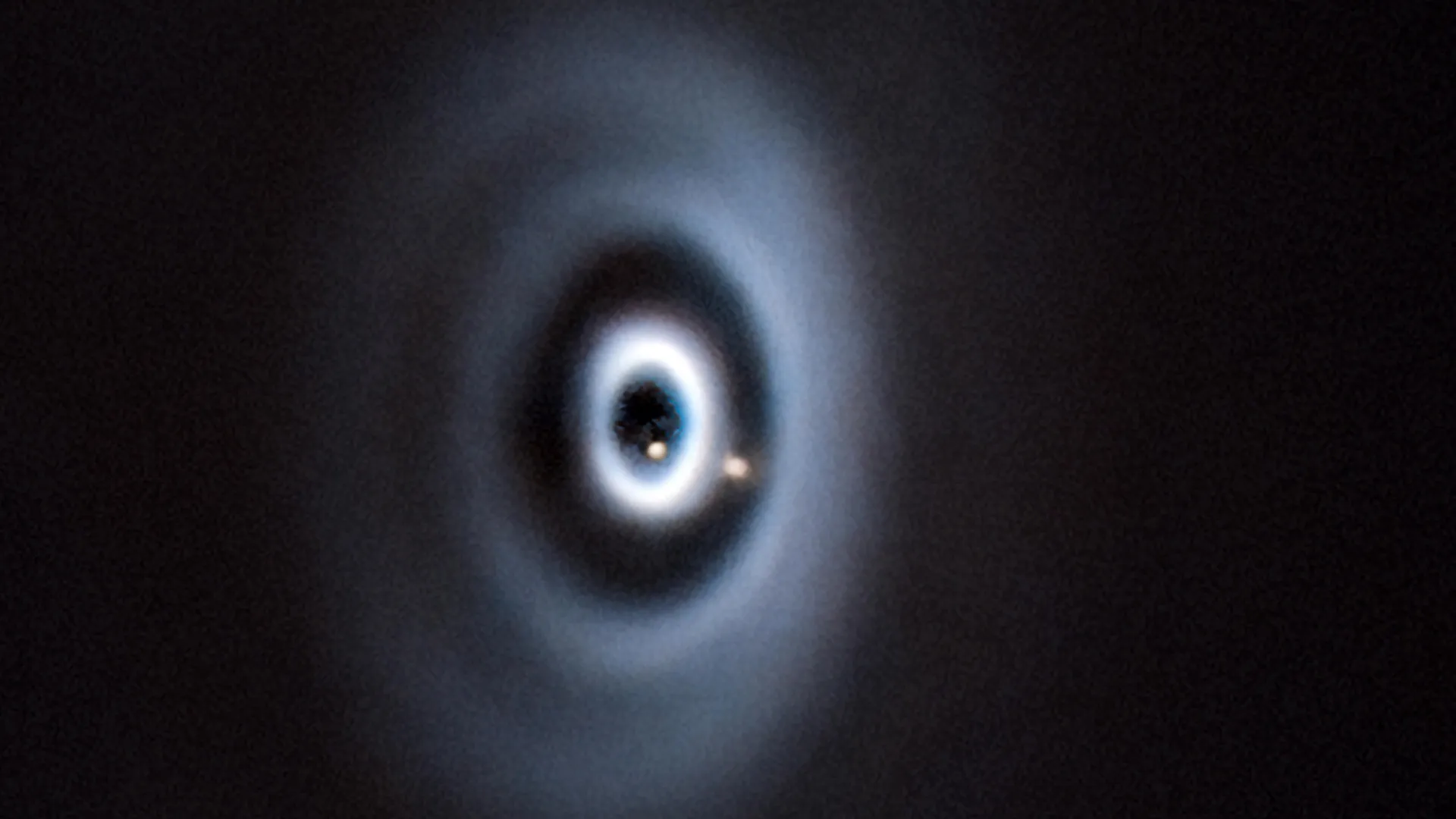
Scientists have long debated where the raw material that formed Earth originally came from. Although our planet sits in the inner Solar System, many researchers have proposed that 6-40 percent of its building material arrived from the outer Solar System, beyond Jupiter.
That idea has been especially important for explaining how Earth acquired volatile substances such as water. If those materials came from farther out, then matter must have moved between the outer and inner regions of the Solar System while Earth was forming.
New research now challenges that picture.
“We were truly astonished”
Planetary scientists Paolo Sossi and Dan Bower of ETH Zurich compared existing measurements of isotope ratios from a wide range of meteorites, including samples associated with Mars and the asteroid Vesta, with the isotopic composition of Earth.
Isotopes are sibling atoms of the same element (same number of protons) that have a different mass (different number of neutrons).
Using a new approach to analyze those data, the researchers reached a striking conclusion. Their results indicate that the material that formed Earth came entirely from the inner Solar System.
Material from the outer Solar System appears to account for less than two percent of Earth’s total mass, and possibly none at all. The study was published in Nature Astronomy.
“Our calculations make it clear: the building material of the Earth originates from a single material reservoir,” says Sossi. His colleague Bower adds: “We were truly astonished to find that the Earth is composed entirely of material from the inner Solar System distinct from any combination of existing meteorites.”
The ETH Zurich team based its analysis on existing measurements from ten different isotope systems found in meteorites. Earlier studies typically focused on only two isotope systems.
“Our studies are actually data science experiments,” says Sossi. “We carried out statistical calculations that are rarely used in geochemistry, even though they are a powerful tool.”
Meteorite Isotopes Reveal Earth’s Origins
Scientists have used isotopes in meteorites for decades to trace where celestial objects formed, including which region of the Solar System they came from. For many years, however, oxygen isotopes were the main tool available for identifying that origin.
That changed in the early 2010s, when an American researcher showed that isotopes of other elements, including chromium and titanium, could also reveal where meteorites formed.
This discovery allowed scientists to divide meteorites into two broad groups. Non-carbonaceous meteorites formed exclusively in the inner Solar System. Carbonaceous meteorites contain more water and carbon and originated in the outer Solar System.
According to the new analysis, Earth is made entirely from non-carbonaceous material. The researchers found no evidence for the previously proposed exchange of material between the inner and outer Solar System reservoirs.
That suggests Earth grew in a relatively stable environment, gradually incorporating smaller nearby planetary bodies as it developed. It also means that most volatile substances, including water, must already have existed in the inner Solar System.
Jupiter May Have Divided the Solar System
Why did the young Solar System end up with two distinct reservoirs of material?
Scientists think Jupiter played a major role. As the gas giant grew rapidly, its enormous gravity carved a gap in the protoplanetary disc surrounding the young Sun. These discs are ring-shaped and consist of gas and dust; they are the birthplace of planets.
Jupiter appears to have acted as a barrier, limiting the movement of material from the outer Solar System into the inner region. Until now, however, scientists did not know how effective that barrier really was.
The new analysis suggests that very little material from beyond Jupiter ever reached the region where Earth formed.
“Our calculations are very robust and rely solely on the data itself, not on physical assumptions, as these are not yet fully understood,” Bower emphasizes.
The results also show that Earth’s material composition resembles that of Mars and Vesta.
Mercury and Venus May Share the Same Pattern
The researchers suspect that Mercury and Venus could fit the same pattern as Earth, Mars, and Vesta.
“Based on our analysis, we can theoretically predict the composition of these two planets,” says Paolo Sossi.
For now, however, that prediction cannot be directly tested. Scientists do not currently have rock samples from Mercury or Venus, the two planets closest to the Sun, that could be analyzed in the same way.
A New Mystery About Earth’s Water
“Our results shed new light on the formation history of our Earth and the other rocky planets,” says Sossi.
The findings also raise a major new question. If Earth did not receive large amounts of water-rich material from the outer Solar System, scientists must explain how enough water could have existed in the hot inner Solar System to eventually produce Earth’s oceans.
Sossi and his team plan to investigate that question next. They also want to determine whether similar processes could occur in planetary systems around other stars.
“Until then, however, Dan and I will have to engage in many heated debates about the material composition of Earth and its neighboring planets, because the scientific discourse over the building blocks of Earth is far from over, despite the new findings,” says Sossi.
The Health Improvement Commission says it is to help people get a clearer picture of their intake.
