Scientists find brain cell switch that could reverse obesity’s effects

Fatty diets and obesity affect the structure and function of astrocytes1, the star-shaped brain cells located in the striatum, a brain region involved in the perception of pleasure generated by food consumption. What is even more surprising is that by manipulating these astrocytes in vivo in mice can influence metabolism and correct certain cognitive changes associated with obesity (ability to relearn a task, for example). These results, described by scientists from the CNRS2 and the Université Paris Cité, were recently published in the journal Nature Communication.

These discoveries reinforce the idea that astrocytes (long neglected in favour of neurons) play a key role in brain function. They also demonstrate, for the first time, the ability of astrocytes to restore cognitive function in the context of obesity, opening up new avenues of research to identify their exact role in energy metabolism.

These conclusions were reached using a combination of ex vivo and in vivo approaches in rodents, including chemogenetic techniques3, brain imaging, locomotion tests, cognitive behaviour and measuring the body’s energy metabolism.

Notes

  1. Unlike neurons, astrocytes (nervous system cells) do not generate electrical activity, which has made them less easy to study in the past. However, thanks to improvements in observation techniques, we now know that their close cooperation with neurons is essential to the proper functioning of the nervous system.
  2. Reporting to l’Unité de biologie fonctionnelle et adaptative (CNRS/Université Paris Cité). Scientists from l’Institut de biologie Paris-Seine (CNRS/Inserm/Sorbonne Université) were also involved.
  3. Calcium is an essential chemical element for astrocyte function, enabling synaptic activity to be modulated. The chemogenetic technique employed was based on the use of a virus, to express, in a targeted manner in the astrocytes, a protein that could modulate calcium flow in the cell, rather like a switch. The scientists were thus able to study the effect of these calcium flows on the activity of the astrocytes and surrounding neurons.
Share Button

Scientists discover amino acid switch that turns fat into a calorie-burning furnace

Consuming fewer calories is largely accepted as a way to improve health and lose weight, but a recently published study in Nature Metabolism points to a specific sulfur-containing amino acid cysteine as a key component in weight loss. In the study “Cysteine depletion triggers adipose tissue thermogenesis and weight loss,” researchers discovered that when study participants restricted their calorie intake, it resulted in reduced levels of cysteine in white fat.

Pennington Biomedical researchers Dr. Eric Ravussin and Dr. Krisztian Stadler contributed to the study in which they and colleagues examined cysteine and discovered that it triggered the transition of white fat cells to brown fat cells, which are a more active form of fat cells that burn energy to produce heat and maintain body temperature. When researchers restricted cysteine in animal models entirely, it drove high levels of weight loss and increased fat burning and browning of fat cells, further demonstrating cysteine’s importance in metabolism.

“In addition to the dramatic weight loss and increase in fat burning resulting from the removal of cysteine, the amino acid is also central to redox balance and redox pathways in biology,” said Dr. Stadler, who directs the Oxidative Stress and Disease laboratory at Pennington Biomedical. “These results suggest future weight management strategies that might not rely exclusively on reducing caloric intake.”

The article is based on results from trials involving both human participants and animal models. For the human trials, researchers examined fat tissue samples taken from trial participants who had actively restricted calorie intake over a year. When examining the fat tissue samples, they looked for changes in the thousands of metabolites, which are compounds formed when the body breaks down food and stores energy. The exploration of these metabolites indicated a reduced level of cysteine.

“Reverse translation of a human caloric restriction trial identified a new player in energy metabolism,” said Dr. Ravussin, who holds the Douglas L. Gordon Chair in Diabetes and Metabolism at Pennington Biomedical and oversees its Human Translation Physiology Lab. “Systemic cysteine depletion in mice causes weight loss with increased fat utilization and browning of adipocytes.”

The tissue samples came from participants in the CALERIE clinical trial, which recruited healthy young and middle-aged men and women who were instructed to reduce their calorie intake by an average of 14% over two years. With the reduction of cysteine, the participants also experienced subsequent weight loss, improved muscle health, and reduced inflammation.

In the animal models, researchers provided meals with reduced calories. This resulted in a 40% drop in body temperature, but regardless of the cellular stress, the animal models did not exhibit tissue damage, suggesting that protective systems may kick in when cysteine is low.

“Dr. Ravussin, Dr. Stadler, and their colleagues have made a remarkable discovery showing that cysteine regulates the transition from white to brown fat cells, opening new therapeutic avenues for treating obesity,” said Dr. John Kirwan, Executive Director of Pennington Biomedical Research Center. “I would like to congratulate this research team on uncovering this important metabolic mechanism that could eventually transform how we approach weight management interventions.”

Share Button

Scientists crack the mystery of brain cell clumps, and make them vanish

Look inside a brain cell with Huntington’s disease or ALS and you are likely to find RNA clumped together.

These solid-like clusters, thought to be irreversible, can act as sponges that soak up surrounding proteins key for brain health, contributing to neurological disorders.

How these harmful RNA clusters form in the first place has remained an open question.

Now, University at Buffalo researchers have not only uncovered that tiny droplets of protein and nucleic acids in cells contribute to the formation of RNA clusters but also demonstrated a way to prevent and disassemble the clusters.

Their findings, described in a study published recently in Nature Chemistry, uses an engineered strand of RNA known as an antisense oligonucleotide that can bind to RNA clusters and disperse them.

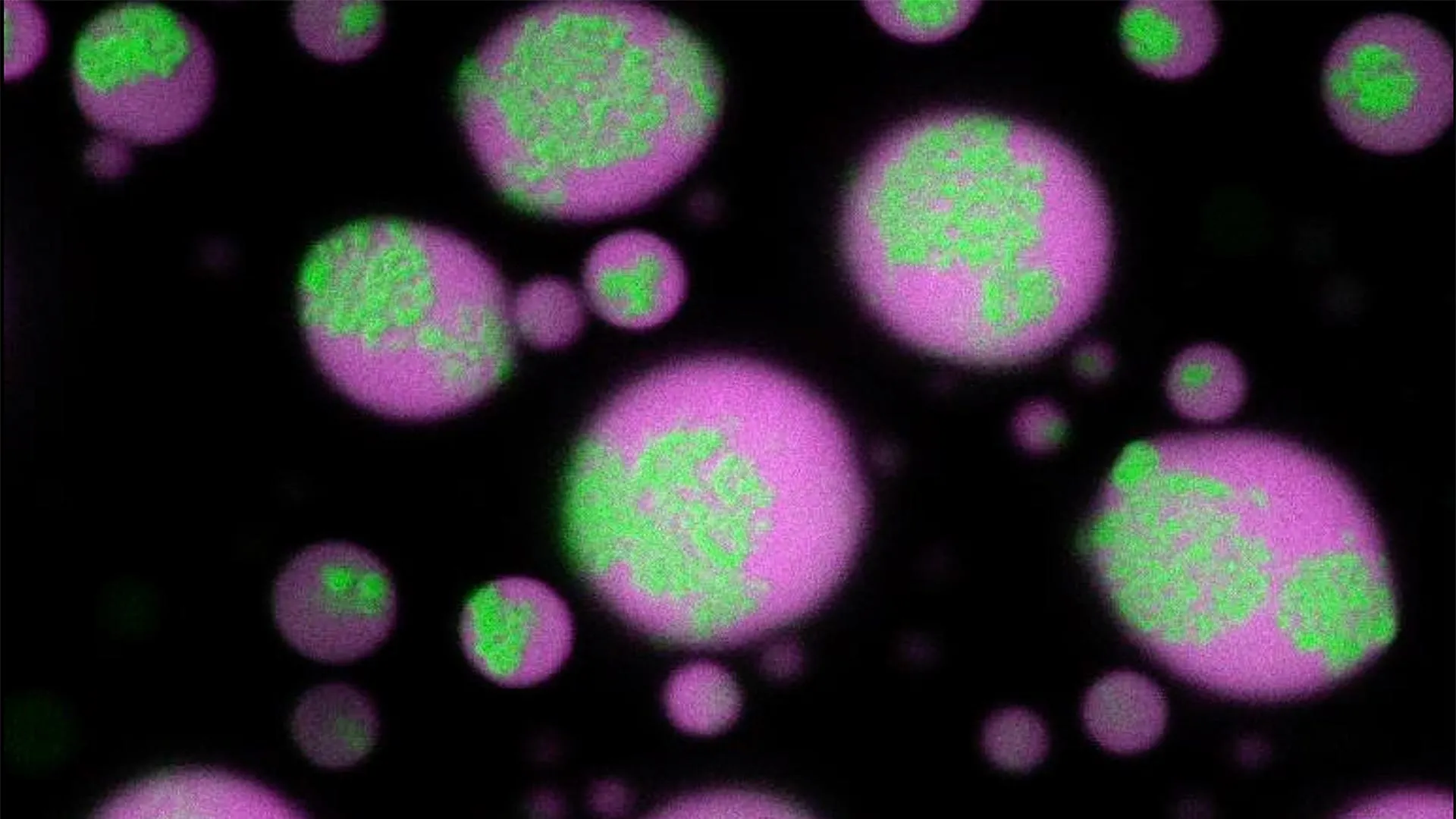
“It’s fascinating to watch these clusters form over time inside dense, droplet-like mixtures of protein and RNA under the microscope. Just as striking, the clusters dissolve when antisense oligonucleotides pull the RNA aggregates apart,” says the study’s corresponding author, Priya Banerjee, PhD, associate professor in the Department of Physics, within the UB College of Arts and Sciences. “What’s exciting about this discovery is that we not only figured out how these clusters form but also found a way to break them apart.”

The work was supported by the U.S. National Institutes of Health and the St. Jude Children’s Research Hospital.

How RNA clusters form

The study sheds new light on how RNA clusters form within biomolecular condensates.

Cells make these liquid-like droplets from RNA, DNA and proteins — or a combination of all three. Banerjee’s team has researched them extensively, investigating their role in both cellular function and disease, as well as their fundamental material properties that present new opportunities for synthetic biology applications.

The condensates are essentially used as hosts by repeat RNAs, disease-linked RNA molecules with abnormally long strands of repeated sequences. At an early timepoint, the repeat RNAs remain fully mixed inside these condensates, but as the condensates age, the RNA molecules start clumping together, creating an RNA-rich solid core surrounded by an RNA-depleted fluid shell.

“Repeat RNAs are inherently sticky, but interestingly, they don’t stick to each other just by themselves because they fold into stable 3D structures. They need the right environment to unfold and clump together, and the condensates provide that,” says the study’s first author, Tharun Selvam Mahendran, a PhD student in Banerjee’s lab.

“Crucially, we also found that the solid-like repeat RNA clusters persist even after the host condensate dissolves,” Mahendran adds. “This persistence is partly why the clusters are thought to be irreversible.”

Preventing — and reversing — clusters

The team was first able to demonstrate that repeat RNA clustering can be prevented by using an RNA-binding protein known as G3Bp1 that is present in cells.

“The RNA clusters come about from the RNA strands sticking together, but if you introduce another sticky element into the condensate, like G3BP1, then the interactions between the RNAs are frustrated and clusters stop forming,” Banerjee says. “It’s like introducing a chemical inhibitor into a crystal-growing solution, the ordered structure can no longer form properly. You can think of the G3BP1 as an observant molecular chaperone that binds to the sticky RNA molecules and makes sure that RNAs don’t stick to each other.”

In order to reverse the clusters, the team employed an antisense oligonucleotide (ASO). Because ASO is a short RNA with a sequence complementary to the repeat RNA, it was able to not only bind to the aggregation-prone RNAs but also disassemble the RNA clusters.

The team found that ASO’s disassembly abilities were highly tied to its specific sequence. Scramble the sequence in any way, and the ASO would fail to prevent clustering, let alone disassemble the clusters.

“This suggests our ASO can be tailored to only target specific repeat RNAs, which is a good sign for its viability as a potential therapeutic application,” Banerjee says.

Banerjee is also exploring RNA’s role in the origin of life, thanks to a seed grant from the Hypothesis Fund. He is studying whether biomolecular condensates may have protected RNA’s functions as biomolecular catalysts in the harsh prebiotic world.

“It really just shows how RNAs may have evolved to take these different forms of matter, some of which are extremely useful for biological functions and perhaps even life itself — and others that can bring about disease,” Banerjee says.

Share Button

The hidden ways light at night damages your brain, mood, and metabolism

In a comprehensive Genomic Press Innovators & Ideas interview published today, distinguished neuroscientist Dr. Randy J. Nelson shares insights from his pioneering research on how disrupted circadian rhythms affect brain function and overall health. The interview, published in Brain Medicine, traces Dr. Nelson’s unconventional path from farm work and autopsy assistant to becoming one of the world’s leading authorities on biological rhythms.

Dr. Nelson, who chairs the Department of Neuroscience at West Virginia University, has spent the past decade uncovering the hidden dangers of artificial light exposure. His research demonstrates that light at night doesn’t just affect sleep quality; it fundamentally alters immune function, triggers neuroinflammation, disrupts metabolism, and influences mood regulation.

From Turkey Processing Plant to Top Research Institution

The interview reveals Dr. Nelson’s remarkable journey to academic prominence. After working night shifts at a turkey processing plant during high school and later conducting postmortem examinations at two Cleveland hospitals, he eventually found his way to the University of California, San Diego, through an unexpected job opportunity at the San Diego Zoo.

“My path to academia is typical in the sense that it is not ‘typical,'” Dr. Nelson reflects in the interview. His unique background, including becoming the first person in the United States to simultaneously earn two separate PhDs (in Psychology and Endocrinology from UC Berkeley), shaped his integrative approach to neuroscience research.

Circadian Disruption: A Modern Health Crisis

Dr. Nelson’s laboratory has published groundbreaking findings on how exposure to artificial light at night affects multiple body systems. The research goes beyond simple sleep disturbance to reveal profound effects on physiological processes that evolved over millions of years to function in sync with natural light-dark cycles.

Key areas of impact identified by Dr. Nelson’s research include immune system dysfunction, where light exposure at inappropriate times can suppress typical immune responses or trigger excessive inflammation. The work also demonstrates clear links between circadian disruption and metabolic disorders, potentially contributing to the obesity epidemic. Perhaps most concerningly, the research shows direct effects on mood regulation, with implications for understanding depression and anxiety disorders.

What specific wavelengths of light are most disruptive to circadian rhythms? How quickly can the body recover from chronic light exposure? What is the contribution of time-of-day as a biological variable? These questions drive ongoing investigations in Dr. Nelson’s laboratory.

Translating Discovery to Clinical Practice

Moving beyond foundational research, Dr. Nelson’s team currently conducts clinical trials examining whether blocking disruptive light effects can improve outcomes for intensive care patients. Two major trials focus on stroke recovery and cardiac surgery patients, populations particularly vulnerable to the harsh lighting conditions typical of hospital ICUs.

“Circadian rhythms are a fundamental aspect of biology, and much is known from foundational science about them,” Dr. Nelson explains. “However, little of this foundational science has been translated to clinical medicine.”

The research also extends to healthcare workers themselves. A third clinical trial investigates whether bright blue light visors can help night shift nurses reset their circadian rhythms, potentially improving their sleep quality, cognitive performance, and mood. Could similar interventions help other shift workers across various industries maintain better health despite irregular schedules?

Time as a Biological Variable

One of Dr. Nelson’s most provocative proposals involves recognizing time-of-day as a crucial biological variable in all research. He argues that experimental results can vary dramatically depending on when studies are conducted, yet this information rarely appears in scientific publications.

“The answer to an experimental question may depend in part on the time-of-day when the question is asked,” Dr. Nelson notes. This observation has profound implications for research reproducibility and could explain why some studies fail to replicate previous findings.

Building the Next Generation of Neuroscientists

Throughout his career at Johns Hopkins University, Ohio State University, and now West Virginia University, Dr. Nelson has mentored 25 PhD students and 16 postdoctoral researchers. His leadership philosophy emphasizes creating supportive environments where young scientists can thrive. His mentoring philosophy has been featured in a recent Society for Neuroscience Neuronline podcast.

As current president of the Association of Medical School Neuroscience Department Chairs, Dr. Nelson advocates for resources and policies that support early-career researchers. He particularly values helping faculty members navigate the challenging early stages of their careers through strategic resource allocation and mentorship.

What role might circadian rhythm research play in addressing the mental health crisis among graduate students and postdocs? How can academic institutions better support work-life integration for researchers studying around-the-clock biological processes?

A Vision for Healthier Living

Dr. Nelson’s research carries immediate practical implications for public health. Simple interventions like reducing evening screen time, using warmer light colors after sunset, and maintaining consistent sleep schedules could significantly impact population health. His work suggests that respecting our evolutionary heritage by aligning modern life more closely with natural light patterns could prevent numerous chronic health conditions. He recently published a trade book with Oxford University Press entitled, “Dark Matters,” to help the general public appreciate the importance of good circadian hygiene for health and wellness.

The interview also touches on Dr. Nelson’s personal interests, including travel, biking, and gardening, activities that keep him connected to natural rhythms. His favorite place remains Southern California, where his academic journey began through that serendipitous opportunity at the San Diego Zoo decades ago. Dr. Randy J. Nelson’s Genomic Press interview is part of a larger series called Innovators & Ideas that highlights the people behind today’s most influential scientific breakthroughs. Each interview in the series offers a blend of cutting-edge research and personal reflections, providing readers with a comprehensive view of the scientists shaping the future. By combining a focus on professional achievements with personal insights, this interview style invites a richer narrative that both engages and educates readers. This format provides an ideal starting point for profiles that explore the scientist’s impact on the field, while also touching on broader human themes.


Share Button

How safe are wireless headphones?

Looking at hearing protection – from noise-cancelling headphones to ear plugs

Share Button

How a ‘seated salsa’ can help your lower back

It’s hard to tone your lower back muscles, but this handy exercise can help.

Share Button

Support network helped us to breastfeed, say mums

Two mums who struggled to breastfed their babies say a peer support group helped them.

Share Button

What really happens to your body when you stop weight loss drugs like Ozempic

Patients prescribed drugs to help them lose weight may experience a rebound in weight gain after halting their prescription, finds a meta-analysis published in BMC Medicine. The study, which analyses data for patients receiving weight loss drugs across 11 randomised trials, suggests that while the amount of weight regain varies depending on the specific drug, there is a broad trend in associated weight regain after the course of medication concluded.

Six anti-obesity medications (AOMs) have been approved by the US FDA for use in assisting with weight loss, including orlistat, phentermine-topiramate, and semaglutide. Glucagon-like peptide-1 (GLP-1) — a therapeutic developed to assist with diabetes — has also increasingly been prescribed to help patients lose weight. However, recent studies have suggested that patients prescribed AOMs may regain weight in the months after stopping taking these medications.

Xiaoling Cai, Linong Ji, and colleagues conducted a meta-analysis of 11 studies from around the world investigating weight change in patients after they stopped taking AOMs. Overall, the authors analysed data from 1,574 participants in treatment groups and 893 in control groups. Weight change was measured by changes in body weight and BMI after stopping medication. Of the 11 studies included in the meta-analysis: six focused on GLP-1 receptor agonists (RAs); one focused on GLP-1 and GLP dual Ras; one study focused on orlistat; two studies on phentermine-topiramate; and one study on naltexone-bupriopion.

The authors controlled for different contributing factors, including medication type, the presence of diabetes, and the presence or absence of lifestyle changes like diet or exercise. Their analysis found that AOMs were associated with significant weight loss while being used, followed by weight regain starting eight weeks after AOM discontinuation, with weight regain then continuing for an average of 20 weeks before plateauing. Weight regain varied with follow-up, with study participants experiencing significant periods of weight regain at eight, 12, and 20 weeks after AOM discontinuation. The amount of weight regained depended on several factors, including the type of medication taken by participants and the consistency of their lifestyle change. For example, participants who completed a 36-week treatment of tirzepatide, a commercially available GLP-1 RA, regained almost half the weight previously lost after switching to a placebo.

The authors note the meta-analysis did not include studies of lifestyle interventions and bariatric surgery, reducing the degree to which different weight loss approaches could be compared within the context of the study. They also note that weight regain has been reported with other weight loss methods, such as gastric bypass and vertical banded gastroplasty.

Share Button

A walk-in fishermen’s clinic saved Tom from sepsis – and could transform the NHS

Tom Parker was treated in one of 70 harbour health clinics after breaking his fibula fishing at sea.

Share Button

Daily weight loss pill could help patients lose 12% of body weight

Trials of a daily obesity pill showed patients lost about 12% of their body weight over 72 weeks.

Share Button