Hubble just exposed a rare and violent star collision

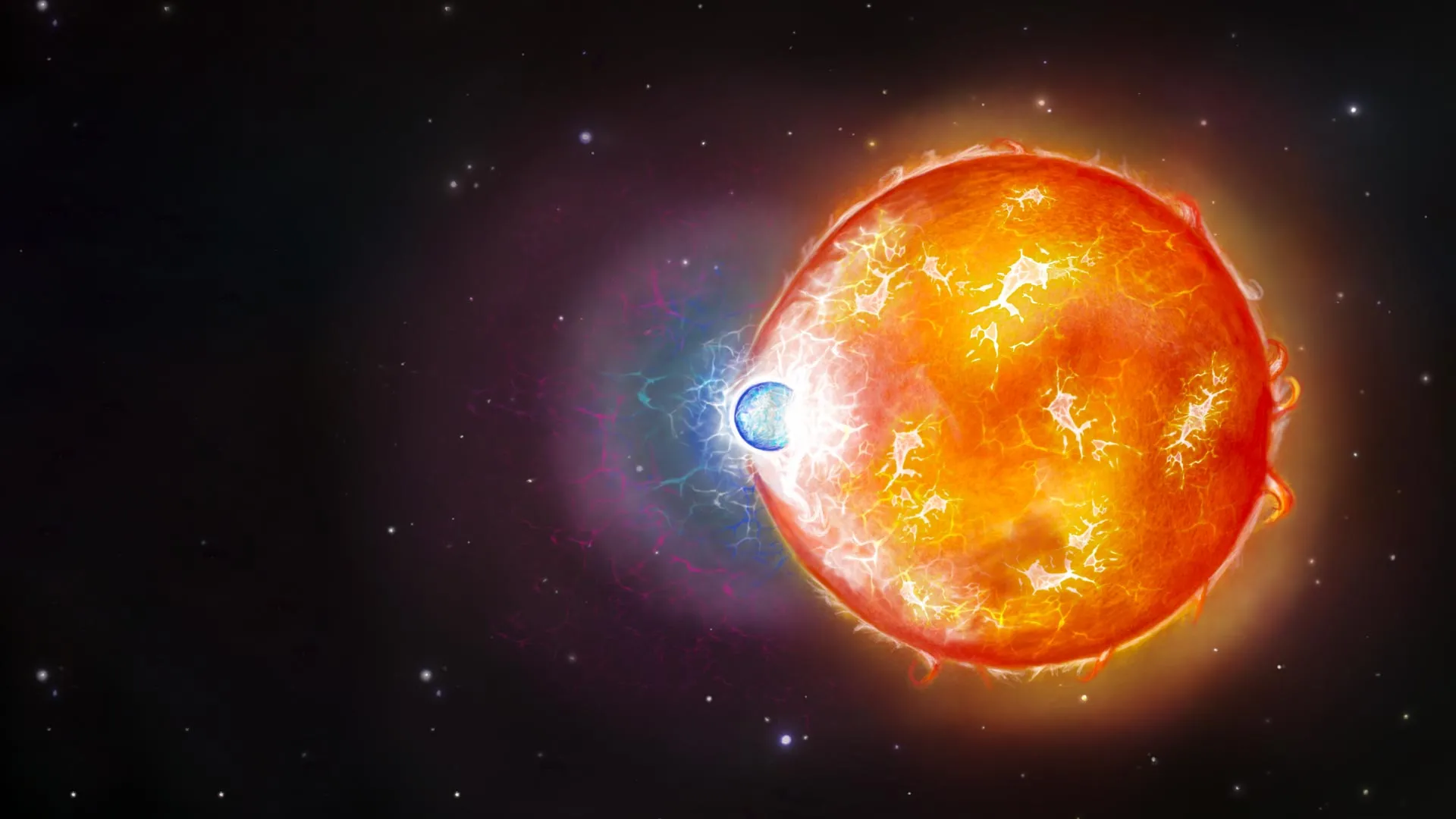
University of Warwick astronomers have uncovered compelling evidence that a nearby white dwarf is in fact the remnant of two stars merging — a rare stellar discovery revealed through Hubble Space Telescope ultraviolet observations of carbon in the star’s hot atmosphere.

White dwarfs are the dense cores left behind when stars exhaust their fuel and collapse. They are Earth-sized stellar embers weighing typically half as much as the Sun, made up of carbon-oxygen cores with surface layers of helium and hydrogen. While white dwarfs are common in the universe, those with exceptionally high mass (weighing more than the Sun) are rare and enigmatic.

In a paper published on August 6 in Nature Astronomy, Warwick astronomers report on their investigations of a known high-mass white dwarf 130 light-years away, called WD 0525+526. With a mass 20% larger than our Sun, WD 0525+526 is considered “ultra-massive,” and how this star came to be is not fully understood.

Such a white dwarf could form from the collapse of a massive star. However, ultraviolet data from the Hubble Space Telescope revealed WD 0525+526 to have small amounts of carbon rising from its core into its hydrogen-rich atmosphere — suggesting this white dwarf did not originate from a single massive star.

“In optical light (the kind of light we see with our eyes), WD 0525+526 looks like a heavy but otherwise ordinary white dwarf,” said first author Dr Snehalata Sahu, Research Fellow at the University of Warwick. “However, through ultraviolet observations obtained with Hubble, we were able to detect faint carbon signatures that were not visible to optical telescopes.

“Finding small amounts of carbon in the atmosphere is a telltale sign that this massive white dwarf is likely to be a be the remnant of a merger between two stars colliding. It also tells us there may be many more merger remnants like this masquerading as common pure-hydrogen atmosphere white dwarfs. Only ultraviolet observations would be able to reveal them to us.”

Normally, hydrogen and helium form a thick barrier-like envelope around a white dwarf core, keeping elements like carbon hidden. In a merger of two stars, the hydrogen and helium layers can burn off almost completely as the stars combine. The resulting single star has a very thin envelope that no longer prevents carbon from reaching the surface — this is exactly what is found on WD 0525+526.

Antoine Bédard, Warwick Prize Fellow in the Astronomy and Astrophysics group at Warwick and co-first author said, “We measured the hydrogen and helium layers to be ten-billion times thinner than in typical white dwarfs. We think these layers were stripped away in the merger, and this is what now allows carbon to appear on the surface.

“But this remnant is also unusual: it has about 100,000 times less carbon on its surface compared to other merger remnants. The low carbon level, together with the star’s high temperature (nearly four times hotter than the Sun), tells us WD 0525+526 is much earlier in its post-merger evolution than those previously found. This discovery helps us build a better understand the fate of binary star systems, which is critical for related phenomena like supernova explosions.”

Adding to the mystery is how carbon reaches the surface at all in this much hotter star. The other merger remnants are later in their evolution and cool enough for convection to bring carbon to the surface. But WD 0525+526 is far too hot for that process. Instead, the team identified a subtler form of mixing called semi-convection, seen here for the first time in a white dwarf. This process allows small amounts of carbon to slowly rise into the star’s hydrogen-rich atmosphere.

“Finding clear evidence of mergers in individual white dwarfs is rare,” added Professor Boris Gänsicke, Department of Physics, University of Warwick, who obtained the Hubble data for this study. “But ultraviolet spectroscopy gives us the ability to detect these signs early, when the carbon is still invisible at optical wavelengths. Because the Earth’s atmosphere blocks ultraviolet light, these observations must be carried out from space, and currently only Hubble can do this job.

“Hubble just turned 35 years old, and while still going strong, it is very important that we start planning for a new space telescope that will eventually replace it.”

As WD 0525+526 continues to evolve and cool, it is expected that more carbon will emerge at its surface over time. For now, its ultraviolet glow offers a rare glimpse into the earliest stage of a stellar merger’s aftermath — and a new benchmark for how binary stars end their lives.

Share Button

Extra-strong nicotine pouches packaged like children’s sweets

Nicotine products designed to appeal to children are being openly sold in shops in Scotland.

Share Button

This prehistoric predator survived global warming by eating bones

About 56 million years ago, when Earth experienced a dramatic rise in global temperatures, one meat-eating mammal responded in a surprising way: It started eating more bones.

That’s the conclusion reached by a Rutgers-led team of researchers, whose recent study of fossil teeth from the extinct predator Dissacus praenuntius reveals how animals adapted to a period of extreme climate change known as the Paleocene-Eocene Thermal Maximum (PETM). The findings, published in the journal Palaeogeography, Palaeoclimatology, Palaeoecology, could help scientists predict how today’s wildlife might respond to modern global warming.

“What happened during the PETM very much mirrors what’s happening today and what will happen in the future,” said Andrew Schwartz, a doctoral student in the Department of Anthropology at the School of Arts and Sciences, who led the research. “We’re seeing the same patterns. Carbon dioxide levels are rising, temperatures are higher and ecosystems are being disrupted.”

Associate Professor Robert Scott of the Department of Anthropology is a co-author of the study.

Schwartz, Scott and another colleague used a technique called dental microwear texture analysis to study the tiny pits and scratches left on fossilized teeth. These marks reveal what kinds of food the animal was chewing in the weeks before it died.

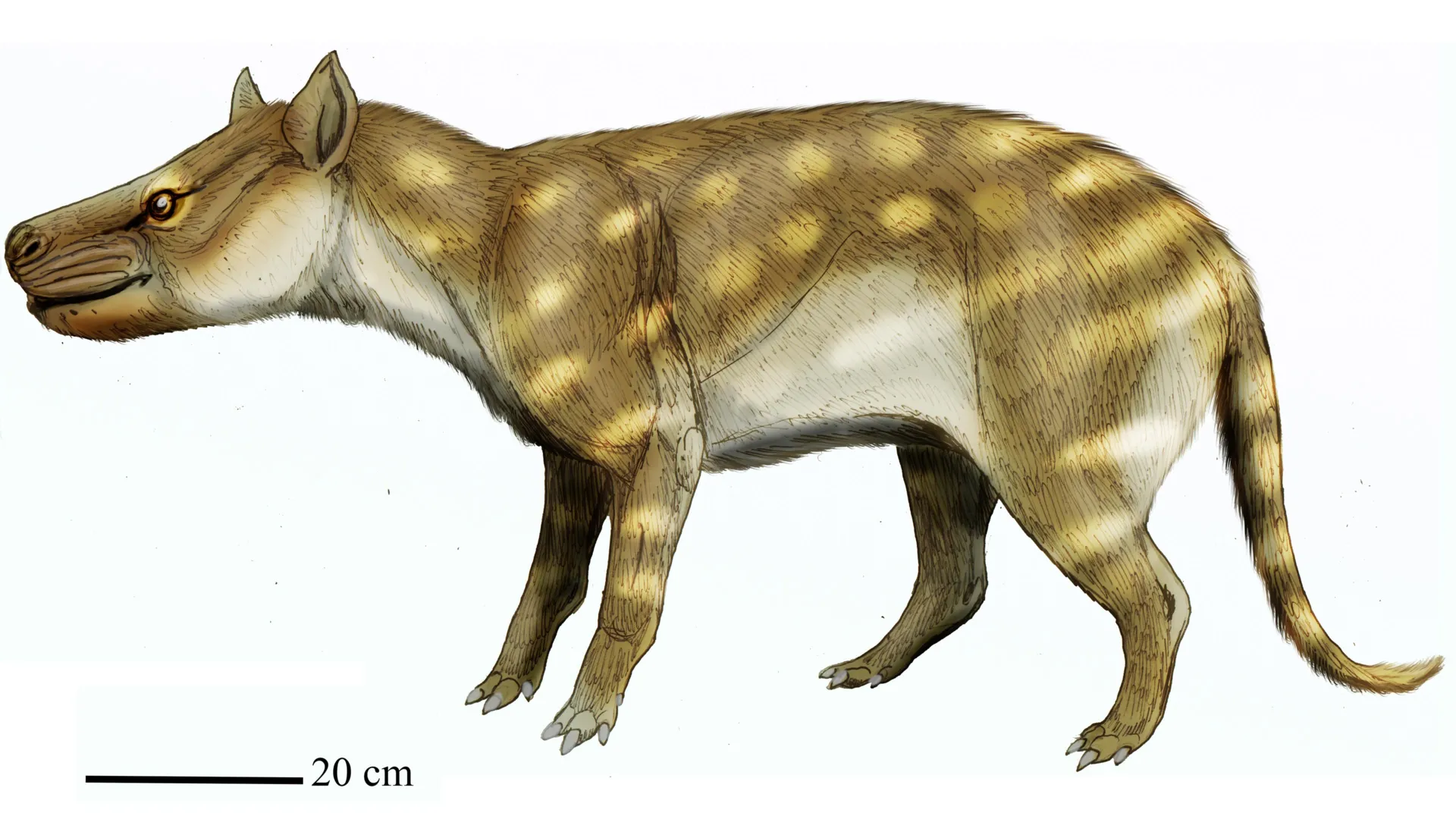
The ancient omnivore was about the size of a jackal or a coyote and likely consumed a mix of meat and other food sources like fruits and insects. “They looked superficially like wolves with oversized heads,” Schwartz said, describing them as “super weird mammals.” “Their teeth were kind of like hyenas. But they had little tiny hooves on each of their toes.”

Before this period of rising temperatures, Dissacus had a diet similar to modern cheetahs, eating mostly tough flesh. But during and after this ancient period, its teeth showed signs of crunching harder materials, such as bones.

“We found that their dental microwear looked more like that of lions and hyenas,” Schwartz said. “That suggests they were eating more brittle food, which were probably bones, because their usual prey was smaller or less available.”

This dietary shift happened alongside a modest reduction in body size, likely because of food scarcity. While earlier hypotheses blamed shrinking animals on hotter temperatures alone, this latest research suggests that limited food played a bigger role, Schwartz said.

This period of rapid global warming lasted about 200,000 years, but the changes it triggered were fast and dramatic. Schwartz said studies of the past like his can offer practical lessons for today and what comes next.

“One of the best ways to know what’s going to happen in the future is to look back at the past,” he said. “How did animals change? How did ecosystems respond?”

The findings also highlight the importance of dietary flexibility, he said. Animals that can eat a variety of foods are more likely to survive environmental stress.

“In the short term, it’s great to be the best at what you do,” Schwartz said. “But in the long term, it’s risky. Generalists, meaning animals that are good at a lot of things, are more likely to survive when the environment changes.”

Such an insight may be helpful for modern conservation biologists, allowing them to identify which species today may be most vulnerable, he said. Animals with narrow diets, such as pandas, may struggle as their habitats shrink. But adaptable species, including jackals or raccoons, might fare better.

“We already see this happening,” Schwartz said. “In my earlier research, jackals in Africa started eating more bones and insects over time, probably because of habitat loss and climate stress.”

The study also showed that rapid climate warming as seen during the ancient past can lead to major changes in ecosystems, including shifts in available prey and changes in predator behavior. This may suggest that modern climate change could similarly disrupt food webs and force animals to adapt, or risk extinction, he said.

Even though Dissacus was a successful and adaptable animal that lived for about 15 million years, it eventually went extinct. Scientists think this happened because of changes in the environment and competition from other animals, Schwartz said.

Schwartz conducted his research using a combination of fieldwork and lab analysis, focusing on fossil specimens from the Bighorn Basin in Wyoming, a site with a rich and continuous fossil record spanning millions of years. Schwartz chose the location because it preserves a detailed sequence of environmental and ecological changes during the ancient period of climate warming.

Schwartz has been interested in paleontology, specifically dinosaurs, since he was a boy, journeying with his father, an amateur fossil hunter, on treks through New Jersey’s rivers and streams. Now, as a late-stage doctoral student, he hopes to use ancient fossils to answer urgent questions about the future.

He also wants to inspire the next generation of researchers.

“I love sharing this work,” he said. “If I see a kid in a museum looking at a dinosaur, I say, ‘Hey, I’m a paleontologist. You can do this, too.'”

In addition to Schwartz and Scott, Larisa DeSantis of Vanderbilt University is an author of the study.

Share Button

Scientists found the gene that makes Aussie skinks immune to deadly snake venom

A University of Queensland-led study has found Australian skinks have evolved molecular armor to stop snake venom from shutting down their muscles.

Professor Bryan Fry from UQ’s School of the Environment said revealing exactly how skinks dodge death could inform biomedical approaches to treating snakebite in people.

“What we saw in skinks was evolution at its most ingenious,” Professor Fry said.

“Australian skinks have evolved tiny changes in a critical muscle receptor, called the nicotinic acetylcholine receptor.

“This receptor is normally the target of neurotoxins which bind to it and block nerve-muscle communication causing rapid paralysis and death.

“But in a stunning example of a natural counterpunch, we found that on 25 occasions skinks independently developed mutations at that binding site to block venom from attaching.

“It’s a testament to the massive evolutionary pressure than venomous snakes exerted after their arrival and spread across the Australian continent, when they would have feasted on the defenseless lizards of the day.

“Incredibly, the same mutations evolved in other animals like mongooses which feed on cobras.

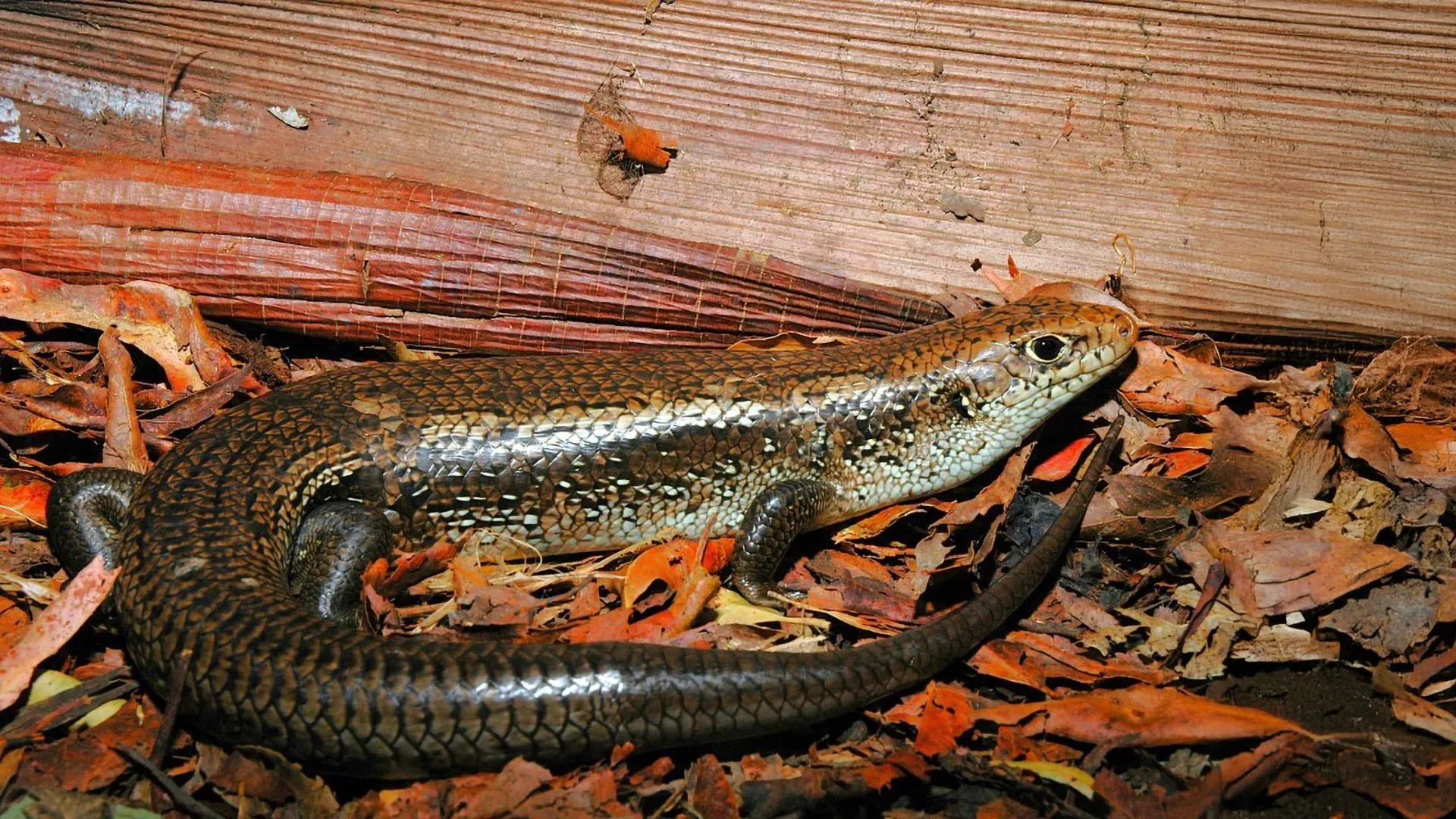
“We confirmed with our functional testing that Australia’s Major Skink (Bellatorias frerei) has evolved exactly the same resistance mutation that gives the honey badger it’s famous resistance to cobra venom.

“To see this same type of resistance evolve in a lizard and a mammal is quite remarkable – evolution keeps hitting the same molecular bullseye.”

The muscle receptor mutations in the skinks included a mechanism to add sugar molecules to physically block toxins and the substitution of a protein building block (amino acid arginine at position 187).

The laboratory work validating the mutations was carried out at UQ’s Adaptive Biotoxicology Laboratory by Dr Uthpala Chandrasekara who said it was incredible to witness.

“We used synthetic peptides and receptor models to mimic what happens when venom enters an animal at the molecular level and the data was crystal clear, some of the modified receptors simply didn’t respond at all,” said Dr Chandrasekara.

“It’s fascinating to think that one tiny change in a protein can mean the difference between life and death when facing a highly venomous predator.”

The findings could one day inform the development of novel antivenoms or therapeutic agents to counter neurotoxic venoms.

“Understanding how nature neutralizes venom can offer clues for biomedical innovation,” Dr Chandrasekara said.

“The more we learn about how venom resistance works in nature, the more tools we have for the design of novel antivenoms.”

The project included collaborations with museums across Australia.

The research has been published in International Journal of Molecular Sciences.

Share Button

I have complex PTSD but waiting list means I’ve only seen psychiatrist once in 10 years

Twelve times more mental health patients are waiting more than 18 months for treatment than those with physical health conditions in England, data analysis shows.

Share Button

Licences needed for Botox clinics in cosmetics crackdown

The government plans to crack down on dodgy cosmetic practitioners in England who exploit people and cause harm.

Share Button

The Earth didn’t just crack, it curved. “It sent chills down my spine!”

Dramatic CCTV video of fault slip during a recent large earthquake in Myanmar thrilled both scientists and casual observers when it was posted to YouTube. But it was on his fifth or sixth viewing, said geophysicist Jesse Kearse, that he spotted something even more exciting.

When Kearse and his colleague Yoshihiro Kaneko at Kyoto University analyzed the video more carefully, they concluded that it had captured the first direct visual evidence of curved fault slip.

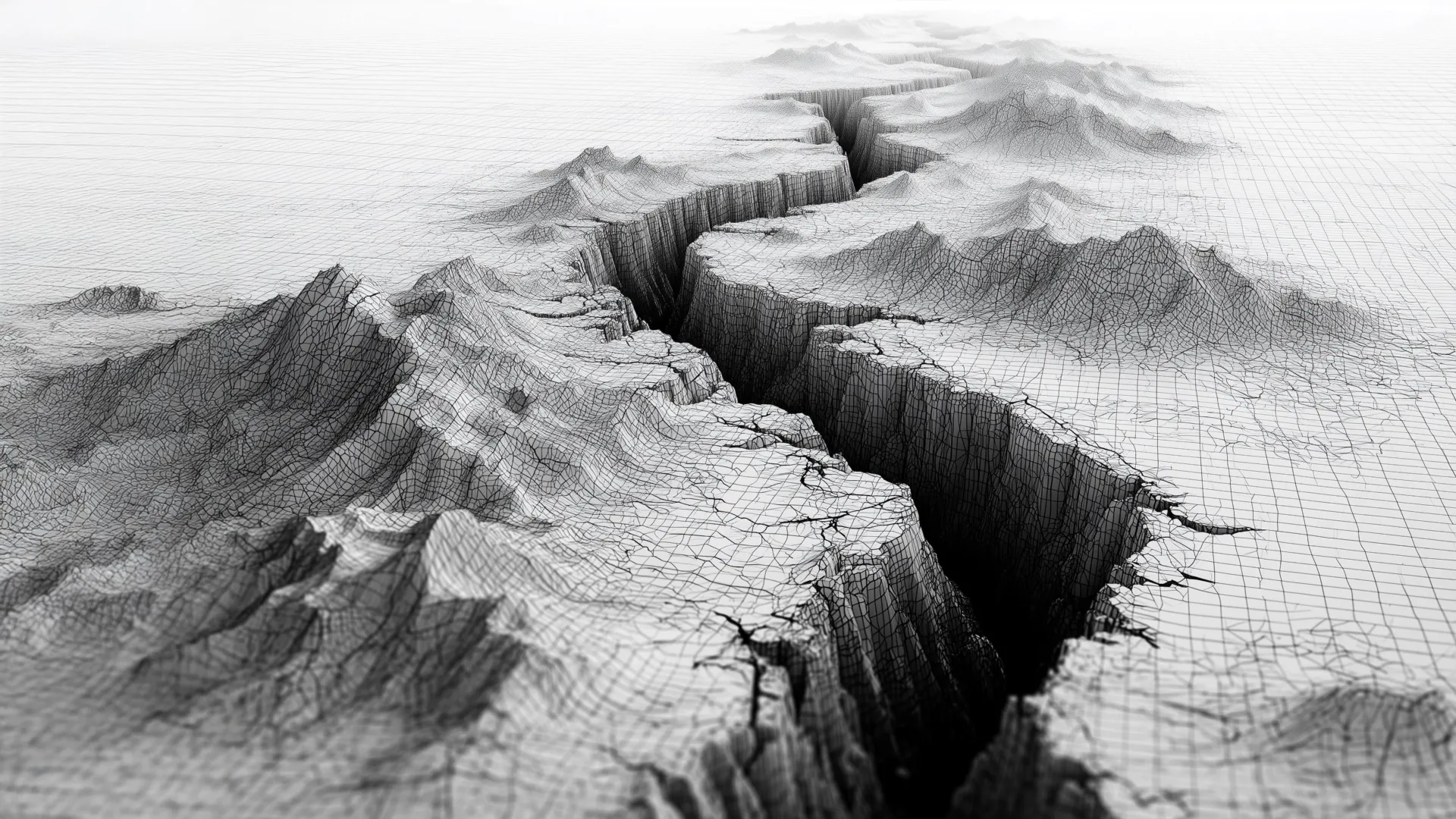
Earthquake geologists often observe curved slickenlines, the scrape marks created by blocks of rock moving past each other during faulting. But until now there has been no visual proof of the curved slip that might create these slickenlines.

The video confirmation of curved fault slip can help researchers create better dynamic models of how faults rupture, Kearse and Kaneko conclude in their paper published in The Seismic Record. (See video below.)

The video comes from a CCTV security camera recording along the trace of Myanmar’s Sagaing Fault, which ruptured 28 March in a magnitude 7.7 earthquake. The camera was placed about 20 meters to the east of the fault and was 120 kilometers away from the earthquake’s hypocenter.

The resulting video is astonishing. A fault in motion as never seen before — shaking followed by a visible northward slide of the land on the western side of the fault.

“I saw this on YouTube an hour or two after it was uploaded, and it sent chills down my spine straight away,” Kearse recalled. “It shows something that I think every earthquake scientist has been desperate to see, and it was just right there, so very exciting.”

Watching it over and over again, he noticed something else.

“Instead of things moving straight across the video screen, they moved along a curved path that has a convexity downwards, which instantly started bells ringing in my head,” Kearse said, “because some of my previous research has been specifically on curvature of fault slip, but from the geological record.”

Kearse had studied curved slickenlines associated with other earthquakes, such as the 2016 magnitude 7.8 Kaikoura earthquake in New Zealand, and their implications for understanding how faults rupture.

With the Myanmar video, “we set about to quantify the movement a bit more carefully, to extract objective quantitative information from the video rather than just pointing at it to say, look, it’s curved,” he said.

The researchers decided to track the movement of objects in the video by pixel cross correlation, frame by frame. The analysis helped them measure the rate and direction of fault motion during the earthquake.

They conclude that the fault slipped 2.5 meters for roughly 1.3 seconds, at a peak velocity of about 3.2 meters per second. This shows that the earthquake was pulse-like, which is a major discovery and confirms previous inferences made from seismic waveforms of other earthquakes. In addition, most of the fault motion is strike-slip, with a brief dip-slip component.

The slip curves rapidly at first, as it accelerates to top velocity, then remains linear as the slip slows down, the researchers found.

The pattern fits with what earthquake scientists had previously proposed about slip curvature, that it might occur in part because stresses on the fault near the ground surface are relatively low. “The dynamic stresses of the earthquake as it’s approaching and begins to rupture the fault near the ground surface are able to induce an obliquity to the fault movement,” said Kearse.

“These transient stresses push the fault off its intended course initially, and then it catches itself and does what it’s supposed to do, after that.”

The researchers previously concluded that the type of slip curvature — whether it curves in one direction, or in the other — is dependent on the direction that the rupture travels, and is consistent with the north to south rupture of the Myanmar earthquake. This means that slickenlines can record the dynamics of past earthquakes, which can be useful for understanding future seismic risks.

Share Button

Could RFK Jr’s move to pull mRNA vaccine funding be a huge miscalculation?

The US is withdrawing $500m for vaccines for diseases like flu and Covid. Health correspondent James Gallagher asks if it’s the right call.

Share Button

Scientists create mysterious molecule that could spark life in space

Researchers have for the first time isolated a compound that could open new doors in understanding the chemistry that supports life in space.

Ryan Fortenberry, an astrochemist at the University of Mississippi, Ralf Kaiser, professor of chemistry at the University of Hawaii at Mānoa, and Alexander M. Mebel, computational chemist at Florida International University, are part of an international team that synthesized methanetetrol for the first time. They published their research on the elusive compound in the journal Nature Communications.

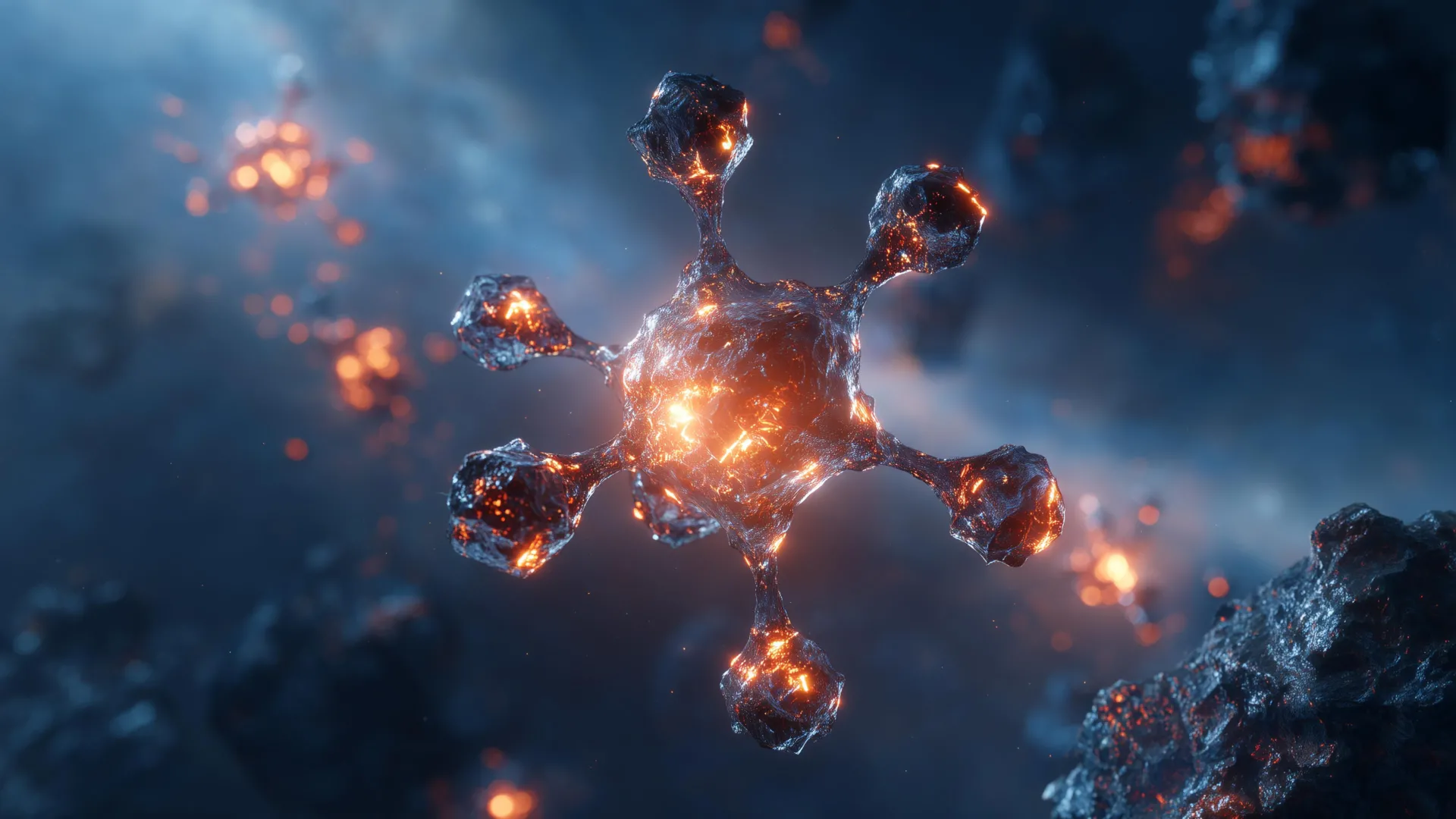
“This is essentially a prebiotic concentrate — a seed of life molecule,” Fortenberry said. “It’s something that can lead to more complex chemistry if given the opportunity. Think of it like an acorn that will grow into a tree in the Grove.

“The acorn alone cannot make a tree; it requires sunlight and water and lots of other things. But it can be what starts the process.”

Methanetetrol is an ortho acid – an elusive class of compounds that are particularly difficult to isolate and study but are thought to play a key role in early life chemistry.

To mimic how methanetetrol might form in space, the researchers froze water and carbon dioxide ices to near absolute zero and exposed them to cosmic ray-like radiation. This process allowed them to release the molecule into gas form and identify it using powerful ultraviolet light.

“The detection of the only alcohol with four hydroxyl groups at the same carbon atom pushes the experimental and detection capabilities to the ‘final frontier,’ the next level beyond what could be accomplished before due to the lack of experimental and computational approaches,” said Kaiser, whose lab has been trying to isolate methanetetrol for more than five years.

Since methanetetrol has so many oxygen bonds – and because oxygen does not like to bond close to other oxygens – the compound is very unstable, meaning it is likely to break down if it is not kept in the right conditions.

“You have this compact, carbon-oxygen molecule that just really wants to go ‘boom,'” Fortenberry said. “And when it does, when you give it any kind of energy, you’ll have water, hydrogen peroxide and a number of other potential compounds that are important for life.

“It’s a like a prebiotic bomb.”

If the molecule can form in the lab, it can also form in space, the authors said. This makes the compound particularly interesting to astrochemists who are looking for potential life-supporting regions.

“While carbon is the building block of life, oxygen is what makes up nearly everything else,” Fortenberry said. “Oxygen is everywhere and is essential for life as we know it.

“So, if we can find places where methanetetrol forms naturally, we know that it is a place that has the potential building blocks to support life.”

This material is based on work supported by the National Science Foundation grants AST-2403867.

Share Button

‘Bridge’ of stray stars reveals two massive galaxies tearing each other apart

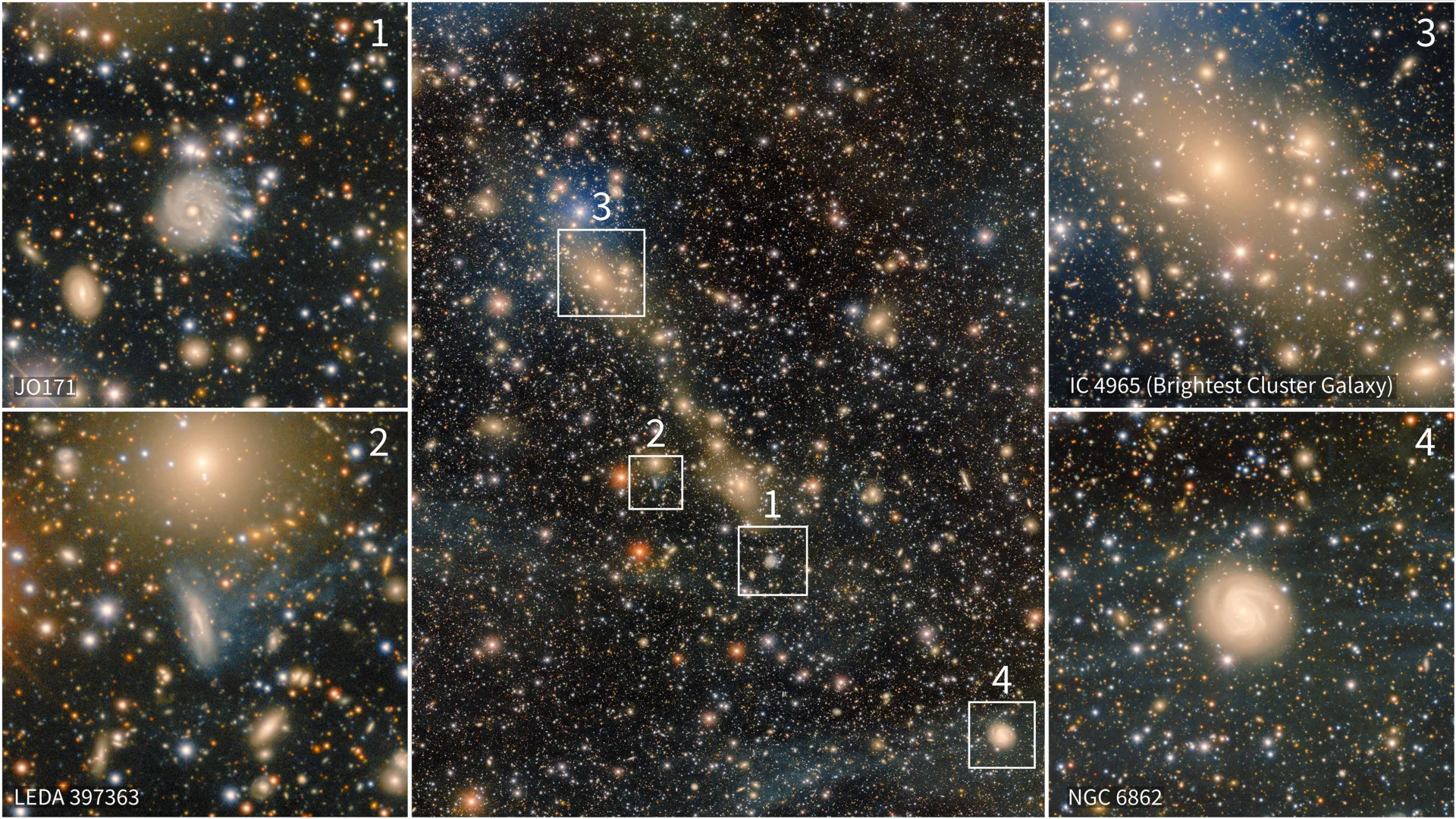
Using one of the most detailed sets of observations ever of a galaxy cluster 700 million light-years from Earth, astronomers have captured the faint glow of stray stars in the process of being ripped from their home galaxy and absorbed into another. The ‘bridge’ of diffuse light — spanning roughly a million light years between two galaxies in the cluster Abell 3667 — is the first direct evidence that the two brightest galaxies in the cluster are actively merging.

The findings also imply, the researchers say, that Abell 3667 formed from two smaller clusters, which had themselves merged around a billion years ago.

“This is the first time a feature of this scale and size has been found in a local galaxy cluster,” said Anthony Englert, a Ph.D. candidate at Brown University and lead author of a study describing the findings. “We knew that it was possible for a bridge like this to form between two galaxies, but it hadn’t been documented anywhere before now. It was a huge surprise that we were able to image such a faint feature.”

The new images of Abell 3667 were made using the Dark Energy Camera (DECam) mounted on the Víctor M. Blanco Telescope at Cerro Tololo Inter-American Observatory in Chile. Englert and two colleagues — Ian Dell’Antonio, a professor of physics at Brown, and Mireia Montes, a research fellow at the Institute of Space Sciences in Barcelona, Spain — stitched together a record-breaking 28 hours of observations taken over a span of years by DECam. The findings are published in The Astrophysical Journal.

“Because Blanco has been imaging with DECam for the past decade, there is a ton of archival data available,” Englert said. “It was just a happy coincidence that so many people had imaged Abell 3667 over the years, and we were able to stack all of those observations together.”

That extensive observation time is what made it possible to image the dim light of stray stars within the cluster. This type of diffuse light, known as intracluster light or ICL, offers a treasure trove of information about the history of Abell 3667 and the gravitational dance of the galaxies within it.

The ICL imaged by Englert and his colleagues revealed a special type of galactic merger happening in Abell 3667. Normally, Englert says, mergers that involve the largest galaxy in a cluster, called the brightest cluster galaxy or BCG, occur gradually as it steals stars from many smaller galaxies that surround it. But this new research shows something different happening in this case. Abell 3667 is actually made of two galaxy clusters, each with its own BCG, that are now merging together. The ICL bridge discovered by the researchers suggests that the larger BCG is stealing stars from the smaller one — an event known as a rapid or aggressive merger. As the two BCGs merge, so too do the smaller galaxies that surround them, making Abell 3667 the product of two merging clusters. Data from X-ray and radio frequency observations had suggested a rapid merger in Abell 3667, but this is the first optical evidence to back it up.

The appearance of intracluster light in these new images offers a tantalizing preview of what’s to come when the Vera C. Rubin Observatory becomes fully operational later this year or early next. Using a telescope twice the size of Blanco and the largest camera ever built, the Rubin telescope will perform a 10-year scan deep into the entire southern sky, a project called the Legacy Survey of Space and Time.

“Rubin is going to be able to image ICL in much the same way as we did here, but it’s going to do it for every single local galaxy cluster in the southern sky,” Englert said. “What we did is just a small sliver of what Rubin is going to be able to do. It’s really going to blow the study of the ICL wide open.”

That will be a scientific bonanza for astronomers and astrophysicists. In addition to revealing the history of galaxy clusters, the ICL holds clues to some of the most fundamental mysteries of the universe, particularly dark matter — the mysterious, invisible stuff thought to account for most of the universe’s mass.

“ICL is quite important for cosmology,” Dell’Antonio said. “The distribution of this light should mirror the distribution of dark matter, so it provides an indirect way to ‘see’ the dark matter.”

Seeing the unseeable — that’s a powerful telescope.

The Victor M. Blanco Telescope and the Vera C. Rubin Observatory are operated by NOIRLab, the U.S. national center for ground-based, nighttime optical astronomy operated by the National Science Foundation. The research was funded by NSF (AST-2108287), the U.S. Department of Energy (DE-SC-0010010) and the NASA Rhode Island Space Grant Consortium.

Image Details

  1. Jellyfish galaxy JO171
    Similar to the iconic Hoag’s Object, JO171 is an example of a ring galaxy, characterized by a completely detached ring of young stars surrounding a central old spheroid. JO171’s fall into the dense Abell 3667 galaxy cluster is stripping it of gas, creating the striking jellyfish-like tendrils seen trailing off to one side of the galaxy. Analysis of the galaxy’s stellar population and its gas and stellar dynamics shows that the origin of the ring is related to an interaction with another galaxy in the distant past, prior to its accretion onto Abell 3667. More recently, since infall into the cluster, the gas in the ring has been stripped by ram pressure, causing the quenching of star formation in the stripped half of the ring. This is the first observed case of ram-pressure stripping in action in a ring galaxy. Both of the events (accretion and stripping) caused dramatic transformations in this galaxy.
  2. Jellyfish galaxy LEDA 64246
    LEDA 64246 is another example of extended galaxy tails formed by ram-pressure stripping. Their blue glow indicates that the stripping has triggered star formation in the trails.
  3. Brightest cluster galaxy IC 4965 and infalling group
    The central galaxy in this cutout is referred to as the brightest cluster galaxy (BCG). The formation of BCGs has been an astronomical mystery for decades. The mystery has been partially answered by the detection of intracluster light, which provides evidence that BCGs generally form through the gradual stripping of stars from less massive galaxies in the cluster, which then accrete onto the BCG.
  4. NGC 6862
    NGC 6862 is a Seyfert galaxy that is partially obscured by Milky Way cirrus, or integrated flux nebulae.
Share Button