This star survived its own supernova and shined even brighter

Rich with detail, the spiral galaxy NGC 1309 shines in this NASA/ESA Hubble Space Telescope Picture of the Week. NGC 1309 is situated about 100 million light-years away in the constellation Eridanus.

This stunning Hubble image encompasses NGC 1309’s bluish stars, dark brown gas clouds and pearly white centre, as well as hundreds of distant background galaxies. Nearly every smudge, streak and blob of light in this image is an individual galaxy. The only exception to the extragalactic ensemble is a star, which can be identified near the top of the frame by its diffraction spikes. It is positively neighborly, just a few thousand light-years away in the Milky Way galaxy.

Hubble has turned its attention toward NGC 1309 several times; previous Hubble images of this galaxy were released in 2006 and 2014. Much of NGC 1309’s scientific interest derives from two supernovae, SN 2002fk in 2002 and SN 2012Z in 2012. SN 2002fk was a perfect example of a Type Ia supernova, which happens when the core of a dead star (a white dwarf) explodes.

SN 2012Z, on the other hand, was a bit of a renegade. It was classified as a Type Iax supernova: while its spectrum resembled that of a Type Ia supernova, the explosion wasn’t as bright as expected. Hubble observations showed that in this case, the supernova did not destroy the white dwarf completely, leaving behind a ‘zombie star’ that shone even brighter than it did before the explosion. Hubble observations of NGC 1309 taken across several years also made this the first time the white dwarf progenitor of a supernova has been identified in images taken before the explosion.

Share Button

NASA’s most advanced radar ever will track earthquakes, landslides, and ice loss from space

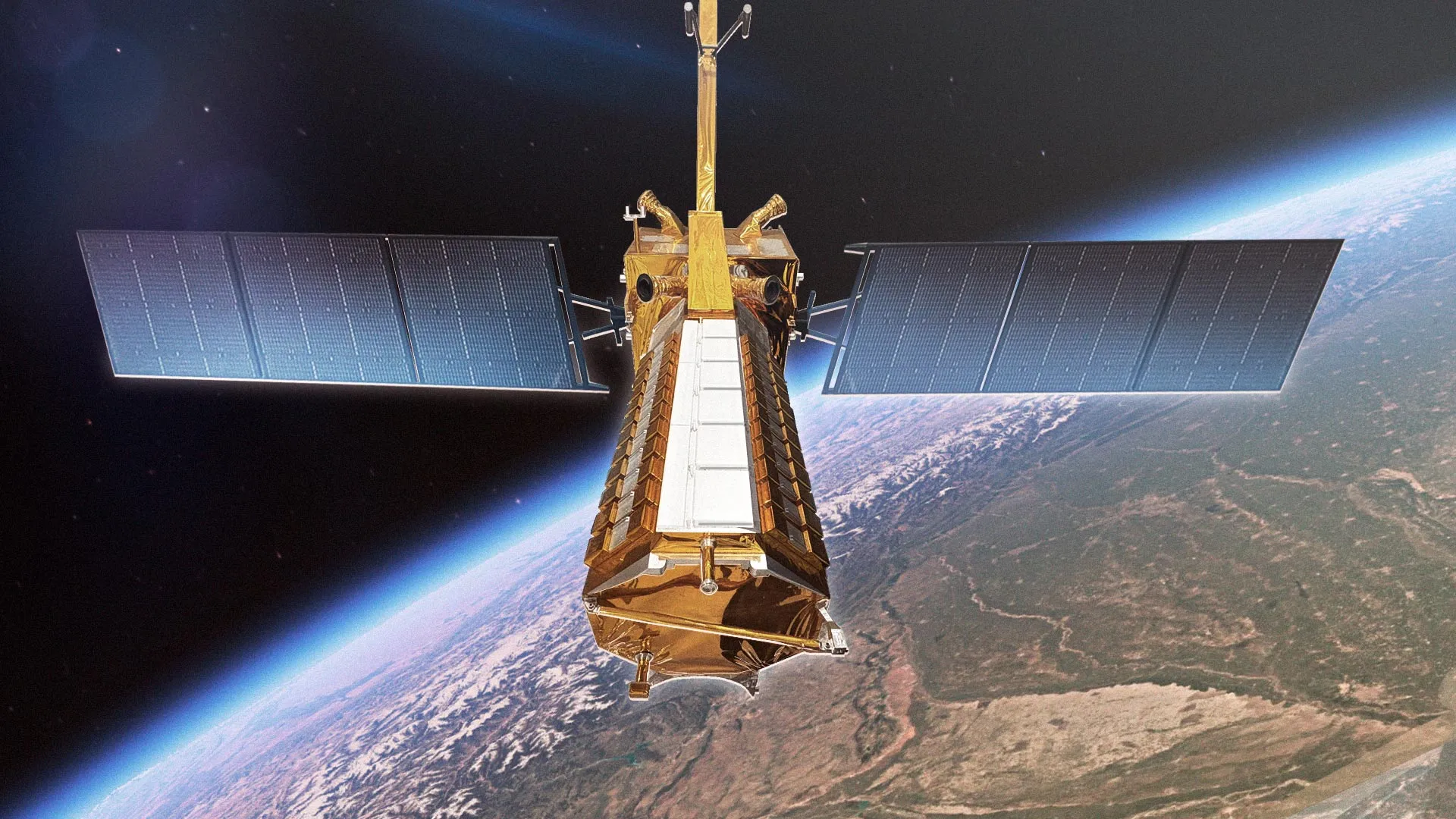
Following a successful launch on July 30, the NISAR satellite will orbit Earth for at least three years, using its sophisticated radar systems to scan nearly all the planet’s land and ice surfaces twice every 12 days. NASA and the Indian Space Research Organisation (ISRO) will jointly operate the spacecraft and gather science of high priority to both the United States and India.

Short for NASA-ISRO Synthetic Aperture Radar, NISAR will help scientists better understand processes involved in natural hazards and catastrophic events, such as earthquakes, volcanic eruptions, and landslides. In addition, it will support monitoring of infrastructure, such as dams, bridges, and roadways. What’s more, the satellite’s cloud-penetrating ability will help urgent-response communities during weather disasters such as hurricanes, storm surges, and floods. And NISAR will provide key global Earth observations, such as changes in ice sheets, glaciers, and sea ice, as well as improve understanding of how deforestation, permafrost loss, and fires affect the carbon cycle.

Along with providing an unprecedented amount of data, the mission breaks new ground with its collaboration between teams of scientists and engineers separated by more than 9,000 miles and 13 time zones.

The first-ever hardware collaboration between NASA and ISRO on an Earth-observing mission, NISAR will carry the most advanced radar system ever launched as part of a NASA or ISRO mission.

About the length of a pickup truck, the satellite’s main body contains engineering systems and a first-of-its-kind dual-radar payload — an L-band system with a 10-inch (25-centimeter) wavelength and an S-band system with a 4-inch (10-centimeter) wavelength. Each system’s signal is sensitive to different sizes of features on Earth’s surface, and each specializes in measuring different attributes, such as moisture content, surface roughness, and motion. These characteristics are important for studying a variety of natural surface conditions, such as the amount of soil moisture available for vegetation to thrive or if land has subsided over time.

When operating together, the satellite’s two radars will collect data synchronized in time and location, extending the sensitivity of the measurements to objects on the surface in a broad range of sizes. For example, S-band data will allow more accurate characterization of shorter plants, such as bushes and shrubs, while L-band data will sense taller vegetation, like trees.

The spacecraft will operate in a Sun-synchronous orbit, with its radar antennas pointed in a configuration that will also offer unprecedented coverage of Antarctica. This is crucial for studying the motion, deformation, and melting of the Antarctic ice sheet as it breaks up and deposits fresh water into the ocean.

Share Button

NHS in England told to keep Welsh patients waiting

One woman says the Welsh NHS “can’t be bothered” to send letters to patients to explain.

Share Button

World-first gonorrhoea vaccine rollout begins in UK as infection rates soar

Doctors say the jabs could save the NHS millions of pounds over the next decade.

Share Button

Scientists just recreated the Universe’s first molecule and solved a 13-billion-year-old puzzle

Immediately after the Big Bang, which occurred around 13.8 billion years ago, the universe was dominated by unimaginably high temperatures and densities. However, after just a few seconds, it had cooled down enough for the first elements to form, primarily hydrogen and helium. These were still completely ionized at this point, as it took almost 380,000 years for the temperature in the universe to drop enough for neutral atoms to form through recombination with free electrons. This paved the way for the first chemical reactions.

The oldest molecule in existence is the helium hydride ion (HeH+), formed from a neutral helium atom and an ionized hydrogen nucleus. This marks the beginning of a chain reaction that leads to the formation of molecular hydrogen (H2), which is by far the most common molecule in the universe.

Recombination was followed by the ‘dark age’ of cosmology: although the universe was now transparent due to the binding of free electrons, there were still no light-emitting objects, such as stars. Several hundred million years passed before the first stars formed.

During this early phase of the universe, however, simple molecules such as HeH⁺ and H2 were essential to the formation of the first stars. In order for the contracting gas cloud of a protostar to collapse to the point where nuclear fusion can begin, heat must be dissipated. This occurs through collisions that excite atoms and molecules, which then emit this energy in the form of photons. Below approximately 10,000 degrees Celsius, however, this process becomes ineffective for the dominant hydrogen atoms. Further cooling can only take place via molecules that can emit additional energy through rotation and vibration. Due to its pronounced dipole moment, the HeH⁺ ion is particularly effective at these low temperatures and has long been considered a potentially important candidate for cooling in the formation of the first stars. Consequently, the concentration of helium hydride ions in the universe may significantly impact the effectiveness of early star formation.

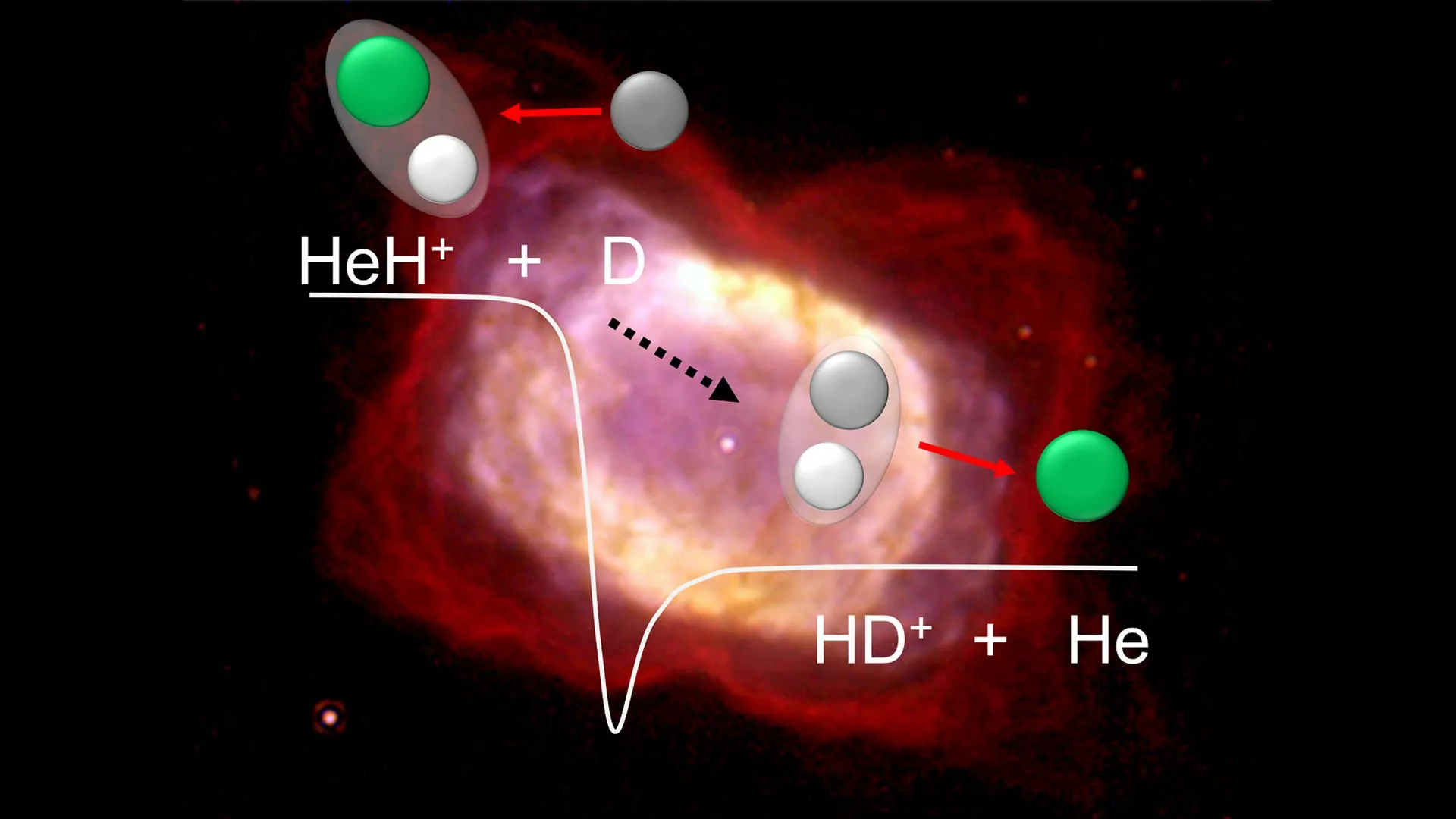
During this period, collisions with free hydrogen atoms were a major degradation pathway for HeH⁺, forming a neutral helium atom and an H2⁺ ion. These subsequently reacted with another H atom to form a neutral H2 molecule and a proton, leading to the formation of molecular hydrogen.

Researchers at the Max-Planck-Institut für Kernphysik (MPIK) in Heidelberg have now successfully recreated this reaction under conditions similar to those in the early universe for the first time. They investigated the reaction of HeH⁺ with deuterium, an isotope of hydrogen containing an additional neutron in the atomic nucleus alongside a proton. When HeH⁺ reacts with deuterium, an HD⁺ ion is formed instead of H2⁺, alongside the neutral helium atom.

The experiment was carried out at the Cryogenic Storage Ring (CSR) at the MPIK in Heidelberg — a globally unique instrument for investigating molecular and atomic reactions under space-like conditions. For this purpose, HeH⁺ ions were stored in the 35-metre-diameter ion storage ring for up to 60 seconds at a few kelvins (-267 °C), and were superimposed with a beam of neutral deuterium atoms. By adjusting the relative speeds of the two particle beams, the scientists were able to study how the collision rate varies with collision energy, which is directly related to temperature.

They found that, contrary to earlier predictions, the rate at which this reaction proceeds does not slow down with decreasing temperature, but remains almost constant. “Previous theories predicted a significant decrease in the reaction probability at low temperatures, but we were unable to verify this in either the experiment or new theoretical calculations by our colleagues,” explains Dr Holger Kreckel from the MPIK. ‘The reactions of HeH⁺ with neutral hydrogen and deuterium therefore appear to have been far more important for chemistry in the early universe than previously assumed,’ he continues. This observation is consistent with the findings of a group of theoretical physicists led by Yohann Scribano, who identified an error in the calculation of the potential surface used in all previous calculations for this reaction. The new calculations using the improved potential surface now align closely with the CSR experiment.

Since the concentrations of molecules such as HeH⁺ and molecular hydrogen (H2 or HD) played an important role in the formation of the first stars, this result brings us closer to solving the mystery of their formation.

Share Button

Ultra-hot Jupiter in death spiral may reveal how rocky worlds are born

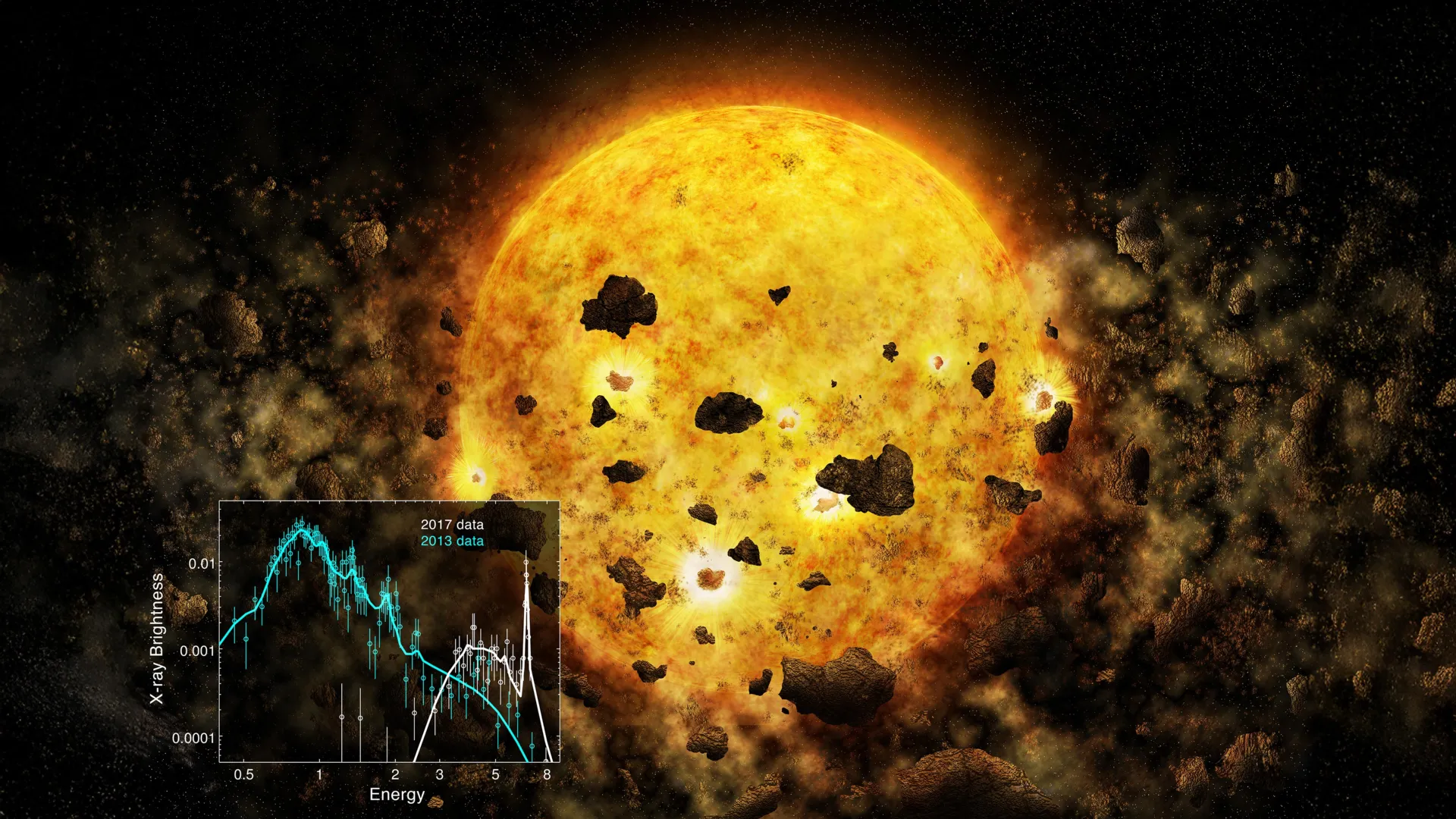
Macquarie University astronomers have tracked an extreme planet’s orbital decay, confirming it is spiralling towards its star in a cosmic death dance that could end in three possible ways.

The ultra-hot Jupiter exoplanet TOI-2109b, located 870 light-years from Earth, completes an orbit around its star in just 16 hours – making it the closest hot Jupiter ever discovered.

With a mass nearly five times that of Jupiter and almost twice Jupiter’s size, TOI-2109b orbits even closer to its star than Mercury does to our Sun.

“Just to put it into context – Mercury’s mass is almost 6,000 times smaller than Jupiter, but it still takes 88 days to orbit our Sun. For a huge gas giant such as TOI-2109b to fully orbit in 16 hours – it tells us that this is a planet located super-close to its star,” says Dr Jaime A. Alvarado-Montes, a Macquarie Research Fellow who led the international study published on July 15 in The Astrophysical Journal.

By analysing transit timing data from multiple ground-based telescopes, NASA’s TESS mission and the European Space Agency’s CHEOPS satellite spanning 2010 to 2024, the team detected subtle changes in the planet’s orbit.

Both theoretical models and observations independently calculated that the planet’s orbital period would decrease by at least 10 seconds over the next three years – confirming the planet may be spiralling towards its star.

The researchers identified three possible fates for TOI-2109b: it could be torn apart by tidal forces, plunge directly into its star, or have its gaseous envelope stripped away by intense radiation, leaving only a rocky core.

“This planet and its interesting situation could help us figure out some mysterious astronomical phenomena that so far we really don’t have much evidence to explain,” Dr Alvarado-Montes says. “It could tell us the story of many other solar systems.”

The findings suggest some rocky planets in other solar systems might be the stripped cores of former gas giants – a possibility that could reshape our understanding of planetary evolution.

With continued monitoring over the next three to five years, astronomers will detect the predicted orbital changes, providing real-time observation of a planetary system in its death throes.

Share Button

Underground life on Mars? Cosmic rays could make it possible

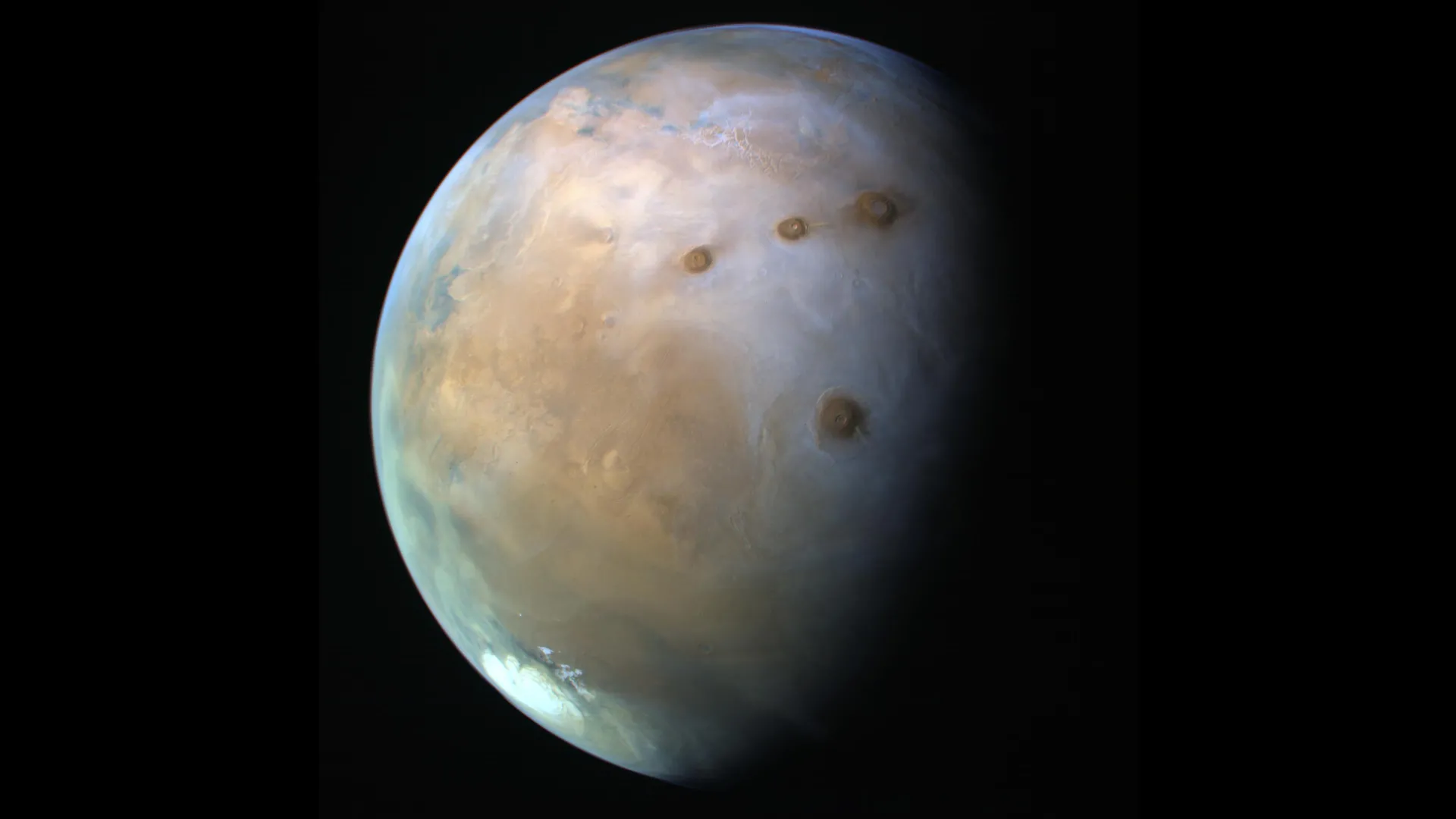
A new study from NYU Abu Dhabi has found that high-energy particles from space, known as cosmic rays, could create the energy needed to support life underground on planets and moons in our solar system.

The research shows that cosmic rays may not only be harmless in certain environments but could actually help microscopic life survive. These findings challenge the traditional view that life can only exist near sunlight or volcanic heat. Published in the International Journal of Astrobiology, the study is led by the Principal Investigator of the Space Exploration Laboratory at NYUAD’s Center for Astrophysics and Space Science (CASS), Dimitra Atri.

The team focused on what happens when cosmic rays hit water or ice underground. The impact breaks water molecules apart and releases tiny particles called electrons. Some bacteria on Earth can use these electrons for energy, similar to how plants use sunlight. This process is called radiolysis, and it can power life even in dark, cold environments with no sunlight.

Using computer simulations, the researchers studied how much energy this process could produce on Mars and on the icy moons of Jupiter and Saturn. These moons, which are covered in thick layers of ice, are believed to have water hidden below their surfaces. The study found that Saturn’s icy moon Enceladus had the most potential to support life in this way, followed by Mars, and then Jupiter’s moon Europa.

“This discovery changes the way we think about where life might exist,” said Atri. “Instead of looking only for warm planets with sunlight, we can now consider places that are cold and dark, as long as they have some water beneath the surface and are exposed to cosmic rays. Life might be able to survive in more places than we ever imagined.”

The study introduces a new idea called the Radiolytic Habitable Zone. Unlike the traditional “Goldilocks Zone” — the area around a star where a planet could have liquid water on its surface — this new zone focuses on places where water exists underground and can be energized by cosmic radiation. Since cosmic rays are found throughout space, this could mean there are many more places in the universe where life could exist.

The findings provide new guidance for future space missions. Instead of only looking for signs of life on the surface, scientists might also explore underground environments on Mars and the icy moons, using tools that can detect chemical energy created by cosmic radiation.

This research opens up exciting new possibilities in the search for life beyond Earth and suggests that even the darkest, coldest places in the solar system could have the right conditions for life to survive.

Share Button

Artists help pupils and centre users create murals

The murals are created at a special education school and wellbeing and cancer support centre.

Share Button

The hidden climate battle between forests and the ocean

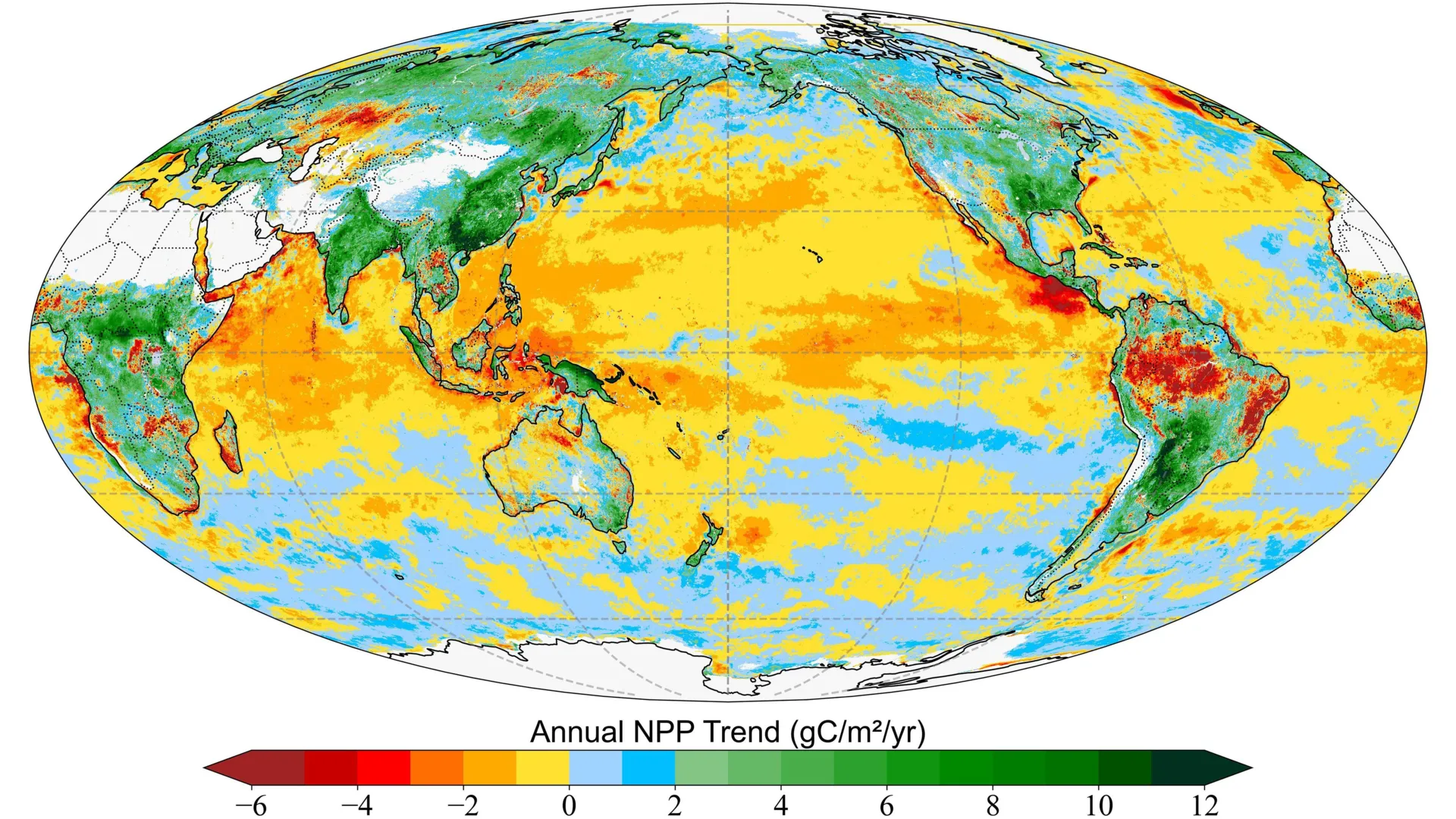
Terrestrial plants drove an increase in global photosynthesis between 2003 and 2021, a trend partially offset by a weak decline in photosynthesis — the process of using sunlight to make food — among marine algae, according to a new study published in Nature Climate Change on August 1. The findings could inform planetary health assessments, enhance ecosystem management, and guide climate change projections and mitigation strategies.

Photosynthetic organisms — also known as primary producers — form the base of the food chain, making most life on Earth possible. Using energy from the sun, primary producers fix, or convert, carbon from the air into organic, or carbon-based, matter. But primary producers also release carbon through a process called autotrophic respiration, which is somewhat akin to breathing. The rate of carbon gain after accounting for loss through respiration is called net primary production.

“Net primary production measures the amount of energy photosynthetic organisms capture and make available to support nearly all other life in an ecosystem,” said first author Yulong Zhang, a research scientist in the lab of Wenhong Li at Duke University’s Nicholas School of the Environment. “As the foundation of food webs, net primary production determines ecosystem health, provides food and fibers for humans, mitigates anthropogenic carbon emissions and helps to stabilize Earth’s climate.”

Previous research on net primary production has typically focused on either land or ocean ecosystems, leaving gaps in our understanding of net primary production across Earth and the potential implications for climate mitigation.

For this study, the team explored annual trends and variability in global net primary production, with a focus on the interplay between land and ocean ecosystems.

“If you’re looking at planetary health, you want to look at both terrestrial and marine domains for an integrated view of net primary production. The pioneering studies that first combined terrestrial and marine primary production have not been substantially updated in over two decades,” said co-author Nicolas Cassar, Lee Hill Snowdon Bass Chair at the Nicholas School who jointly oversaw the research with Zhang.

Satellite Insights

Observations from satellites offer continuous perspective on photosynthesis by plants and marine algae called phytoplankton. Specifically, specialized satellite instruments measure surface greenness, which represents the abundance of a green pigment called chlorophyll produced by photosynthetic life. Computer models then estimate net primary production by combining greenness data with other environmental data, such as temperature, light and nutrient variability.

The authors of the new study used six different satellite-based datasets on net primary production — three for land and three for oceans — for the years from 2003 to 2021. Using statistical methods, they analyzed annual changes in net primary production for land and, separately, for the ocean.

They found a significant increase in terrestrial net primary production, at a rate of 0.2 billion metric tons of carbon per year between 2003 and 2021. The trend was widespread from temperate to boreal, or high-latitude, areas, with a notable exception in the tropics of South America.

By contrast, the team identified an overall decline in marine net primary production, of about 0.1 billion metric tons of carbon per year for the same time period. Strong declines mainly occurred in tropical and subtropical oceans, particularly in the Pacific Ocean.

All told, trends on land dominated those of oceans: Global net primary production increased significantly between 2003 and 2021, at a rate of 0.1 billion metric tons of carbon per year.

Environmental Drivers

To understand the potential environmental factors at play, the team analyzed variables such as light availability, air and sea-surface temperature, precipitation and mixed layer depth — a measure that reflects the extent of mixing in the ocean’s top layer by wind, waves and surface currents.

“The shift toward greater primary production on land mainly stemmed from plants in higher latitudes, where warming has extended growing seasons and created more favorable temperatures, and in temperate regions that experienced local wetting in some areas, forest expansion and cropland intensification,” said Wenhong Li, a professor of earth and climate sciences at the Nicholas School and a co-author on the study.

Warming temperatures appeared to have an opposite effect in some ocean areas.

“Rising sea surface temperatures likely reduced primary production by phytoplankton in tropical and subtropical regions,” Cassar added. “Warmer waters can layer atop cooler waters and interfere with the mixing of nutrients essential to algal survival.”

Although land drove the overall increase in global primary production, the ocean primarily influenced year-to-year variability, especially during strong climate events such as El Niño and La Niña, the authors found.

“We observed that ocean primary production responds much more strongly to El Niño and La Niña than land primary production,” said co-author Shineng Hu, an assistant professor of climate dynamics at the Nicholas School. “A series of La Niña events was partly responsible for a trend reversal in ocean primary production that we identified after 2015. This finding highlights the ocean’s greater sensitivity to future climate variability.”

Broad Implications

The study points to the important role of terrestrial ecosystems in offsetting declines in net primary production among marine phytoplankton, according to the authors.

But they added that declines in net primary production in tropical and subtropical oceans, coupled with stagnation on land in the tropics, can weaken the foundation of tropical food webs, with cascading effects on biodiversity, fisheries and local economies. Over time, these disruptions could also compromise the ability of tropical regions to function as effective carbon sinks, potentially intensifying the impacts of climate warming.

“Whether the decline in ocean primary production will continue — and how long and to what extent increases on land can make up for those losses — remains a key unanswered question with major implications for gauging the health of all living things, and for guiding climate change mitigation,” Zhang said. “Long-term, coordinated monitoring of both land and ocean ecosystems as integrated components of Earth is essential.”

Funding: Y.Z., W.L., and G.S. were partially supported by the Duke University-USDA Forest Service collaboration (23-JV-11330180-119). N.C. was supported by the National Science Foundation (OCE-2123198). J.M. was supported by the Oak Ridge National Laboratory. J.X. is supported by the National Science Foundation (Macrosystem Biology) and NEON-Enabled Science Program (DEB-2017870).


Share Button

700,000 years ahead of their teeth: The carbs that made us human

As early humans spread from lush African forests into grasslands, their need for ready sources of energy led them to develop a taste for grassy plants, especially grains and the starchy plant tissue hidden underground.

But a new Dartmouth-led study shows that hominins began feasting on these carbohydrate-rich foods before they had the ideal teeth to do so. The study provides the first evidence from the human fossil record of behavioral drive, wherein behaviors beneficial for survival emerge before the physical adaptations that make it easier, the researchers report in Science.

The study authors analyzed fossilized hominin teeth for carbon and oxygen isotopes left behind from eating plants known as graminoids, which includes grasses and sedges. They found that ancient humans gravitated toward consuming these plants far earlier than their teeth evolved to chew them efficiently. It was not until 700,000 years later that evolution finally caught up in the form of longer molars like those that let modern humans easily chew tough plant fibers.

The findings suggest that the success of early humans stemmed from their ability to adapt to new environments despite their physical limitations, says Luke Fannin, a postdoctoral researcher at Dartmouth and lead author of the study.

“We can definitively say that hominins were quite flexible when it came to behavior and this was their advantage,” Fannin says. “As anthropologists, we talk about behavioral and morphological change as evolving in lockstep. But we found that behavior could be a force of evolution in its own right, with major repercussions for the morphological and dietary trajectory of hominins.”

Nathaniel Dominy, the Charles Hansen Professor of Anthropology at Dartmouth and senior author of the study, says isotope analysis overcomes the enduring challenge of identifying the factors that caused the emergence of new behaviors — behavior doesn’t fossilize.

“Anthropologists often assume behaviors on the basis of morphological traits, but these traits can take a long time — a half-million years or more–to appear in the fossil record,” Dominy says.

“But these chemical signatures are an unmistakable remnant of grass-eating that is independent of morphology,” he says. “They show a significant lag between this novel feeding behavior and the need for longer molar teeth to meet the physical challenge of chewing and digesting tough plant tissues.”

The team analyzed the teeth of various hominin species, beginning with the distant human relative Australopithecus afarensis, to track how the consumption of different parts of graminoids progressed over millennia. For comparison, they also analyzed the fossilized teeth of two extinct primate species that lived around the same time — giant terrestrial baboon-like monkeys called theropiths and small leaf-eating monkeys called colobines.

All three species veered away from fruits, flowers, and insects toward grasses and sedges between 3.4 million to 4.8 million years ago, the researchers report. This was despite lacking the teeth and digestive systems optimal for eating these tougher plants.

Hominins and the two primates exhibited similar plant diets until 2.3 million years ago when carbon and oxygen isotopes in hominin teeth changed abruptly, the study found. This plummet in both isotope ratios suggests that the human ancestor at the time, Homo rudolfensis, cut back on grasses and consumed more oxygen-depleted water.

The researchers lay out three possible explanations for this spike, including that these hominins drank far more water than other primates and savanna animals, or that they suddenly adopted a hippopotamus-like lifestyle of being submerged in water all day and eating at night.

The explanation most consistent with what’s known about early-human behavior, they report, is that later hominins gained regular access to underground plant organs known as tubers, bulbs, and corms. Oxygen-depleted water also is found in these bulging appendages that many graminoids use for storing large amounts of carbohydrates safely away from plant-eating animals.

The transition from grasses to these high-energy plant tissues would make sense for a species growing in population and physical size, Fannin says. These underground caches were plentiful, less risky than hunting, and provided more nutrients for early humans’ expanding brains. Having already adopted stone tools, ancient humans could dig up tubers, bulbs, and corms while facing little competition from other animals.

“We propose that this shift to underground foods was a signal moment in our evolution,” Fannin says. “It created a glut of carbs that were perennial — our ancestors could access them at any time of year to feed themselves and other people.”

Measurements of hominin teeth showed that while they became consistently smaller — shrinking about 5% every 1,000 years — molars grew longer, the researchers report. Hominins’ dietary shift toward graminoids outpaced that physical change for most of their history.

But the study found that the ratio flipped about 2 million years ago with Homo habilis and Homo ergaster, whose teeth exhibited a spurt of change in shape and size more suited to eating cooked tissues, such as roasted tubers.

Graminoids are ubiquitous across many ecosystems. Wherever they were, hominins would have been able to maximize the nutrients derived from these plants as their teeth became more efficient at breaking them down, Dominy says.

“One of the burning questions in anthropology is what did hominins do differently that other primates didn’t do? This work shows that the ability to exploit grass tissues may be our secret sauce,” Dominy says.

“Even now, our global economy turns on a few species of grass–rice, wheat, corn, and barley,” he says. “Our ancestors did something completely unexpected that changed the game for the history of species on Earth.”

Share Button