Royal College of Nursing wants urgent talks on way NHS contract works, warning nurses feel undervalued.


Royal College of Nursing wants urgent talks on way NHS contract works, warning nurses feel undervalued.
The comedian talks about some of the things she has struggled with as a new mother in her forties.

Popular GLP-1 drugs help many people drop tremendous amounts of weight, but the drugs fail to provide a key improvement in heart and lung function essential for long-term good health, University of Virginia experts warn in a new paper.
The researchers emphasize that weight loss associated with GLP-1 drugs has many clear health benefits for people with obesity, type 2 diabetes and heart failure, including improving blood-sugar control, short-term cardiorenal benefits and improvements in survival outcomes. But doctors may need to consider recommending exercise programs or develop other approaches, such as nutrition supplements or complementary medications, to help GLP-1 patients get the full cardiorespiratory benefits of substantial weight loss over the long-run, the researchers say.
“Some patients literally told me that they felt that they were losing muscle or muscle was slipping away from them while they were on these medications,” said researcher Zhenqi Liu, MD, Professor of Medicine and James M. Moss Professor of Diabetes at the University of Virginia School of Medicine and former chief of UVA Health’s Division of Endocrinology and Metabolism. “This is a serious concern. Muscle, especially axial muscle, is essential for posture, physical function and overall well-being. Losing lean body mass can increase the risk of cardiovascular disease, all-cause mortality and diminished quality of life. We need to make sure that patients prescribed these medications aren’t already at risk for malnutrition or low muscle mass.”
About GLP-1 Drugs
While GLP-1 drugs help people lose fat, this comes with loss of fat-free mass, of which muscle makes up 40% to 50%. In fact, fat-free mass lost accounts for 25-40% of the total pounds lost, while age-related declines in fat-free mass are only 8% per decade.
Liu and his collaborators, graduate student Nathan R. Weeldreyer and Siddhartha S. Angadi, PhD, Associate Professor of Kinesiology at UVA’s School of Education and Human Development, wanted to better understand the potential long-term consequences of this muscle loss, so they reviewed available data on the drugs’ effects on cardiorespiratory fitness, or CRF.
CRF (or VO2max) is a measure of how well the body can use oxygen during exercise. It is a handy way for doctors to assess how well the heart, lungs, muscle and blood vessels work together, and it is used to predict all-cause and cardiovascular mortality (risk of death).
Patients with obesity often have low CRF. In some cases, this is because the person lacks muscle mass; in others, a person may have enough muscle, but the quality of that muscle is compromised by fat that has penetrated it.
“Cardiorespiratory fitness is a potent predictor of all-cause and cardiovascular mortality risk across a range of populations, including obesity, diabetes and heart failure,” said Angadi, a cardiovascular exercise physiologist with UVA’s Department of Kinesiology. “In a recent study by our group that examined mortality outcomes from almost 400,000 individuals across the world, we found that CRF was far superior to overweight or obesity status for predicting the risk of death. In fact, once CRF was factored in, body weight failed to predict the risk of mortality. This is why it’s so important to understand the effects of this new class of drugs on it.”
In their review of the available medical literature, the researchers found that GLP-1 drugs improve certain measures of heart function, yet those improvements don’t translate into significant improvements in VO2max.
Some small studies, they note, have suggested that exercise can help improve VO2max for patients taking GLP-1 drugs, but these had poor controls and larger, well-designed studies are needed to bear that out.
Ensuring Healthy Weight Loss
The researchers ultimately conclude that GLP-1 drugs “significantly reduce body weight and adiposity, along with a substantial FFM [fat-free mass] loss, but with no clear evidence of CRF enhancement.” They remain concerned that this could take a toll on patients’ metabolic health, healthspan/frailty and overall longevity. They are urging additional research to better understand the effects of the drugs and ensure patients get the best possible outcomes.
They note, however, that there are promising signs that we may be able to develop medications to help, such as a monoclonal antibody already in the pipeline that may be able to offset lean-muscle loss.
“This is an area of active research, and we are hopeful that better solutions are coming soon,” Liu said. “But for now it is important that patients prescribed GLP-1 drugs have conversations with their healthcare providers about strategies to preserve muscle mass. The American Diabetes Association recommends screening for malnutrition and low muscle mass risk before starting these medications and promoting adequate protein intake and regular exercise throughout treatment.”
“Finally,” Angadi added, “exercise training during GLP1 therapy remains to be assessed in its ability to preserve or improve VO2max during GLP1 therapy.”
Findings Published
The researchers have published their findings in JCEM, the Journal of Clinical Endocrinology & Metabolism. The work was supported by the National Institutes of Health, grants R01DK124344 and R01DK125330.
But the health secretary says he will not negotiate on pay, adding that the union has lost goodwill with their five-day walkout.
NRS Healthcare, which provides wheelchairs, hoists and other equipment, is expected to run out of cash by the end of the week, the BBC understands.
But the health secretary says he will not negotiate on pay, adding that the union has lost goodwill with their five-day walkout.
Parents should wash their children’s hands with soap and warm water before food, say health officials.
Resident doctors in England went on strike over pay for five days at the end of July 2025.
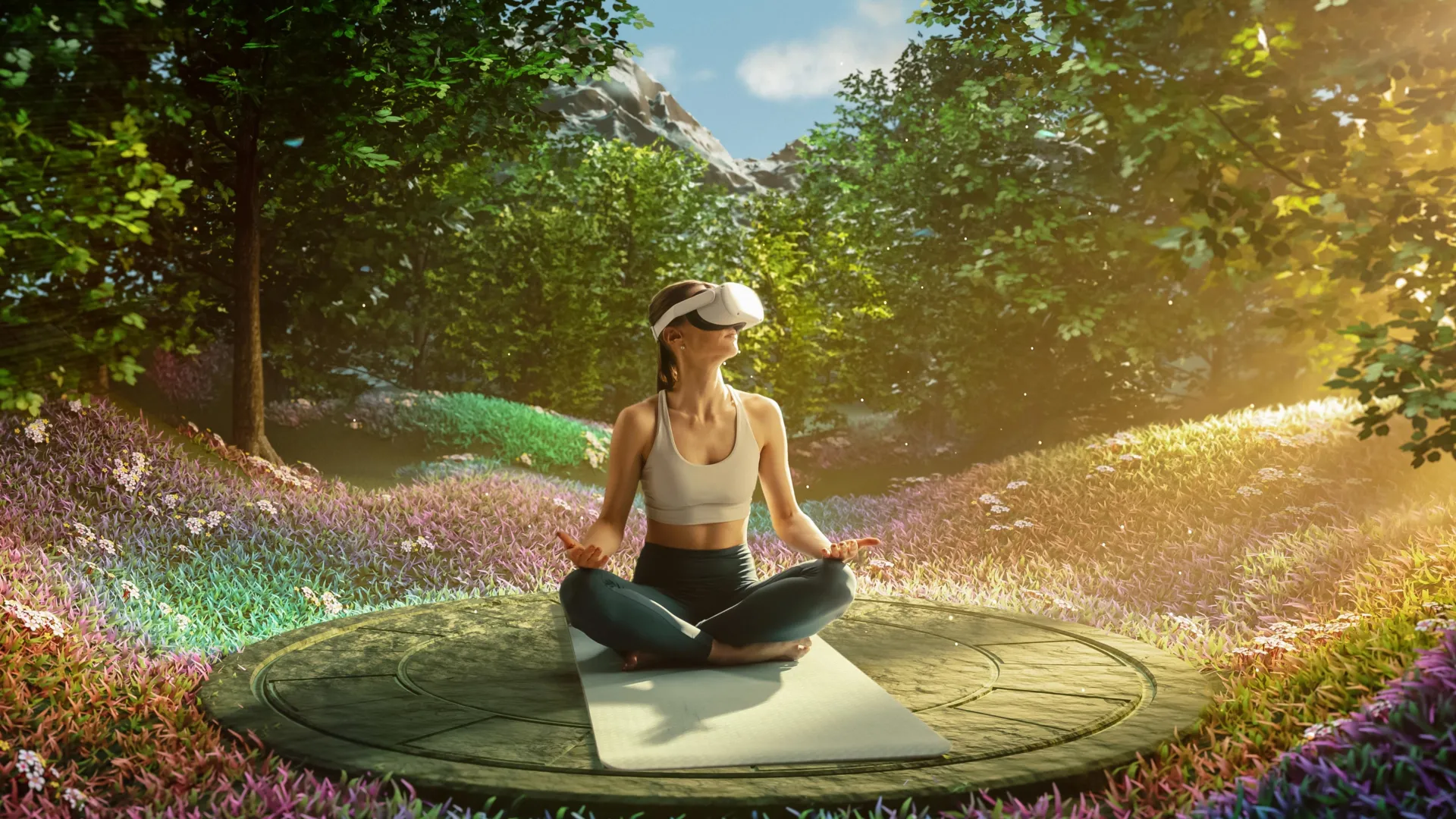
Immersing in virtual reality (VR) nature scenes helped relieve symptoms that are often seen in people living with long-term pain, with those who felt more present experiencing the strongest effects.
A new study led by the University of Exeter, published in the journal Pain, tested the impact of immersive 360-degree nature films delivered using VR compared with 2D video images in reducing experience of pain, finding VR almost twice as effective.
Long-term (chronic) pain typically lasts more than three months and is particularly difficult to treat. The researchers simulated this type of pain in healthy participants, finding that nature VR had an effect similar to that of painkillers, which endured for at least five minutes after the VR experience had ended.
Dr Sam Hughes, Senior Lecturer in Pain Neuroscience at the University of Exeter, led the study. He said: “We’ve seen a growing body of evidence show that exposure to nature can help reduce short term, everyday pain, but there has been less research into how this might work for people living with chronic or longer-term pain. Also, not everyone is able to get out for walks in nature, particularly those living with long term health conditions like chronic pain. Our study is the first to look at the effect of prolonged exposure to a virtual reality nature scene on symptoms seen during long term pain sensitivity. Our results suggest that immersive nature experiences can reduce the development of this pain sensitivity through an enhanced sense of presence and through harnessing the brains in-built pain suppression systems”
The study, which was funded by the Academy of Medical Sciences, involved 29 healthy participants who were shown two types of nature scene after having pain delivered on the forearm using electric shocks. On the first visit, they measured the changes in pain that occur over a 50-minute period following the electric shocks and showed how the healthy participants developed sensitivity to sharp pricking stimuli in the absence of any nature scenes. The results showed that the participants developed a type of sensitivity that closely resembles that seen in people living with nerve pain — which occurs due to changes in how pain signals are processed in the brain and spinal cord.
On the second visit, they immersed the same participants in a 45-minute virtual reality 360-degree experience of the waterfalls of Oregon to see how this could change how the development of pain sensitivity. The scene was specially chosen to maximize therapeutic effects.
In the second visit, they explored the same scene, but on a 2D screen.
They completed questionnaires on their experience of pain after watching the scenes in each case, and also on how present they felt in each experience, and to what extent they felt the nature scenes to be restorative[LV1] .
On a separate visit, participants underwent MRI brain scans at the University of Exeter’s Mireille Gillings Neuroimaging Centre. Researchers administered a cold gel to illicit a type of ongoing pain and then scanned participants to study how their brains respond.
The researchers found that the immersive VR experience significantly reduced the development and spread of feelings of pain sensitivity to pricking stimuli, and these pain-reducing effects were still there even at the end of the 45-minute experience.
The more present the person felt during the VR experience, the stronger this pain-relieving effect. The fMRI brain scans also revealed that people with stronger connectivity in brain regions involved in modulating pain responses experienced less pain. The results suggest that nature scenes delivered using VR can help to change how pain signals are transmitted in the brain and spinal cord during long-term pain conditions.
Dr Sonia Medina, of the University of Exeter Medical School and one of the authors on the study, said: “We think VR has a particularly strong effect on reducing experience of pain because it’s so immersive. It really created that feeling of being present in nature – and we found the pain – reducing effect was greatest in people for whom that perception was strongest. We hope our study leads to more research to investigate further how exposure to nature effects our pain responses, so we could one day see nature scenes incorporated into ways of reducing pain for people in settings like care homes or hospitals.”
The paper is titled ‘Immersion in nature through virtual reality attenuates the development and spread of mechanical secondary hyperalgesia: a role for insulo-thalamic effective connectivity’ and is published in the journal Pain.
With doctors returning to work after five-day walkout, is there an opportunity for talks to re-start?
