The two-year project involves 70 patients recruited in north Staffordshire and Birminmgham.


The two-year project involves 70 patients recruited in north Staffordshire and Birminmgham.
People with experience of compulsive buying say more NHS help is needed to tackle the issue.
Tim Hull, who has a rare neurological condition, says his quality of life is “very, very low”.
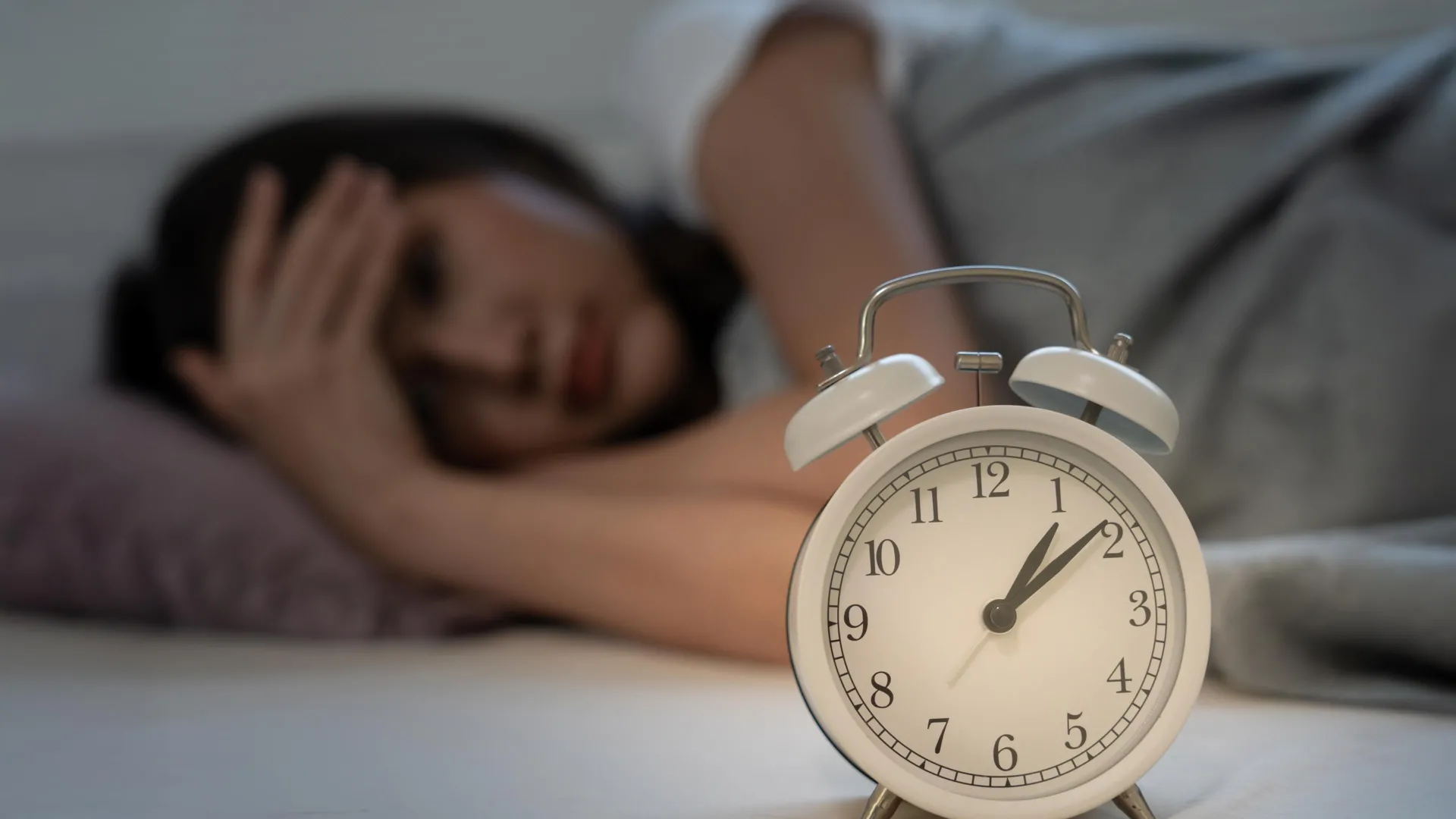
A groundbreaking international study, recently published in Health Data Science, analyzed objective sleep data from 88,461 adults in the UK Biobank and found significant associations between sleep traits and 172 diseases. The research, led by teams from Peking University and Army Medical University, highlights sleep regularity — such as bedtime consistency and circadian rhythm stability — as an underrecognized but critical factor in disease risk.
Using actigraphy data over an average of 6.8 years, researchers identified that 92 diseases had over 20% of their risk attributable to poor sleep behavior. Notably, irregular bedtime (after 00:30) was linked to a 2.57-fold higher risk of liver cirrhosis, while low interdaily stability increased the risk of gangrene by 2.61 times.
Importantly, the study challenges previous claims that “long sleep” (≥9 hours) is harmful. While subjective reports have linked long sleep to stroke and heart disease, objective data revealed this association in only one disease. Misclassification may be to blame: 21.67% of “long sleepers” actually slept less than 6 hours, suggesting that time spent in bed is often confused with actual sleep time.
“Our findings underscore the overlooked importance of sleep regularity,” said Prof. Shengfeng Wang, senior author of the study. “It’s time we broaden our definition of good sleep beyond just duration.”
The team confirmed several associations in U.S. populations and identified inflammatory pathways as a possible biological link. Future research will explore causality and assess the impact of sleep interventions on chronic disease outcomes.
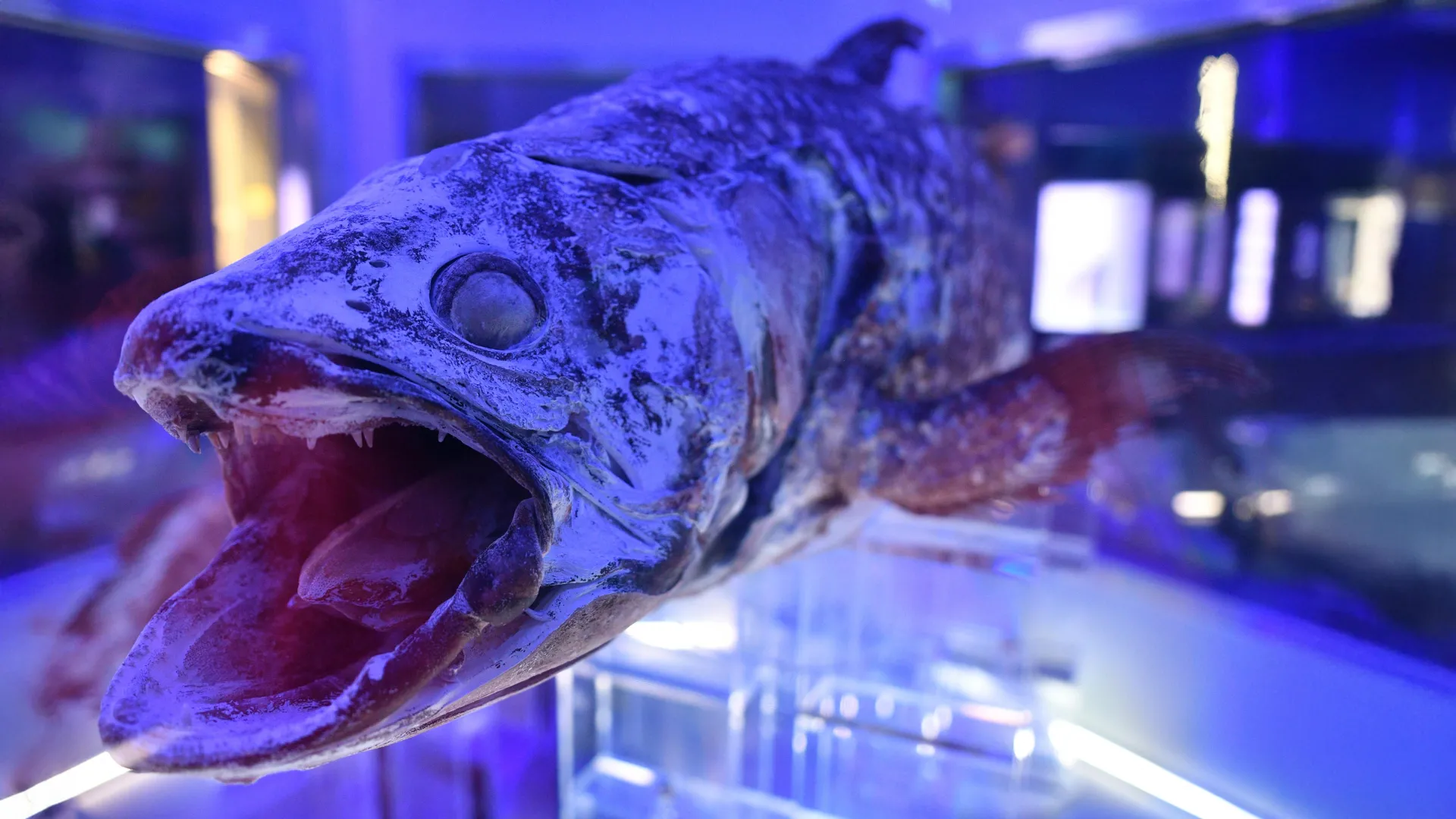
The coelacanth is known as a “living fossil” because its anatomy has changed little in the last 65 million years. Despite being one of the most studied fish in history, it continues to reveal new information that could transform our understanding of vertebrate evolution. This is revealed in a study published in the journal Science Advances by researchers from the University of São Paulo (USP) in Brazil and the Smithsonian Institution in the United States.
Upon re-examining the cranial musculature of the African coelacanth (Latimeria chalumnae), the authors discovered that only 13% of the previously identified evolutionary muscle novelties for the largest vertebrate lineages were accurate. The study also identified nine new evolutionary transformations related to innovations in feeding and respiration in these groups.
“Ultimately, it’s even more similar to cartilaginous fish [sharks, rays, and chimaeras] and tetrapods [birds, mammals, amphibians, and reptiles] than previously thought. And even more distinct from ray-finned fish, which make up about half of living vertebrates,” says Aléssio Datovo, a professor at the Museum of Zoology (MZ) at USP supported by FAPESP, who led the study.
Among the evolutionary novelties erroneously identified as present in coelacanths are muscles responsible for actively expanding the buccopharyngeal cavity, which extends from the mouth to the pharynx. This set of muscles is directly related to food capture and respiration. However, the study showed that these supposed muscles in coelacanths were actually ligaments, which are structures incapable of contraction.
Ray-finned fish (actinopterygii) and lobe-finned fish (sarcopterygii) diverged from a common ancestor approximately 420 million years ago. The sarcopterygii include fish such as coelacanths and lungfish, as well as all other tetrapods, because they evolved from an aquatic ancestor. These include mammals, birds, reptiles, and amphibians.
In ray-finned fish, such as aquarium carp, it is easy to see how the mouth moves to suck in food. This ability gave actinopterygii a significant evolutionary advantage; today, they comprise about half of all living vertebrates.
This is a fundamental difference from other fish, such as coelacanths and sharks, which primarily feed by biting their prey.
“In previous studies, it was assumed that this set of muscles that would give greater suction capacity was also present in coelacanths and, therefore, would have evolved in the common ancestor of bony vertebrates, which we now show isn’t true. This only appeared at least 30 million years later, in the common ancestor of living ray-finned fish,” points out Datovo.
Behind the scenes
Coelacanths are extremely rare fish that live about 300 meters below the surface of the water and spend their days in underwater caves.
One reason they have changed so little since the extinction of the dinosaurs is that they have few predators and live in a relatively protected environment. This has resulted in slow changes to their genome, as shown by a 2013 study published in the journal Nature.
Coelacanths were first known only from fossils from about 400 million years ago. It was not until 1938 that a living animal was discovered, much to the astonishment of scientists. In 1999, another species (Latimeria chalumnae) was discovered in Asian waters.
Due to the rarity of specimens in museums, researchers from USP and the Smithsonian Institution’s National Museum of Natural History had to persevere to find an institution willing to lend animals for dissection.
The Field Museum in Chicago and the Virginia Institute of Marine Science, both in the United States, finally agreed to lend one specimen each. According to Datovo, G. David Johnson, co-author of the article, deserves credit for obtaining the loan.
Johnson, born in 1945, was “probably the greatest fish anatomist of his time,” according to Datovo. He died in November 2024 after a domestic accident while the study was under review.
Contribution
“Contrary to what it may seem, dissecting a specimen does not mean destroying it as long as it’s done properly,” says Datovo.
The researcher, who has been conducting this type of study for over 20 years, spent six months separating all the muscles and skull bones of the coelacanth. These structures are now preserved and can be studied individually by other scientists, eliminating the need to dissect a new animal.
Seeing each muscle and nerve firsthand allowed the authors to identify what was actually in the coelacanth’s head with certainty, point out previously undescribed structures, and correct errors that had been repeated in the scientific literature for over 70 years.
“There were many contradictions in the literature. When we finally got to examine the specimens, we detected more errors than we’d imagined. For example, 11 structures described as muscles were actually ligaments or other types of connective tissue. This has a drastic consequence for the functioning of the mouth and breathing, because muscles perform movement, while ligaments only transmit it,” he explains.
Due to the position of coelacanths in the vertebrate tree of life, the discovery impacts our understanding of cranial evolution in all other large vertebrate groups.
With this information, the researcher used three-dimensional microtomography images of the skulls of other groups of fish, both extinct and living. These images are made available by other researchers who study fish anatomy when they perform 3D scans.
From images of the skull bones of other fish from completely extinct lineages, Datovo and Johnson were able to infer where the muscles found in coelacanths would fit, elucidating the evolution of these muscles in the first jawed vertebrates. In future work, Datovo intends to analyze similarities with the muscles of tetrapods, such as amphibians and reptiles.
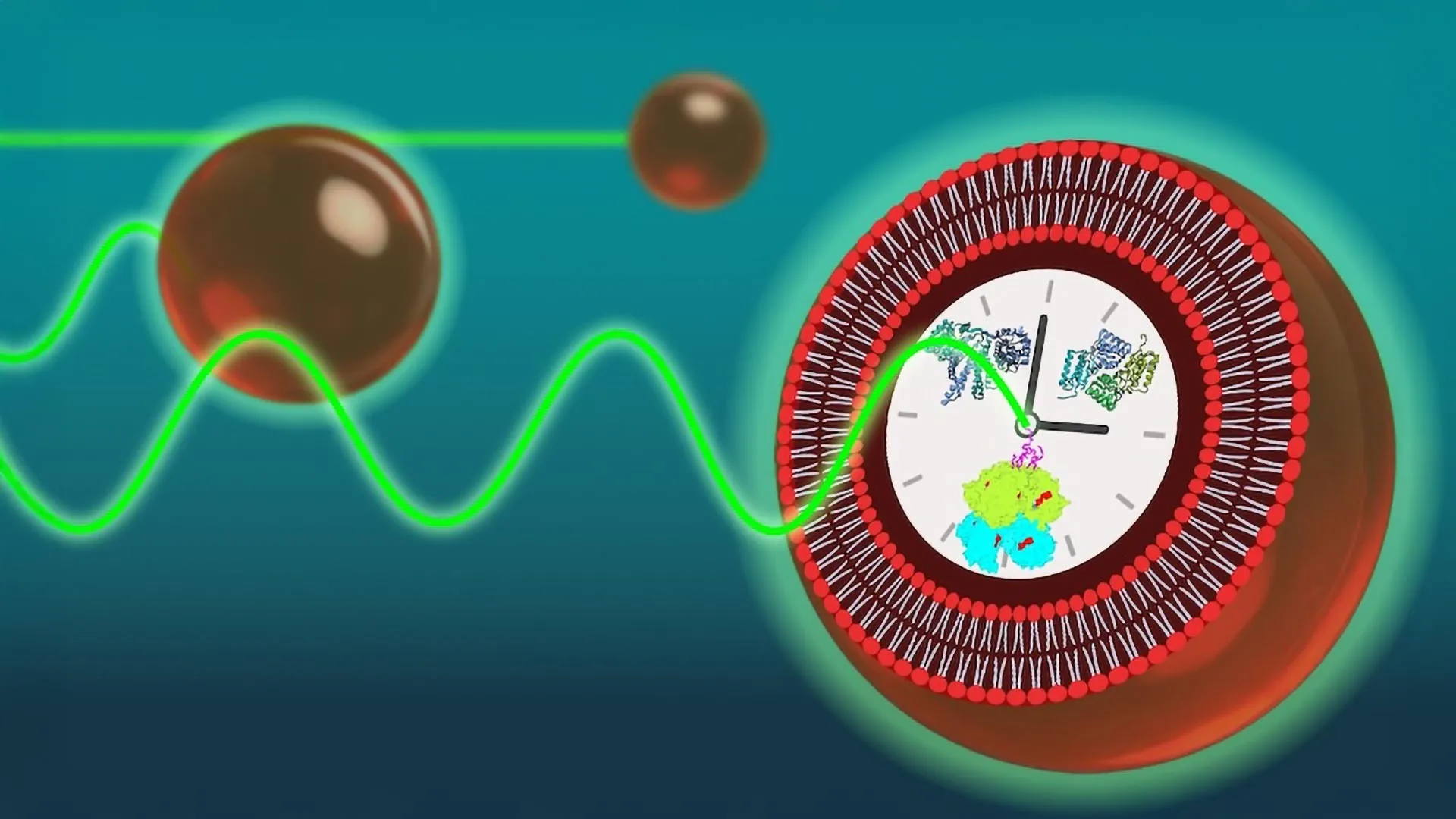
A team of UC Merced researchers has shown that tiny artificial cells can accurately keep time, mimicking the daily rhythms found in living organisms. Their findings shed light on how biological clocks stay on schedule despite the inherent molecular noise inside cells.
The study, recently published in Nature Communications, was led by bioengineering Professor Anand Bala Subramaniam and chemistry and biochemistry Professor Andy LiWang. The first author, Alexander Zhang Tu Li, earned his Ph.D. in Subramaniam’s lab.
Biological clocks — also known as circadian rhythms — govern 24-hour cycles that regulate sleep, metabolism and other vital processes. To explore the mechanisms behind the circadian rhythms of cyanobacteria, the researchers reconstructed the clockwork in simplified, cell-like structures called vesicles. These vesicles were loaded with core clock proteins, one of which was tagged with a fluorescent marker.
The artificial cells glowed in a regular 24-hour rhythm for at least four days. However, when the number of clock proteins was reduced or the vesicles were made smaller, the rhythmic glow stopped. The loss of rhythm followed a reproducible pattern.
To explain these findings, the team built a computational model. The model revealed that clocks become more robust with higher concentrations of clock proteins, allowing thousands of vesicles to keep time reliably — even when protein amounts vary slightly between vesicles.
The model also suggested another component of the natural circadian system — responsible for turning genes on and off — does not play a major role in maintaining individual clocks but is essential for synchronizing clock timing across a population.
The researchers also noted that some clock proteins tend to stick to the walls of the vesicles, meaning a high total protein count is necessary to maintain proper function.
“This study shows that we can dissect and understand the core principles of biological timekeeping using simplified, synthetic systems,” Subramaniam said.
The work led by Subramaniam and LiWang advances the methodology for studying biological clocks, said Mingxu Fang, a microbiology professor at Ohio State University and an expert in circadian clocks.
“The cyanobacterial circadian clock relies on slow biochemical reactions that are inherently noisy, and it has been proposed that high clock protein numbers are needed to buffer this noise,” Fang said. “This new study introduces a method to observe reconstituted clock reactions within size-adjustable vesicles that mimic cellular dimensions. This powerful tool enables direct testing of how and why organisms with different cell sizes may adopt distinct timing strategies, thereby deepening our understanding of biological timekeeping mechanisms across life forms.”
Subramaniam is a faculty member in the Department of Bioengineering and an affiliate of the Health Sciences Research Institute (HSRI). LiWang is a faculty member in the Department of Chemistry and Biochemistry, also affiliated with HSRI. He is a fellow of the American Academy of Microbiology and the 2025 recipient of the Dorothy Crowfoot Hodgkin Award from The Protein Society.
The work was supported by Subramaniam’s National Science Foundation CAREER award from the Division of Materials Research and by grants from the National Institutes of Health and Army Research Office awarded to LiWang. LiWang was supported by a fellowship from the NSF CREST Center for Cellular and Biomolecular Machines at UC Merced.
NHS England finds “significant” concerns about services at Leeds Teaching Hospitals NHS Trust.
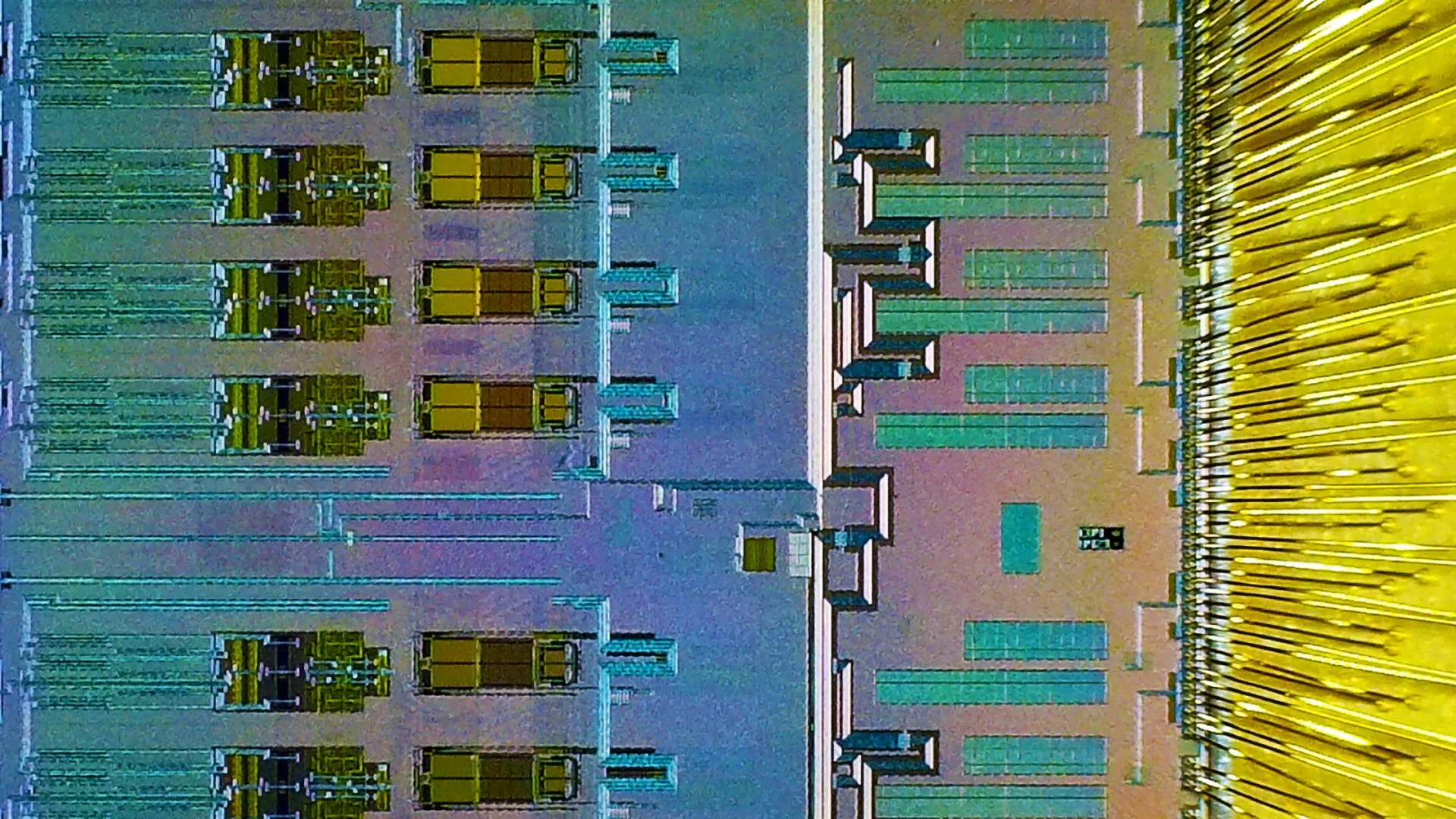
The Large Hadron Collider (LHC) is tough on electronics. Situated inside a 17-mile-long tunnel that runs in a circle under the border between Switzerland and France, this massive scientific instrument accelerates particles close to the speed of light before smashing them together. The collisions yield tiny maelstroms of particles and energy that hint at answers to fundamental questions about the building blocks of matter.
Those collisions produce an enormous amount of data — and enough radiation to scramble the bits and logic inside almost any piece of electronic equipment.
That presents a challenge to CERN’s physicists as they attempt to probe deeper into the mysteries of the Higgs boson and other fundamental particles. Off-the-shelf components simply can’t survive the harsh conditions inside the accelerator, and the market for radiation-resistant circuits is too small to entice investment from commercial chip manufacturers.
“Industry just couldn’t justify the effort, so academia had to step in,” according to Peter Kinget, the Bernard J. Lechner Professor of Electrical Engineering at Columbia Engineering. “The next discoveries made with the LHC will be triggered by one Columbia chip and measured by another.”
Kinget leads the team that designed specialized silicon chips that collect data in one of the harshest and most important environments in particle physics. Their most recent paper describing this project was published July 1 in the IEEE Open Journal of the Solid-State Circuits Society.
“These sort of collaborations between physicists and engineers are very important to advancing our ability to explore fundamental questions about the universe,” according to John Parsons, professor of physics at Columbia University and leader of the Columbia team working on the ATLAS detector, one of the LHC’s massive instruments. “Developing state-of-the-art instrumentation is crucial to our success.”
Circuits that resist radiation
The devices the team designed are called analog-to-digital converters, or ADCs. Their task is capturing electrical signals produced by particle collisions inside CERN’s detectors and translating them into digital data that researchers can analyze.
In the ATLAS detector, the electrical pulses generated by particle collisions are measured using a device called a liquid argon calorimeter. This enormous vat of ultra-cold argon captures an electronic trace of every particle that passes through. Columbia’s ADC chips convert these delicate analog signals into precise digital measurements, capturing details that no existing component could reliably record.
“We tested standard, commercial components, and they just died. The radiation was too intense,” says Rui (Ray) Xu, a Columbia Engineering PhD student who has worked on the project since he was an undergraduate at the University of Texas. “We realized that if we wanted something that worked, we’d have to design it ourselves.”
Designing “high-accuracy” reliability
Instead of creating entirely new manufacturing methods, the team used commercial semiconductor processes validated by CERN for radiation resistance and applied innovative circuit-level techniques. They carefully chose and sized components and arranged circuit architectures and layouts to minimize radiation damage and built digital systems that automatically detect and correct errors in real time. Their resulting design is resilient enough to withstand the unusually severe conditions at LHC for more than a decade.
Two Columbia-designed ADC chips are expected to be integrated into the ATLAS experiment’s upgraded electronics. The first, called the trigger ADC, is already operating at CERN. This chip, initially described in 2017 and validated in 2022, enables the trigger system to filter about a billion collisions each second and to instantly select only the most scientifically promising events to record. It serves as a digital gatekeeper deciding what merits deeper investigation.
The second chip, the data acquisition ADC, recently passed its final tests and is now in full production. The chip, which was described in an IEEE paper earlier this year, will be installed as part of the next LHC upgrade. It will very precisely digitize the selected signals, enabling physicists to explore phenomena like the Higgs boson, whose discovery at CERN made headlines in 2012 and led to the Nobel Prize in physics in 2013, but whose exact properties still hold mysteries.
Both chips represent the kind of direct collaboration between fundamental physicists and engineers.
“The opportunity as an engineer to contribute so directly to fundamental science, is what makes this project special,” Xu said.
It further created opportunities to collaborate across multiple institutions. The chips were designed by electrical engineers at Columbia and at the University of Texas, Austin, in close collaboration with physicists at Columbia’s Nevis Laboratories and the University of Texas, Austin.
Funded by the National Science Foundation and the Department of Energy, Columbia’s chips play a central role in a broader international collaboration coordinated in part by Columbia’s Nevis Laboratories. As research at CERN advances, Columbia-designed components will contribute to data acquisition systems that support physicists in analysing phenomena beyond the current limits of knowledge.

As the world grapples with the urgent need to reduce carbon emissions and combat climate change, researchers at the University of Sharjah are turning to a cutting-edge technology that could reshape the future of energy: AI-powered digital twins.
According to the researchers, these digital replicas of the physical world have the potential to transform the generation, management, and optimization of energy across diverse clean energy platforms, accelerating the transition away from fossil fuels, which environmental scientists associate with global warming.
Digital twins’ ability to replicate and interact with complex systems has made them a cornerstone of innovation across industries, driving improvements in efficiency, cost reduction, and the development of novel solutions.
However, the scientists caution that current digital twin models still face notable limitations that restrict their full potential in harnessing energy from sources such as wind, solar, geothermal, hydroelectric, and biomass.
“Digital twins are highly effective in optimizing renewable energy systems,” the researchers write in the journal Energy Nexus. “Yet, each energy source presents unique challenges — ranging from data variability and environmental conditions to system complexity — that can limit the performance of digital twin technologies, despite their considerable promise in improving energy generation and management.”
In their study, the authors conducted an extensive review of existing literature on the application of digital twins in renewable energy systems. They examined various contexts, functions, lifecycles, and architectural frameworks to understand how digital twins are currently being utilized and where gaps remain.
To extract meaningful insights, the researchers employed advanced text mining techniques, leveraging artificial intelligence, machine learning, and natural language processing. This scientifically rigorous approach enabled them to analyze large volumes of raw data and uncover structured patterns, concepts, and emerging trends.
From this in-depth analysis, the authors drew several key conclusions. They identified research gaps, proposed new directions, and outlined the challenges that must be addressed to fully harness the potential of digital twin technology in the renewable energy sector.
Following a detailed discussion on the integration of digital twins across various renewable energy applications, the authors summarized their most significant findings across five major energy sources: wind, solar, geothermal, hydroelectric, and biomass. Each source presents unique opportunities and challenges, and the study offers a comprehensive overview of how digital twins can be tailored to optimize performance in each domain.
The study reveals that digital twins offer significant advantages across various renewable energy systems:
Wind Energy: Digital twins can predict unknown parameters and correct inaccurate measurements, enhancing system reliability and performance.
Solar Energy: They help identify key factors that influence efficiency and output power, enabling better system design and optimization.
Geothermal Energy: Digital twins can simulate the entire operational process — particularly drilling — facilitating cost analysis and reducing both time and expenses.
Hydroelectric Energy: The AI-driven models simulate system dynamics to identify influencing factors. In older hydro plants, they are used to mitigate the impact of worker fatigue on productivity.
Biomass Energy: Digital twins improve performance and management by offering deep insights into operational processes and plant configurations.
But the authors’ contribution to the field stands out in highlighting critical limitations in the application of digital twin technology across these energy sources. Their analysis underscores the need for more robust models that can address specific challenges unique to each renewable energy system.
The authors identify several limitations in the application of digital twins across different renewable energy systems:
Wind Energy: Digital twins face challenges in accurately modeling and monitoring environmental conditions. They struggle to simulate critical factors such as blade erosion, gearbox degradation, and electrical system performance — particularly in aging turbines.
Solar Energy: Despite their potential, digital twins still fall short in reliably predicting long-term performance. They have difficulty tracking panel degradation and accounting for environmental influences over time, which affects their accuracy and usefulness.
Geothermal Energy: A major obstacle is the lack of high-quality data, which hampers the ability of digital twins to simulate geological uncertainties and subsurface conditions. The technology also faces complexity in modeling the long-term behavior of geothermal systems, including heat transfer and fluid flow dynamics.
Hydroelectric energy: Applied to hydroelectric projects, digital twins face challenges in accurately modeling water flow variability and in capturing environmental and ecological constraints. These limitations reduce their effectiveness in optimizing system performance and sustainability.
biomass energy: When used with biomass energy systems, digital twins still struggle to simulate the entire production supply chain. They fall short in providing precise models for biological processes, biomass conversion, and the complex biochemical and thermochemical reactions involved.
The authors emphasize the broader implications of these shortcomings for the renewable energy sector. To address these challenges, they offer a set of guidelines and a research roadmap aimed at helping scientists enhance the reliability and precision of digital twin technologies.
Their recommendations focus on improving data collection methods, advancing modeling techniques, and expanding computational capabilities to ensure digital twins can deliver trustworthy insights for decision-making and system optimization.
The screening is part of the drive to fight superbugs that are resistant to common antibiotic drugs.
