Do you need to spend more to get the best for your chapped lips?


Do you need to spend more to get the best for your chapped lips?
The group hopes to help women with newborn care, maternal health, and mental wellbeing.
The doctors’ union says it will seek fresh talks with ministers before setting strike days.
Until now, there had only been drugs for older children which carried an overdose risk for the young.
Singer says tests following surgery to remove her breast show no spread of the disease
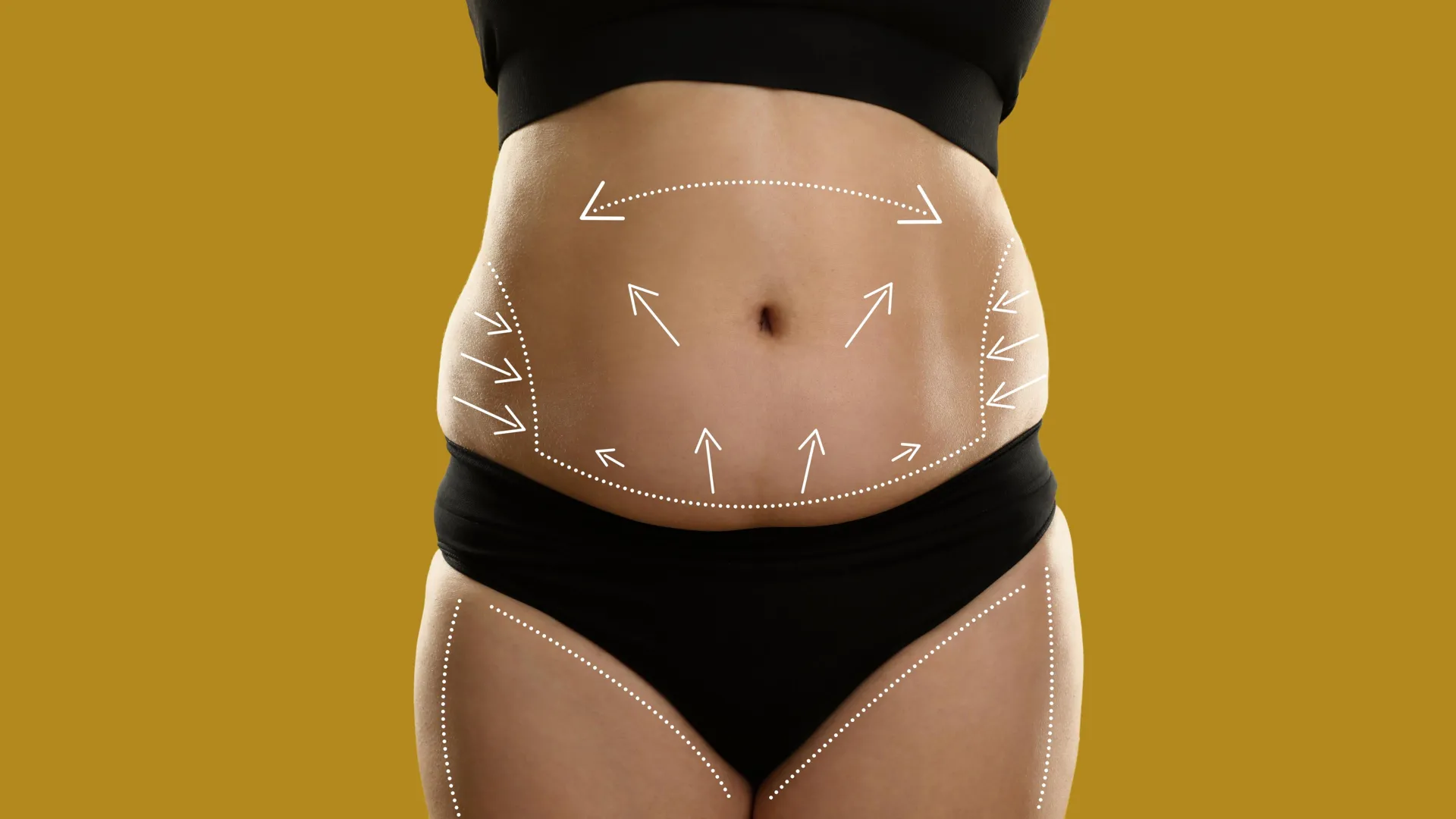
Most patients undergoing “tummy tuck” surgery (abdominoplasty) to remove excess skin and tissue after weight loss continue to lose weight in the months and years after surgery, suggests a follow-up study in the July issue of Plastic and Reconstructive Surgery®, the official medical journal of the American Society of Plastic Surgeons (ASPS). The journal is published in the Lippincott portfolio by Wolters Kluwer.
“We found that patients not only maintained their weight loss after abdominoplasty, but also continued to lose weight over time – up to ten pounds, on average,” comments senior author John Y.S. Kim of Northwestern University Feinberg School of Medicine, Chicago. “This postoperative weight loss appears greater, and increases at later follow-up times, in patients with initially higher body mass index [BMI].”
Continued weight loss up to five years after tummy tuck
Abdominoplasty is a cosmetic surgical procedure to improve the appearance of the abdomen. In 2023, ASPS Member Surgeons performed more than 170,000 abdominoplasties, according to ASPS statistics. Many of these procedures are performed in patients with massive weight loss that leaves them with excess, sagging skin.
Plastic surgeons have observed that patients may continue to lose weight after abdominoplasty. However, there is little research evidence on this issue, including whether the abdominoplasty procedure itself contributes to long-term weight loss.
Dr. Kim and colleagues performed a study to assess changes in body weight in 188 patients who underwent abdominoplasty between 2018 and 2022. Ninety-seven percent of patients were women. The average preoperative weight was about 168 pounds with a BMI of 27.7. Most patients underwent liposuction or a further procedure to remove excess fat (lipectomy) at the same time as abdominoplasty. Trends in body weight were assessed through up to five years after surgery.
The results showed continued weight loss after abdominoplasty. At three to six months, average weight loss was between five and six pounds, with about a three percent decrease in BMI. From one to four years, weight loss was about five pounds, for a BMI reduction of about two percent. By five years (in a limited number of patients), average weight loss was nearly ten pounds, with more than a five percent decrease in BMI.
‘Near-constant negative change in body weight’ after abdominoplasty
Overall, about 60% of patients lost weight during follow-up. Further analysis showed a “near constant negative change in body weight that did not significantly change over time,” the researchers write.
After adjustment for other factors, continued weight loss was more likely for older patients, for those who underwent liposuction/lipectomy, and those who had never smoked. Weight loss was greater for patients who had higher body weight and BMI before surgery, and for a small number of patients who used the newer weight loss medication semaglutide.
The study adds new evidence that “post-abdominoplasty weight reduction is a quantifiable phenomenon and that patients undergoing abdominoplasty continue to lose a significant amount of weight for up to five years after surgery,” the researchers write. They note some key limitations of their study, including varying follow-up times and potential confounding factors.
The study cannot definitively explain why patients continue to lose weight after surgery. However, Dr. Kim and coauthors write, “We have found that patients who were able to achieve weight loss after their abdominoplasty succeeded in developing healthy habits that centered around nutrition and exercise.” They highlight the need for an “evidence-based platform” to assess weight changes after abdominoplasty and to identify factors associated with long-term weight loss.

Botanists from the University of Copenhagen and the UK set out to find the best flower combinations for bees and hoverflies. The results make it easier for garden owners and municipalities, among others, to plant the perfect pantries for insects, which also delight the human eye.
Flower strips, seed mixtures, and wild by design. We want to help bees and other vital pollinators, which are in decline all over the world. But which flowers are actually the best?
This question prompted botanists from the Natural History Museum of Denmark at the University of Copenhagen and botanists from the National Botanic Garden of Wales to conduct a scientific study of which flower mixtures attract the most pollinators.
“Much of our knowledge in this area is anecdotal. So, there was a need for a scientific approach, where we systematically test different flowers to be sure how we can best help pollinators, which are extremely important to our ecosystems,” says professor and botanist Natasha de Vere from the Natural History Museum of Denmark.
Yarrow, Garden cosmos, and cornflower are a treat
The researchers reviewed over 400 previous research articles on flowers and insects and investigated how much bees and hoverflies like the finished flower mixtures that are currently sold commercially.
Based on the study, the researchers developed two new seed mixtures, which they evaluated both on the number of insects that visited them and on their aesthetic appeal to humans.
“We can see that seed mixtures containing both non-native and native flowering plants establish themselves better in the soil, bloom for longer, and have more visits from pollinators. And they are also most attractive to the human eye,” says Natasha de Vere.
Based on the study, the researchers recommend choosing seed mixtures with these species if you want to attract bees and hoverflies and are also interested in the aesthetic value of the flowers:
If everyone does a little, we can help the bees
The reason why the researchers have also included the aesthetic dimension of flower mixtures in their study is, of course, that appearance also has a significant impact on what we choose to plant in our gardens and green spaces.
“It has become quite popular to plant strips of flowers in urban areas and in gardens where there may have been only grass lawns before. This is because flowers are good for bees, but also for our mental health,” says Natasha de Vere.
According to the professor, who has conducted in-depth research into the interaction between plants and pollinators for a number of years, even small areas of flowers are of great importance to our buzzing friends.
Her research shows that gardens and urban areas can be very good for pollinators.
“It is important that everyone does something to help – and even small changes can really make a difference. I myself only have a small backyard, which I have filled with the best plants for pollinators, and it is now full of bees and hoverflies,” she says, adding:
“I hope our new research results can be used to provide evidence-based guidance on how to select plant species – whether you are a garden owner, a municipal gardener, or otherwise involved in producing seed mixtures.”

Like all complex organisms, every human originates from a single cell that multiplies through countless cell divisions. Thousands of cells coordinate, move and exert mechanical forces on each other as an embryo takes shape. Researchers at the Göttingen Campus Institute for Dynamics of Biological Networks (CIDBN), the Max Planck Institute for Dynamics and Self-Organisation, and the University of Marburg have now discovered a new way that embryonic cells coordinate their behavior. This involves molecular mechanisms previously known only from the process of hearing. The researchers attribute the fact that such different cells use the same proteins for two such different functions to their evolutionary origin. The results were published in Current Biology.
The interdisciplinary research team used an unusual combination of methods from developmental genetics, brain research, hearing research and theoretical physics to make a surprising discovery in cell communication: they found that in thin layers of skin, cells register the movements of their neighboring cells and synchronize their own tiny movements with those of the others. Groups of neighboring cells thus pull together with greater force. Thanks to their high sensitivity, the cells coordinate very quickly and flexibly as these subtle forces are the fastest signals traveling across embryonic tissue. When the cells were genetically deprived of their ability to “listen” to each other, the entire tissue changed and development was delayed or failed altogether.
The researchers integrated cellular coordination into computer models of the tissue . These models showed that the “whispering” among neighboring cells leads to an interwoven choreography of the entire tissue and protects it from external forces. Both effects were confirmed by video recordings of embryonic development and further experiments. “Using AI methods and computer-assisted analysis, we were able to examine about a hundred times more cell pairs than was previously possible in this field,” explains Dr Matthias Häring, group leader at the CIDBN and co-author of the study. “This big data approach gives our results the high level of accuracy needed to reliably get to the bottom of these delicate interactions between cells.”
The mechanisms revealed here in embryonic development were already known to play a role in the process of hearing. For instance, when very quiet sounds are heard, the hair cells in the ear, which convert sound waves into nerve signals, react to tiny mechanical movements. At the threshold of hearing, the cell protrusions bend over distances of only a few atomic diameters. The ear is so sensitive because of special proteins that convert mechanical forces into electrical currents. Until now, almost no one suspected that such sensors of force also play an important role in embryonic development. In principle, this is possible because every cell in the body carries the genetic blueprints for all proteins and may use them as needed.
The phenomenon could also provide insights into how the perception of force at a cellular level has evolved. “The evolutionary origin of these force-sensitive ion channel proteins probably lies in our single-celled ancestors, that we share with fungi and which emerged long before the origin of animal life,” explains Professor Fred Wolf, Director of the CIDBN and co-author of the study. “But it was only with the evolution of the first animals that the current diversity of this protein type emerged.” Future work should determine whether the original function of these cellular “nanomachines” was to perceive forces inside the body rather than, as in hearing, to perceive the outside world.

Just over 200 years after French engineer and physicist Sadi Carnot formulated the second law of thermodynamics, an international team of researchers has unveiled an analogous law for the quantum world. This second law of entanglement manipulation proves that, just like heat or energy in an idealized thermodynamics regime, entanglement can be reversibly manipulated, a statement which until now had been heavily contested. The new research – released on July 2, 2025 in Physical Review Letters – deepens understanding of entanglement’s basic properties and provides critical fundamental insight into how to efficiently manipulate entanglement and other quantum phenomena in practice.
Entanglement is arguably the central feature of quantum mechanics. If two microscopic particles are said to be entangled, then if someone measures a quantum property of one of the particles and then repeats the measurement on its entangled partner, they will always find that the pair is correlated, even when the two particles are separated by vast distances. Therefore, knowing the state of one particle automatically provides information about the other. Entanglement was introduced about 90 years ago as proof of the absurdity of quantum theory if treated as a complete description of nature. Yet it is not regarded as absurd today. After exhaustive proofs of entanglement’s authenticity in the real world, it is now the key resource in quantum information theory, allowing quantum teleportation and quantum cryptography, and offering significant advantages in quantum computing, communication and precision measurements.
Though entanglement still appears counterintuitive to our lived experience of the world, researchers have discovered striking parallels with something much more familiar: thermodynamics. In fact, many similarities have emerged between the theories of quantum entanglement and thermodynamics. For example, ‘entanglement entropy’ is a characteristic of idealised, noiseless quantum systems that mimics the role of thermodynamical entropy.
However, an equivalent to the second law of thermodynamics – which dictates that processes tend towards increasing disorder (the aforementioned entropy) and that perfect reversibility is an attainable though rare and highly efficient ideal – has remained stubbornly out of reach. Here, reversibility does not refer to time symmetry but the ability of an external agent to manipulate the system into a different state and then manipulate it back to its initial state without any loss. “Finding a second law analogous to the second law of thermodynamics has been an open problem in quantum information science,” says study co-author Tulja Varun Kondra. “Solving this has been our primary motivation.”
Much work towards addressing this problem has focused on a scenario in which two distant parties (often called Alice and Bob) want to exchange quantum information, but are restricted to act locally on their quantum systems and communicate classically, by say phone or the internet. This limitation to local operations and classical communication (LOCC) simplifies the situation, meaning whatever Alice and Bob do, they cannot affect the intrinsically nonlocal properties of entanglement between their quantum systems.
“It is known that under LOCC operations in this scenario, entanglement is irreversible,” explains lead author of the study Alexander Streltsov. “So the question is, can we somehow go beyond LOCC in a meaningful way, and recover reversibility?” The team’s answer is ‘yes’, as long as Alice and Bob share an additional entangled system: an entanglement battery.
Just as an ordinary battery stores energy which can be used to inject or store work in the context of thermodynamics, an entanglement battery injects and stores entanglement. The battery can be used in the state transformation process and the state of the battery itself can be changed to perform operations. There is only one rule: whatever Alice and Bob do, they must not decrease the level of entanglement within the battery.
And just as a regular battery allows tasks to be performed that would be impossible without one, so too does an entanglement battery. By assisting standard LOCC operations with their hypothetical entanglement battery, the team demonstrated that any mixed-state entanglement transformation can be made perfectly reversible.
This achievement is a significant contribution to the debate around whether entanglement manipulation is generally reversible. But a more important outcome of this work is that the researchers have shown that the methods they have developed are applicable beyond mixed-state entanglement transformation, allowing them to leverage the entanglement battery to verify reversibility in various scenarios. Proving that entanglement manipulations across all quantum states are reversible is expected to lead to a family of second laws for entanglement manipulation.
The entanglement battery may even find uses outside entanglement theory. For example, the same principles apply to systems involving more than two entangled particles, paving the way for understanding and manipulating complex quantum networks and perhaps developing future, highly efficient quantum technologies.
In addition, generalising the concept of an entanglement battery to a resource battery – an additional quantum system that participates in the transformation process without reducing the resource in question – could allow the systematic demonstration of reversibility across quantum physics based on a minimal set of assumptions. “We can have a battery that is supposed to preserve coherence or free energy, and then we can formulate a reversible framework in this setting where, instead of entanglement, we reversibly manipulate that particular resource of our system,” says Streltsov. “Though many of these other principles of reversibility have already been confirmed via other approaches, our technique offers a unified proof framework based on well-established physical principles.”
When a drummer plays a drum, she sets the drumhead into vibration by hitting it. The vibration contains a signal that we can decode as music. When the drumhead stops vibrating, the signal is lost.
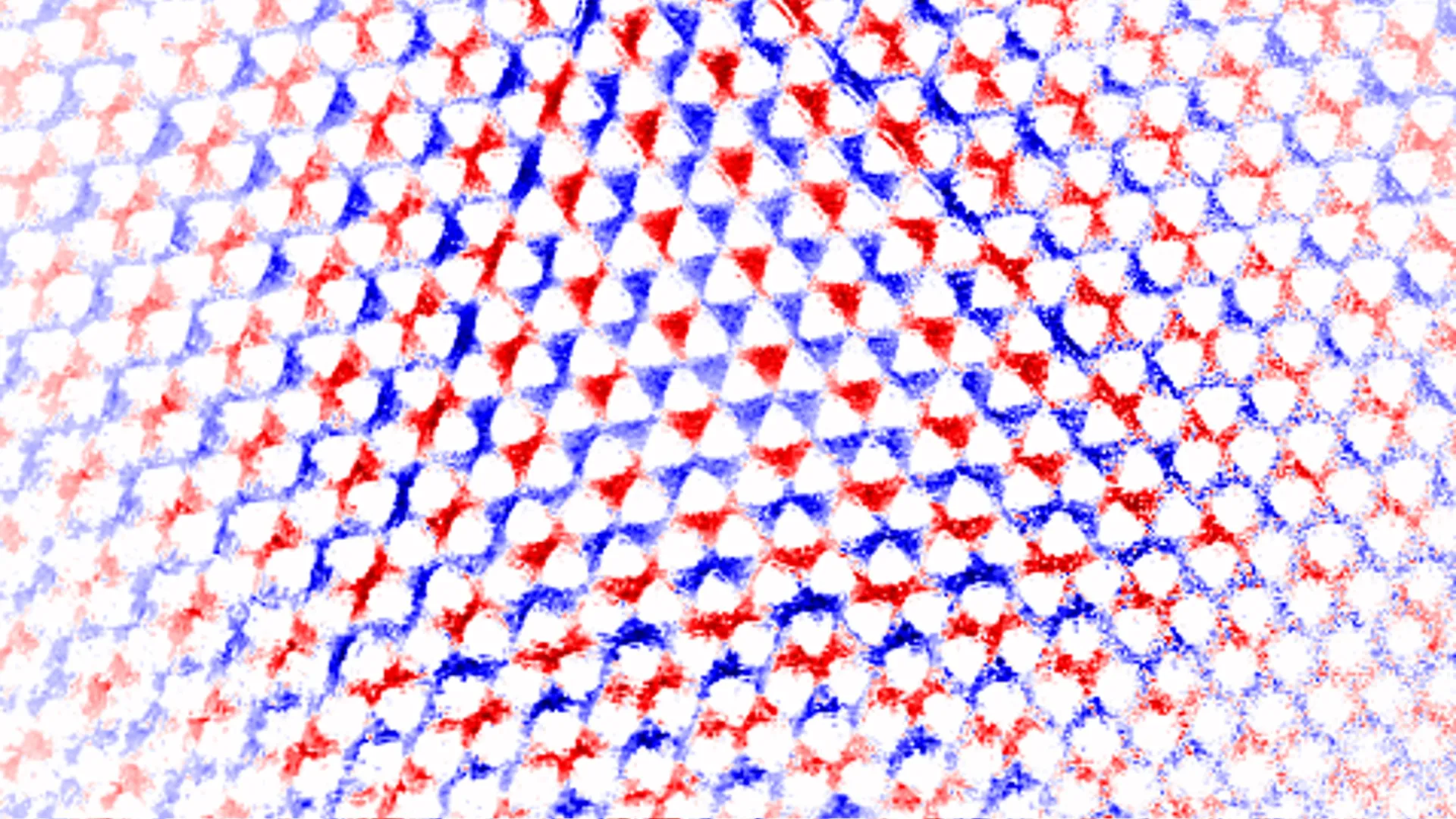
Now imagine a drumhead that is ultra-thin, about 10 mm wide, and perforated with many triangular holes.
Researchers at the Niels Bohr Institute, University of Copenhagen, in collaboration with the University of Konstanz and ETH Zurich, have managed to get vibrations to travel around this membrane, almost without any loss. In fact, so little loss that it is far better than even electronic circuit signal handling. The result is now published in the journal Nature.
Phonons – Sound Signals or Vibrations That Spread Through a Solid Material
The signal consists of phonons – which can be translated to what one might call vibrations in a solid material. The atoms vibrate and push each other, so to speak, so a given signal can move through the material. It is not far-fetched to imagine encoding a signal, which is then sent through the material, and here signal loss comes into play.
If the signal loses strength or parts of the signal are lost in heat or incorrect vibrations, one ends up not being able to decode it correctly.
System Reliability is Crucial
The signals that researchers have succeeded in sending through the membrane are distinguished by being almost lossless. The membrane as a platform for sending information is incredibly reliable.
Loss is measured as a decrease in the amplitude of the sound wave as it moves around the membrane. When researchers direct the signal through the material and around the holes in the membrane – where the signal even changes direction – the loss is about one phonon out of a million.
The amplitude of current fluctuations in a similar electronic circuit decreases about a hundred thousand times faster.
Basic Research with Perspectives
Researchers at the Niels Bohr Institute, Assistant Professor Xiang Xi and Professor Albert Schliesser, explain that the result should not be thought of in a specific, future application – but there are still rich possibilities. Currently, there is a global effort to build a quantum computer, which is dependent on super-precise transfer of signals between its different parts.
Another field within quantum research deals with sensors that, for example, can measure the smallest biological fluctuations in our own body – here too, signal transfer is crucial.
But Xiang Xi and Albert Schliesser are currently most interested in exploring the possibilities even further.
“Right now, we want to experiment with the method to see what we can do with it. For example, we want to build more complex structures and see how we can get phonons to move around them, or build structures where we get phonons to collide like cars at an intersection. This will give us a better understanding of what is ultimately possible and what new applications there are,” says Albert Schliesser. As they say: “Basic research is about producing new knowledge.”
