One parent says the number of patients involved in a review is “ridiculous”.


One parent says the number of patients involved in a review is “ridiculous”.
Mothers have described being left to recover from caesarean sections with “no support”.
As well as offering advice, Wellbeing Week will include poetry, gardening workshops, art and music.
Oli’s experience is one of a growing number of clinical negligence claims being made in England, BBC analysis shows.
Lhamo Weston says it’s important to be open about competing with endometriosis
Maryam Moshiri tells the BBC she wanted to reveal her diagnosis to raise awareness about the cancer.
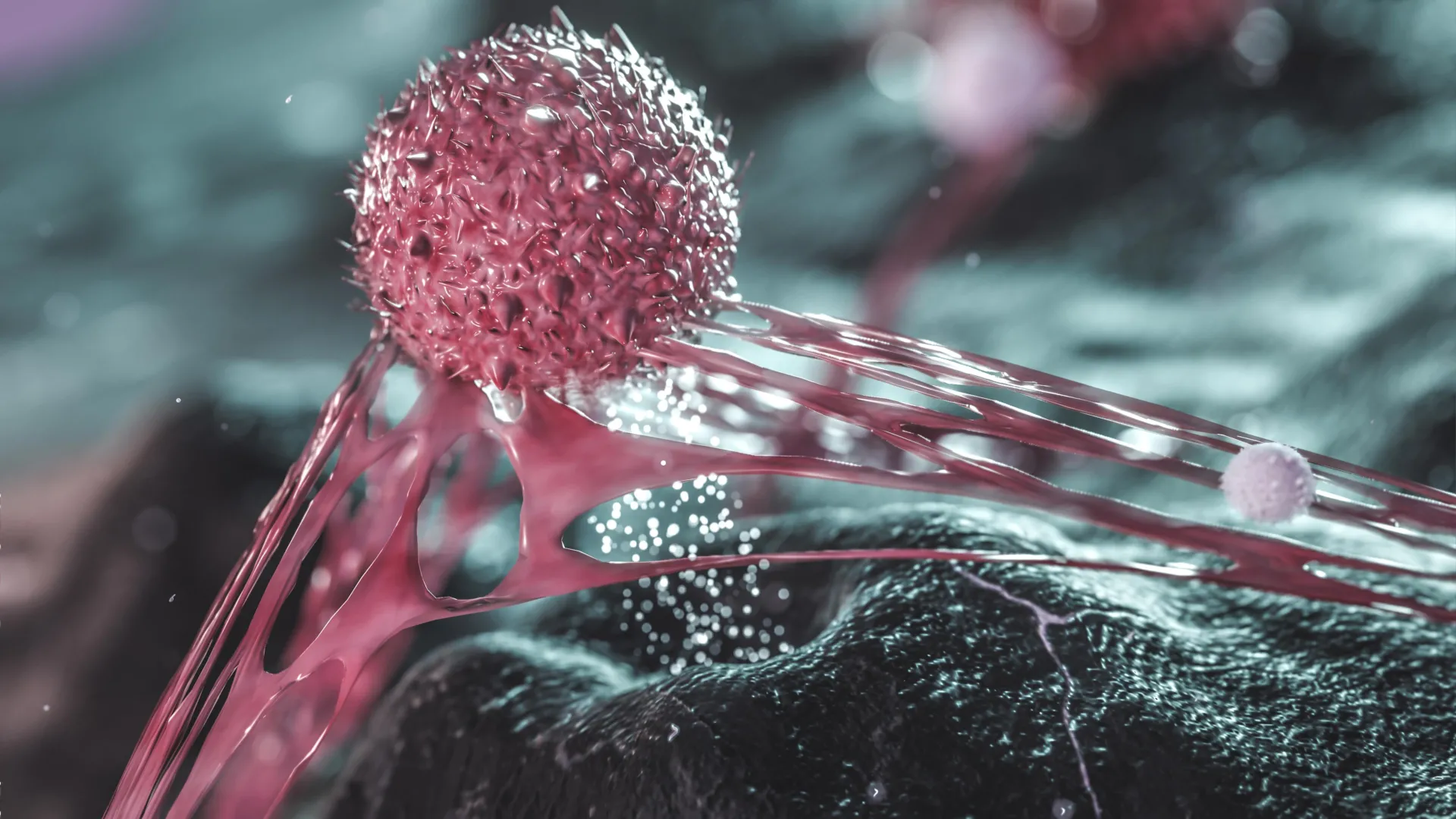
Researchers from the MRC Laboratory of Medical Sciences (LMS), Imperial College London, and UCL Genetics Institute have built a detailed cellular map of breast tumors, revealing separate regions filled with actively dividing cancer cells and others containing dormant cells. Published in Genome Medicine, the findings show that these inactive cancer cells are often surrounded by immune and connective tissue cells that may help protect them from treatment.
The work suggests that future cancer therapies may need to do more than attack fast-growing tumor cells. They may also need to target dormant cancer cells and the local environments that allow them to persist, with the goal of stopping tumor growth while reducing the risk that the disease returns later.
Hidden Cells Inside Breast Tumors
Breast tumors are complex environments made up of many different kinds of cells. Alongside rapidly multiplying cancer cells are immune cells, newly formed blood vessels and a particularly concerning group of cancer cells that remain unusually quiet.
These dormant, or ‘quiescent’, cells can survive treatment and may later contribute to cancer spreading or returning. Researchers at the LMS, Imperial and UCL wanted to understand where these cells are located in untreated tumors, what distinguishes them and which other cells tend to surround them.
Using publicly available data, the team created detailed maps of breast cancer tumors and found distinct clusters of quiescent cells surrounded by other cells that may serve as a protective barrier.
Why Dormant Cancer Cells Are Dangerous
“Quiescent cancer cells are very dangerous,” explains Dr. Alexis Barr, co-lead author and head of the Cell Cycle Control group at the LMS. “These cells can hide from chemotherapy and then remain in this dormant quiescent state in the tumor, and then later reactivate to drive proliferation.”
Cancer cells can enter this dormant state in response to stressful conditions inside a growing tumor. As tumors expand rapidly, blood flow and nutrients may not always keep pace. Some cells respond by essentially putting their growth on hold.
Much like a bear hibernating through difficult conditions, these cells can remain inactive until the environment becomes more favorable. That opportunity may come after treatment has ended.
Alexis adds, “If we want to achieve long-term control of peoples’ tumors and prevent tumor relapse, we have to focus on these dormant quiescent cancer cells, and have to understand more about them.”
Mapping the Tumor Cell by Cell
To investigate these hidden cell populations, Alexis worked with Dr. Maria Secrier’s computational biology team at UCL to construct a detailed picture of the tumor and the immune and support cells surrounding it.
The researchers combined single-cell RNA sequencing, which reveals which genes individual cells are using, with spatial transcriptomics, a technique that shows where those cells are positioned and which neighboring cells are nearby.
“We found cells that resemble therapy-resistant cells already residing in the tumor before we give any treatment,” says Maria, suggesting that some characteristics associated with treatment resistance may already exist before therapy begins rather than appearing only as a response to treatment.
The researchers saw this pattern in both aggressive forms of breast cancer and slower-developing classes – an unexpected result because quiescence had previously been linked more closely with slower-growing disease.
Protective Neighborhoods Around Dormant Cells
The analysis extended beyond the cancer cells themselves. Researchers also examined the many supporting cell types that become part of the tumor environment.
A consistent pattern emerged. Dormant cancer cells were frequently located close to CXCL10-positive macrophages (a type of immune cell) and myofibroblastic cancer-associated fibroblasts (a type of tumor-supporting cell).
These surrounding cells may have been recruited or altered in ways that help protect the dormant cancer cells. One possibility is that they create a physical or biological barrier that prevents cancer-killing immune cells or treatments from reaching the inactive cells effectively.
“The cancer cells are really encapsulated within these areas of macrophages and fibroblasts that we think act as shields for these dormant cancer cells,” said Maria. “But we don’t yet know the direction of cause and effect: whether the surrounding cells push cancer cells into dormancy or if the cancer cells attract or alter their surroundings. It’s very likely coming from both sides.”
Different Tumor Regions May Need Different Treatments
Many chemotherapy drugs work best against cells that are dividing quickly. Dormant cells, however, are not actively multiplying, which can make them much harder to eliminate.
The findings suggest that rapidly growing and dormant parts of the same tumor may respond differently to treatment. Researchers detected increased activity in the complement pathway (a part of the immune system) within dormant cell niches. That raises the possibility that treatments targeting this pathway could make those areas more vulnerable.
The support cells surrounding dormant cancer cells could provide another possible treatment target. However, researchers still need to determine whether these cells actually help maintain dormancy and how important they are to cancer cell survival.
“Different parts of the tumor will likely respond to different drugs,” said Maria. “If we understand what drug combinations we can use to target both the proliferative and the dormant areas, potentially that could be more successful than current therapies. This is giving us a first insight into how we can then intervene with different therapeutics that specifically target different areas of the tumor where the cells have adapted and have evolved differently.”
Alexis said, “It is clearly important to focus on proliferative cancer cells, but we also need to understand this population of quiescent dormant cancer cells. And that’s been less studied.”
A Possible Path Toward Longer-Lasting Treatments
The ideas generated by this analysis still need to be tested experimentally. Even so, locating treatment-resistant regions that already exist inside tumors and understanding the cells that support them could eventually help researchers develop more effective combinations of cancer therapies.
By mapping quiescent cells and the environments that surround them, scientists may be able to design treatments that attack both the rapidly growing portions of a tumor and the dormant cells that can survive and later become active again.
This work was primarily funded by a UKRI Future Leaders Fellowship, the Medical Research Council and the Biotechnology and Biological Sciences Research Council.

Older adults at risk of dementia improved their memory, thinking skills, and overall cognitive performance after taking part in two culturally adapted lifestyle programs across 11 Latin American countries. The strongest benefits were seen among participants who received more structured guidance, including regular coaching and support.
The Alzheimer’s Association-funded study, known as the Latin American Initiative for Lifestyle Intervention to Prevent Cognitive Decline (LatAm-FINGERS), followed participants for two years.
The findings were presented at the Alzheimer’s Association International Conference (AAIC) 2026 in London. They build on results from the U.S. Study to Protect Brain Health Through Lifestyle Intervention to Reduce Risk (U.S. POINTER), showing that programs combining physical activity, healthy eating, cognitive training and social engagement can be adapted for different cultures, health systems and communities. The study was also published in The Lancet.
Adapting Brain Health Programs to Local Cultures
“The results demonstrate for the first time in Latin America that culturally adapted lifestyle interventions can be successfully implemented across diverse countries and communities, and deliver cognitive benefits for populations that are often underrepresented in clinical research,” said Lucia Crivelli, Ph.D., lead author of the study and principal investigator at Fleni, a neurological institute in Buenos Aires, Argentina.
“We did not simply translate the U.S. POINTER model into Spanish and Portuguese. We adapted it to local cultures and habits while preserving its core elements — making the program practical, affordable and feasible as a public health strategy,” Crivelli added.
To make the intervention work across many different settings, multinational working groups included representatives from every participating country. They determined which parts of the program needed to stay consistent and which could be adjusted according to local culture, climate, available foods, access to technology, and participant preferences.
Exercise options included familiar activities such as salsa and tango, along with outdoor group workouts in public parks. Nutrition guidance also modified the MIND diet to better fit regional eating habits and food availability. Foods including avocado, quinoa, açaí, aguaymanto, chia, and pumpkin seeds were incorporated as locally accessible options. Study materials were translated and adjusted for local communities, and extra assistance was provided to people with limited experience using digital technology.
Benefits Across Diverse Communities
“LatAm-FINGERS included significant racial and ethnic diversity, and a wide range in education and socioeconomic status (SES). The results demonstrate that brain health can be improved across diverse communities representing different cultures and with varying access to resources,” said Laura D. Baker, Ph.D., professor of gerontology and geriatrics, internal medicine, at Wake Forest University School of Medicine and Advocate Health, and U.S. POINTER principal investigator. “We now have a second strong finding in a completely different part of the world, which suggests that the U.S. POINTER formula can be adapted for anybody.”
“I am confident that we can successfully use the U.S. POINTER structured intervention to expand our tools and resources to further engage Latino and Hispanic communities in the U.S. — and beyond that to other communities — and the program will be equally effective,” Baker said.
Researchers believe programs that address several risk factors at once may offer greater benefits because Alzheimer’s disease and other dementias are affected by multiple aspects of health and lifestyle. With dementia becoming more common around the world, the results point to the potential value of practical, affordable, and adaptable lifestyle programs for reducing risk, including in low- and middle-income countries.
“The LatAm-FINGERS results add to U.S. POINTER findings by extending the evidence to Latin America and strengthening the case that these behavioral and lifestyle interventions can be adapted for diverse populations and communities worldwide,” said Heather M. Snyder, Ph.D., Alzheimer’s Association senior vice president of medical and scientific relations.
“A key message from this study is that structure and social support matter,” Snyder continued. “Addressing multiple lifestyle factors can positively impact brain health and may eventually be combined with emerging drug therapies to reduce cognitive decline and dementia risk.”
Comparing Structured Support With General Advice
The analysis included 1,065 people enrolled at 12 study sites in Argentina, Bolivia, Brazil, Chile, Colombia, Costa Rica, Dominican Republic, Ecuador, Mexico, Peru and Uruguay. Participants were randomly placed into one of two groups that differed in how intensive and structured the intervention was and how much ongoing support participants received.
The Systematic Lifestyle Intervention (SLI) group included 539 participants. They received continuous coaching and support through supervised exercise, nutrition counseling based on a modified MIND diet, computerized cognitive training, cardiovascular risk monitoring, and 38 group meetings designed to encourage social connection and accountability.
The Flexible Lifestyle Intervention (FLI) group included 526 participants. They received periodic health education along with broad lifestyle recommendations. During the two-year study, these participants attended four group meetings covering diet, physical activity, cognitive and social engagement, and vascular risk management. Unlike the SLI group, they did not receive continuing coaching or supervision.
55% Greater Improvement in Overall Cognition
After two years, the more structured SLI program produced significantly stronger cognitive gains than the FLI approach.
Participants in the SLI group had a 55% greater improvement on a composite measure of global cognition compared with participants in the FLI group. They also experienced significantly larger improvements in memory, executive function, and processing speed.
LatAm-FINGERS and U.S. POINTER are part of the World-Wide FINGERS network. The international effort grew out of the original Finnish FINGER trial, which found that interventions targeting several lifestyle factors at the same time may help preserve cognitive function in older adults at risk of decline.

Sugar substitutes are often marketed as a better choice than foods loaded with refined sugar (glucose). Common examples include aspartame, the sweetener used in Equal packets, sucralose (Splenda), and sugar alcohols such as sorbitol.
But growing research is complicating the idea that these alternatives are automatically healthier. A new study suggests that sorbitol, in particular, may have metabolic effects that make it less harmless than many people assume.
Sorbitol May Be One Step Away From Fructose
The research, published recently in Science Signaling, builds on a line of research from Gary Patti’s laboratory at Washington University in St. Louis examining how fructose affects the liver and other parts of the body.
Patti, the Michael and Tana Powell Professor of Chemistry, in Art & Sciences, and of genetics and medicine, at WashU Medicine, has previously investigated what happens when fructose is processed by the liver. His earlier work showed that the products of fructose metabolism can be exploited by cancer cells to promote their growth. Other research has identified fructose as an important contributor to steatotic liver disease, a condition involving excess fat accumulation in the liver that affects about 30% of adults worldwide.
The new findings raise concerns about sorbitol because of how closely it is connected to fructose metabolically. Patti described sorbitol as being essentially “one transformation away from fructose,” meaning the body can convert it into a closely related form that may produce similar effects.
From the Gut to the Liver
The researchers performed experiments in zebrafish to trace what happens to sorbitol inside the body. Sorbitol is commonly added to “low-calorie” candy and chewing gum, but it also occurs naturally in stone fruits.
The team found that sorbitol does not have to come directly from food. Enzymes in the intestine can also produce it from glucose after a meal. Once sorbitol is present, its eventual fate can depend on how much glucose and sorbitol has been consumed and on the types of bacteria living in the gut.
That creates several possible routes through which fructose-related compounds can ultimately appear in the liver.
Much of the previous research on sorbitol metabolism has centered on diseases such as diabetes. Under those conditions, unusually high glucose levels can drive the body to produce larger amounts of sorbitol.
The enzyme responsible for making sorbitol has a relatively low affinity for glucose. In simple terms, it generally does not become very active until glucose concentrations rise substantially. For that reason, sorbitol production has historically been associated with diabetes, where blood glucose can reach high levels.
The zebrafish experiments, however, showed that diabetes is not required. Even under healthy conditions, glucose concentrations inside the gut can become high enough after eating to trigger significant sorbitol production in the intestine.
“It can be produced in the body at significant levels,” said Patti. “But if you have the right bacteria, turns out, it doesn’t matter.”
Gut Bacteria Can Act as a Protective Filter
Certain bacteria appear to prevent sorbitol from becoming a problem. Sorbitol-degrading Aeromonas bacterial strains can consume the sugar alcohol and convert it into a harmless bacterial byproduct.
That microbial cleanup process may determine whether sorbitol stays in the gut or travels farther into the body.
“However, if you don’t have the right bacteria, that’s when it becomes problematic. Because in those conditions, sorbitol doesn’t get degraded and as a result, it is passed on to the liver,” he said.
After reaching the liver, sorbitol can be converted into a derivative of fructose.
That finding is particularly relevant because people with diabetes and other metabolic disorders may deliberately choose products labeled “sugar free” in an effort to avoid the health effects associated with table sugar. Understanding whether alternative sweeteners truly offer a healthier metabolic outcome is therefore important.
Too Much Sorbitol Can Overwhelm the Gut
At relatively low levels, including the quantities typically obtained from fruit, gut bacteria appear to be effective at removing sorbitol.
The situation can change when the amount of sorbitol rises beyond what those microbes can process. That can happen in at least two ways. Consuming large amounts of glucose can cause the intestine to produce more glucose-derived sorbitol, while consuming large quantities of sorbitol directly can also increase the total load.
As glucose and sorbitol intake climbs, even people who carry beneficial sorbitol-degrading bacteria may eventually overwhelm those microbes’ ability to keep up.
That makes navigating sweeteners increasingly difficult. Many processed foods contain several forms of sugar and sugar substitutes at the same time. Patti discovered this firsthand when he realized that his own favorite protein bar contained a large amount of sorbitol.
Sugar Alcohols May Not Simply Pass Through the Body
Sorbitol belongs to a group of compounds known as polyols, commonly called sugar alcohols. They are widely used because they provide sweetness while often supplying fewer calories than ordinary sugar.
A common assumption has been that these compounds are largely expelled from the body without causing major metabolic effects. The new findings suggest the story may be more complicated.
Patti’s laboratory still needs to determine exactly how bacteria break down and remove sorbitol, but the researchers found clear evidence that sorbitol does not necessarily remain confined to the digestive tract.
“We do absolutely see that sorbitol given to animals ends up in tissues all over the body,” he said.
The findings reinforce a broader lesson emerging from research on alternative sweeteners. Replacing ordinary sugar with another sweet-tasting compound does not necessarily eliminate metabolic consequences.
As Patti summarized it, “there is no free lunch” when searching for sugar alternatives, particularly when several metabolic pathways can ultimately lead toward liver dysfunction.
This work was supported by the National Institutes of Health, grants R35ES028365 (G.J.P.) and P30DK056341 (S.K.).
Tropical peatland fires rank among the most dangerous and stubborn fires on Earth. Instead of racing through trees and vegetation, these fires smolder through dried wetland soils and large deposits of peat, often continuing underground at relatively low temperatures. That makes them extremely difficult to extinguish and exceptionally polluting.
By one estimate, peat fires produce three times more fine particulate matter than other tropical forest fires, along with five times more sulfur dioxide, three times more organic carbon, and twice as much methane and carbon monoxide.
Satellite Images Reveal Indonesia’s Fire Season
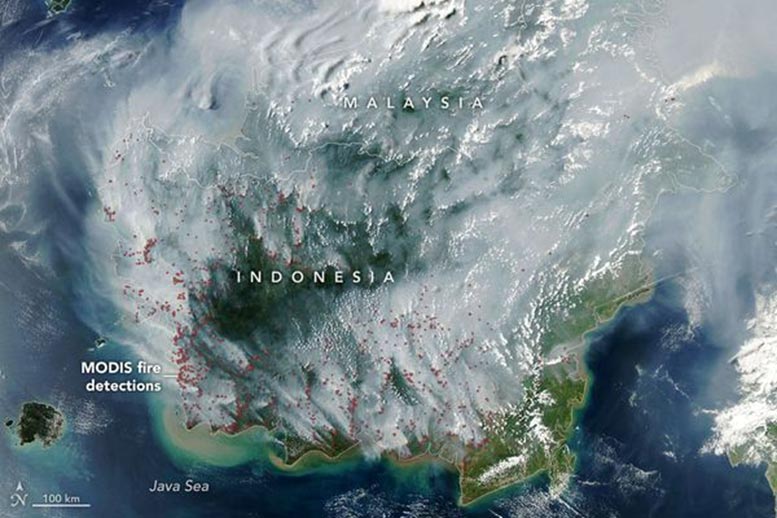
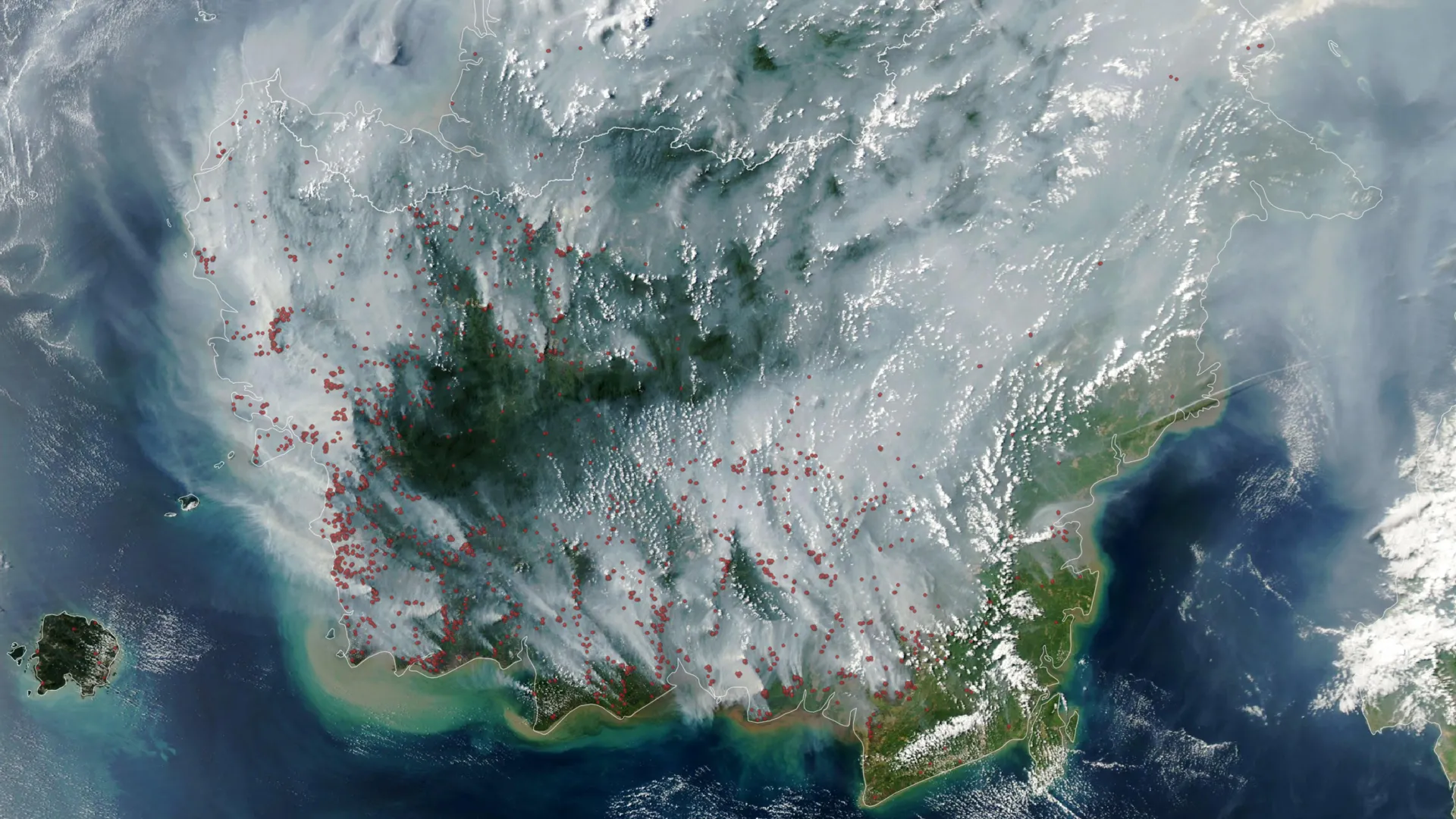
Indonesia’s 2026 fire season was already underway when the MODIS (Moderate Resolution Imaging Spectroradiometer) instrument aboard NASA’s Aqua satellite captured an image of the region on September 1, 2026.
On the annotated map, each red dot represents a “fire detection.” This means the satellite sensor and an algorithm identified a pixel containing thermal anomalies associated with fire. A single fire can produce multiple detections.
Peat fires are a persistent problem in Indonesia, which contains about 36 percent of the world’s tropical peatlands. During severe droughts, these normally wet landscapes can dry enough to ignite. Over the past three decades, such conditions have repeatedly produced long-lasting fires that blanket large areas in smoke for weeks and disrupt the lives of millions of people.
El Niño Is Intensifying the Dry Season
Wildfires occur in Indonesia every year, but some of the most destructive seasons in recent decades came during El Niño, particularly in 1997 and 2015.
NOAA assessed El Niño as present and strengthening in August 2026. The climate pattern commonly reduces rainfall across Indonesia. The drying can become even more pronounced when El Niño occurs alongside a positive phase of the Indian Ocean Dipole, which was also underway.
“Indonesia is only about three weeks into its fire season, but we’re seeing fire activity track sharply upward, similar to 2015,” said Robert Field, a Columbia University researcher who developed a tool called the Global Fire Weather Database that produces experimental, real-time fire weather forecasts.
“The strong El Niño is making the dry season drier over the fire-prone parts of the country and exacerbating burning — just as we anticipated it would,” he said.
The comparison with 2015 is significant. After more than three months of burning that year, Indonesia’s fires had emitted 1.75 billion tons of greenhouse gas equivalents — more than Japan emits in an entire year. By September 2, the 2026 fires had been burning for about a month and had already released roughly 10 percent of the amount produced during the 2015 crisis.
Underground Peat Fires Can Burn for Months
Indonesia was also experiencing severe, widespread drought during the summer of 2026, much as it did in 2015. Data from the Indonesian meteorological agency showed that about 90 percent of the country received little or no rainfall in early August.
Under normal conditions, peat deposits in Kalimantan, Sumatra, and Papua are too wet for fire to move underground. Drought changes that dramatically, allowing flames to enter the peat itself and continue smoldering below the surface.
“Surface fires are less of a concern, but when fires get underground, they just won’t stop,” Field said. “They’ll keep burning until the rains come in October or November.”
Indonesia relies on observations from NASA and NOAA satellites to follow active fires in near-real-time. MODIS and VIIRS are among the main instruments used. Indonesia’s Ministry of Forestry operates the SiPongi fire-monitoring platform using MODIS and VIIRS data, and the system counted 946 hotspots on August 31, 2026.
The Worst Fires Can Be Hardest to See From Space
Satellite monitoring has important limitations, however. MODIS and VIIRS can struggle to detect fires hidden by thick smoke or clouds, burning beneath the forest canopy, or smoldering underground inside peat deposits.
In fact, when Indonesian fires become especially intense, the number of fires detected by MODIS or VIIRS can sometimes decline because the smoke itself blocks the satellites’ view.
“The worst smoke events, paradoxically, can be the hardest to observe from space with MODIS and VIIRS,” said Mark Cochrane, an ecologist at the University of Maryland Center for Environmental Science who has conducted field research on peat fires in Indonesia for nearly a decade.
Some of Indonesia’s modern fire vulnerability can be traced back decades. According to Cochrane, extensive construction of irrigation canals and drainage of peat swamps during the 1990s, undertaken in part to create massive rice farms, lowered water tables across wetland areas and made the landscape more combustible. Oil palm plantations and other plantation forestry are also widespread in the region.
Following the unusually grim fire season of 2015, governments and other organizations attempted to reverse some of that damage. Projects have included blocking irrigation canals to help restore wetlands, strengthening firefighting capabilities, and stepping up efforts to prevent accidental human ignitions.
2026 Could Be a Major Test of Fire Protections
“This year will be a real stress test of the measures that were put in place after 2015,” said Shi Jun Wee, a University of Maryland graduate student.
Wee is part of a team working with NASA and MapBiomas to develop improved methods for spotting understory fires that MODIS and VIIRS may miss. Their approach uses shortwave infrared observations from Landsat and Sentinel-2 satellites.
As the 2026 fire season continues, Wee plans to follow conditions using NASA’s Worldview data browser, FIRMS (Fire Information for Resource Management System), HLS (Harmonized Landsat and Sentinel-2) observations, and GFED (Global Fire Emissions Database).
Hazardous Smoke Is Already Disrupting Daily Life
For people living in Indonesia and neighboring countries, the effects are already being felt. Indonesian officials have warned that large portions of the population have been exposed to hazardous smoke.
According to news reports, some schools have begun switching to remote learning, nine national parks have closed, and several flights have been delayed because of heavy smoke.
Cochrane cautioned that attention to the problem often rises during major El Niño fire seasons and fades once conditions improve.
“People tend to focus on these fires during an El Niño and then forget about them,” Cochrane said. “We need sustained focus, even during the years when they aren’t as bad, to solve this,” he said. “These fires create a tremendous amount of emissions.”