
Scientists found a new Alzheimer’s trigger and a drug that stops it

A promising experimental compound developed by researchers at ETH Zurich could offer a new way to slow the progression of Alzheimer’s disease. In studies involving mice, the treatment reduced nerve cell loss, helped the animals live longer, and targeted a biological process that existing Alzheimer’s drugs do not address.

The compound, known by researchers as “Compound 10,” is the result of nearly two decades of work led by Ursula Quitterer, Professor of Molecular Pharmacology at ETH Zurich.

A Long Search for New Alzheimer’s Clues

The research began almost 20 years ago when Quitterer received brain tissue samples from a colleague at Ain Shams University Hospital in Cairo. The samples were collected during tumor surgeries and came from both people with dementia and individuals without the condition.

Those samples helped launch an investigation into a protein called GRK2, which has been the focus of Quitterer’s research for many years.

GRK2 plays an important role throughout the body. As a regulatory protein, it helps cells respond to signals and adapt to stress. It is active in several organs, including the heart and the brain, where it supports healthy nerve cell function.

Using both human brain tissue and mouse models of Alzheimer’s disease, the ETH Zurich team uncovered evidence that GRK2 may be a major contributor to dementia. Their findings were recently published in the journal Cell Reports Medicine.

When a Protective Protein Turns Harmful

GRK2 exists in two forms inside cells. One form functions normally, while the other becomes inactive through cellular processes.

The researchers found that the inactive version accumulates in large amounts in the brains of people with dementia. Similar patterns were also observed in mice that develop Alzheimer’s-like symptoms.

Further experiments revealed that inactive GRK2 molecules clump together inside nerve cells. These clusters attach to mitochondria, the structures often referred to as the “powerhouses” of cells, and interfere with their function.

“The GRK2 aggregates block the pores of the mitochondria, reducing the amount of energy they can supply and leading to a situation of stress inside the cells,” Quitterer explains.

The team also found that inactive GRK2 appears to increase the production of amyloid beta, a protein fragment widely associated with Alzheimer’s disease.

This creates a damaging cycle. Amyloid beta places additional stress on nerve cells, which leads to the formation of even more inactive GRK2. As more GRK2 accumulates and forms aggregates, the disease process continues to accelerate.

Compound 10 Breaks the Cycle

To interrupt this cycle, the researchers designed and tested several experimental compounds in cell cultures and mice.

Among them, Compound 10 delivered the strongest results. The compound prevented GRK2 molecules from forming harmful aggregates, allowing mitochondria to function more effectively. As a result, amyloid beta deposits were reduced, nerve cells remained healthier, and cell death was slowed.

The benefits extended beyond the brain.

In mice, Compound 10 also appeared to improve heart function and influence aging-related changes. The researchers observed that treated animals developed fewer gray hairs as they grew older.

Why the Research Took Nearly Two Decades

The team has completed the basic research phase and filed a patent application for Compound 10.

According to Quitterer, one reason the work took so long is the nature of Alzheimer’s research itself.

“It took so long simply because everything takes so long in Alzheimer’s research,” explains Quitterer.

Because Alzheimer’s is an age-related disease, the researchers worked with older mice. These animals were typically between one and a half and two years old. Each experiment required a similar amount of time before meaningful conclusions could be drawn and the next stage of research could begin.

“It’s all a great deal slower than in cancer research, for example.”

A New Target for Future Alzheimer’s Treatments

ETH Zurich and the researchers are now seeking a company interested in advancing Compound 10 toward drug development.

“Alzheimer’s is a very complex disease,” says Quitterer. Current medications do not cure the disease, but rather — at most — delay its progression by several months.

“That’s why it’s so important that we’ve now identified a new target protein in the form of GRK2, as well as an active ingredient that operates via GRK2 and therefore via a different mechanism than existing Alzheimer’s drugs.”

While much more research is needed before the compound could be tested in people, the discovery opens the door to a new treatment strategy. Researchers believe that combining Compound 10 with existing Alzheimer’s medications could eventually provide greater benefits and improve quality of life for patients.

Share Button

‘Lives still at risk’ from unregulated baby sleep industry after BBC investigation

‘Families deserve clarity about the qualifications and training of those caring for their children’

Share Button

How Eriksen’s heart device kicked into action

Denmark’s team doctor said an ICD implanted into the footballer’s chest responded as it should after he collapsed on Sunday.

Share Button

Are you too emotional?

Kimberley Wilson gives tips on how to manage your emotions.

Share Button

New drug to stop ‘Ozempic butt’ muscle loss side effect of obesity jabs

A third of the weight loss from obesity jabs can come from muscle, say experts.

Share Button

Top five-a-day foods new study says your heart needs

Not all fruit and veg is equal for getting nutrients called flavanols, say researchers.

Share Button

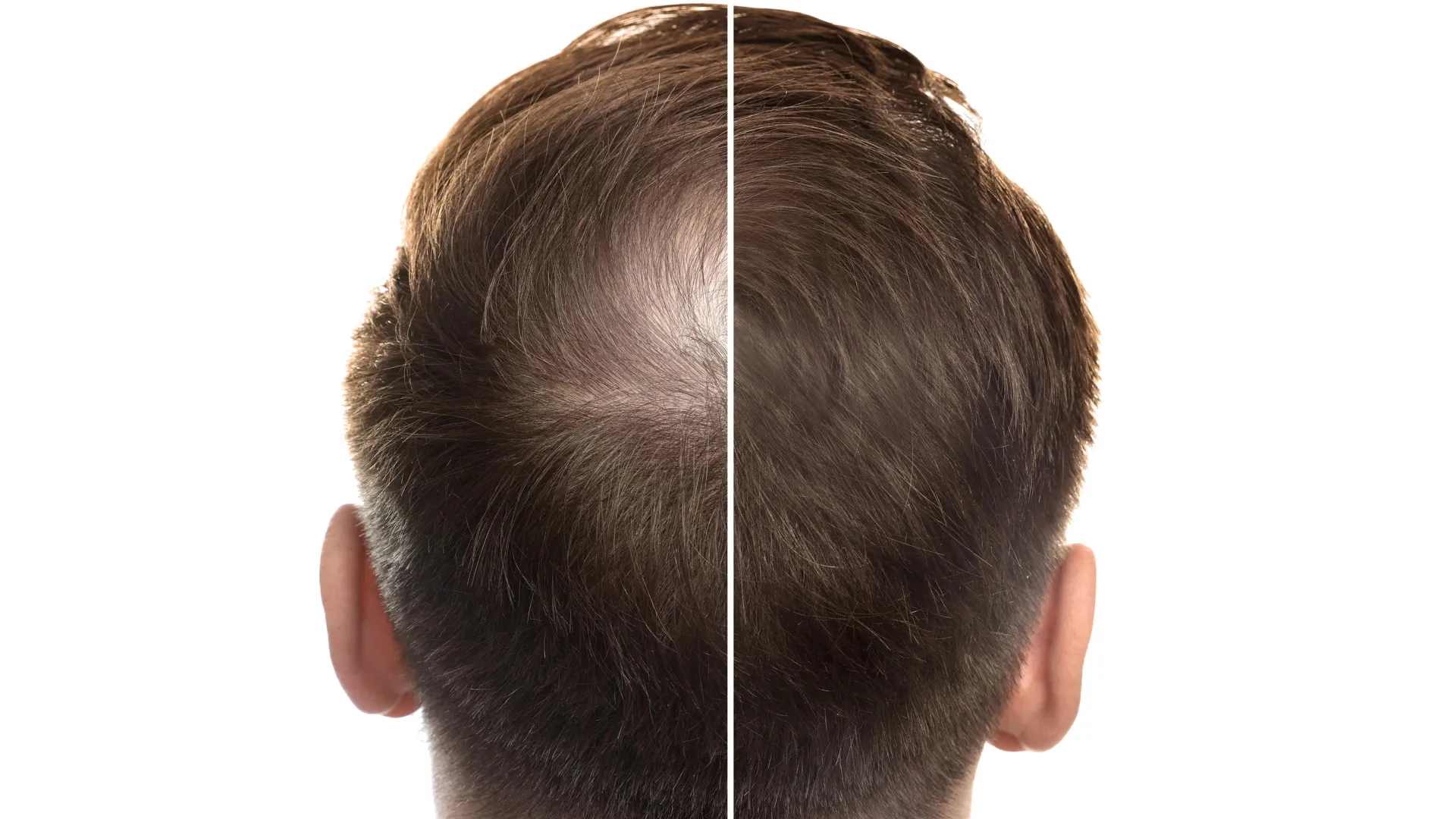
Ancient Chinese medicine could transform hair loss treatment

Androgenetic alopecia (AGA) is the most common type of hair loss, affecting millions of men and women around the world. It is often known as male or female pattern hair loss, and it usually develops gradually as hair follicles shrink over time. As follicles become smaller, they produce thinner, shorter hairs until growth may slow dramatically or stop.

Current treatments, including finasteride and minoxidil, can help some people, but they are not ideal for everyone. Finasteride works by targeting hormones involved in follicle shrinkage, while minoxidil is commonly used on the scalp to encourage growth. However, some patients worry about unwanted effects, including sexual side effects linked to finasteride or scalp irritation associated with minoxidil. Because of this, many people continue to look for options that feel safer, more natural, or more comprehensive.

Ancient Root Meets Modern Hair Science

A new scientific review suggests that Polygonum multiflorum, a root long used in traditional Chinese medicine, may deserve serious attention as a potential therapy for androgenetic alopecia. The herb has been used for more than 1,000 years and has traditionally been associated with “blacken hair and nourish essence.”

What makes the review especially interesting is that the plant does not appear to act through only one biological route. Instead, researchers report that Polygonum multiflorum may influence several processes involved in hair loss and regrowth at the same time.

In androgenetic alopecia, a hormone called dihydrotestosterone plays a major role. It can gradually shrink hair follicles, making it harder for them to keep producing strong, healthy hair. According to the review, Polygonum multiflorum may help reduce the impact of this hormone, protecting follicles from one of the major drivers of pattern hair loss.

A Multi Path Approach to Hair Regrowth

The review also describes several other possible benefits. Polygonum multiflorum may help prevent follicle cells from dying too early, which is important because healthy follicles depend on active, living cells to maintain the hair growth cycle. It may also turn on key biological signals involved in regeneration, including Wnt and Shh pathways.

These pathways are important because they help control how cells grow, communicate, and repair tissue. In hair follicles, they are closely linked to the shift from resting phases into active growth. When these signals are stronger, follicles may be more likely to reenter a growth state.

The herb may also improve blood flow to the scalp. Better circulation can help bring oxygen and nutrients to follicles, supporting the environment needed for healthier hair growth. This is one reason researchers see Polygonum multiflorum as potentially broader than conventional treatments that focus on a single target.

“Our analysis bridges ancient wisdom and modern science,” said Han bixian, the first author of a review on the topic recently published in the Journal of Holistic Integrative Pharmacy. “What surprised us was how consistently historical texts — from the Tang Dynasty onward — described effects that align perfectly with today’s understanding of hair biology. Modern studies now confirm that this isn’t folklore; it’s pharmacology.”

From Traditional Records to Laboratory Evidence

The review brings together several kinds of evidence, including laboratory research, clinical reports, and historical herbal records. Those older records are not being treated as proof by themselves. Instead, researchers are comparing traditional claims with modern biological findings to see where they overlap.

That overlap appears to be one of the main reasons for renewed interest in Polygonum multiflorum. The review suggests that the herb may do more than slow hair loss. By acting on growth factors and signaling pathways, it may help create conditions that support regeneration.

This is an important distinction. Many hair loss treatments are designed mainly to preserve existing hair or slow further thinning. A treatment that actively supports regrowth through multiple mechanisms could offer a different kind of approach, especially for people who have not responded well to existing options.

Safety Depends on Proper Preparation

The review also emphasizes that preparation matters. In traditional Chinese medicine, Polygonum multiflorum is typically processed before use. This step is considered important because processing can affect both safety and biological activity.

“When properly processed — a key step in traditional preparation — the herb shows a favorable safety profile, making it more acceptable to patients wary of side effects like sexual dysfunction or scalp irritation linked to current medications,” This article highlights.

That point is especially relevant because natural products are not automatically risk free. Herbs can contain powerful compounds, and their effects may vary depending on preparation, dose, and product quality. The review presents processed Polygonum multiflorum as a more acceptable option for some patients, but it does not suggest that people should self treat without guidance.

More Clinical Testing Is Still Needed

Although the findings are promising, the researchers stress that stronger clinical evidence is still needed. Much of the current support comes from laboratory studies, historical records, and limited clinical observations. Large, carefully designed human trials would be necessary to confirm how well Polygonum multiflorum works for androgenetic alopecia and how safe it is across different groups of patients.

Still, the review points to a larger idea with growing scientific importance. Traditional remedies may contain biologically active compounds that can inspire new treatments when they are studied with modern methods. In the case of Polygonum multiflorum, centuries of use are now being examined through the lens of hormone biology, cell survival, growth signaling, and scalp circulation.

For people dealing with hair loss, the research offers a hopeful but cautious message. A root used for more than a millennium may not replace today’s treatments yet, but it could help guide the next generation of hair regrowth therapies.

Share Button

Scientists finally complete Schrödinger’s 100-year-old color theory

A century old idea from Erwin Schrödinger has taken a major step forward, thanks to new research into how humans perceive differences between colors.

A team led by Los Alamos scientist Roxana Bujack used geometry to build a mathematical definition of color perception based on hue, saturation, and lightness. Their results, presented at a visualization science conference, formalize Schrödinger’s model of color and show that these familiar color qualities are built into the structure of color perception itself.

“What we conclude is that these color qualities don’t emerge from additional external constructs such as cultural or learned experiences but reflect the intrinsic properties of the color metric itself,” Bujack said. “This metric geometrically encodes the perceived color distance — that is, how different two colors appear to an observer.”

Completing Schrödinger’s Color Puzzle

By defining these perceptual attributes more rigorously, the researchers have supplied a missing piece in Schrödinger’s long standing vision for a closed mathematical model of color. The goal was to define hue, saturation, and lightness using only the geometric property of highest color similarity.

Human color vision is based on three types of cone cells, which are centered around red, blue, and green. That gives color spaces three dimensions, allowing scientists to organize and compare colors mathematically.

In the 19th century, mathematician Bernhard Riemann proposed that perceptual color spaces are not flat or straight, but curved. In the 1920s, Schrödinger built on that idea by defining hue, saturation, and lightness within a Riemannian model of color perception, using a metric that describes how people perceive color differences.

Fixing a Century Old Mathematical Gap

Schrödinger’s definitions have shaped color science for roughly 100 years. But while the Los Alamos team was developing algorithms for scientific visualization, they found that the mathematics behind the model had important weaknesses.

The biggest problem involved the neutral axis, the line of grays that runs from black to white. Schrödinger’s definitions of hue, saturation, and lightness depend on where a color sits in relation to that axis, yet he never formally defined the axis itself.

That omission created a serious gap. Without a precise definition of the neutral axis, the entire construction was formally incomplete. The team’s most important advance was finding a way to define the neutral axis using only the geometry of the color metric.

To accomplish that, the researchers had to move beyond the traditional Riemannian model. That shift represents a major mathematical advance for visualization science.

A Better Model of How Colors Change

The team also corrected two other important issues in the older framework.

One involved the Bezold- Brücke effect, a phenomenon in which changing light intensity can make a color appear to shift in hue. The researchers addressed this by using the shortest path in their geometric model of color perception rather than relying on a simple straight line.

They also used the shortest path in a non-Riemannian space to account for diminishing returns in color perception, another effect that had not been fully captured by the older approach.

Why Color Perception Matters

The research was presented at the Eurographics Conference on Visualization and builds on a broader Los Alamos project on color perception. That project also produced a groundbreaking 2022 paper in the Proceedings of the National Academy of Sciences.

A more precise model of color perception could have wide value in fields that depend on accurate color, including photography, video, visualization, and related technologies. It could also improve the way scientists create and interpret visual data.

Scientific visualization plays an important role in helping researchers understand complex information. Better color models can support more effective analysis across many areas, including national security sciences.

The team’s work now provides a foundation for future color modeling in non-Riemannian space.

Funding: This work was supported by the Laboratory Directed Research and Development program at Los Alamos and by the National Nuclear Security Administration’s Advanced Simulation and Computing program.

Share Button

Cosmeticorexia: How girls are falling down a skincare rabbit hole

Fuelled by social media, the market for children’s skincare is booming. Experts fear for the long-term impact on girls

Share Button

Tiny X-ray telescope could unlock the Moon’s hidden chemistry

Researchers at Tokyo Metropolitan University have used simulations to show that a small, newly developed X-ray telescope could help create a chemical map of the entire lunar surface. Such a map would be a major step toward understanding how the Moon formed, changed, and evolved over time.

Their detailed modeling, which included both the telescope detector and a realistic Moon orbiting satellite mission, suggests that one telescope could map five important elements in about two years. A larger five by five array of detectors could produce sharper maps and complete the work more quickly.

Mapping the Moon’s Chemistry

The Moon’s geological history is still not fully understood. One major reason is that scientists do not yet have a complete geochemical map of the lunar surface. Because researchers cannot simply collect samples from every part of the Moon, they must rely on remote sensing methods.

One of these methods is X-ray fluorescence imaging. In this approach, detectors are pointed at the Moon to capture X-rays emitted by specific elements after they are struck by solar radiation. Those signals can help reveal which elements are present across different regions of the surface.

Why Complete Lunar Maps Are Difficult

Earlier observations from the Apollo and Chandrayaan missions produced useful partial maps, but a full global map is still missing. Creating one is technically difficult for several reasons. Missions have limited time to gather enough sunlight driven X-ray signals, and detectors can degrade during long periods in space.

The problem is especially difficult near the Moon’s poles. In these regions, solar X-rays are weaker, which makes it harder to collect the signals needed to identify surface elements.

A Compact X-Ray Telescope for Lunar Orbit

To address these obstacles, a team led by Airi Toida and Prof. Yuichiro Ezoe of Tokyo Metropolitan University has proposed using a compact X-ray telescope on a satellite orbiting the Moon. The telescope would allow wide area observations of the lunar surface during strong solar flares, when the Sun provides more intense X-ray illumination.

Traditional X-ray telescopes are often too large and heavy for this type of mission. By contrast, the team’s compact telescope was originally designed for studying Earth’s magnetosphere and weighs less than ten kilograms. Its small size could make it practical for long term lunar satellite observations.

The detector has also been tested in radiation conditions far harsher than those expected in lunar orbit. That durability could support robust, wide area, high resolution imaging over an extended mission.

Simulations Show a Path to a Full Moon Map

The researchers then added the telescope’s specifications into a numerical simulation to test whether a satellite mission could successfully map the Moon. Assuming 300 solar flares per year and a single telescope aboard a Moon orbiting satellite, the simulation showed that the whole lunar surface could be mapped for five elements (oxygen, iron, magnesium, aluminum, silicon) in two years, using a grid size of 70 x 70 kilometers.

Because the telescope is so compact, the team also examined a satellite carrying a five by five array of telescopes. According to the simulations, this 25 telescope system could reduce the mission time to one year. With two years of operation, it could also map sodium, while improving the grid size to 30 x 30 kilometers.

A New Window Into Lunar Geology

If either mission concept becomes reality, it would produce the first complete map of elemental abundance across the entire Moon. That achievement would give scientists a powerful new tool for studying lunar geology and reconstructing the Moon’s long and complex history.

This work was supported by JSPS KAKENHI Grant Number 21H04972.

Share Button