
A “death” protein may be the key to slowing aging at its source

As people get older, their blood and immune systems gradually lose strength. A major reason is the decline of hematopoietic stem cells (HSCs), which are responsible for producing all types of blood cells. Under healthy conditions, these stem cells can renew themselves and create a balanced mix of blood cells. Over time, however, they become less efficient. They generate fewer new cells, begin to favor certain types such as myeloid cells over lymphoid cells, and are less capable of supporting a strong immune response.

Several factors appear to drive this decline, including accumulated cellular damage, changes in gene activity, chronic low-level inflammation, and shifts in the bone marrow environment. Even so, scientists have not fully understood how these different stresses combine to impair HSC function.

Investigating a Key Aging Pathway

To better understand this process, researchers from The University of Tokyo, Japan, and St. Jude Children’s Research Hospital, USA, explored how age-related stress affects HSCs. They focused on the receptor-interacting protein kinase 3 (RIPK3)-mixed lineage kinase like (MLKL) signaling axis, which is typically associated with necroptosis, a form of programmed cell death.

The study was led by Dr. Masayuki Yamashita, an Assistant Member at St. Jude Children’s Research Hospital, who, at the time of the investigation, was an Assistant Professor at The Institute of Medical Science, The University of Tokyo. Co-authors included Dr. Atsushi Iwama from The Institute of Medical Science, The University of Tokyo, and Dr. Yuta Yamada from St. Jude Children’s Research Hospital, who was a graduate student at The Institute of Medical Science, The University of Tokyo.

A Surprising Discovery About MLKL

The research began with an unexpected observation. Dr. Yamashita explains, “We discovered an unexpected phenotype in HSCs of MLKL-knockout mice repeatedly treated with 5-fluorouracil, where aging-associated functional changes were markedly attenuated despite no detectable difference in HSC death, prompting us to investigate whether this pathway might induce functional changes beyond cell death.”

This finding suggested that MLKL might influence stem cell aging without actually killing the cells. That idea became central to the study, which was published in Volume 17 of Nature Communications on April 6, 2026.

How Scientists Tested the Mechanism

To explore this possibility, the researchers used several types of genetically engineered mice, including wild-type, MLKL-deficient, and RIPK3-deficient models. They also used specialized reporter mice designed to detect MLKL activation using a Förster resonance energy transfer-based biosensor.

The mice were exposed to different stress conditions that mimic aging, such as inflammation, replication stress, and oncogenic stress. To measure how well HSCs functioned, the team relied mainly on bone marrow transplantation, which tests the ability of stem cells to rebuild the blood system.

Additional techniques provided deeper insights, including flow cytometry, ex vivo expansion, RNA-seq, assay for transposase-accessible chromatin-seq, high-resolution imaging, metabolic testing, and detailed studies of mitochondria. Together, these approaches allowed the researchers to examine how MLKL affects HSCs at multiple levels.

Mitochondrial Damage Without Cell Death

The results revealed a previously unknown role for MLKL in stem cell aging. Although MLKL is usually linked to cell death, its activation in HSCs did not increase cell death or reduce cell numbers. Instead, it acted in a different way.

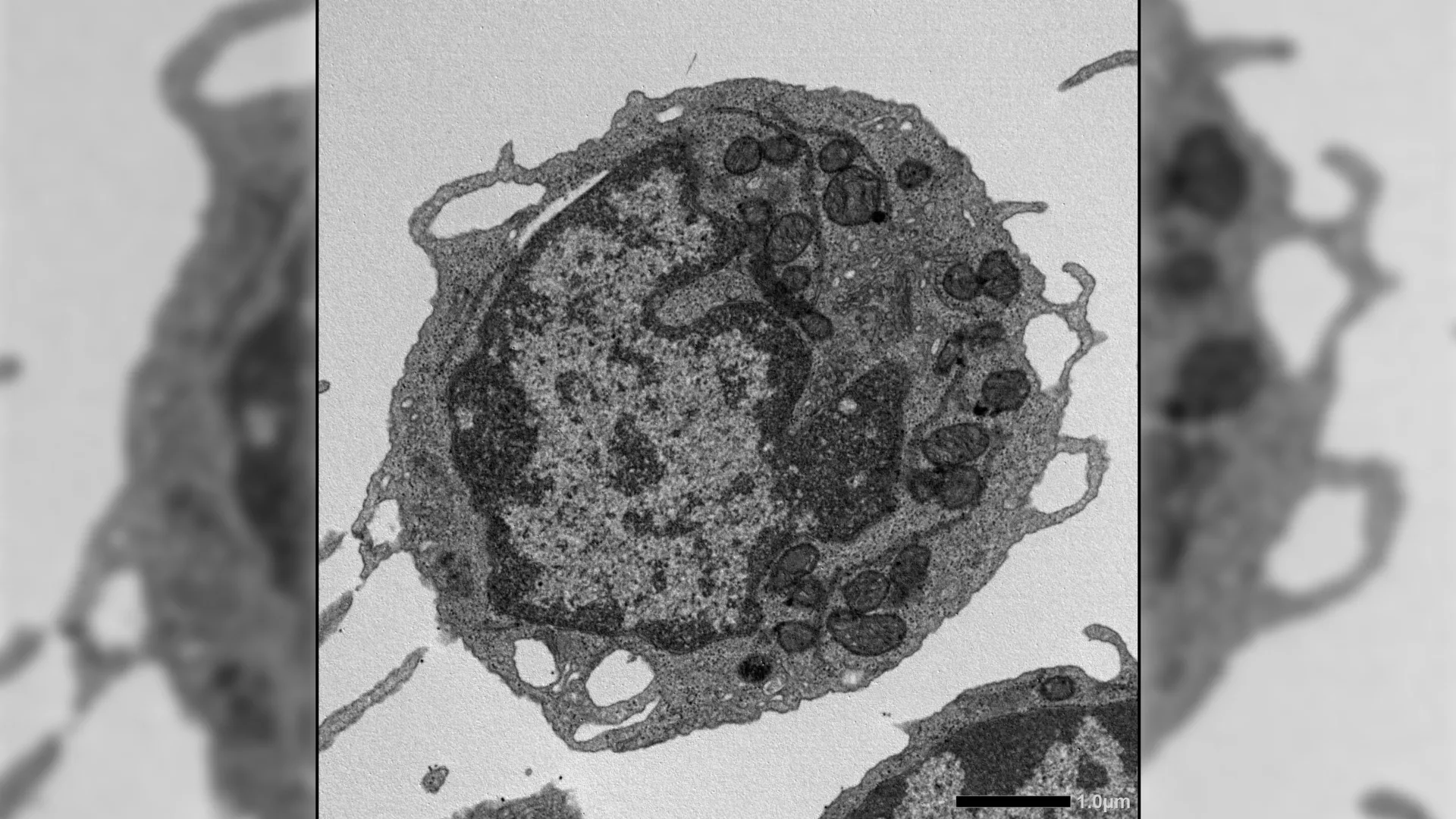
When activated under stress, MLKL briefly moved to the mitochondria, the structures that generate energy within cells. There, it caused damage by lowering membrane potential, altering mitochondrial structure, and reducing energy production. These effects led to key features of aging in HSCs, including reduced ability to renew themselves, decreased production of lymphoid cells, and a shift toward myeloid cell output.

Blocking MLKL Preserves Stem Cell Function

When MLKL was removed or inactivated, many of these problems were significantly reduced. HSCs lacking MLKL retained their ability to regenerate, produced healthier immune cells, showed less DNA damage, and maintained better mitochondrial function. These benefits were seen even in older animals or under stressful conditions.

Notably, these improvements occurred without major changes in gene expression or chromatin accessibility. This suggests that MLKL influences aging through processes that occur after gene activity, particularly at the level of cellular structures like mitochondria, rather than through changes in DNA regulation or inflammation.

Implications for Aging and Future Therapies

The findings point to a common pathway that connects various types of cellular stress to mitochondrial damage and stem cell aging. By identifying MLKL as a key link in this process, the study offers new insight into how aging affects the blood system.

Dr. Yamashita emphasizes, “In the longer term, this research could lead to therapies that preserve the function of hematopoietic stem cells, ultimately improving recovery and long-term health for patients undergoing chemotherapy, radiation, or transplantation. By revealing how non-lethal activation of cell-death pathways drives stem cell aging, these findings may inspire new classes of mitochondrial-protective or necroptosis-modulating drugs.”

A New Understanding of Stem Cell Aging

Overall, the study reveals that MLKL plays an important role in stem cell aging without causing cell death. Instead, it responds to stress by damaging mitochondria and weakening HSC function over time. This discovery challenges traditional views of necroptosis-related proteins and opens new possibilities for slowing or preventing age-related decline in the blood and immune systems.

Share Button

Lawmakers clash with RFK Jr as he shifts focus away from vaccines

During a three-hour hearing, the US health secretary tried to focus on chronic disease while being pressed on vaccines.

Share Button

Some Reflective Questions to Assess Your Relationship with Life

I invite you to ponder some inner reflective questions to help you sense how much harmony there is in your life. You can listen within for your answers. Another option is to use these as journaling prompts and write your answers.

Reflective Questions

Do you feel free? Do you enjoy enough freedom in your life?

Would you say that your life feels delightful? Do you have a lot pleasure and happiness in your life? Do you love and appreciate the life you get to live each day?

Do you feel supported by Life? Do you feel that Life takes really good care of you – like it meets all your needs and then some?

Do you feel at peace within yourself? Do you feel at peace with the world you inhabit?

Do you feel that your life fits your heart?

Are you in love?

Do you feel that you’re really good at receiving many different kinds of gifts from Life? Like there’s always something wonderful coming up.

Do you enjoy one or more close friendships – with people who see you, know you, and love you as you are?

Do you feel seen, loved, held, and cared for by Life?

Do you feel like you’re on a really devoted path through life? Do you feel positively engaged with how you’re living? Do you have the right level of stimulation and motivation to enjoy a nice sense of flow?

And… Do you trust Life? Do you trust this Reality? How strong is that trust?

So what came through as you reflected? Are you enjoying a delightfully harmonious flow in your relationship with life? Is there some room for improvement here? Or does it seem unrealistic to feel loved, delighted, happy, positively stimulated, and beautifully supported by Life?

What’s your current truth here?

Cooperating with Life’s Intelligence

To create a really harmonious life, you need Life’s cooperation, don’t you? It’s not really meant to be something you figure out and do all by yourself. Harmony is something you’re invited into – by Life – when Life signals that you’re ready for it.

To cooperate with Life in this way requires that you trust Life. It’s pretty hard to harmonize with something you don’t trust. What you’re really choosing to trust here is the intelligence that flows through Life and Reality.

So what you’re actually seeking to harmonize with is intelligence – more specifically the currents of intelligence that flow through the Reality around you. Creating a harmonious life is a matter of aligning your own best intelligence with the intelligence of the Reality that you inhabit. And this requires being sensitive to those currents of intelligence and paying careful attention to them.

Now when we reach a certain point in life, Life reaches out to invite us into a new level of harmony. Often this involves letting go of an old path that no longer feels harmonious. We feel a disconnect rising up, such as feelings of agitation to want to change something, even if we don’t know exactly what to change.

The Key Skill of Orienting

What actually wants to change here is our orientation towards Life.

Life is an evolving intelligence, and so are we as individuals, and now and then we may fall out of sync, much like two people can fall out of sync during a conversation. This is when an invitation can emerge to reorient ourselves and get back in sync. This kind of orienting is a skill set, and it can be learned, developed, and practiced. It’s a wickedly important skill set for a world that doesn’t sit still and keeps shifting. People who don’t consciously develop and practice these skills are likely to be in for a very rough ride, if they aren’t already succumbing to that now.

How can you assess your current Life orienting skills? Review the reflective questions above. These questions serve to reveal the quality of your orienting skills and how well you’re currently applying them. They help you get a more honest picture of how well you’re cooperating with Life… or if you’ve fallen out of sync. And if you have fallen out of sync, don’t panic. It happens.

Receiving Life’s Gifts

What I can tell you is that this is shift into greater harmony is very connected with a willingness and an openness to receive more from Life without feeling like we have to earn it with effort.

A telltale sign that we’re in harmony and in sync with Life is that Life is very generous with us. In this place of beingness, it feels like Life keeps showering us with gifts. It’s a place of feeling deliciously loved by Life.

Sometimes that shift comes from exhaustion or exasperation with over-stressing and over-working ourselves – like doing hustle culture for a while – until we finally conclude there’s a gotta be a better way to live.

Where this often starts is with a sense of Wonder, so that’s something I want to invite you into right now. I invite you to Wonder: Could it be possible that Life could take much better care of you and make your life feel a whole lot lighter, a whole lot freer, even a whole lot luckier, if you were able to let yourself receive more?

Will you let Life help you create more harmony? Could it be that simple?

Yeah, in a way…

But sometimes it’s hard to let go of old limits in our thinking and allow that help to flow through. That’s our challenge – to say yes when Life offers us a harmony upgrade. That’s a big part of the skill set of orienting – recognizing that yes there is a better way and letting that flow through without blocking, declining, or deflecting it.

Life checks in now and then to see if harmony is really important enough to us to receive it, and if Life sees that we’d rather prioritize something else, it just holds off till we’re ready. And Life is immensely patient with us, waiting and waiting till we’re ready to get back in sync.

Help Is Offered

My own Life has felt really harmonious lately, especially in the past few years. I just turned 55 on April 14, and I feel so light, lively, and energetic. I wouldn’t say that my relationship with Life is easy per se, but it is harmonious – in the sense that one can enjoy the thrill of riding a galloping Fire Horse. 😉

This year I sensed a really interesting invitation from Life flowing through, which was to host a space where I help people improve in this area together – where everyone arrives with the intention to make their lives more harmonious. So we’re on the same page because we all want more harmony. I knew this would be an awesome group energy to engage with, so I said yes to the assignment.

By taking this on, I’m learning a great deal more about harmony and how to sync with Life more consciously too. This has helped me significantly upgrade my own orientation skills and discover more nuances and subtleties within them.

We’re doing this in the form of a live, in person event. It’s called Open. Just that one word. Open.

We’re opening to receiving more. More flow. More freedom. More flexibility. More ease. More lightness. More friendship. More love. More cooperation.

We’re hosting this for three days in Las Vegas on April 28th through 30th, so it’s this month.

Open is an invitation to increase the level of harmony in your life, and to work with like-minded and like-hearted people who want the same. It’s a deep inner journey into a very personal reorientation process.

At Open I’ll guide you through a series of orientation containers, each with a different theme and different skills to practice within. These containers are very thoughtfully and lovingly crafted to help reorient to Wonder. To Intelligence. To Trust. To Freedom. To Embodiment. To Magnetism. To Love. To Friendship. To Pleasure. And more… I want to keep some of these delights a surprise.

So this is intended as an offer of help from Reality. It’s a chance to orient yourself to Life differently.

Not recorded. Not streamed. In-person. This month.

You’ve got to be in the room really feeling it. Your body has to come along. Note that Embodiment is one of our core containers. Open is an experience for your body too, not just your mind and heart.

A Preview – Come Inside the Room

Open is very experiential. It’s not content-based. NOT 3 days of lecture.

As the name suggests, Open is a space of opening into greater harmony – both within yourself and with Life. These arise as a package deal.

Open is a very deep inner journey. And this journey invites you to reorient yourself to Life, specifically to create a lighter and more harmonious relationship with Life where you get to receive a lot more. Think of it like Life offering you its hand and asking if you’d like to be best friends from now on.

You can expect a very warm and welcoming atmosphere. Very compassionate. Very human. Very intimate. Very accepting. We’re not using social pressure. Every exercise is by consent.

I hope you like handpan music because we’ll have some live music with a handpan while you’re doing some reflective exercises.

So we’re creating a very gentle, very yin space that encourages emergence – especially the emergence of new perspectives and new possibilities.

The energy of Open is very warm – but not tame. Open invites you to take a deep and honest look into yourself and your orientation towards Life – and to then translate that into new understanding and new decisions. So Open is also very grounded and practical because harmony is something you live within day to day. In the final segment we’ll spend a good bit of time on integration, so you can start putting into practice what you’ve discovered.

Hence, Open is designed to be a very supportive space to reexamine and then rebuild your overall orientation towards Life. That’s a big deal. It’s meant to be life-changing.

If you’re seeing this invitation, then as a representative of Life – some people have referred to me as the Emissary of the Simulation – I’m personally inviting you to come to Vegas. Let me guide you through this inner journey experience for 3 days at the end of this month.

Join Us in Las Vegas

Open is happening at the New York-New York Hotel in Las Vegas. That’s right on the Las Vegas Strip. It’s a 10-minute ride from the airport. It’s literally on the same street as the airport, right on Tropicana Avenue.

The price is $888. You can think of it as three vertical infinity signs.

I can’t predict how many people will go to Open, but based on our room size, we can accommodate up to about 150 people, so it ought to be a fairly intimate event.

And I want you to know that I’m really pouring my heart into this one – because getting to a place of better harmony with Life has so much to do with dropping into our hearts and getting our mental decisions to really respect our feelings.

If this sounds appealing to you, you can read the full invitation and sign up to join us in Las Vegas at StevePavlina.com/Open.

I hope to see you there. It’s this month, so it’s nearly here already. The close proximity is part of the invitation, so that the people who show up are the ones who feel the most ready to have this kind of experience together. The invitation and the actual experience are meant to be very close in time.

I can tell you it’s going to be a lot of fun too!

Do you want to get to a place of receiving more from life? Life is offering that. Tune in to yourself and see if you’re ready for more harmony and more receiving. I encourage you to trust whatever decision comes up for you.

Share Button

Rollout of Covid vaccines extraordinary feat – inquiry report

Covid vaccines saved hundreds of thousands of lives, but a small minority harmed need better support, says report.

Share Button

Vaccines a huge success, but public trust must be earned – key findings from Covid report

Immunisation saved hundreds of thousands of UK lives, but vaccine hesitancy remains an issue.

Share Button

Breakthrough £90,000 Alzheimer’s drugs unlikely to benefit patients, report suggests

A major review has provoked a backlash after concluding the medicines provide too little benefit to be noticed.

Share Button

I feared my son had a brain tumour but he’d been poisoned with vitamin D

Investigations found Roo had been accidentally poisoned with a dose of vitamin D prescribed for growing pains.

Share Button

Wellbeing garden opens to combat isolation

The outdoor area at Yarm Wellness will officially open to the public on Saturday.

Share Button

Senior midwife appointed to maternity inquiry

Senior midwife Donna Ockenden will review maternity services in Sussex after a campaign by families.

Share Button

A crushed fossil revealed a dinosaur that shouldn’t have existed

“You want to stick your finger in a dinosaur brain?” asked Simba Srivastava.

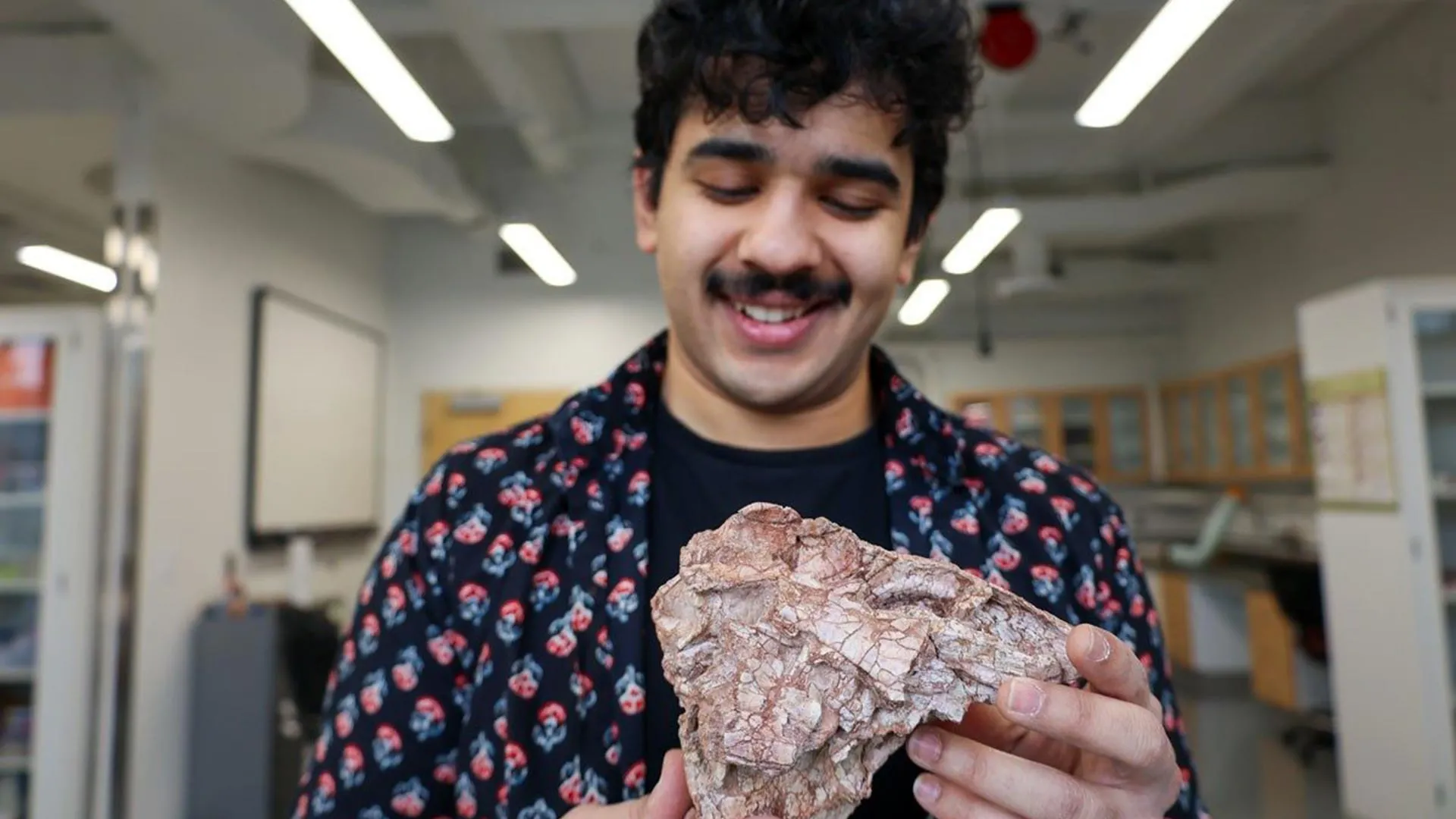
Inside a paleobiology lab lined with cabinets of ancient fossils, the Virginia Tech undergraduate held up a rough, pitted skull.

“This is a uniquely sucky specimen,” said Srivastava. “It’s so bad. Like, if you saw a human skull in this way, you’d throw up.”

Despite its poor condition, the senior geosciences major spent two years carefully reconstructing the fossil and figuring out where it fits in the evolutionary history of dinosaurs. His work, published in Papers in Palaeontology, offers new insight into how dinosaurs rose to dominance during the Jurassic period.

Although this kind of research is typically handled by experienced scientists, geobiologists Sterling Nesbitt and Michelle Stocker brought Srivastava onto the project as a first-year student.

“We want undergraduate researchers to experience the whole paleontological research process at Virginia Tech,” said Nesbitt. “Simba grabbed the project by the reins.”

Reconstructing a Rare Dinosaur Skull

The fossil had an unusual history. It was first discovered in 1982 by a team from the Carnegie Museum of Natural History at Ghost Ranch in New Mexico. More than 30 years later, Nesbitt rediscovered it in a drawer and brought it to Virginia Tech for further study.

Using computed tomography scanning data, Srivastava digitally separated the crushed bones and created a 3D printed reconstruction of the skull.

The fossil belonged to a carnivorous dinosaur species that lived more than three times earlier than Tyrannosaurus Rex.

These animals lived near the end of the Triassic period, which lasted from about 252 million to 201 million years ago. At that time, dinosaurs were not yet the dominant predators often seen in movies. They competed with early relatives of crocodiles and mammals for survival.

How Dinosaurs Rose to Power

That balance changed dramatically after a mass extinction event eliminated much of the competition. As the Triassic period ended, dinosaurs quickly became the dominant land animals.

“Dinosaurs go from being co-stars to the headliner,” Srivastava said.

Fossils from this critical transition are rare, especially well-preserved ones from the end of the Triassic. That makes this damaged skull especially valuable.

In fact, no other specimen like it has been found.

Even in its distorted state, the fossil revealed important details. The dinosaur had large cheekbones, a broad braincase, and likely a short, deep snout. These features had not been seen before in early dinosaurs, suggesting they were evolving in more complex ways than previously understood.

A New Species With a Strange Look

Srivastava named the new species based on its unusual appearance.

“We landed on Ptychotherates bucculentus, which means ‘folded hunter with full cheeks’ in Latin,” said Srivastava. “One paleo-artist said that it looked like a murder muppet.”

After years of analysis, the team determined that this dinosaur belonged to Herrerasauria, one of the earliest groups of carnivorous dinosaurs. It appears to have been among the last surviving members of this lineage.

Rethinking the End-Triassic Extinction

The fossil led to another unexpected conclusion.

Ptychotherates was found in rock layers that may date to just before the mass extinction at the end of the Triassic period, and no other members of its group have been found after that time, possibly suggesting that this dinosaur group went extinct as a result of that mass extinction.

“This forces us to reconsider the impact of the end-Triassic extinction as something that wiped out not just the competitors to dinosaurs, but some long-standing dinosaur lineages themselves,” Srivastava said.

Because no herrerasaurians have been discovered elsewhere from such a late point in the Triassic, scientists think the region that is now the American Southwest may have been their final refuge.

One Fossil, an Entire Lost Lineage

Srivastava’s “folded hunter” may be the only remaining evidence of this group’s final chapter.

“This specimen, it fits in my hands, but it is the only proof that any of these dinosaurs lived this long, lived in these latitudes, the only proof that they evolved to have this skull shape,” said Srivastava. “All these billions of individuals that existed through time are spoken for by this one specimen.”

Share Button